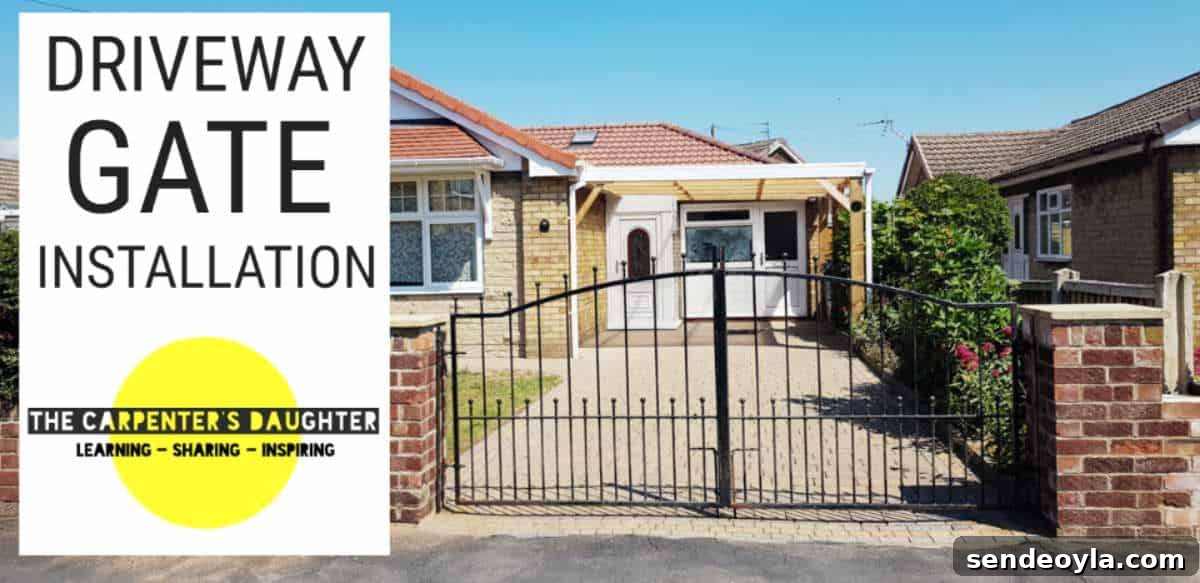
A clear, step-by-step guide to installing double metal driveway gates so they open freely, stay secure and sit level. Includes practical tips on hinge adjustments, drop-bolt drilling, hinge-pin security and a companion how-to video to follow along.
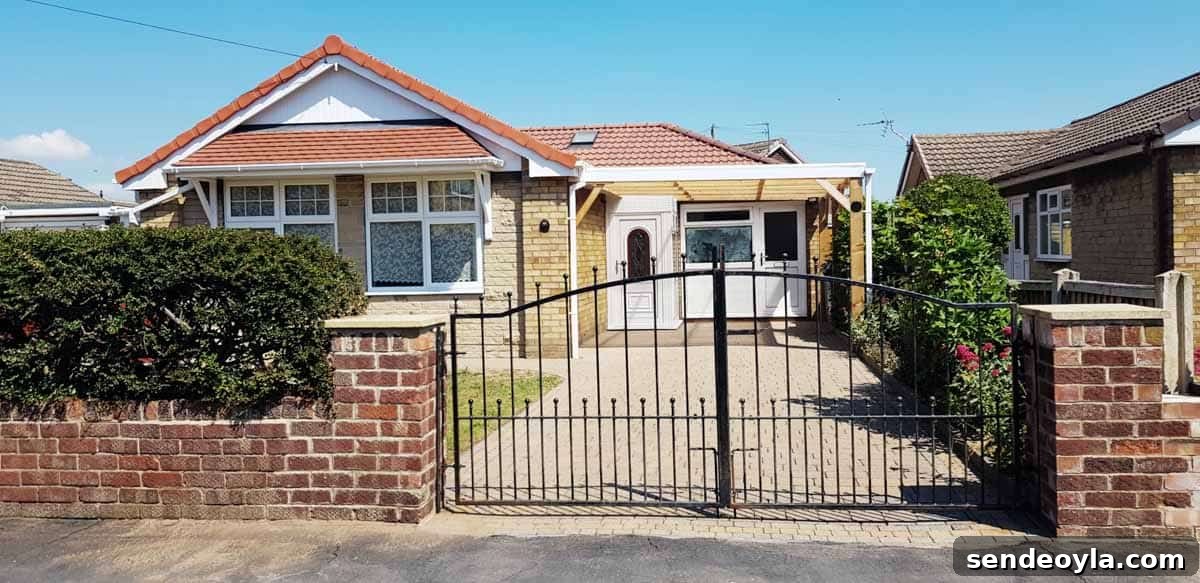
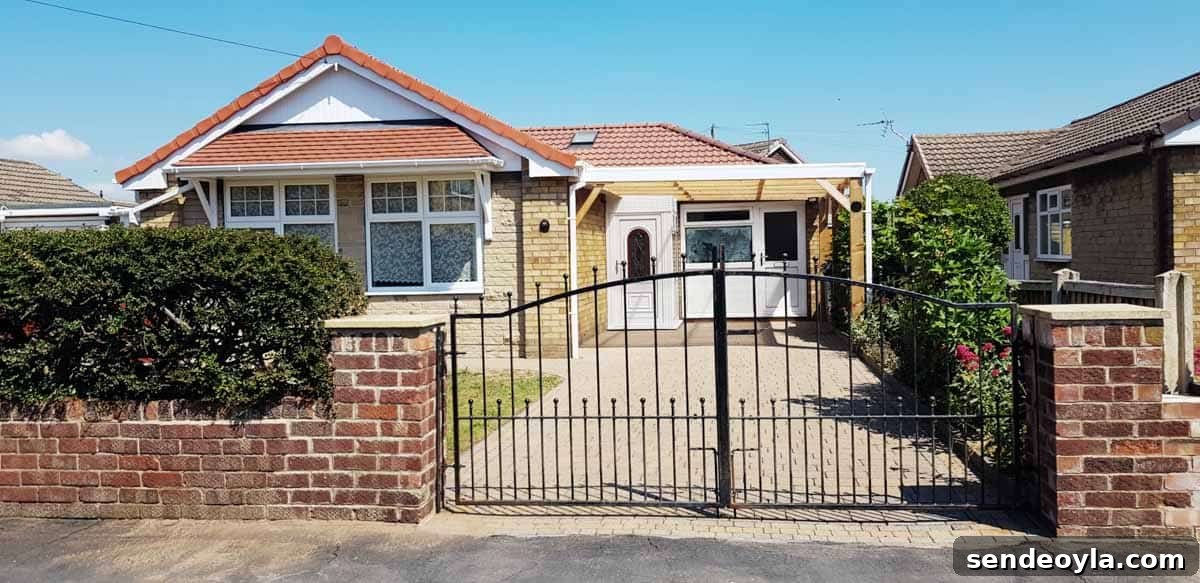
In 2019 I fitted a pair of second‑hand 5 ft metal gates with my dad at my parents’ bungalow. The original wrought‑iron gates were perfectly serviceable, but the replacement refreshed the entrance and improved functionality. This guide explains how to fit double metal driveway or garden gates — particularly metal iron gates fixed to brick pillars — and covers the key checks and adjustments to ensure the gates open and close properly.
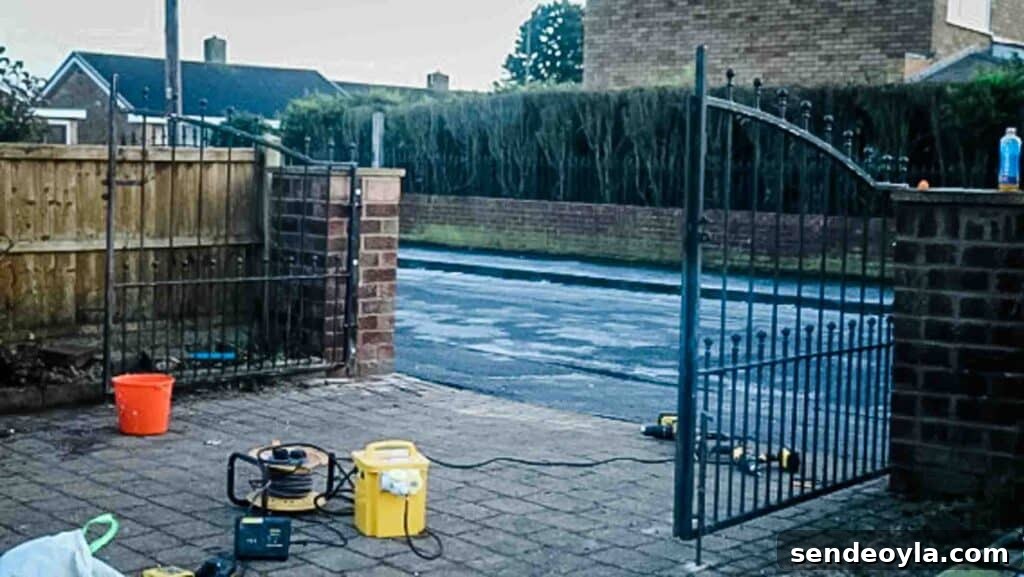
Tools & Materials Used To Fit Double Driveway Gates
- Metal gates (pair)
- Gate hanging strips or gate posts; cement if using new posts
- Hacksaw or angle grinder
- Spirit level
- SDS hammer drill and combi drill
- Masonry drill bits (suitable for brick and block paving)
- Concrete/masonry screws (do not require rawl plugs)
- Long straight edge and long structural timber for clearance gauges
- Adjustable spanner and basic spanners/sockets
- Washers, nuts and small hinge bolts for security pins
Tip: second‑hand gates can be found locally and are often significantly cheaper; new metal driveway gates tend to start from a few hundred pounds. Concrete screws (masonry screws) are ideal for attaching hanging strips directly to brickwork without anchors.
How to Install Metal Driveway Gates
This guide assumes you already have the gates. It does not cover gate fabrication or welding. The main stages are: establish the correct clearance, mount hanging strips, hang and level each gate, fit drop bolts, secure hinge pins and make final adjustments.
Finding the Right Clearance
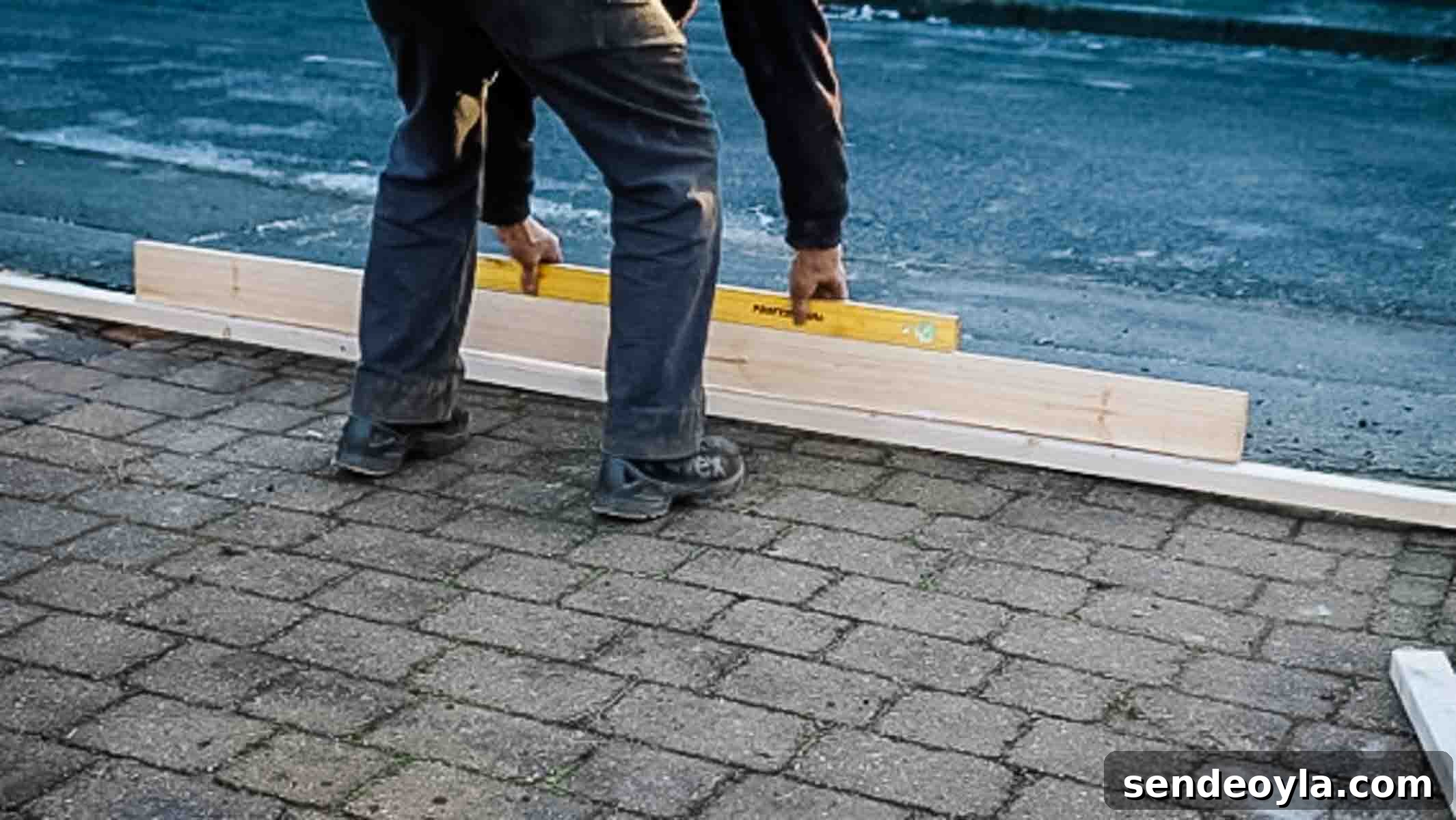
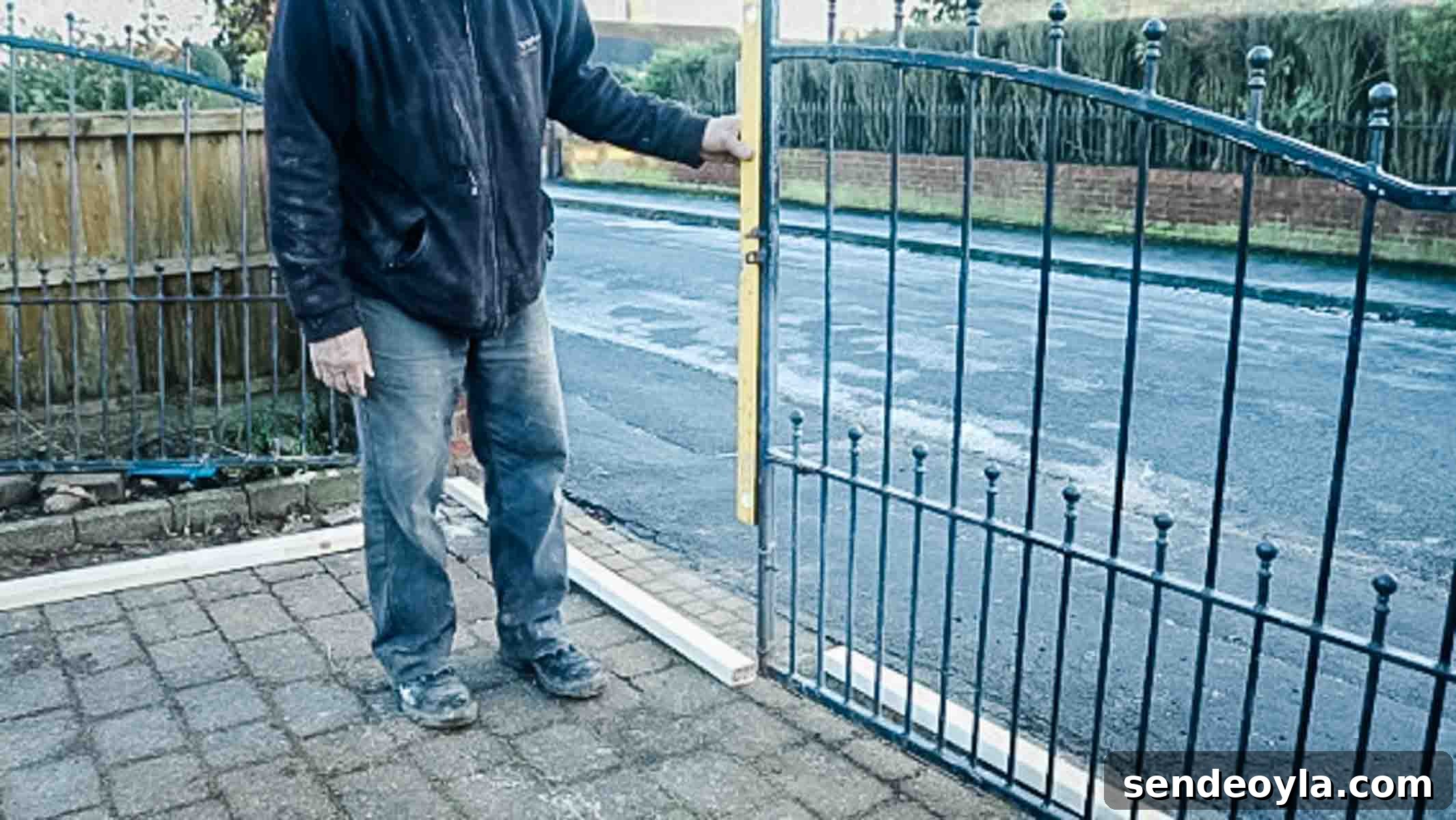
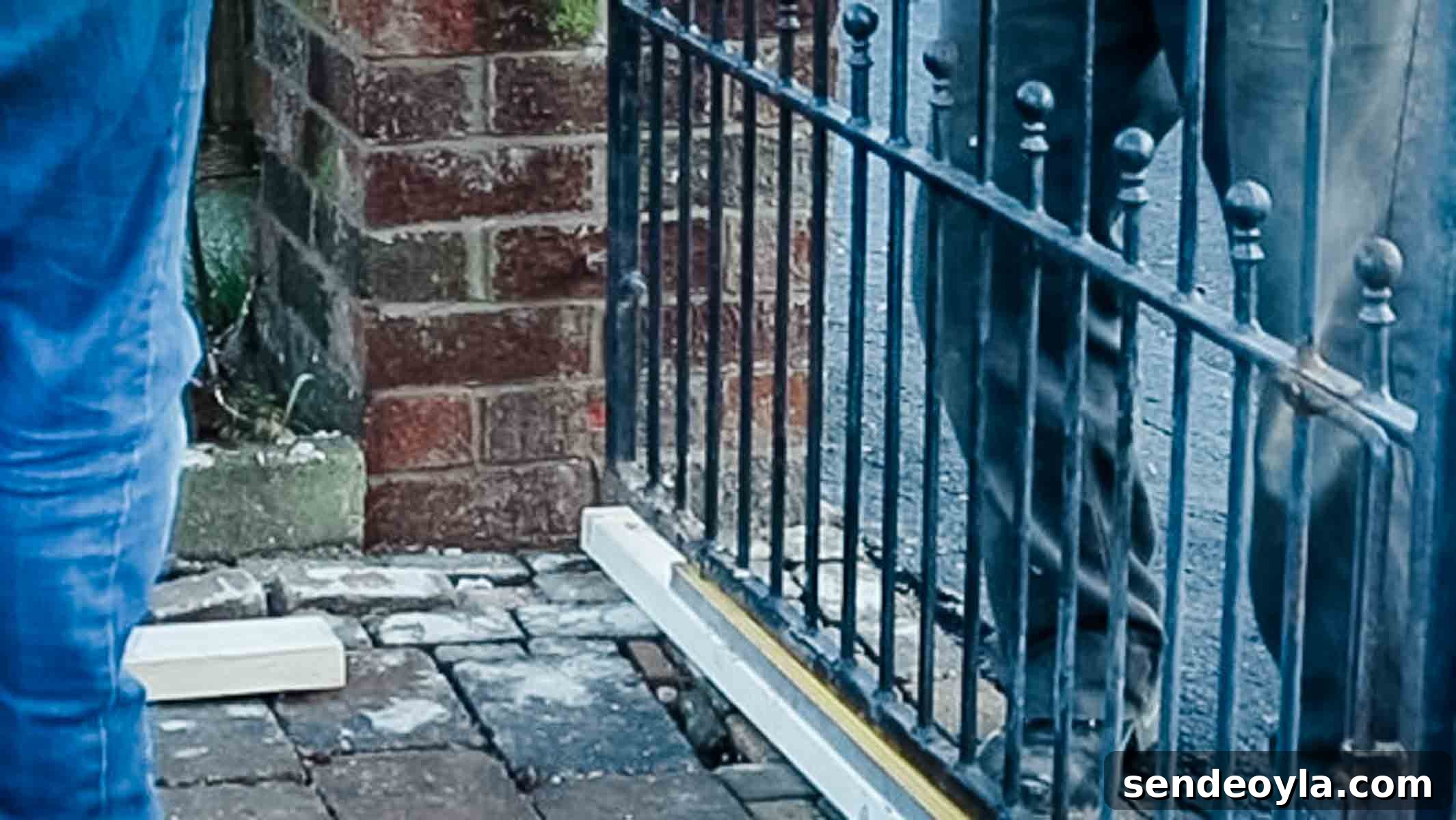
Before fixing anything to the pillars, work out the clearance between the ground and the bottom of each gate when fully open. Lay a length of structural timber across the opening where the gate will rest and place a second piece on top as a gauge. Check that top piece with a spirit level. If the driveway slopes, you may need to pack or adjust the timber position so the gates will clear the surface when opening.
Checking the Clearance While “Open”
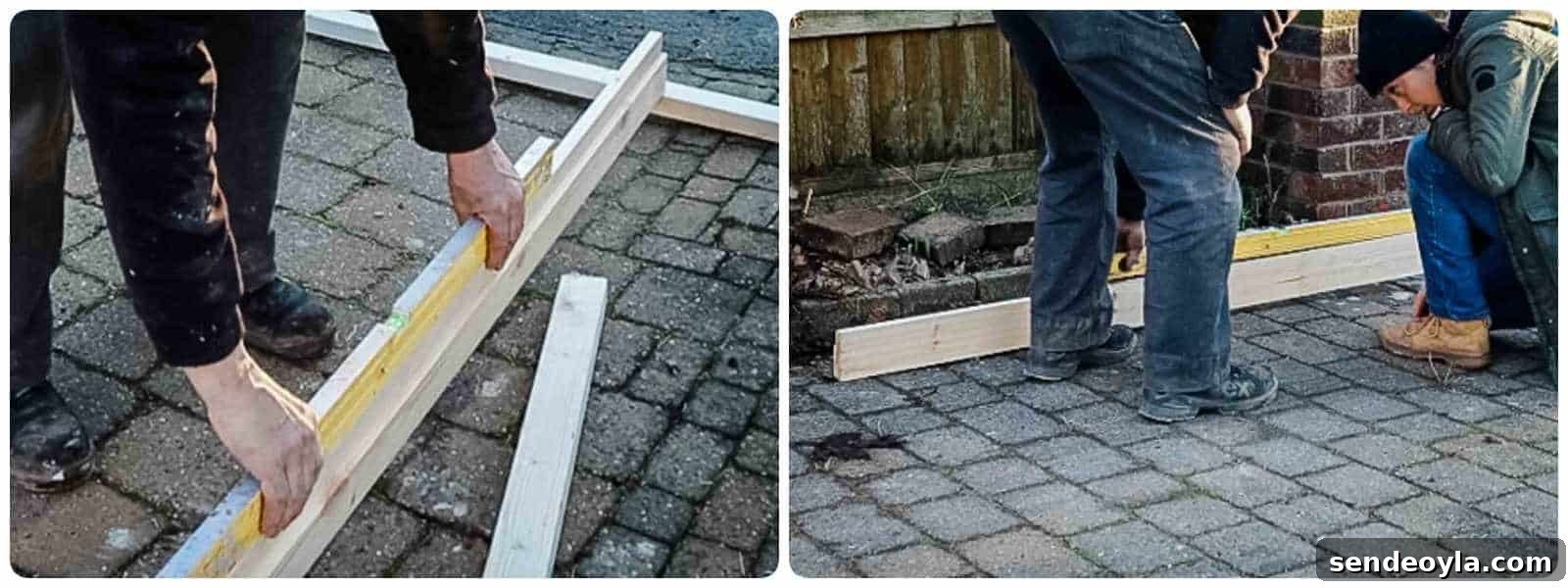
With a straight edge resting on the floor, raise the spirit level until the bubble is centred. The gap between the spirit level and the timber shows the clearance you must allow between the ground and the gate bottom. In our installation we left about a 1″ (25 mm) gap. Repeat this on both sides, as driveway surfaces and pillar heights are rarely identical.
Top Tip
Measure both sides and test the gates in the fully open position before drilling any holes. If you need more clearance, stack timber packers and re‑test until both sides match.
If There’s No Gap
If one side clears but the opposite outer edge does not, increase the packer depth across the whole width and re‑test. Always make absolute sure each gate can open freely without scraping any paving or tarmac.
Line Up the Gate Hanging Strips
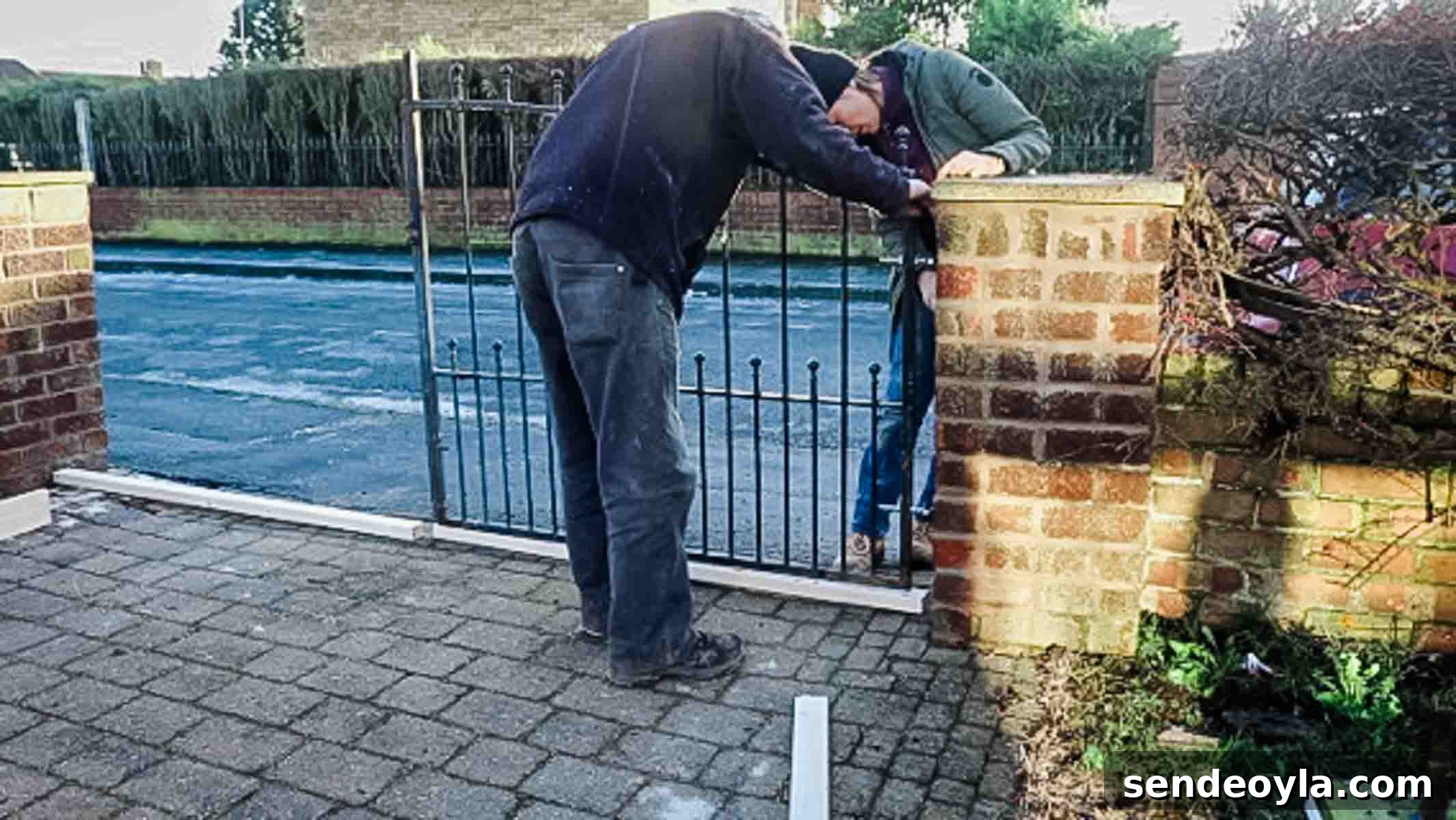
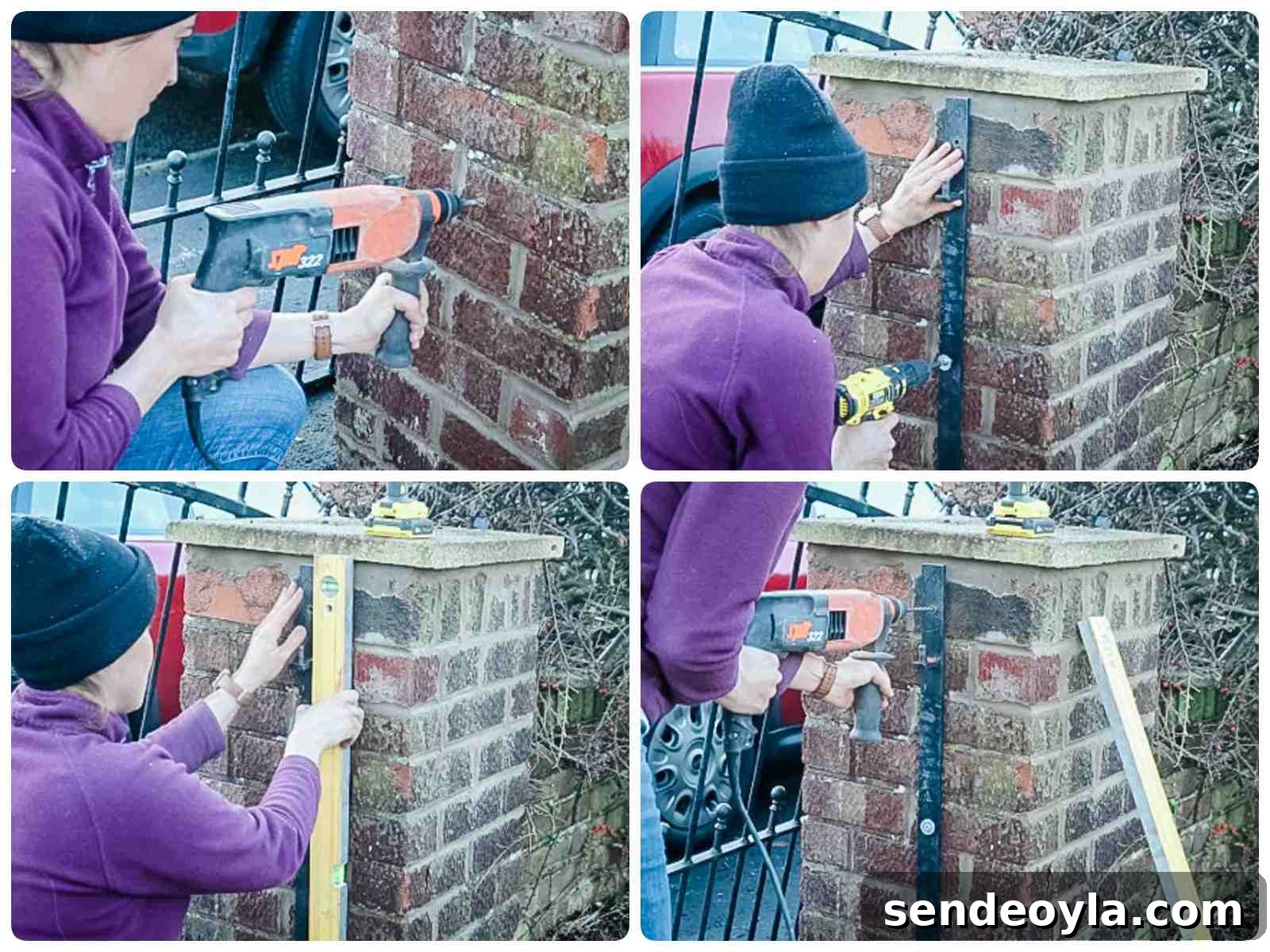
Once the clearance and packers are set, rest the gate on the timber gauge and position the hanging strip where it will attach to the brick pillar. Mark the centre screw hole with a masonry drill bit so you have a starter point for drilling.
Cutting and Preparing Hanging Strips
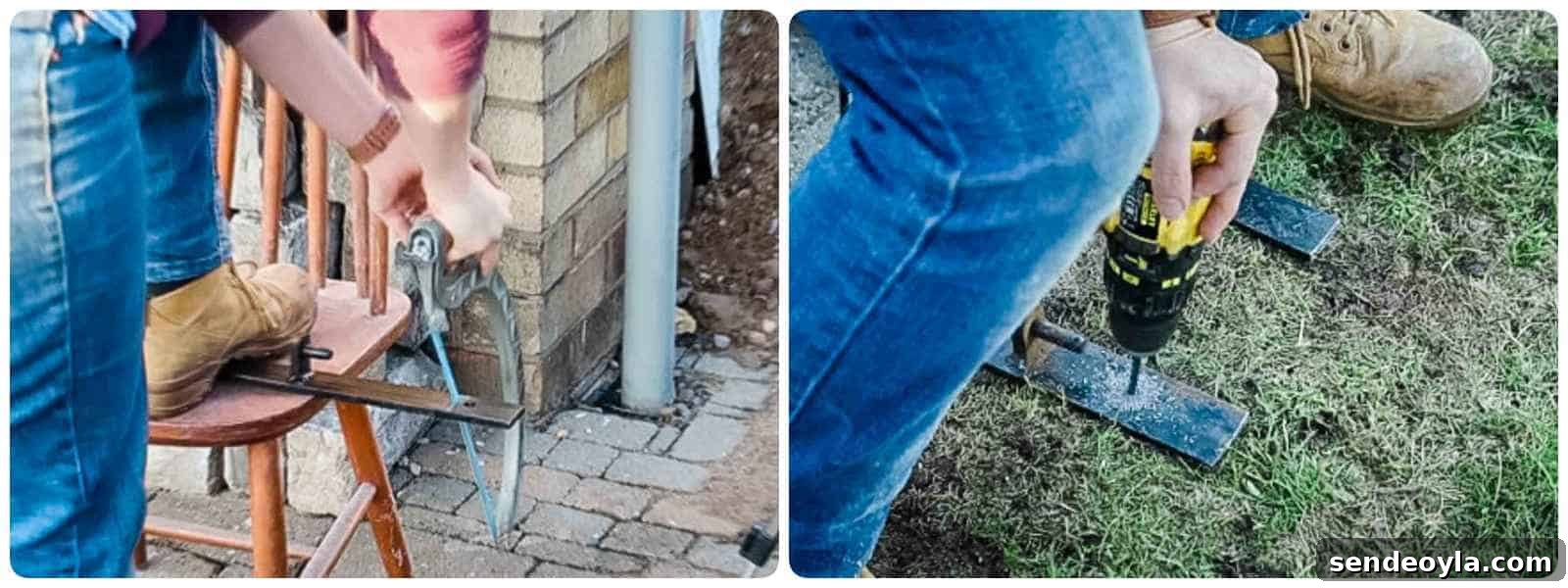
If the hanging strips are too long, cut them to size with a hacksaw or angle grinder, then drill any additional mounting holes needed. If you are using free‑standing posts instead of brick pillars, set those posts in concrete and allow them to cure before hanging the gates.
Screwing Gate Hangers to Brickwork
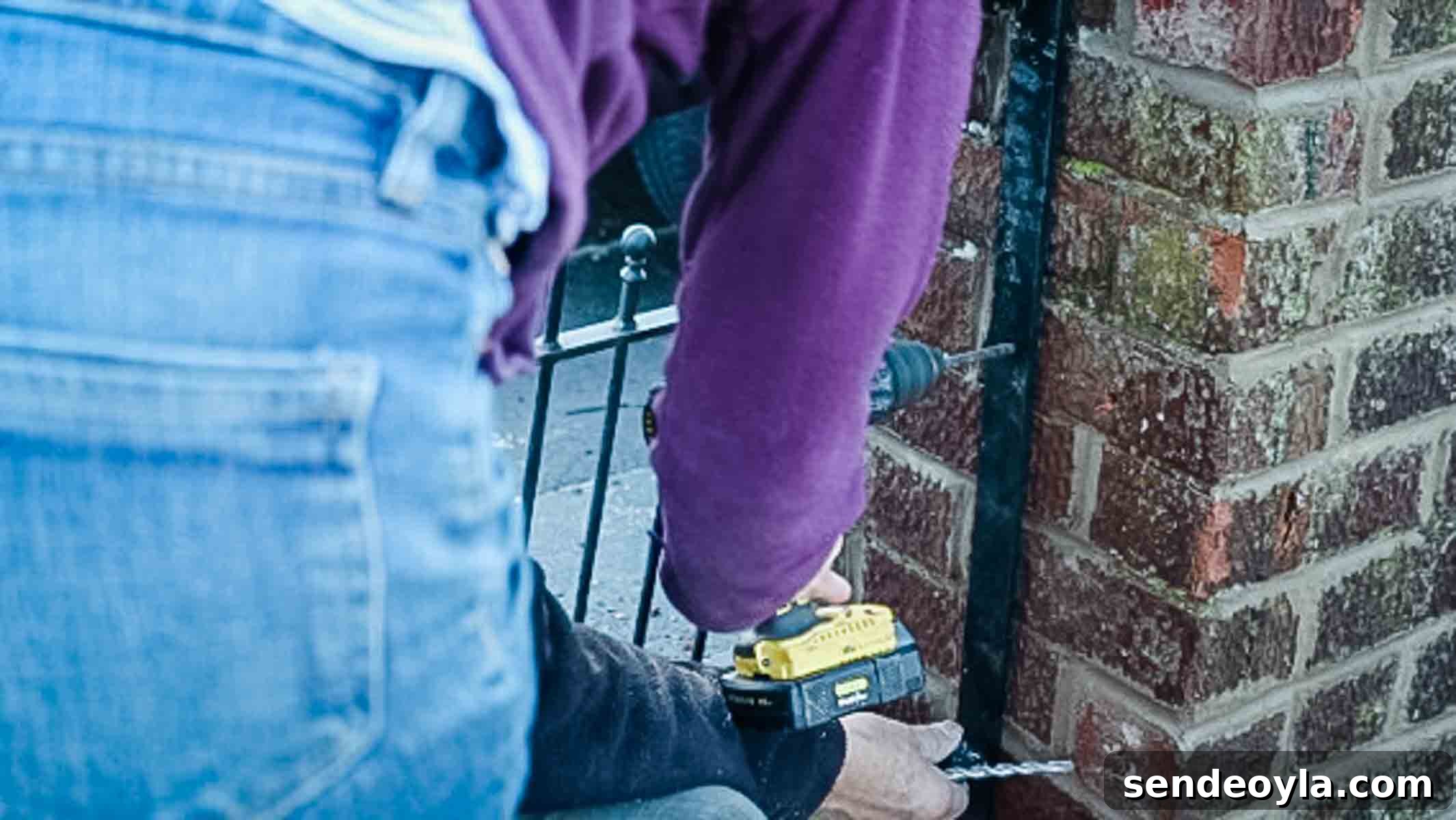
Drill a pilot hole about 4 inches deep at the marked point, then attach the hanging strip using a concrete screw and a washer. Check the strip with a spirit level, adjust as needed and then fit the remaining screws. When drilling brickwork always wear eye protection and hearing protection.
Hanging Metal Gates
Hook the gate onto the hanging strip and hand‑tighten the hinge bolts for now. You will need to leave some freedom in the hinges to make leveling adjustments. Work on getting the first gate perfectly vertical and plumb before hanging the second.
Getting the First Gate Straight
With one person holding a spirit level and another making small hinge adjustments, correct any tilt. To move the gate closer to the brickwork, loosen the outer hinge bolt and tighten the inner one; to move it away, do the reverse. Once level, fully tighten the hinge bolts.
Hanging the Matching Gate
Prop the second gate on the same clearance gauge and line up its hanging strip to match the first gate. Draw a level reference line across the pillar, drill the pilot hole to the same depth as the first, and fix the strip with concrete screws. Hang the second gate and adjust its hinges until the latch aligns and both gates close in a straight line.
Adjusting Hinges & Final Tightening
If the latch does not catch, loosen and re‑position hinge bolts until the two leaves meet squarely and the latch engages. When satisfied, give all hinge nuts and bolts a final tightening with an adjustable spanner.

Drilling Drop Bolt Holes
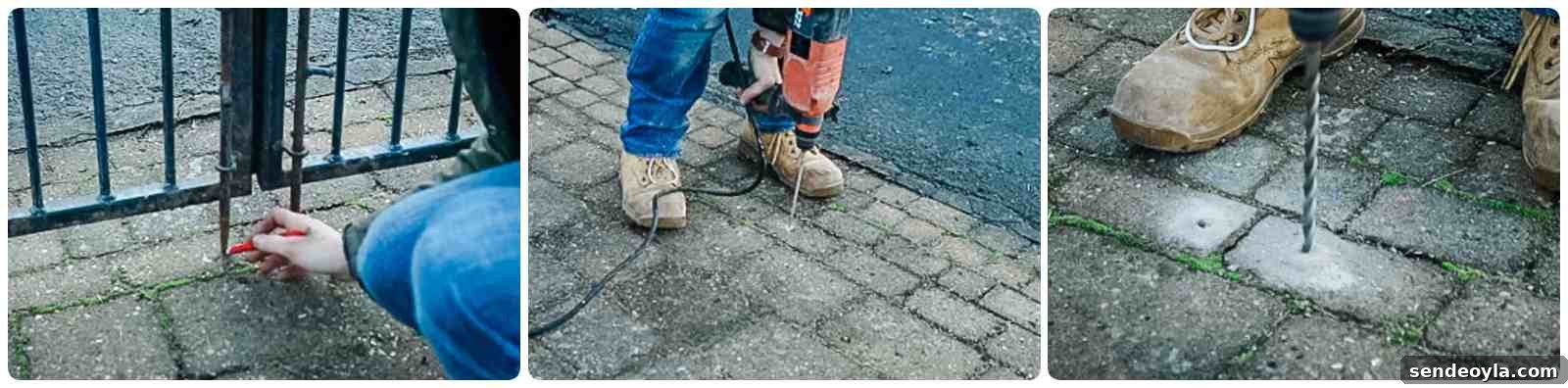
With the gates closed, lower the drop bolts and mark the hole positions on the ground or paving. Start with a small masonry drill bit and then enlarge the hole by gradually increasing bit size while rotating to create a slightly loose fit for the bolt. Also check the drop-bolt positions while the gates are open so vehicles can pass freely.
Installing Hinge Pins for Security
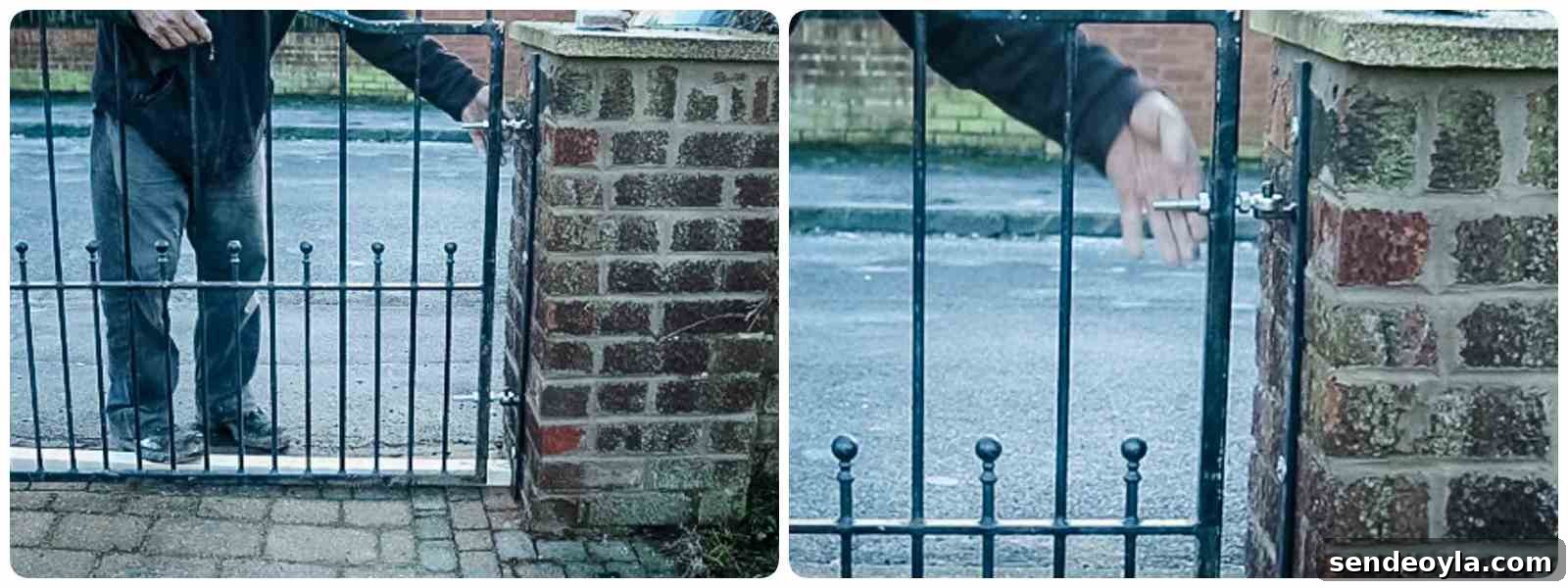
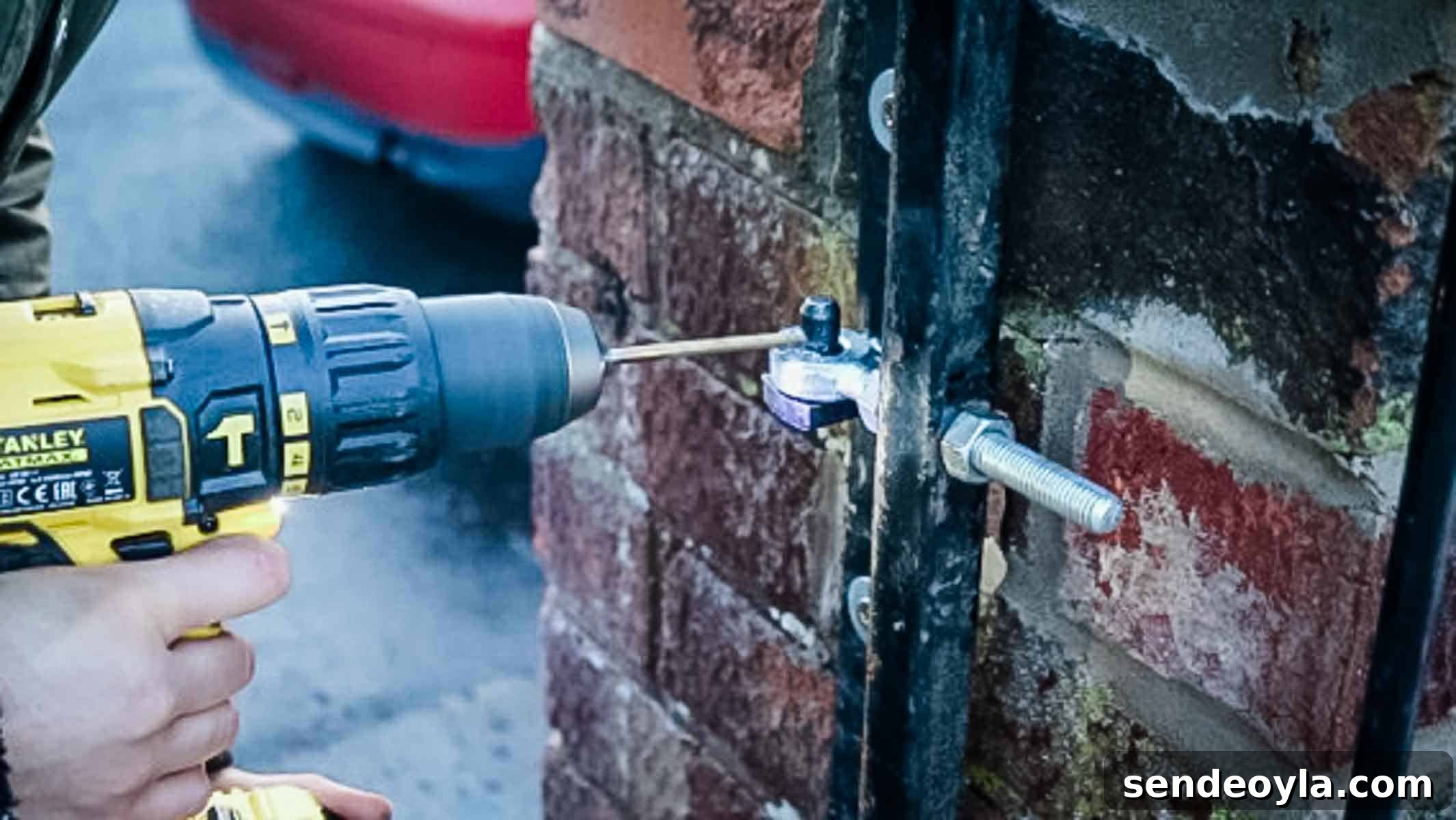
To stop the gates being lifted off their hinges, drill through the curved hinge sections with an SDS drill and fit small nut‑and‑bolt pins. Drill carefully to avoid slipping; placing a washer between the hinge faces can help line up and prevent the drill from clashing with the opposite side. Fit bolts, clamp the nuts and tighten. Finish with spray paint to match and protect exposed metal.
Painting a Rusty Gate
If your gates show surface rust, remove loose scale with a wire brush, apply a rust converter or primer as needed, then paint with a quality black metal paint. This both improves appearance and protects the metal from further corrosion.
Quick Checklist: Steps to Fit Double Metal Gates
- Set clearance using timber and a spirit level.
- Prop the gate on the clearance and cut hanging strips if needed.
- Mark and drill the middle screw hole on the pillar, then attach the strip with a concrete screw and washer.
- Use a spirit level to align the strip and fix remaining screws.
- Hang the first gate and adjust hinge bolts to make it plumb.
- Prop and match the second gate to the same height and alignment.
- Draw a level reference line and attach the second hanging strip at the same depth as the first.
- Adjust hinges until the latch catches and both gates close in a straight line.
- Mark and drill drop‑bolt holes in the ground and fit bolts for security.
- Drill hinge pin holes and fit security bolts to prevent lifting.
- Touch up with paint and final tighten all fixings.
Do You Need Planning Permission to Install a Gate?
You may need planning permission if the gate is over 1 metre high and next to a road used by vehicles, if the gate is part of a listed property, or if it affects the boundary with a neighbouring listed building. Check your local planning guidance if in doubt.
Printable Summary Card
Double Metal Driveway Gate Installation — Yield: one gate installation.
Prep Time: 1 hour • Active Time: 1 hour • Total: 2 hours • Difficulty: Some skill required
Materials
- 2 straight edges / timber packers
- Concrete screws and washers
- Pair of metal gates
- Gate hanging strips
Tools
- Hacksaw or angle grinder
- Spirit level
- SDS hammer drill and combi drill
- Masonry drill bits
- Adjustable spanner
Instructions
- Work out gate clearance with timber and level.
- Rest the gate on the gauge and cut hanging strips if needed.
- Drill centre screw hole and attach strip with concrete screw and washer.
- Level the strip and fit remaining screws.
- Hang the gate and level using hinge adjustments.
- Match and hang the second gate to the same alignment.
- Fit drop bolts and drill holes in the ground.
- Drill hinge pin holes, fit security bolts and tighten.
More Projects You Might Like
- How to build a wooden gate
- DIY double wooden gates
- Low‑cost tarmac driveway repair
- How to build a shed door
- Fence post extensions DIY
- How to lay a paved patio