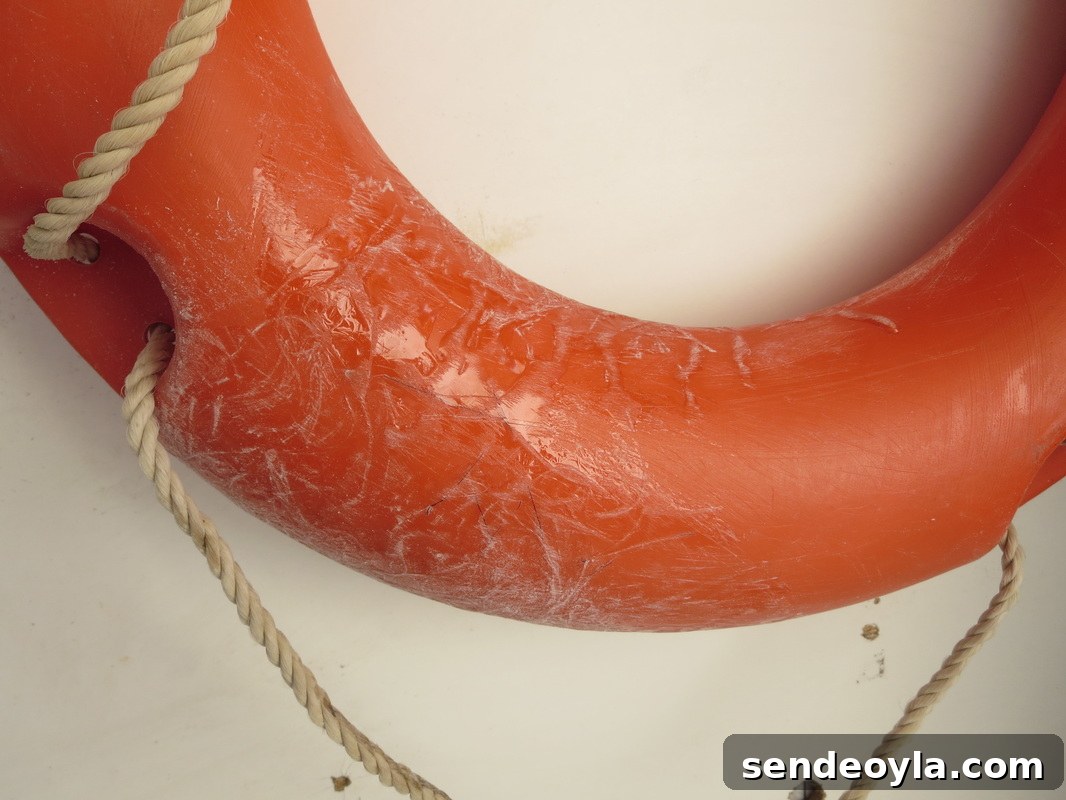
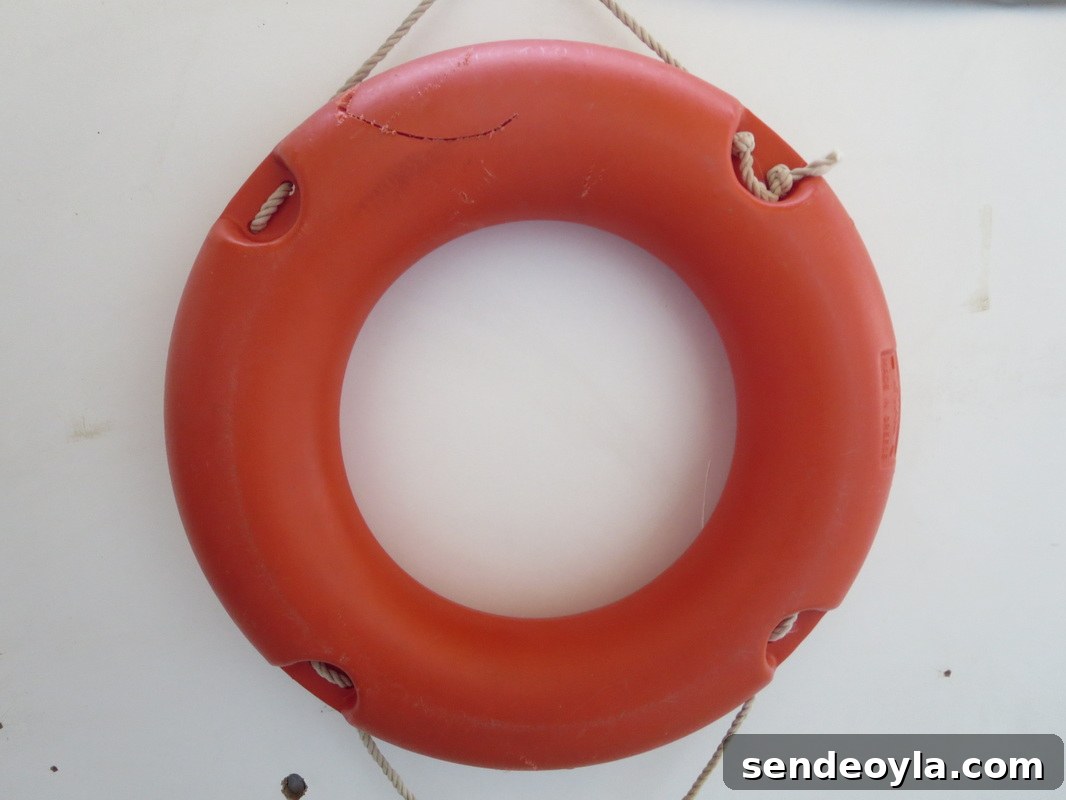
While walking along the beach with my husband, we came across a damaged lifebuoy. It was clearly abandoned on the sand, but the shape and size suggested it had once been a useful lifesaver. Rather than leave it to the elements, we decided to rescue and repurpose it.
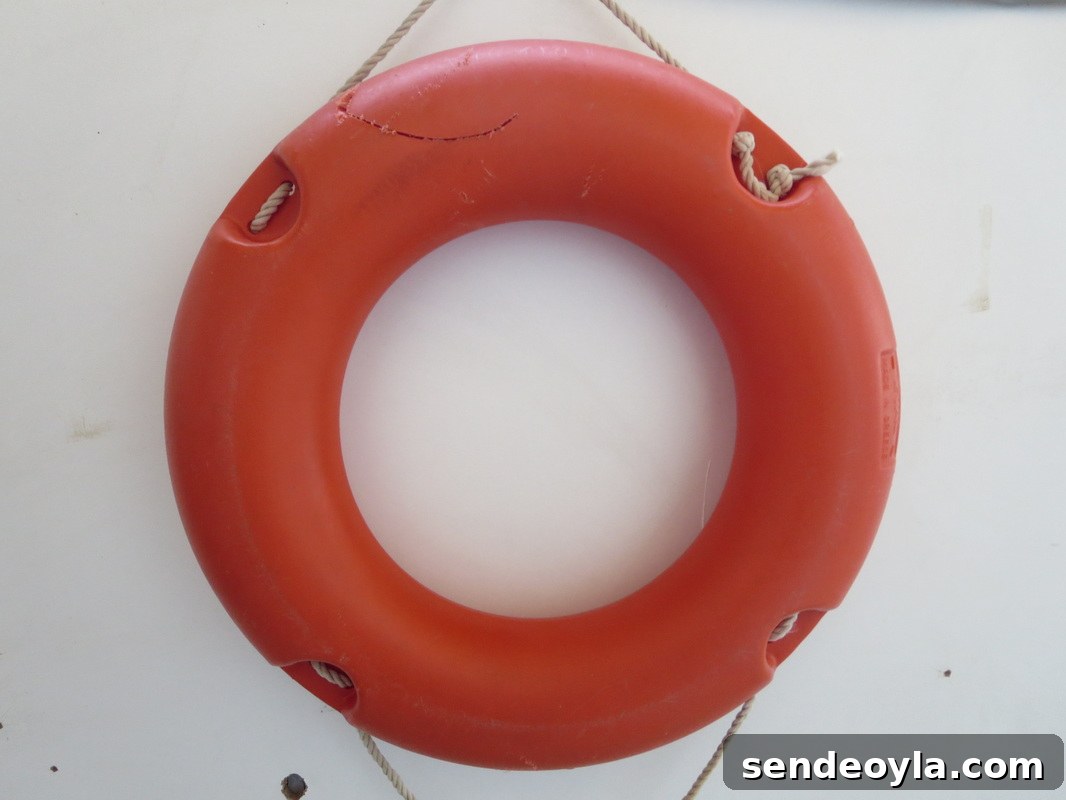
My husband, an avid fisherman, picked it up and inspected the damage. The lifebuoy had a cracked section and missing material that made it unsafe for use on his boat. Still, the structure was largely intact and looked repairable with some basic fiberglass repair techniques.
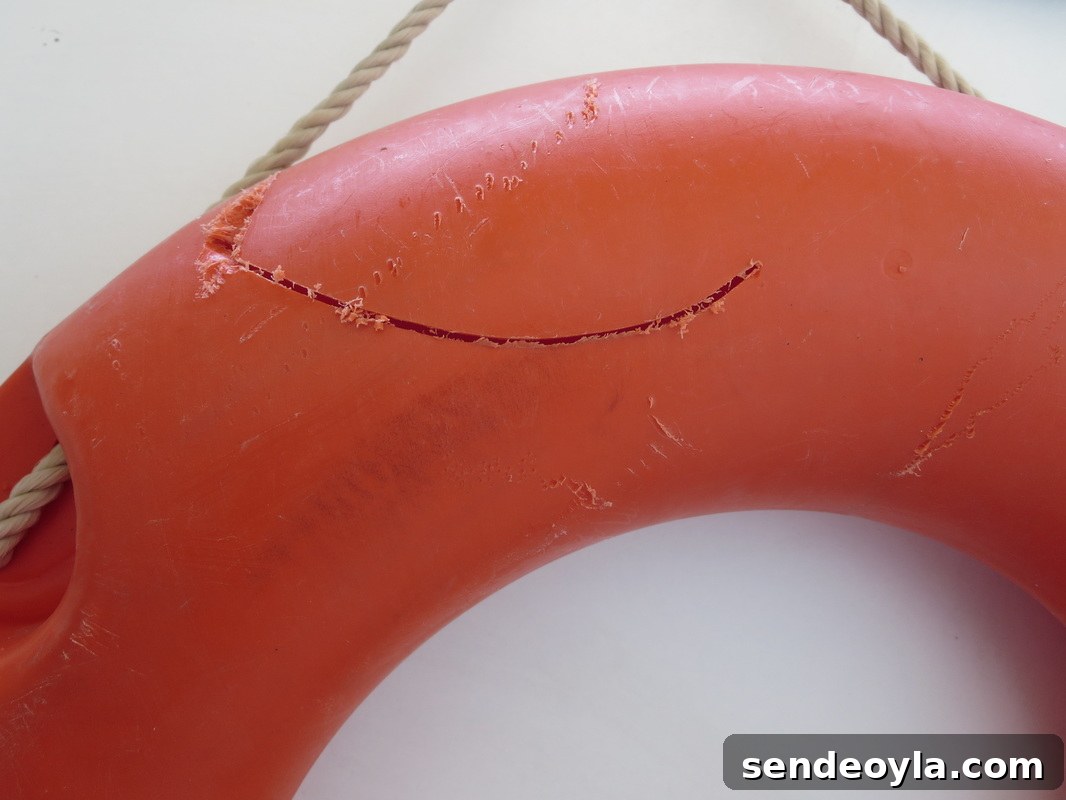
We aren’t intimidated by a little damage—especially as a couple who enjoys DIY projects—so we agreed to bring it home and restore it. The goal was twofold: repair the lifesaver as a functional spare for the boat, and give it a beachy, rustic finish so it could double as coastal wall decor.
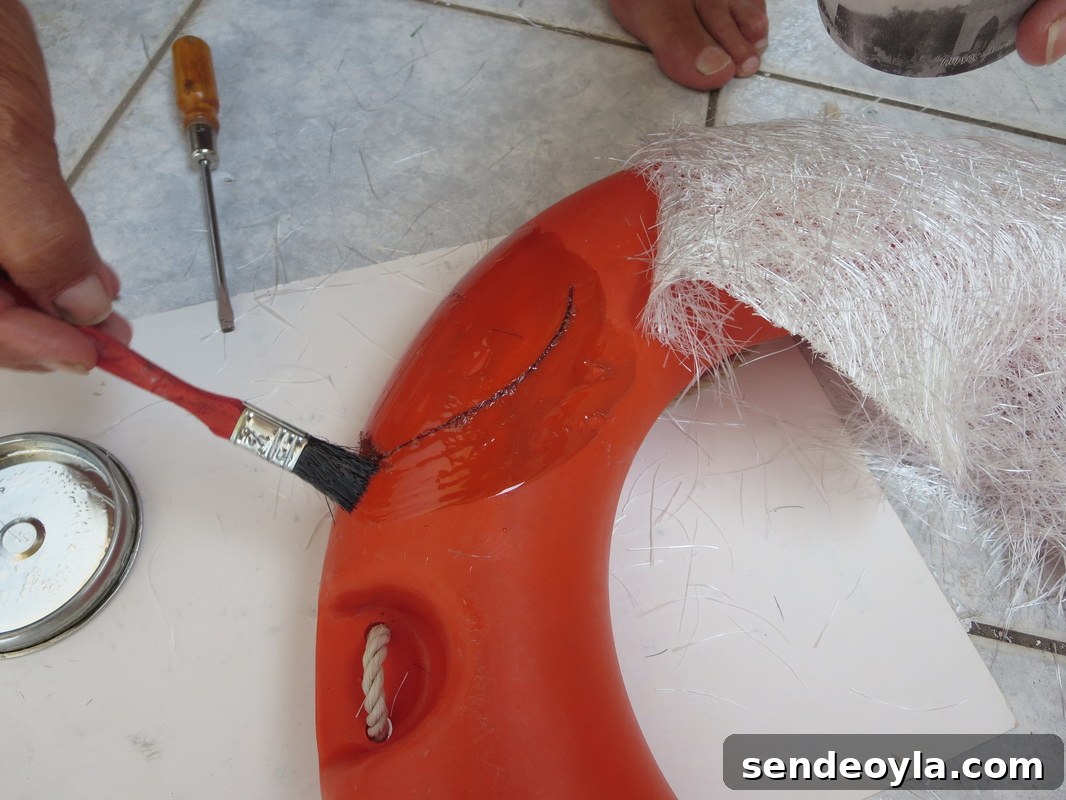
For the structural repair we used polyester resin and fiberglass cloth. He first applied polyester resin to the damaged area, laid a fiberglass sheet on top, then applied more resin so the cloth would fully saturate. These layers bonded together into a solid fiberglass patch that restored strength to the lifebuoy.
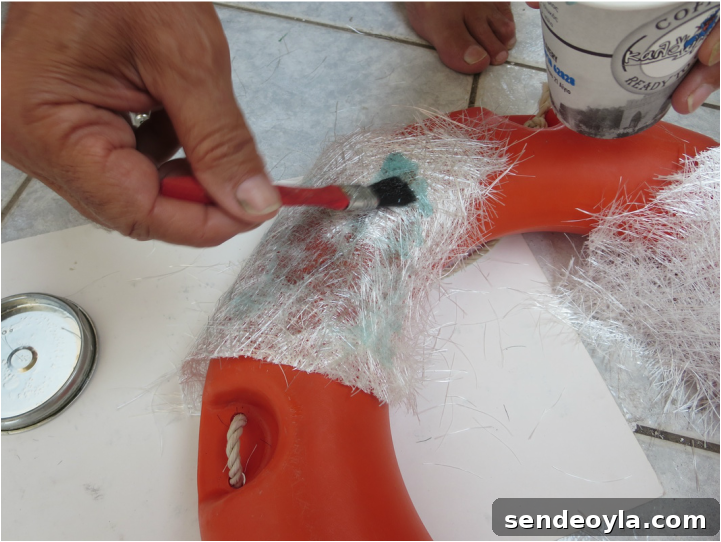
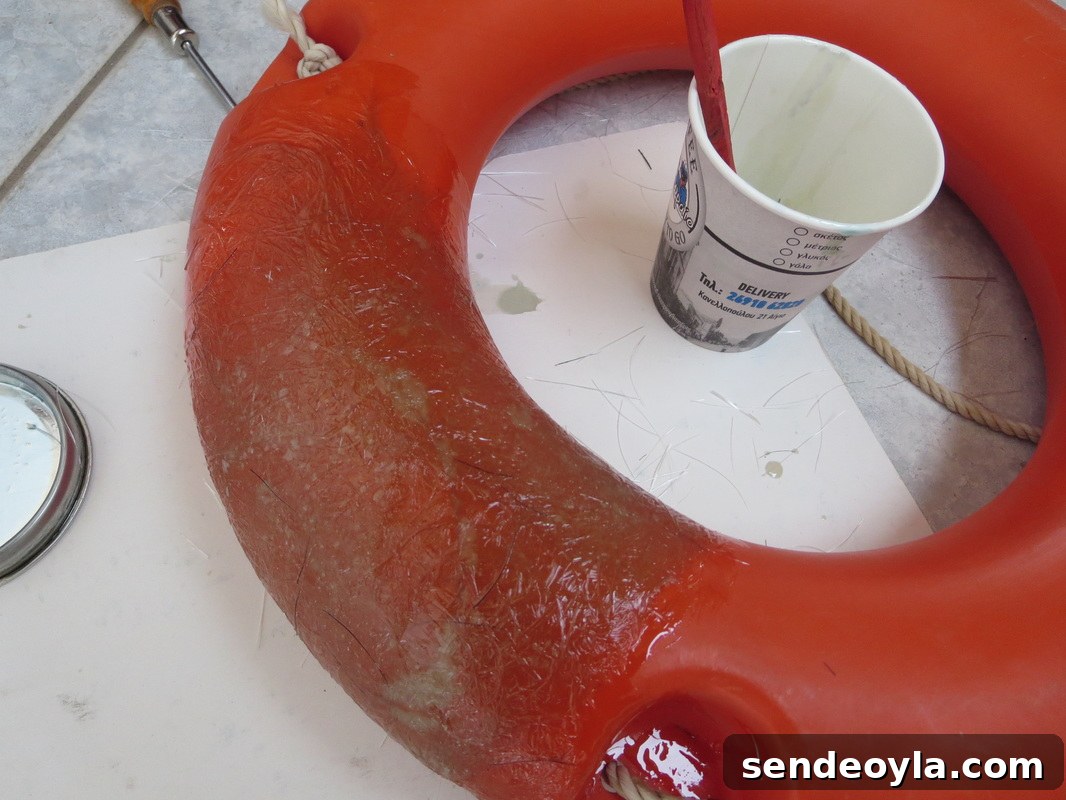
After applying three layers of fiberglass cloth and resin, we let the repair cure overnight. Once fully hardened, we sanded the patch to smooth sharp edges and blend the repair into the lifebuoy’s contours. The sanding step is important for safety and for achieving a more finished appearance.
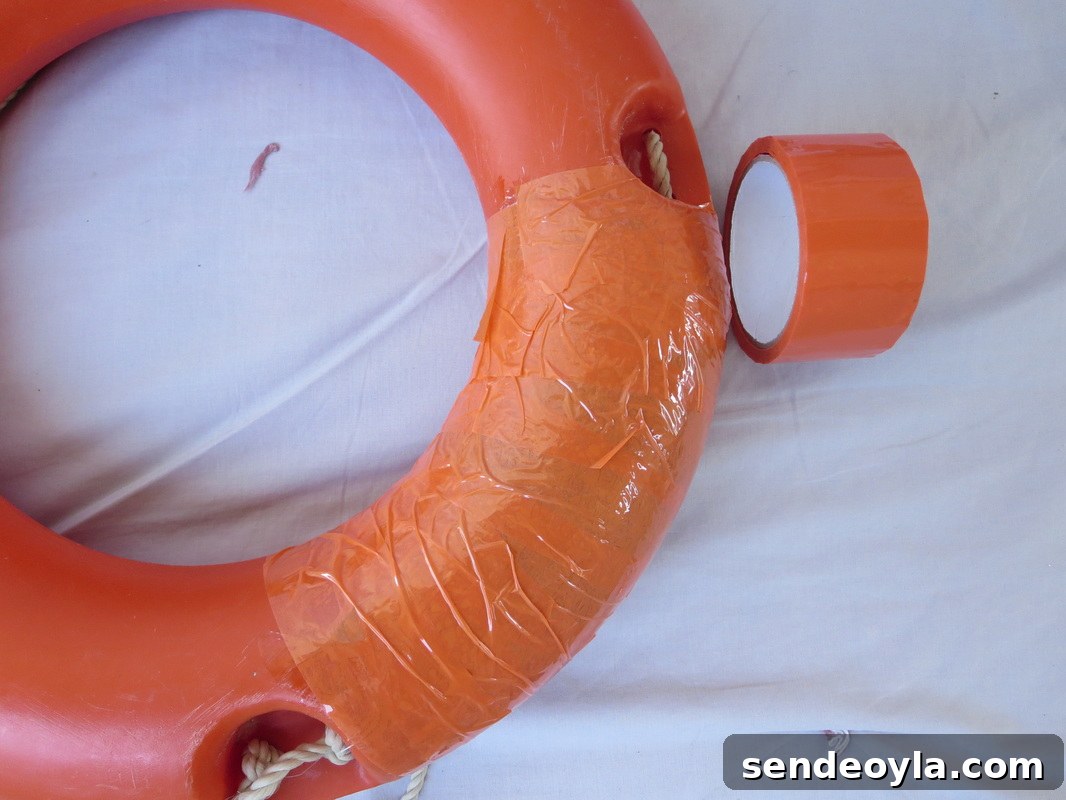
To protect the repair and make it safe to handle, we sealed the patched area with tape while we prepared the decorative finish. The tape creates a barrier between the rough fiberglass and any fabrics or hands that will touch the surface.
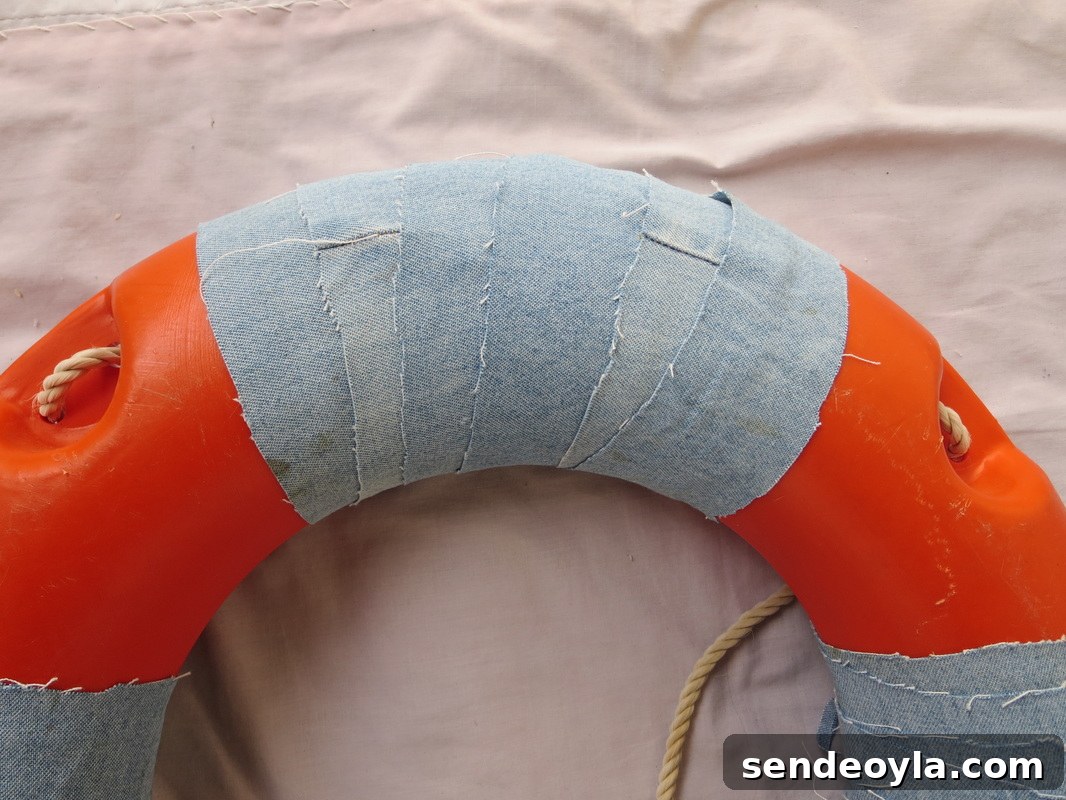
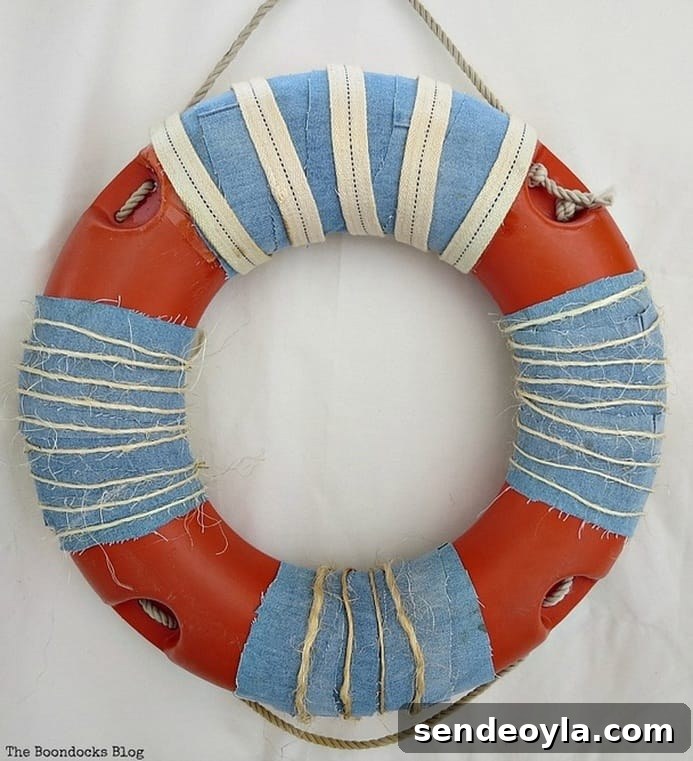
For the decorative transformation I wrapped the lifebuoy with strips of an old denim dress, then layered twine and ribbon for texture and a nautical accent. Reusing fabric and materials for this upcycle project gives the finished piece a rustic, beach-inspired vibe while being eco-friendly and budget-conscious.
Here is the finished piece—repaired, reinforced, and dressed up as a coastal wall decoration. It keeps its potential function as a spare lifesaver should my husband need it, but for now it hangs as a charming, reclaimed nautical accent in our home.
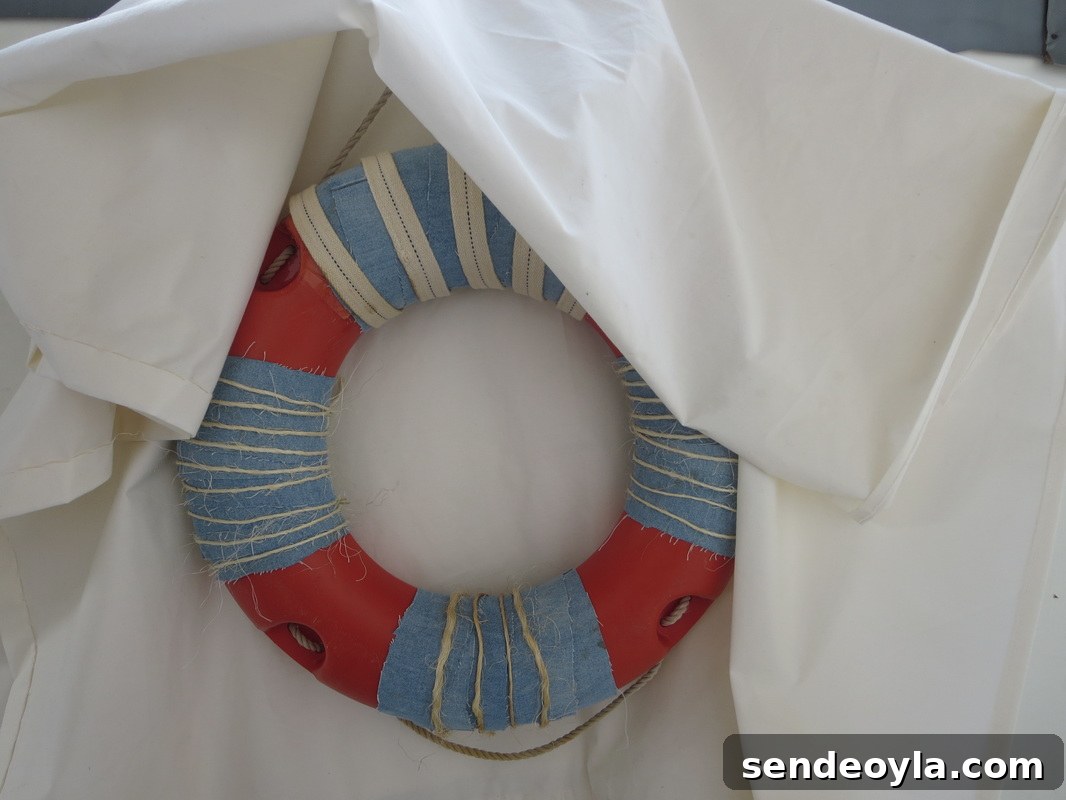
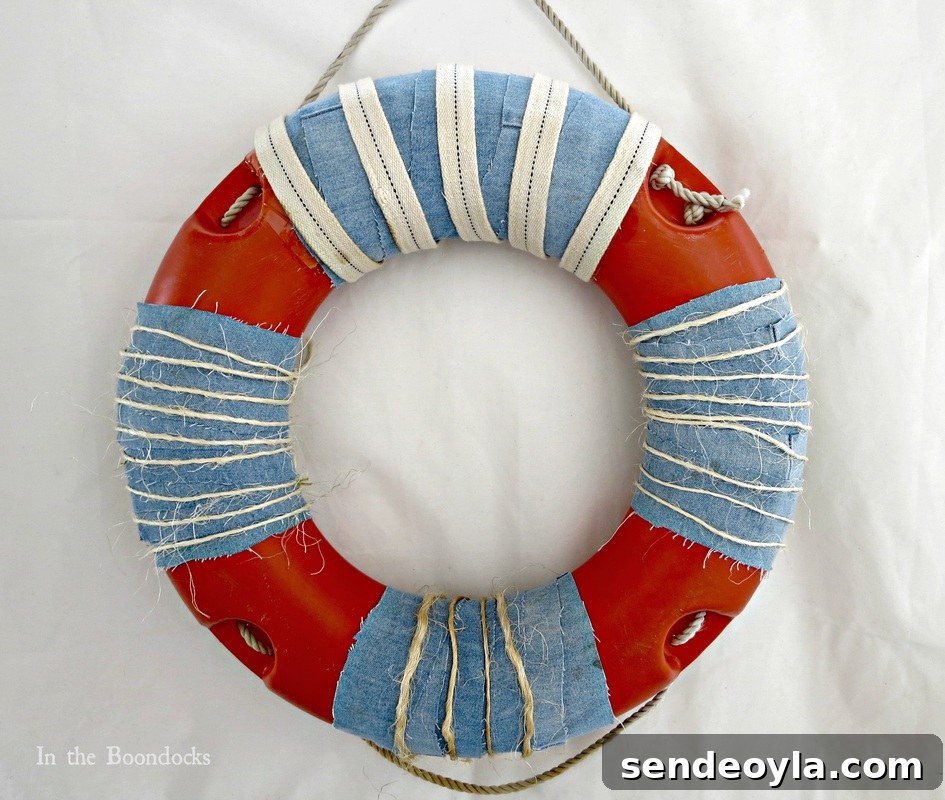
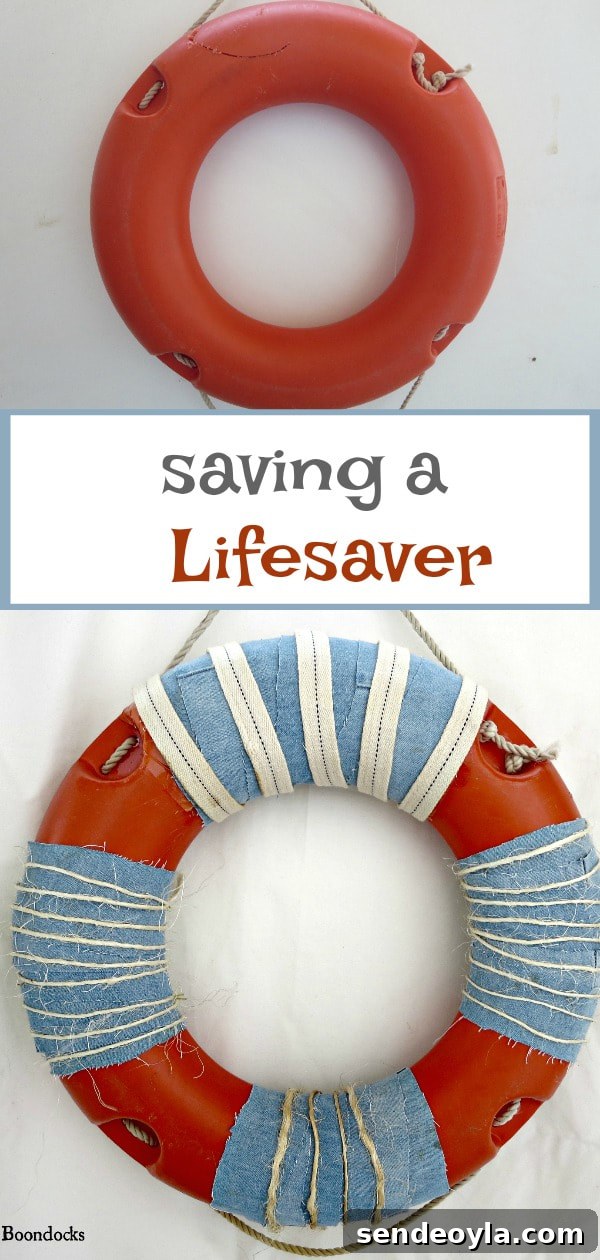
Before and after photos show the dramatic improvement: the damaged, discarded lifebuoy restored to both strength and style. The repair used common fiberglass techniques—resin, fiberglass cloth layers, curing, and sanding—followed by a decorative upcycle with denim, twine, and ribbon to achieve a relaxed coastal look.
We turned a lonely beach find into a practical spare for the boat and a distinctive piece of coastal decor. This upcycle demonstrates how basic fiberglass repair combined with creative finishing touches can give new life to discarded objects while adding personality to your home.
If you try a similar DIY lifesaver repair, remember to work in a well-ventilated area when handling resins, wear appropriate protective gear, and follow product instructions for mixing and curing. For a decorative finish, reclaimed textiles and natural rope create a timeless beachy look that fits coastal and rustic decor styles.
Related projects and inspirational DIY ideas include nautical lanterns and seaside art made from reclaimed materials—perfect companions for a coastal-themed collection of upcycled decor.