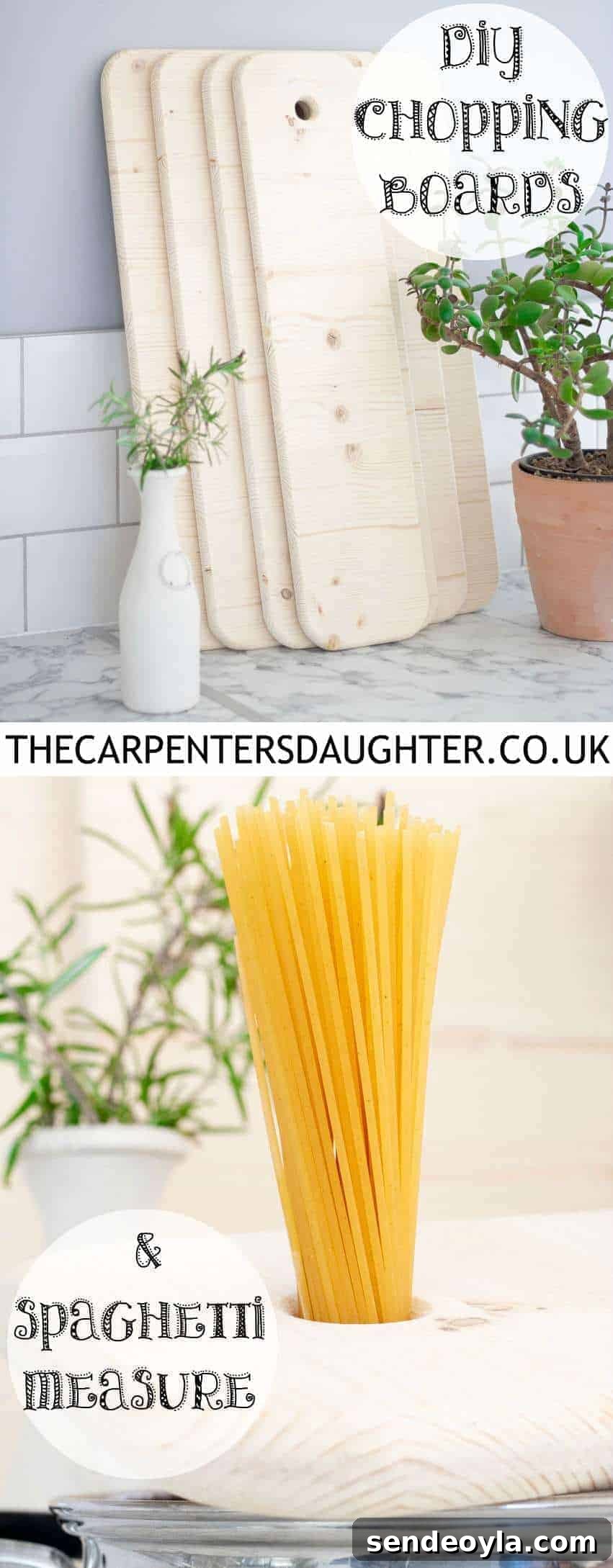
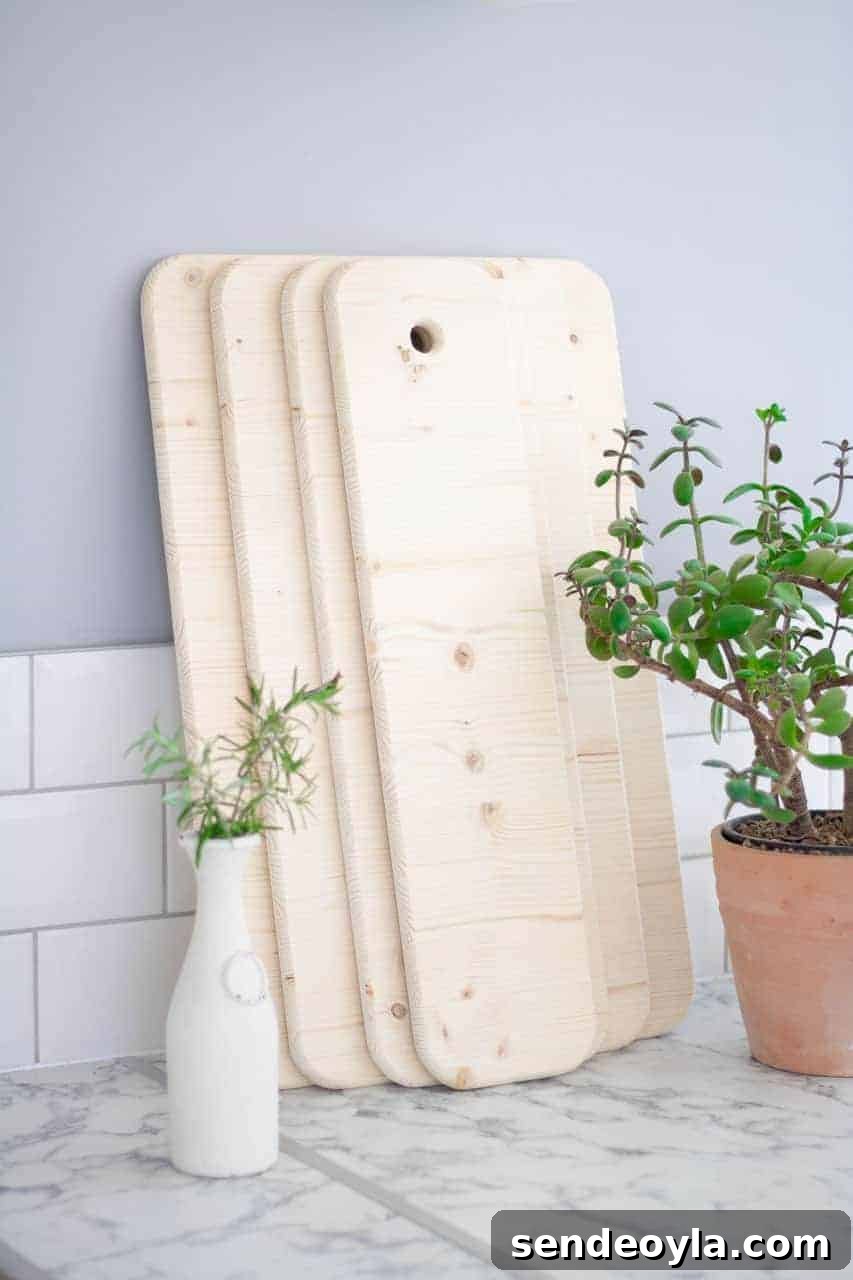
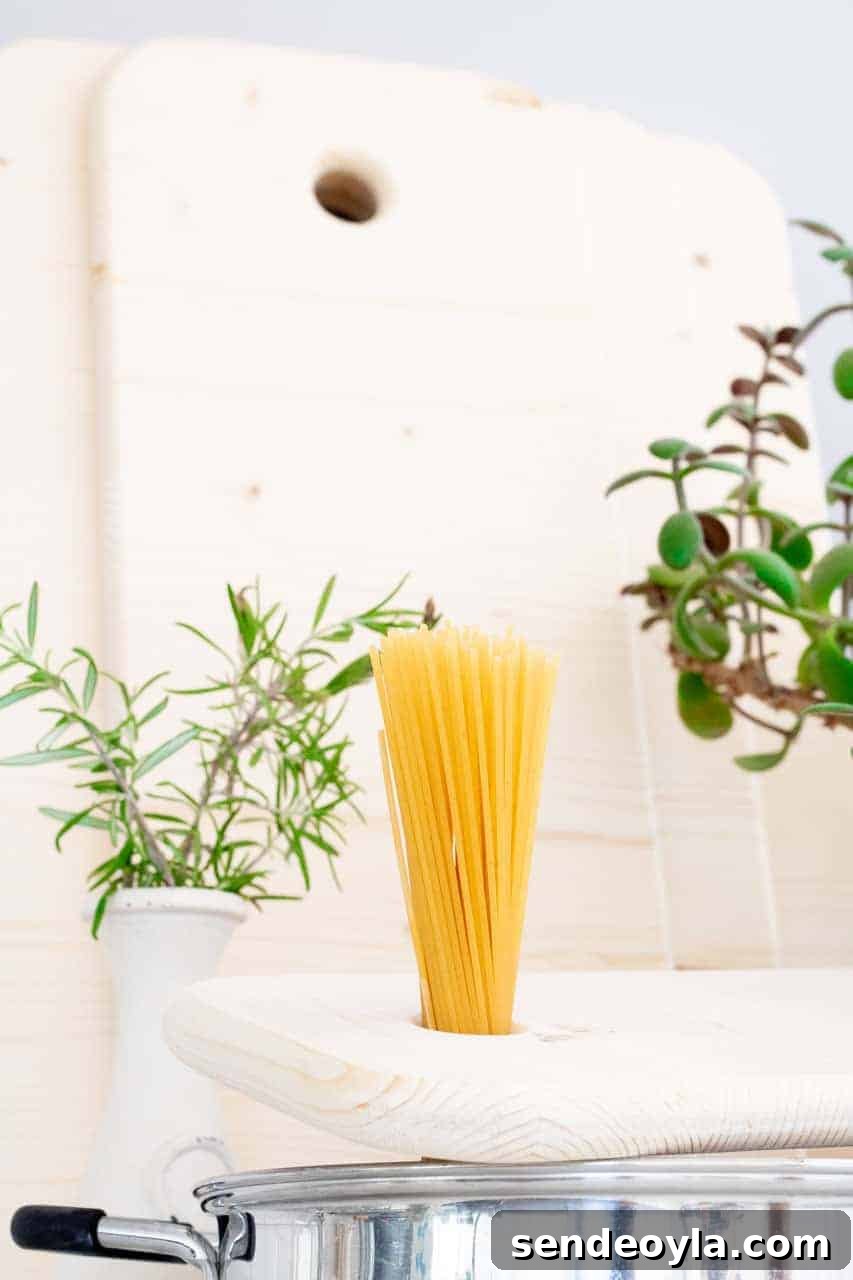
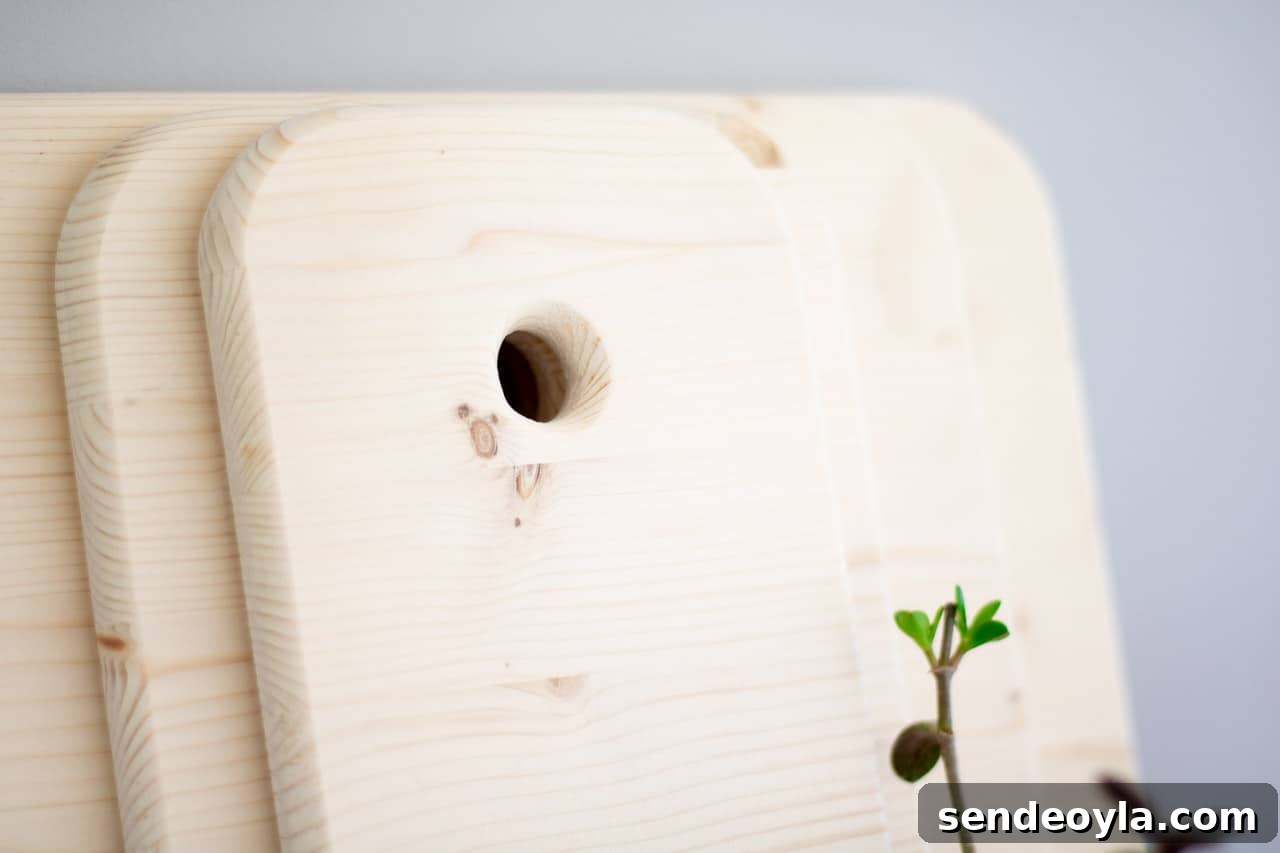
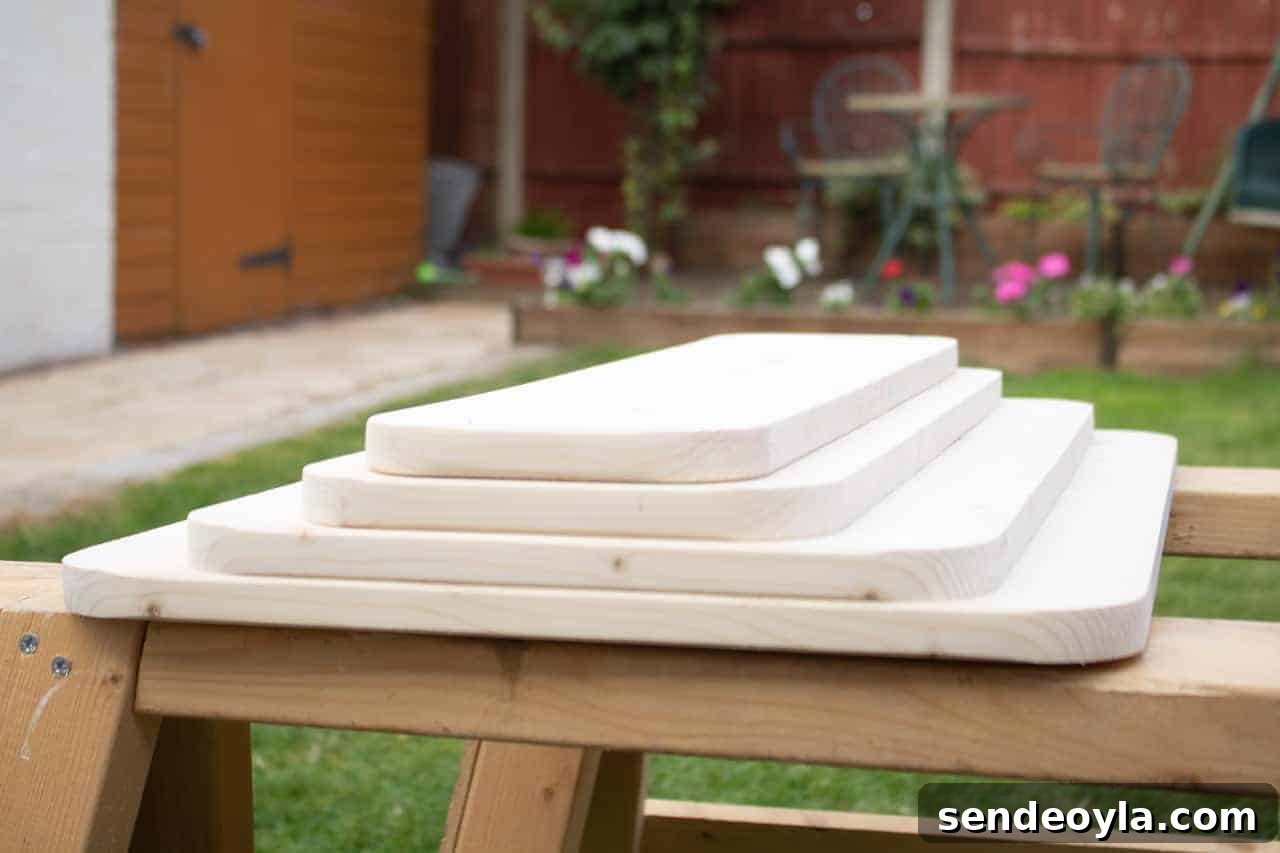
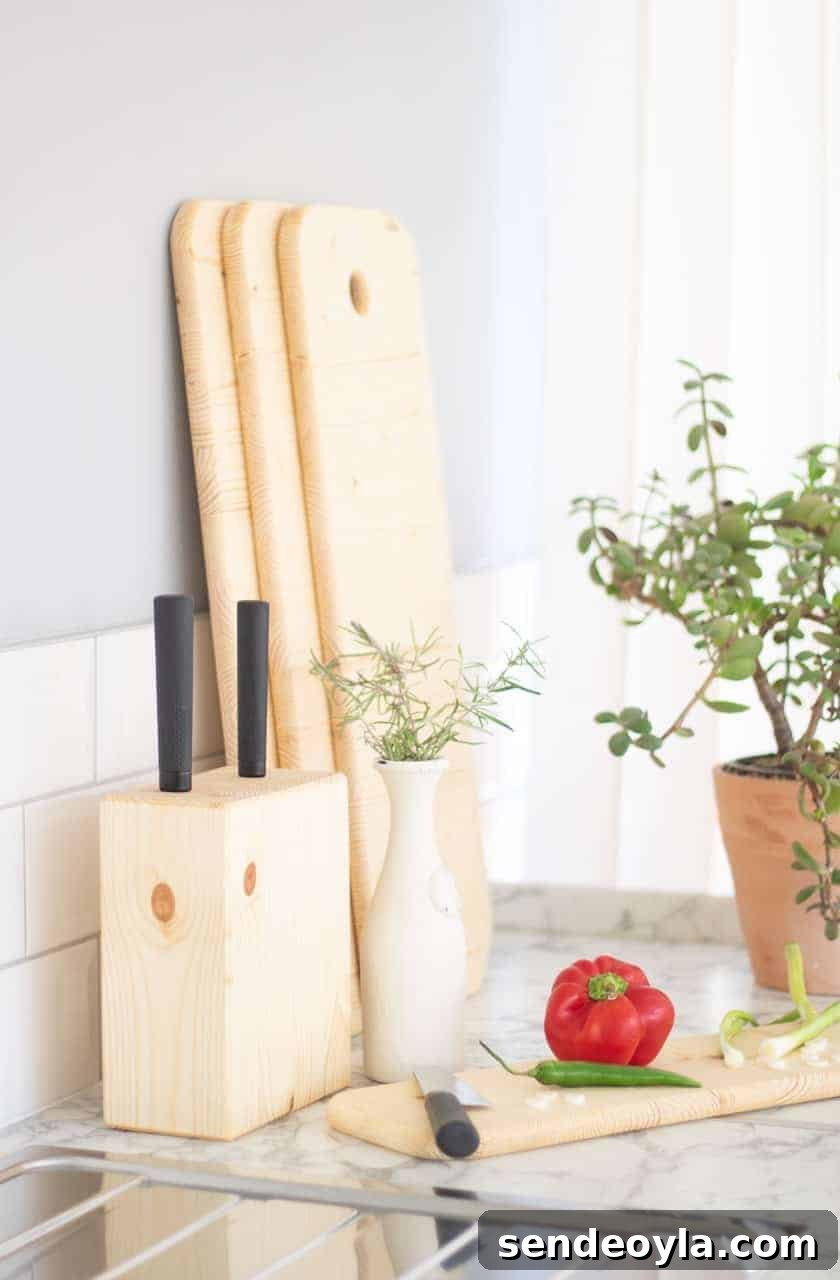
Learn how to make an easy DIY chopping board set from affordable pine timber and basic power tools. Design the boards to suit your kitchen — the handle doubles as a practical spaghetti measure for single to four portions.
This project includes a paid mention of Wickes, a retailer I regularly use for materials and tools. Thank you for your continued support.
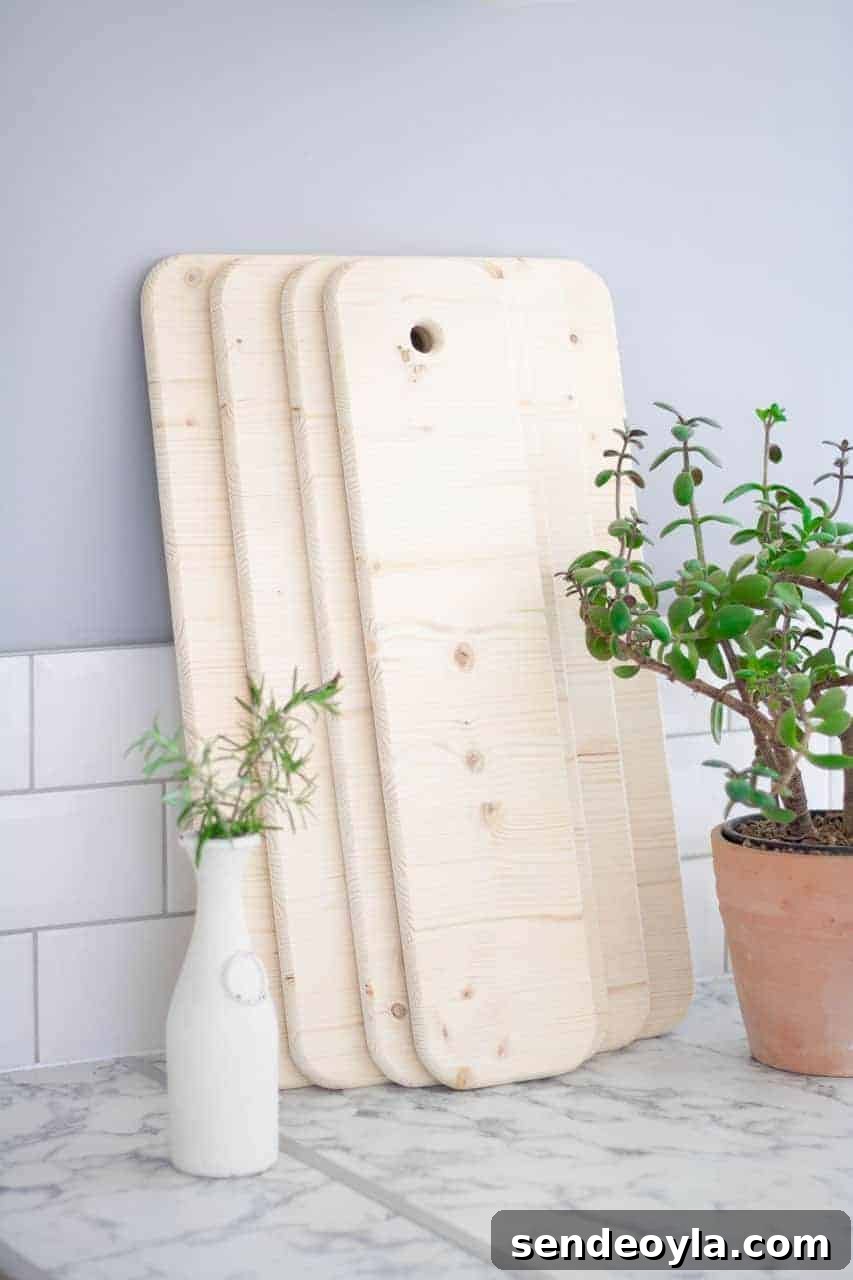
A chopping board set can be made in many shapes, sizes and finishes. Recently I’ve grown fond of larger, paddle-style boards: they provide more working surface, lend a modern feel to the kitchen, and can help disguise any worn areas on your worktop. Instead of spending hours hunting for the right style, making your own trio of matching boards is straightforward once you decide on the shape and a food-safe finish. Below I share how I made mine, step by step.
I bought materials from Wickes for this project—timberboard and basic supplies—and I often use their click-and-collect service to check stock and plan visits. Their how-to guides and videos are also useful if you need additional reference while working.
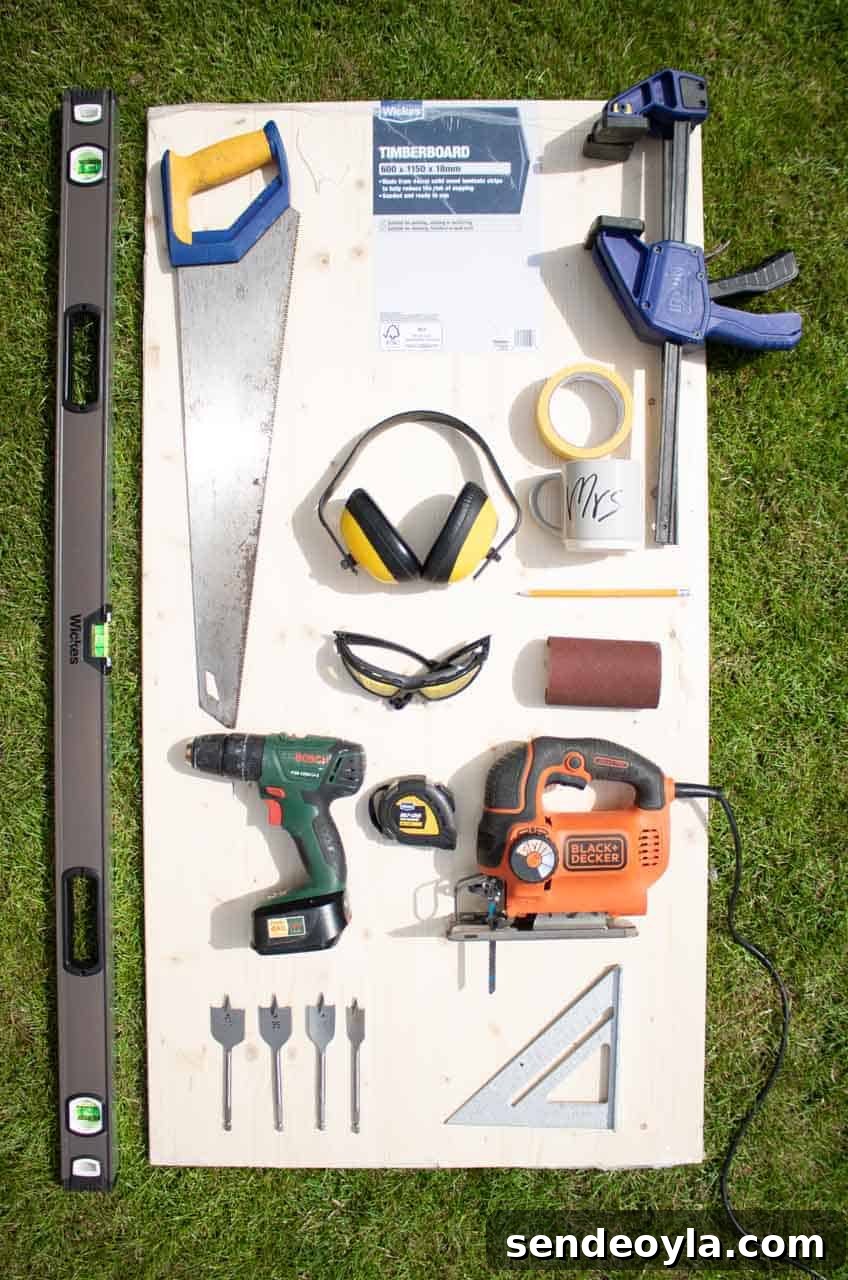
Things you’ll need to make a DIY chopping board set
- Timberboard wood (or multiple off-cuts glued together)
- Long spirit level (helps draw straight lines)
- Masking tape
- Pencil and tape measure
- Hand saw or circular saw
- Clamps
- Safety goggles and ear protection
- Mug or small bowl (for marking curves)
- Jigsaw
- Combination square or speed square
- Sander or sanding block with sandpaper
- Flat wood drill bits: 20mm, 28mm, 35mm and 38mm (or similar)
- Lint-free cloth
- Food-safe worktop oil and maintenance oil
- Old offcut of 18mm dowel (for sanding inside holes)
- Router with a rounding bit (for smooth edges)
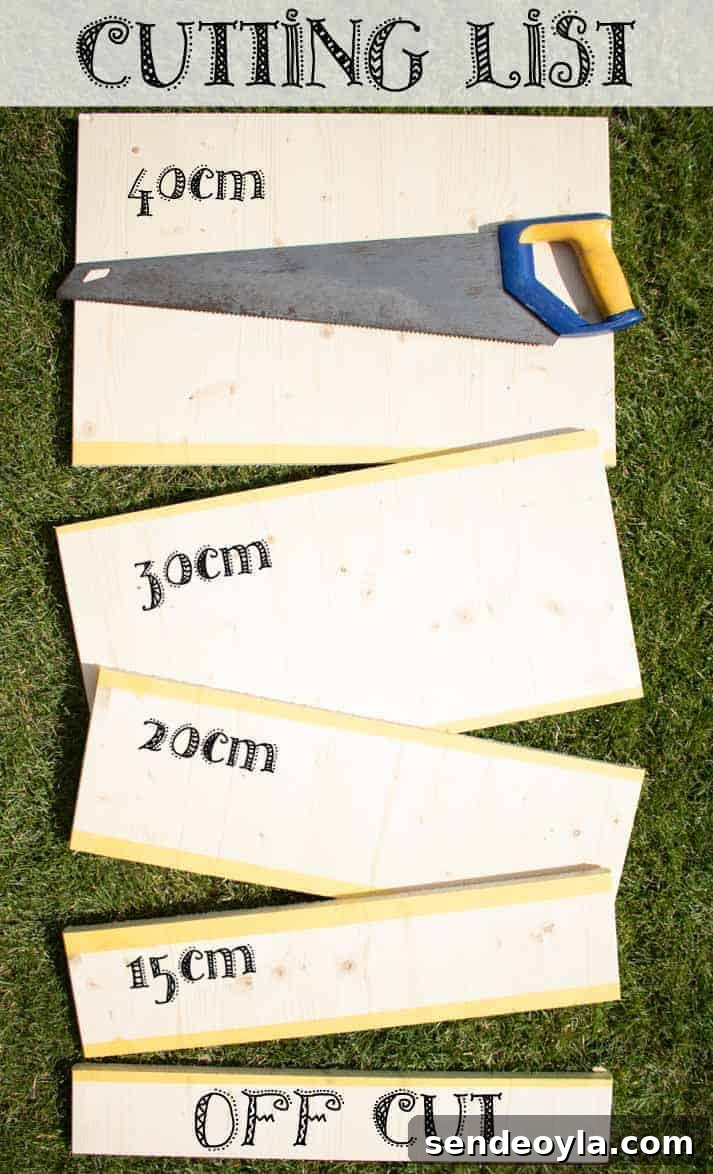
Chopping board set: cutting
Start by measuring and marking your timber according to your chosen sizes. The cutting list shown in my images is a guide — adjust measurements if you want different board shapes or handles.
Tips for accurate cutting:
- Apply masking tape to the cut line so pencil marks stand out and the wood splinters less.
- Use a 1m spirit level as a straight edge when drawing lines for long cuts.
- Clamp your timberboard to saw horses or a stable surface before cutting.
- If using a hand saw, aim the cut slightly downward for straighter results.
- If using a circular saw, use the spirit level as a guide and always wear safety gear.
How to shape the boards
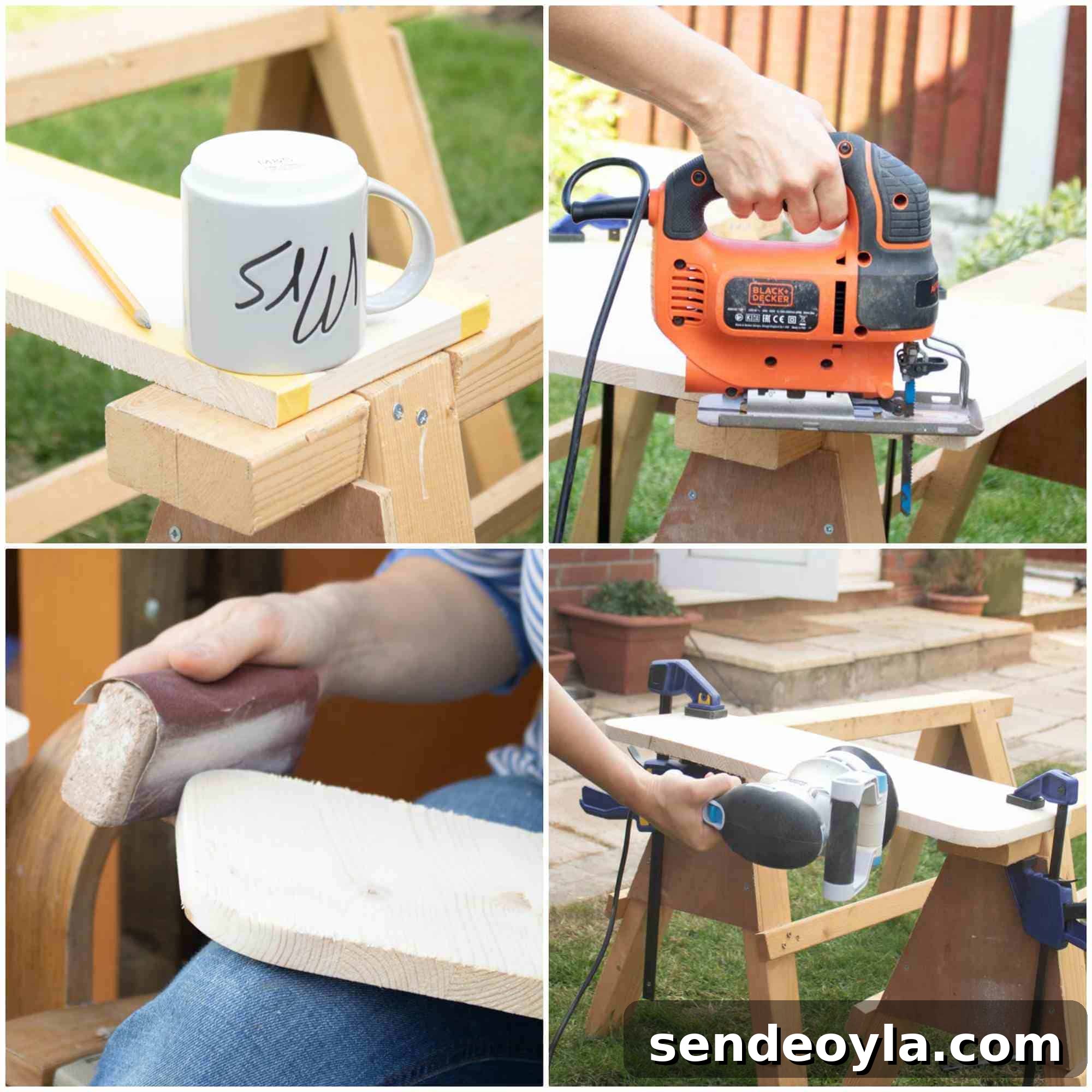
After cutting the boards to size, create gentle rounded corners by holding a mug or similar object in each corner and tracing around it to form a curve. Cut the corners with a jigsaw using an appropriate wood blade, then sand the edges smooth.
Turning the handle into a spaghetti measure
To make the handle measure portions of dry spaghetti, I measured my typical 80g serving, calculated the approximate circumferences and then the diameters. I rounded to the nearest flat wood drill bit sizes available. The measurements I used were:
- 20mm = 1 portion (≈ 80g)
- 28mm = 2 portions (≈ 160g)
- 35mm = 3 portions (≈ 240g)
- 38mm = 4 portions (≈ 320g)
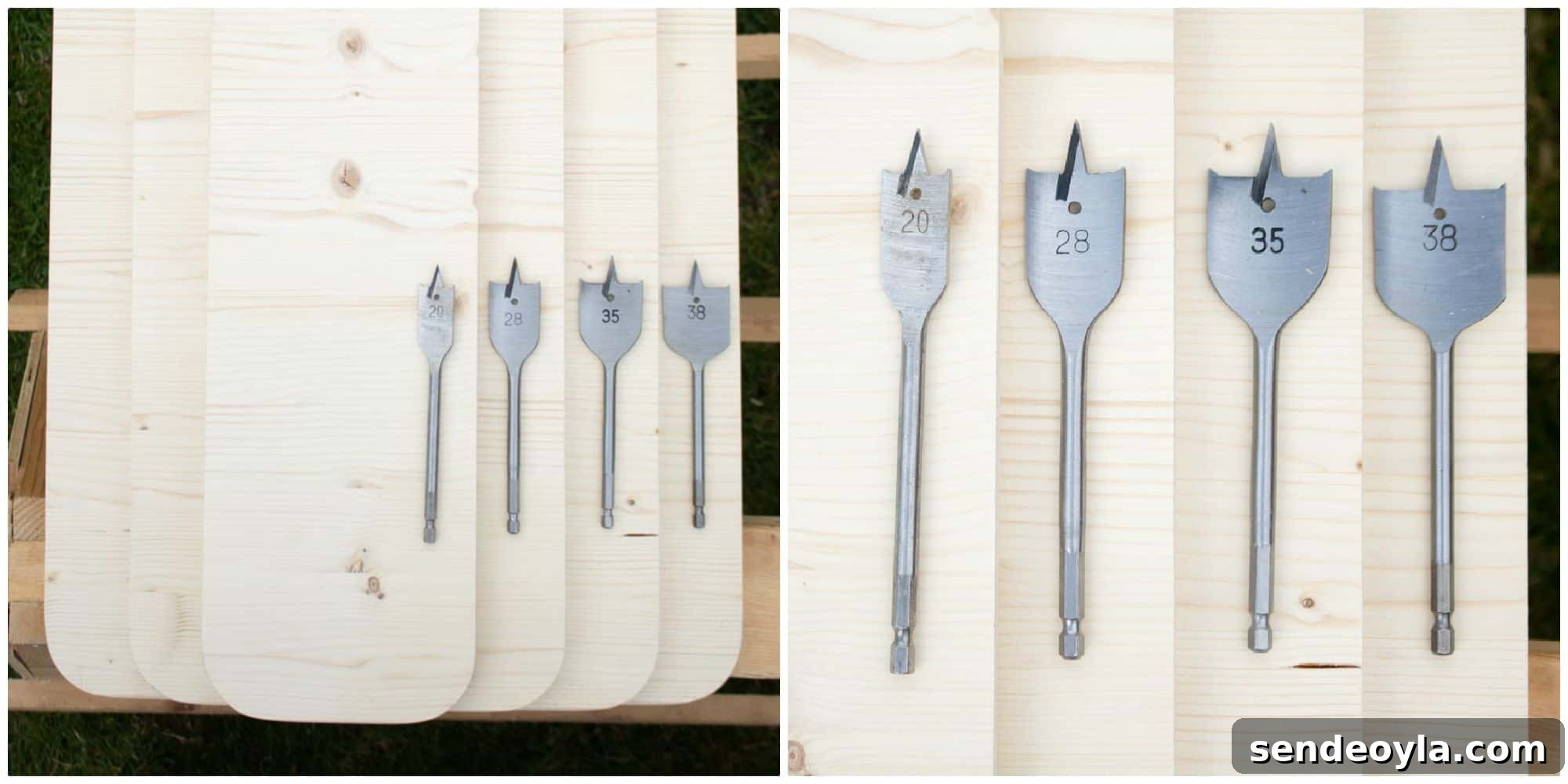
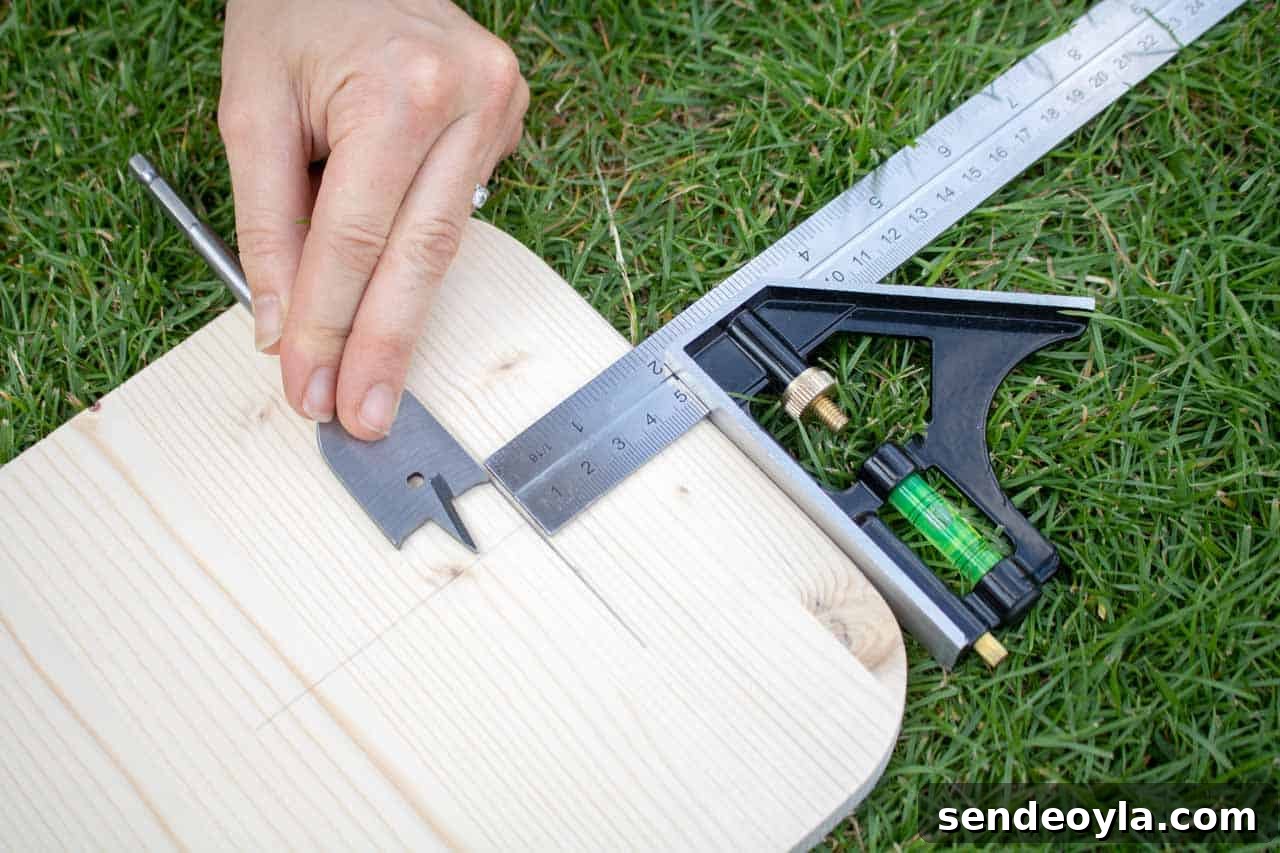
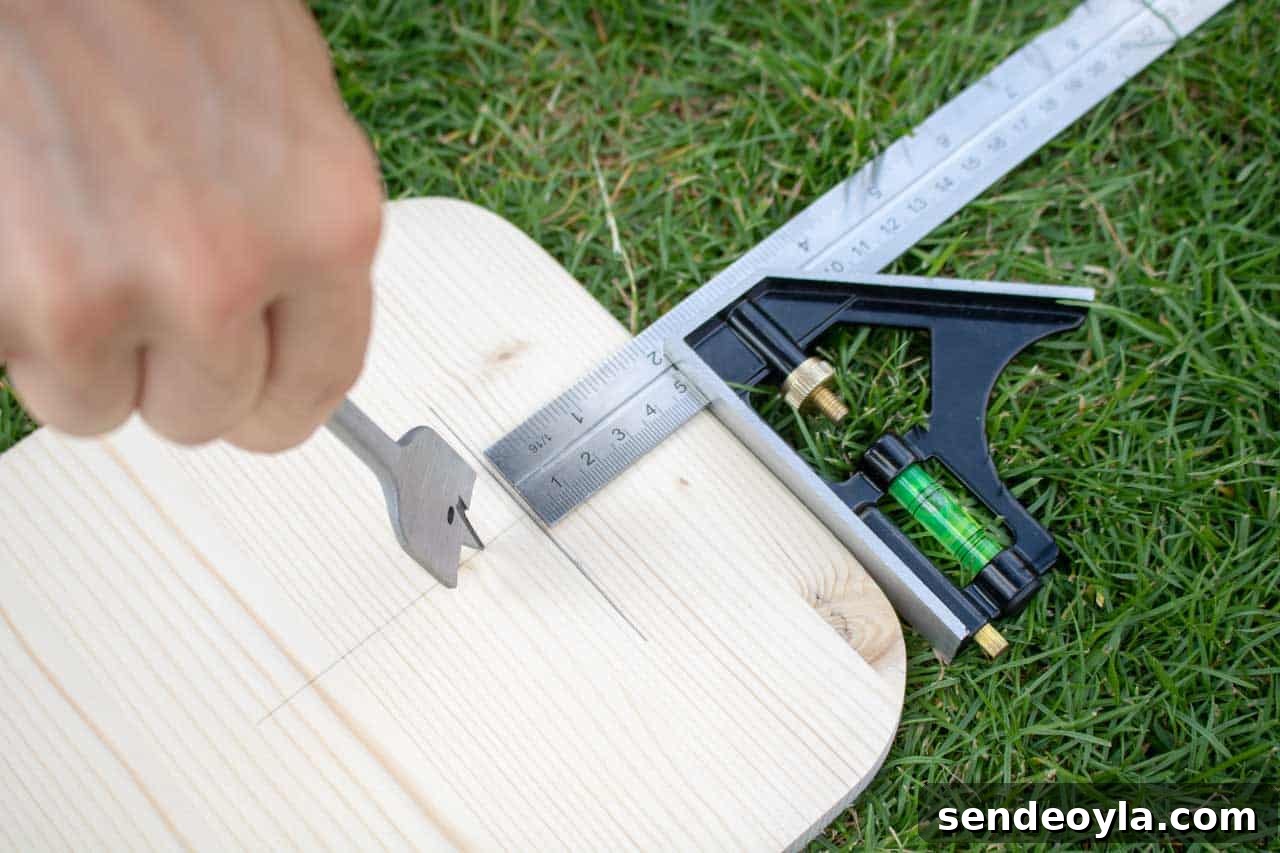
To mark the hole centers: draw a center line lengthwise with a speed square, mark a small 2-inch guideline at the top of the handle area, and then position the appropriate flat wood drill bit along that line. Pierce the wood lightly to mark the drilling point before drilling the final hole.
Clamp the board over scrap timber and drill carefully. To reduce tear-out when the bit breaks through, stop halfway and finish drilling from the opposite side so the fibers cut cleanly.
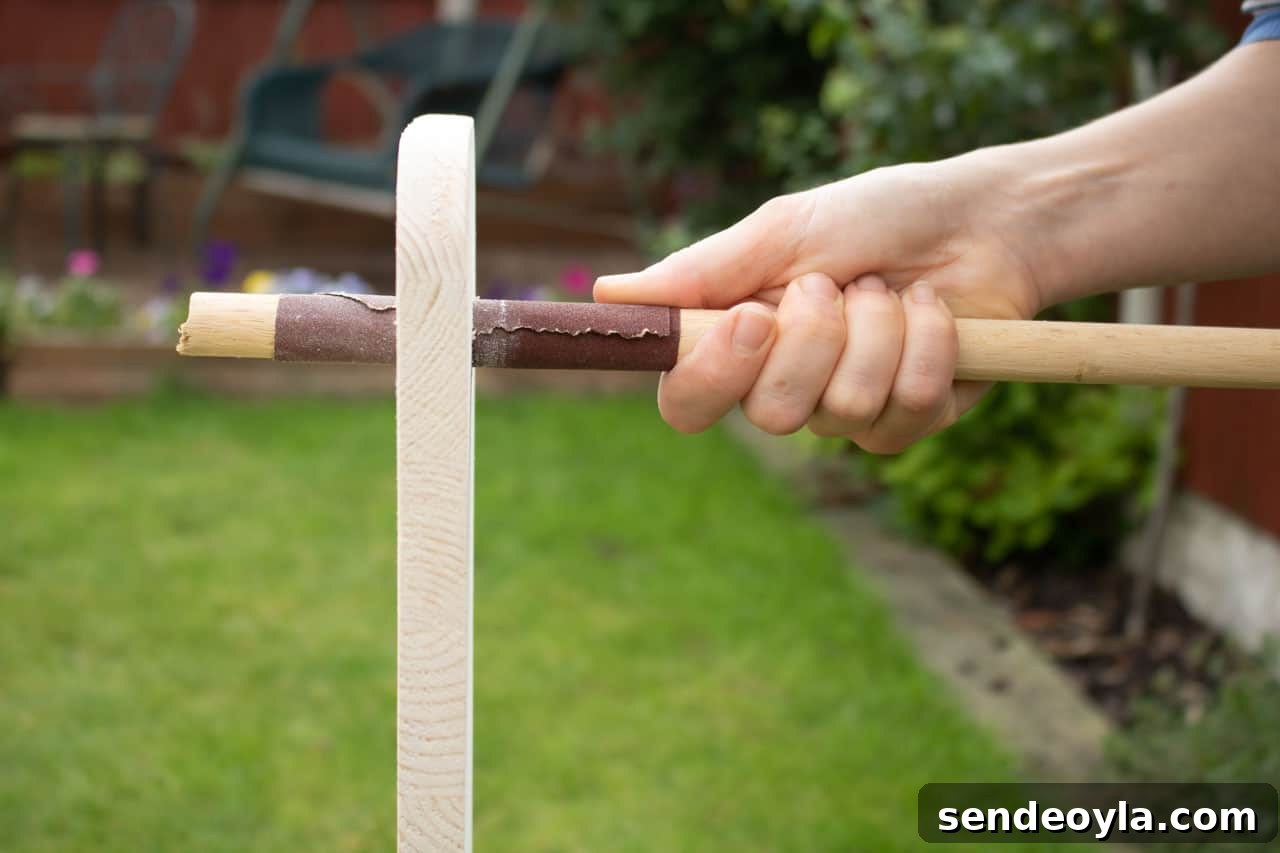
After drilling, wrap 120-grit sandpaper around an 18mm dowel offcut and twist it inside each hole to remove roughness. Sand all flat surfaces thoroughly to remove pencil marks and smooth edges.
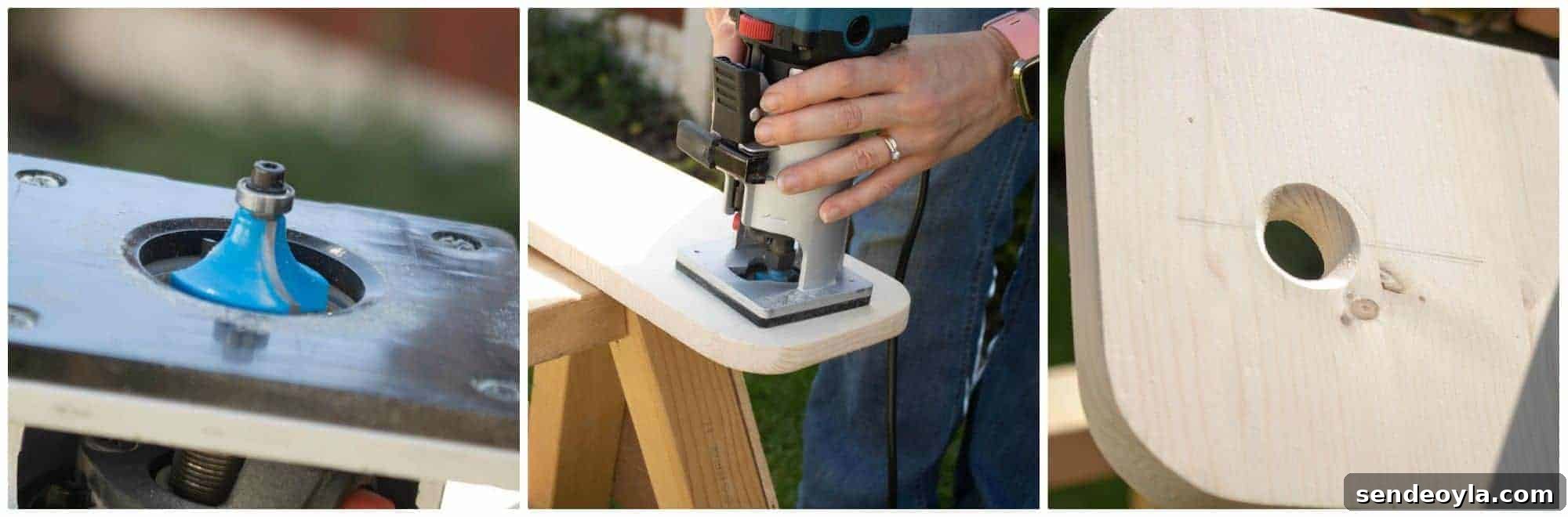
Use a 1/4-inch rounding bit in a palm router to chamfer and smooth each hole and then router the outer edges of the boards for a comfortable, finished profile. Make two or three light passes, working clockwise, then flip and repeat on the other side for even results.
Food-grade finishes: what to use
A key decision is choosing a food-safe finish. Many household oils and varnishes are not suitable for food contact, and some natural oils (like olive oil) can go rancid and leave unpleasant odours. For a long-lasting, food-safe surface I used a branded Worktop Oil Treatment in a natural shade. This provides water and stain resistance and helps protect soft, porous pine.
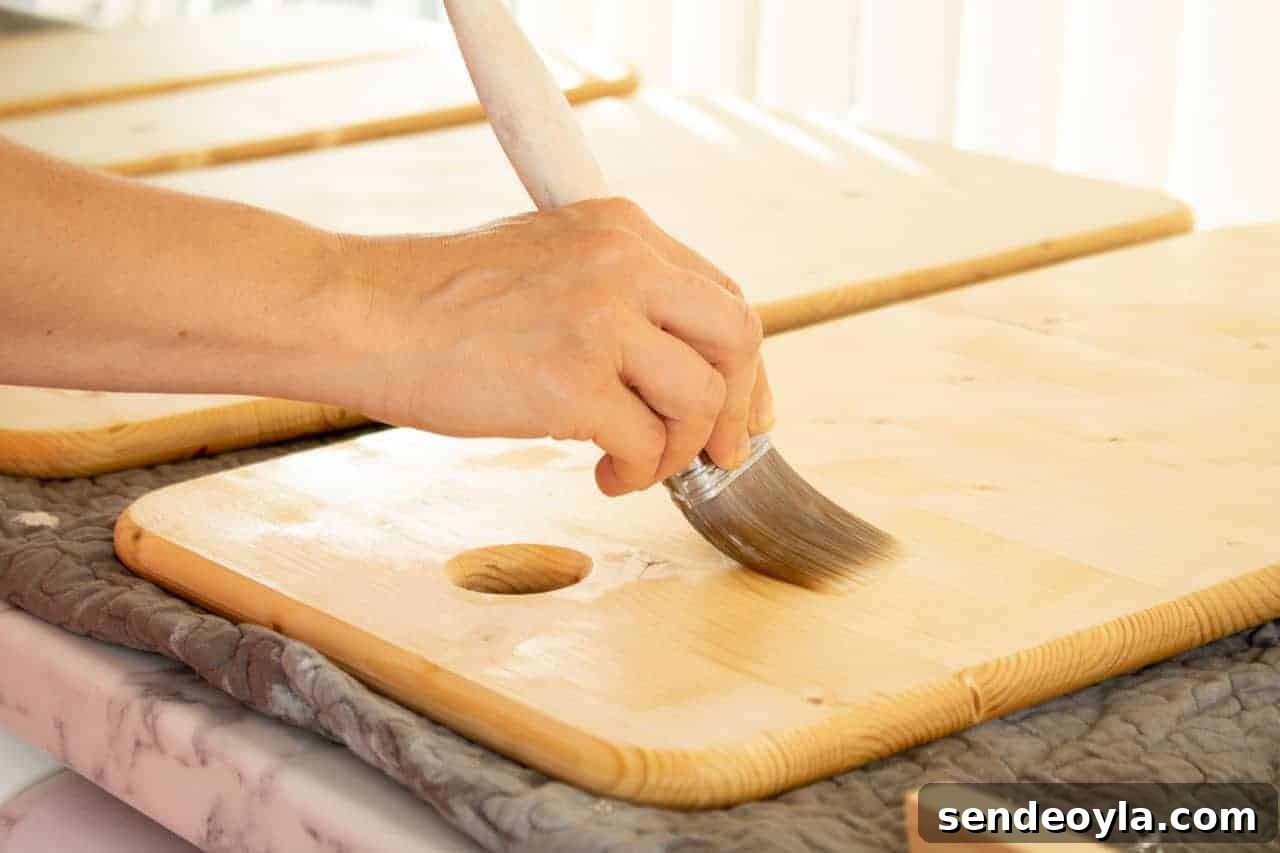
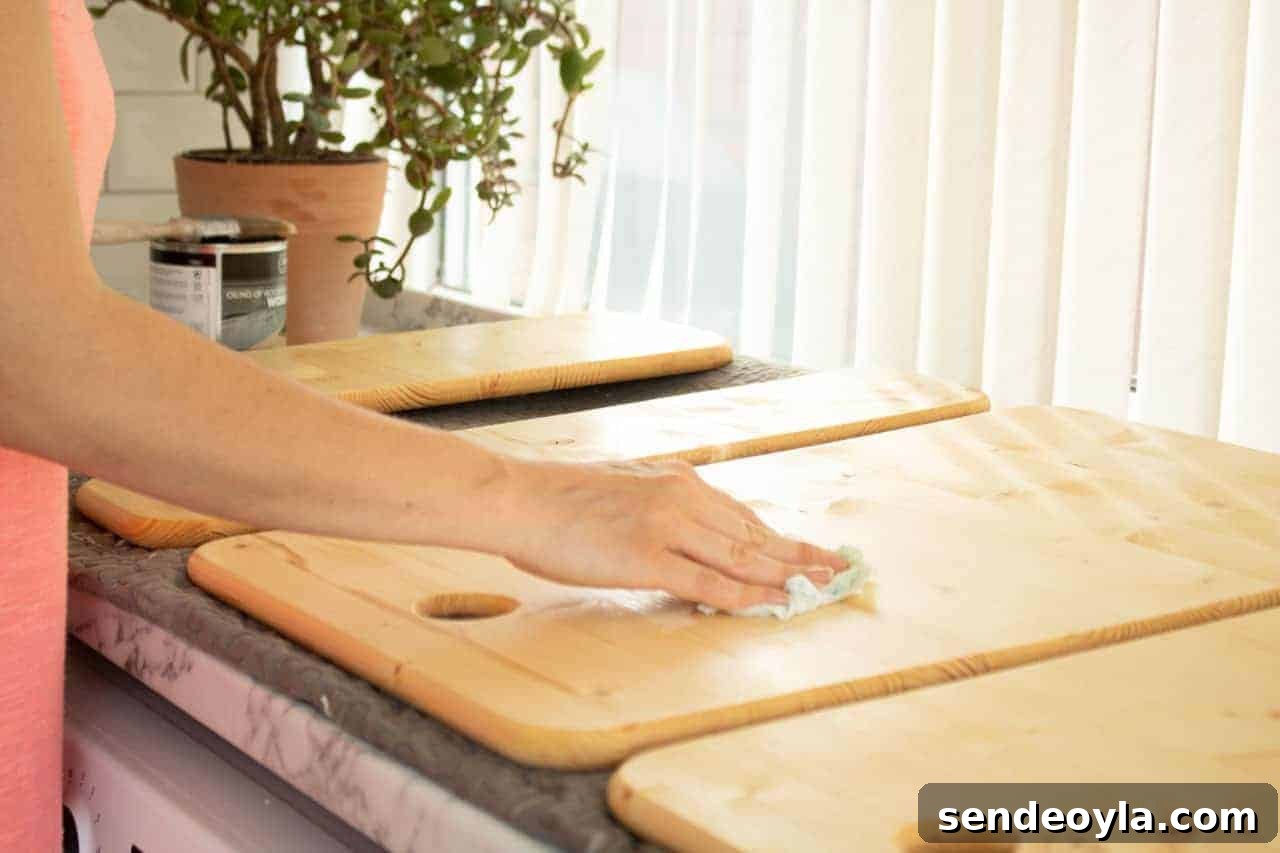
Apply the oil with a clean brush, leave it for 20 minutes, then wipe off excess with a lint-free cloth. Repeat after an hour for additional coats. I applied three coats since pine is porous. Allow the boards to cure — they are usable within 24 hours but will continue to harden over time.
These boards are intended for general food prep and styling rather than heavy-duty meat processing; I use a separate marble surface for raw meat. They work well for vegetable prep and food photography on my food blog.

Equipment
- Pencil and tape measure
- Clamps
- Jigsaw
- Sander or sanding block
- Sandpaper (120 grit and finer)
- Lint-free cloth
- Flat wood drill bits: 20mm, 28mm, 35mm, 38mm
- Router and rounding router bit
- Paint brush for oil
Ingredients (materials)
- Timberboard wood or off-cuts glued into a board
- Cardboard (to make templates)
- Food-grade worktop oil
Step-by-step instructions
- Cut your wood to the desired sizes following your cutting list or template.
- Use a mug to draw rounded corners, cut them with a jigsaw, and sand smooth.
- Mark a center line lengthwise and a 2-inch guideline at the top of the handle area for the spaghetti holes.
- Start with the smallest board and smallest drill bit, position it on the guideline, lift to pierce a starter hole, then clamp and drill. Flip the board to finish from the opposite side to prevent tear-out.
- Use a dowel wrapped in sandpaper to smooth inside the hole, then router the hole edges and outer board edges with a rounding bit.
- Sand away pencil marks and uneven spots, vacuum or brush off all dust.
- Apply food-grade worktop oil with a brush, allow 20 minutes, then wipe off excess. Repeat every hour for further coats; three coats are recommended for pine.
- Allow boards to cure; they will be usable within 24 hours.
Related projects you might like
- DIY tea towel ladder
- DIY knife block set
- Wood turning basics for beginners
Pin this DIY chopping board set tutorial for later