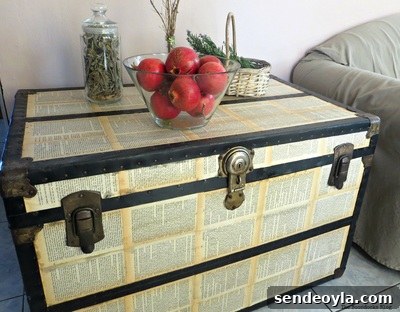
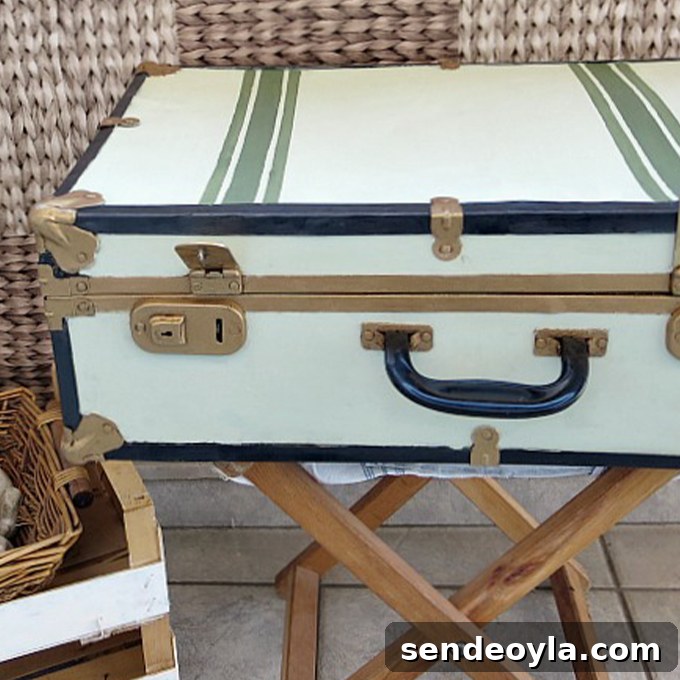
I restored an old, rusted vintage suitcase and turned it into a fresh, stylish piece of luggage. The makeover was straightforward — it didn’t need to be perfect, because the small imperfections add to the suitcase’s vintage character.
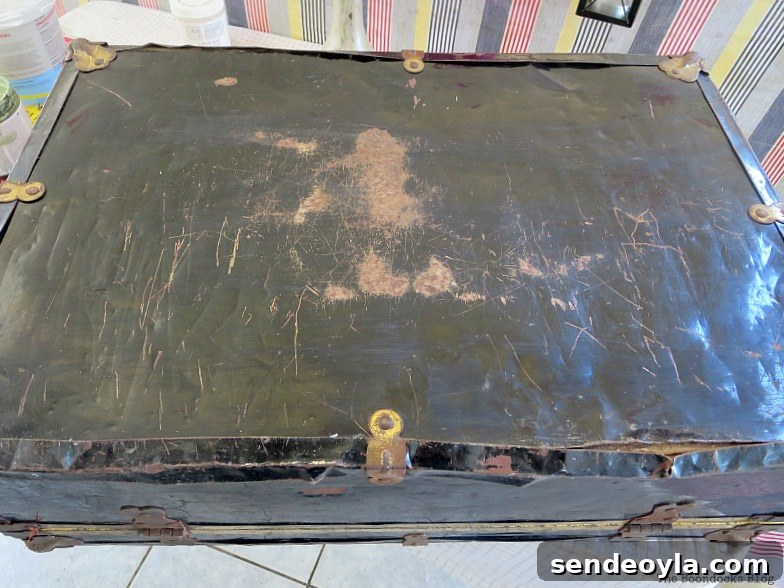
I found this suitcase in my basement, which seems to be a treasure trove of vintage oddities. It arrived in poor condition: scratched all over, with bent metal framework and tarnished hardware. It looked like a big job, but I love a good restoration challenge.
Disclosure: This post mentions products used during the project. Any product names are included for reference only.
How to Paint a Vintage Suitcase
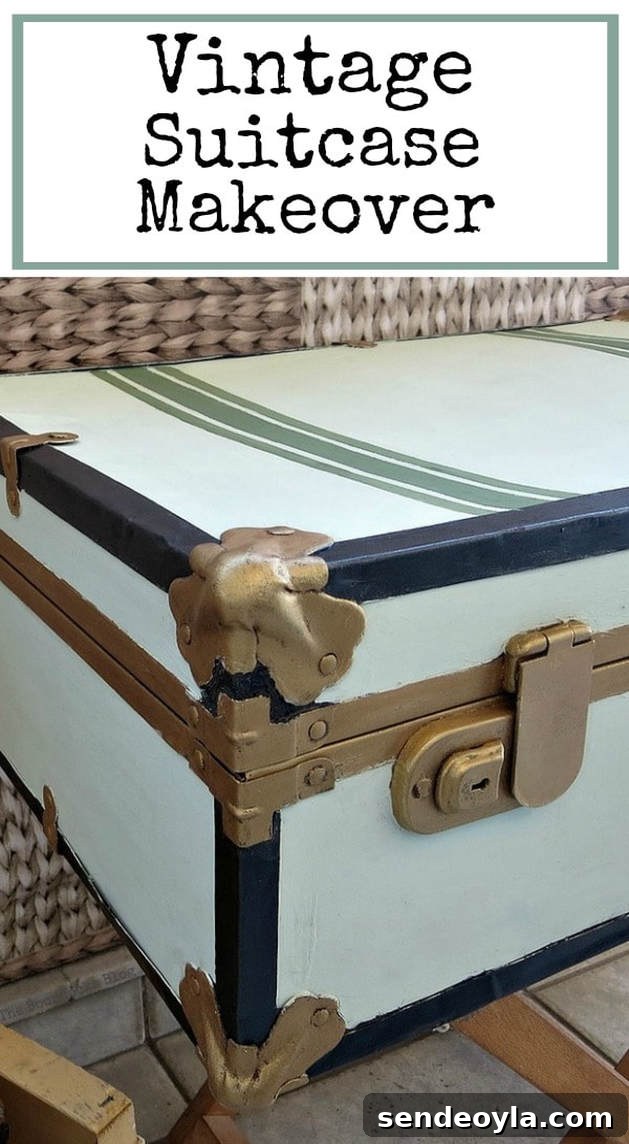
I began by painting the sides of the suitcase with chalk-style paint. I applied two coats and mixed a touch of white into the paint to create a soft olive shade, giving the piece an aged yet refined look. The chalky finish went on smoothly and helped achieve that worn, vintage feel without hiding the suitcase’s original character.
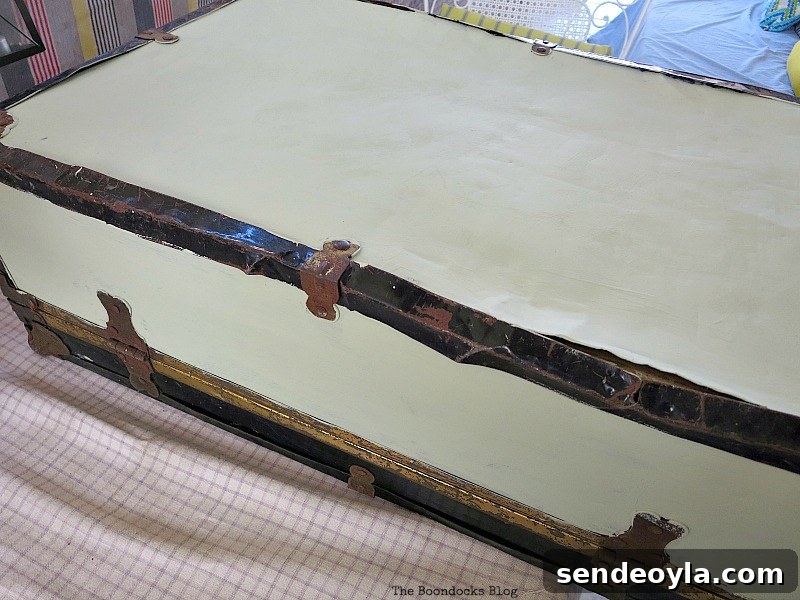
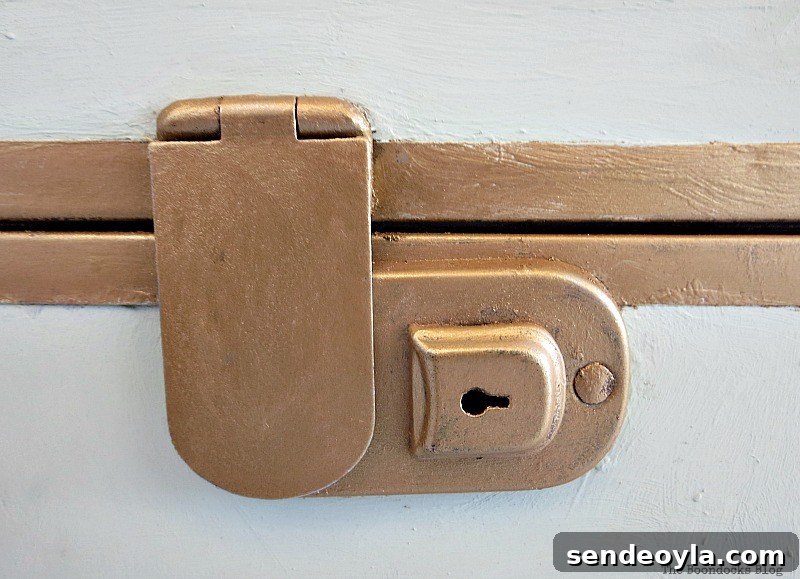
Next, I addressed the little corner bumpers, which had seen better days. I used a metallic finish in a burnished-brass tone to bring them back to life, buffing them to a subtle sheen so they would complement the softened green rather than overpower it. The same metallic treatment was applied to the inner frame pieces that latch together.
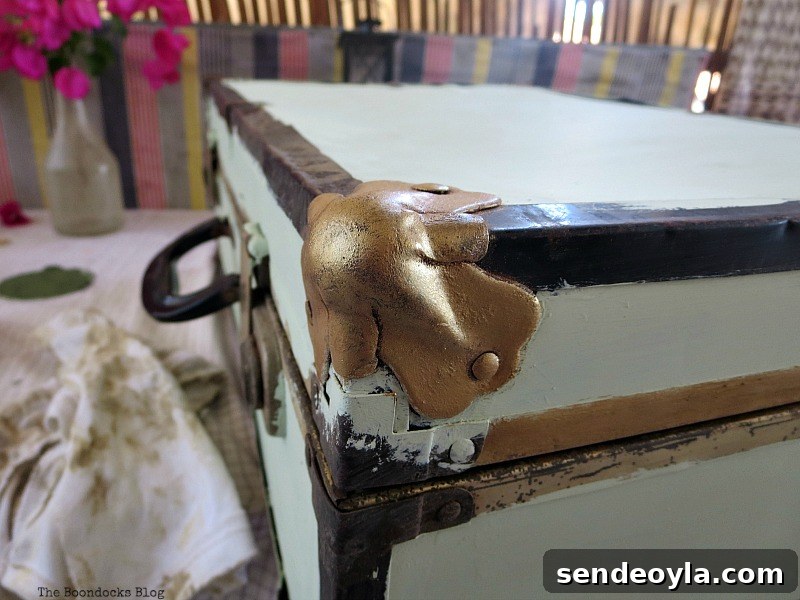
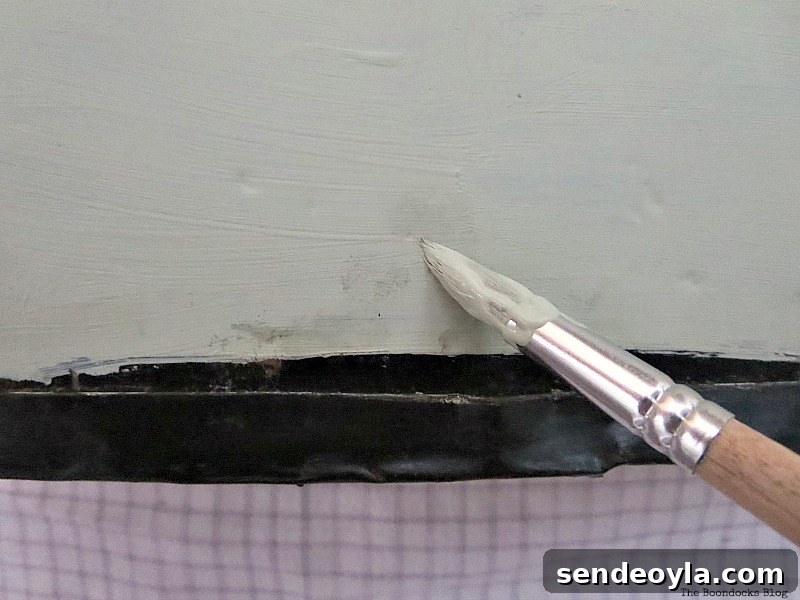
To keep lines clean along the edges, I pressed a strip of cardboard against the edge and painted along that guide. That simple trick helped me get straight, even lines without needing tape for every pass.
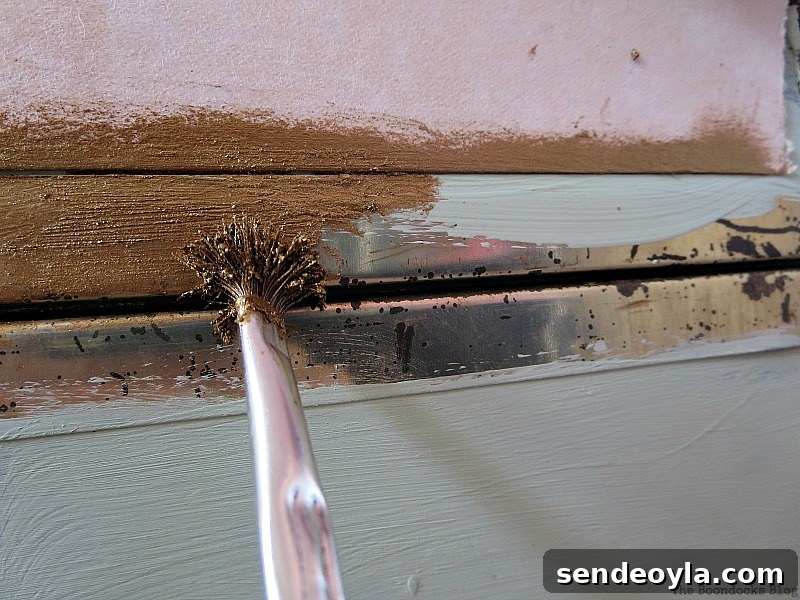
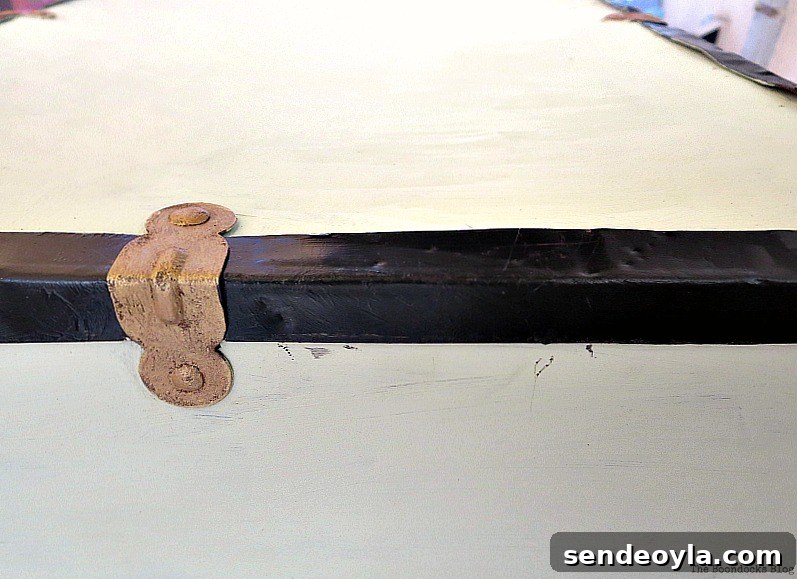
The edge clamps received the same burnished-brass finish so the hardware would read as a cohesive set. For the outer metal framework, I refreshed it with a deep black acrylic paint to provide contrast and a crisp outline to the softened body color.
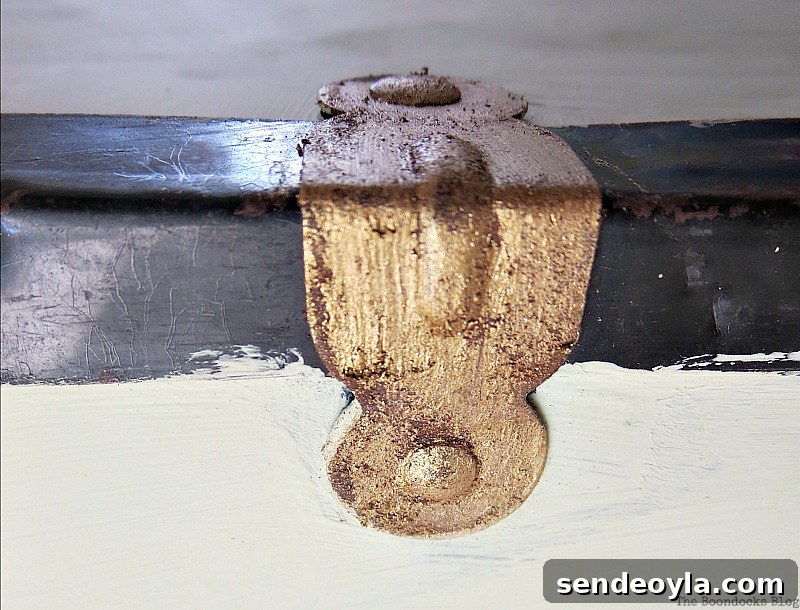
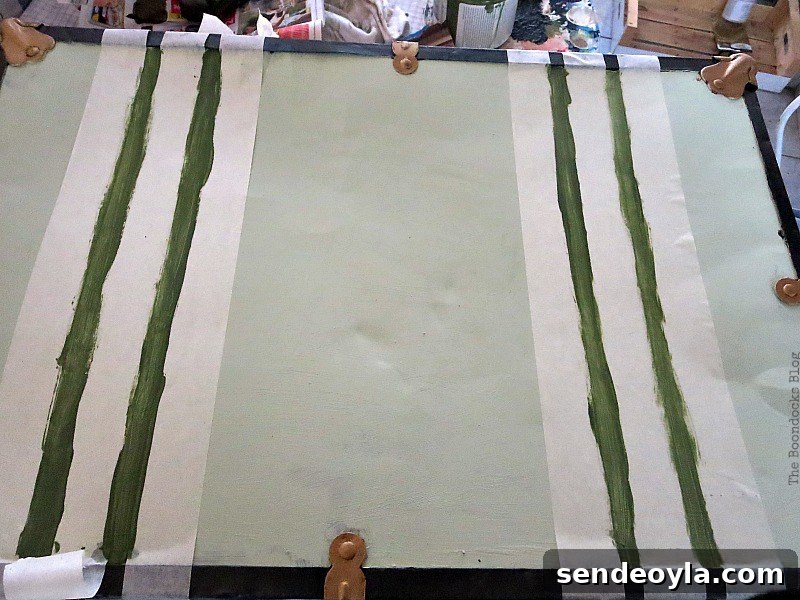
To give the suitcase an old-world look reminiscent of classic travel trunks, I created faux straps on the top. I taped off the areas I wanted to resemble leather straps and painted them in the same soft olive tone. It was a bit tedious — painting long, narrow stripes isn’t the most comfortable task — but the result was worth the effort.
Along the way I had to go back and touch up a few spots. Some parts of the metal frame were bent beyond easy repair, so I used a hammer to try to straighten them. They’re still a little warped, but those imperfections are part of the suitcase’s charm and remind you it’s a true vintage piece.
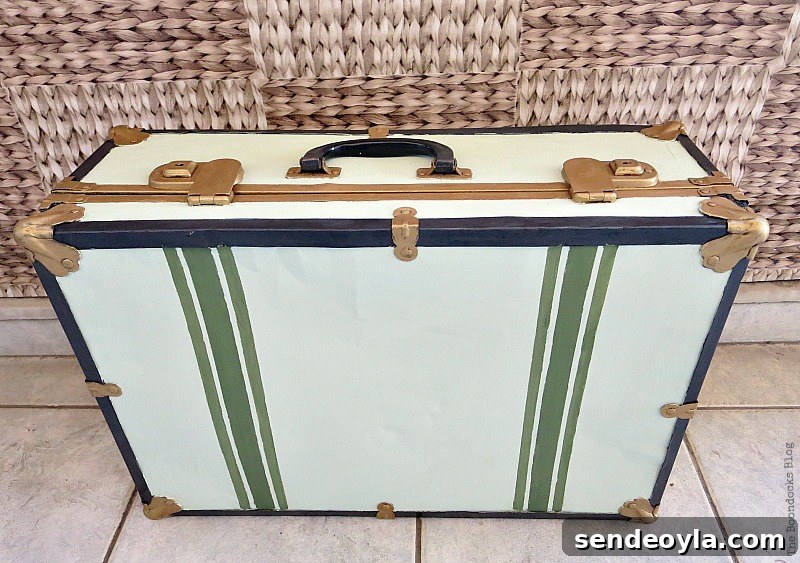
And here she is — my refreshed vintage suitcase, with a clean yet lived-in aesthetic.
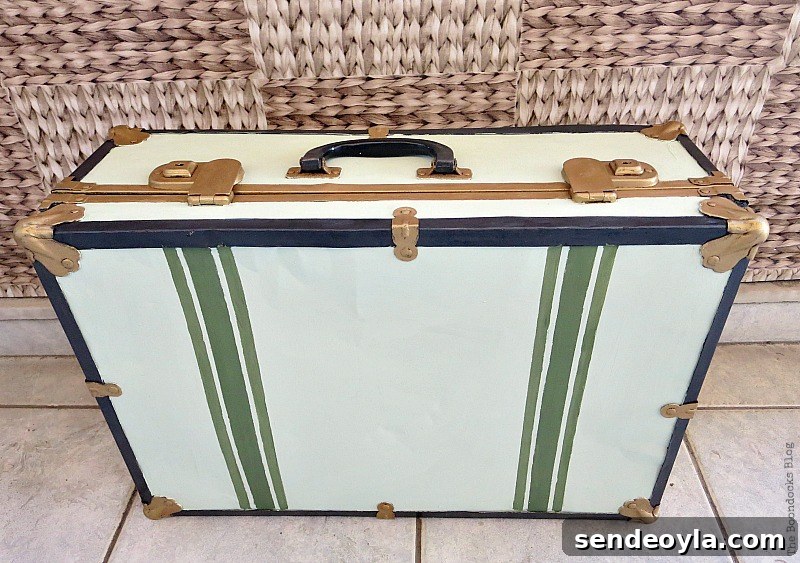
The contrast between the burnished-brass hardware and the black frame is exactly what I wanted. The warm metallic glow makes the hardware stand out against the muted body color.
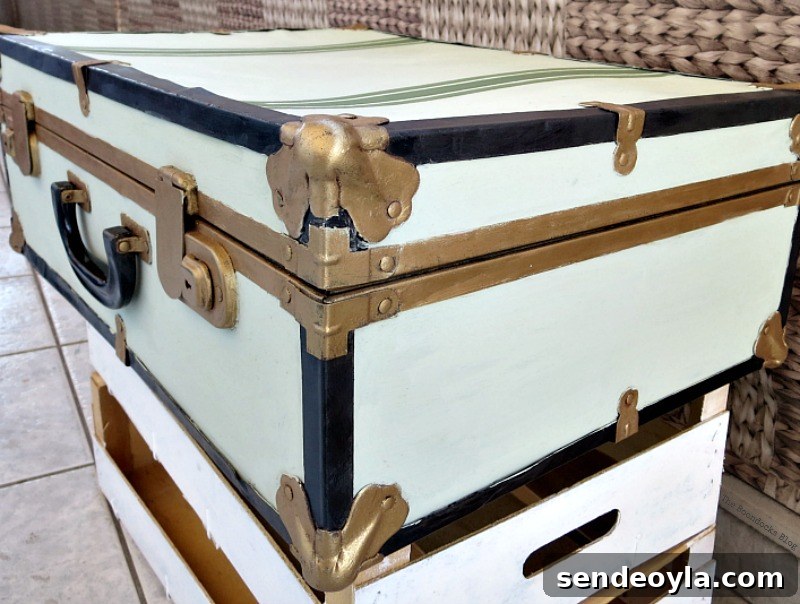
I decided to leave the bottom unpainted — there was no point in overworking an area that rarely gets seen. At one point I considered painting the straps all the way around the suitcase, but when I inspected the hardware I noticed several asymmetries: the front clasps weren’t evenly placed and the center clamp was off relative to the handle. Painting straps all the way around would have highlighted these irregularities rather than disguising them.
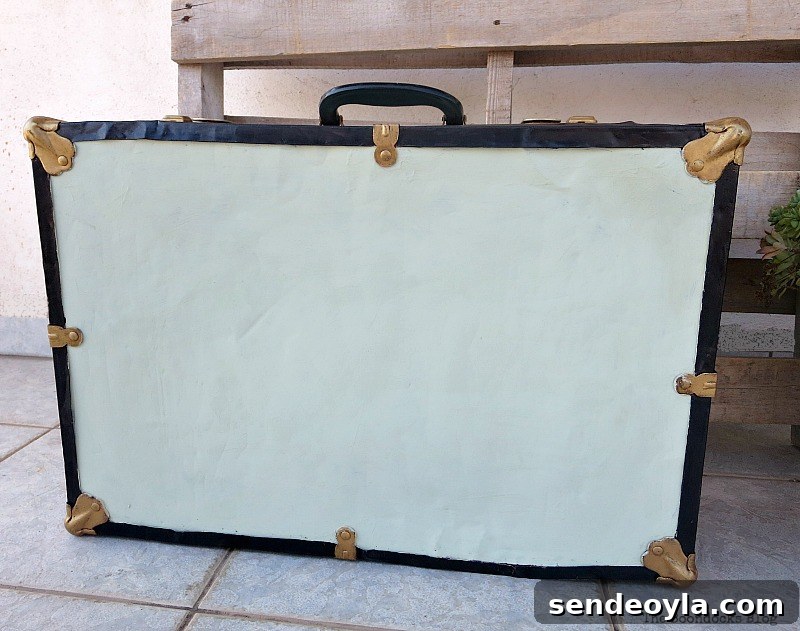
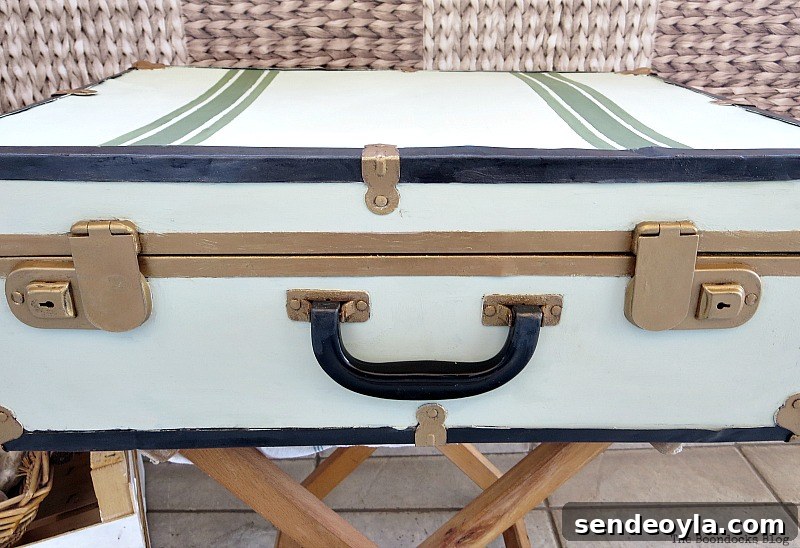
While working on this project I came across several online resources about restoring trunks and suitcases. They were useful for learning terminology and techniques, and they reinforced the idea that keeping some original wear preserves the item’s history and personality.
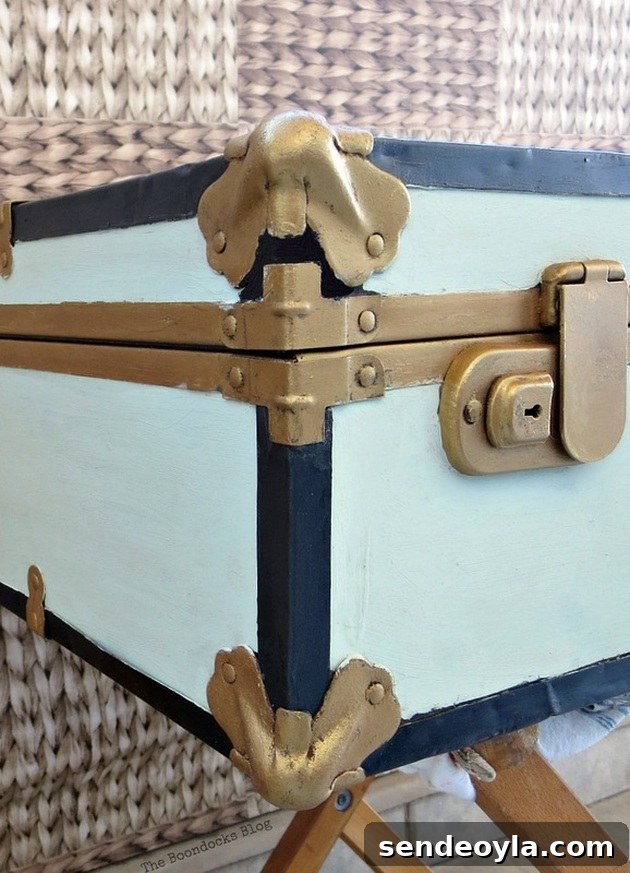
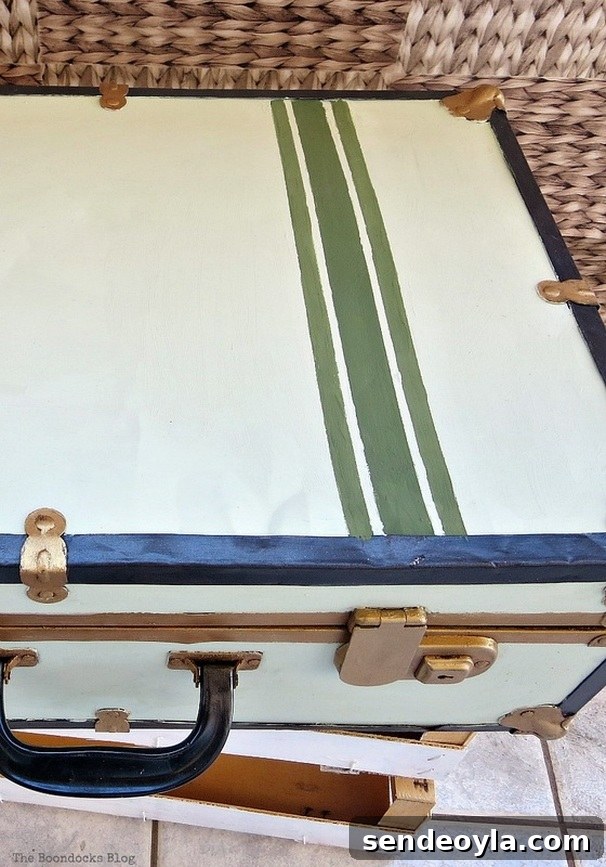
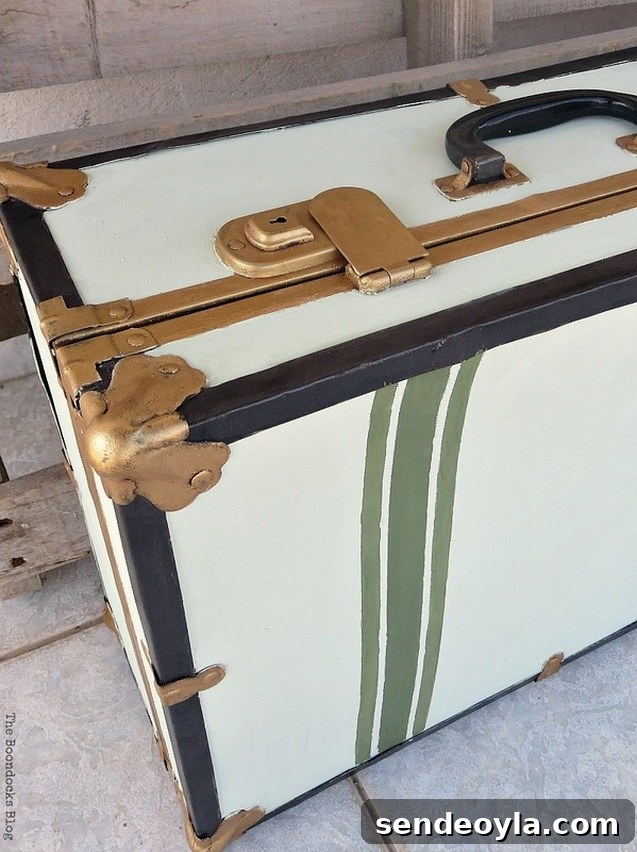
I still plan to show the interior soon — there’s one more step before it’s completely finished — but for now I’m very pleased with the result. The soft, muted color makes the hardware look clean and highlights the brass without making it look gaudy. This felt like a true trash-to-treasure project.
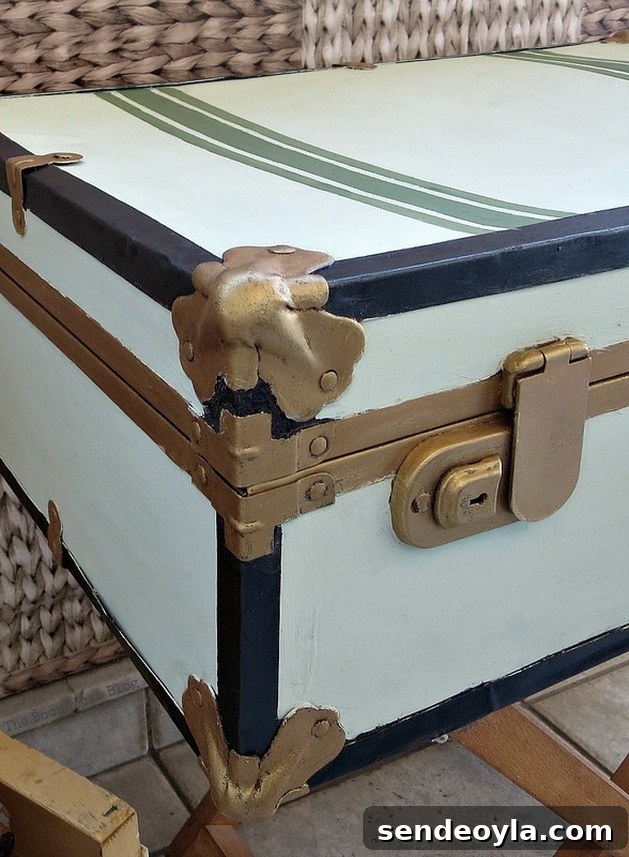
Do you have any old suitcases or trunks you’re thinking of restoring? I’d love to hear about the colors and finishes you chose, and whether you prefer to preserve wear or aim for a pristine look.

You may also like: