
How to Paint Your Front Door for a Sturdy, Weather-Resistant Finish
I had a small accident about a month ago that forced me to repaint my front door. It turned out to be a blessing in disguise—my door needed refreshing anyway. In this post I’ll show you how I achieved a durable finish that has held up through wind, rain, and even a nor’easter.
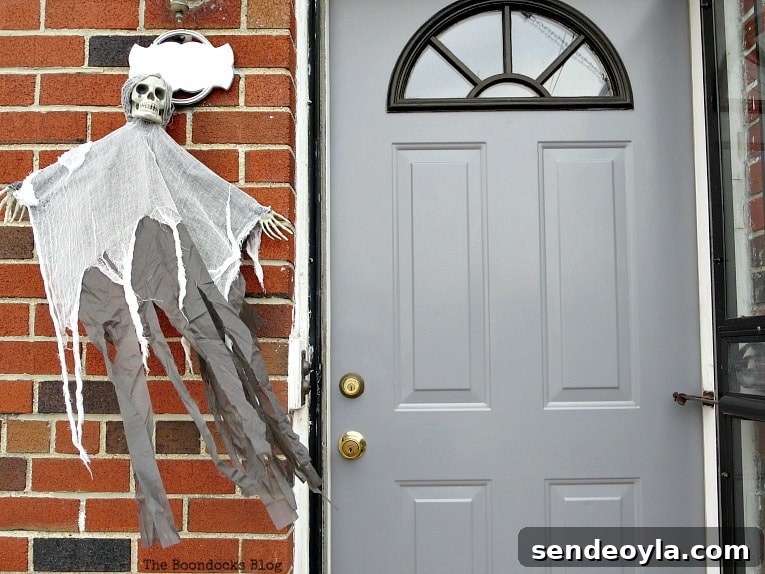
What happened
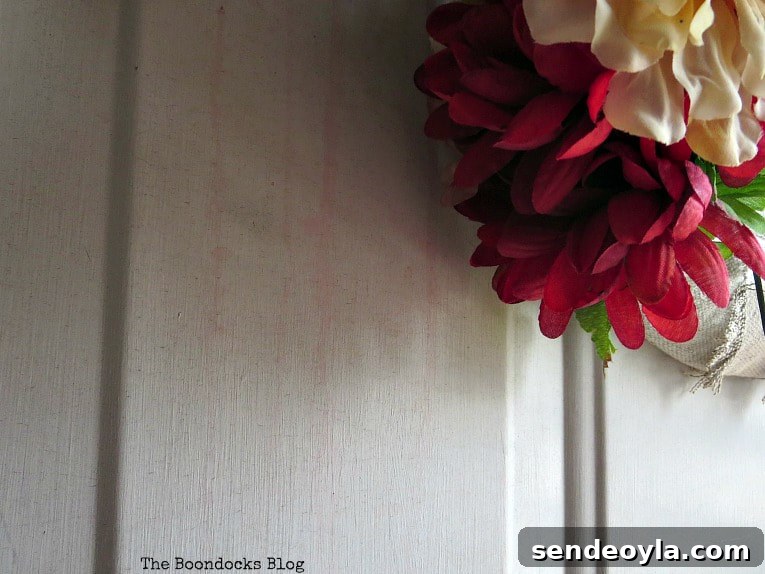
We had a severe rainstorm and the dye from a fall wreath bled through the storm door and streaked the front door. The faux flowers in the wreath left red marks that made it obvious the door needed more than a quick wipe-down.
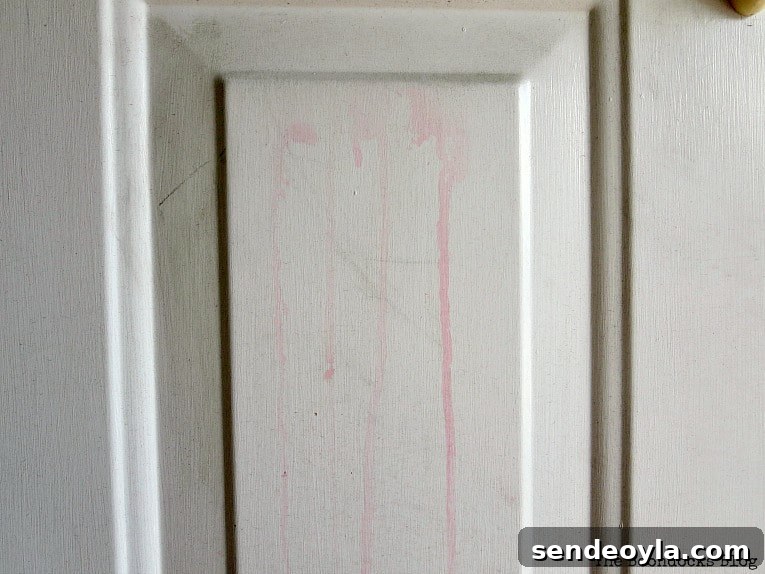
The dye came from the faux flowers on the wreath and collected in the recessed moulding and pockets of the door, so a thorough cleaning and a fresh coat of paint were necessary.
Disclosure
I received product for this project. All opinions are my own; I only share products I use and would recommend. Some items mentioned are affiliate links, which help support the blog at no extra cost to you.
What I Used
- Americana Decor Curb Appeal front door and shutter paint (Salem Grey)
- 2-inch angled paint brush
- Drop cloth
- Command hook (for temporarily hanging wreaths or hardware while painting)
Why I Chose This Paint
The paint I used is made specifically for doors and shutters. It’s thicker than regular acrylic, water-based for easier application and cleanup, and formulated to resist fading so it stands up to sun and weather. It works on wood and metal surfaces, and is suitable for items like mailboxes and railings as well.
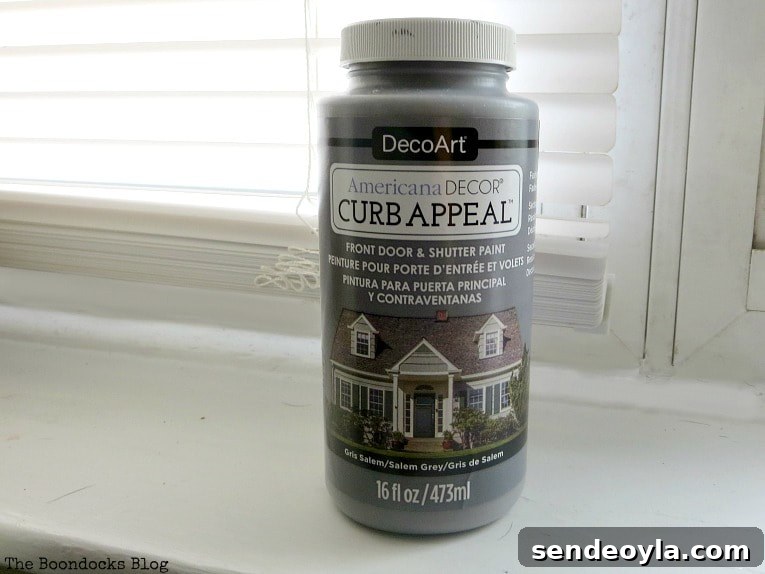
I chose Salem Grey because it complements my brick exterior without competing with it—on a sunny day the color reads almost slate-blue, which nicely tones down the brightness of the bricks.
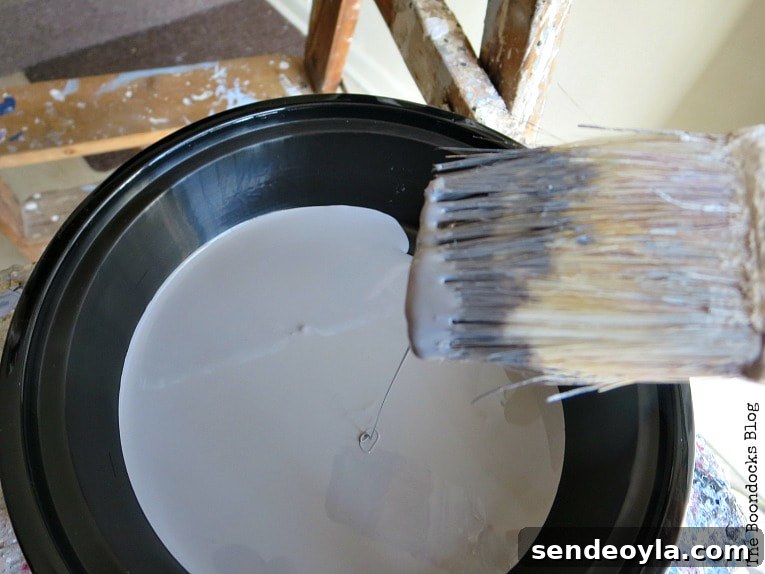
The How To: Step-by-Step
Preparing the surface and using the right technique make all the difference when painting an exterior door. Here’s the simple process I followed:
- Clear the area. Lay down a drop cloth to protect the porch floor and remove or secure any hardware that would get in the way. Temporarily hang wreaths and decorations elsewhere (I used a Command hook).
- Clean the door thoroughly. I wiped away dirt, dust, and any loose paint so the new paint would adhere properly. Pay special attention to recessed moulding where stains can collect.
- Address stains. If you have dye or stubborn marks, treat them as needed before painting—cleaners or a light sanding can help, depending on the surface and stain.
- Choose your brush. An angled 2-inch brush is ideal for cutting into moulding and getting smooth edges around hardware and seams.
- Paint the details first. Start with the recessed moulding and edges to ensure clean lines, then fill in the larger flat surfaces.
- Apply two thin coats. The product I used is thick enough to cover well; I applied two coats with drying time between them. The entire job took me about two hours, including time for the coats to dry and a few touch-ups.
- Reinstall hardware. Once fully dry, reattach any hardware or decorations and enjoy your refreshed door.
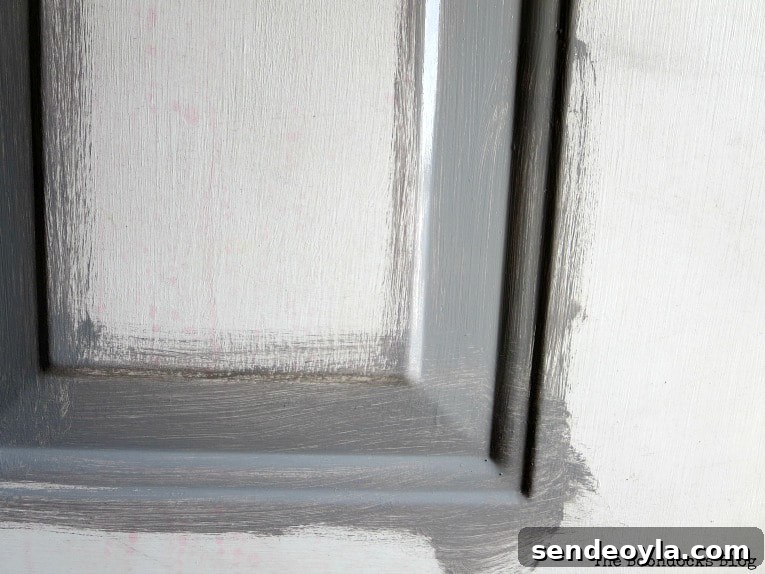
Result and Durability
After the first coat the door already looked refreshed, and the second coat gave it a smooth, even finish. I protected the door with the storm door and its glass insert, and we’ve since had a nor’easter—the paint held up beautifully. I liked the durability so much, I plan to use the remaining paint on indoor doors that receive heavy use.
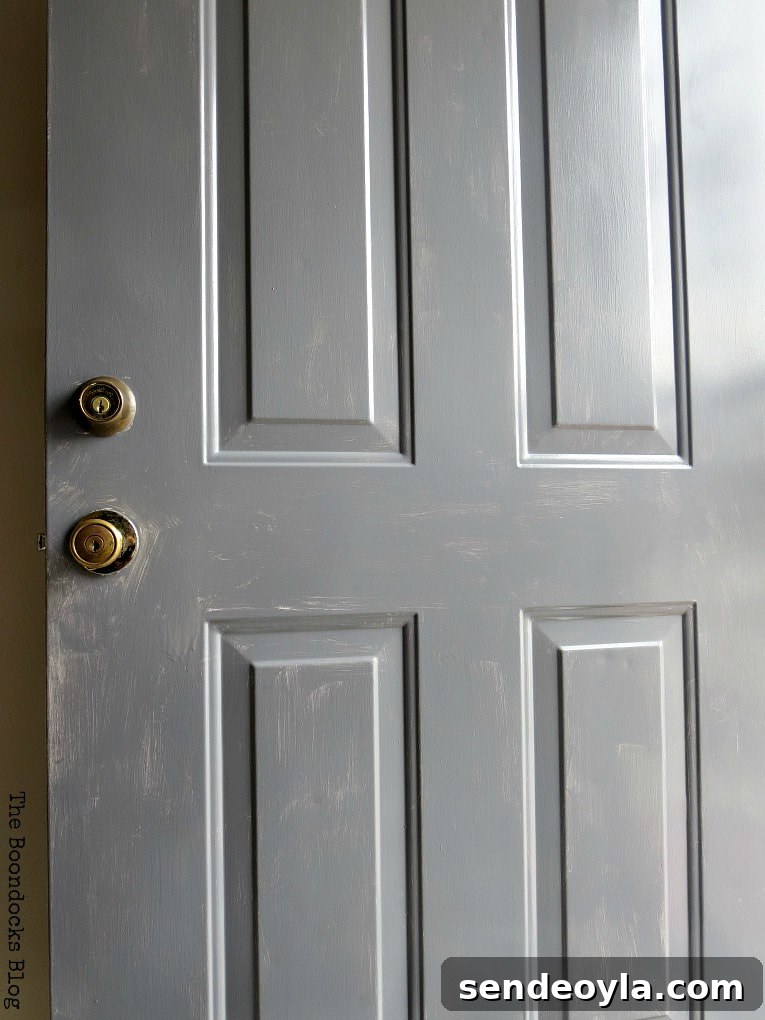
The 16 oz (473 ml) bottle size is convenient—big enough to finish a modest project, and I used less than half of it on this door.
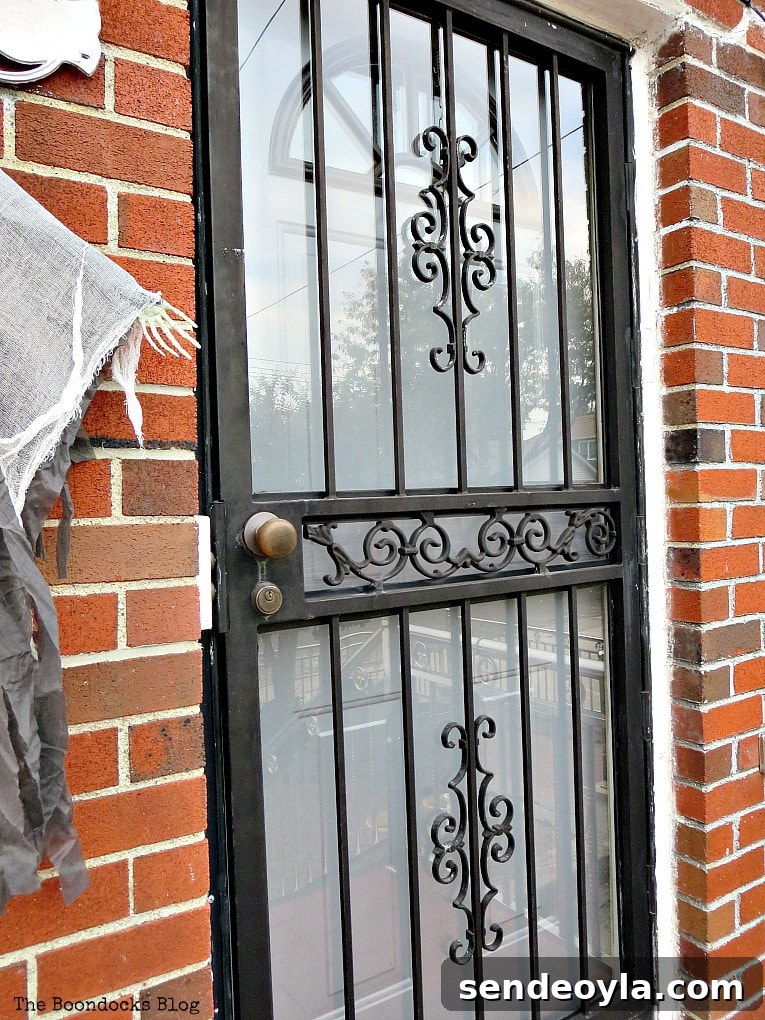
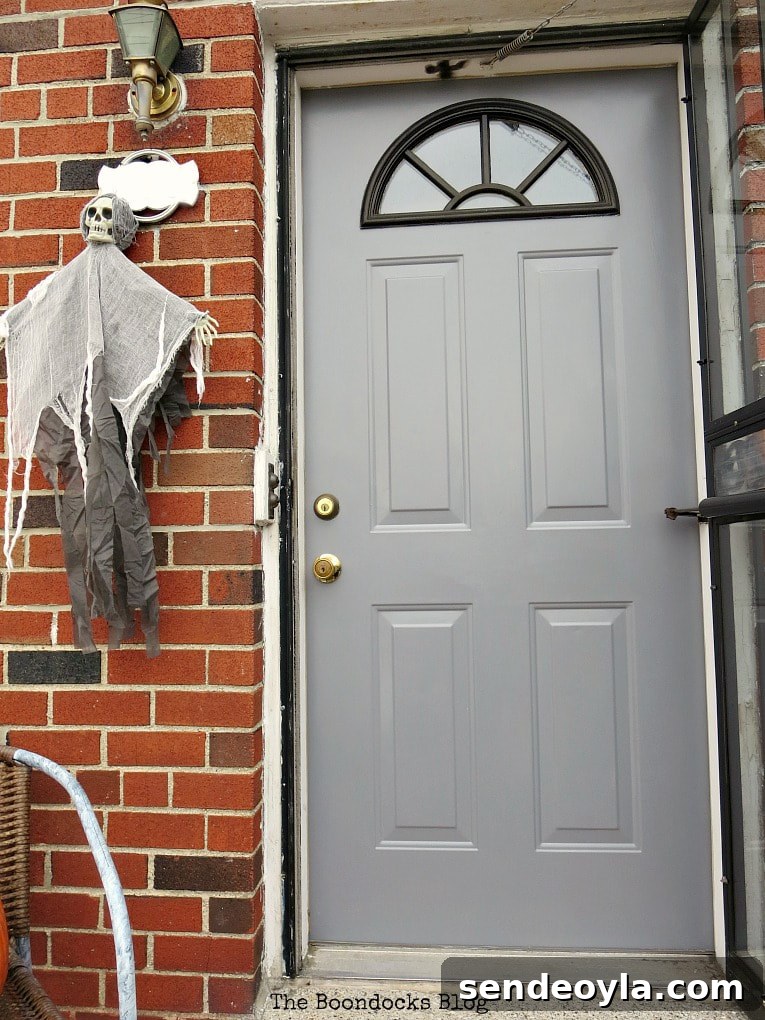
In bright sun the color shifts slightly toward a slate tone, which I find very flattering against brick. The paint is available in many shades, so you can pick a color that compliments your home’s exterior.

Final Thoughts
What began as a small mishap turned into the perfect excuse to freshen up the front entrance. With proper prep, a paint designed for doors, and two careful coats, you can achieve a long-lasting, weather-resistant finish. If you’re working with a brick exterior, neutral greys or muted blues often pair beautifully—what color would you choose for your front door?
More Ideas
This blog is for entertainment and inspiration; my tutorials are not a substitute for professional advice. I appreciate your comments and try to reply to every one.