
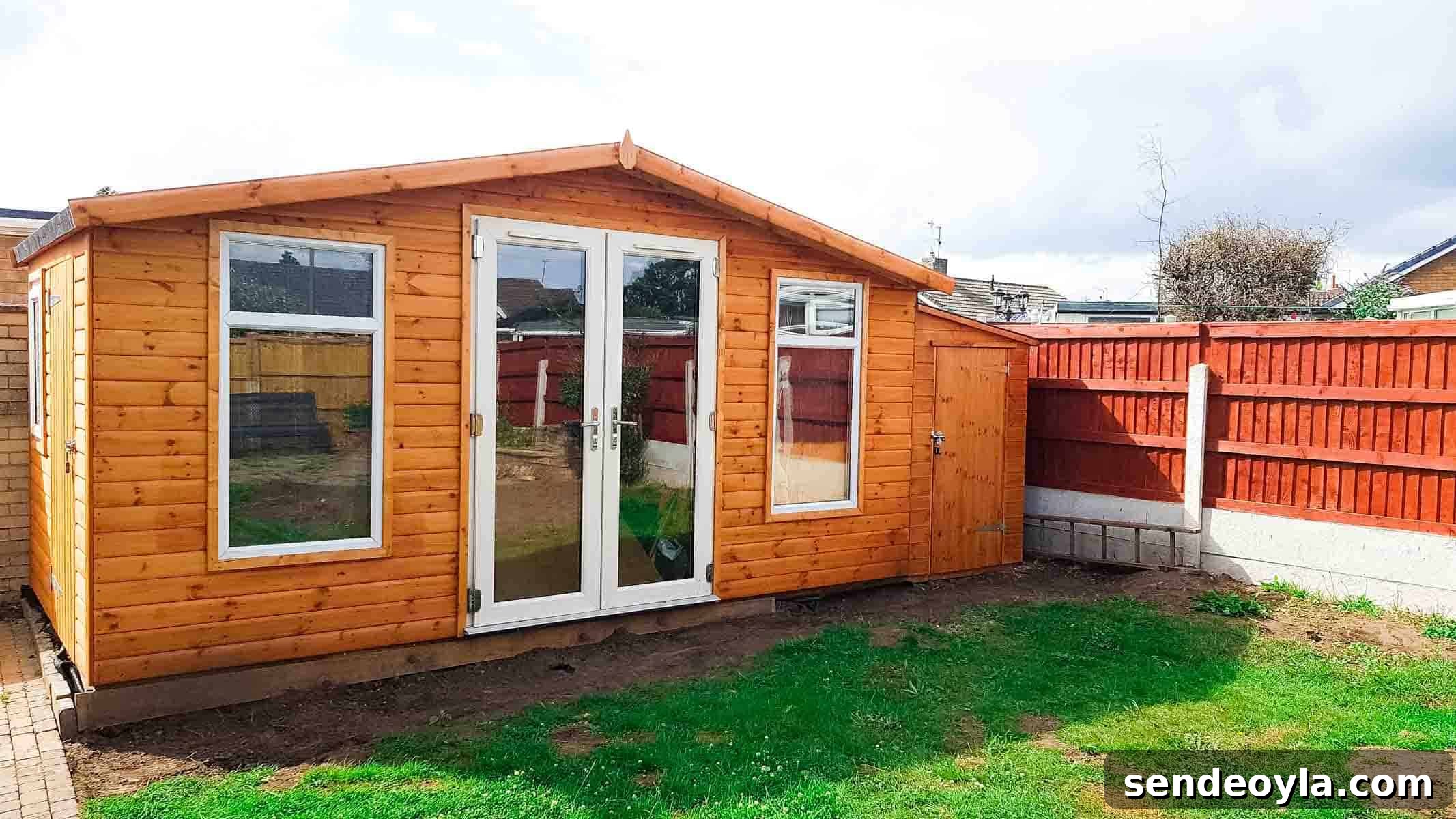
Step-by-step guide to felting a shed roof after the frame is built. This roof was installed in two sections, then felted and finished with trim. The method also works well for repairing a leaking shed roof.
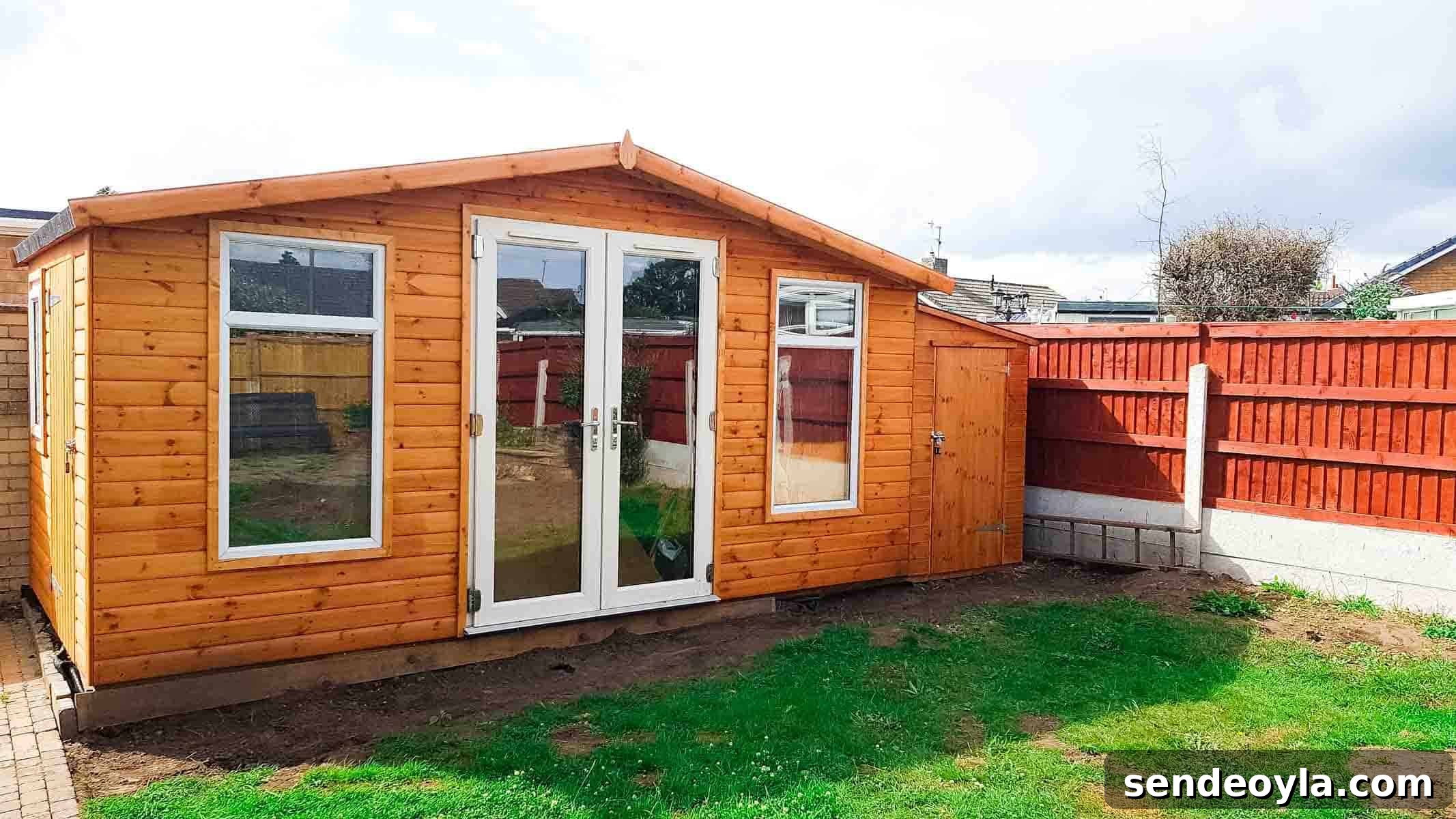
Recently I wrote about building a summerhouse frame and cladding it. For this project my dad — a carpenter with decades of experience — and I completed the roof and covered it with roofing felt. Traditional, bespoke sheds like this are much sturdier than the typical flat-pack units you find in stores.
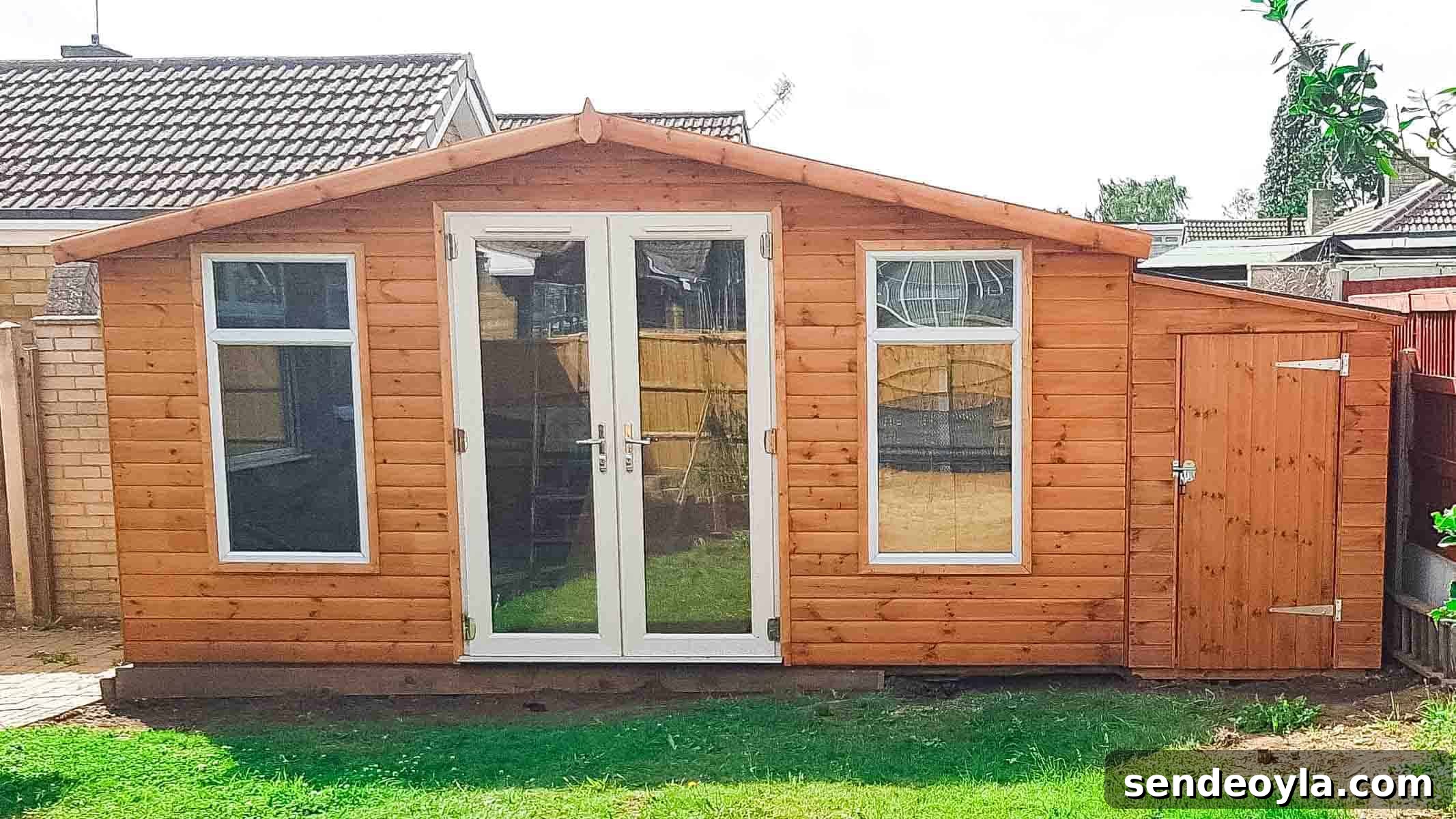
This article focuses specifically on the shed roof: how we fitted the roof panels, laid OSB sheathing and applied roofing felt in strips. I’ll share practical tips on materials, order of work, nailing, adhesive and finishing trim so you can feel confident tackling a felted shed roof yourself.
I’ve used roofing felt on a variety of small projects — from a DIY dog house to storage chests — and the techniques are the same whether you’re covering a pitched apex roof, a lean-to or repairing an existing roof.
Shed roofing materials and tools we used
- OSB sheets for roof sheathing
- Structural timber for rafters and battens
- Roofing felt (good quality, thicker felt recommended)
- Bitumen adhesive suitable for felt overlaps
- Caulking gun or adhesive applicator
- Stanley knife or utility knife
- 13 mm clout nails and a hammer
- Spare cladding or timber for trim
- Hand saw and compact saw for cutting trim
- Combi drill and wood screws for securing panels
Preparing the roof before felting
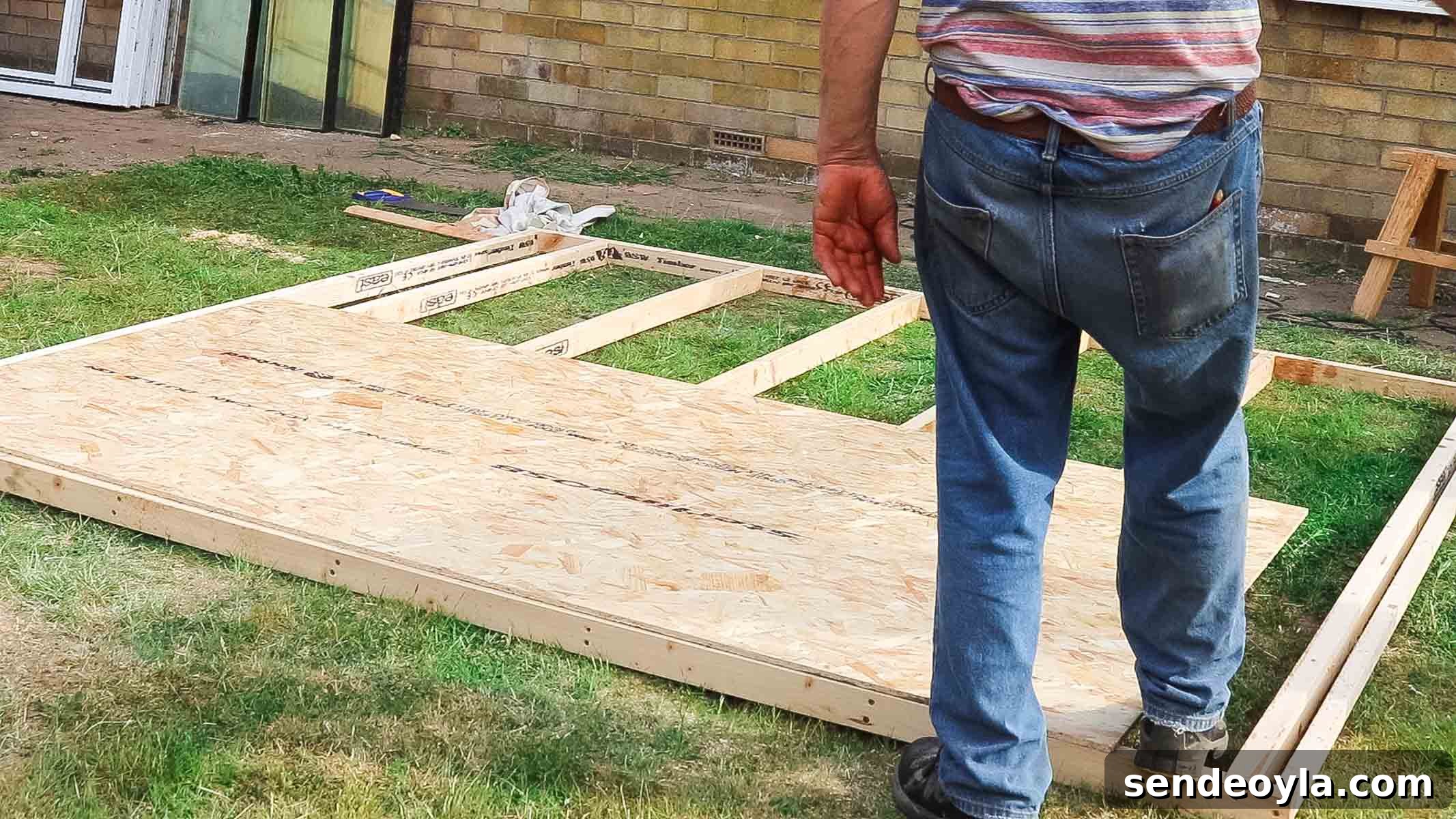
Before you start with the felt, build the roof frame and add the sheathing. For a large apex shed we constructed each roof section separately and later joined them on the apex. We fitted offset battens at the center so the two sections would sit securely together and not shift.
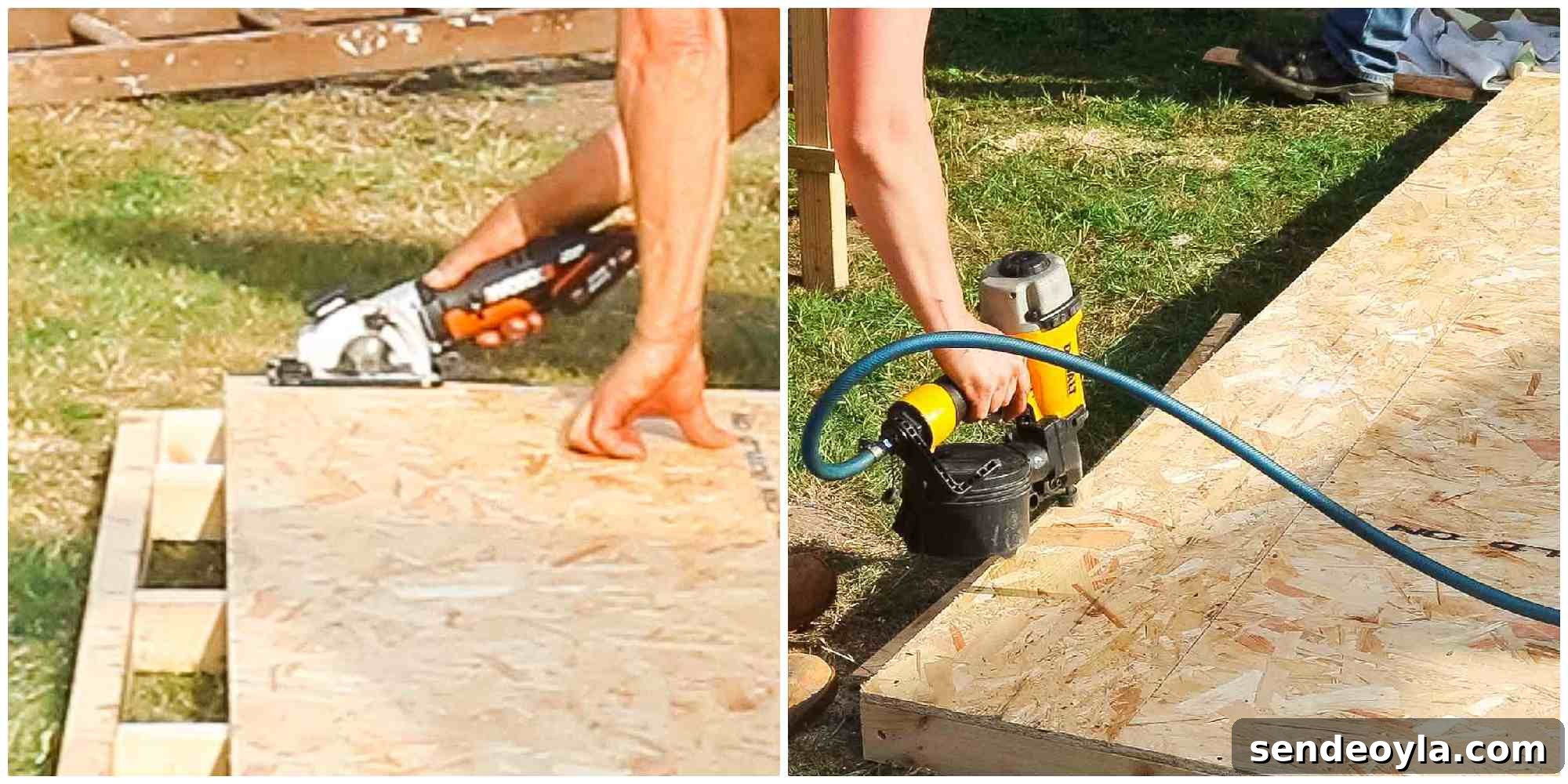
Once the framework and overhangs were set, we cut OSB sheets and fixed them to the rafters with nails and screws. Ensure the sheathing is fully supported and screwed into the structural timber so the felt has a stable base to sit on.
How to felt a shed roof — overview
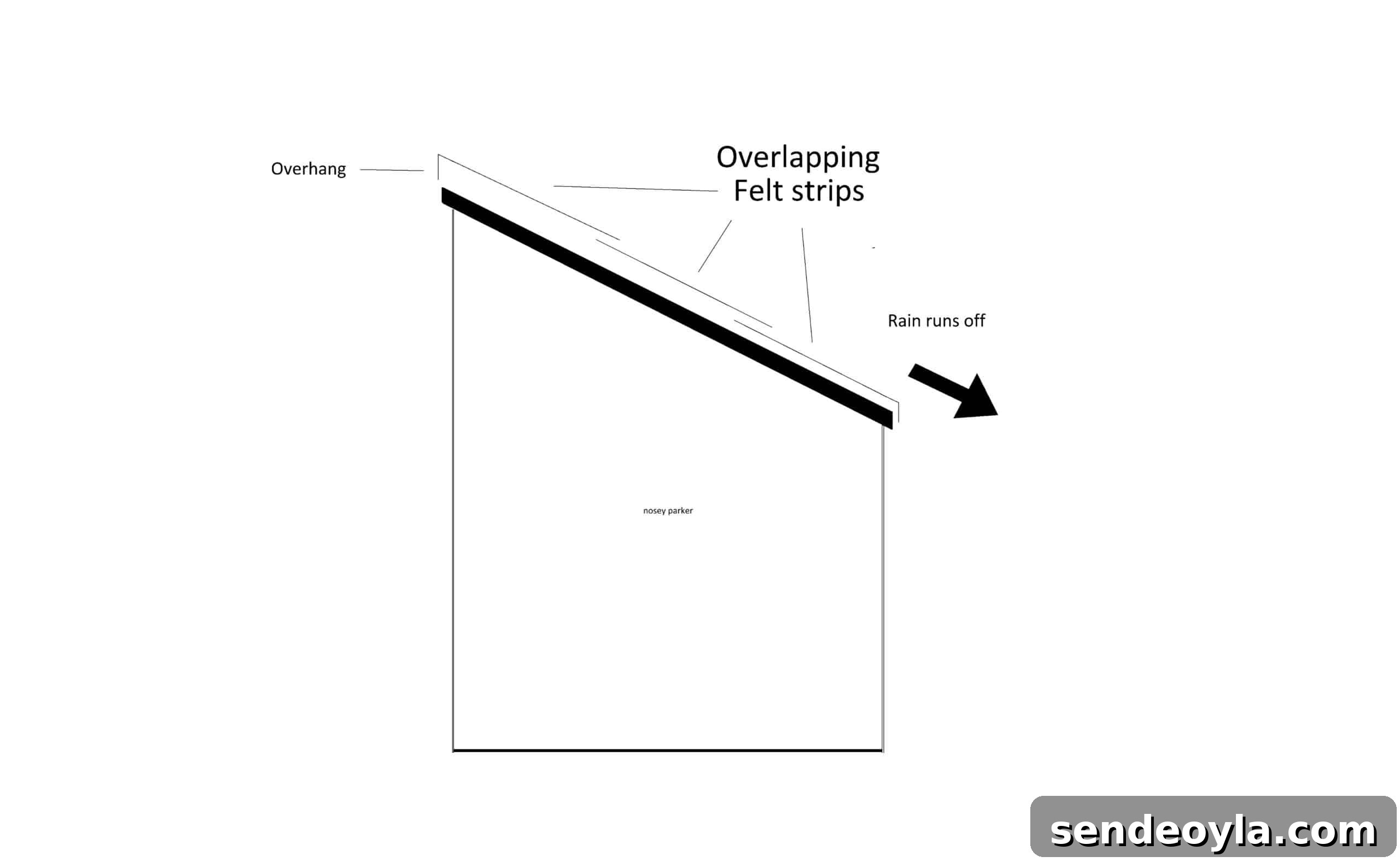
If your roof area is large you’ll work in strips. Cut the felt roughly to length, leaving generous overhangs and overlaps. Plan the order so water drains off without getting underneath the overlaps — this is essential to prevent rot.
The correct order for fitting felt
Start with the lowest strip of felt at the eaves. Each subsequent strip is installed above the previous one, overlapping so water runs down and off the roof rather than seeping under the layers. This staged approach keeps the roof watertight and protects the wood beneath.
Choosing the right felt for a shed roof
Buy the best quality roofing felt you can reasonably afford. Thicker, patterned felt (the tile-effect rolls) is more durable and resists punctures better than the very cheap rolls. Spending a little more now will save you time and maintenance later.
Clout nailing the felt
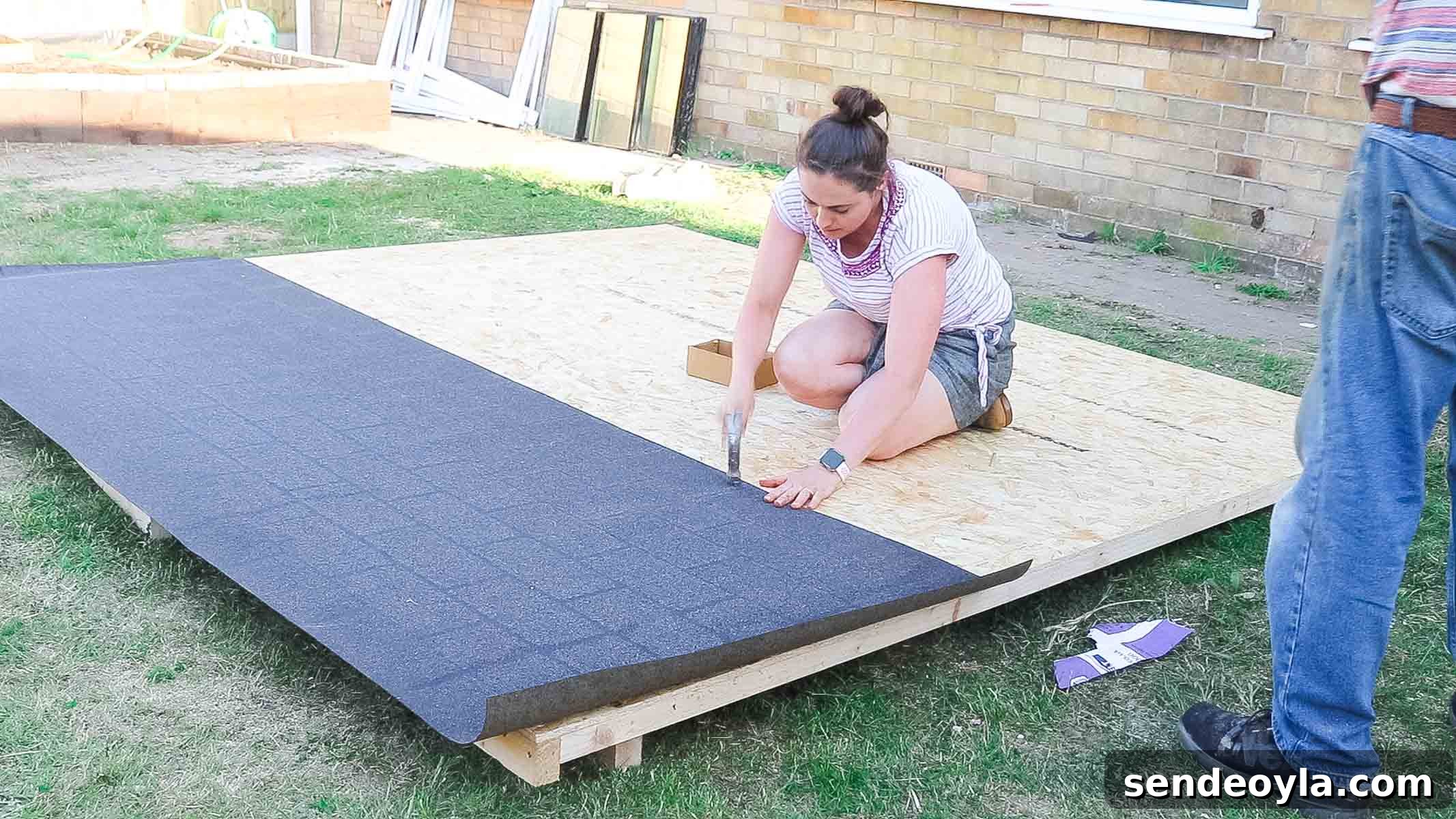
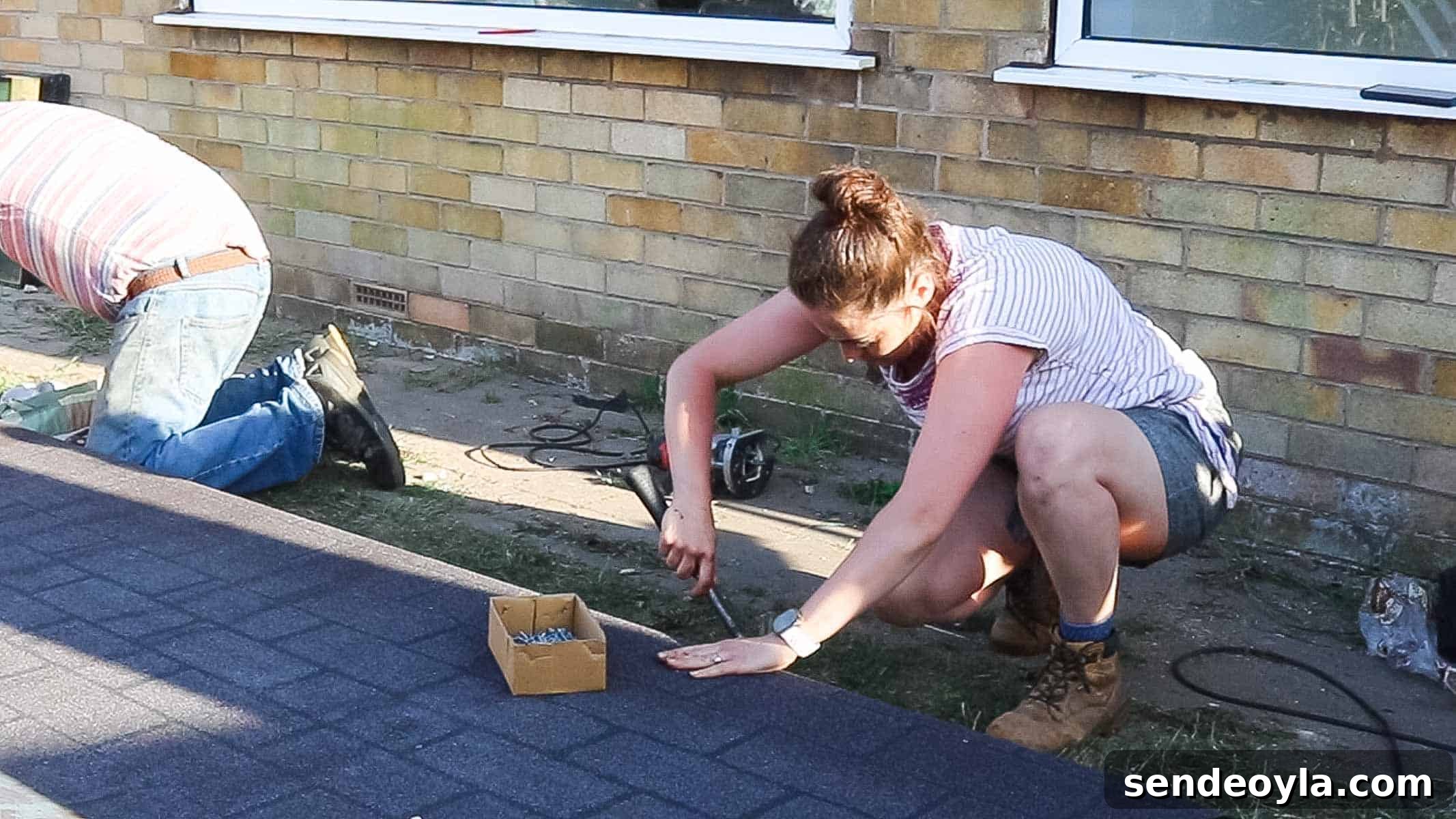
Unroll the felt and align the straight edge where you want to start. Fold the leading edge over the roof sheathing and secure it with 13 mm clout nails, spacing nails at roughly 10 cm intervals. Use patterned felt so the texture runs downhill toward the eaves.
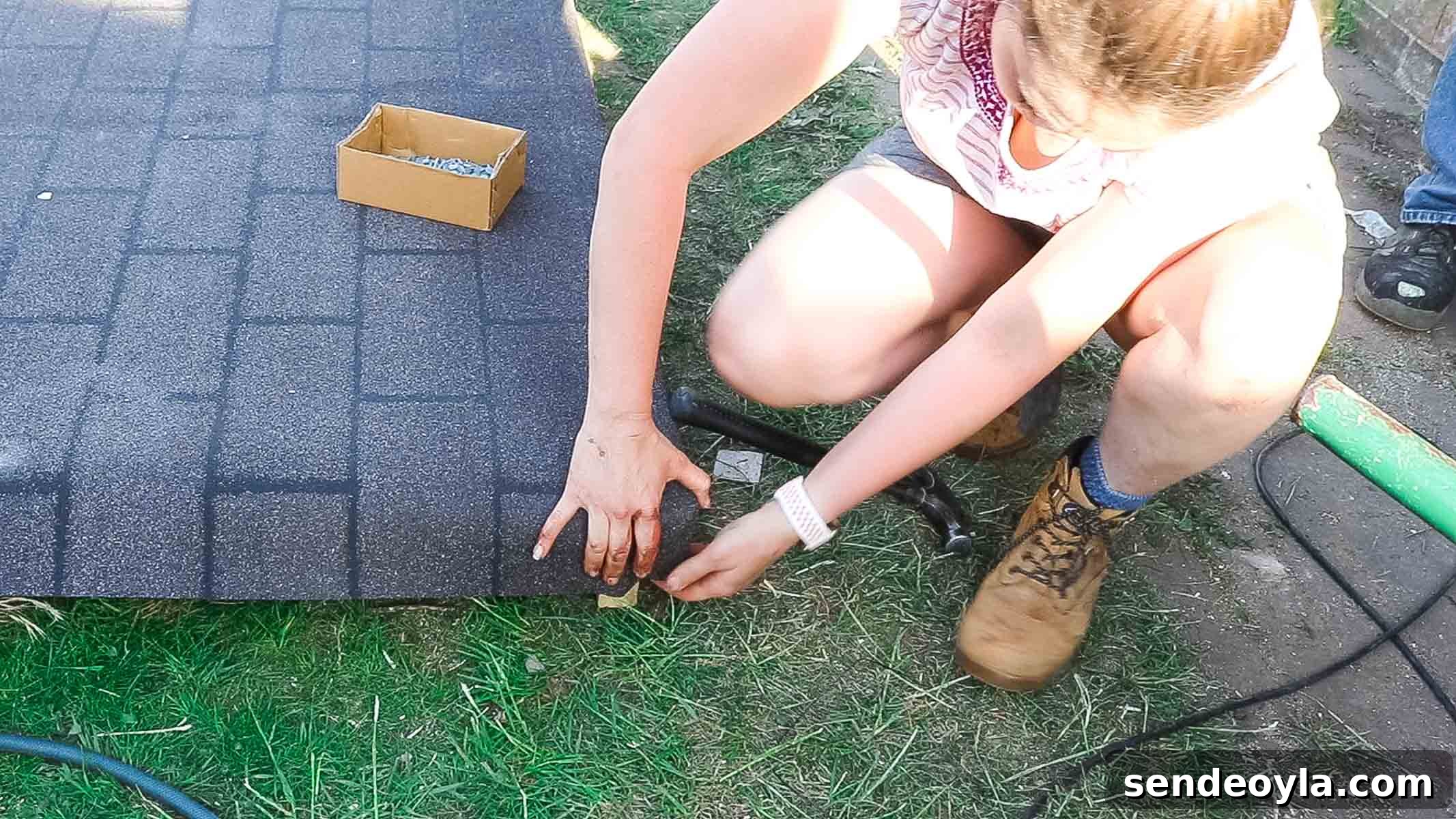
Blanket folds for corners (don’t cut)
A key tip: don’t cut the felt at corners. Instead use a blanket fold — tuck one section underneath and fold the top sheet inwards and down to neatly close the corner before nailing. This prevents gaps that can let water in and is the correct method for corners on pitched, lean-to and pent roofs.
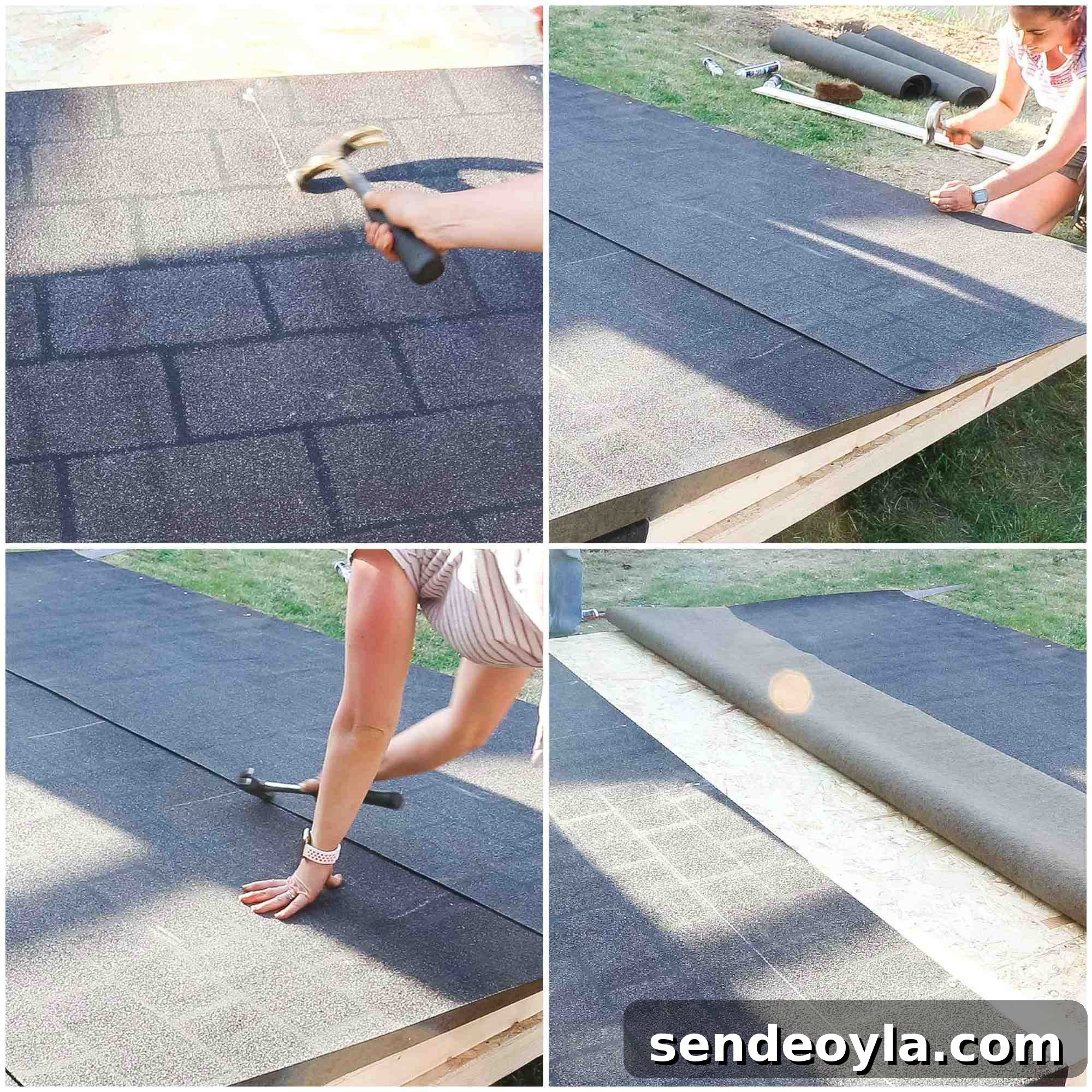
After nailing the first strip, mark the overlap position with a light tap from the hammer. You’ll use those marks to know where to apply the bitumen adhesive for a secure, watertight overlap.
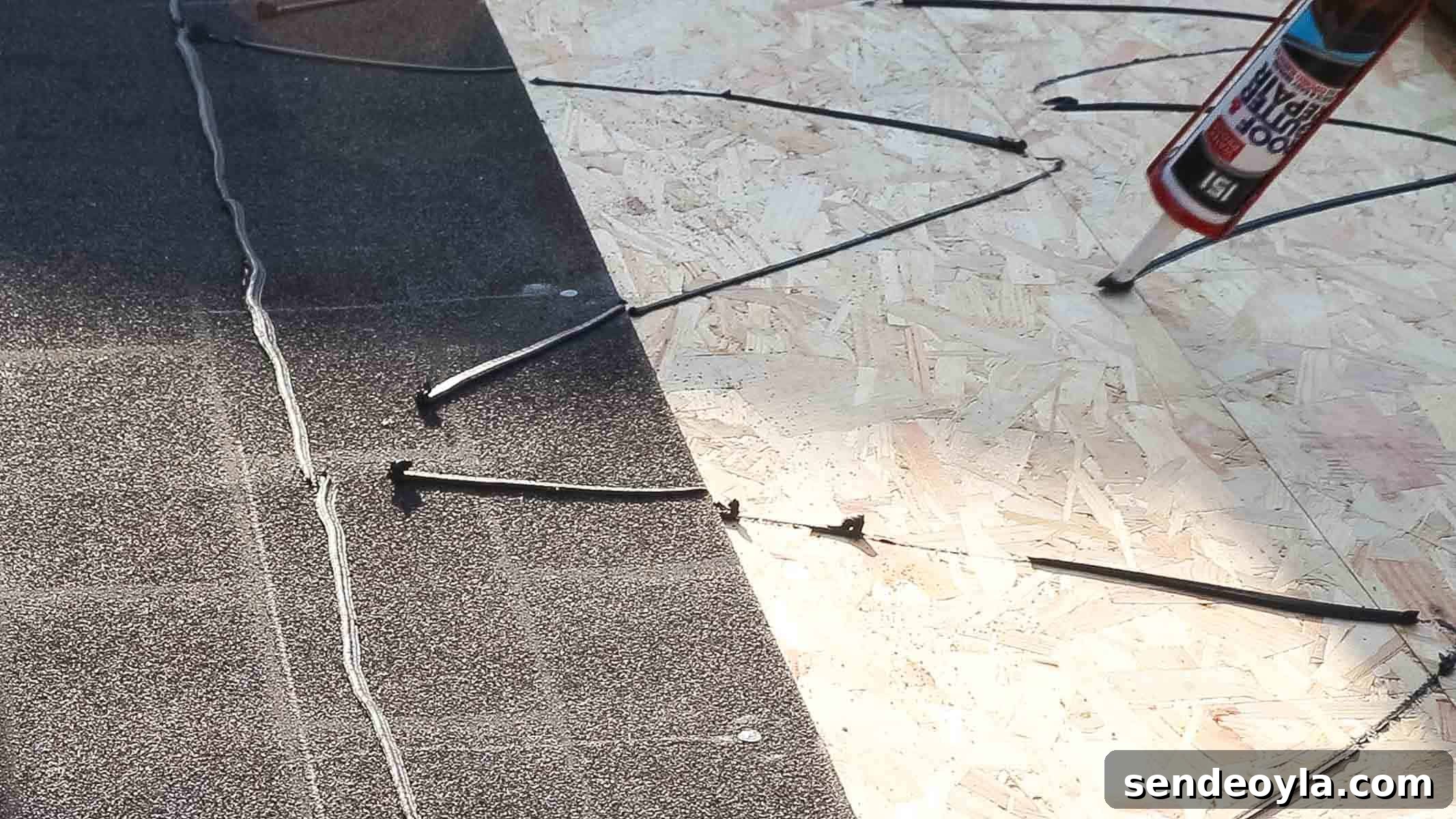
Sealing overlaps with bitumen
Pull back the upper strip, apply a bead of bitumen within the marked area (we used a cartridge bitumen for ease of application), then press the felt down. A zig-zag bead or continuous line of adhesive will bond the two sheets and stop wind-lift and water ingress.
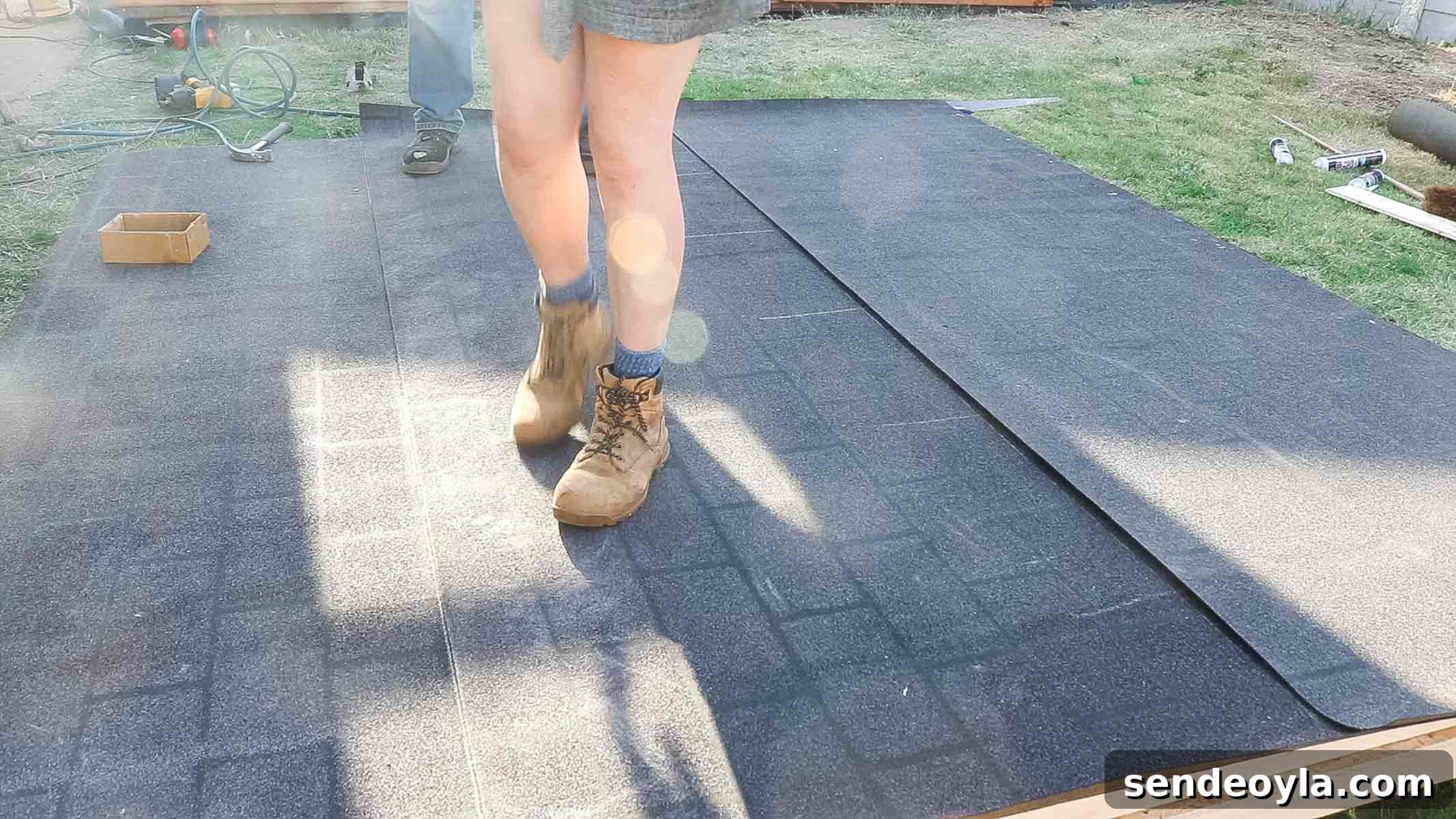
Once overlapped and bonded, apply firm pressure — walking or pressing down evenly — then secure with clout nails around the perimeter and across the field where needed.
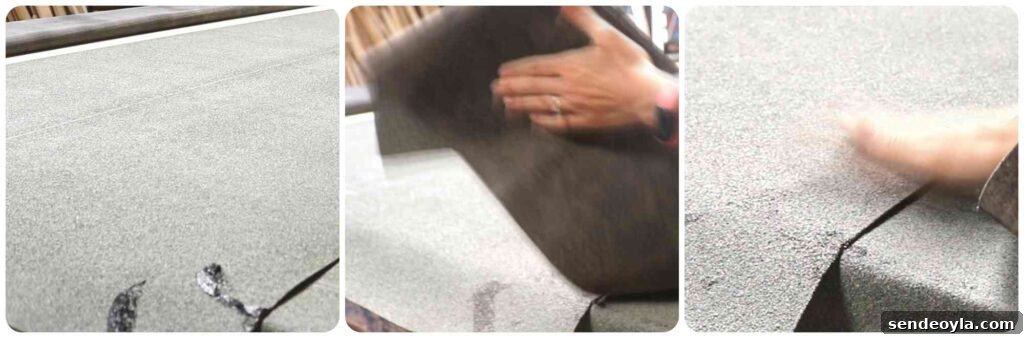
Cleaning bitumen from felt
If bitumen lands on the visible side of the felt, carefully scrape off any excess without damaging the surface. A useful trick: rub a scrap of felt folded in half so the granulated surface sheds and sprinkle those granules over the mark to camouflage the stain. It’s a quick cosmetic fix that blends well.
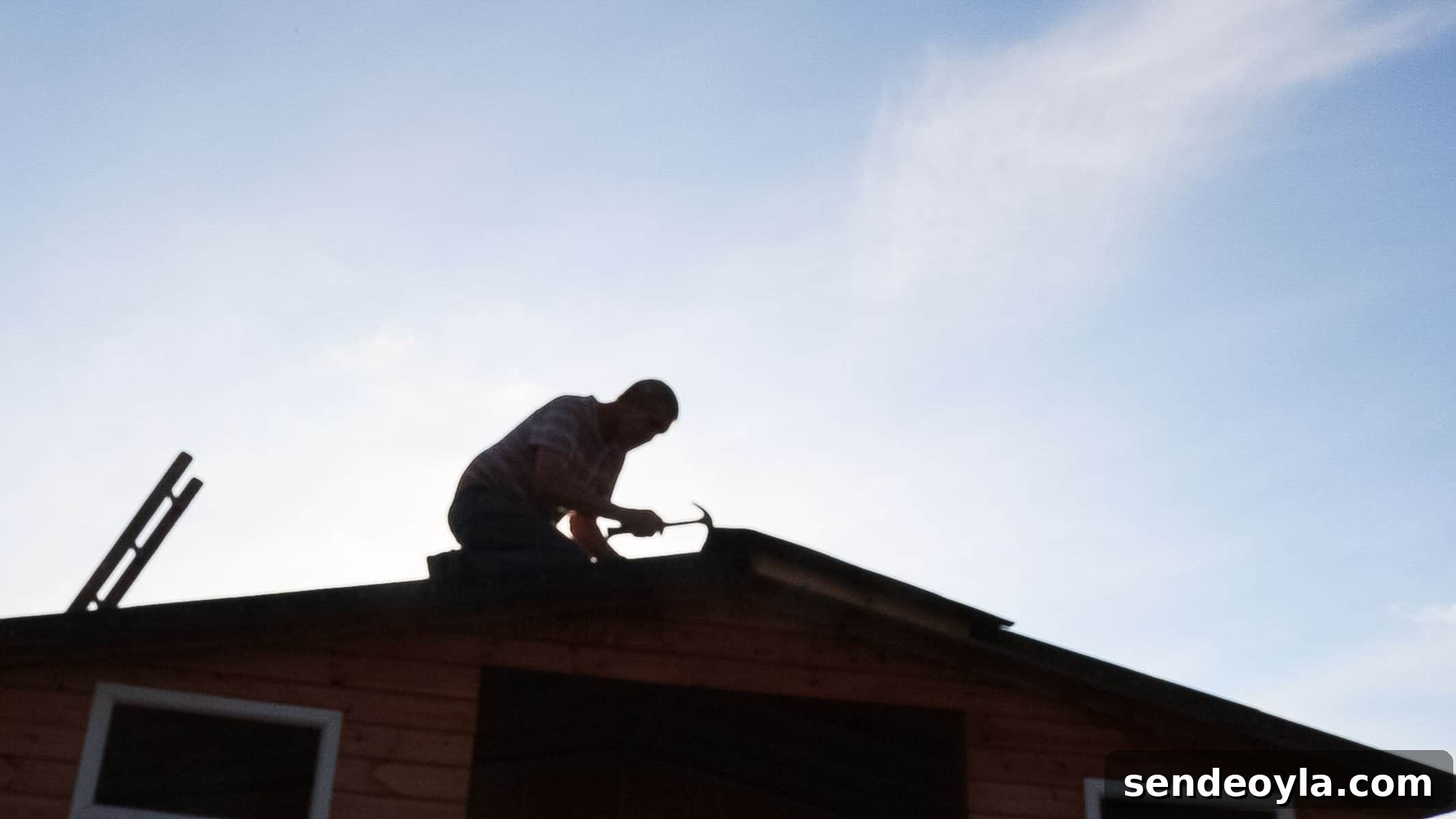
Fitting felt on a large apex roof
For large apex roofs we pre-felted each panel on the ground in manageable sections and then lifted them into place. If you can safely reach and lift a completed felted panel, fitting in situ is fine — but remember felt adds weight and can make handling more awkward.
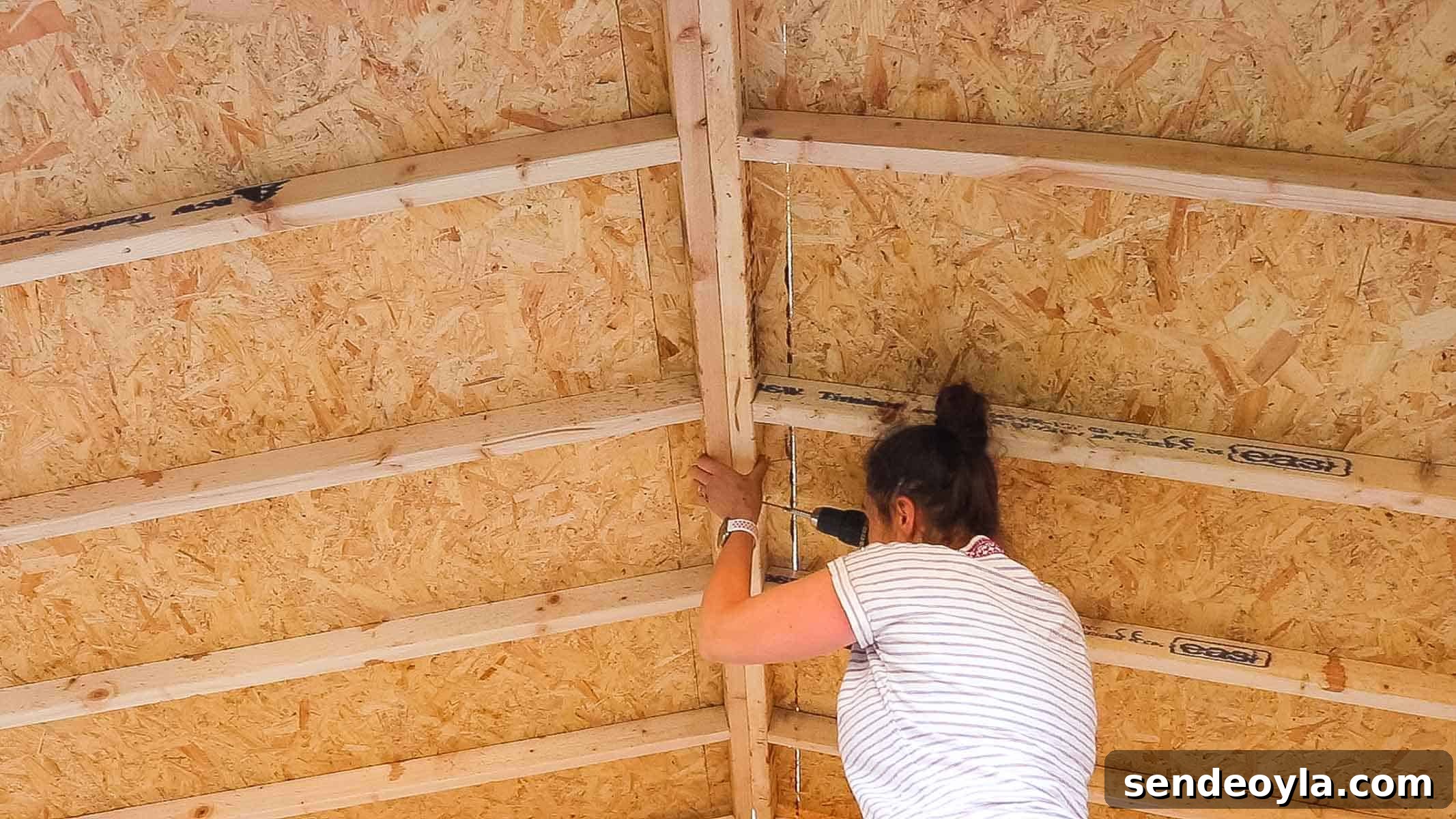
Joining the roof panels
Once both panels were positioned, we screwed the roof sections together along the central battens and fixed the top of the wall panels to the roof battens. These fixings prevent movement and ensure the roof behaves as a single, solid unit.
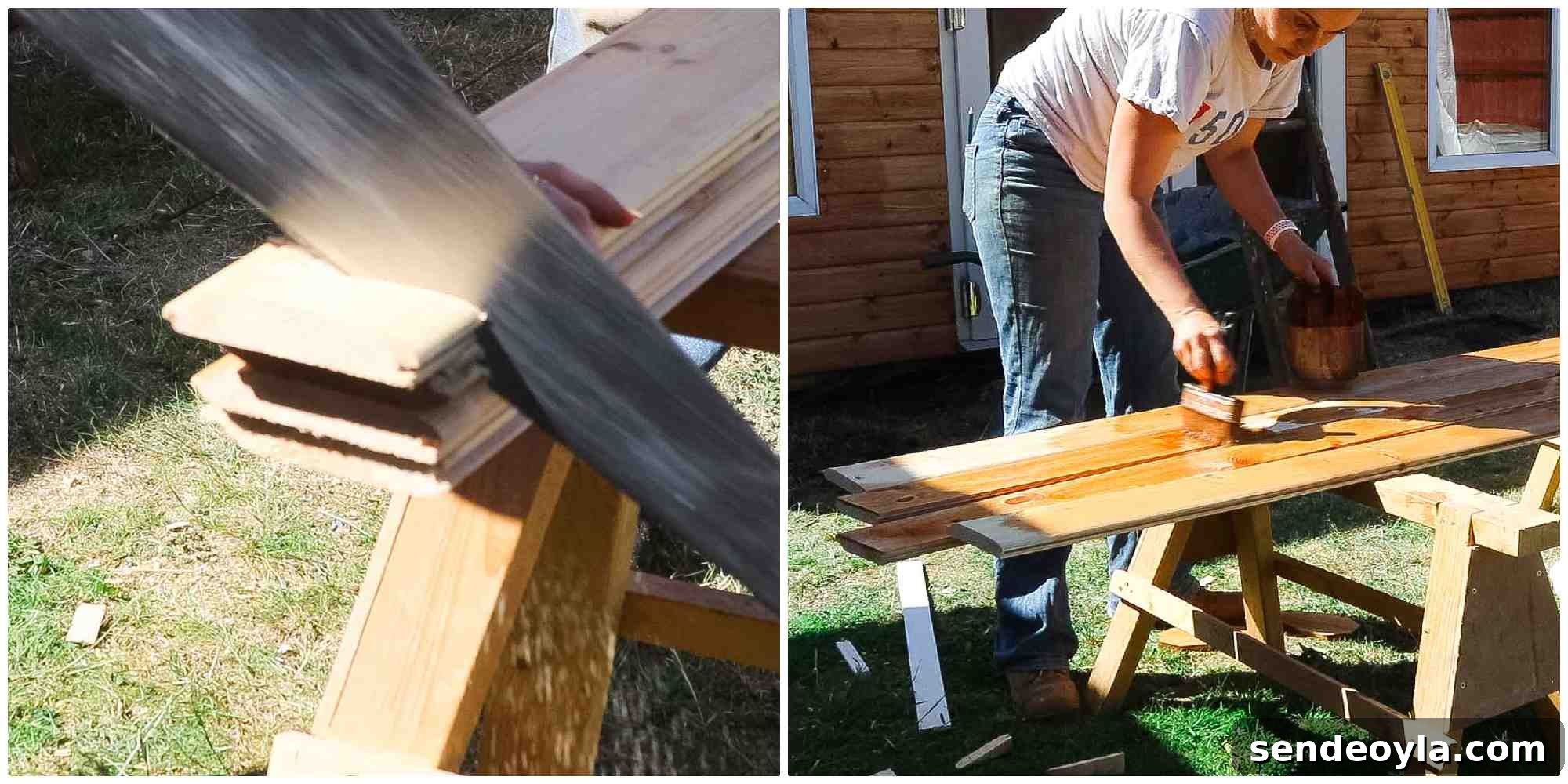
Adding trim to tidy the roof
Trim tidy the finished edge with painted or treated timber. Cut four pieces of spare cladding to length, treat them with preservative, then screw them in place so they cover the felt’s raw edge. Pre-fit screws to the trim pieces on the ground so you’re not juggling screws up a ladder.
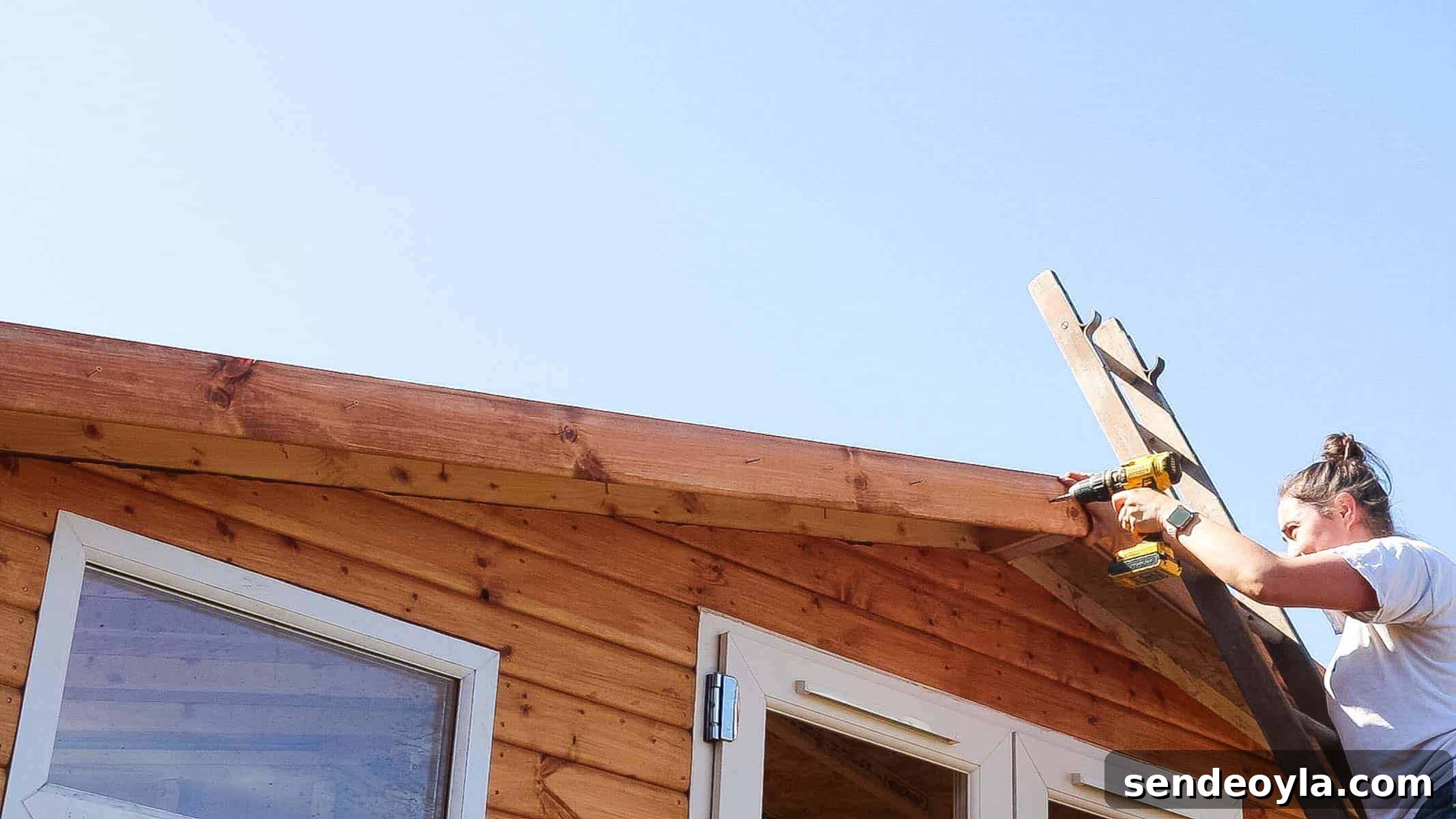
A decorative centre piece over joins hides the seam and gives a neat, finished appearance. Once trim is in place, run a final check for any loose nails, exposed edges or areas that need another dab of sealant.
Materials, tools and quick instructions
Materials: roofing felt, clout nails, bitumen adhesive, timber for trim.
Tools: hammer, Stanley knife, saw, drill, caulking gun or applicator.
Step-by-step summary
- Unroll the felt and allow a generous overhang at the eaves and verges.
- Cut each strip roughly to length, leaving overlap allowance.
- Fix the lowest strip first with clout nails along the leading edge.
- Work upward, laying each next strip over the previous one so water runs off properly.
- Mark overlap positions with a light hammer tap to guide adhesive application.
- Apply bitumen adhesive within the marked overlap area, press the felt down and secure with nails.
- Create blanket folds at corners — tuck and fold, don’t cut — then nail down.
- Fit treated timber trim around the edges and screw it in place to cover raw felt edges.
- For apex roofs, felt each panel and then add a final overlap strip along the ridge where the panels meet.
Similar projects
- Green roof bike shed
- 20 DIY shed organization ideas
Printable: How to Felt a Shed Roof — Tips & Tricks
Yield: Felted shed roof — a practical, watertight finish for a pitched or lean-to shed roof.
Prep time: 1 hour
Active time: 1 hour
Total time: 2 hours
Difficulty: Easy
Materials
- Roofing felt (quality roll)
- Clout nails
- Bitumen adhesive
Tools
- Hammer
- Stanley knife
- Saw and drill
Instructions
- Unroll the felt on the roof and allow a generous overhang.
- Cut and fit strips until you have enough to overlap correctly.
- Start at the lowest point and clout nail the first strip.
- Make reference marks to show overlap zones.
- Fix the upper edge of the top strip, then pull the middle back and insert the next strip.
- Apply bitumen between the overlap marks and press the felt down firmly.
- Nail just above the overlaps, then repeat across the roof.
- Create blanket folds at corners, then nail around the perimeter.
- Fit and screw in treated trim and trim excess felt with a utility knife.
If you’re tackling a shed roof for the first time, take your time with the overlaps and corners — they’re what make the roof waterproof. Good materials and a careful installation will give you a durable, low-maintenance roof that protects the structure for years.