
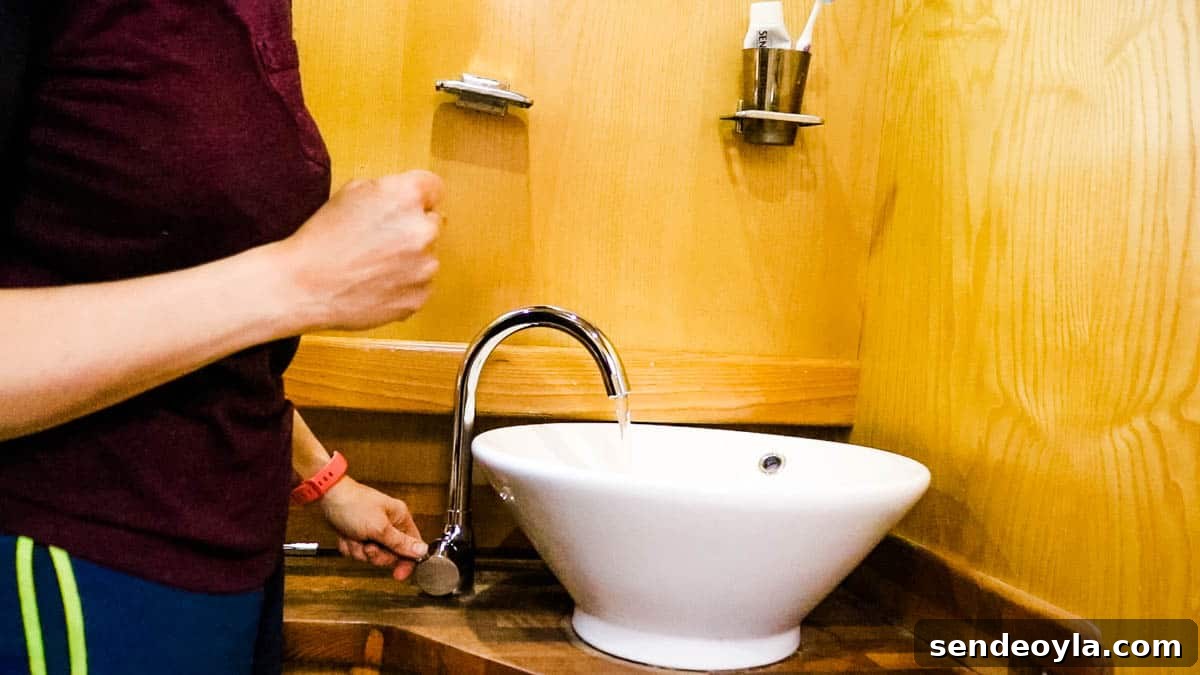
This guide to changing a mixer tap will help whether you’re working in a narrowboat bathroom or a house kitchen. It’s written for anyone facing a leaking tap who would rather replace it than try to repair the cartridge or seals. If you’re installing a pull-out mono mixer tap from scratch, look for a separate guide on fitting pull-out taps for step-by-step instructions.
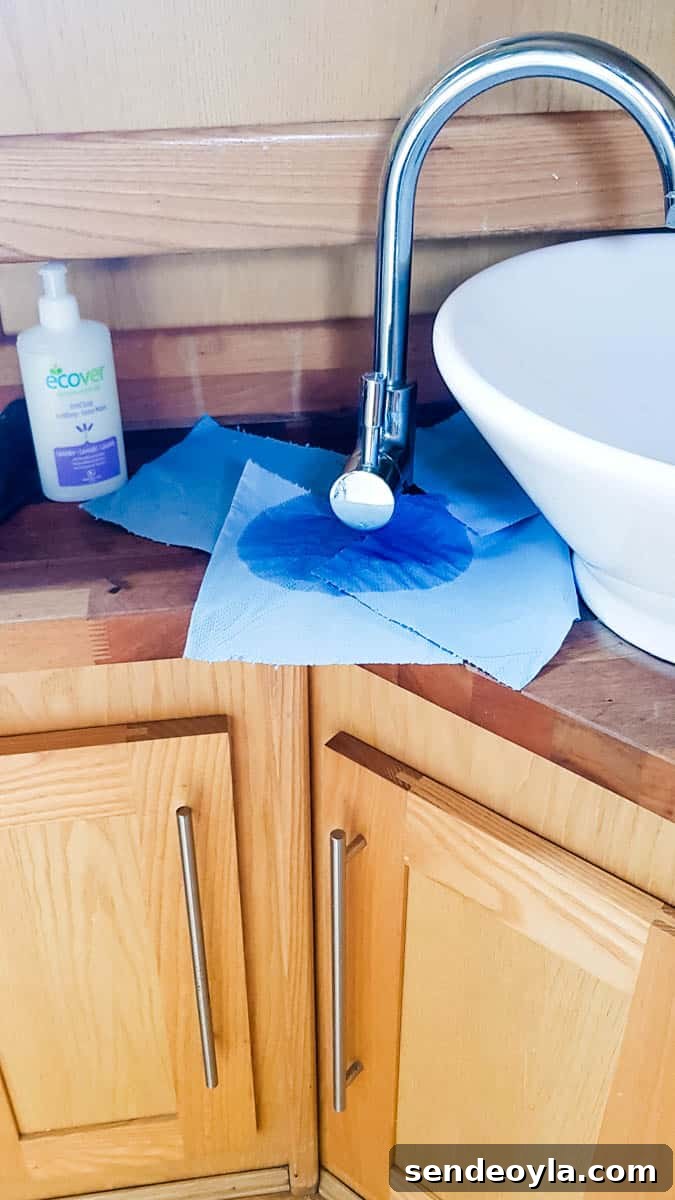
When I surveyed a 57ft narrowboat recently, one of the items that came up was a leaky tap in the bathroom. Over a weekend I removed and replaced the mixer tap and dealt with a few complications caused by mismatched fittings. Below I explain what I did, why I chose to replace rather than repair, and practical tips for making the job as straightforward as possible.
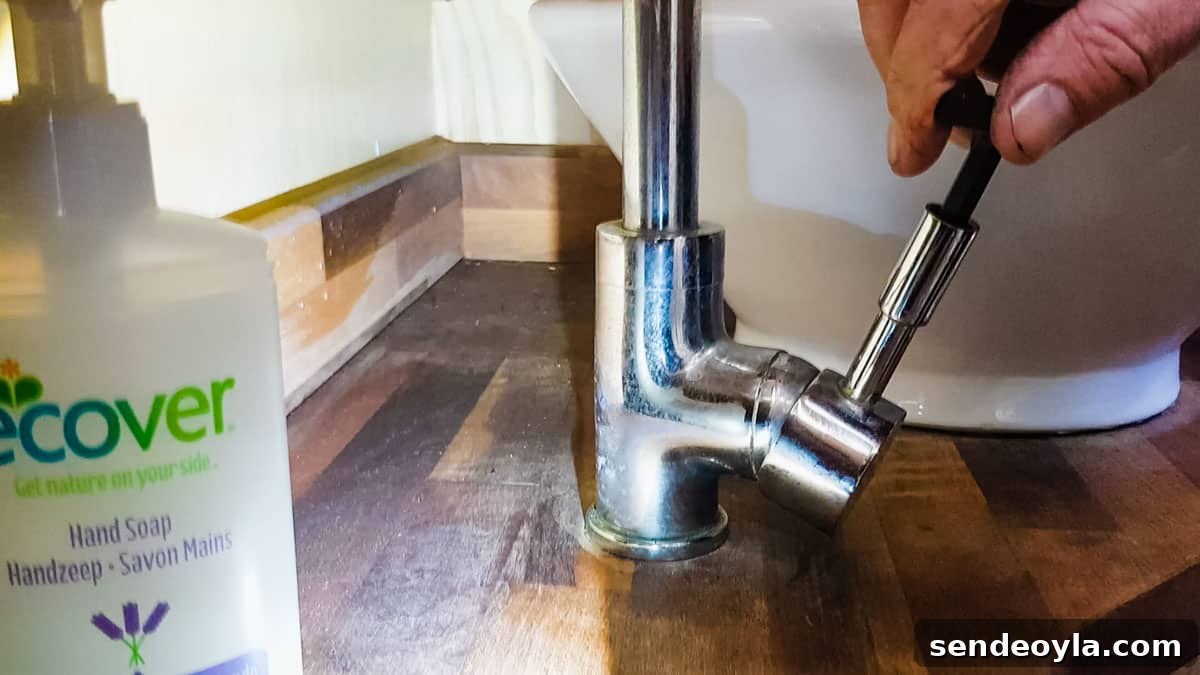
Should You Try to Fix a Dripping Tap?
Most leaks on mixer taps occur around the handle, usually because an internal cartridge or O-ring has worn or seized. You can sometimes remove the handle with an Allen key and replace the cartridge, or soak components in a limescale remover if mineral buildup is the issue. That said, if you don’t know the tap brand, model, or exact seal size, repairs can become frustrating and time-consuming. For many people, fitting a new tap is faster and more reliable than chasing hard-to-find spare parts.
Advice from Experienced Plumbers
- If you don’t know the tap brand and model, it will be harder to source the right cartridge or seals.
- A repair can sometimes be a short-term fix; replacing might save repeated visits later.
- Avoid very cheap replacement taps that may not meet local standards — inferior fittings can create new problems.
I didn’t always follow that last rule and it caused some extra effort on this job, so consider buying from a reputable supplier where you can check how the hose tails and mounting hardware fit before you buy.
Turning Off the Water
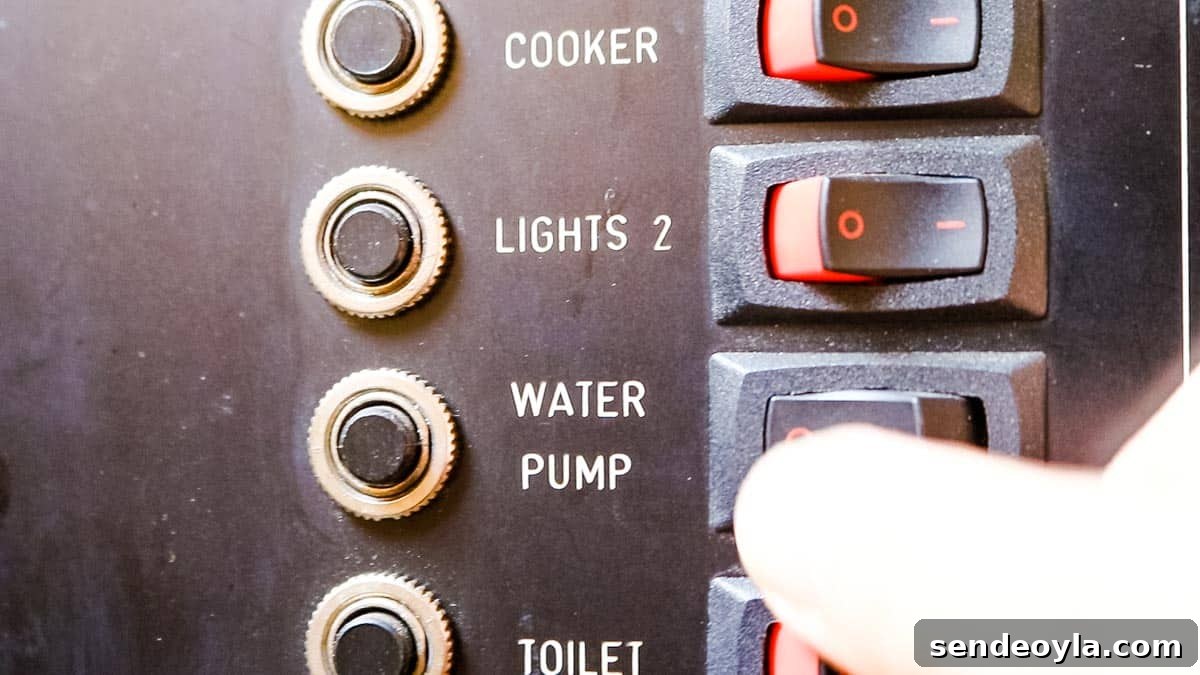
Always switch the water off before you start. In a house you’ll usually have local isolation valves under the sink. On the narrowboat I was working on there were no local isolators, so I turned the water off at the boat’s pump. That shuts off water supply to everything on board, so consider doing any additional small plumbing while you have the system offline.
Preparing to Disconnect the Tap
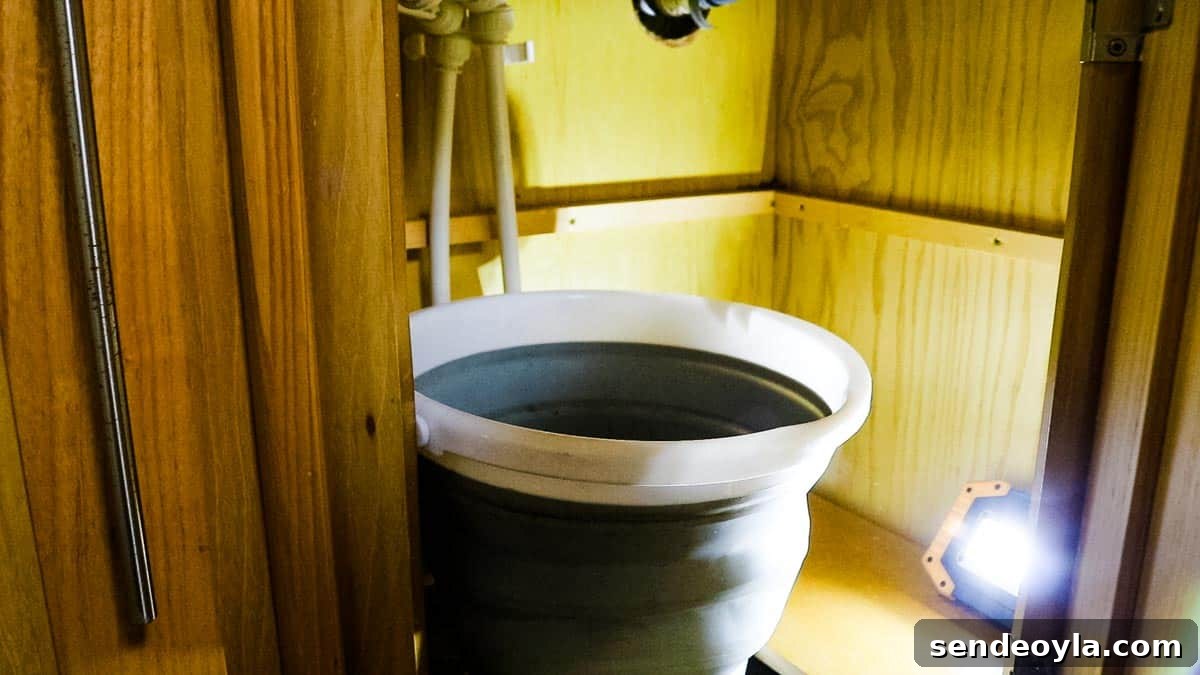
Clear out the cupboard under the sink and remove any fragile items. Have a bucket and several towels or rags ready — plumbing jobs are rarely dry. For confined spaces a shallow food tray or washing-up bowl can help capture water. A bright torch is invaluable in narrowboat cupboards; a USB-chargeable torch is very handy.
Removing the Tap Mount
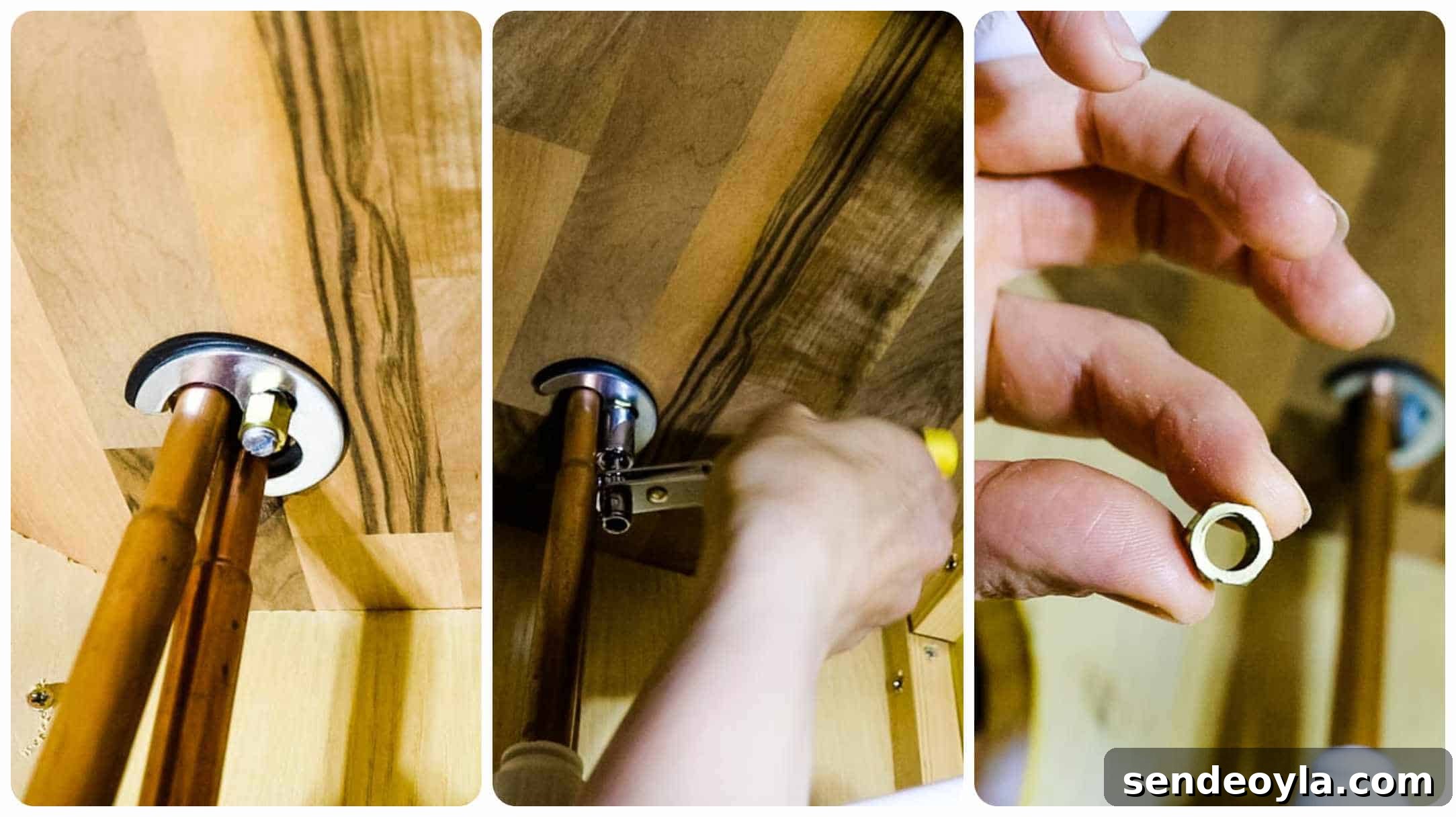
Different taps clamp to the worktop in different ways. Older taps often use a bolt and nut with metal and rubber washers; many modern taps use a large screw barrel and a hex-shaped clamping nut. To undo these I recommend water pliers and a spanner. Unscrew the clamping nut while holding the tap steady above so the tap can be removed easily.
Disconnecting Speedfit and Hose Tails
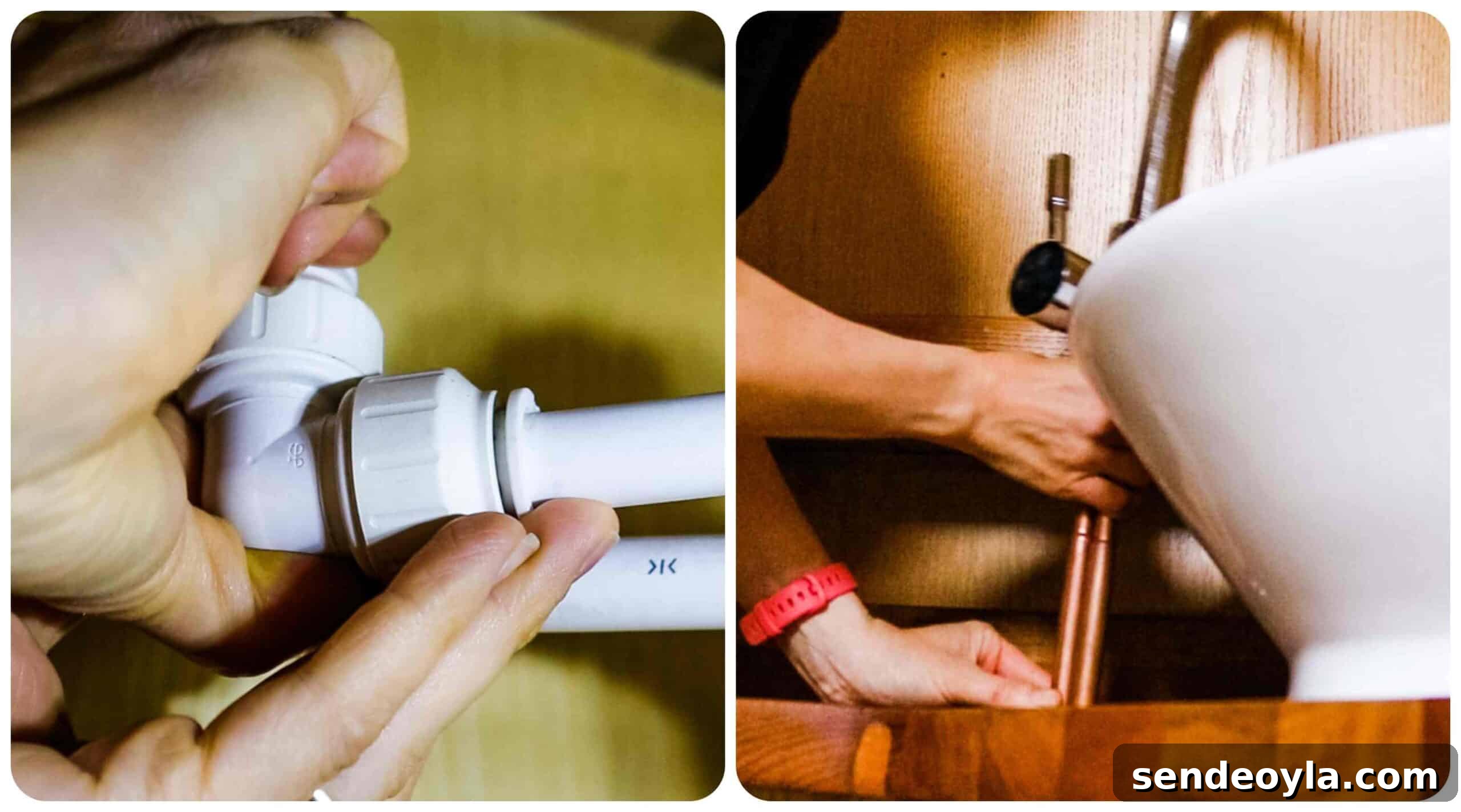
I encountered copper hose tails and a mix of fittings. You might have flexi tails, copper tails or Speedfit plastic pipe. To disconnect Speedfit fittings: unscrew the compression ring on elbows or couplers, pull the collar back and pull the fitting away from the pipe. If the joint is tight because of residual pressure, unscrew a bit more or try a spray of silicone to ease the connection.
Tip: You can buy flexi tails that include integrated isolation valves to make future work easier.
Familiarise Yourself With the New Tap
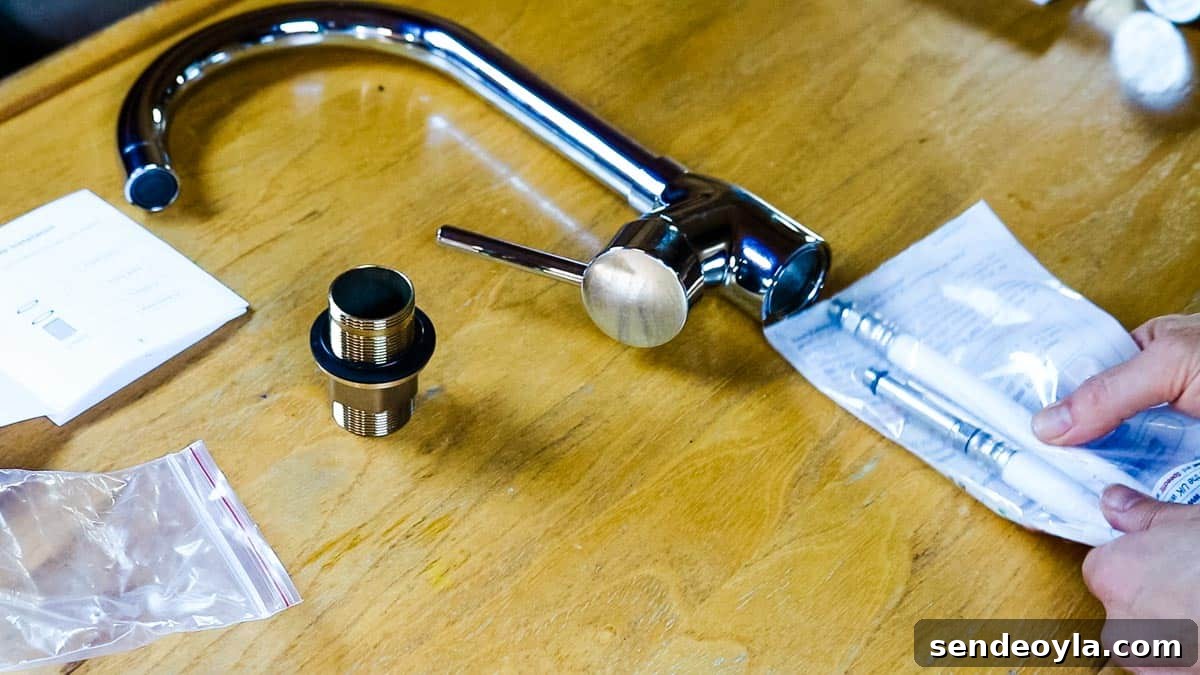
Lay out all the components and read the instructions. Taps differ in how washers, barrels and fittings assemble. If you buy a low-cost tap online, make sure the mounting base and hose tails will actually fit the mounting hardware — on this job the replacement tap’s base was too narrow to accept the provided Speedfit-style hose barrels, so I had to use the existing tap tails instead. Where possible, check fittings in-store before you buy.
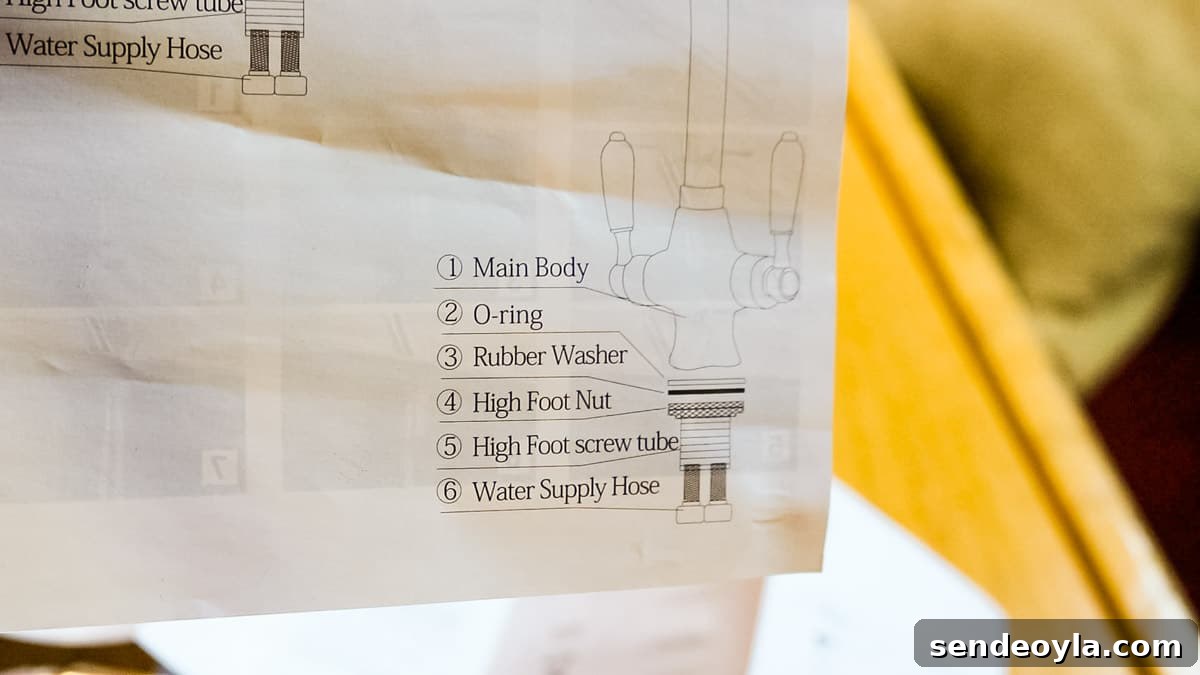
Order and Fit the Tap Tails
- Slide the mounting barrel and nut over each hose tail before fitting the tails to the tap base.
- Feed the tails through the hole in the worktop so you can position the tap from above.
- Fit any rubber or O-ring washers as instructed under the tap base.
Hand-screw the hose tails into the tap and check alignment; don’t fully tighten the clamp beneath the worktop until everything is correctly positioned.
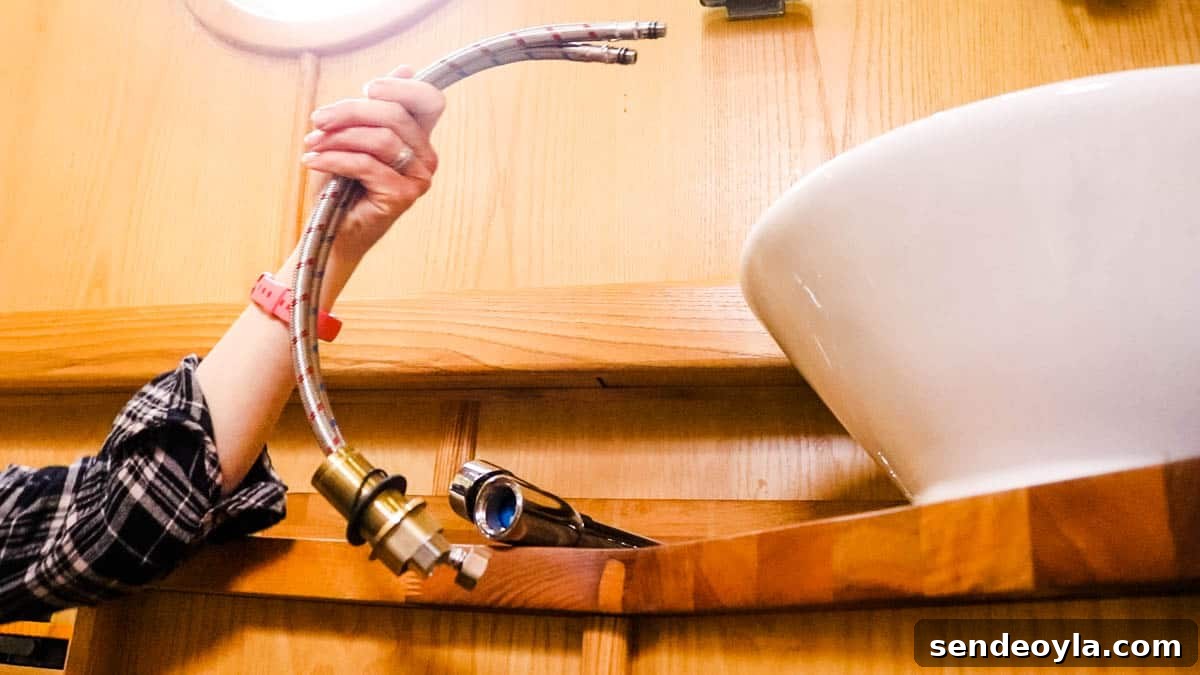
Position the Tap and Fit Isolation Valves
Place the tap so the handle operates comfortably and ensure the O-ring is seated between the tap base and the worktop. From below, hand-tighten the clamping nut to hold the tap in place while you fit the flexible tails and isolation valves.
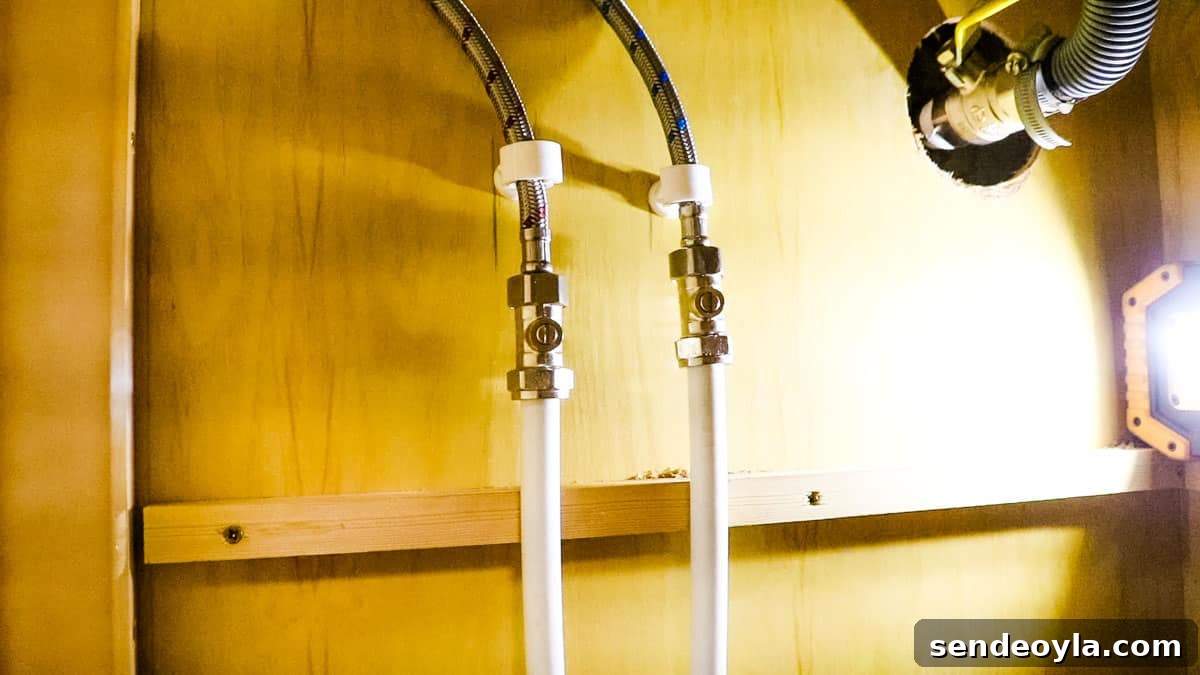
If you’re connecting to 15mm plastic Speedfit pipe, a common approach is to fit 15mm compression isolation valves on the flexi tails, then cut and adapt the boat or house supply pipes to connect to those valves. Brass compression valves have an arrow indicating water flow direction and a slot or handle to turn them on and off. Make sure the arrow points toward the tap and leave the valves hand-tight until everything is aligned.
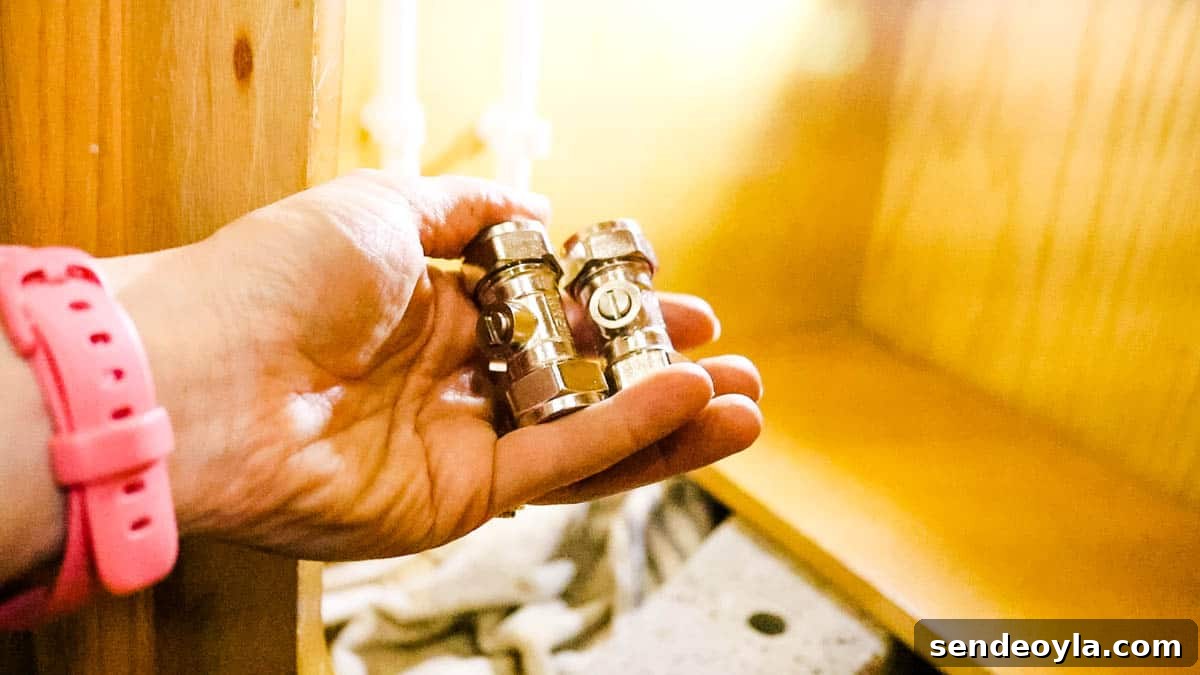
Connecting Flexi Tails to Speedfit Pipe
Line up a flexi tail beside the plastic supply pipe so you can mark where to cut. Use plastic pipe cutters for a clean cut. If you must use a hacksaw, deburr and sand the cut smooth, as sharp edges can damage inserts and seals.
To join brass compression valves to plastic tubing: slide the compression nut on, then the olive, then insert a Speedfit plastic insert into the pipe and push the pipe into the compression fitting. Hand-tighten first, then use a spanner and water pliers to turn until you feel resistance plus one final quarter turn. Don’t over-tighten — compression nuts and olives can damage pipes if forced.
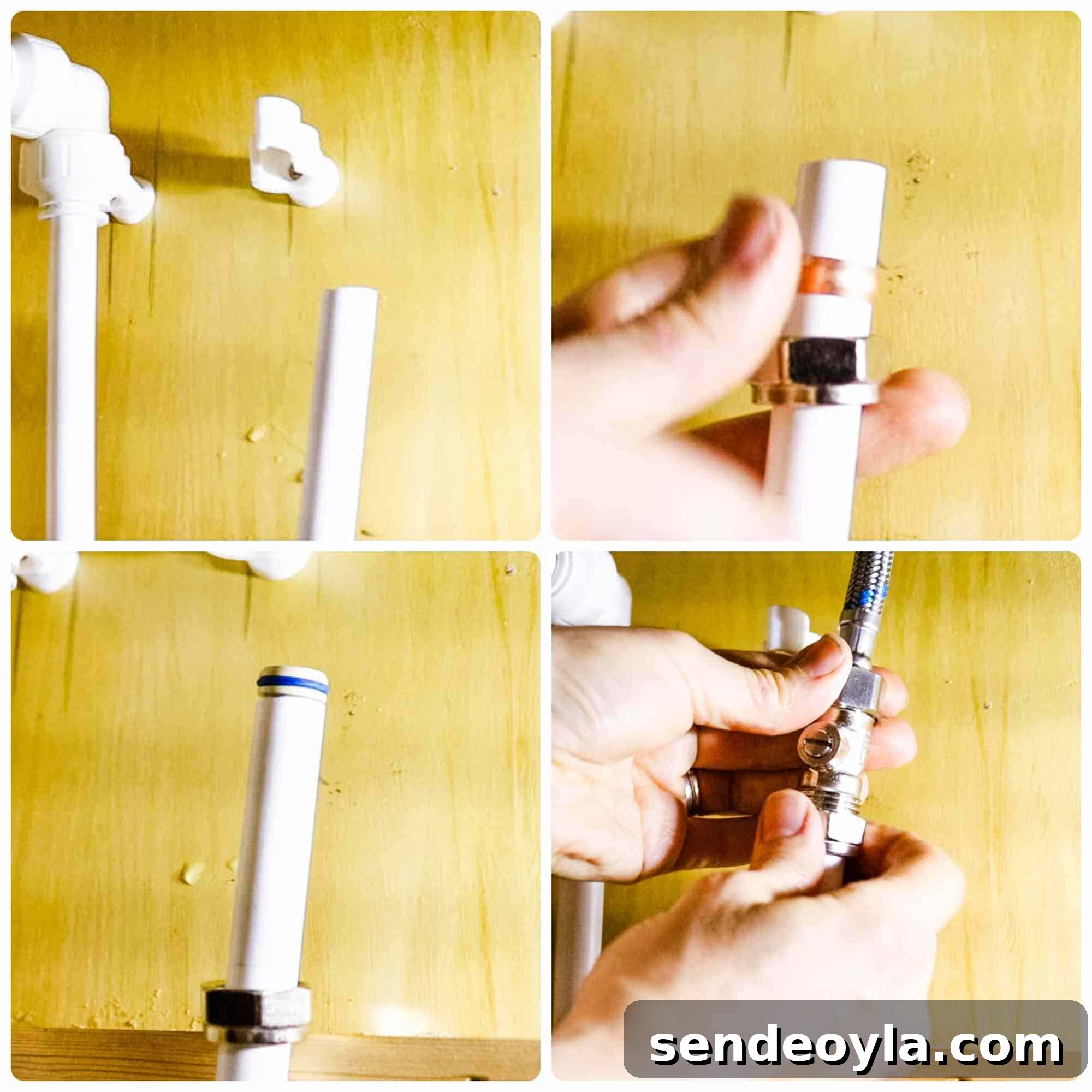
Final Tightening and Testing
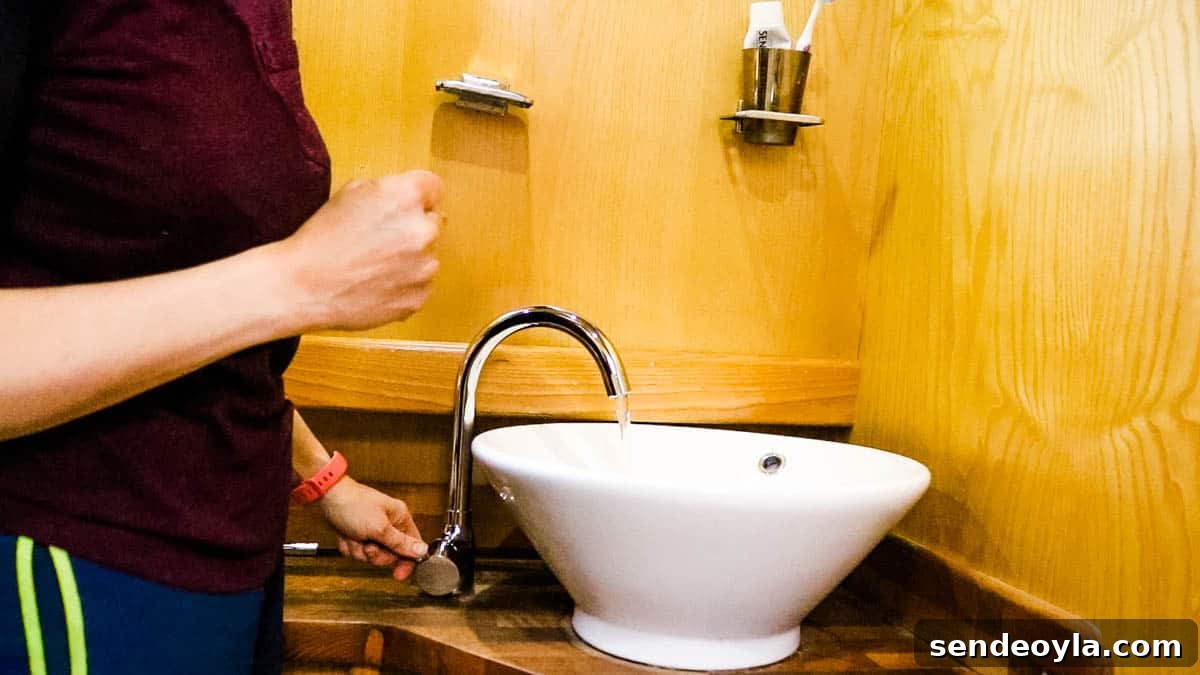
Once all connections are made and hand-tight, dry the area and turn the water back on slowly. On a narrowboat this may mean switching the pump back on at the control panel and opening the isolation valves beneath the tap. Test hot and cold flows — hot water is typically left, cold right — and watch for drips. If you see any leaks, nip the compression nuts up a little and recheck after a short interval.
Tighten the Final Nut and Secure Hoses
Finally, steady the tap above and fully tighten the large clamping nut underneath. Secure the hose tails in clips to prevent them being knocked or strained. Give the whole installation a final clean and check. If everything is dry and operating correctly, you’re done.
Quick Checklist: Changing a Mixer Tap
- Turn off the water supply and prepare a bucket and towels.
- Remove the old tap by undoing the clamping nut and disconnecting hose tails.
- Check the new tap’s parts and slide the mounting barrel and nut over the tails first.
- Feed tails through the worktop, fit washers and hand-tighten the hose tails to the new tap.
- Fit isolation valves to the flexi tails and connect to supply pipe with appropriate inserts and olives.
- Hand-tighten then finish with a spanner and water pliers; do not over-tighten.
- Turn the water back on, open isolators, test hot and cold, and check for leaks. Re-nip if necessary.
Printable Summary
Changing a Mixer Tap
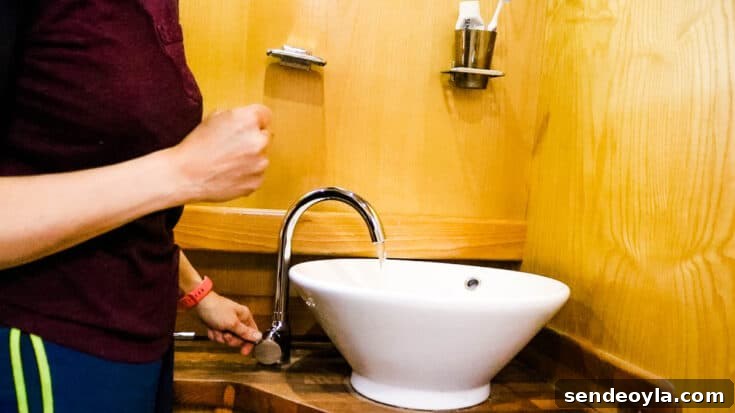
A practical guide to replacing a mixer tap in a narrowboat or house. Useful when a tap is leaking and replacing it is quicker or more reliable than trying to repair internal parts.
Materials
- Mixer tap
- Plastic pipe cutters
- Speedfit inserts (if using plastic pipe)
Tools
- Water pliers
- Spanner
- Torch and towels
Instructions
- Turn the water off.
- Remove the old tap mounting and disconnect hoses.
- Place a bucket and towels under the plumbing to catch spills.
- Thread the new hose tails through the tap mounting barrel and into the worktop hole.
- Hand-screw the hose tails into the tap and position the tap.
- Fit isolation valves to the bottom of the flexi tails and align arrows with flow direction.
- Cut supply pipe cleanly and insert Speedfit inserts if required.
- Assemble compression fittings with olive and nut, hand-tighten then finish with a spanner.
- Turn the supply back on, test, and check for leaks; tighten slightly if needed.
Further Reading
- How to cut a kitchen sink hole in a worktop
- Fitting and sealing a kitchen sink
- Plumbing a kitchen sink waste and trap
- Our buying a narrowboat experience