
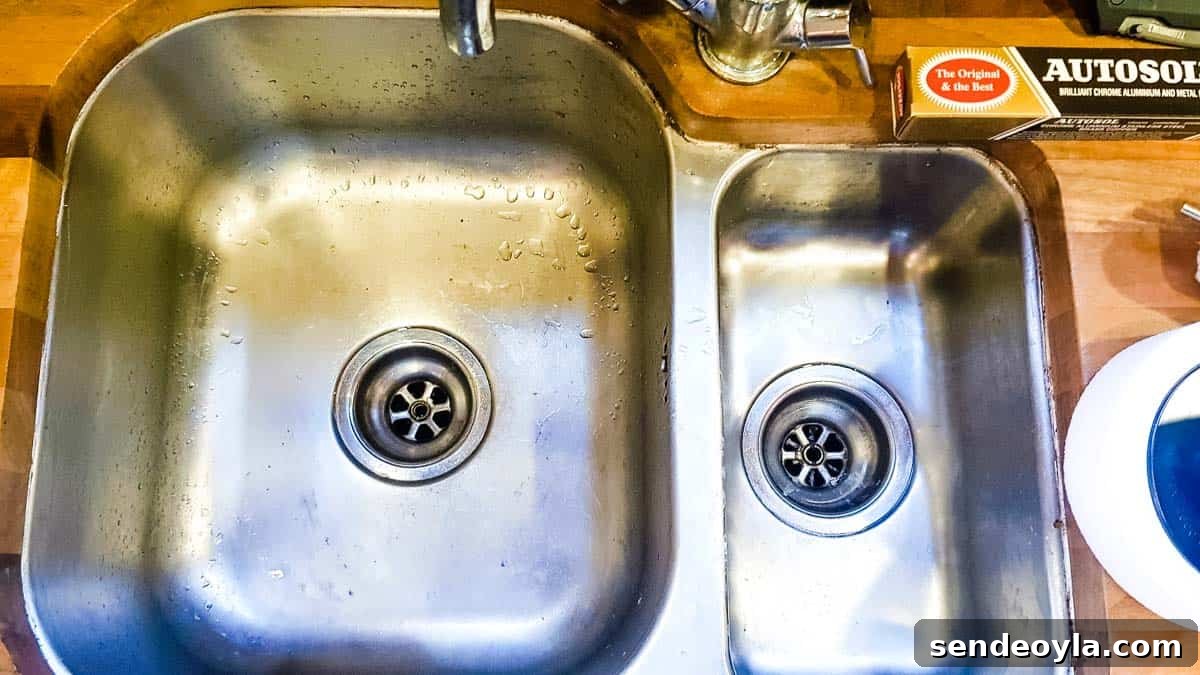
How to remove scratches from a stainless steel sink using a couple of power tools, minimal elbow grease and a metal polish paste.
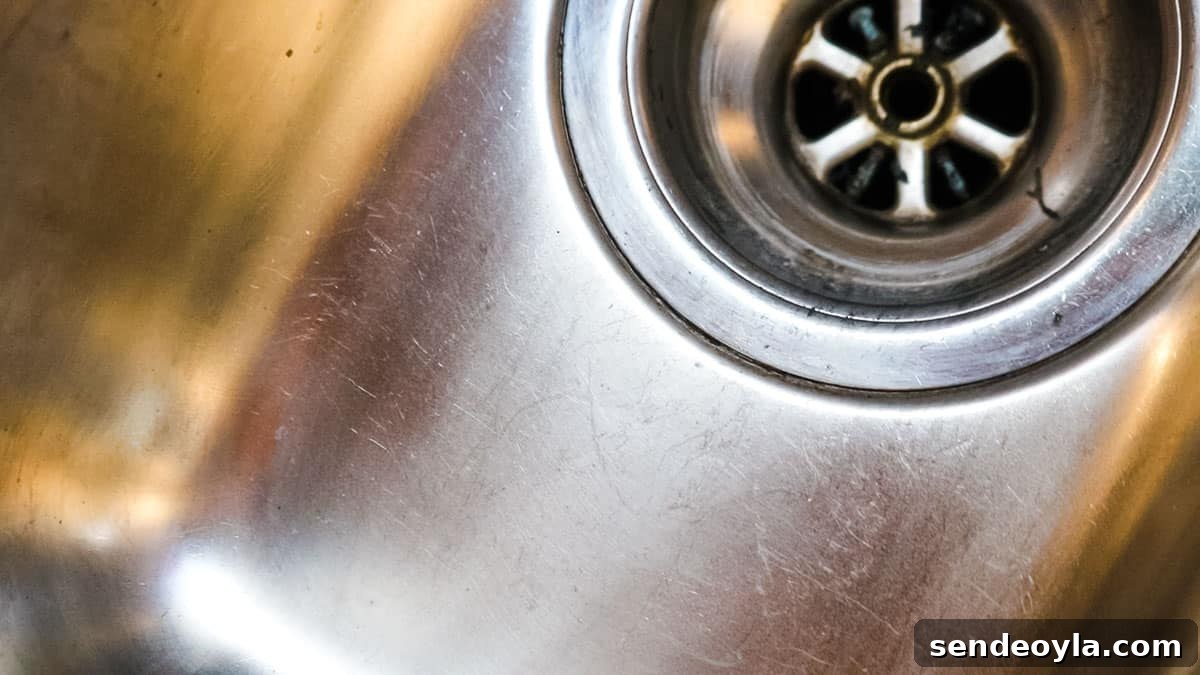
Many people assume a scratched stainless steel sink must be replaced, but in most cases you can restore the finish quickly and affordably. With the right metal polish, a buffing pad, and either a hand polisher or a drill attachment, light and moderate scratches can be smoothed and the sink restored to a near‑new mirror finish. This guide explains the tools, steps and tips I used to get great results in about an hour for a double sink.
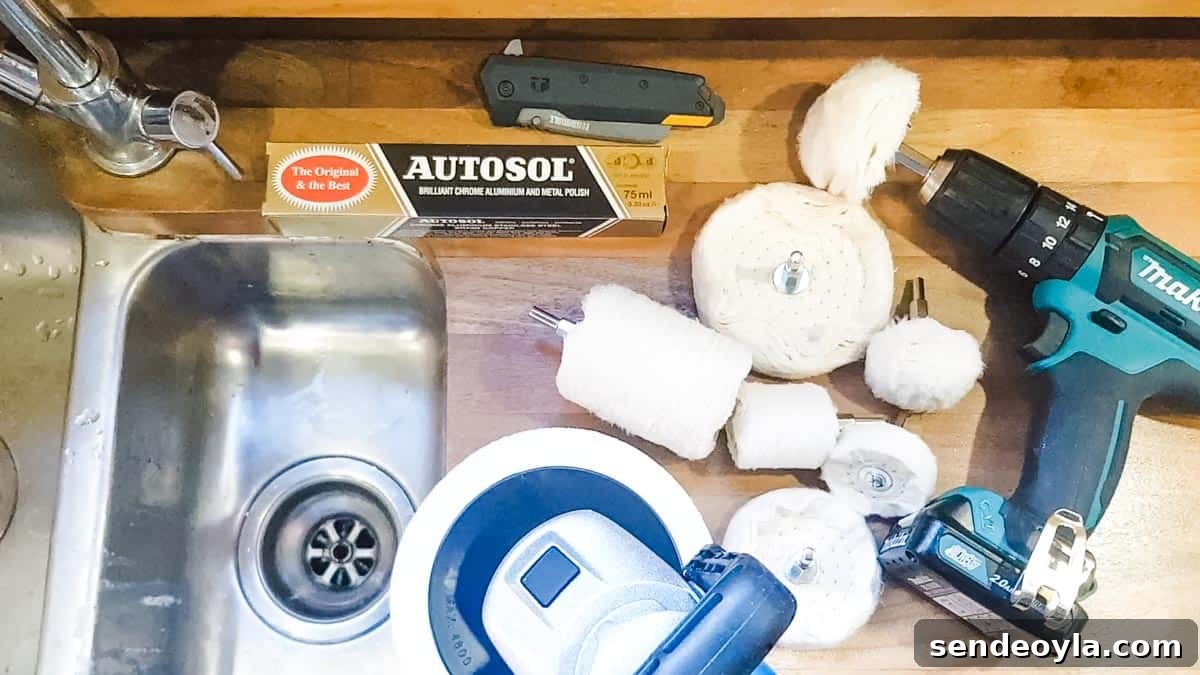
Polishing kit and supplies
Below are the main items I used. You can adapt based on what you already own—many alternatives work, but the combination of a quality metal polish and mechanical buffing makes the job fast and consistent.
- Buffing wheel pads for a drill attachment
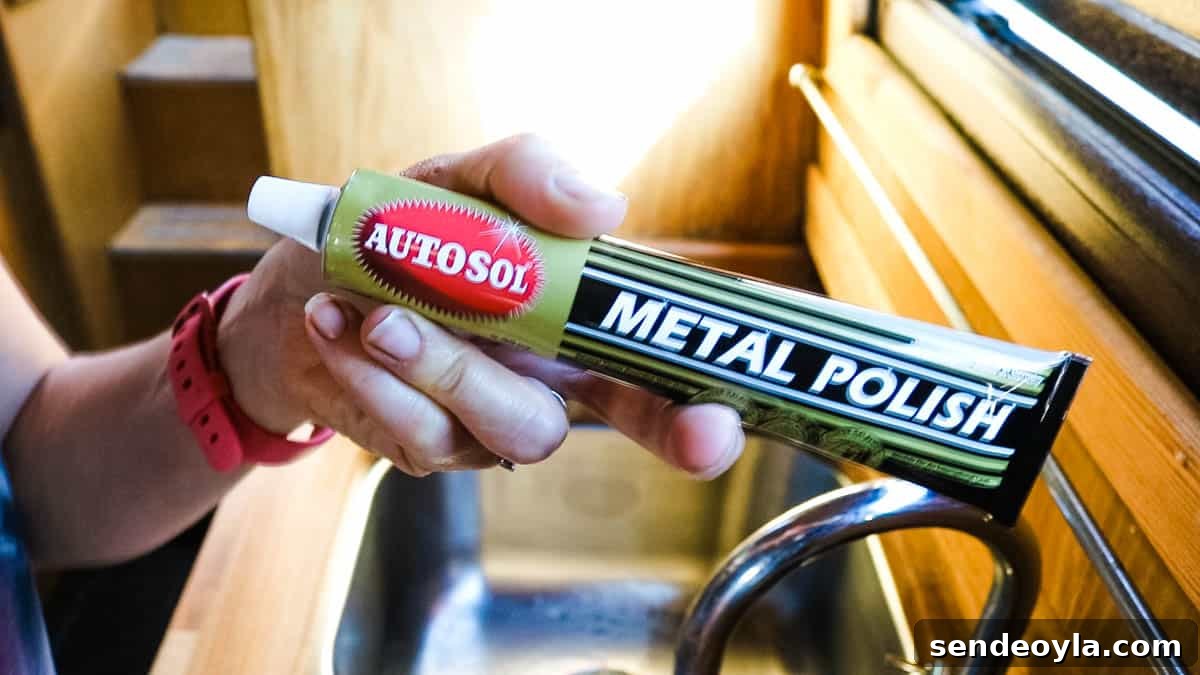
- Autosol metal polish (metal polish paste is ideal for stainless steel)
- Tough, sharp knife or scraper for removing old silicone
- Electric polisher for broad surfaces (or a small handheld polisher)
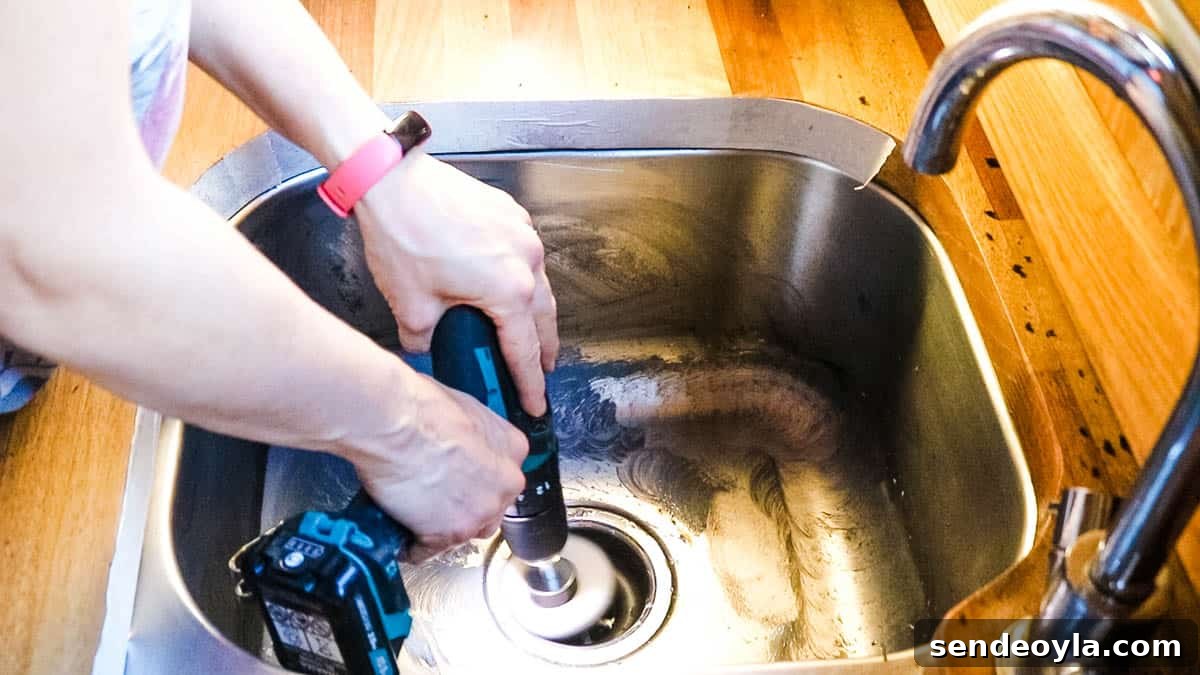
- Cordless drill with buffing pad attachments for corners and drains
- Masking tape to protect adjacent surfaces
- Clear silicone to reseal around undermount sinks
- Degreaser spray (e.g., Pink Stuff degreaser) or a washing‑up liquid solution
- Microfibre cloths for final wipe down
- Hearing protection and gloves if desired
Why stainless steel sinks scratch
Stainless steel is durable, but even new sinks develop fine scratches from utensils, pans and abrasive cleaning pads. Over time those scratches scatter light and make the surface look dull and worn. Polishing removes the superficial tarnish and evens out small scratches so the sink regains shine. Note that very deep gouges or structural damage may need professional repair or replacement, but most everyday marks respond well to polishing.
Best polish and alternatives
For this project I used a metal polish paste designed for stainless steel; it behaves like a thick toothpaste and buffs away grime and oxidation when worked at speed. Autosol is a widely recommended product, but other metal polishes can work too. Some readers report success with Flitz metal polish, household products like paste cleaners, or mild abrasive mixes—however, results vary and mechanical buffing usually produces the most consistent finish.
- Flitz metal polish and buffing balls
- Pink paste cleaners or oven cleaners for stubborn stains (use with caution)
- Household paste cleaners mixed with fine sugar or salt for a mild abrasive test
- Polishing toothpaste can be tested on tiny areas but is not as effective as metal polish
How to clean and polish a stainless steel sink
Follow these steps for a safe, effective polishing session:
- Clean the sink thoroughly to remove food debris and grease. Use a degreaser or washing up liquid and dry the surface.
- Turn off the water to avoid accidental spray near power tools and remove or mask anything you don’t want polished.
- If there is old silicone around an undermount sink, carefully remove it with a sharp knife or silicone remover and clean the area.
- Apply a small ribbon of metal polish to a buffing pad on the polisher or drill attachment. A little polish goes a long way.
- Work in sections. Use the electric polisher for the large flat areas and the drill with a small buffing pad for drains, corners and tight radii. Keep the pad moving to avoid overheating a single spot.
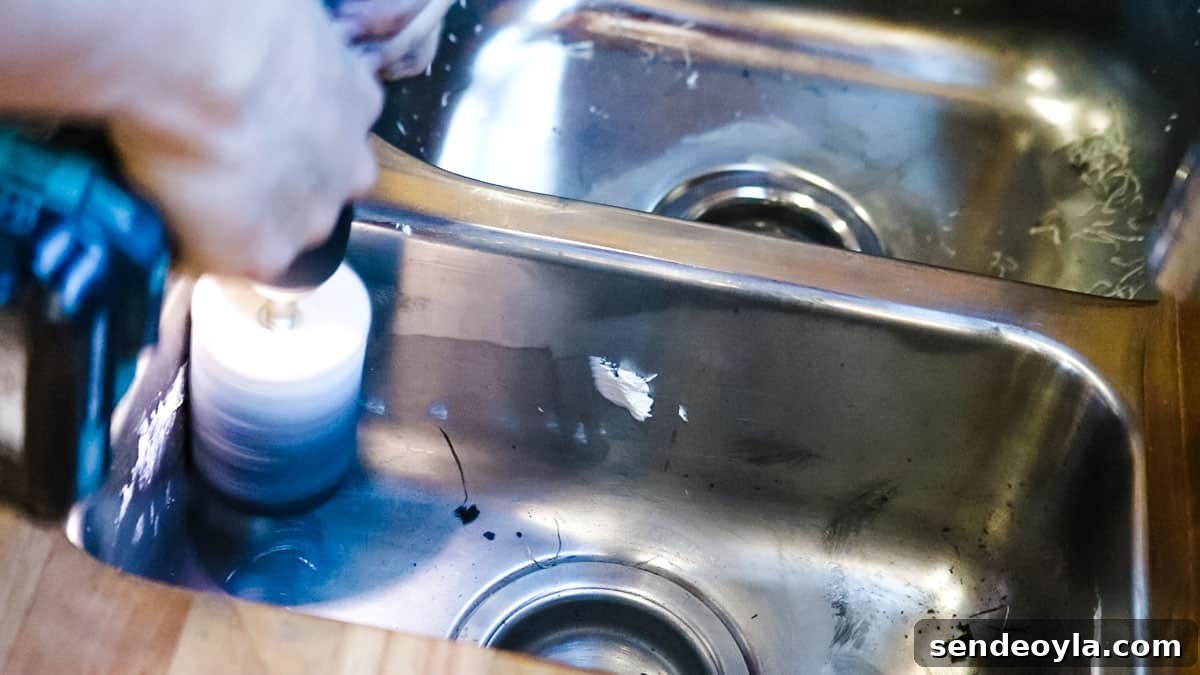
- You’ll see a dark residue appearing as the polish lifts oxidation and fine metal particles. Wipe away residue periodically with a cloth and check progress.
- Once satisfied, clean the sink with a degreaser to remove polish residue and buff off with a clean microfibre cloth for a final shine.
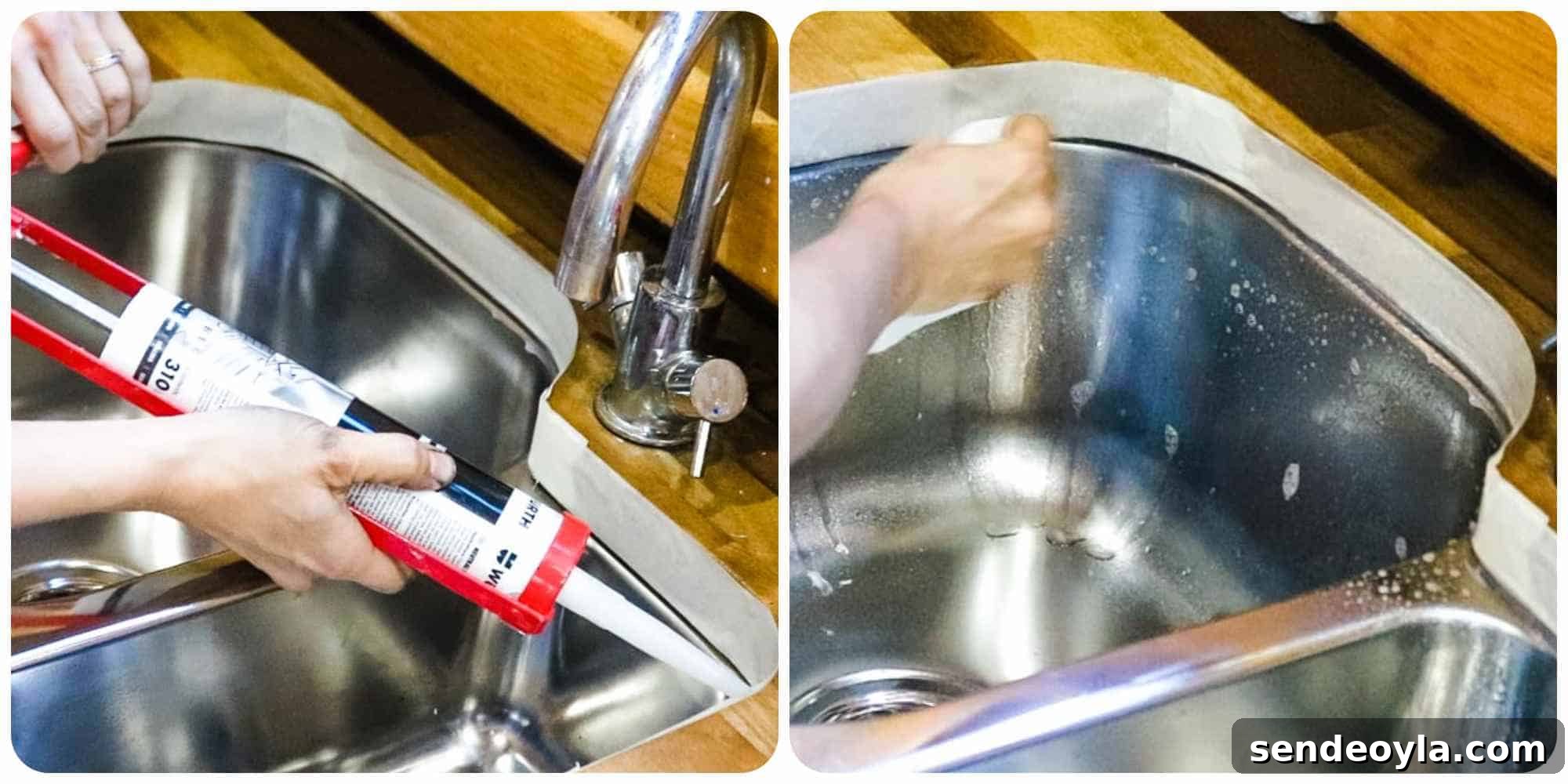
- If you removed old silicone, mask the worktop edges, apply a thin bead of clear silicone around the sink, and smooth it. Use a little washing up solution to wipe away excess before it sets.
Polisher vs drill attachments — pros and cons
Both tools speed the job compared with hand polishing, but they serve different roles:
The polisher
Best for large flat surfaces since it covers more area quickly and won’t lose power. It’s not ideal for tight corners or the drain area and can damage foam pads if it catches on a sharp edge.
Drill buffing attachments
Perfect for tight areas, drains and corners. They work well with cordless drills if you don’t have a mains polisher nearby and let you reach awkward angles without removing fixtures.
How long it takes
For a typical double undermount sink, expect around one hour of active polishing when using power tools. Hand polishing the same area could take several hours and usually won’t achieve the same uniform finish.
Reapplying silicone around the sink
After polishing and cleaning, reapply clear silicone if you removed the old sealant. Tape the worktop edge (not the sink) to get a neat line, run a steady bead of silicone, then spray the bead lightly with washing up solution and smooth away excess with a cloth. The soapy solution prevents the silicone from sticking to the cloth and makes cleanup easy before it cures.
Top tip
If silicone gets on surfaces you want to protect, deal with it immediately while still wet—spray with soapy water and wipe away. Once silicone dries it’s much harder to remove cleanly.
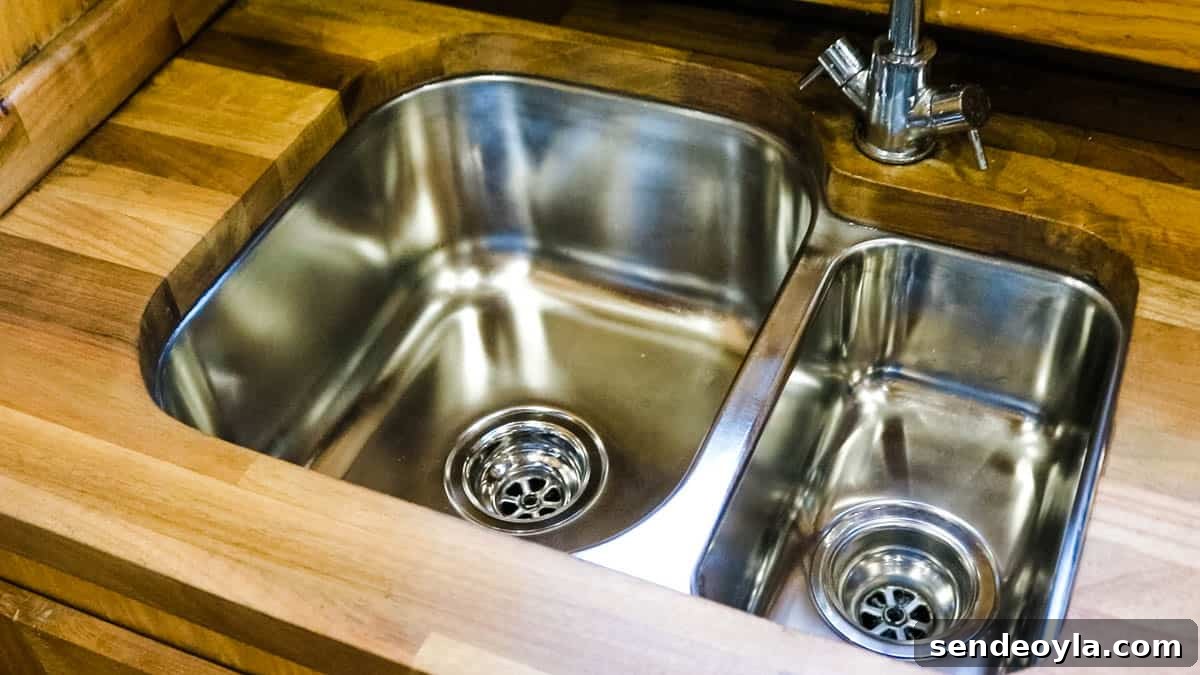
Final results
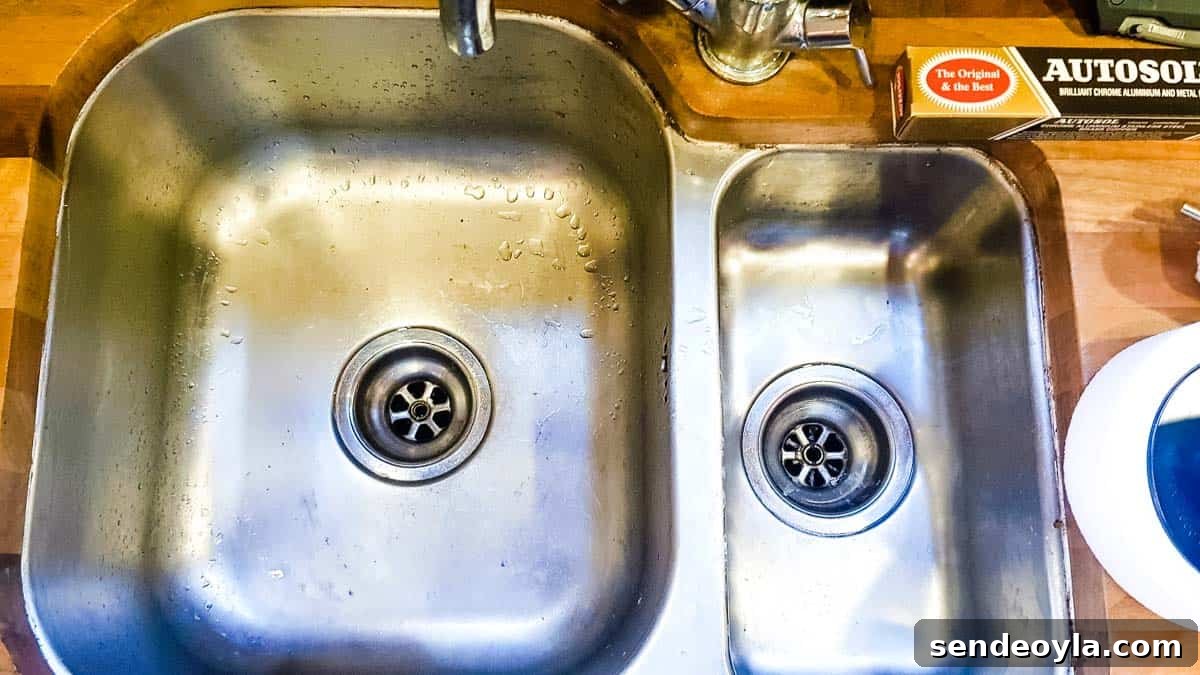
With a bit of patience and the right tools, the sink can be transformed to a near‑new look. Minor knocks from years of use may still be visible up close, but for everyday use and aesthetics the restored mirror finish is usually indistinguishable from a replacement sink. Finish by buffing gently with a microfibre cloth to enhance the shine and remove any final streaks.
Quick printable steps
Prep time: 2 minutes • Active time: ~1 hour • Difficulty: Beginner
- Clean sink and remove debris.
- Turn water off and protect surroundings with masking tape.
- Remove old silicone if needed and clean the area.
- Apply metal polish to buffing pad and work in sections with polisher and drill attachments.
- Wipe away residue and clean with degreaser.
- Reapply silicone if required and smooth the bead.