
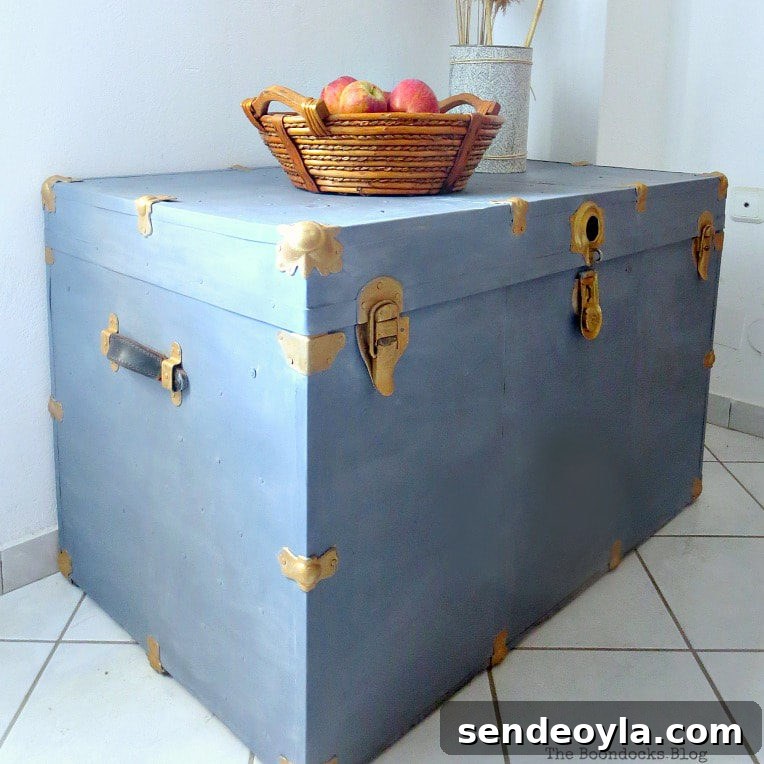
After generations of crossings back and forth across the Atlantic, my family has collected quite a few vintage metal trunks. With a little paint, these weathered pieces can be transformed into beautiful, usable storage — here’s how I revived one using Old Fashioned Milk Paint.
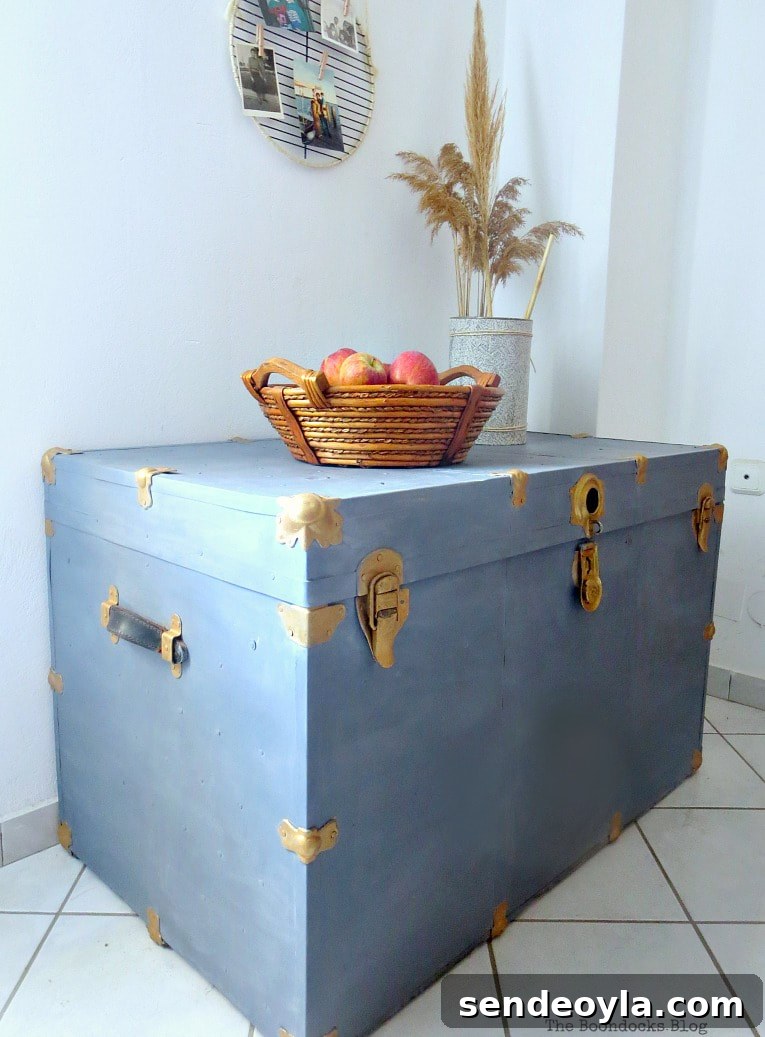
Painting Old Trunks
Disclosure: I received product for this project, but all opinions here are my own.
My basement holds more trunks than most homes — a consequence of family moves between countries over the years. I counted about five the last time I looked. One was already given a makeover years ago with decoupage and became what I call the Chivalrous Trunk, but the others were sadly neglected in the dark. It was time to bring one upstairs and give it new life.
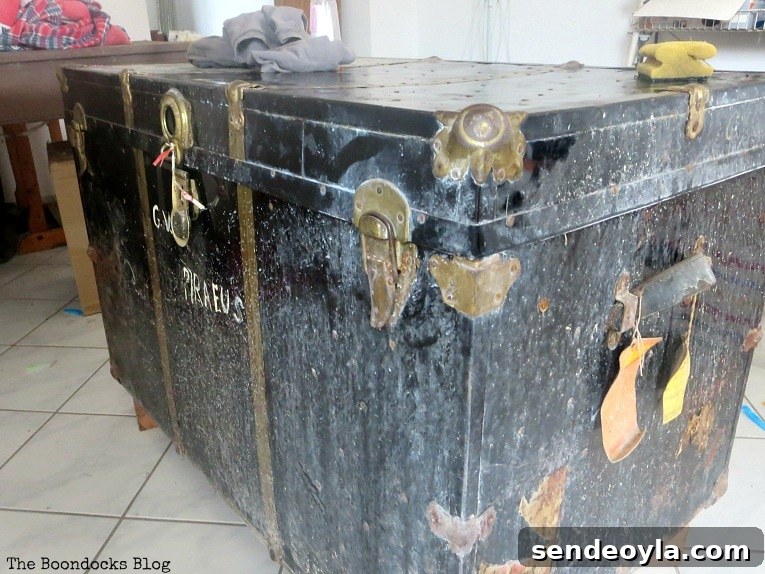
As an Old Fashioned Milk Paint Brand blogger, I was curious if true milk paint would adhere to metal. I decided to test it on this trunk and document the steps so you can revive a metal trunk too.
How to Revive a Vintage Metal Trunk
Step 1: Clean. I started by wiping away years of dust and grime with a simple vinegar-and-water solution. A good cleaning helps paint stick and removes residues that can cause uneven coverage.
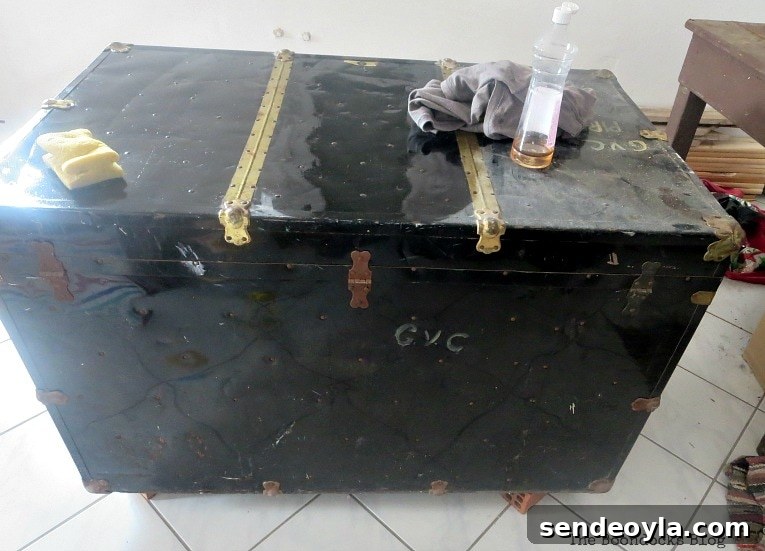
Step 2: Prepare to paint. I could have painted it myself, but I hired one of my daughters for the job — she’s an artist, so I trusted her eye. We used the SafePaint version of Old Fashioned Milk Paint because this trunk didn’t need chippy, distressed texture; it already had plenty of dents. SafePaint provides a smooth, durable finish better suited to metal.
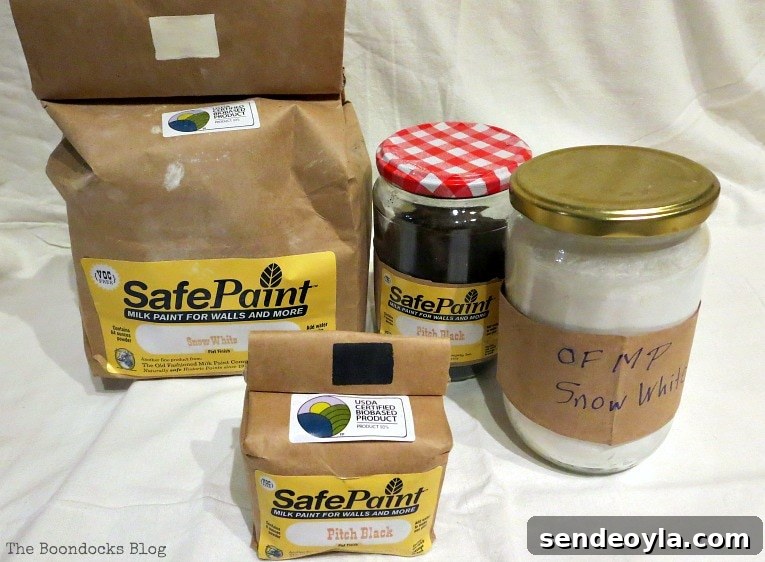
Step 3: Mix color. We blended Pitch Black and Snow White to arrive at a soft grey. Mixing milk paint is simple: add the powder to a jar, pour equal parts warm water, stir, and let it sit for about 20 minutes until it becomes slightly foamy. We adjusted the ratio by adding small amounts of black until the exact shade was reached. One of the great benefits of milk paint is how easy it is to custom-mix any tone you want.
You can mix only the quantity you need and refrigerate any leftover mixed paint for up to three days, which is handy for small projects like this trunk.
After a few thin, even coats, the trunk took on a soft, cloud-like grey. We purposely avoided over-mixing the powder so subtle variations in shade remained visible, giving a delicate, textured look rather than a flat uniform coat.
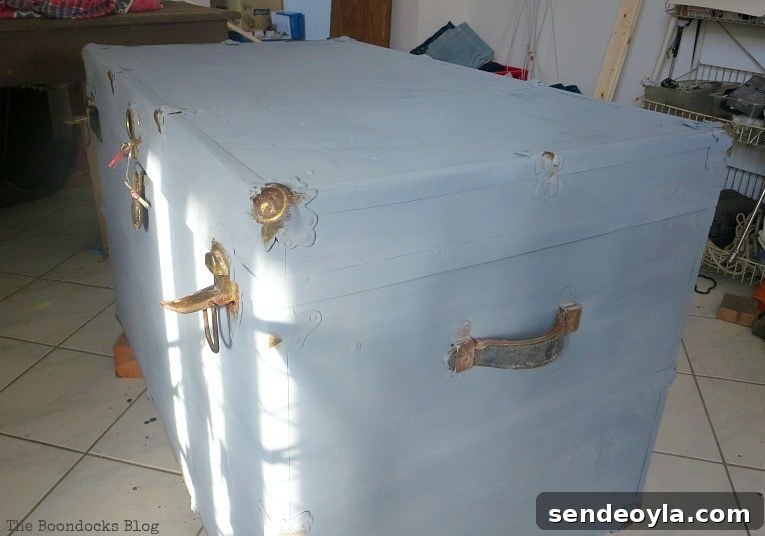
Step 4: Seal the paint. Once the paint was dry, we sealed the finish with a beeswax-based furniture wax. Wax protects the surface, enriches the color, and adds a soft sheen. You can use a store-bought wax or make simple beeswax polish at home to match your scent and finish preferences. We rubbed wax into the painted areas and even into the metal handles to protect and warm the finish.
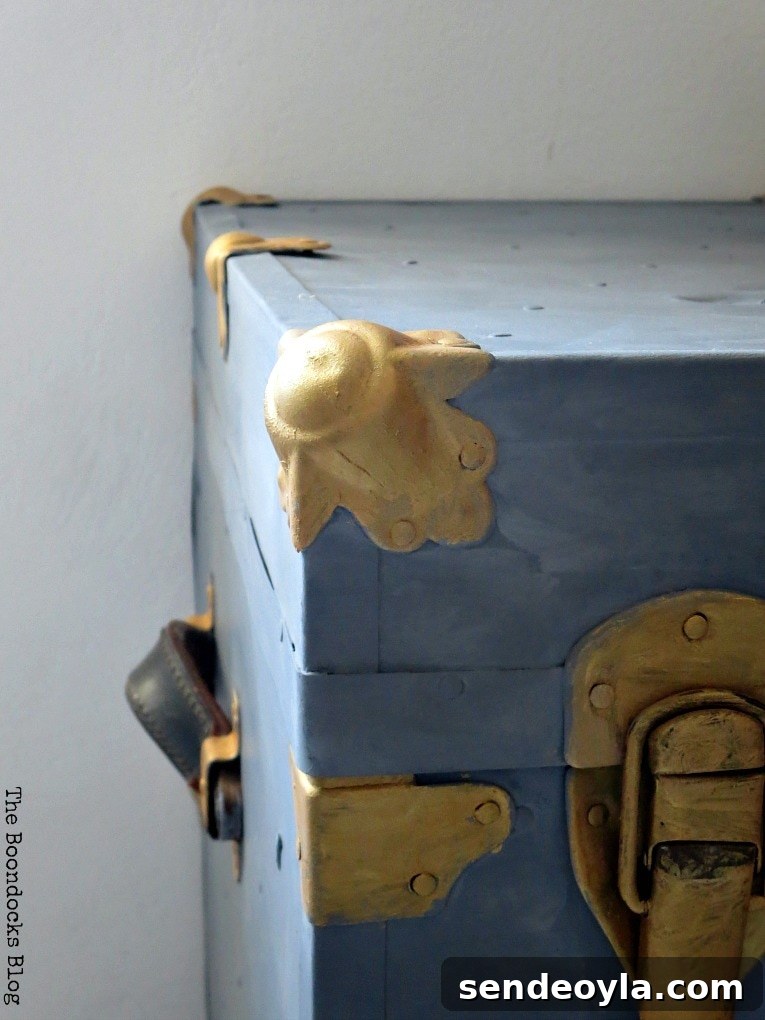
Step 5: Refresh the hardware. To complement the soft grey, I added a metallic burnished brass finish to select hardware pieces. We kept the hardware painting minimal — only some studs and select metal accents — because a restrained approach preserved the trunk’s character and avoided overworking the design.
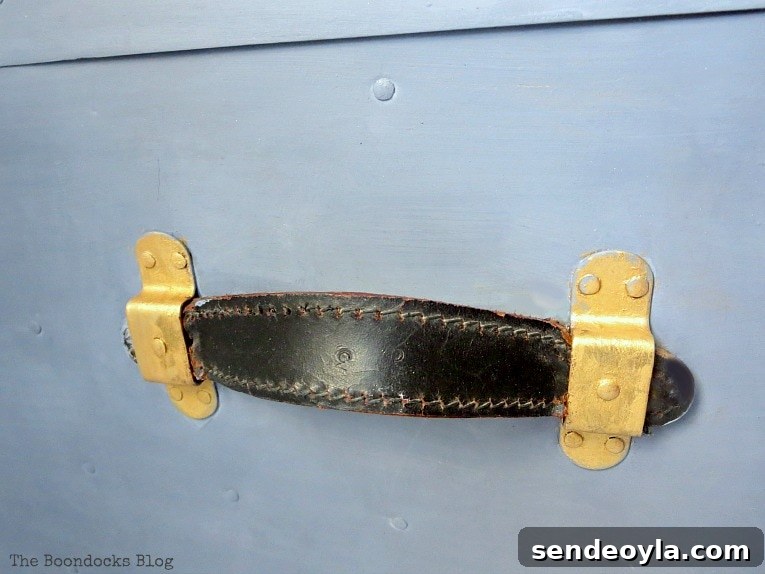
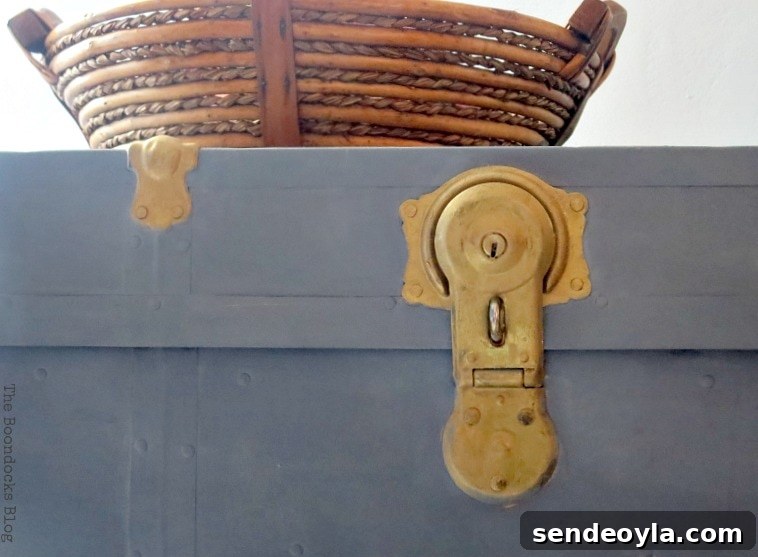
The final result is a trunk that still shows its history through small dents and marks, but now it has a fresh, elegant appearance that complements the burnished hardware and soft grey paint. It’s presentable, useful for storage, and has earned a place in the living space rather than the basement.
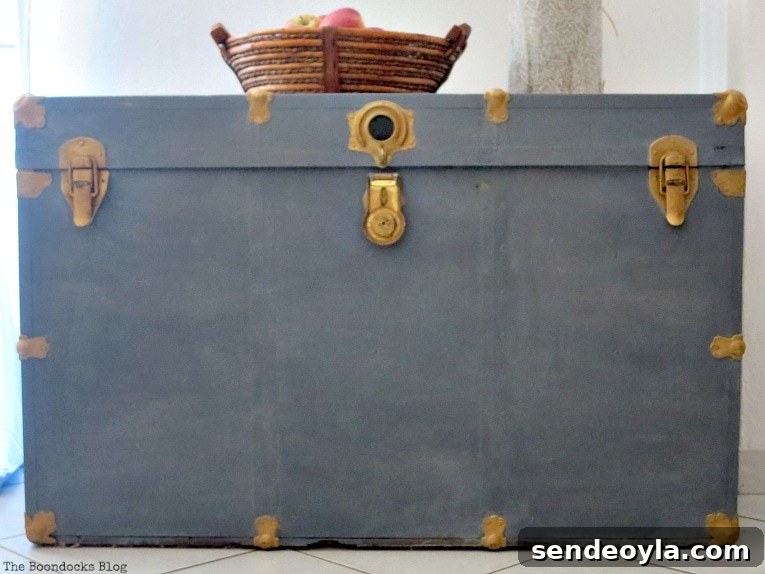
I’ve had this trunk in use for a month and I’m impressed with how well this true milk paint performs on metal. It went on smoothly and sealed up nicely with wax. Best of all, my daughter earned a little extra spending money — a win–win.
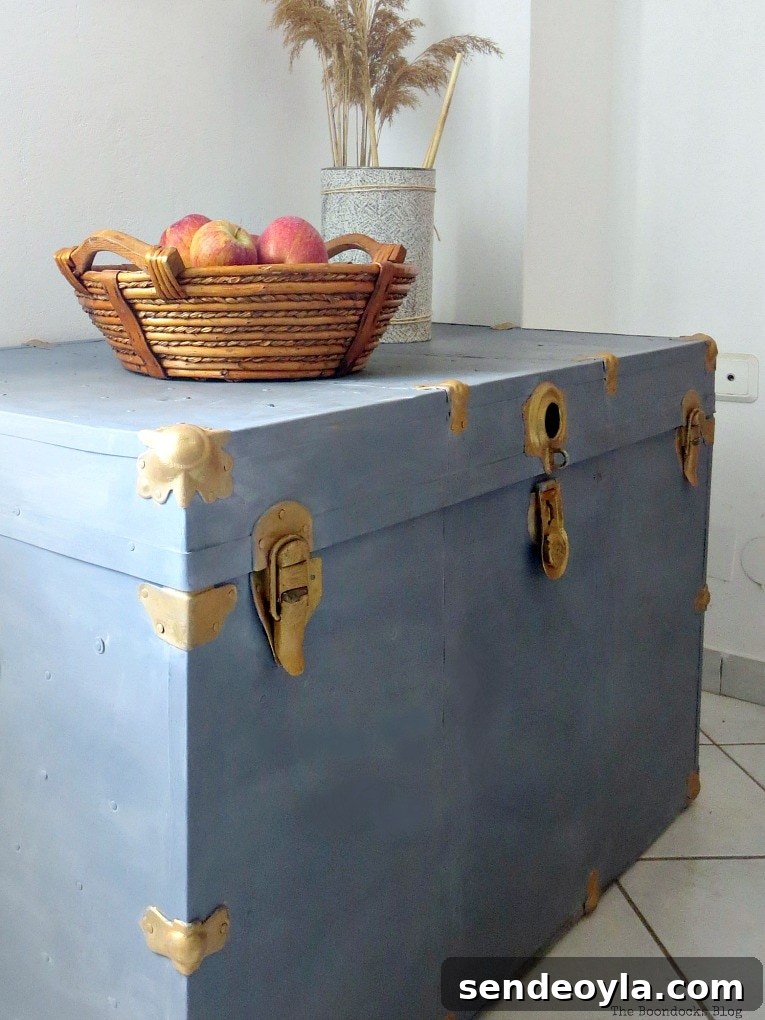
That’s my step-by-step on how to revive a metal trunk using Old Fashioned Milk Paint: clean thoroughly, mix and apply the milk paint, seal with wax, and selectively refresh hardware for a polished finish. Now I’m deciding what to do with the other trunks — any ideas?
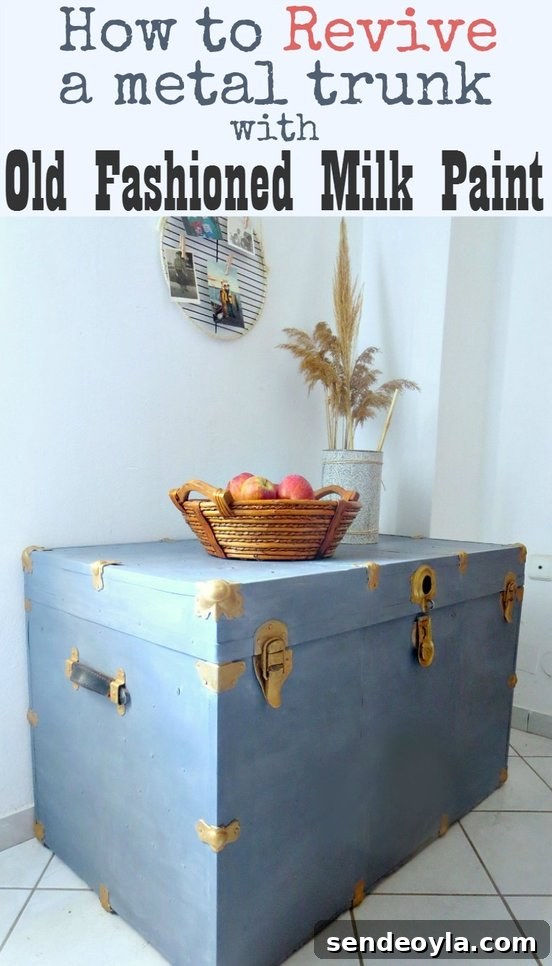
If you enjoyed this project, share it with friends or save the images for inspiration.
Subscribe to my blog if you’d like more restoration projects delivered twice a week — sign-up details are on the site. Your email will remain private.