
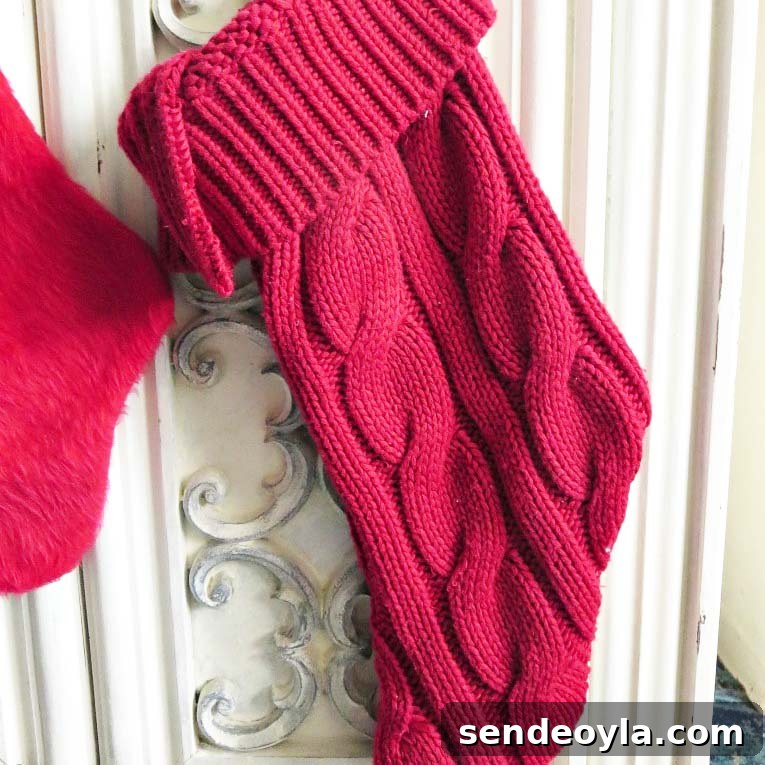
I always try to use up supplies I already have before buying more, especially for holiday crafting. I had a favorite red sweater that no longer fit because the neck was too tight, but instead of tossing it I decided to repurpose it into something festive. Below I’ll show you how to make easy sweater Christmas stockings—simple, cozy, and perfect for upcycling old sweaters into durable holiday decor.
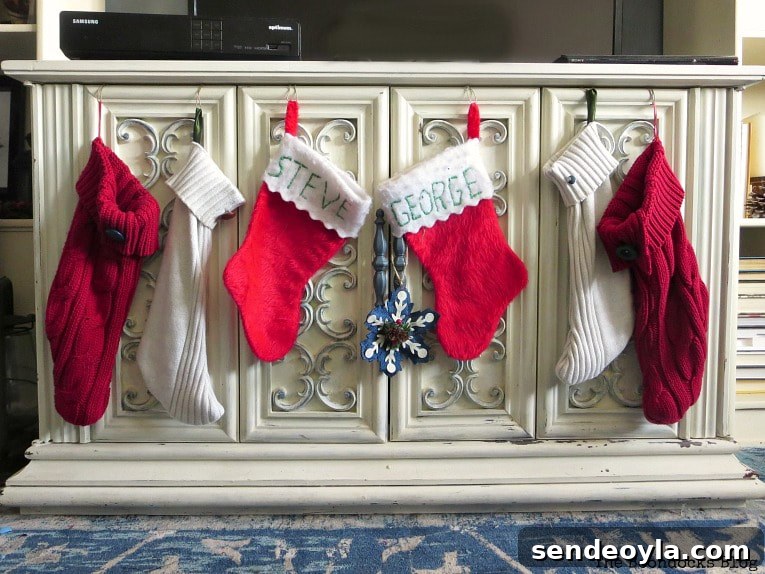
After moving to the United States I had to rebuild my Christmas decorations from scratch. The only originals I kept were a couple of felt stockings I made years ago for my boys, but they were looking tired. Last year we used inexpensive felt stockings that didn’t hold up well, so this year I wanted something sturdier and more attractive. Upcycling sweaters from my closet solved that problem—cozy fabric, ready-made cuffs, and a homely seasonal look.
What I Used:
- An old sweater for the main stocking body
- Two wide sleeves from another sweater (optional)
- Thread and needle
- A sharp pair of scissors
- Buttons for decoration and identification
- Ribbons in green and red for hanging loops and accents
How to Make Sweater Stockings:
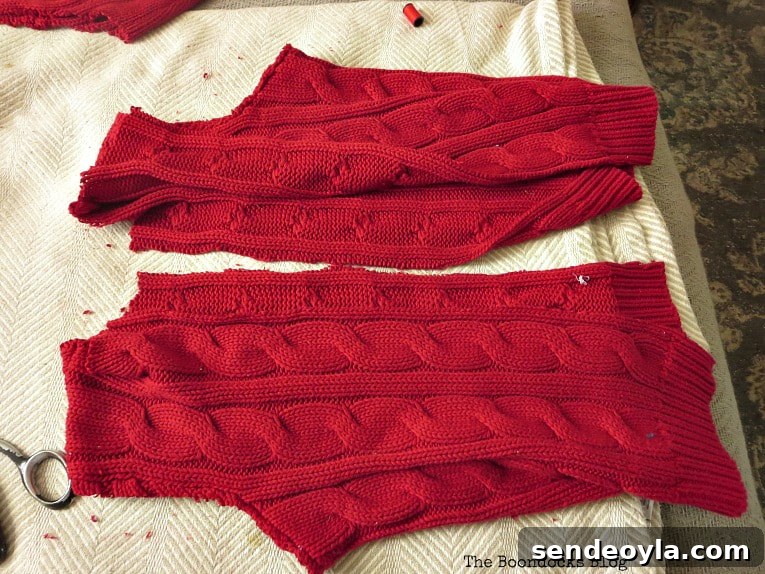
Begin by choosing a sweater with a sturdy knit and the color or pattern you want for your stocking. I used a red sweater with a high neck. First, remove the sleeves from the sweater: cut along the seam where the sleeve meets the body so you have the sweater’s body and separate sleeves to use later. I saved the sleeves to use as wine-bottle gift wrapping for another project.
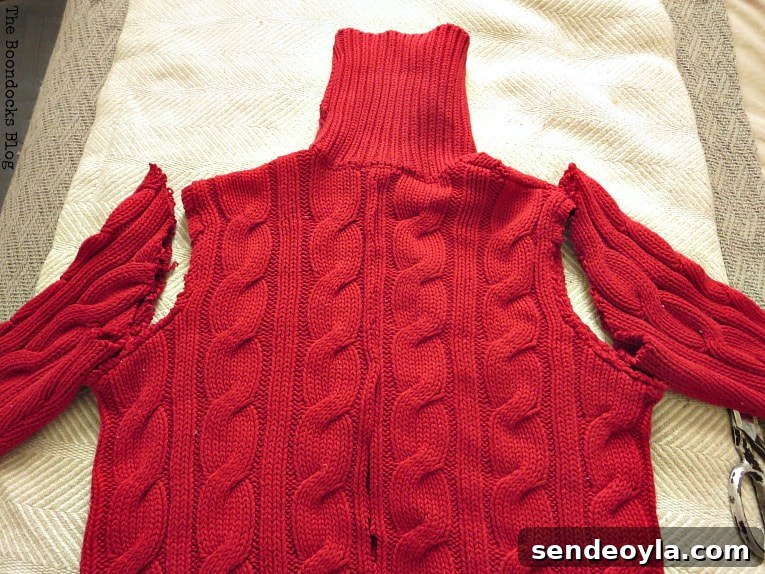
Next, cut the sweater body down the center so you have two flat panels. Trim off the turtleneck or collar if you prefer a clean cuff edge—this can become the stocking’s turned-over cuff or be removed entirely depending on the look you want.
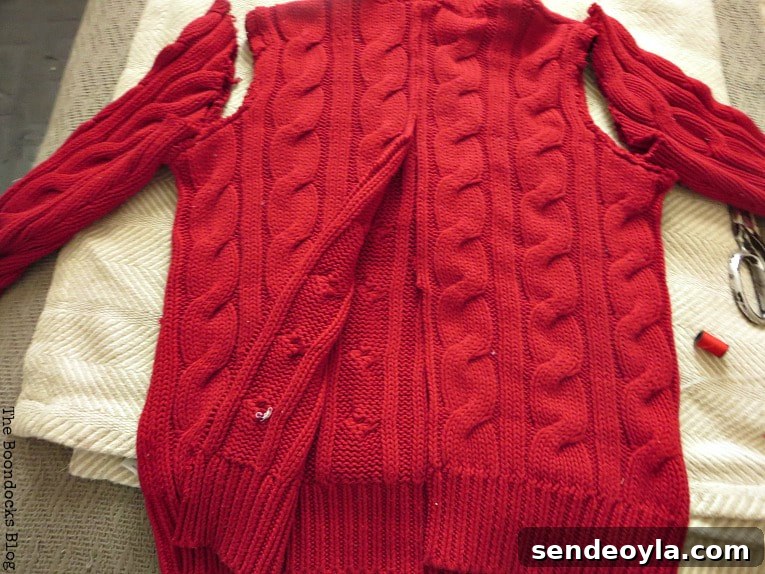
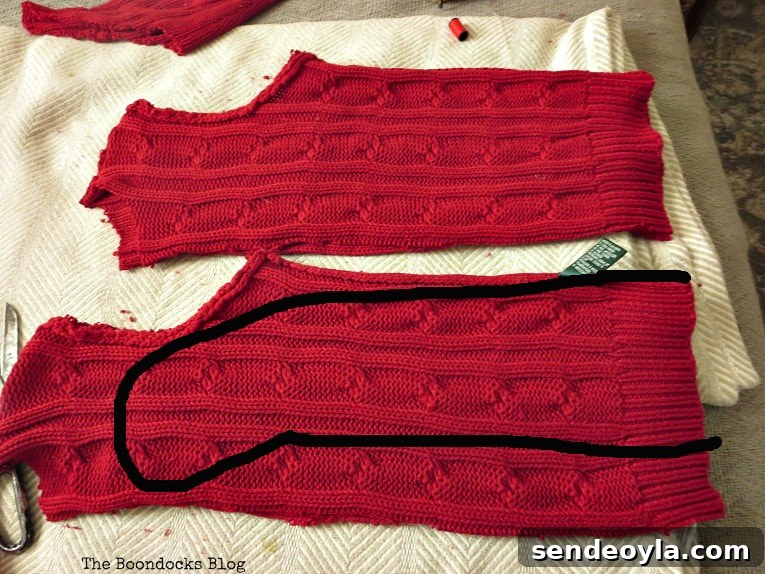
Fold one sweater panel so the right sides face each other and sketch a stocking shape. If the panel already has a seam on one side you can use that as one edge of the stocking and only stitch the other edges. Sew along the stocking outline with a needle and thread—use small, strong stitches for a neat finish. After stitching, trim away excess fabric and carefully turn the stocking right side out.
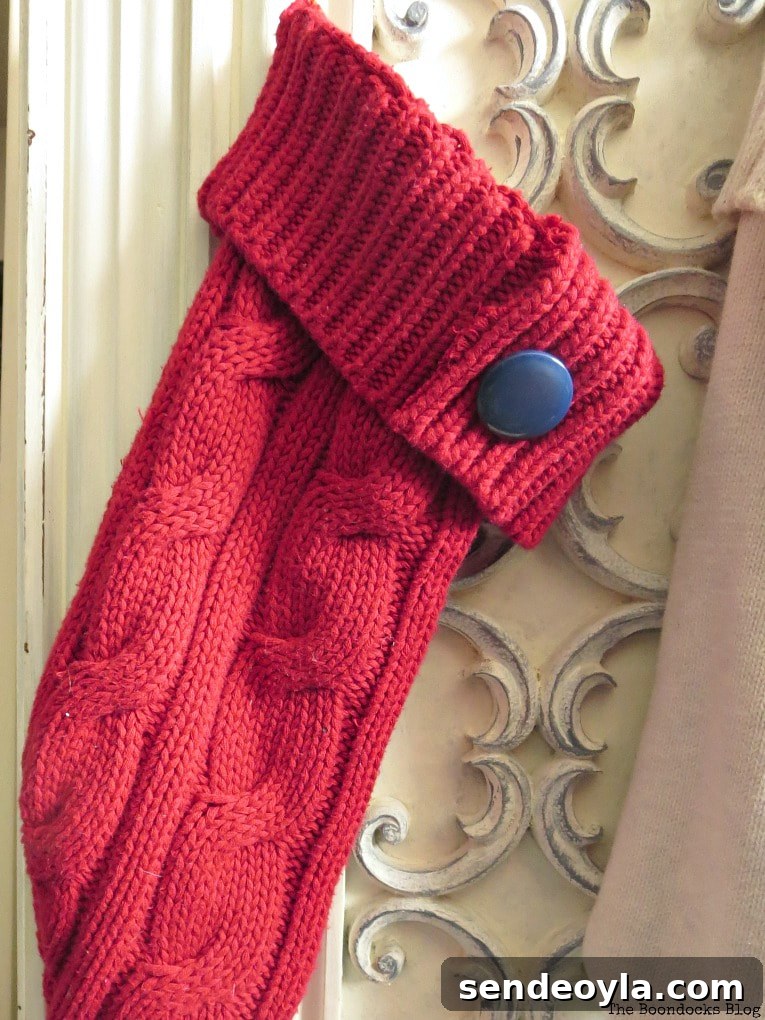
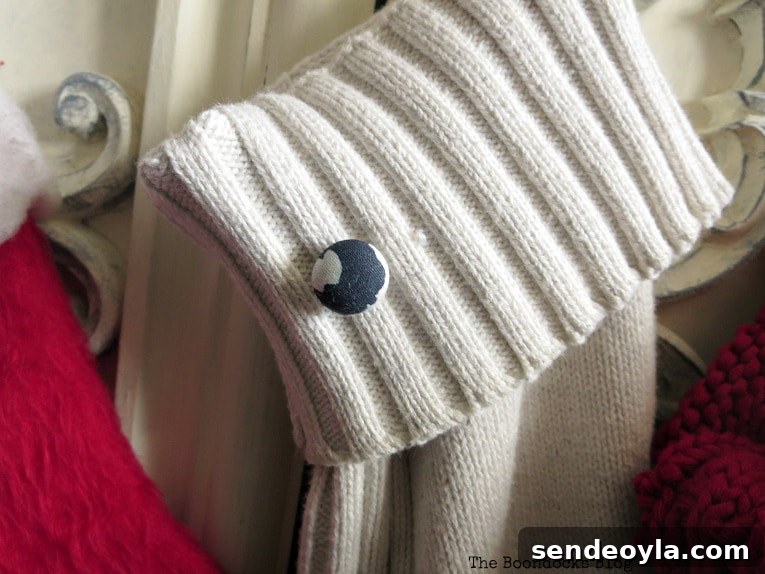
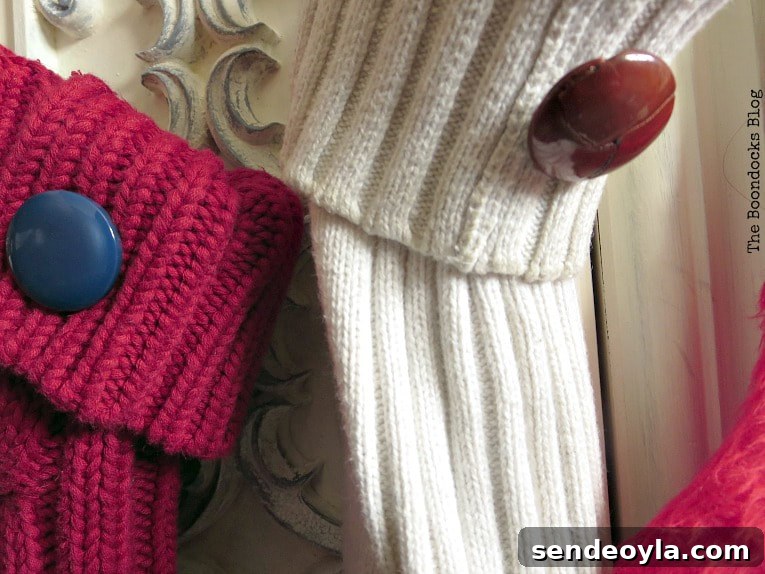
Fold over the top to create a cuff—the sweater’s knit naturally lends itself to a cozy, rolled cuff that looks finished and warm. For hanging loops, sew a short strip of ribbon into the inside seam at the top corner of the stocking. Choose ribbon colors that complement the sweater or match your home decor.
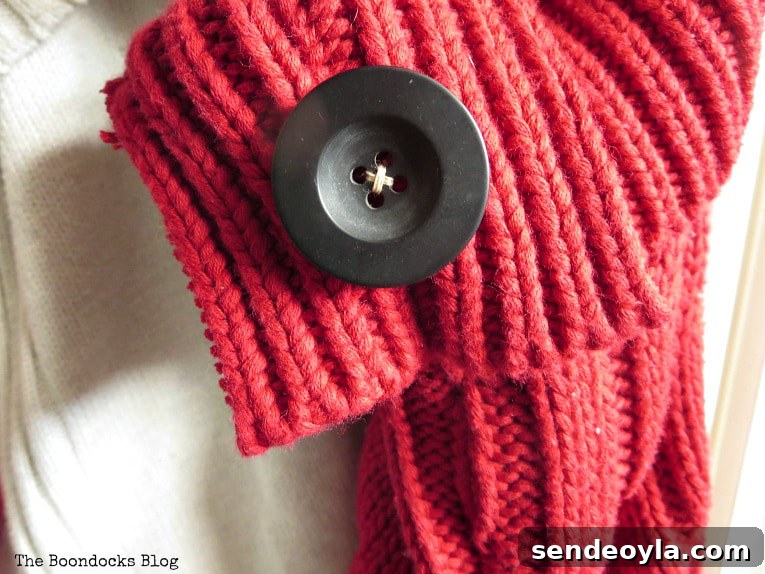
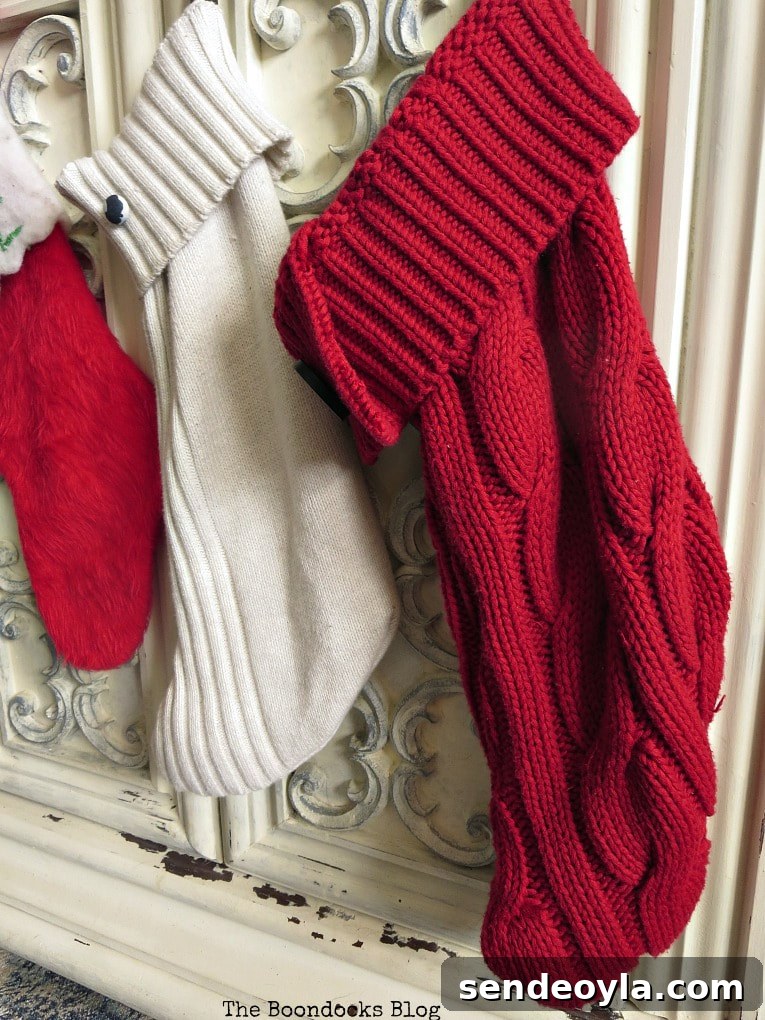
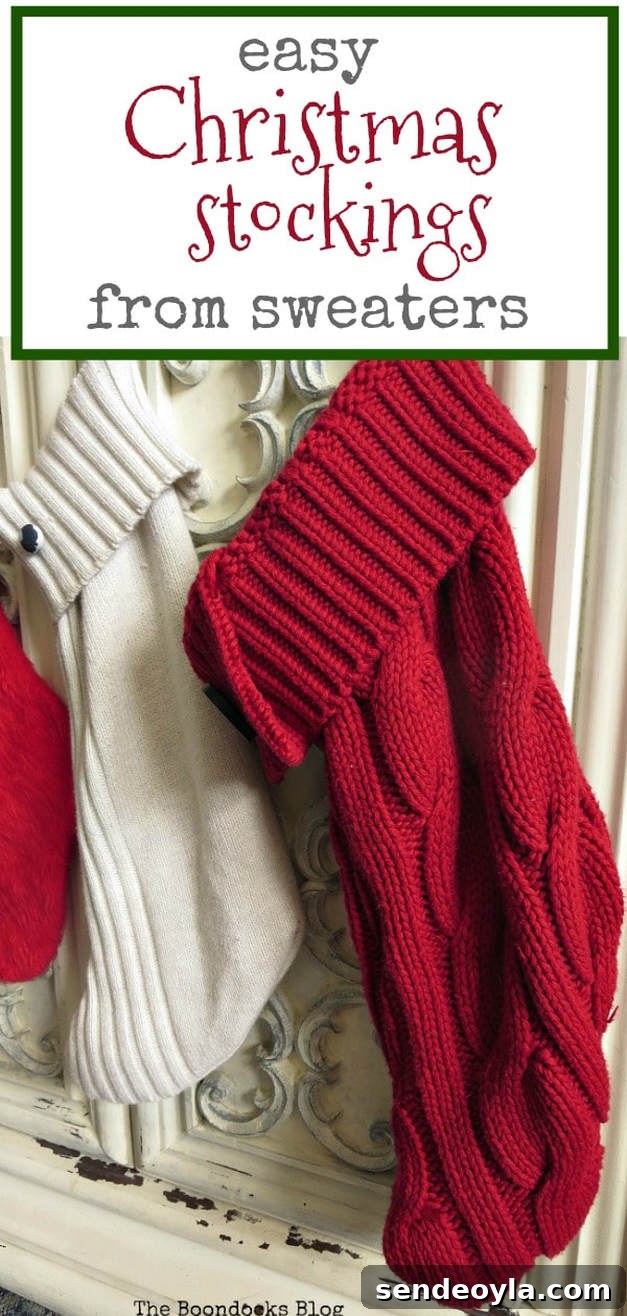
Finish the stocking with buttons and small details to personalize each one. I used different buttons on each stocking so family members can tell which is theirs at a glance; later I may add embroidered names or tags. One of my stockings is for our dog, Tatou—the black-and-white buttons suit him perfectly. For a quick variation, you can make stockings directly from wide sweater sleeves: simply sew the open end closed, turn it right side out, and add a hanging loop.
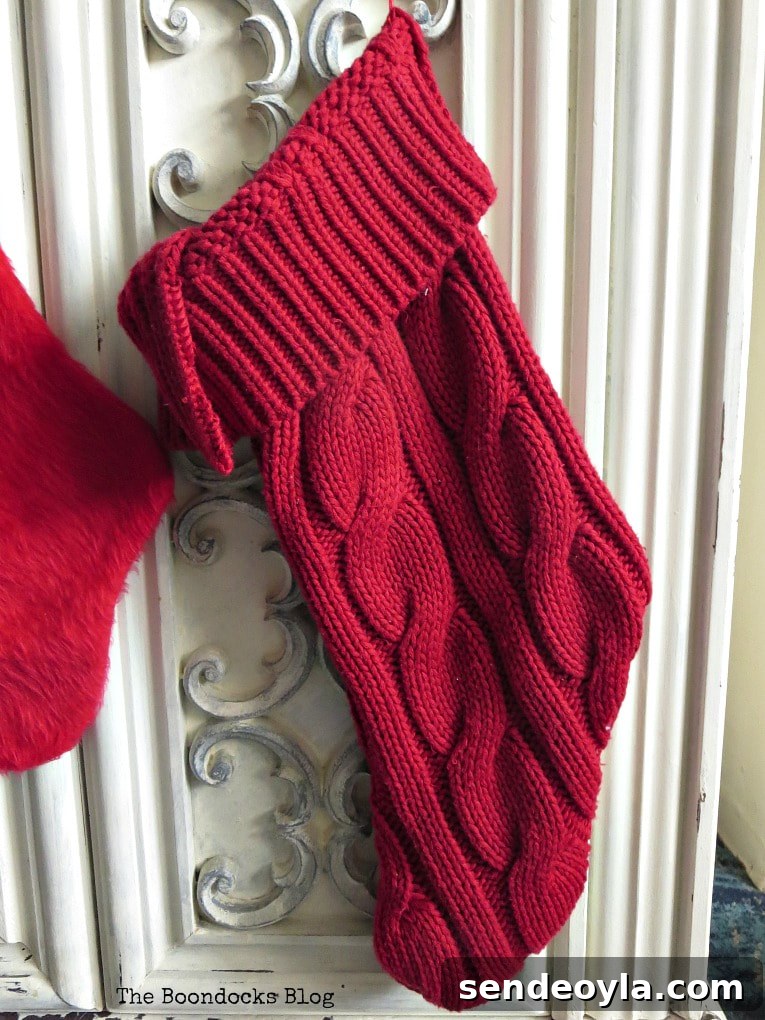
I rehung the finished stockings on a restored vintage cabinet in the living room where the carved scrollwork makes a lovely backdrop. These sweater stockings are not only attractive but also durable, with the knit fabric holding up better to repeated use than cheap felt alternatives.
Making stockings from sweaters is an economical, eco-friendly way to add homemade charm to your holiday decor. Before you donate or discard a worn sweater, consider whether it could be transformed into a stocking, a pillow, or another home accessory. These projects use minimal supplies, require basic sewing skills, and produce seasonal pieces that feel personal and long-lasting.
If you’re looking for more easy holiday crafts that repurpose materials you already own, try turning sweater sleeves into pillows or making simple sewn ornaments—small projects that refresh your decor without a big expense. Happy crafting and enjoy your homemade sweater stockings this holiday season!

This tutorial is intended for hobby crafters and is shared for inspiration; it is not professional advice. Enjoy creating and adapting the steps to suit your own style and materials.