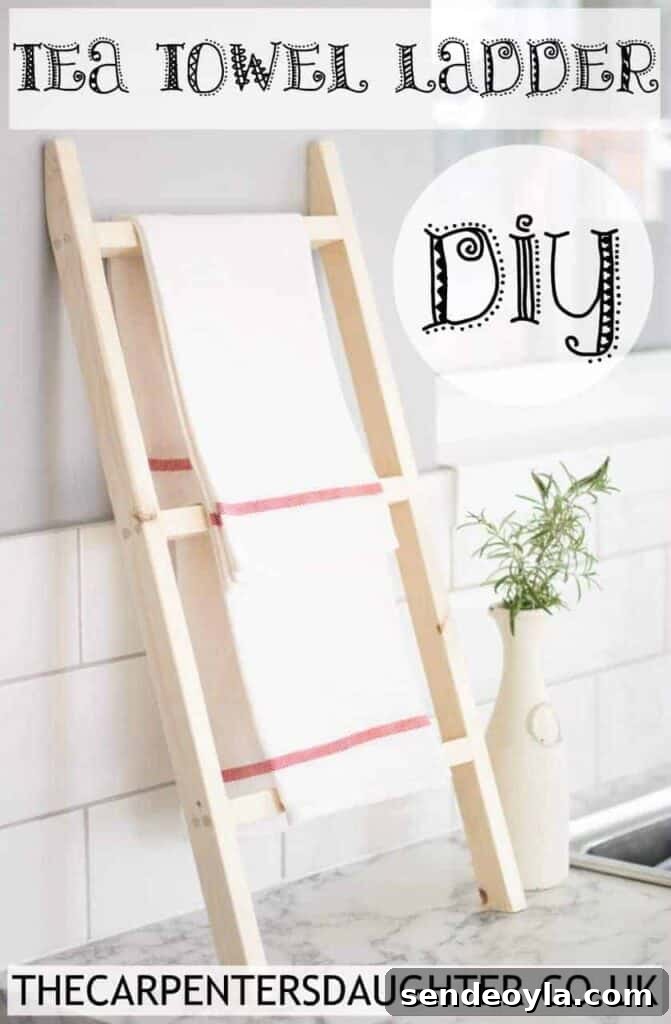
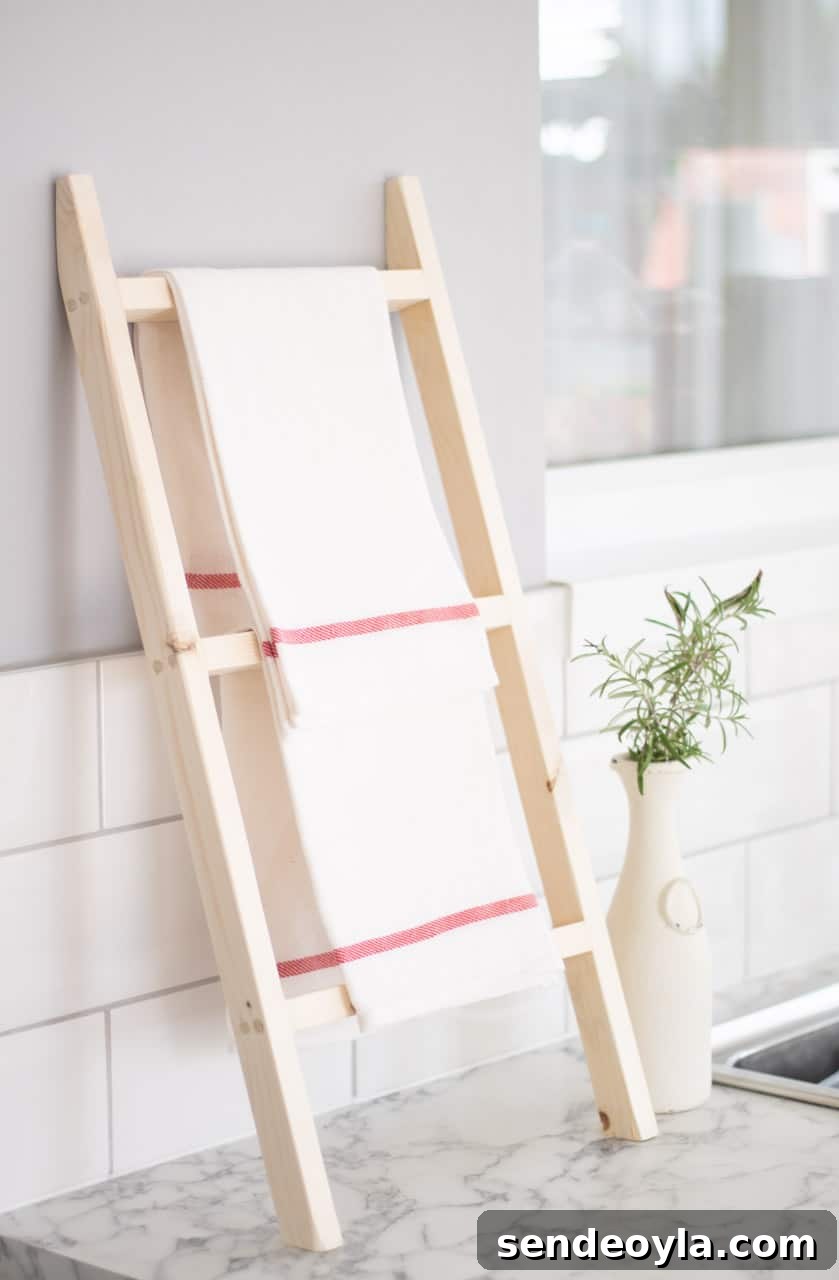
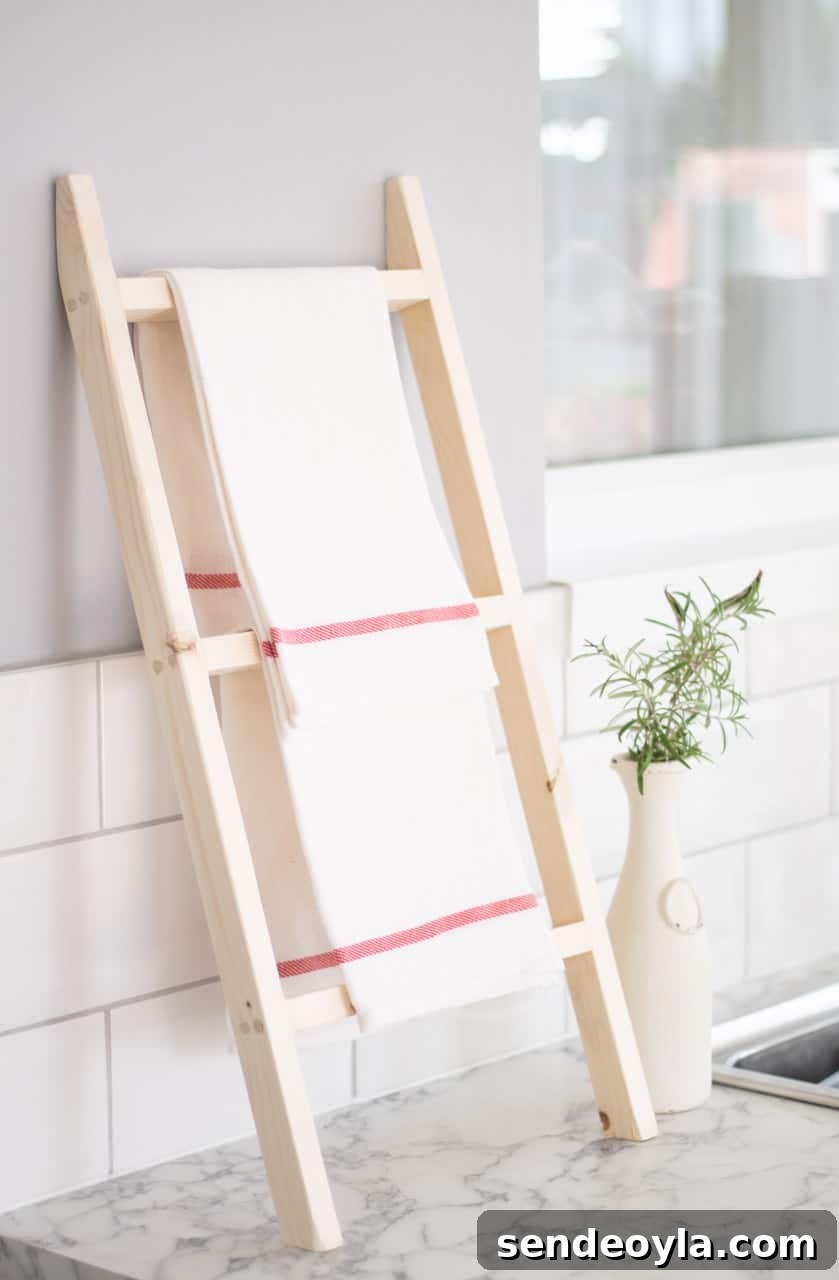
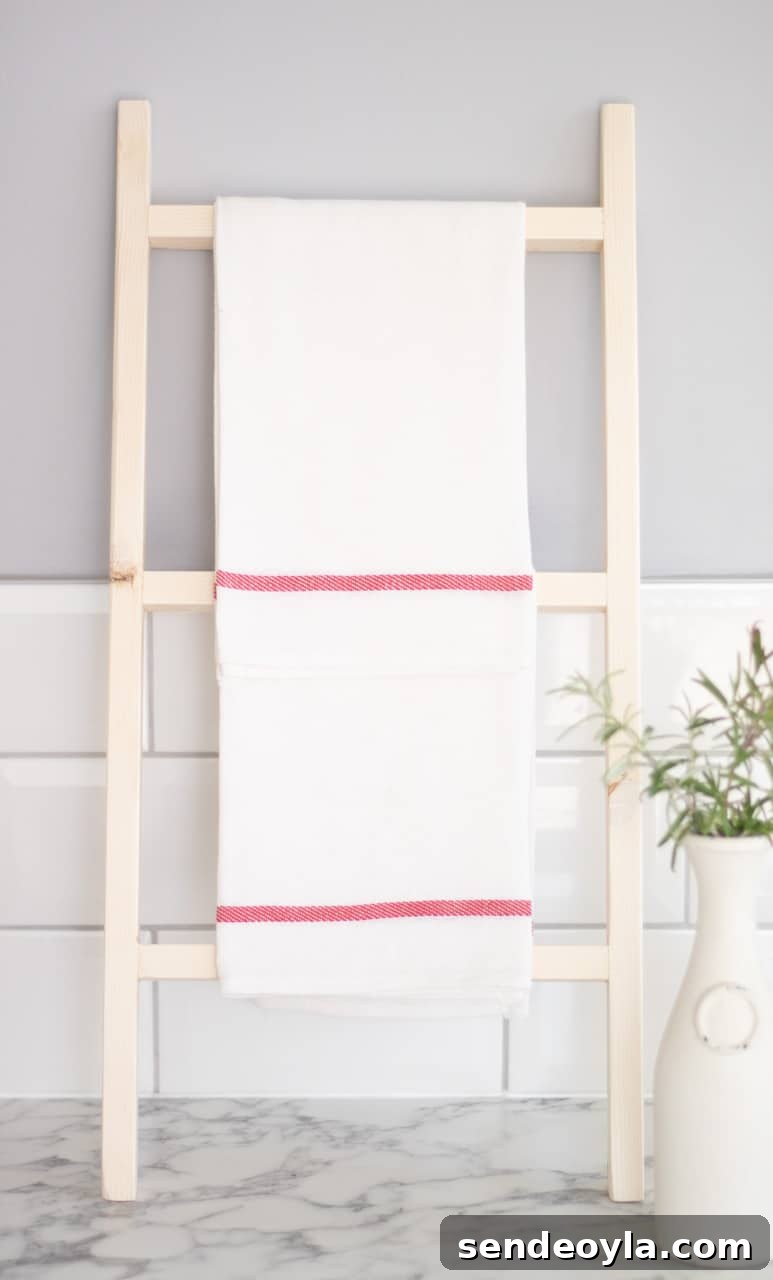
This guide shows how to build a simple DIY tea towel ladder that sits on a kitchen countertop. It’s an inexpensive, renter-friendly solution that doesn’t require screwing anything into a wall or cabinet end panel. The ladder is portable, leaves no marks, and keeps tea towels neat and accessible.
This project includes a paid ad for Wickes, a store I’ve used regularly. I appreciate their products and support while I develop DIY projects and kitchen updates.
I work full time as a food blogger and enjoy creating recipes for my blog, Tastefully Vikkie. When I’m not in the kitchen I’m usually improving the house: renovating, organising, or making small custom pieces to improve function and appearance. That combination of cooking and DIY inspired me to design a compact countertop tea towel ladder for the utility area I use for filming and washing up.
Over time I’ve relied on Wickes for materials for projects such as fitting a utility kitchen, building decking, hanging doors, and installing coving tools. Their how-to guides and products helped shape many of these DIY builds.
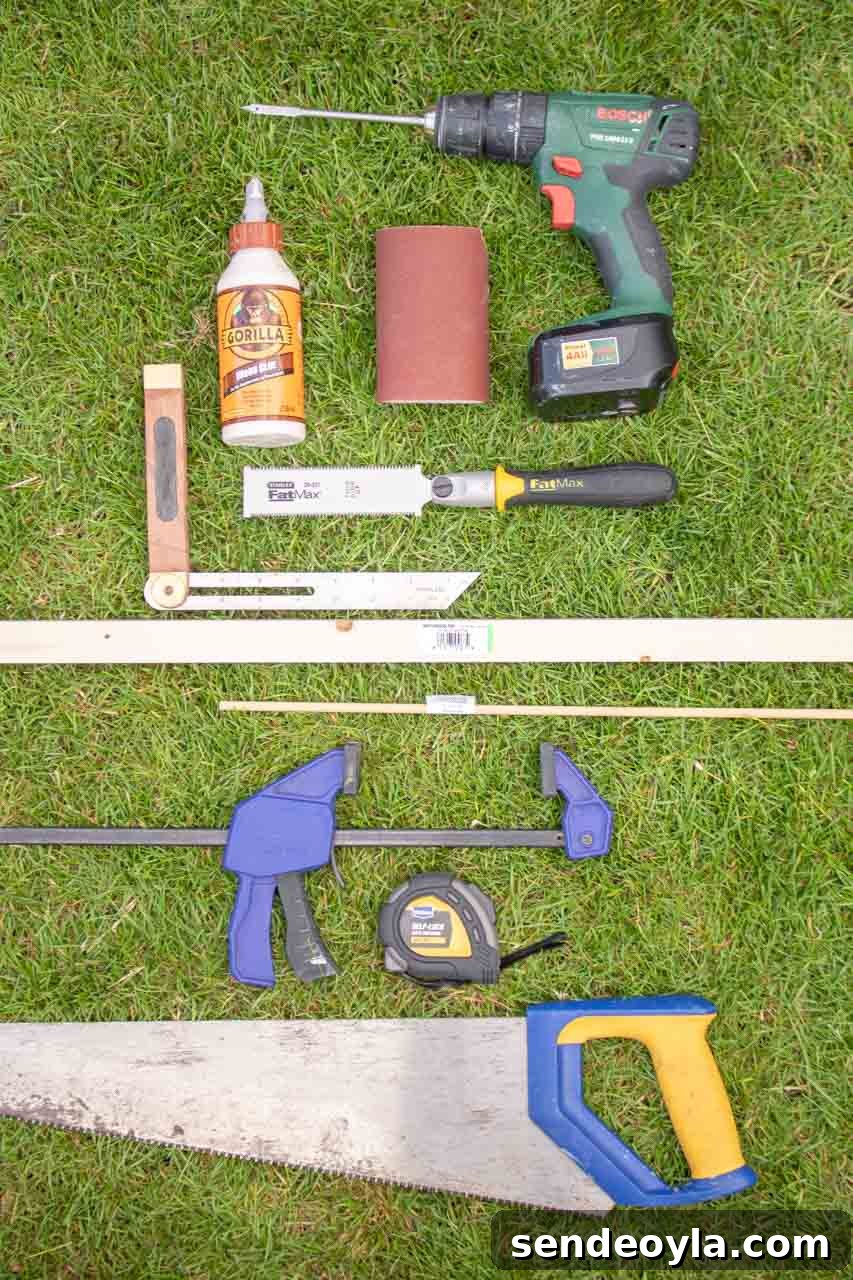
Things you’ll need to make a tea towel ladder
- Planed whitewood PSE timber (18 x 28 x 2400 mm) or similar
- 6mm light hardwood dowel (2.4 m length)
- Wood glue
- Hand saw or chop saw
- Tape measure and pencil
- Four clamps
- 6mm flat wood drill bit (or equivalent)
- Combi drill
- Flush trim saw
- 120 grit sandpaper and sanding block
- Bevel gauge and speed square
- Wooden mallet
- Food-grade finish such as worktop oil
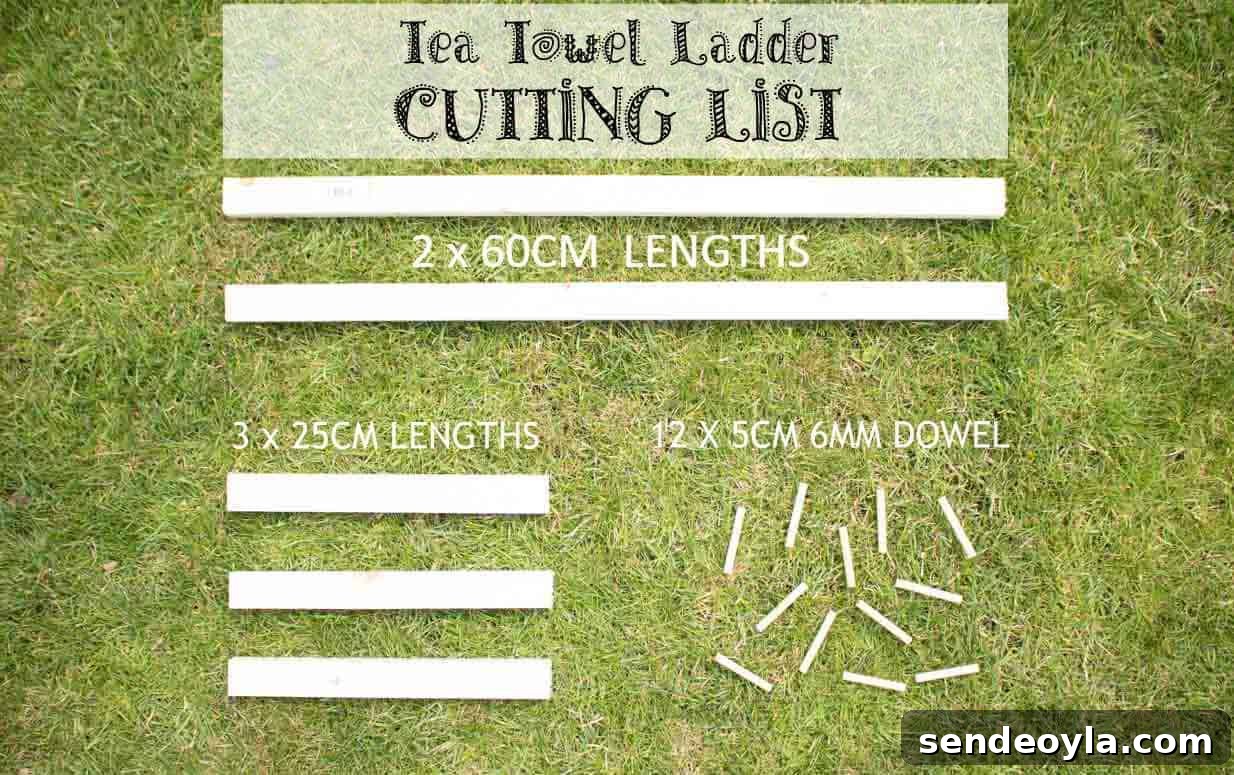
Cutting list (simple guide)
This cutting list is a guideline based on my countertop and kitchen layout. Adjust lengths to suit your space and the width of your tea towels (you can fold a towel lengthways to check).
- 2 side pieces: 60 cm long
- 3 ladder steps: 25 cm long
- 12 dowel pins: 5 cm each (cut from 6 mm dowel)
How to make the countertop tea towel ladder
1. Cut your wood to length. Clamp pieces to a sawhorse and use a hand saw for careful cuts, or a chop saw for quicker, straighter results. Lightly sand cut edges for a neat finish.
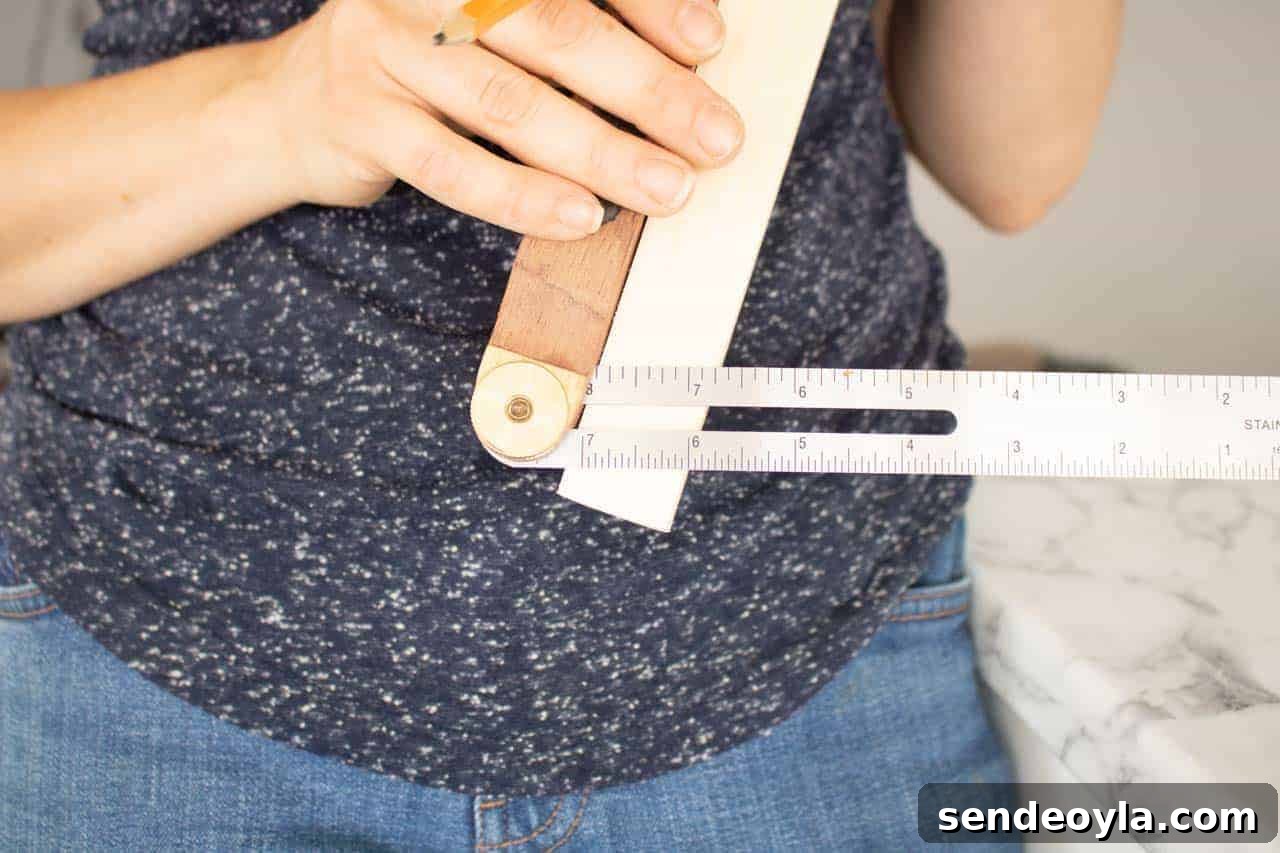
2. Decide the ladder angle. Hold the two long side pieces against the wall at the slope you prefer. Use a bevel gauge to measure the angle, then mark the bottom line on the timber and cut. Tape the two side pieces together and cut them together for matching angles, then sand so both match precisely.
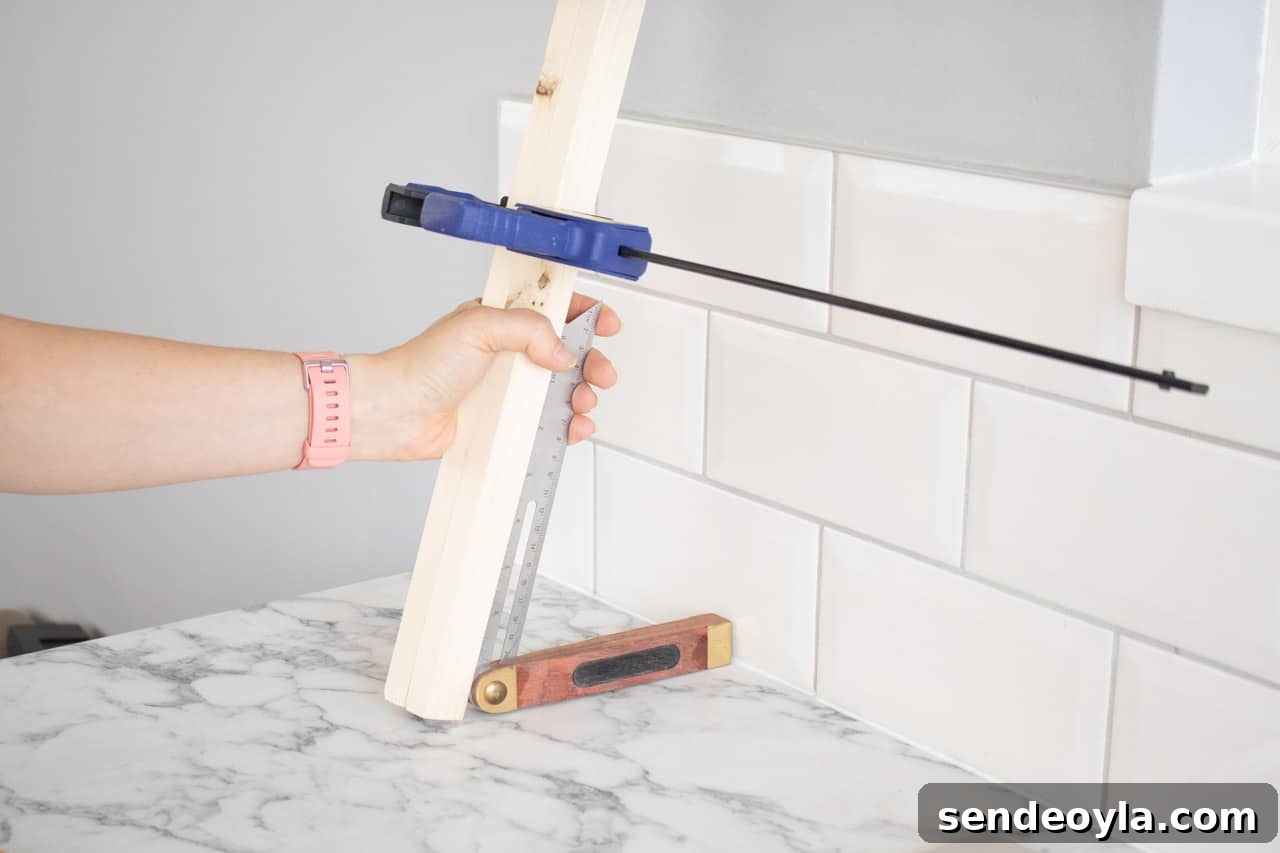
3. Scribe the top edge so the ladder sits flush and avoids scuffing the wall. Hold a 1 cm offcut against the top edge, draw the scribe line, cut and sand until smooth. Both top and bottom should sit flat and stable on counter and wall.
Marking out the steps
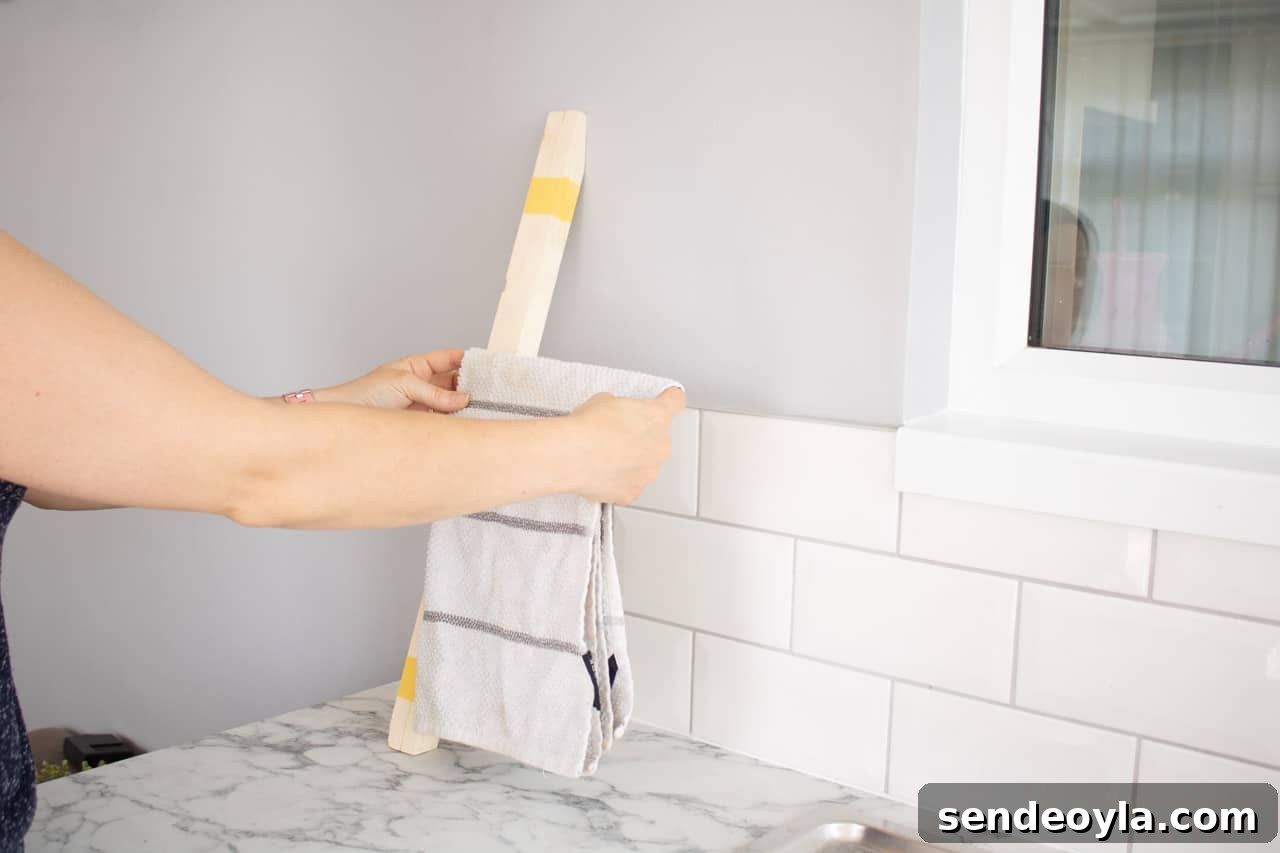
Fold a tea towel and hold it against the side pieces to find a comfortable height for the middle step. Mark this position with a pencil. From there, measure and mark 20 cm above and below to position the remaining steps evenly.
Dowel pin joins (step joints)
1. Draw straight lines across the pencil marks using a speed square. Place a step piece against the lines and mark where the dowel holes will be. Drill two 6 mm holes through the side pieces while they are taped together—leave a few millimetres between holes and avoid drilling too close to edges.
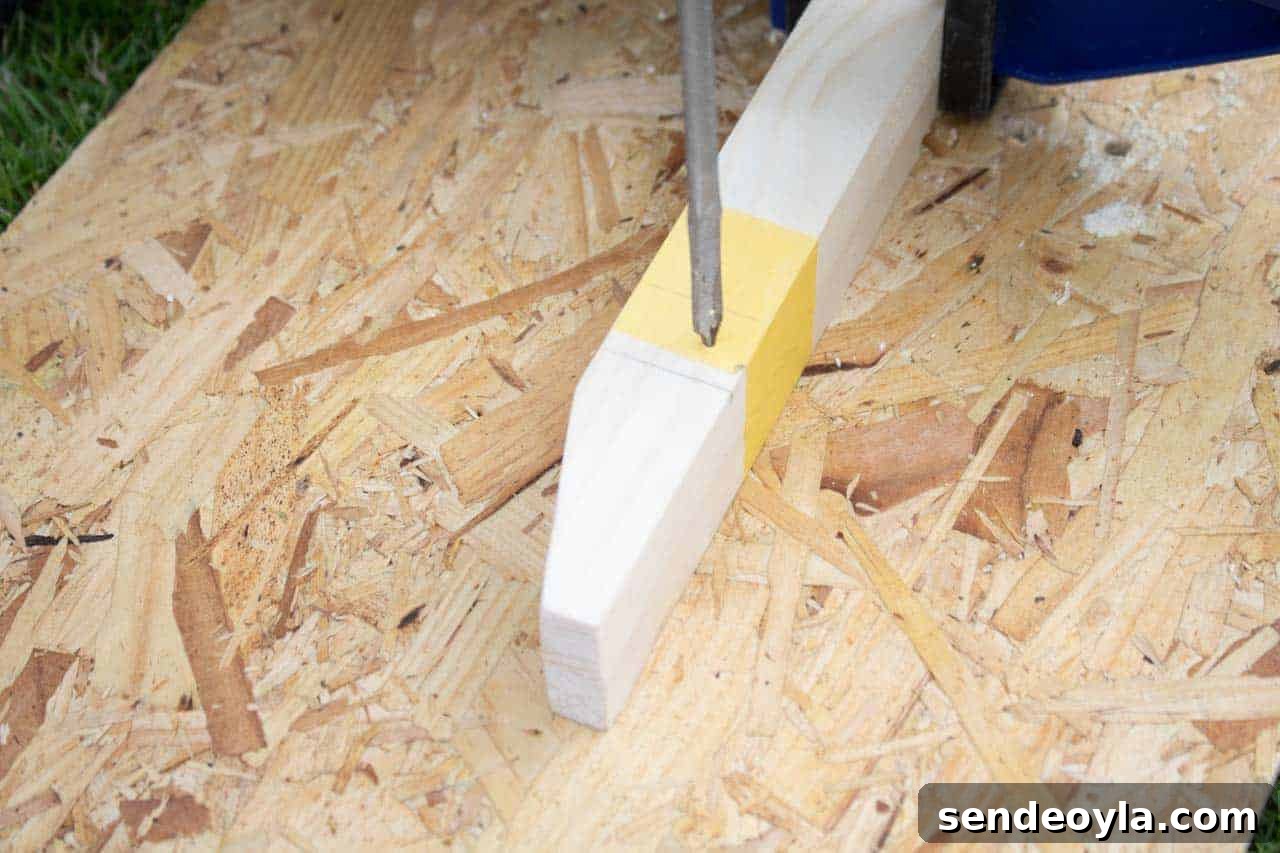
2. Position a scrap or rag underneath to catch glue drips. Align the step with the side pieces, clamp in place and check the step is square with a speed square. Tape the drill bit to mark the correct depth (about 4 cm) and drill through the side pieces into the step to form matching holes.
3. Disassemble, apply wood glue to the joint faces and into the holes, then reassemble. Insert dowel pins, tapping them home with a wooden mallet. Wipe away glue drips immediately and leave to dry according to the glue manufacturer’s instructions.
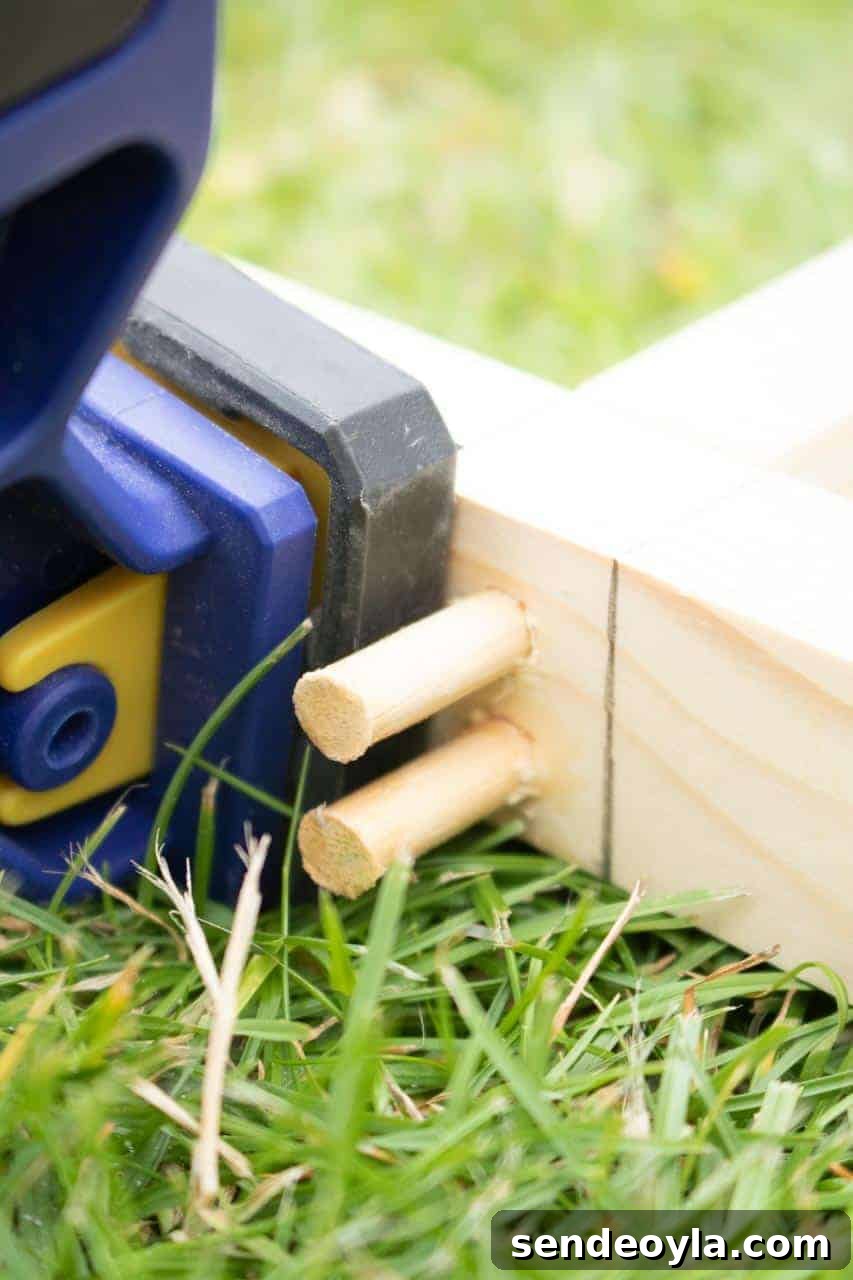
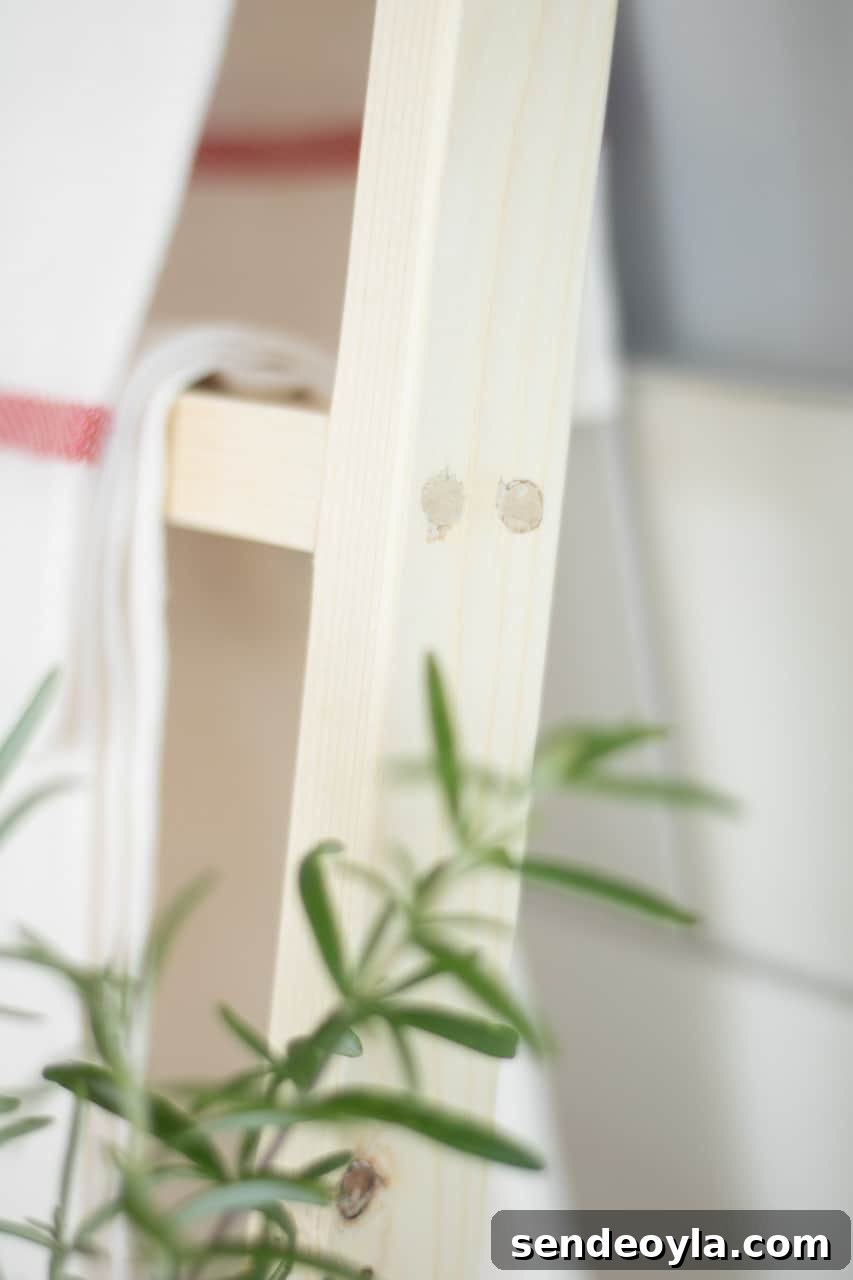
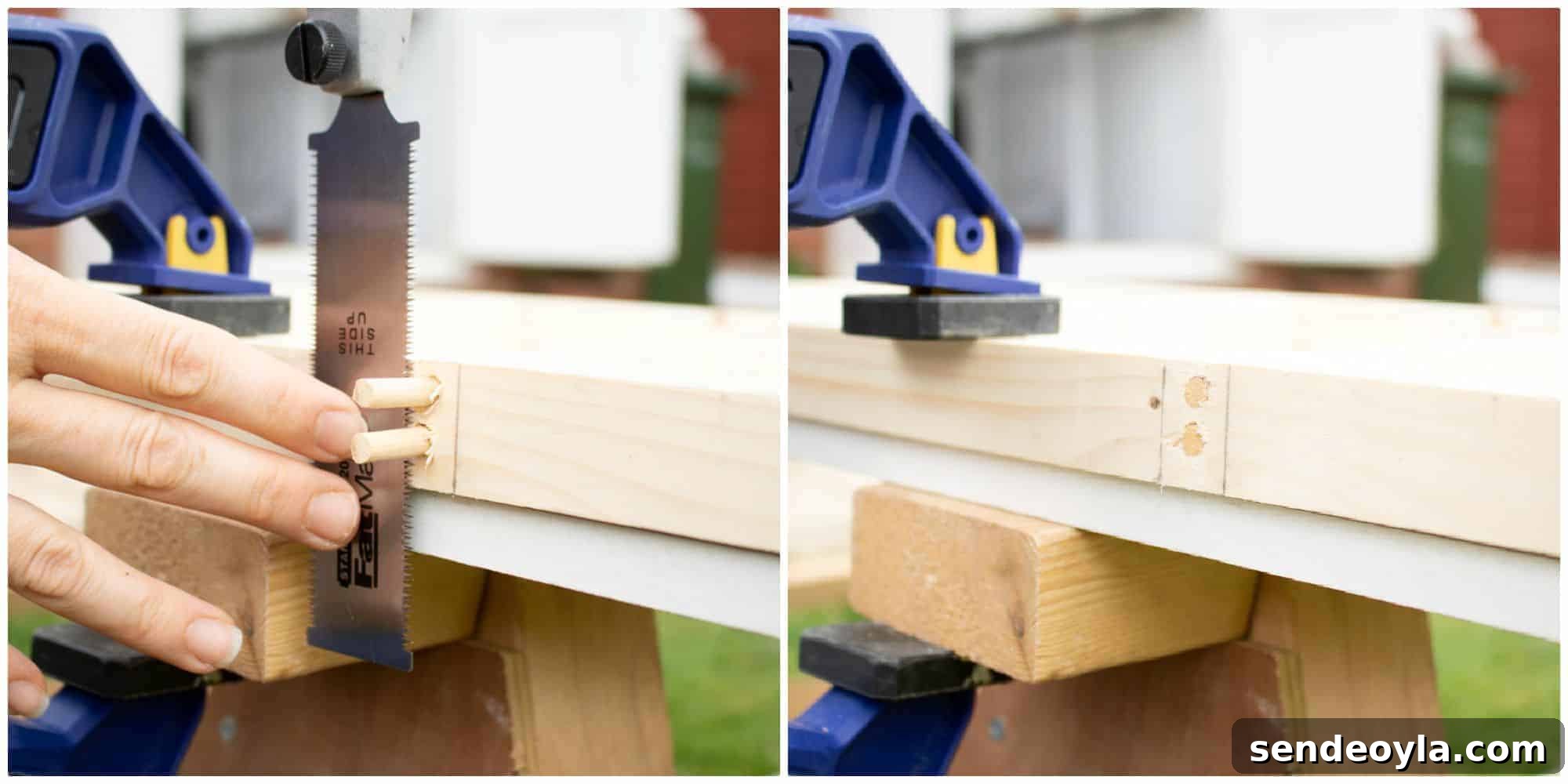
4. Once glue has cured, remove clamps and trim protruding dowels with a flush trim saw while the piece is clamped. Sand the dowels and surrounding joins smooth with a sanding block and 120 grit paper. Round off sharp edges and remove pencil marks. Work outside or use a mask to avoid inhaling dust.
Finishing your tea towel ladder
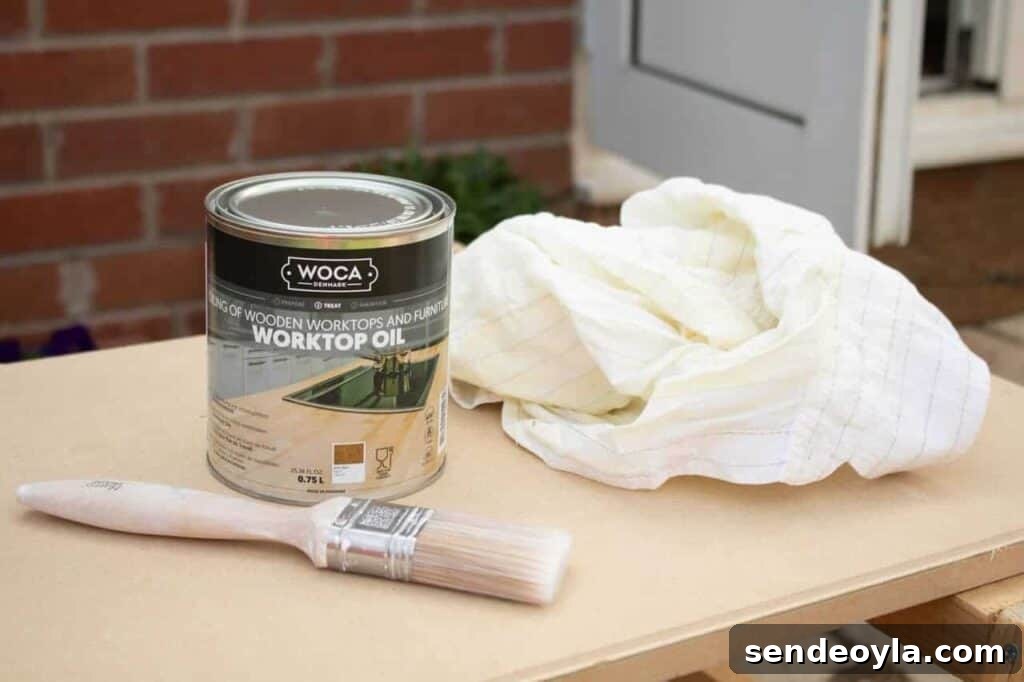
Because tea towels contact foodware and hands, seal the timber with a non-toxic, food-safe finish. After final sanding and dusting, brush on a coat of food-grade worktop oil and leave 20 minutes, then wipe off excess with a lint-free cloth. Repeat coatings as recommended by the product—typically another coat after an hour for additional protection.
Allow the finish to cure and remember to safely dispose of or soak used oil-soaked rags in water (they can be combustible if stored dry). Top up the oil once a year or as needed. Consider adding rubber pads on the mitred corners to protect surfaces, though I found mine stable without them.
Quick recipe-style summary
DIY Countertop Kitchen Tea Towel Ladder
Portable, renter-friendly ladder for hanging tea towels on a countertop. Simple dowel-pin construction and a food-safe oil finish.
- Prep Time: 1 hr
- Drying Time / Additional coats: up to 2 hrs
- Servings: 1 tea towel ladder
- Cost: Approx. £10 (materials)
- Author: Vikkie Lee
Equipment
- Saw, drill, clamps
- Tape measure, pencil, speed square
- Sanding block and 120 grit sandpaper
- Flush trim saw, wooden mallet
Materials
- Wood lengths, 6 mm dowel, wood glue
- Food-grade worktop oil or similar finish
Instructions (condensed)
- Cut the side pieces and steps to length and sand.
- Mark and cut top and bottom angles so the ladder sits flush on counter and wall.
- Mark step positions, drill dowel holes through taped side pieces into steps.
- Glue joints, insert dowels, clamp and allow to dry.
- Trim and sand dowels flush, finish with food-safe oil.
Pin this tea towel ladder for later