
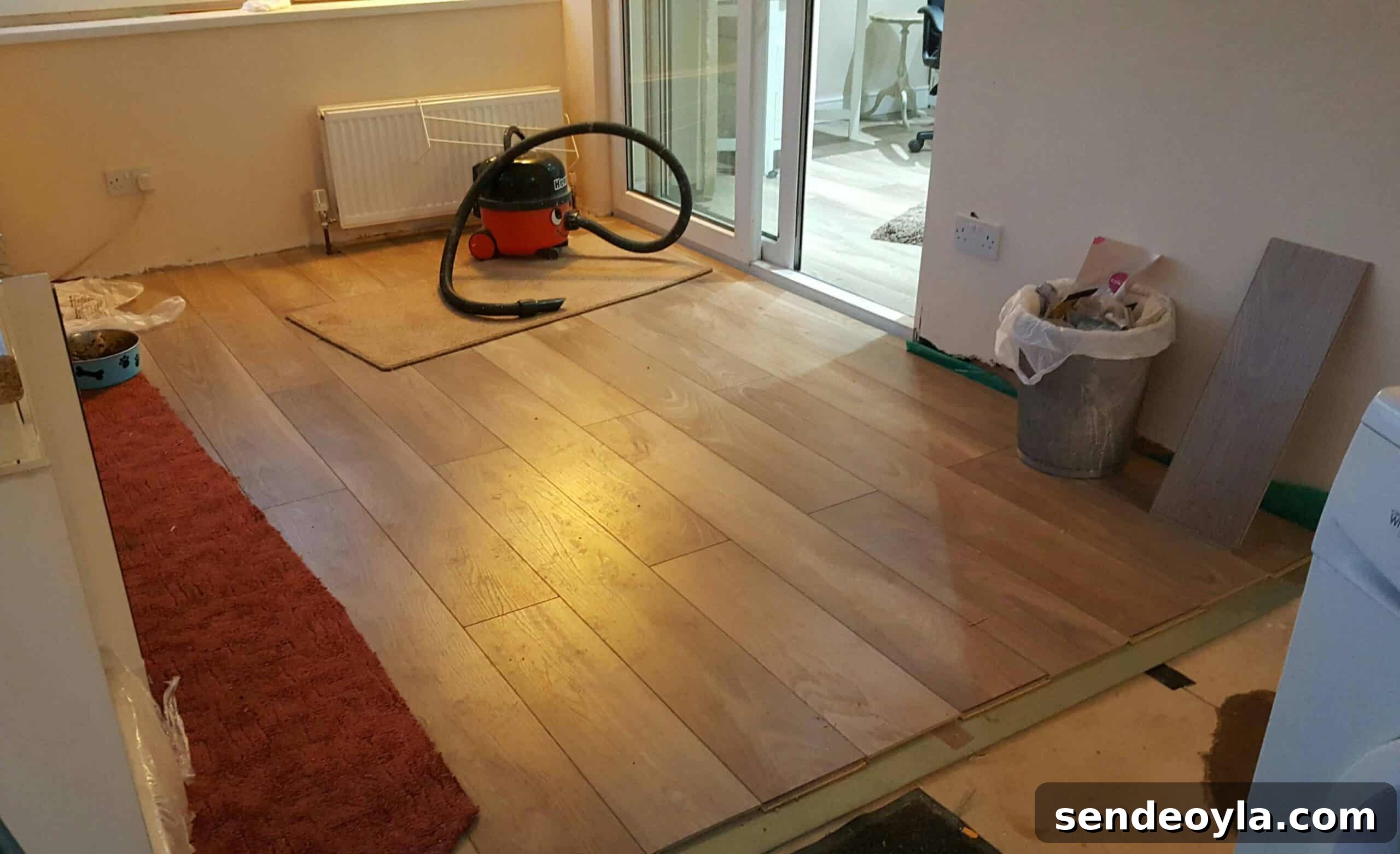
On Friday, my father-in-law dropped by just in time to point out that my approach to laying the third row of laminate was creating unnecessary waste. I had been trying to line up each row so the joints matched perfectly, but that strategy eats into the coverage you actually get from a pack. If you aim for perfectly aligned seams, you should expect to use more boards than the box coverage suggests.
We’d already had to lift and relay the laminate twice in our living room this year after leaks, using some of the spare packs we’d bought for the conservatory. With the way I was laying the boards and with my poor maths, we were cutting it fine on materials. To make matters more awkward, our preferred Napoli Oak laminate has since been discontinued at B&Q, so finding an exact match for any mistakes or shortfalls looked unlikely.
There’s another complication: the conservatory doubles as a utility area and our washing machine has leaked in the past. Because of that, my fiancé suggested a hybrid finish — laminate across the main conservatory floor for a clean look and a more hard-wearing carpet or similar covering on the side where the washing machine sits. That felt like a sensible compromise: laminate where you want the cohesive look, and a durable surface near the appliances that might get wet or scuffed.
To keep the visual lines straight across the room, we decided to work in two-and-a-half strip increments for the laminate layout. That approach helped us maintain neat, continuous lines without the excessive waste that comes from trying to line every seam across all rows. It’s a small planning change, but it makes a big difference to material usage and the final appearance of the floor.
At the moment the floor is taking shape; the photo shows the current progress. The room measures 6m by 3m, so we’ll need a longer, non-standard transition to join the laminate to the carpeted area. We’ve ordered a 3-metre laminate-to-carpet threshold online because standard strips aren’t long enough for this span. A single continuous threshold like that will give a neat finish where the two floorings meet and will avoid gaps or mismatched joints.
Before we move on to the repair work, here are a few practical tips from this project that might help if you’re planning laminate flooring yourself:
- Measure carefully and allow for extra material. Boxes list theoretical coverage but don’t always account for finishing cuts and intentional pattern matching.
- Avoid forcing seams to align across every row — intentional staggering of joints reduces waste and improves stability.
- If your floor area includes a utility zone or appliance that has leaked before, consider a water-resistant option or a different flooring type for that section to protect your investment.
- Order transition strips and thresholds that fit the full width of the room to avoid joins in visible places.
- Keep some spare planks for future repairs, especially if the exact finish may be discontinued.
In the next post I’ll explain how we repaired the washing machine damage to the subfloor — that’s why there are kitchen units staged on the left in the photo for now. I’ll cover the steps we took to make the area solid again and how we prepared it to accept both the laminate and the carpet edging.
You Might Also Like
- Review of the best mop for laminate flooring
- How to fit a carpet to laminate strip
- Guide to laying your own carpet
- You can find my complete list of fitting a kitchen projects here