
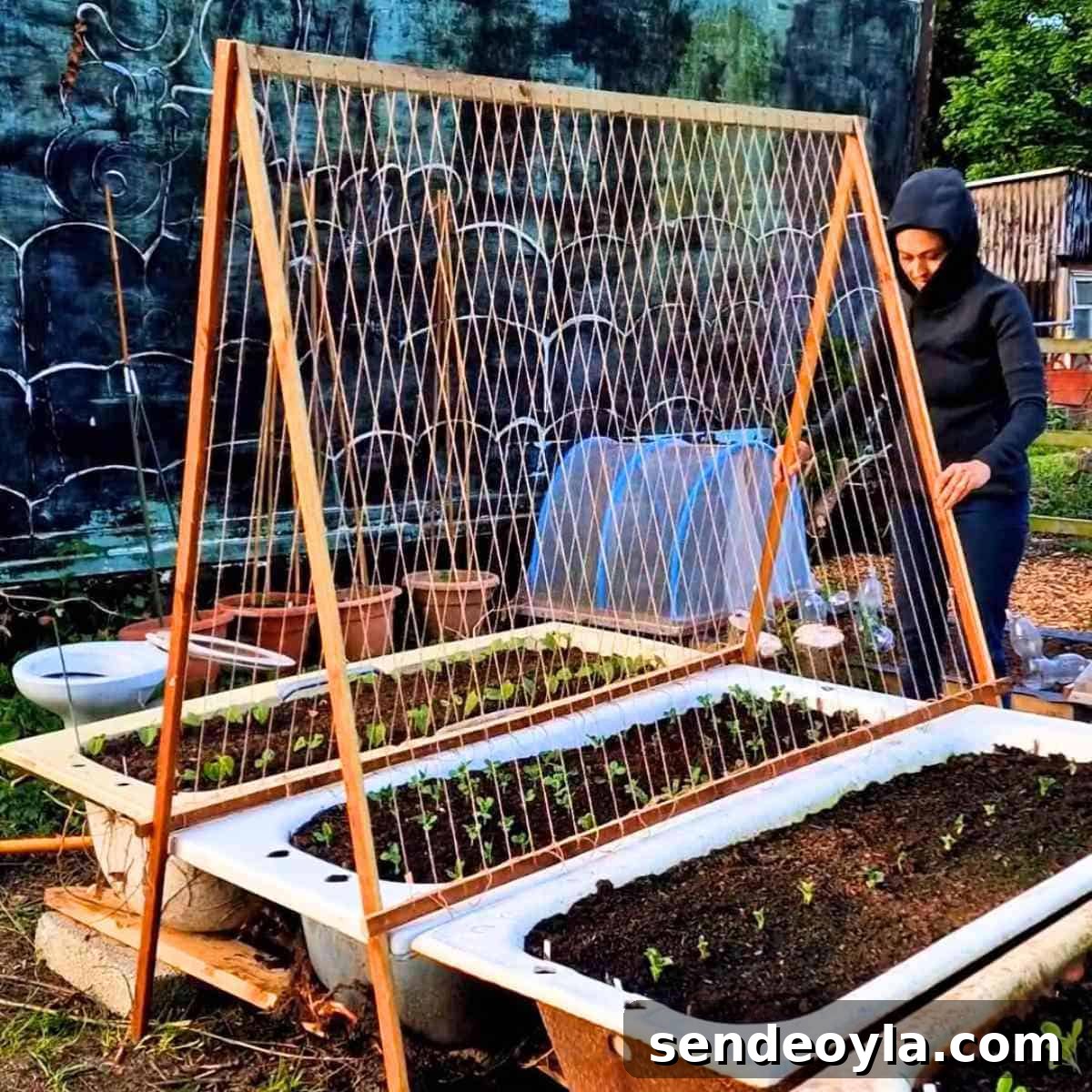
Learn how to build an affordable, sturdy DIY pea trellis to place over your garden beds. I made this in an afternoon using simple slats and jute twine so pea tendrils can climb easily.
This guide includes clear step-by-step instructions, practical tips, and links to short how-to videos for visual reference.
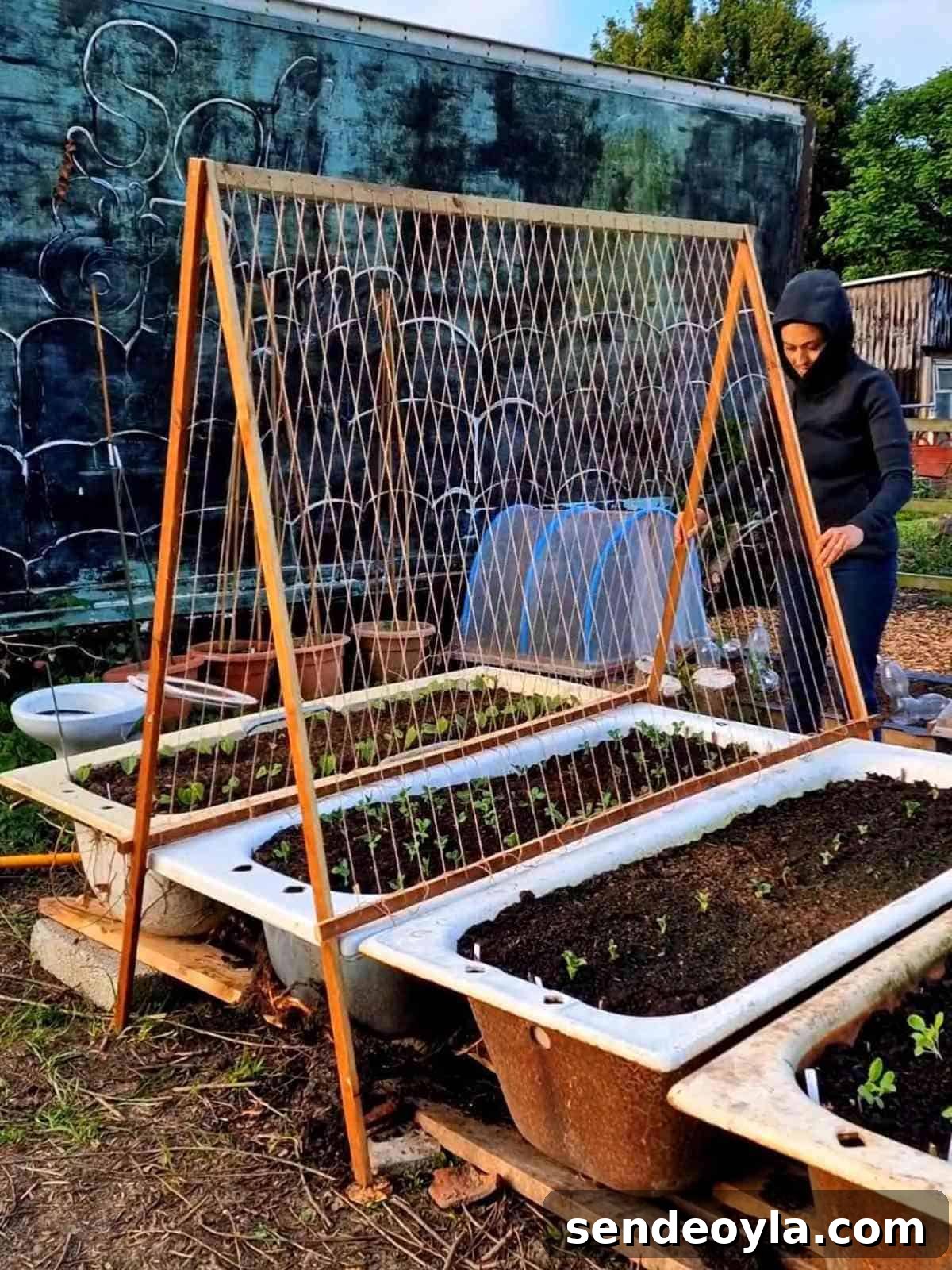
Since early spring I’ve been sowing a variety of vegetables on our new four-acre farm, including several types of peas. Along the way I’ve tried different supports and trellis ideas, and this simple A-frame trellis made from slats and garden twine has been one of my favourites — quick to build, easy to position and foldable for seasonal storage.
✔️ Why You’ll Love This Project
This pea trellis is designed to be practical, inexpensive and beginner-friendly. Key benefits include:
- Lightweight and easy to position on beds or containers
- Makes good use of offcuts and scrap wood
- Built with only wood and garden twine (or alternative netting)
- Can be completed in a single afternoon with basic tools
- Far cheaper than buying a ready-made trellis
- Works for many pea varieties including sweet peas, sugar snaps and snow peas
⚒️ Tools and Materials
Tip: I have a printable how‑to card near the end of this post, but read the full guide for extra tips and clarifications.
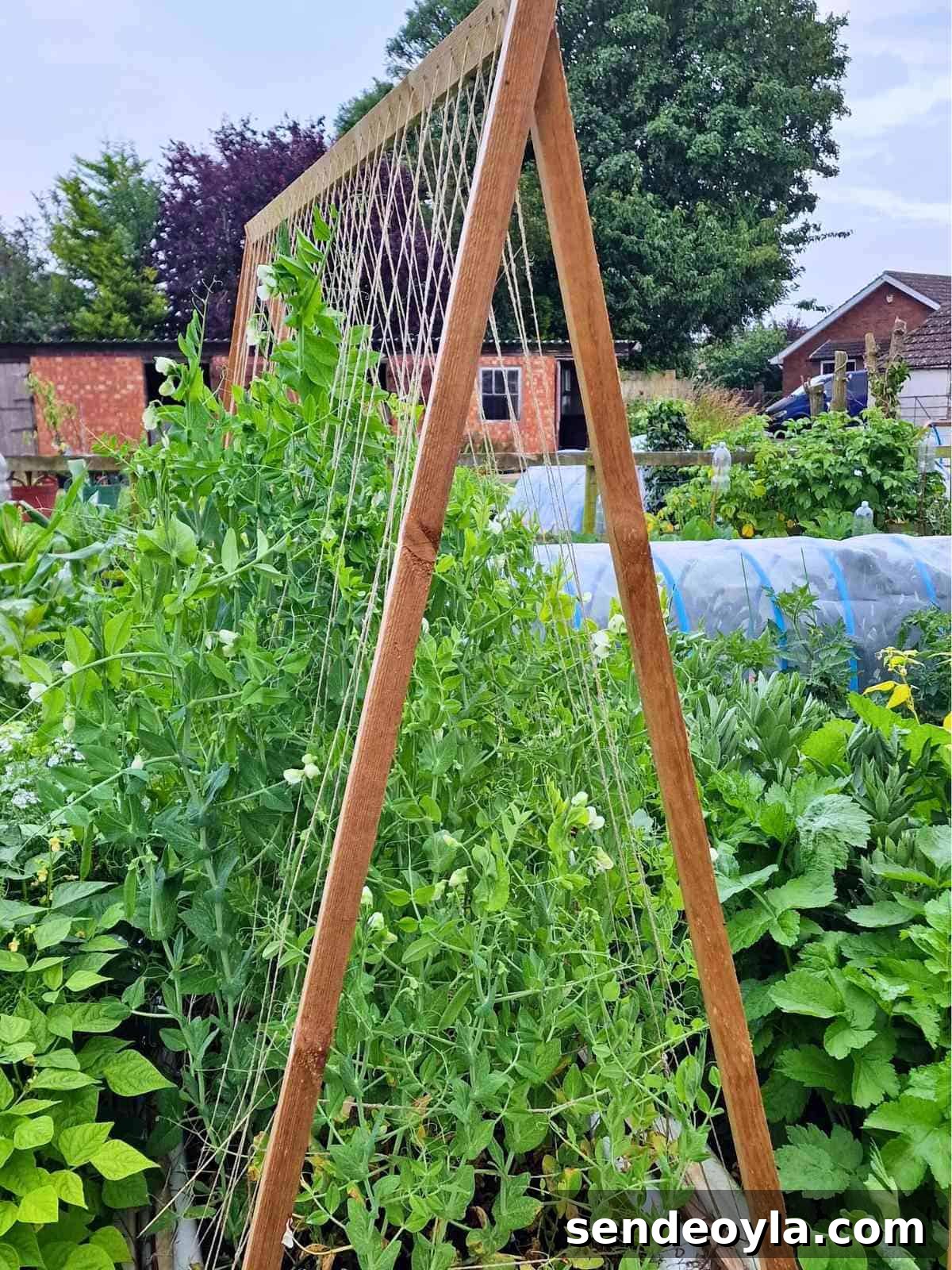
- Garden twine — natural jute or cotton twine; you can use poultry netting or plastic netting instead if preferred.
- Slat wood — narrow, straight slats or thin boards; bamboo poles are an alternative if you prefer.
- Combi drill — for pilot holes and screws.
- Impact driver or drill driver — for faster screwing (optional).
- Hand saw — to trim slats to length.
- Seed spacing ruler — not essential, but useful as a jig for evenly spaced drill holes.
- Wood drill bit — sized to let the twine pass through easily.
📋 Step-by-Step Instructions
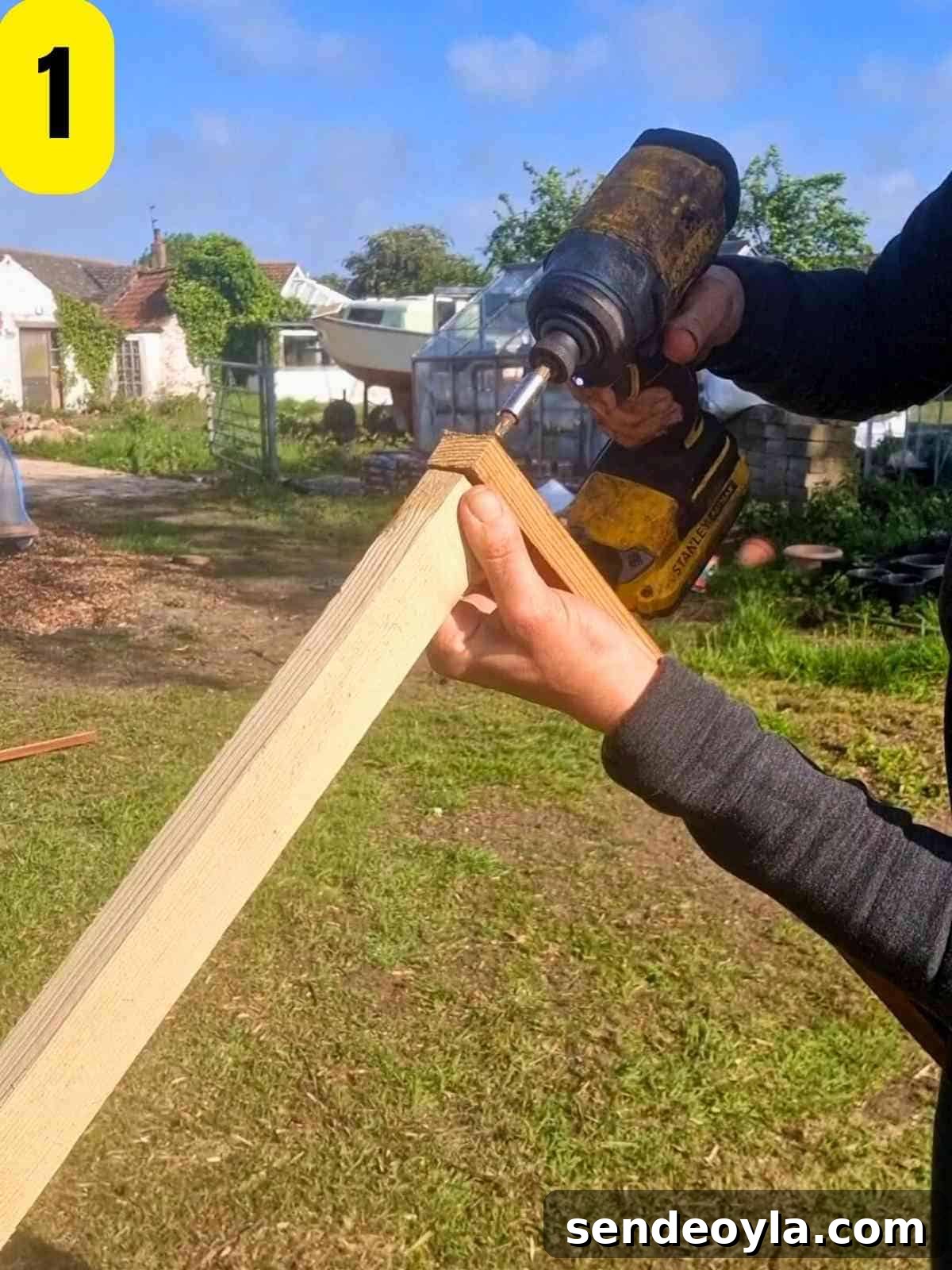
1. Attach the first vertical leg to the top crosspiece by driving a screw through the top into the slat. Repeat on the opposite side so you have two top-mounted legs.
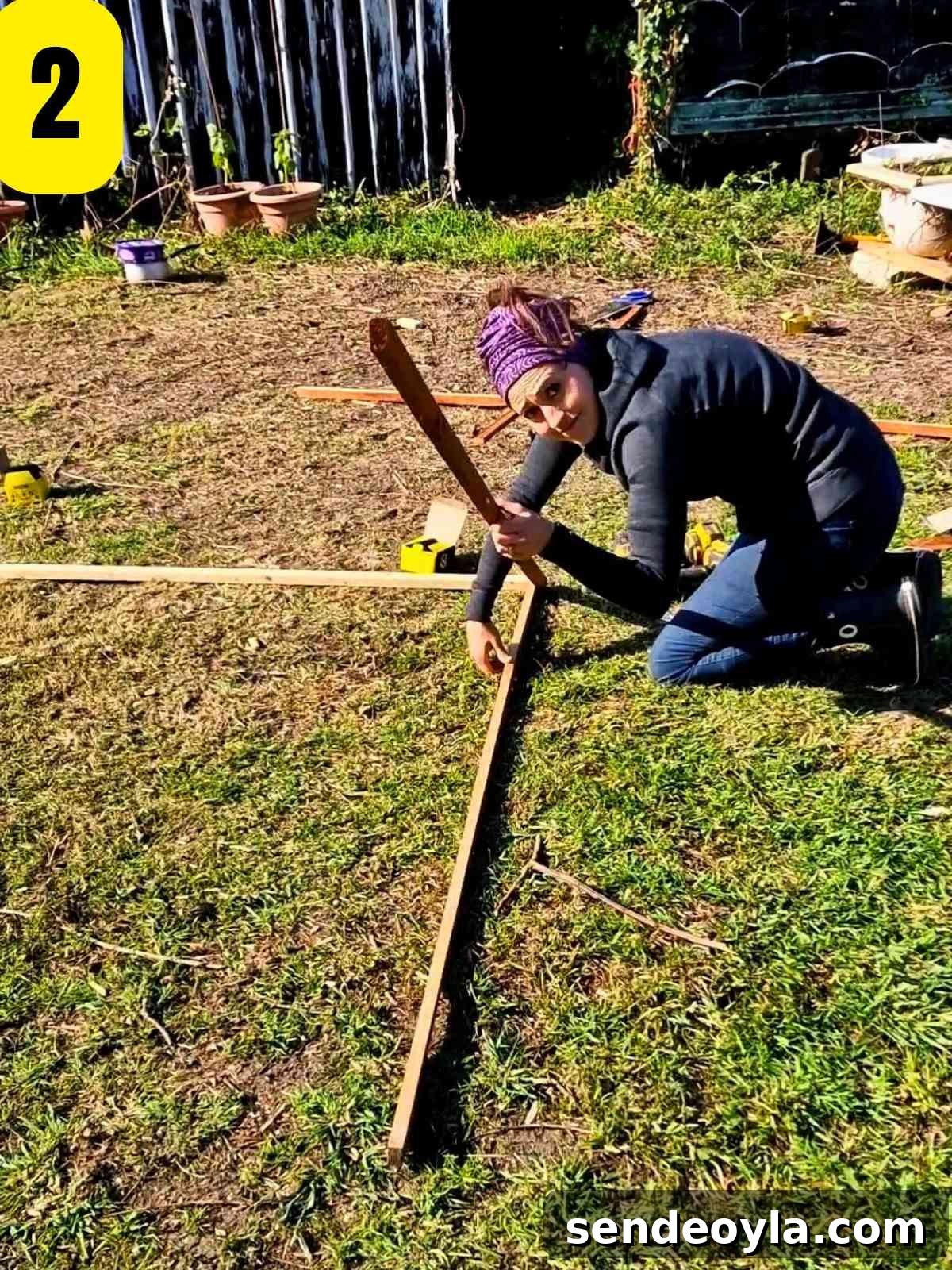
2. Screw a second leg over each top connection, placing the screw to avoid the first screw head. Do not fully tighten this second screw — it should allow the leg to pivot so the frame can open and close. Repeat on both sides to form an A-frame.
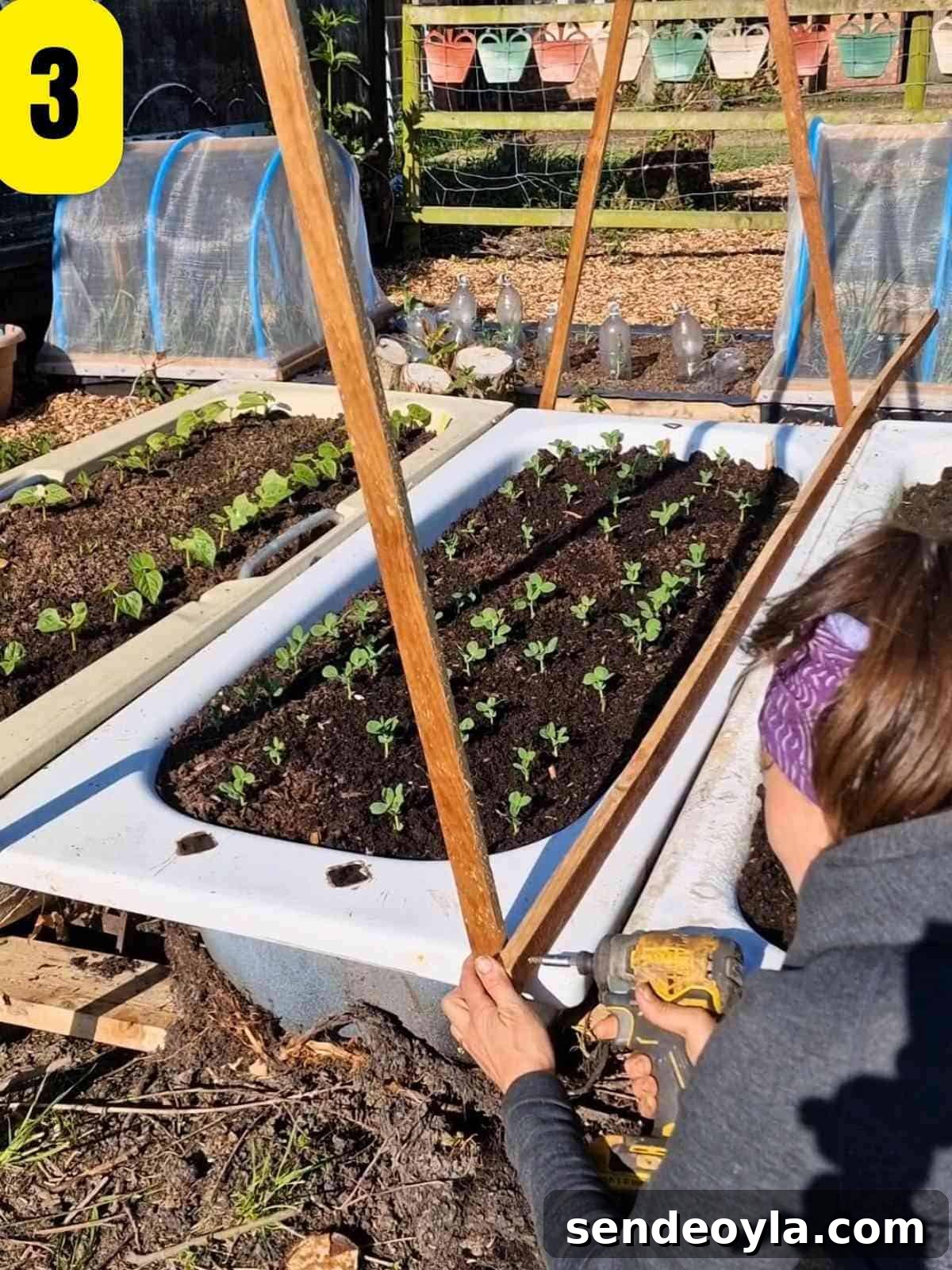
3. Open the A-frame and place it over your pea plants or where you intend to position the trellis. Measure the desired height, then drill and attach a horizontal slat at one end to set that height — I rested mine on the edge of a raised bath bed.
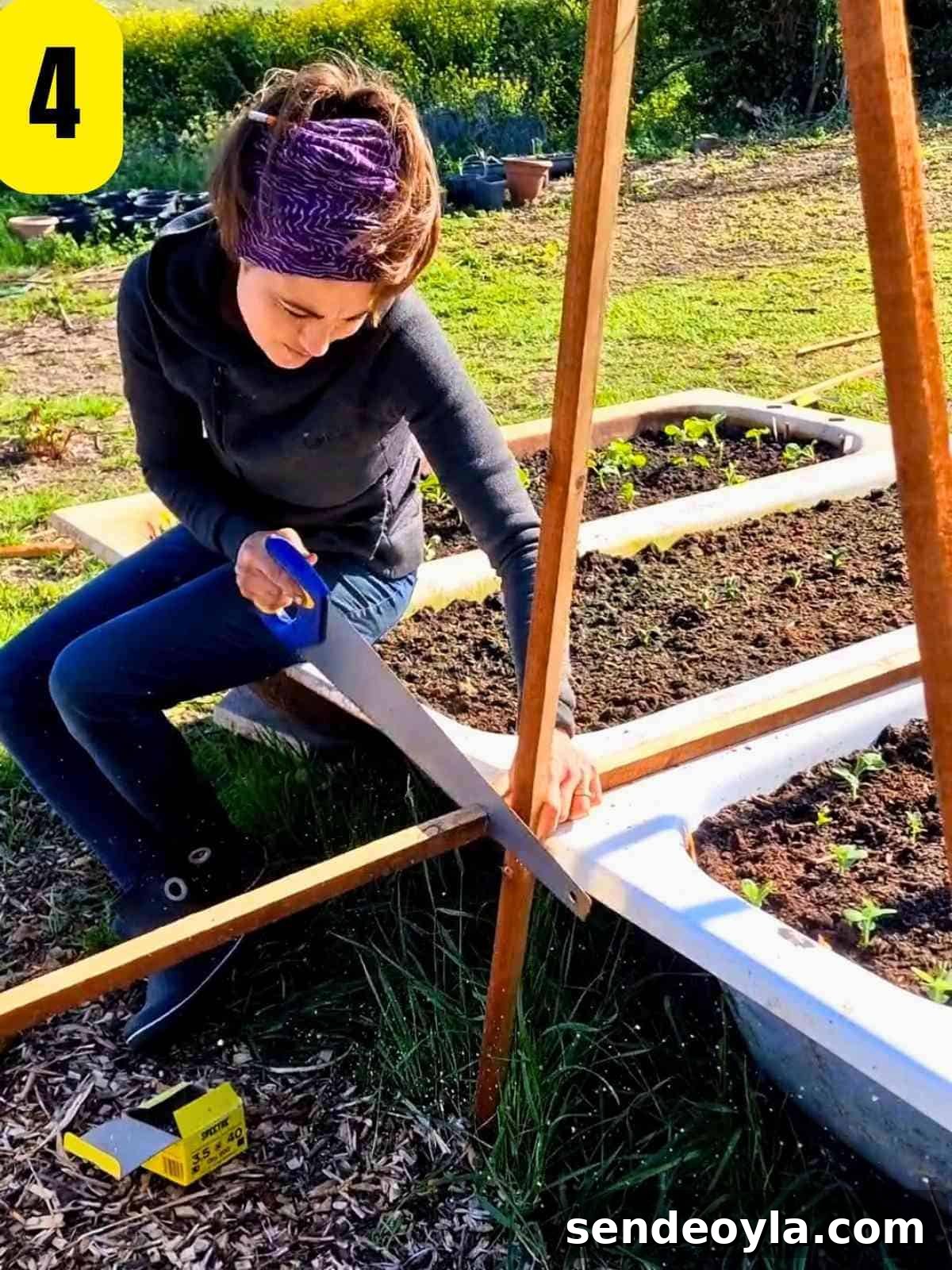
4. Trim the opposite horizontal slat so it fits flush, then drill and screw it into place. Repeat for the other side so both A-frame halves have matching top and bottom horizontals.
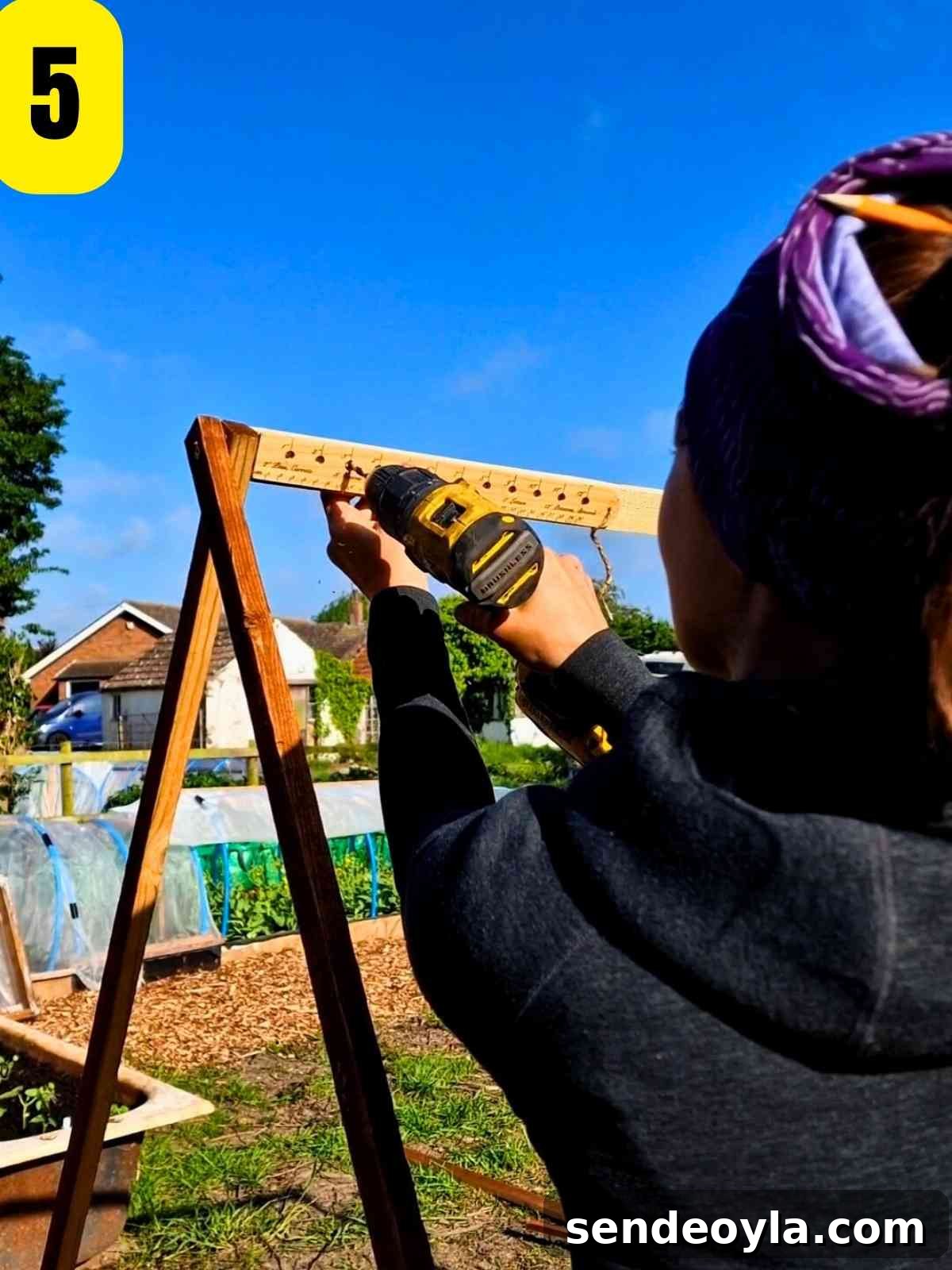
5. Mark and drill holes for the twine about every 2 inches along the top and matching holes on the bottom slats. To keep the holes aligned, temporarily close the frame and use the first drilled slat as a template for the remaining horizontal pieces.
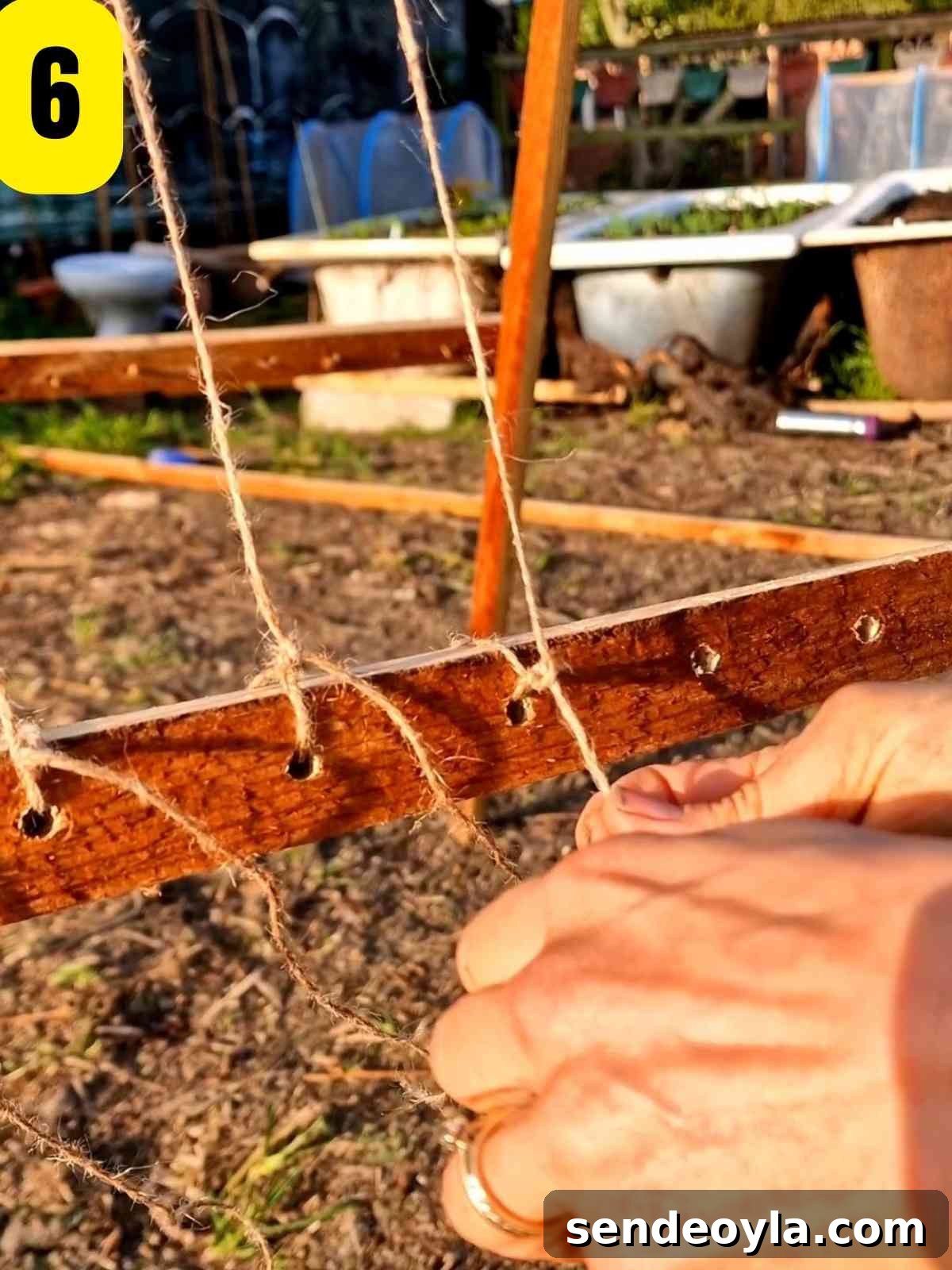
6. Thread the twine through the holes, knotting securely on one side and pulling it taut across to the opposite hole. Tie a final knot to secure each run. Repeat for every pair of holes until the face is filled with vertical lines of twine.
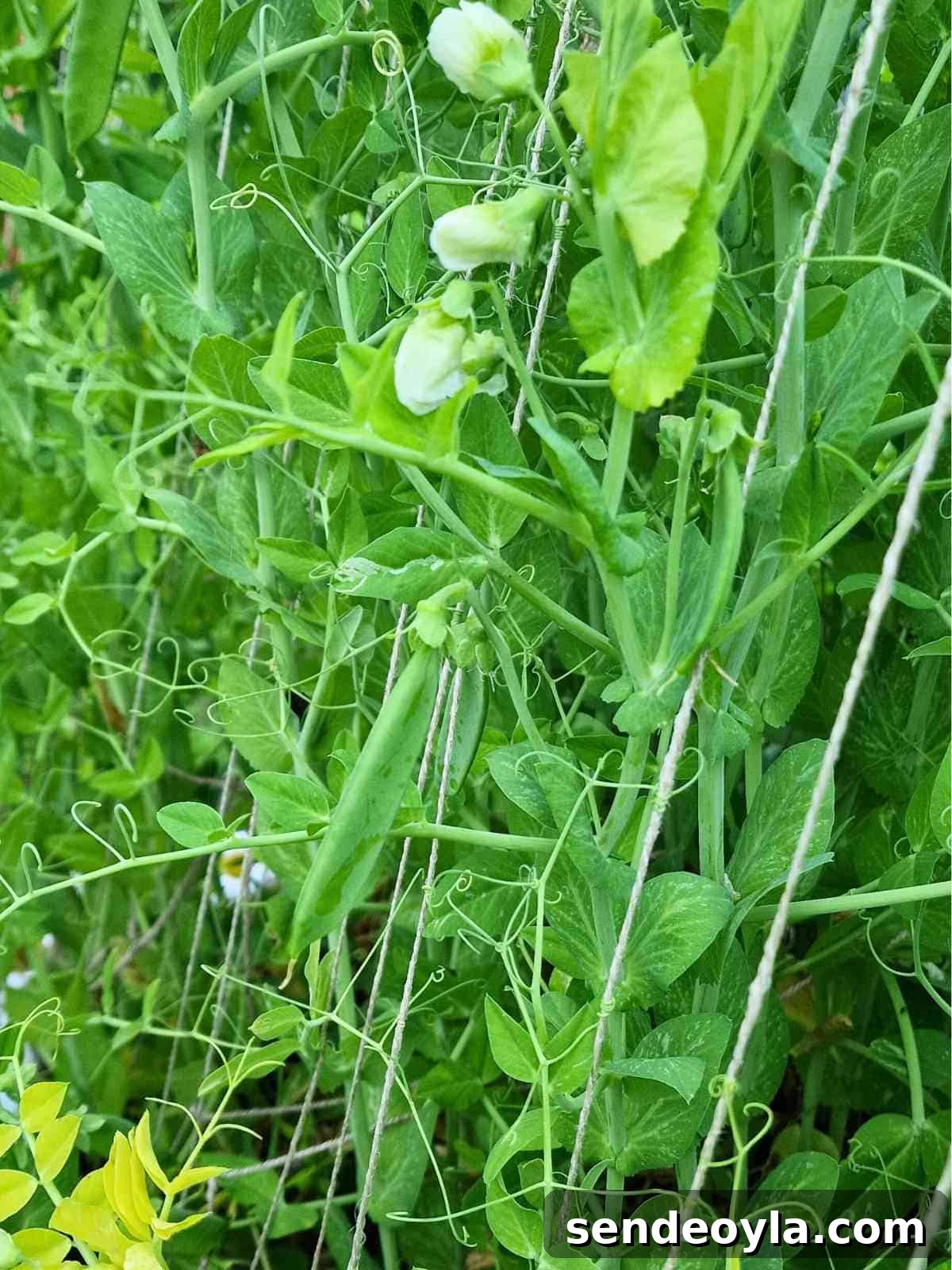
Tip: If you prefer, add more twine horizontally to form a grid. You can also run extra twine across the inside of the A-frame for additional support or use netting instead of twine for quicker coverage.
⚖️ Project Variations
Several alternative materials and approaches can be used depending on budget and availability:
- Chicken wire — staple to the wooden frame or use wire mesh panels for a longer-lasting solution.
- Hinged frames — build two separate frames and attach with hinges at the top for a neat foldable design.
- Plastic netting — bird or garden netting stapled to the frame is lightweight and effective.
- Bean-pole A-frame — stick poles into the soil and tie them where they cross to form a natural A-frame, then add a horizontal top piece if needed.
🦺 Safety Tips
- Do not wear loose gloves when using a drill; they can catch and pull your hand.
- Know the source of any reclaimed wood you use, such as pallet timber, and avoid contaminated or treated pieces near edible crops.
- Sand rough edges to prevent splinters when handling.
🧽 Care and Maintenance
Treat the timber with a natural preservative each year if you want to extend its lifespan. Replace twine when it becomes weathered to keep the trellis strong and reliable.
💡 Pro Tips
- Use a seed-spacing ruler as a drill-jig to ensure straight, evenly spaced holes.
- Drill matching holes on the two identical bottom slats first, close the frame and then use those holes as a template for the final horizontal slat.
- If using treated timber, avoid direct contact with soil where possible to prevent leaching into garden beds.
- Set the trellis in place when pea shoots are young so tendrils can grab on early and climb naturally.
❓ FAQ
Height depends on the variety: bush peas typically reach around 3 ft (about 90 cm), climbing varieties can reach 6 ft (around 180 cm) or more, and some sugar snap peas can grow even taller. Choose a height appropriate for the variety you planted.
➕ More Gardening Projects
If you enjoy simple DIY garden builds, consider other small projects like a potting bench, upcycled raised beds, or a hinged hoop house for raised beds. These projects are affordable, practical and pair well with a trellised pea patch.
Subscribe to the newsletter for updates on new projects and seasonal tips. Follow me on social channels for short how-to videos and progress updates.
📖 Printable Card
How to Make an Easy DIY Pea Trellis (Simple Build)
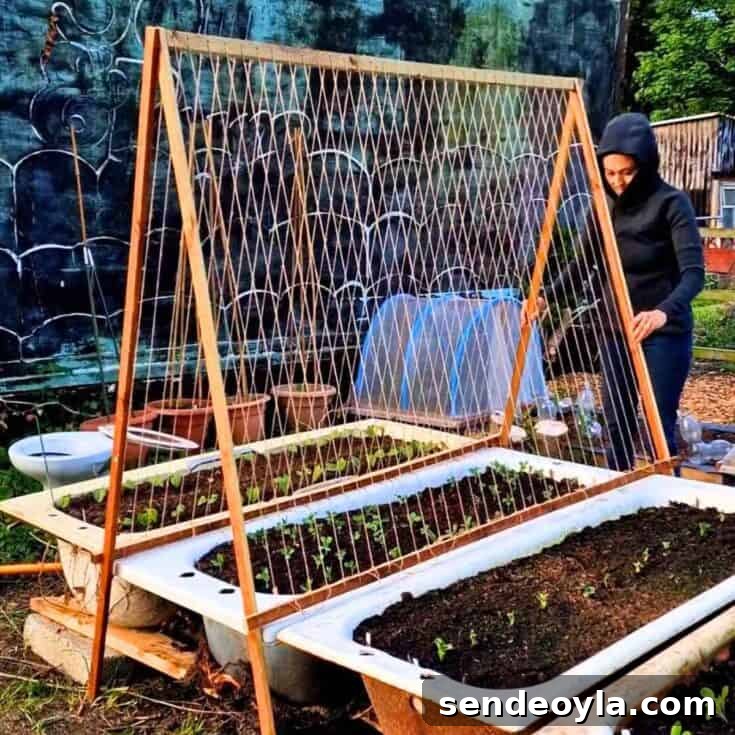
Build a folded A-frame trellis from slats and twine in a single afternoon. This lightweight design is easy to position over beds and stores flat for the off-season.
Materials
- Garden twine
- Wood slats or poles
Tools
- Combi drill and drill bit
- Impact driver or screwdriver
- Hand saw
- Seed spacing ruler (optional)
Instructions
- Screw one vertical leg to the top slat and repeat on the other side.
- Add the second leg over the top connection on each side with a screw that allows pivoting to form an A-frame.
- Open the frame, position it over the plants, and attach a horizontal slat at the desired height.
- Trim and fit the opposite horizontal slats and fix them with screws so both halves match.
- Mark and drill evenly spaced holes for the twine; use one slat as a template to keep holes aligned.
- Thread and knot the twine through the holes, tensioning as you go until the trellis face is complete.