
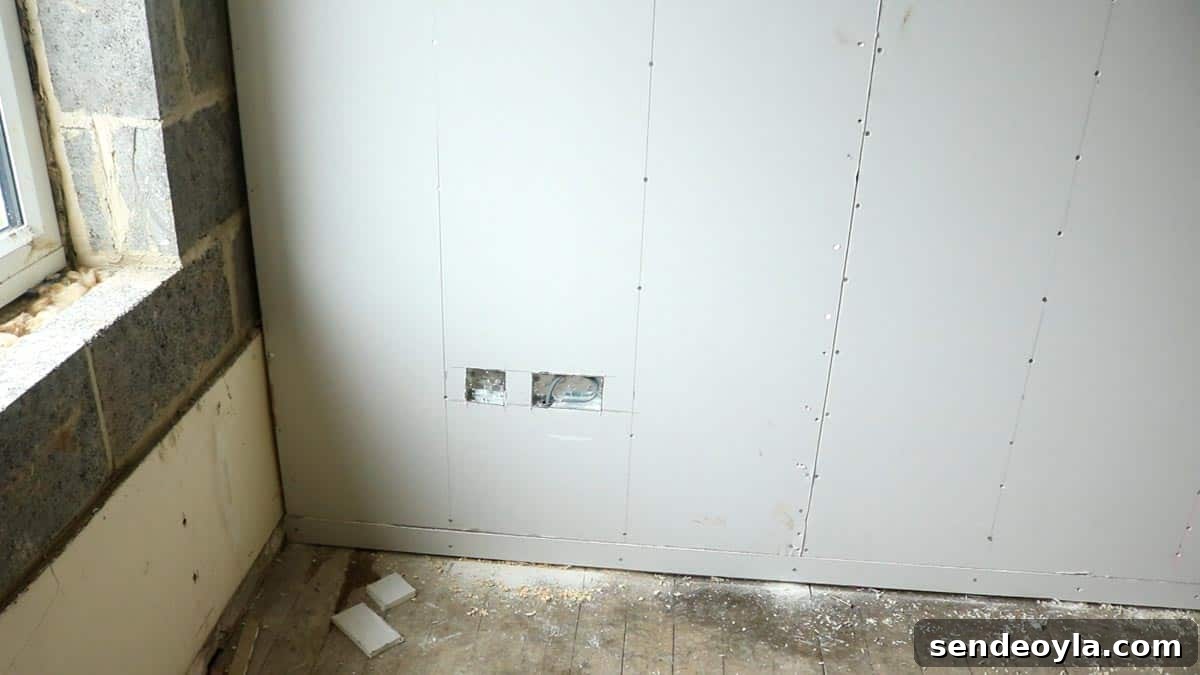
Here’s a practical, step‑by‑step account of how we built a partition wall to split a large living room into two bedrooms. I’m not a professional; this documents what my Dad taught me and what we did on site.
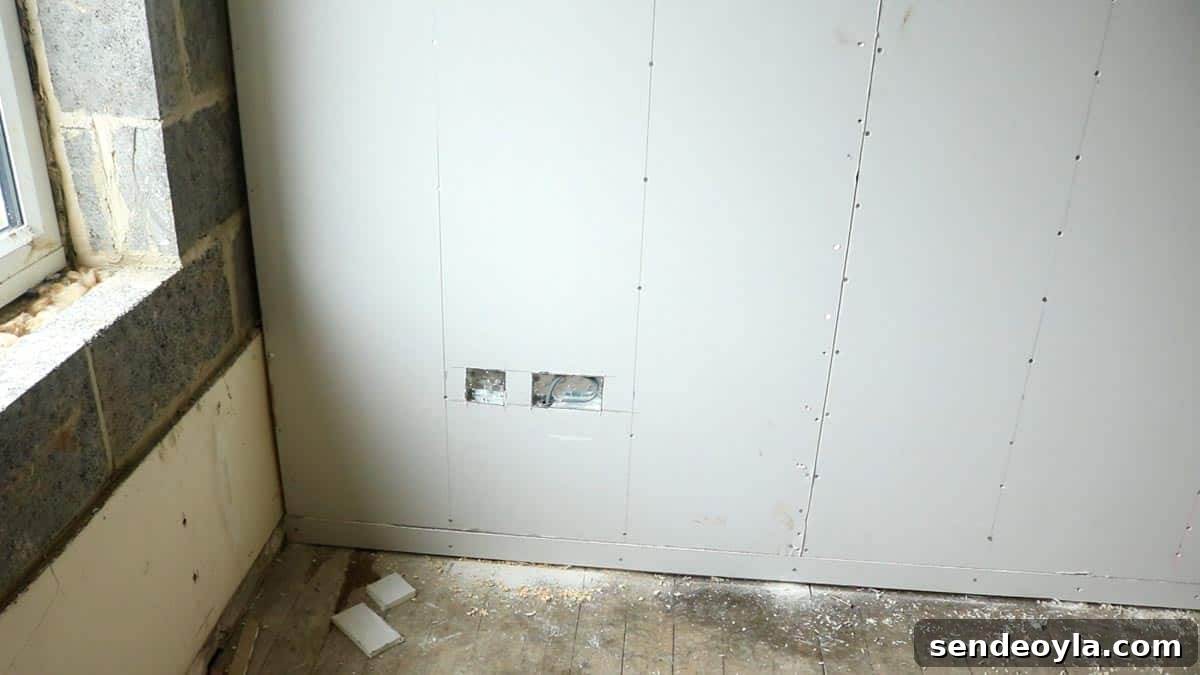
I’d been keen to learn how to build a stud partition wall, and on a recent weekend I helped install one during my parents’ bungalow renovation. A partition wall is an economical and effective way to divide a room and create extra bedrooms or living spaces without major structural work.
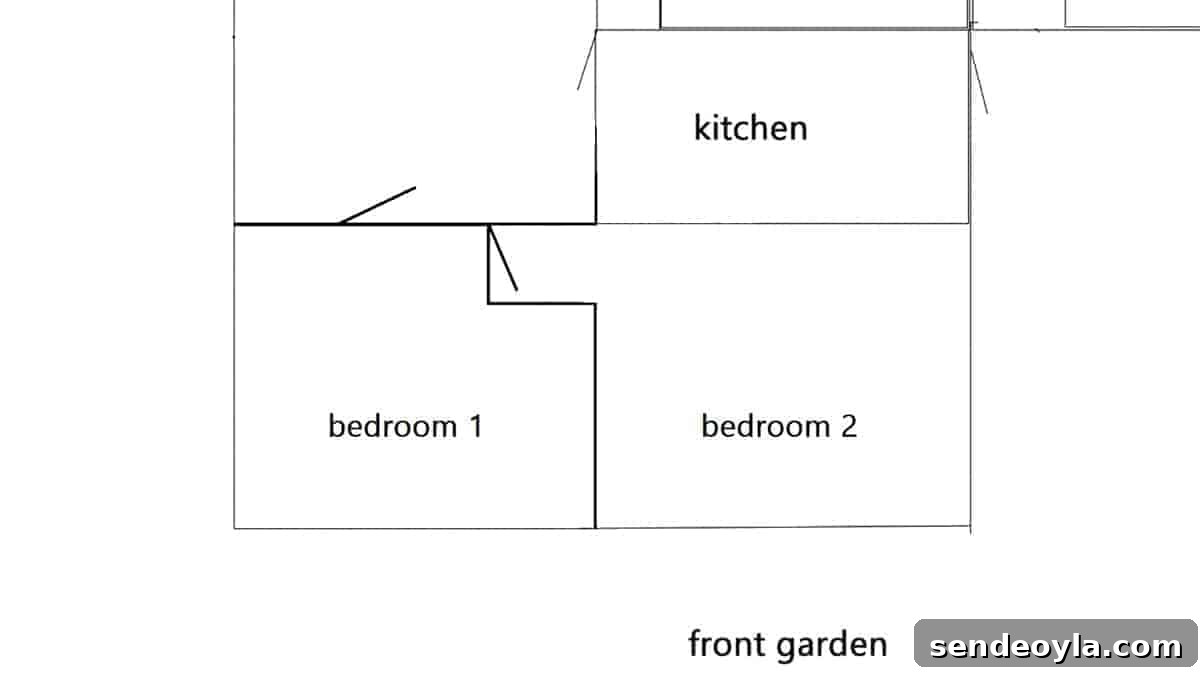
The original living room had an awkward L‑shape that didn’t use space well. We decided to divide it into two bedrooms with new partition walls and two doorways. Below I describe the layout decisions, tools, materials and the sequence we followed for installation.
LIVING ROOM BEFORE
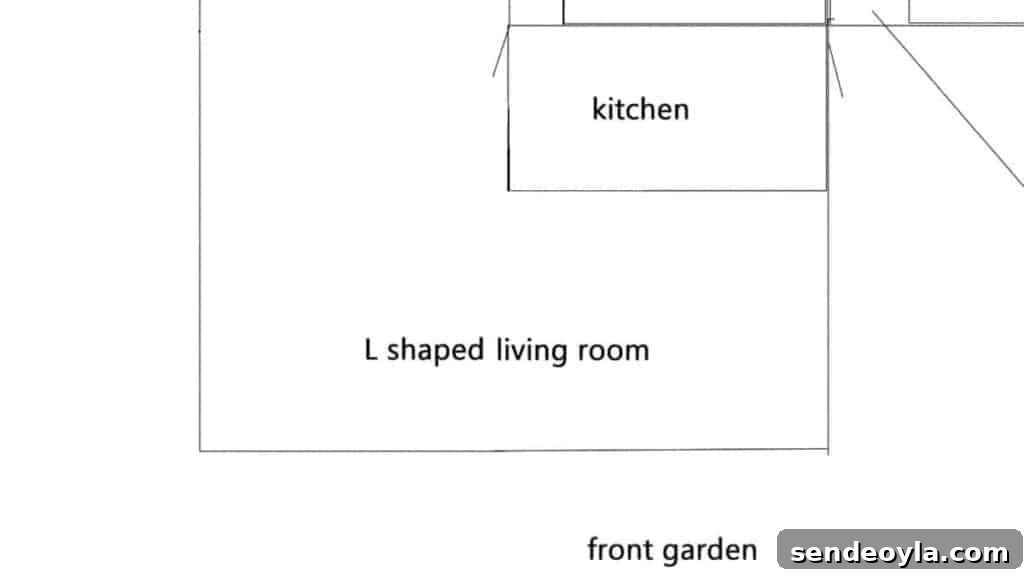
TWO BEDROOMS AFTER
LAYING OUT YOUR PARTITION WALL
Before I arrived, my Dad had already created the door openings, so my focus was on constructing and fitting a basic studded partition wall. The general sequence is:
- Lay a straight length of C16 structural timber where the wall will sit.
- Offset the base if you need to account for plasterboard thickness when continuing existing walls.
- Make sure corners are square so doorways and joins line up.
- Screw a base length to the floorboards to hold the bottom plate in place.
- Cut door openings while the base piece is fixed in position if required.
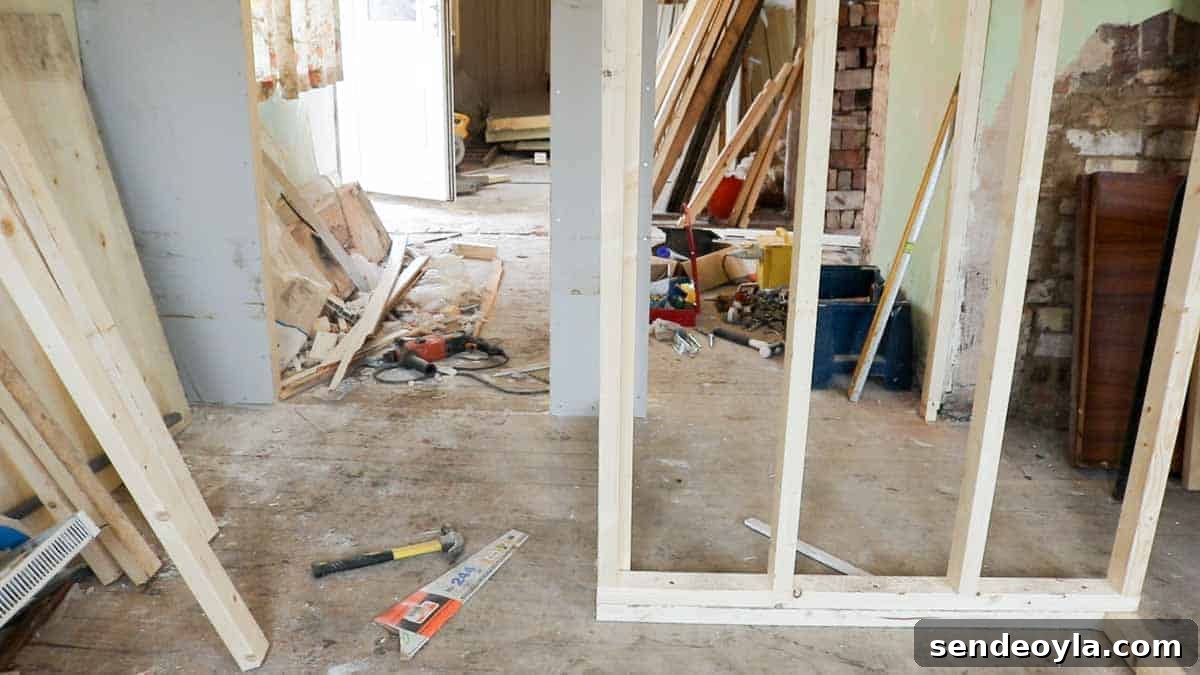
HOW TO BUILD A PARTITION WALL
With the base plate secured to the floor, cut two more matching C16 lengths for each section and stack them where the upright studs will go. We built the frame flat on the floor, then lifted and slotted it into position between the base plate and the ceiling joists.
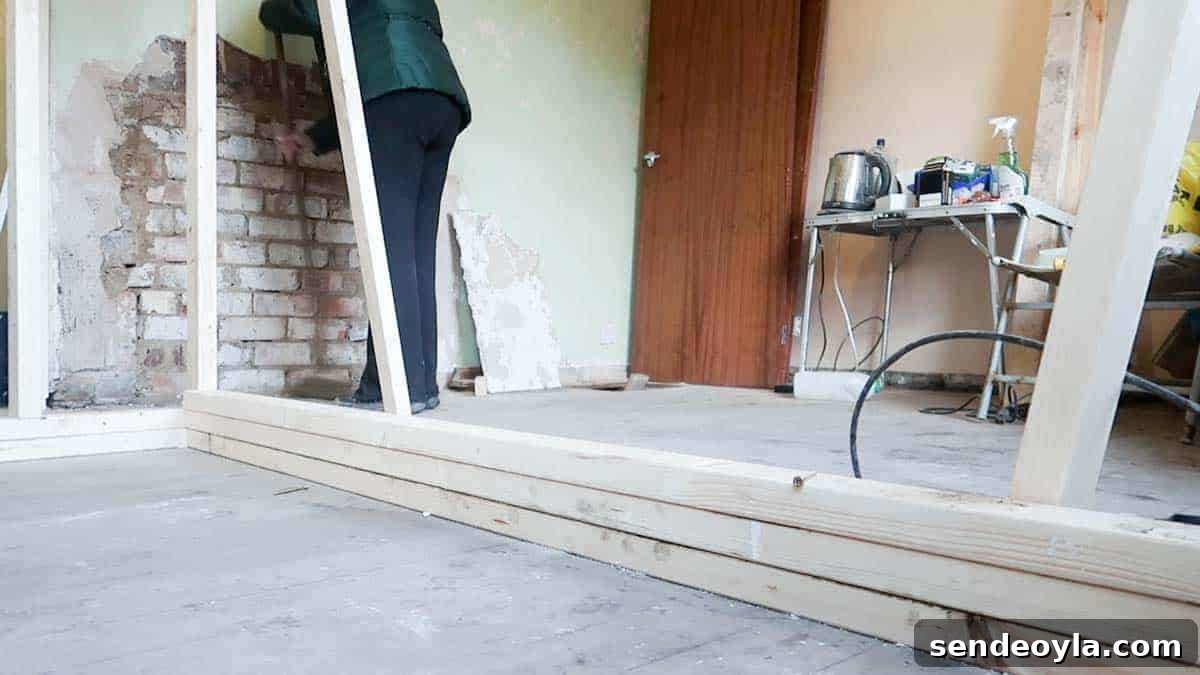
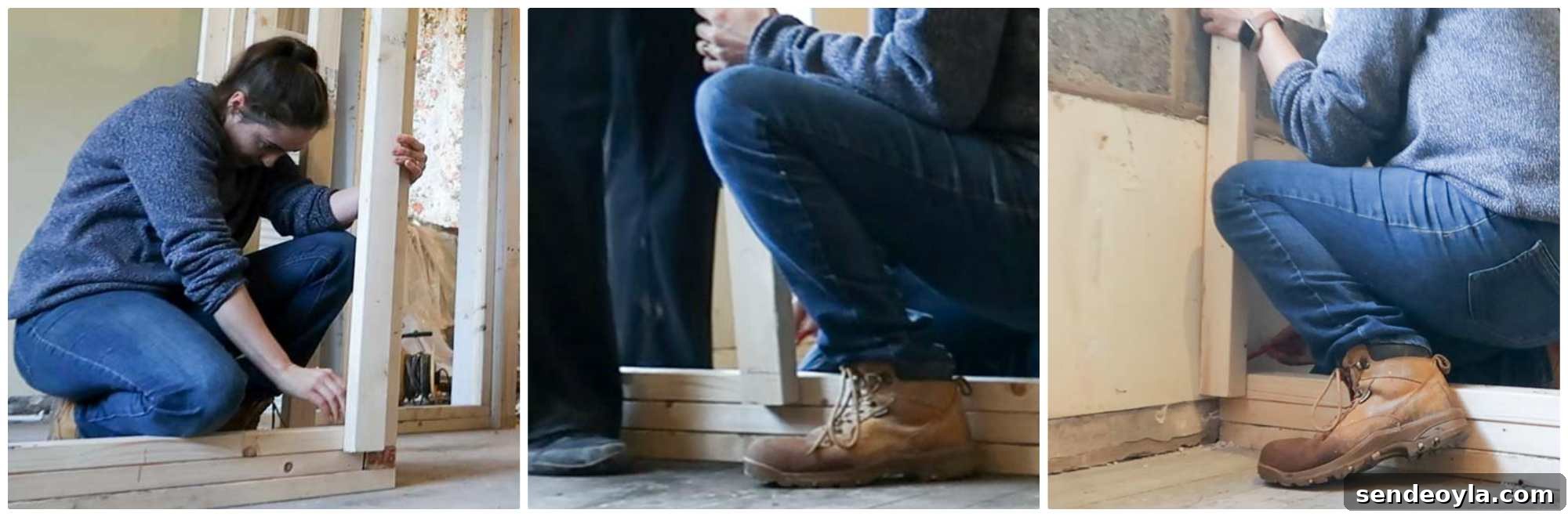
MARK FOR BATTENS
Decide the stud spacing by measuring the width of your plasterboard. Our plasterboard was 1200mm wide, so we marked studs every 400mm. Hold a long timber up to the ceiling and transfer the stacked timber marks so each upright matches the ceiling height. Label each piece as you go—ceiling levels often vary so every stud may be slightly different.
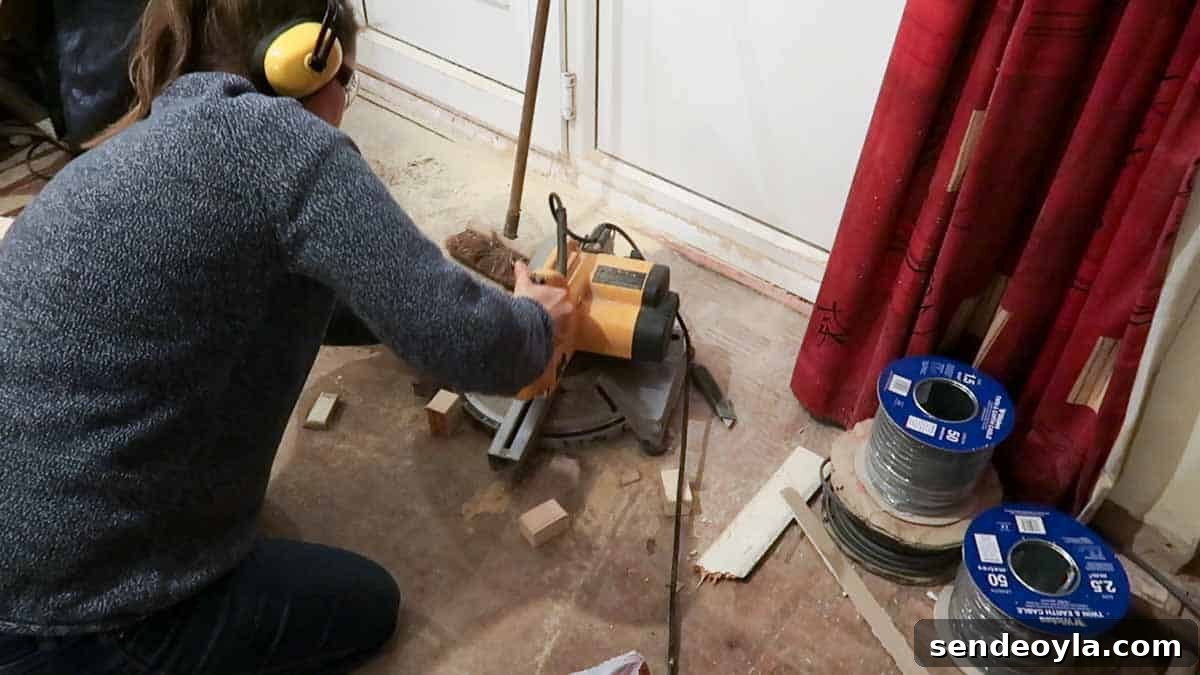
CUTTING YOUR PARTITION WALL BATTENS
We used a mitre (chop) saw for accurate cuts, but a handsaw or jigsaw will also work. Cut each stud to the marked lengths and keep them in order so you don’t mix up pieces that fit slightly different ceiling heights.
SCREWING THE PARTITION FRAME TOGETHER
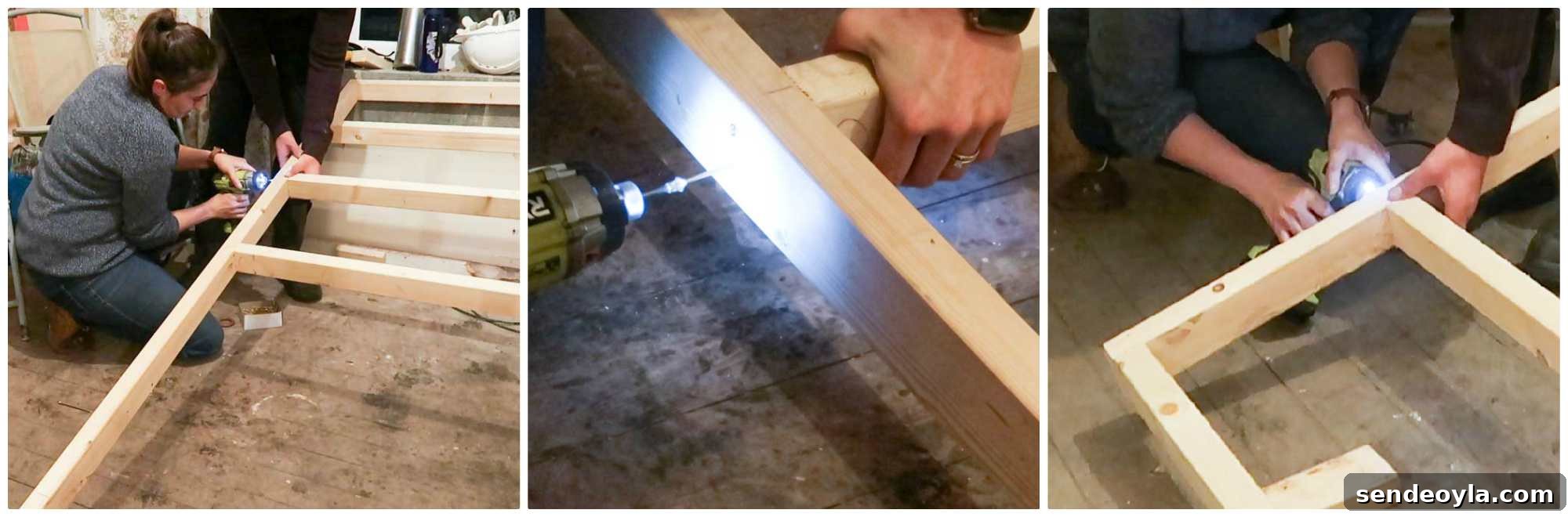
Lay the cut battens in their intended order, align them with the pencil marks and screw the frame together. Work away from the side that will be fixed in place, so screws don’t obstruct later fixing. We used long wood screws and an impact driver to assemble each section.
FITTING THE PARTITION WALL
Once assembled, slot the frame between the base plate and ceiling. If it’s tight, tap it gently with a mallet or use the heel of a boot. Check the frame is flush with adjacent walls, then secure with screws.
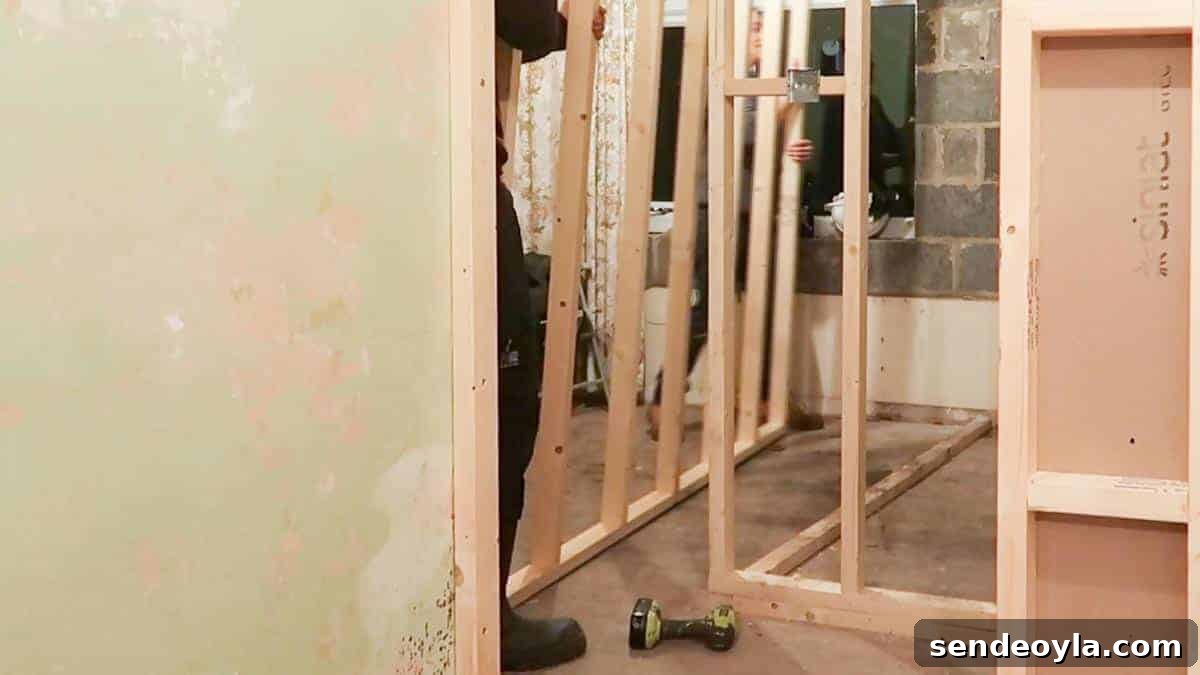
SCREWING THE PARTITION TO ADJACENT FRAMES
Hold the frame flush and screw it to any existing partition or timber frame using long wood screws. Place a few screws along the side and repeat along the bottom to secure the base plate.
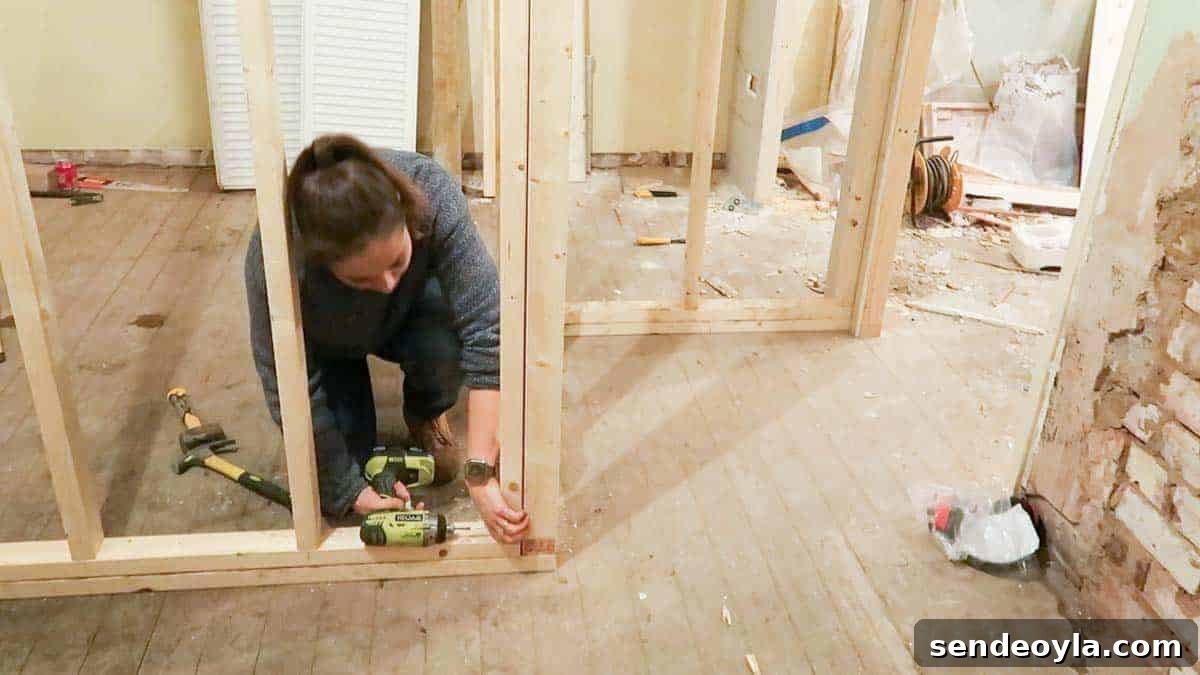
ENSURING THE UNFIXED SIDE IS LEVEL
Use a spirit level to align the free side against the masonry wall. Tap the frame gently until the bubble is centered, then clamp or hold while you fasten it in place.
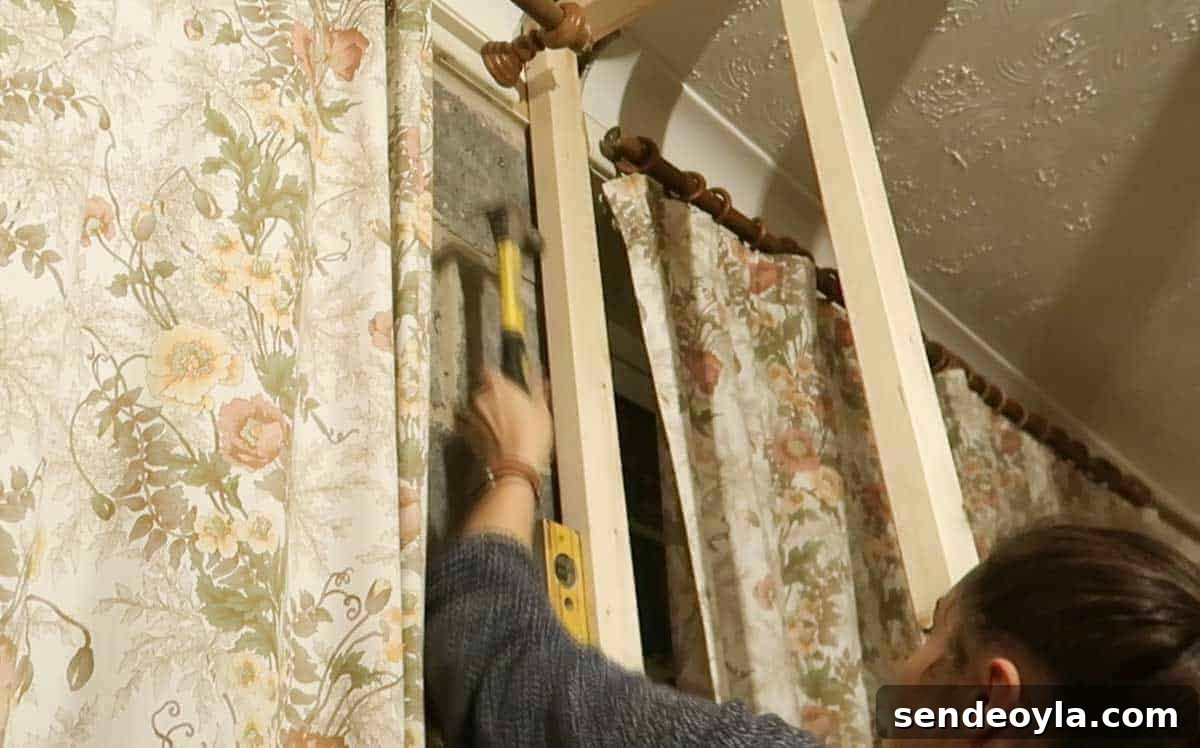
FIXING THE FRAME TO MASONRY
To attach timber to brick or block, drill through the wood into the masonry with an SDS or hammer drill. We used masonry (Spax) screws that can be driven directly into the drilled hole without rawl plugs. Tip: use small shims where the timber doesn’t sit perfectly flat to prevent twisting when tightened.
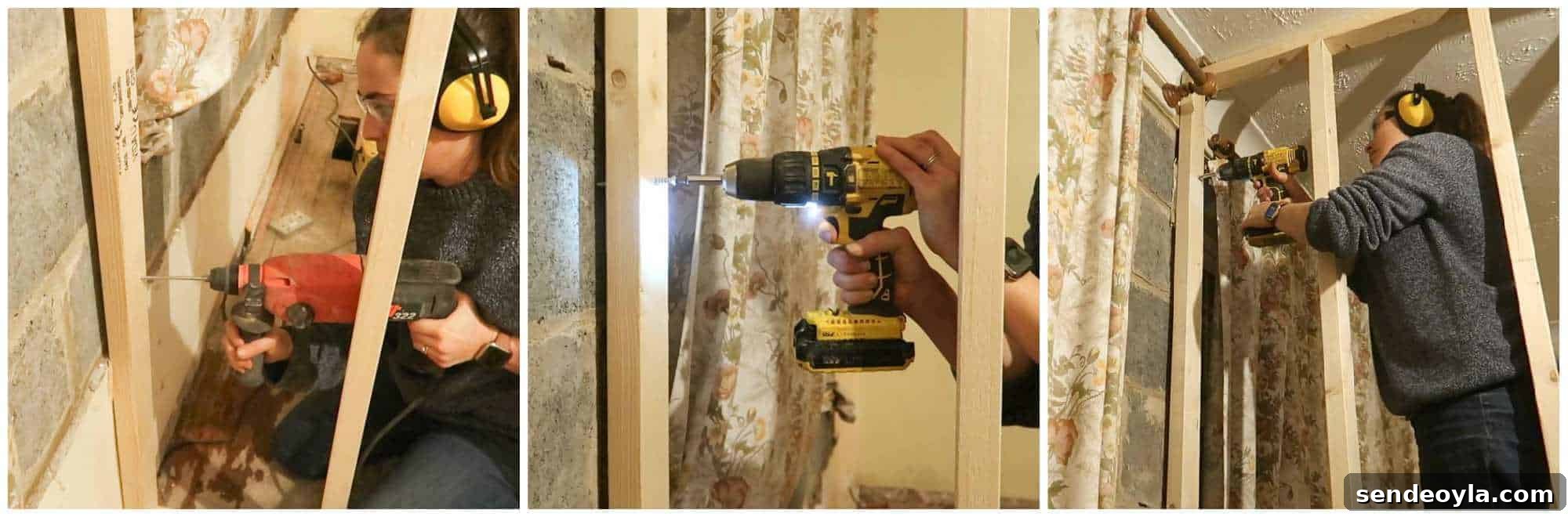
CEILING ANCHORING
Screw the top plate into the ceiling timber. From the attic, add blocking and screw down into the top of the partition to securely clamp it to the ceiling structure. This step gives the wall its vertical rigidity.
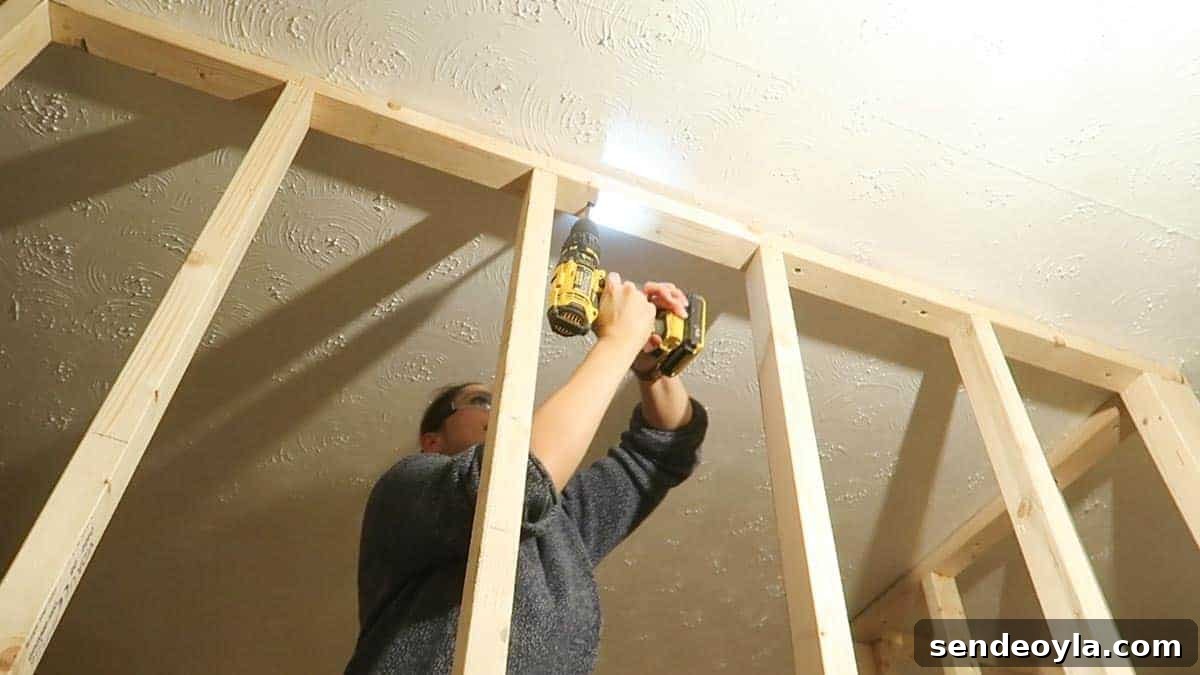
INSTALLING NOGGINS
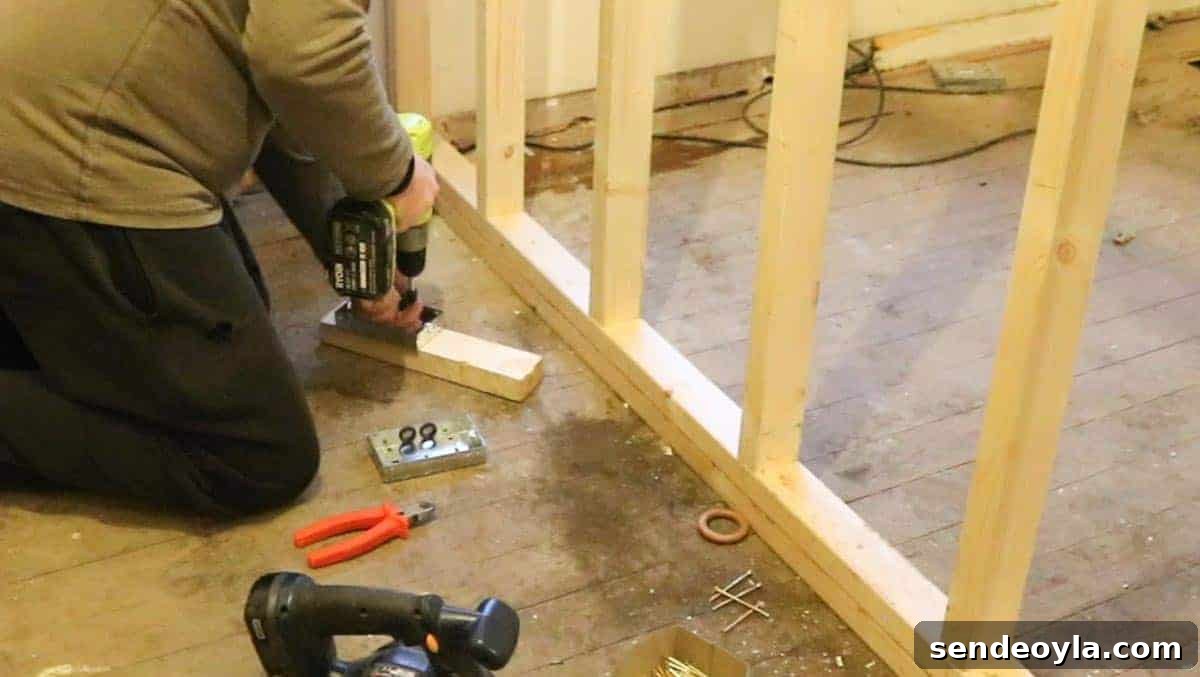
Add noggins—short horizontal pieces of C16—between studs to strengthen the frame and give solid fixing for fixtures and plasterboard edges. Measure from the bottom for accurate cuts and stagger noggins roughly halfway up the wall. Use two screws per noggin for a solid connection.
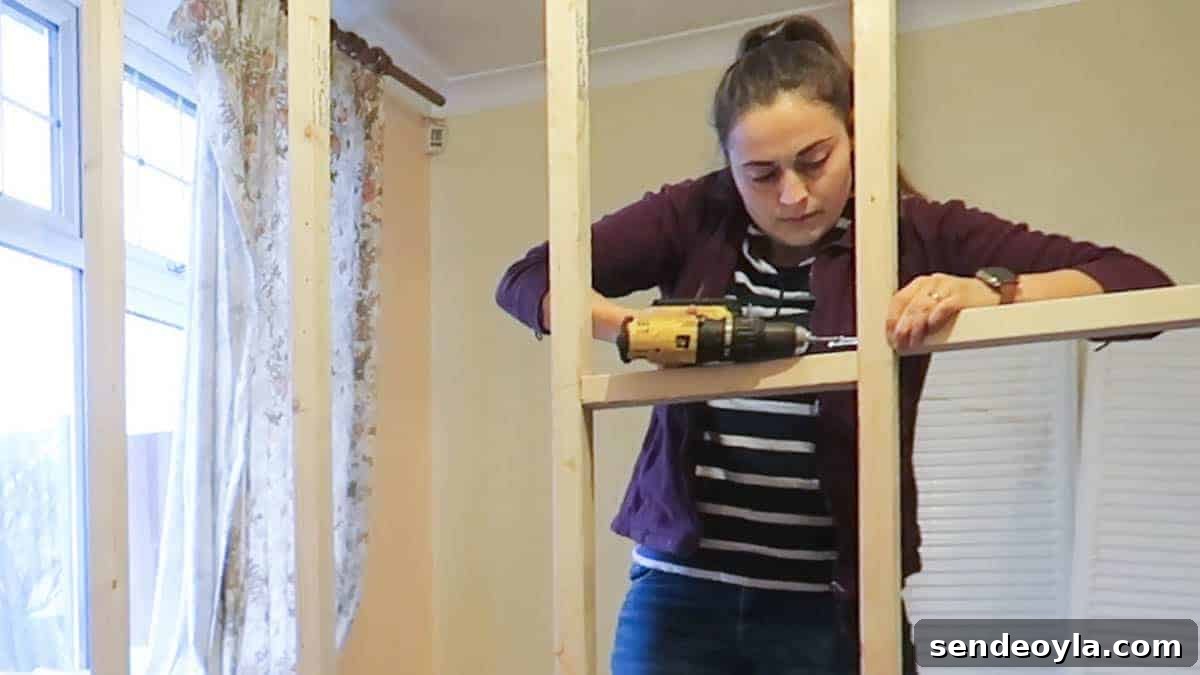
ALTERNATIVE ANGLED FIXING FOR NOGGINS
If you don’t have a pocket‑hole jig, you can pre‑start a short angled screw to hold a noggin, then drive a long screw at an opposing angle to pull the noggin tight. This method works well for thick structural timber.
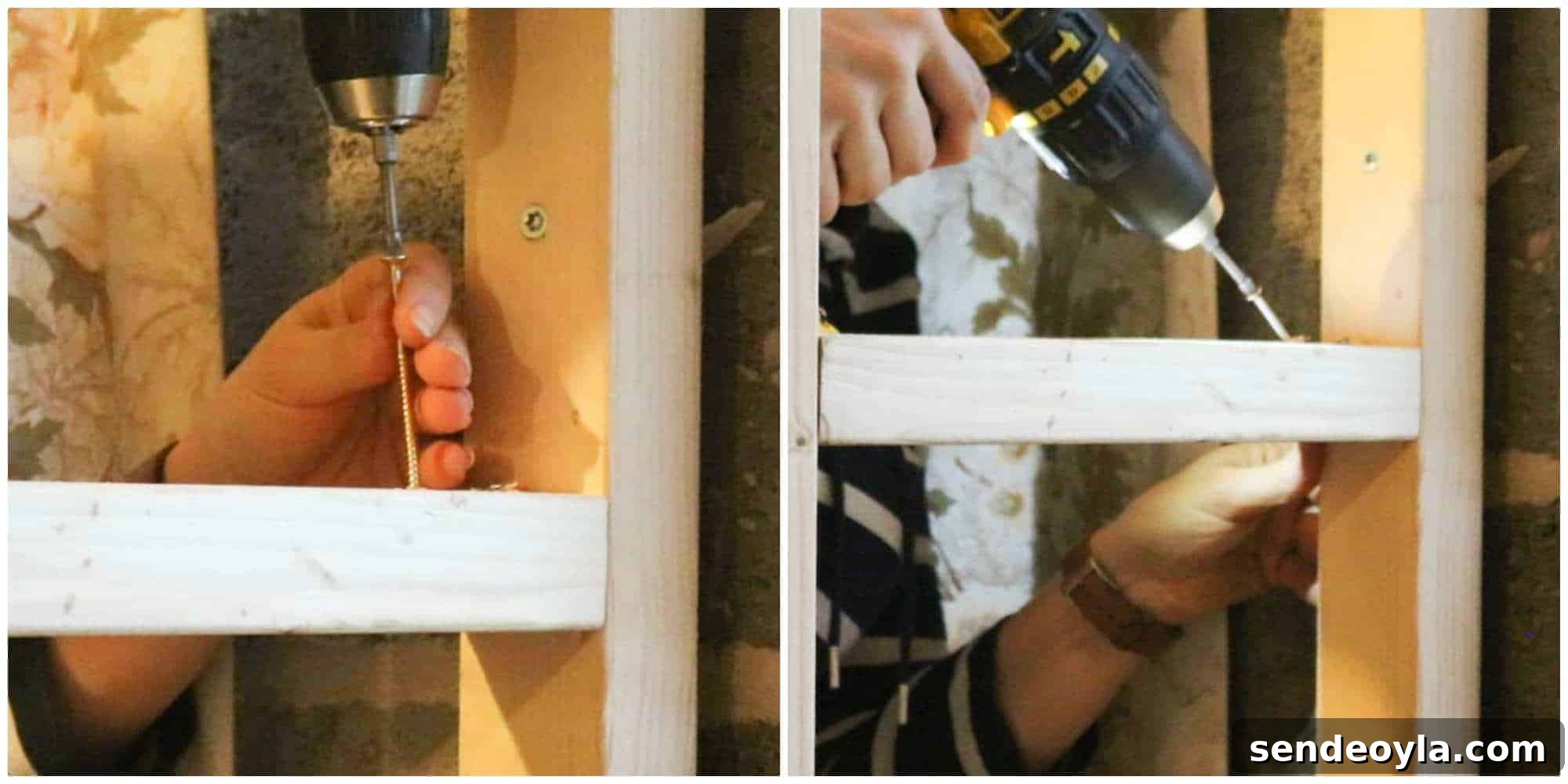
ELECTRICS IN A PARTITION WALL
Plan electrical points before plasterboarding. An electrician installed sockets on noggins so boxes have solid backing. He ran cables through small holes in floorboards and the ceiling as required. Always use a qualified electrician for wiring.
INSULATION — IS IT NECESSARY?
Internal partition walls don’t legally require insulation, but adding mineral wool or acoustic insulation improves sound reduction and can help slightly with thermal comfort between rooms. We opted to leave insulation as optional on this project.
HOW TO CUT PLASTERBOARD
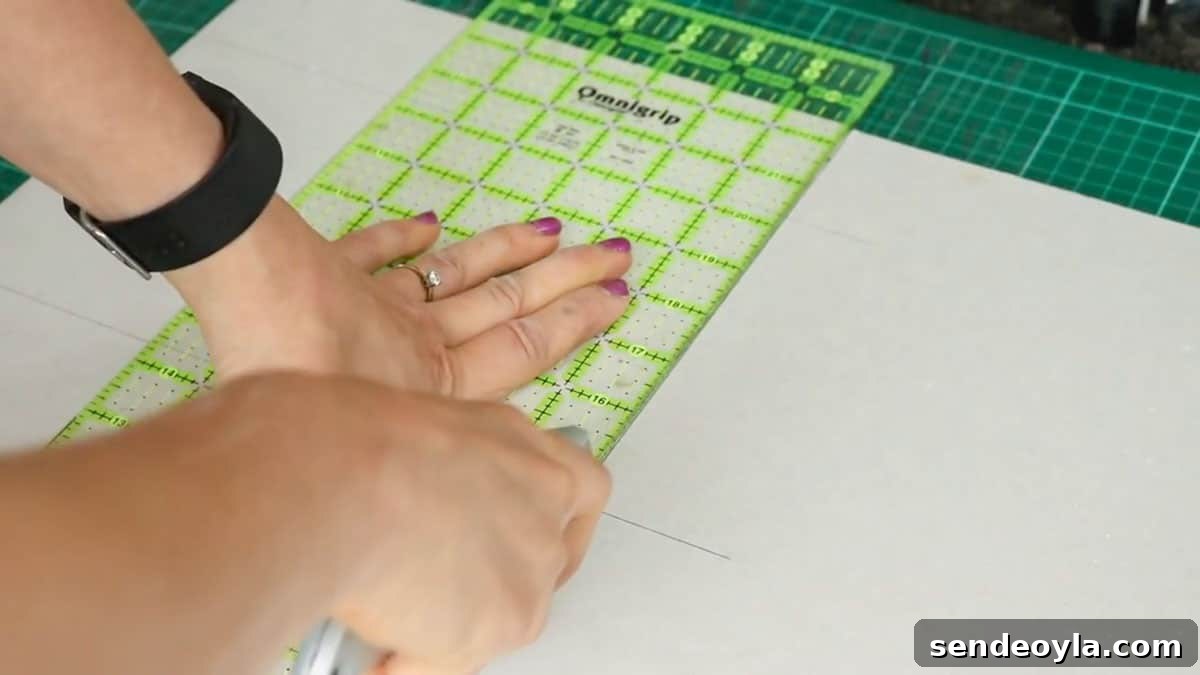
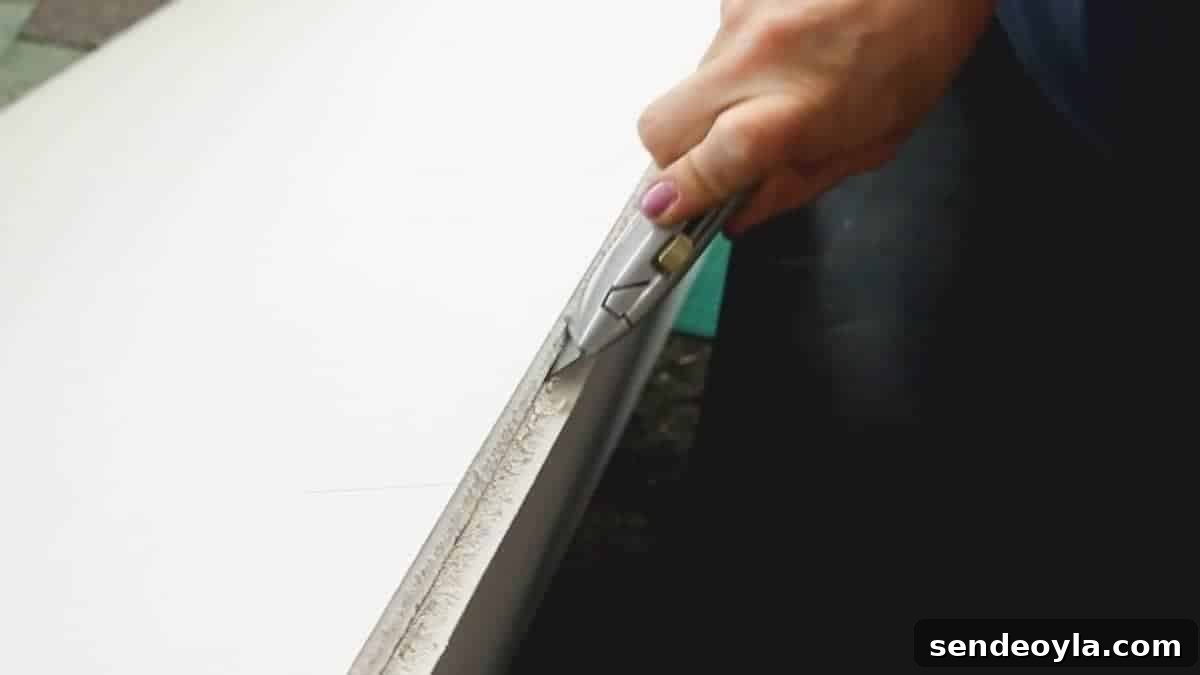
Mark the plasterboard, score a straight line with a utility (Stanley) knife, then snap the board along the score and cut the paper backing. If you cut a little off, plasterboard is inexpensive and forgiving.
PROPPING UP THE PLASTERBOARD
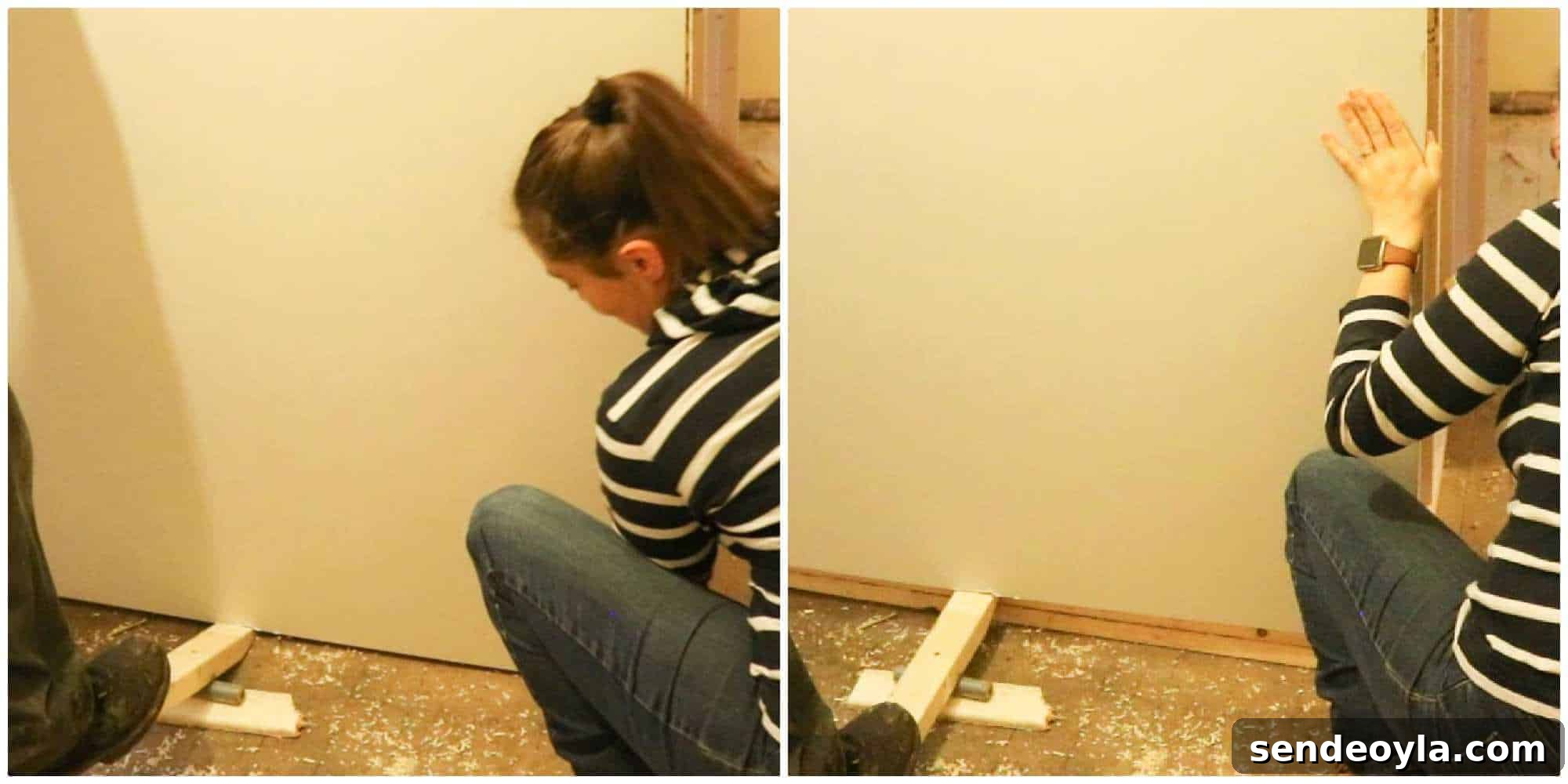
To hold large plasterboard sheets while fixing them, my Dad made a simple prop: a mitred timber with a dowel beneath that bears against the floor. It’s pressed with a foot to lever the board up to the ceiling, allowing one person to screw the sheets in place.
SCREWING PLASTERBOARD
Use plasterboard screws on a low torque setting so the heads are slightly countersunk but don’t break the paper face. Space screws approximately every 150mm (6 inches) around edges and across studs. Transfer stud locations to the first plasterboard side so you can locate studs when fixing the second side.
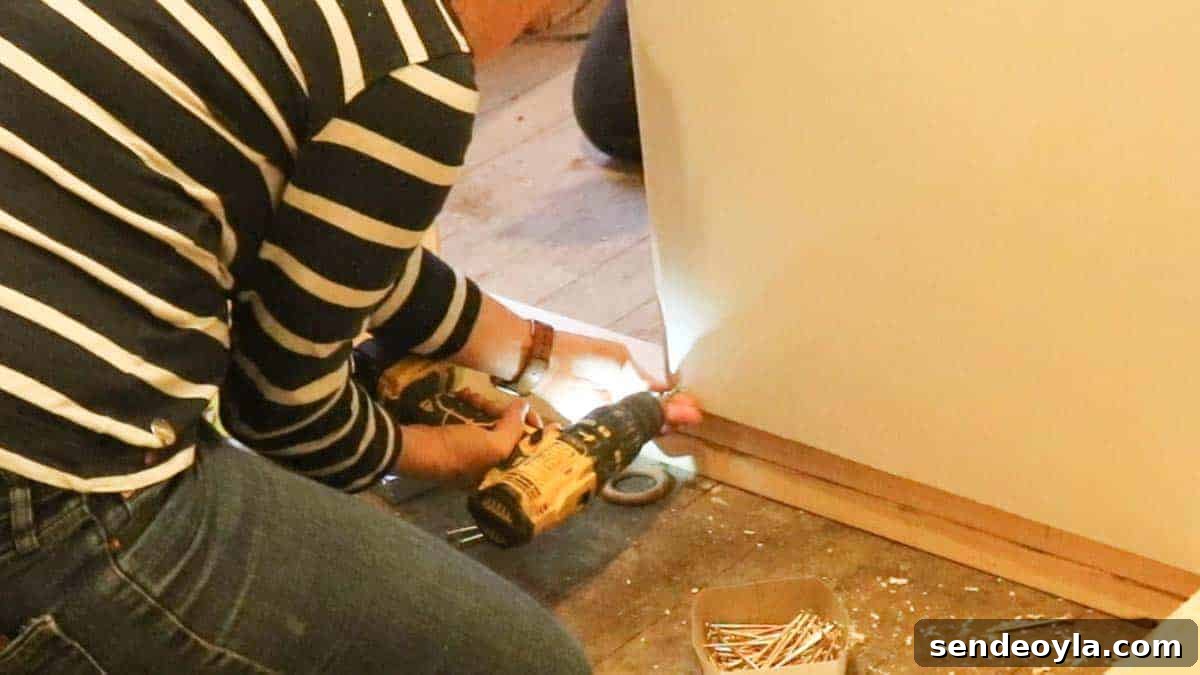
CUTTING OUT SWITCHES AND SOCKETS
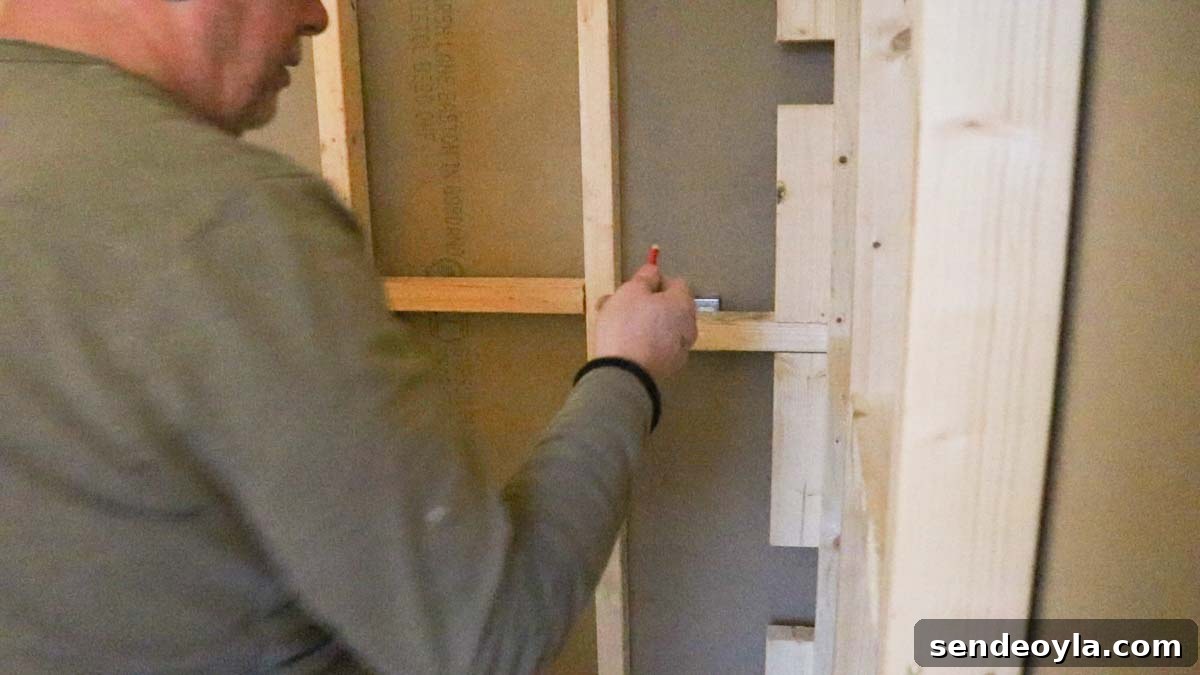
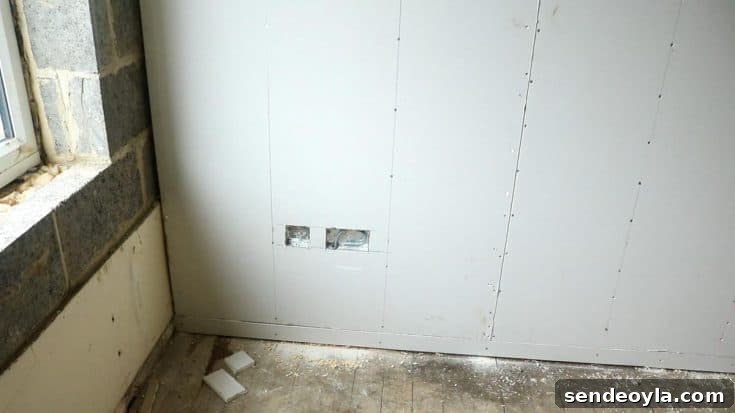
Hold the boarding in place, mark electrical positions from behind, then cut openings with a plasterboard knife. Don’t cut too tightly—leave a small clearance so the electrical box can be fitted and trimmed neatly.
FILLING GAPS NEAR SKIRTING
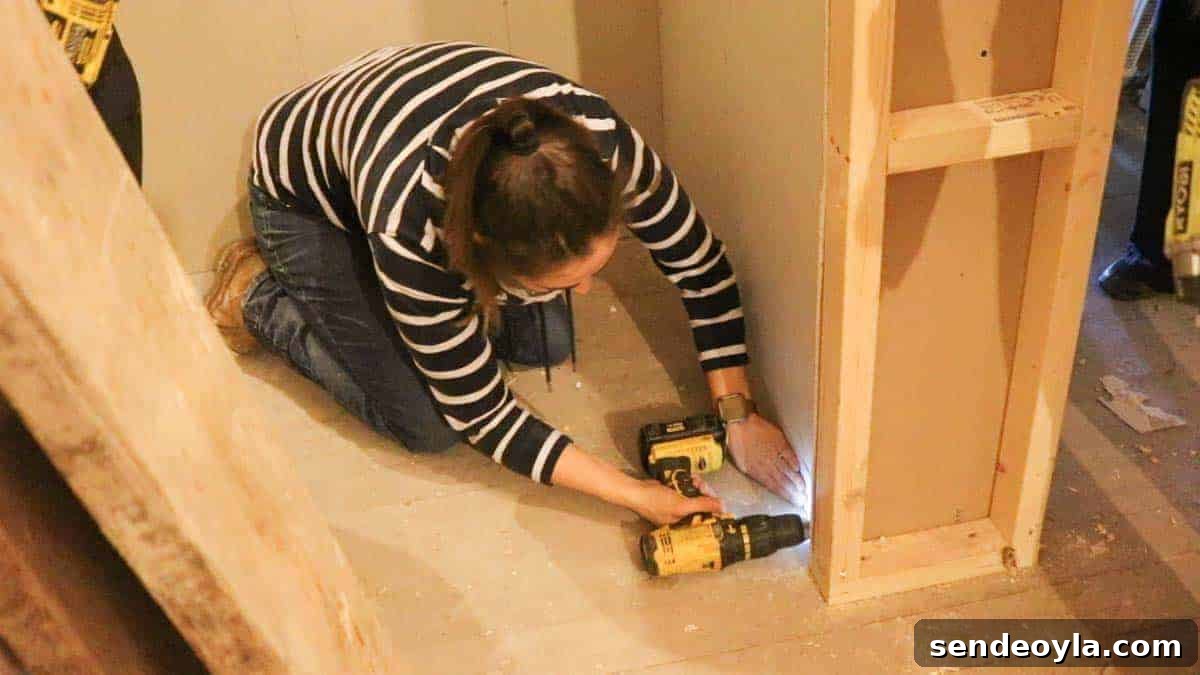
If plasterboard sheets are slightly shorter than the finished wall height, cut narrow strips to fill the lower gaps and screw them into the base plate before plastering. This gives a neat finish once skirting goes back on.
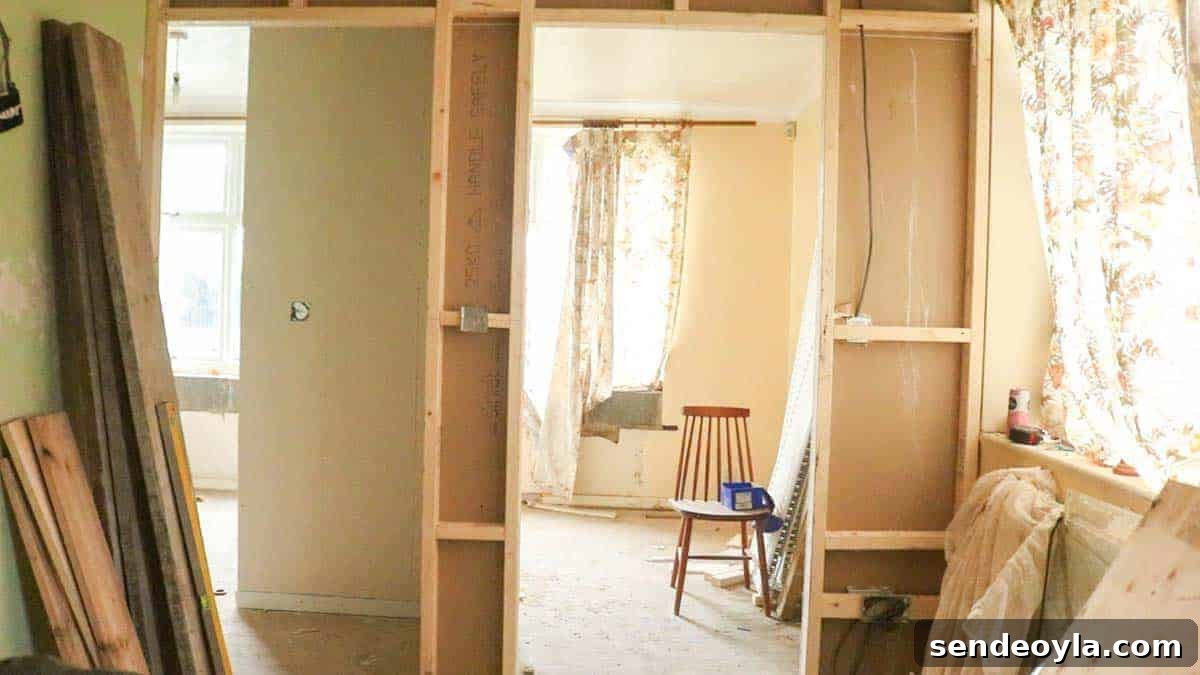
At the time we took these photos the electrician still had a few final connections to make and we hadn’t plastered the second side yet, but the structure and boarding give a clear idea of the finished layout. Next steps will be corner beads, jointing tape, skimming/plastering and finishing around doors and sockets.
How to Build a Partition Wall — Quick Summary
A concise checklist of the key steps and materials for installing a stud partition wall.
1 hour
4 hours
5 hours
Materials
- C16 structural timber
- Spax or masonry screws
- Plasterboard
- Plasterboard screws and jointing materials
Tools
- Spirit level
- Combi drill / impact driver
- SDS or hammer drill (for masonry)
- Mitre saw (or hand saw)
- Stanley knife and plasterboard knife
- Tape measure
Key Steps
- Screw a base plate to the floor where the new wall will sit.
- Cut and stack C16 timber to form studs, marking spacing to suit plasterboard width.
- Screw the frame together on the floor, keeping pieces in order for different ceiling heights.
- Slot the assembled frame into position and secure to adjacent frames or masonry.
- Ensure the wall is plumb and level, then fix to the ceiling via attic blocking if possible.
- Install noggins for strength and to back sockets or fixtures.
- Install electrical boxes with a qualified electrician before boarding.
- Cut and fix plasterboard, transfer stud marks to the second side, then finish with tape and plaster.
More Home Reno Projects
- DIY Garage Conversion — en suite and layout ideas