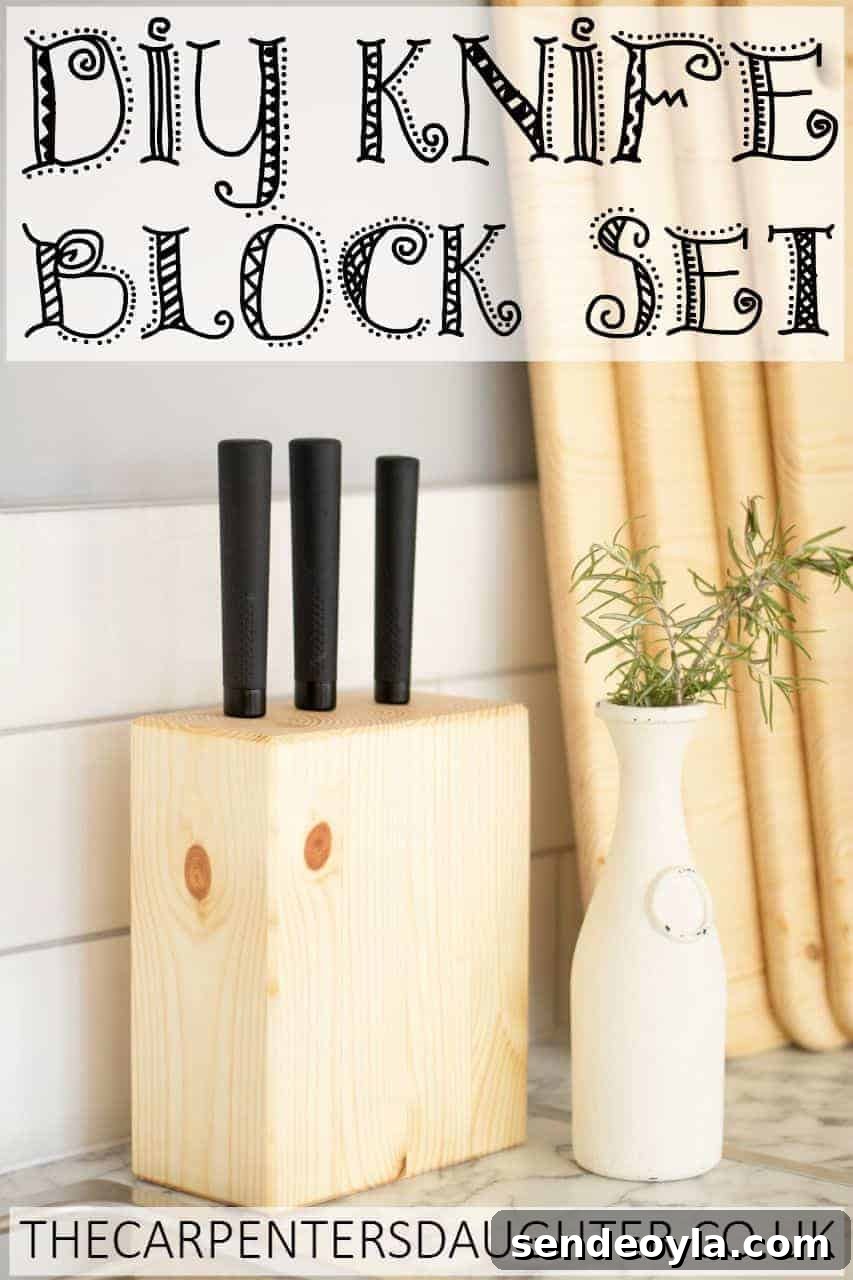
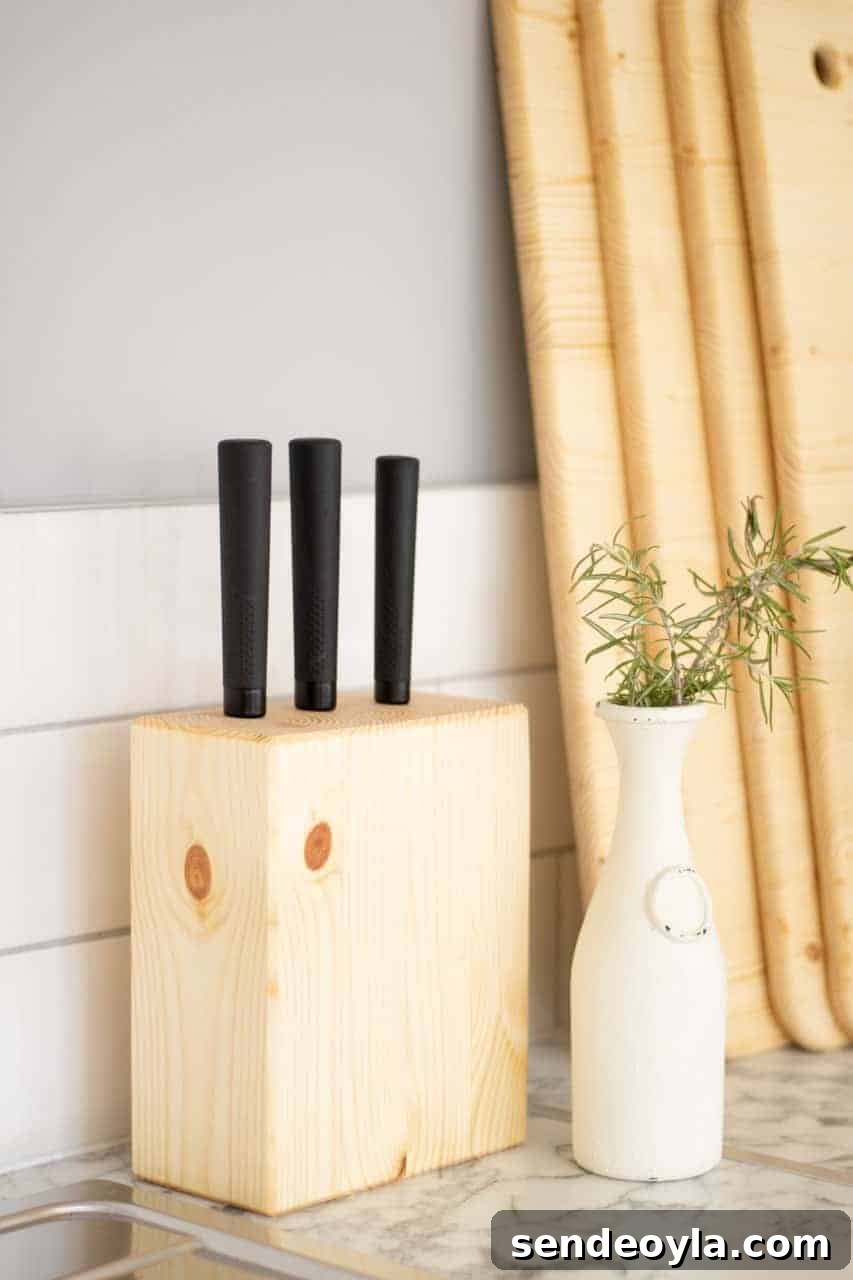
Learn how to make a simple, custom wooden knife block set using your existing knives. It’s a neat, space-saving solution for the kitchen and makes a thoughtful personalised gift for food-loving friends and family.
THIS DIY PROJECT CONTAINS A PAID AD FOR WICKES, A DIY STORE I’VE USED FOR YEARS. THANK YOU FOR YOUR SUPPORT.
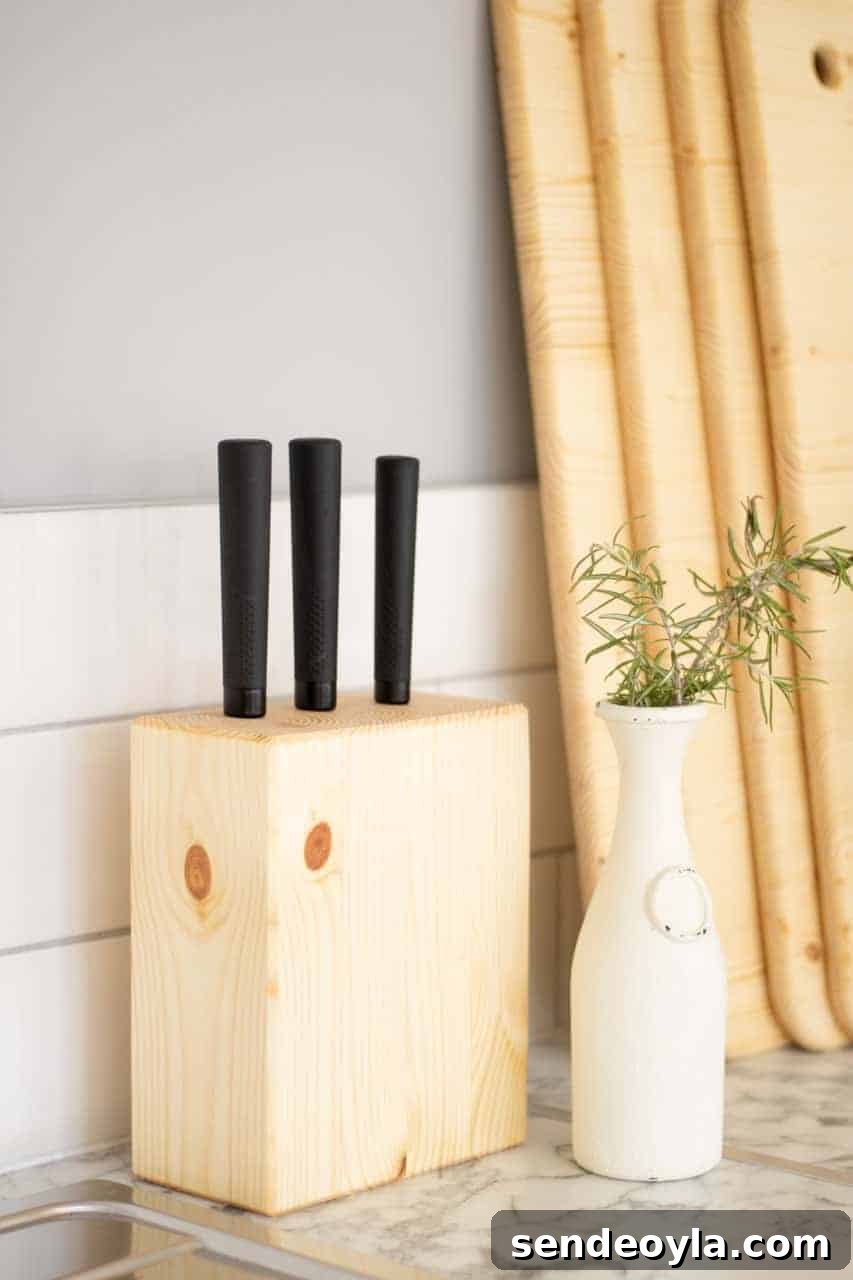
I collect a lot of knives of different shapes, sizes and styles, but I usually reach for the same two or three. My countertop utensil pots were overflowing and, when I’m preparing food in my studio kitchen, it was inconvenient to keep going between rooms. I decided to make a dedicated knife block set that fits the knives I already own.
The beauty of this design is that you don’t need to buy a new set of knives. You simply build a custom block to match the blades and handles you use most. All the timber and most materials I used are commonly available at DIY stores such as Wickes.
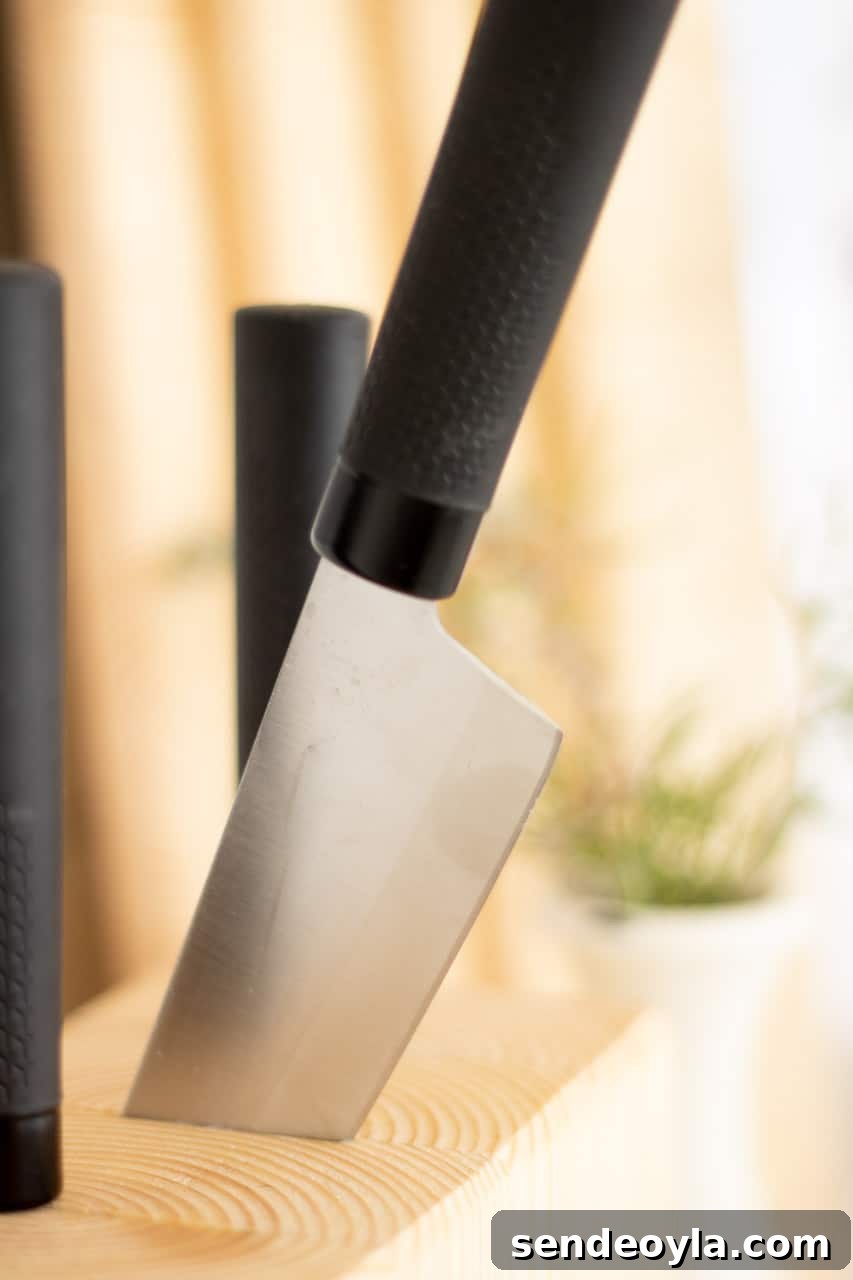
This guide covers the materials, cutting list and step-by-step instructions to make a flat-edged wooden knife block set with routed blade slots. It’s straightforward, practical and quick to complete with basic woodworking tools.
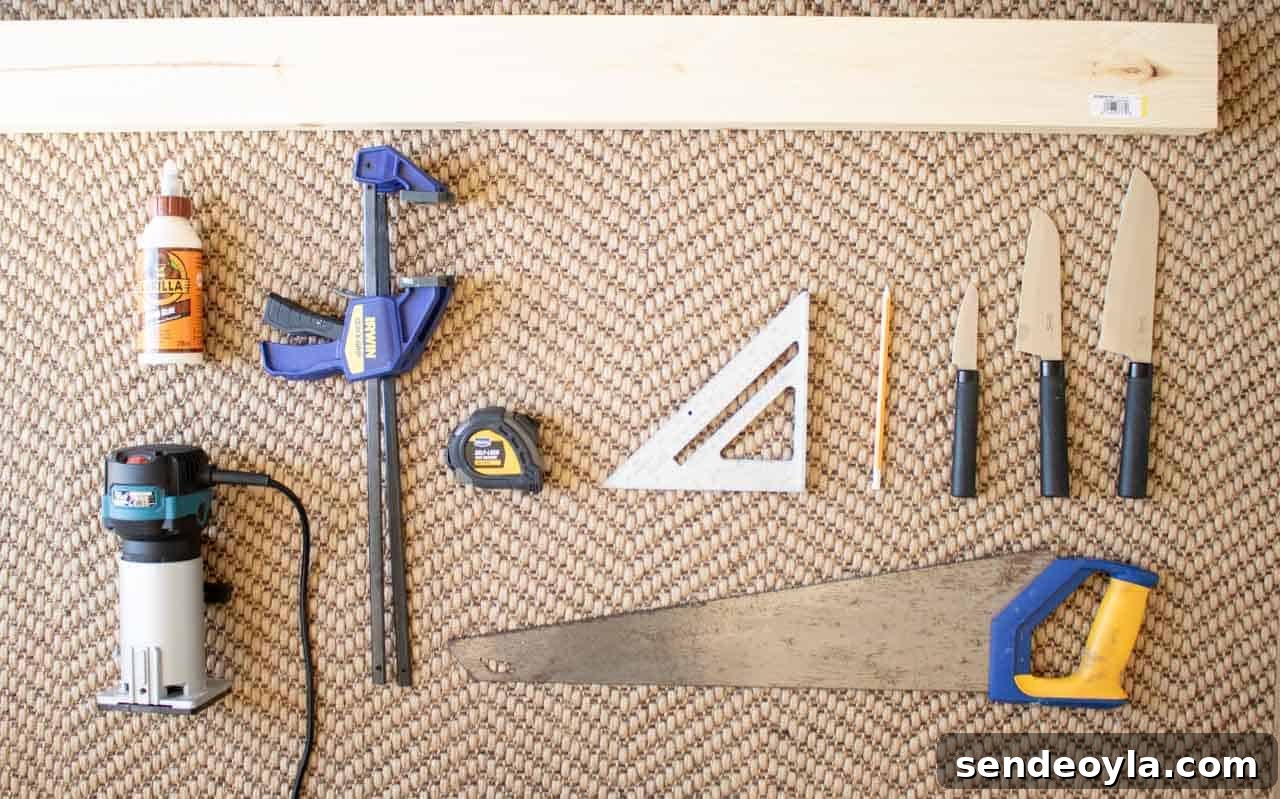
THINGS YOU’LL NEED TO MAKE A KNIFE BLOCK SET
- 1 x Wickes Redwood PSE Timber – 44mm x 94mm x 2.4m (or similar length of hardwood)
- Wood glue
- Straight imperial router bit
- Cross cut saw or hand saw
- Sandpaper and sanding block or an orbital sander
- Your own knives (to measure and mark)
- Tape measure
- Speed square
- Combination square
- Pencil
- Palm router
- 45 degree router bit (optional, for chamfering edges)
- Sliding bevel
- Clamps
- Food-grade worktop oil for finishing
- Rubber dots or foam pads (for base protection)
- Gloves and a protective sheet to catch glue drips
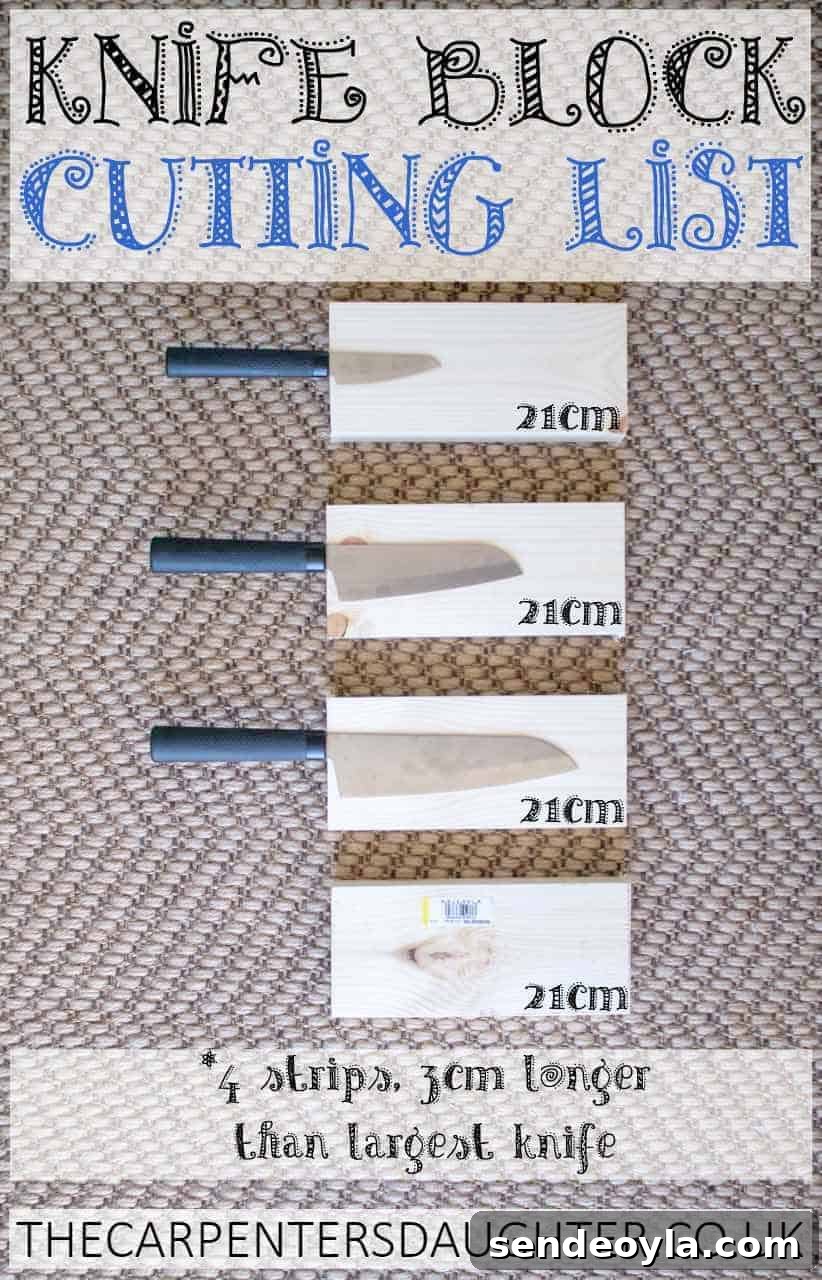
KNIFE BLOCK SET CUTTING LIST
Use this cutting list as a guide only — adjust lengths to suit the longest knife in your collection. As a rule, the width of the timber should be at least as wide as the widest blade and the thickness needs to accommodate your knife handles plus some room for your hand to grip comfortably.
For this flat-edged block, allow an extra 3 cm on top of the longest blade length to provide space for glue and to ensure the handles sit comfortably at the top.
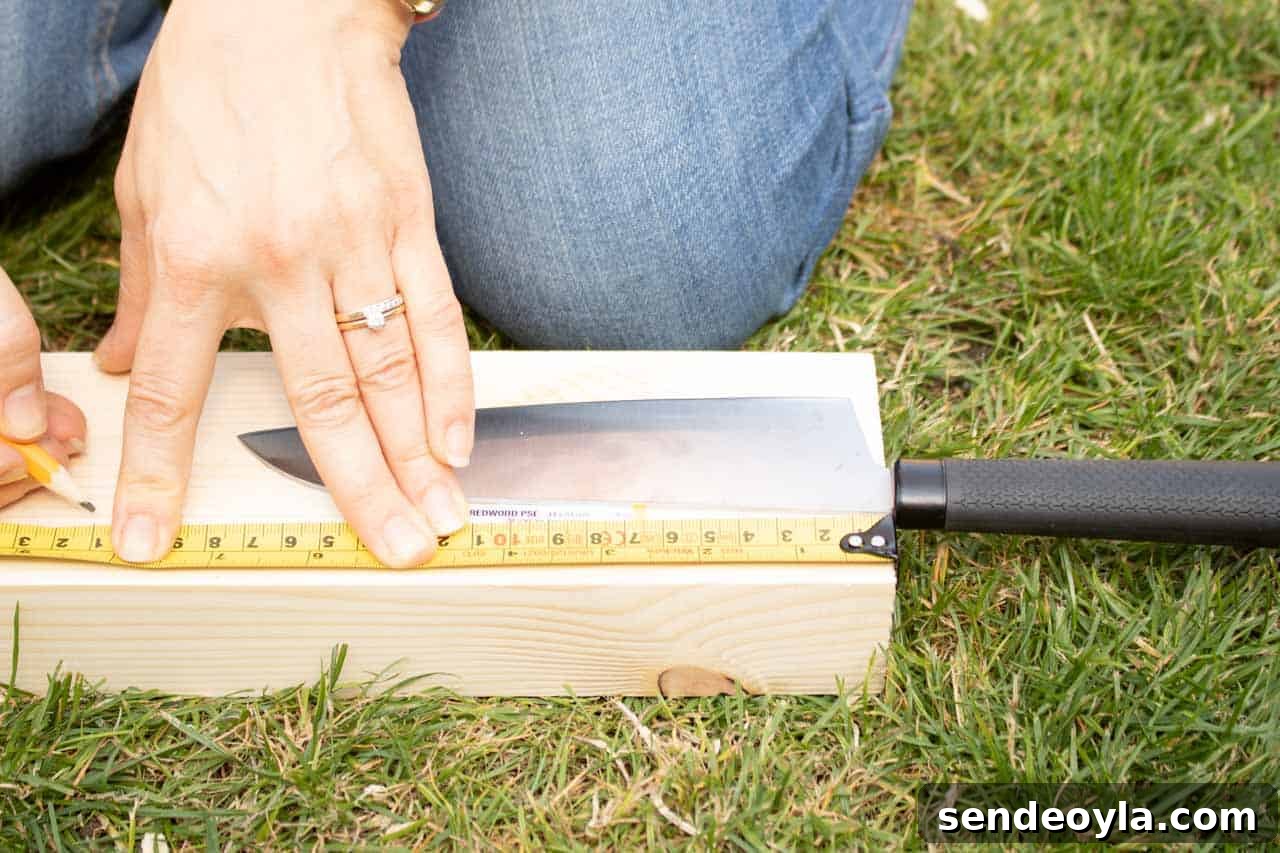
HOW TO MAKE A KNIFE BLOCK SET
1. Measure and cut: Measure the length of your longest knife and add at least 3 cm. Cut the timber into strips — you need one strip per knife plus one extra end piece. A chop saw or hand saw will work; a circular saw on a track will speed the process if available.
2. Arrange the knives: Place your knives on each strip to decide placement. It’s usually best to position blades toward the centre of the strip to preserve more glue-bearing surface at the edges. Decide whether you want handles aligned or centred — I centred the blades on each strip.
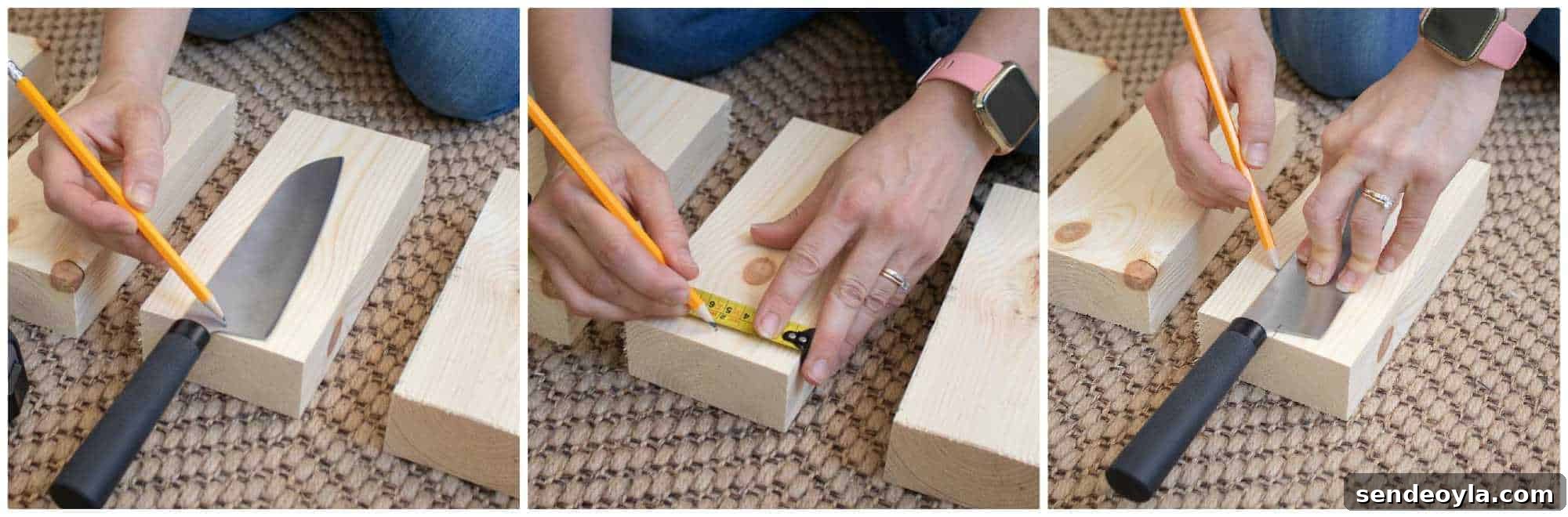
3. Mark around the blades: With gloves on, hold the knife blade against the strip and carefully trace the blade outline with a pencil. You only need to draw the outline on one face of each strip since a flat panel will be glued on top.
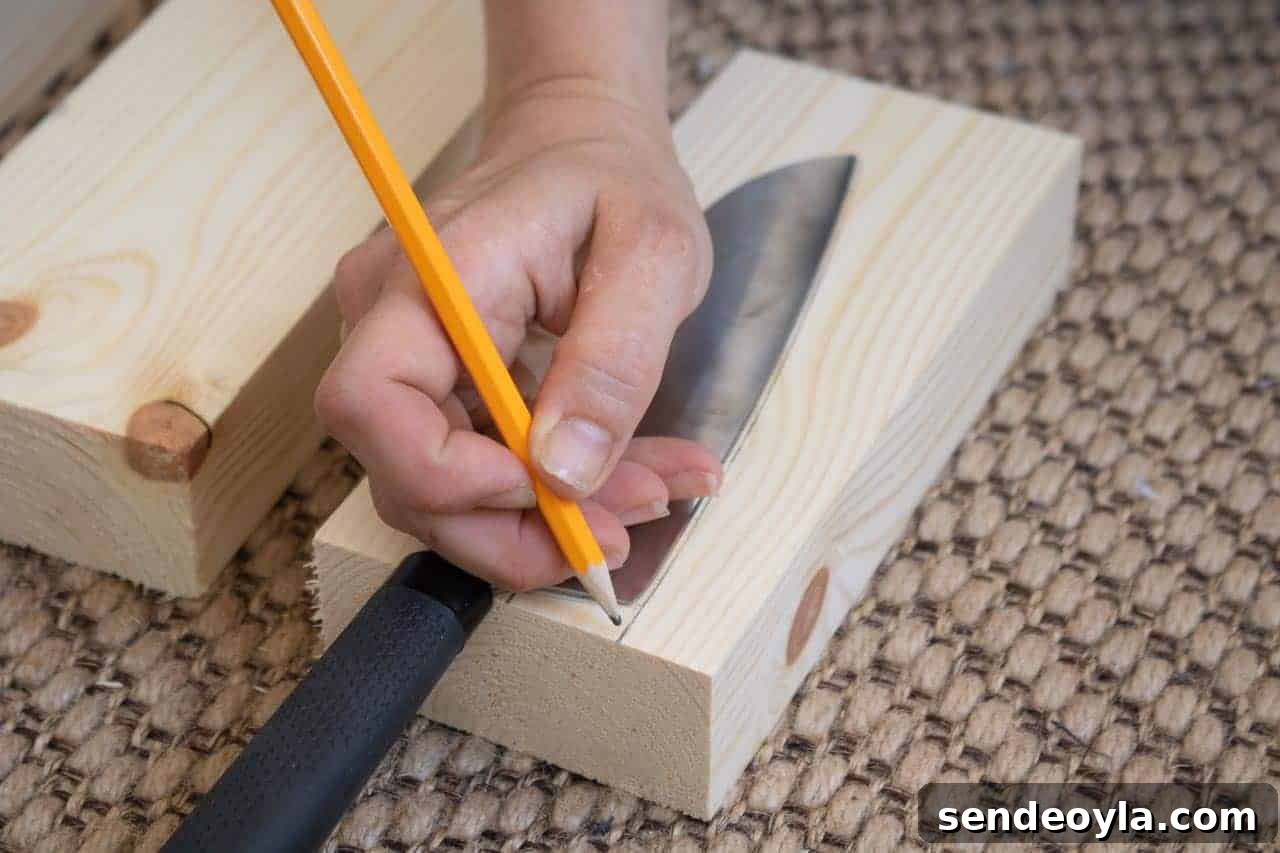
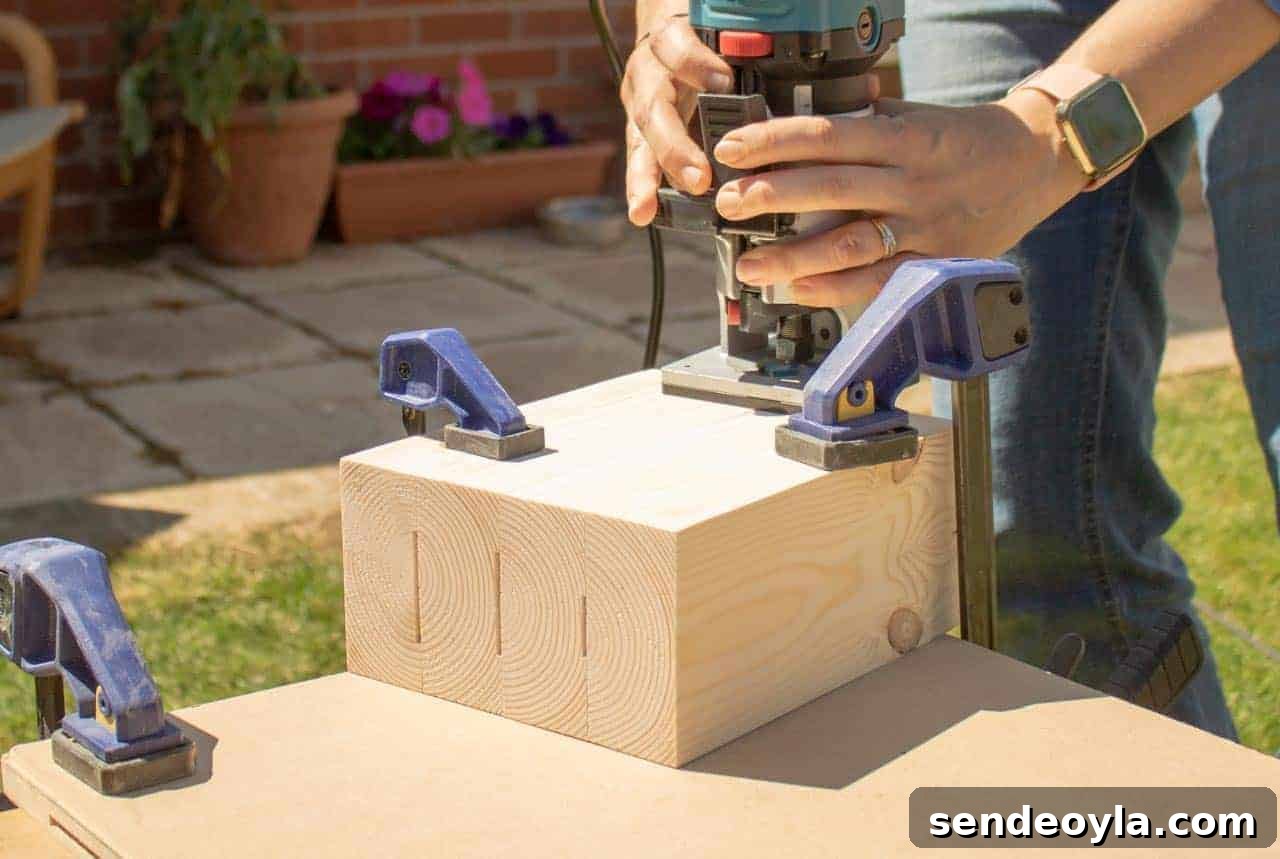
4. Router the slots: Fit a straight router bit to your palm router and set the cutting depth to match the knife blade thickness. Always check each knife and test the depth on an offcut while the router is unplugged. Clamp the strip and router out the area inside your pencil lines. The top edge should be neat; any roughness lower down will be hidden when assembled.
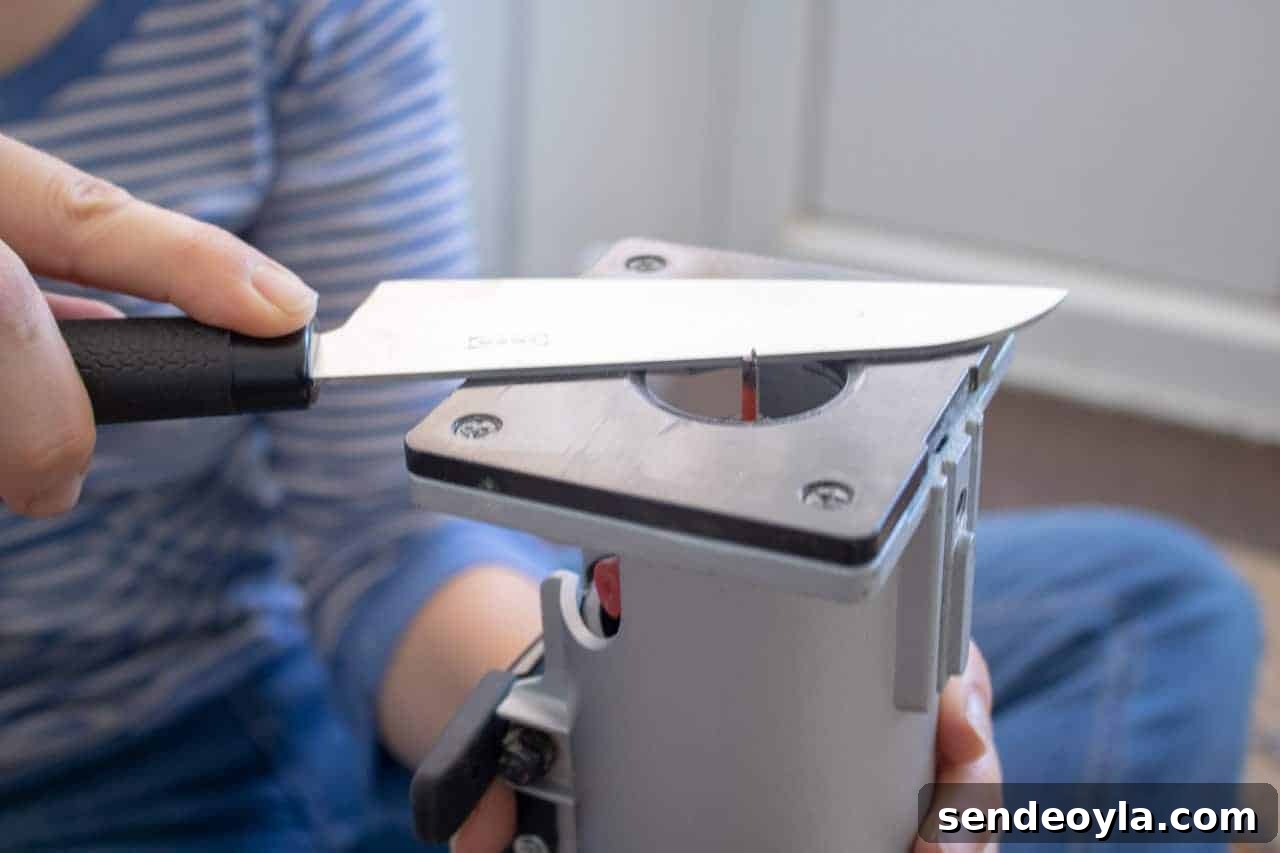
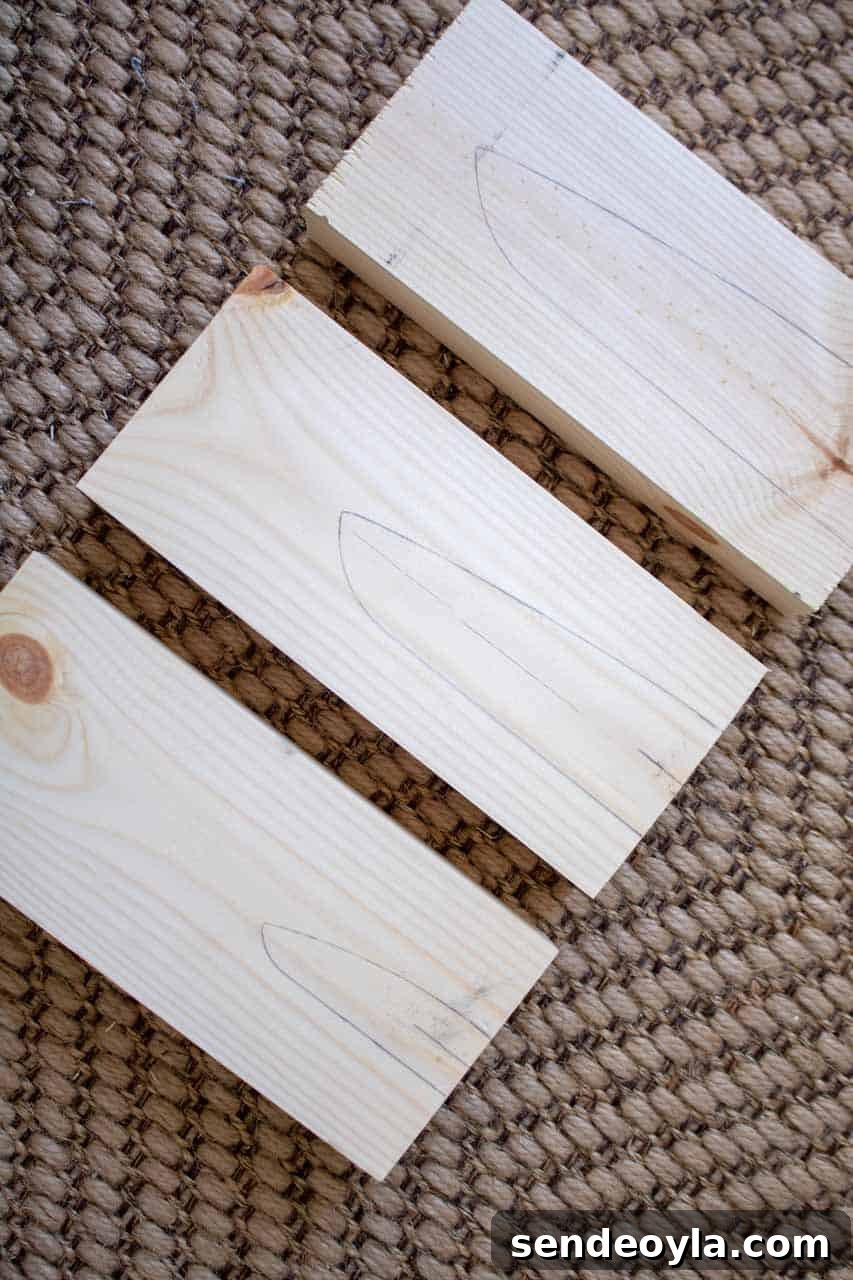
5. Number and prepare strips: Number the strips in size order (1 = largest, 2 = medium, etc.) to avoid confusion at assembly. Lay a protective sheet down and place a flat offcut beneath the strips to keep your work surface clean.
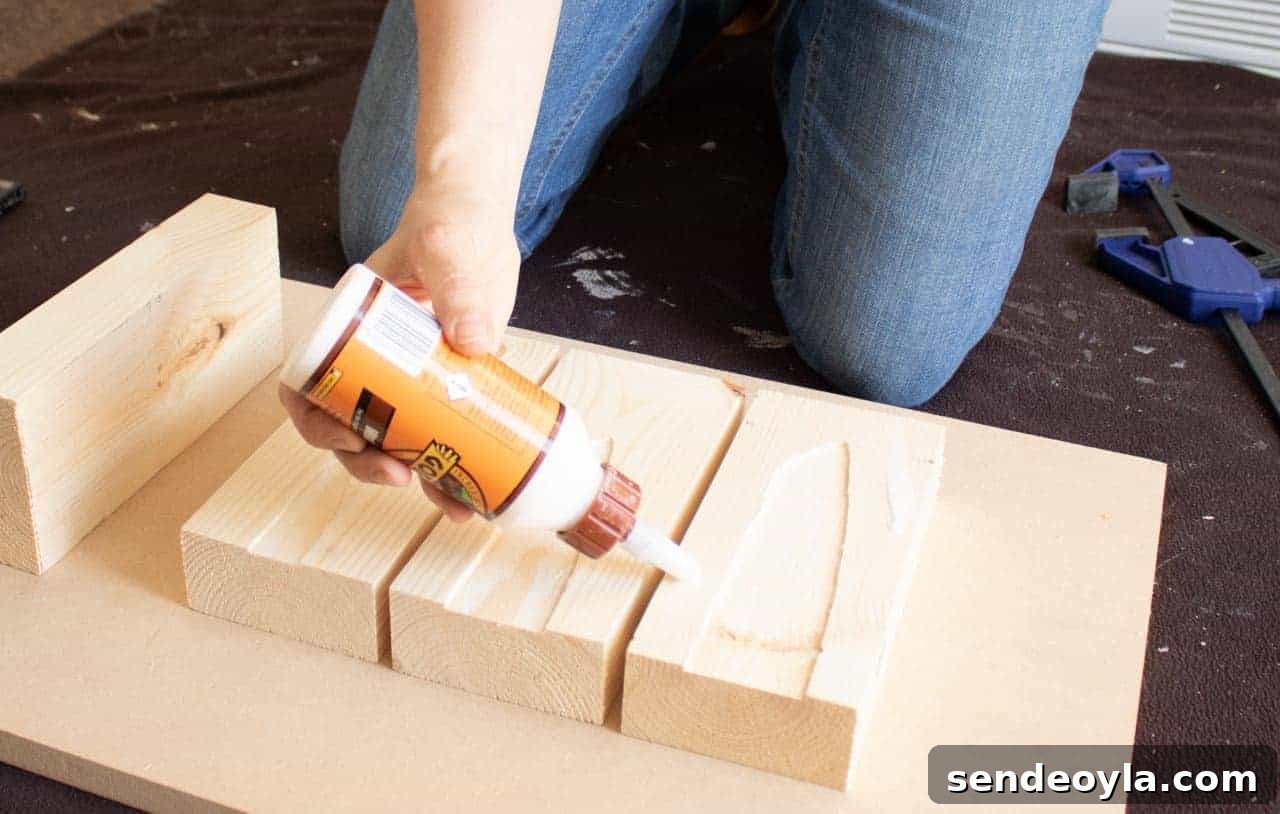
6. Glue and clamp: Apply a thin, even layer of wood glue to the non-carved faces of each strip — take care to avoid getting glue into the routed blade pockets. Line the strips up in order, press them together on a flat surface, straighten, and clamp firmly. Wipe away any excess glue with a damp cloth and leave to cure overnight.
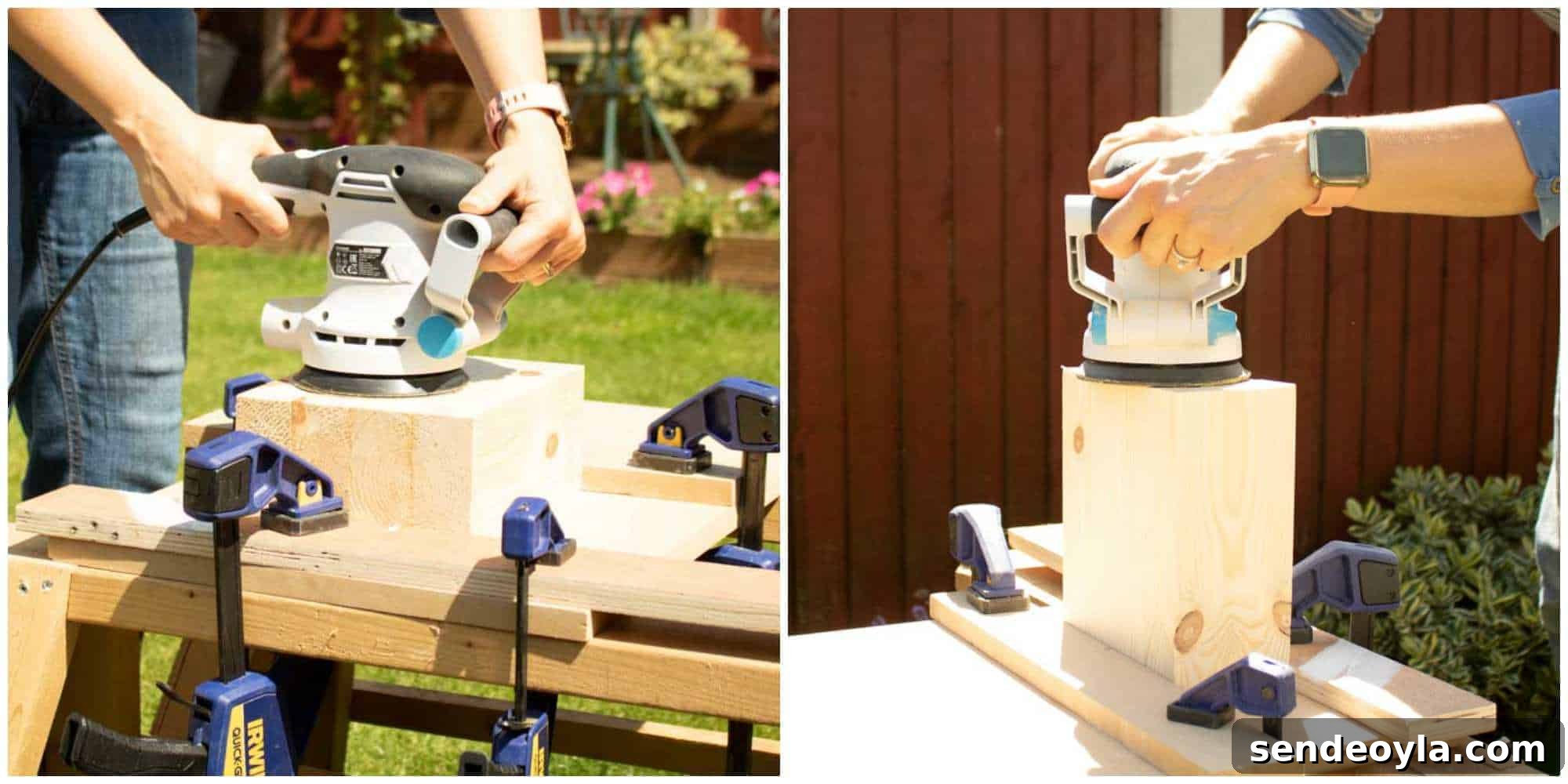
7. Sand and tidy: Release the clamps and sand the assembled block to smooth edges and remove glue residue. An orbital sander makes this quick, but a sanding block will work. Clamp offcuts around the piece while sanding to stop it moving. If you prefer, use a 45-degree router bit to slightly chamfer the edges for a cleaner, finished look.
TREATING WITH A FOOD-GRADE WORKTOP OIL
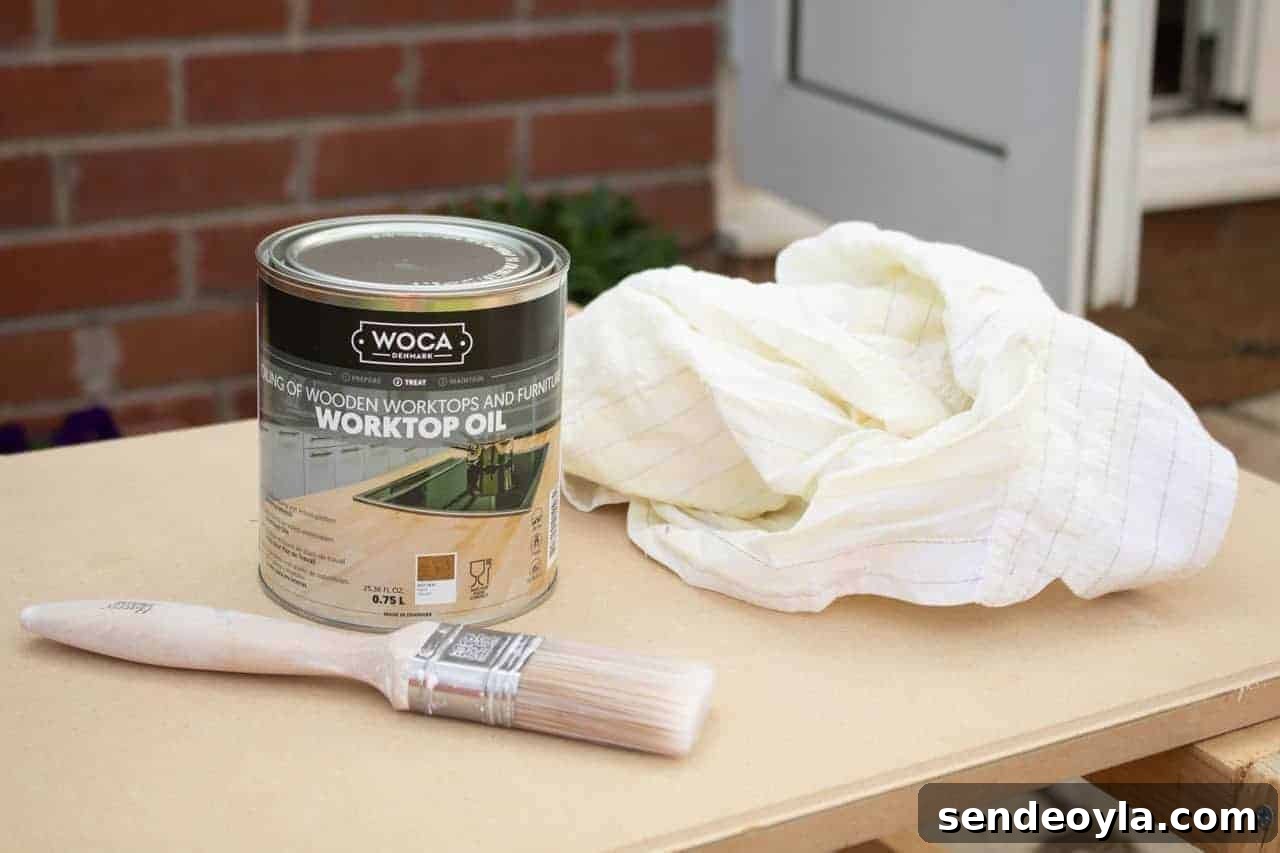
Once the block is dust-free (a hoover is handy), treat the wood with a food-grade worktop oil. Brush a coat over the entire piece, allow it to sit for 20 minutes, then wipe off the excess with a lint-free cloth. Repeat after an hour if you want a more durable finish. Two coats are usually enough for good protection and a warm, natural look.
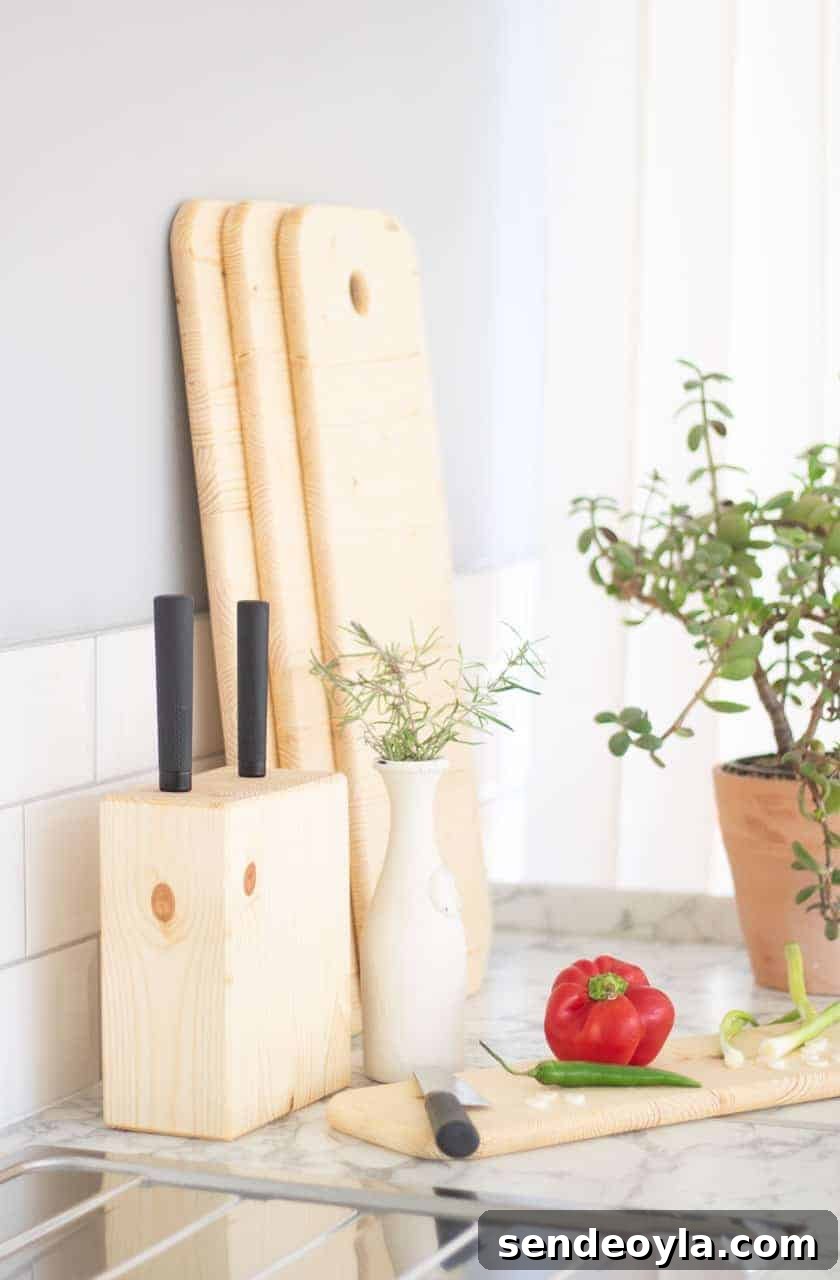
Finally, add small rubber dots or foam pads under the base to protect your worktop and prevent slipping. Your custom knife block is now ready to hold your blades neatly and safely.
YOU MIGHT ALSO LIKE…
- DIY Tea Towel Ladder
- DIY Chopping Board with Built-in Spaghetti Measure
📖 Printable Card
DIY Wooden Knife Block Set
Step-by-step guide to build a simple wooden knife block tailored to your existing knives. Practical, tidy and customisable — a handy addition to any kitchen.
Prep Time: 2 hrs Cook/Work Time: 2 hrs Total Time: 4 hrs
Servings: 1 knife block set Author: Vikkie Lee
Equipment
- Straight imperial router bit
- Cross cut saw or hand saw
- Detail sander or orbital sander
- Sand pad or sandpaper and block
- Your own knives
- Tape measure
- Speed square
- Pencil
- Palm router
- Bevel gauge
- Clamps
- Gloves
- Protective sheet for glue drips
Ingredients / Materials
- 1 length of timber (e.g. Redwood PSE Timber 44mm x 94mm x 2.4m)
- Wood glue
- Food-grade worktop oil treatment
- Rubber dots or foam pads
Instructions
- Measure the length of your longest knife and add at least 3 cm.
- Cut strips so you have one strip per knife plus an extra end piece.
- Place a knife on a strip with the handle resting on the top edge and mark the blade outline on one side.
- Number the strips in size order to avoid confusion.
- Set the router depth to match the blade thickness and test on an offcut.
- Clamp a strip and rout out the pencil-marked area for each blade.
- Apply glue to the non-carved faces, align the strips in order, then clamp on a flat surface. Wipe excess glue and leave overnight.
- Release clamps, sand smooth, and tidy any glue residue.
- Treat with food-grade oil, wait 20 minutes, wipe off excess, and repeat after an hour if desired.
- Stick rubber dots or pads under the base to protect your countertop.
PIN THIS DIY KNIFE BLOCK SET TUTORIAL FOR LATER…