
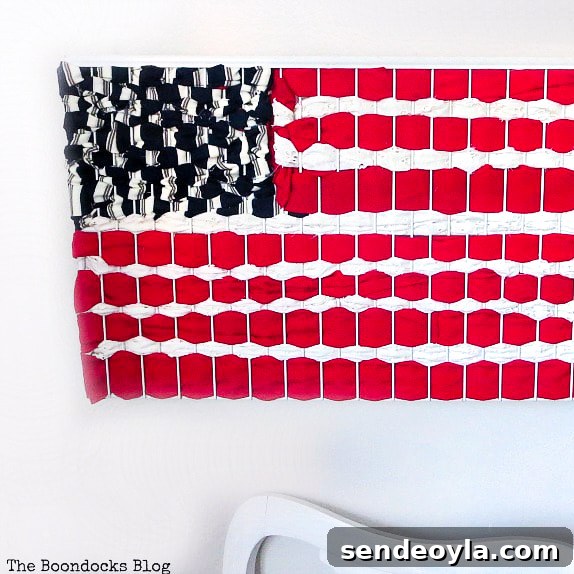
I have been back in the USA for almost a year and realized I still hadn’t created any patriotic artwork for the home. I do have a flag or two hanging outside, but with the Fourth of July approaching I wanted something unique to brighten the interior. What I made is an easy, upcycled piece of patriotic art using fabric scraps—something simple, bold, and handmade.
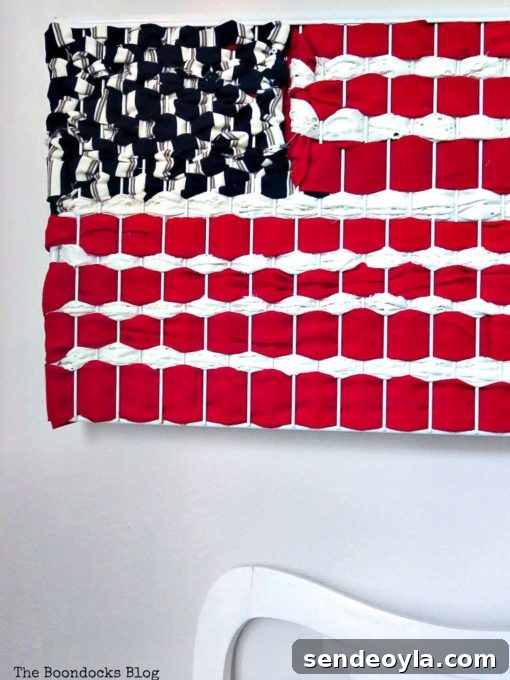
DIY Patriotic Art Idea
This project shows how to turn fabric scraps into a decorative American-flag inspired piece that works well indoors. It’s a great way to repurpose leftover textiles and a small metal frame or rack. The finished piece reads like pop art—bright, bold, and full of texture—so it suits modern or casual interiors.
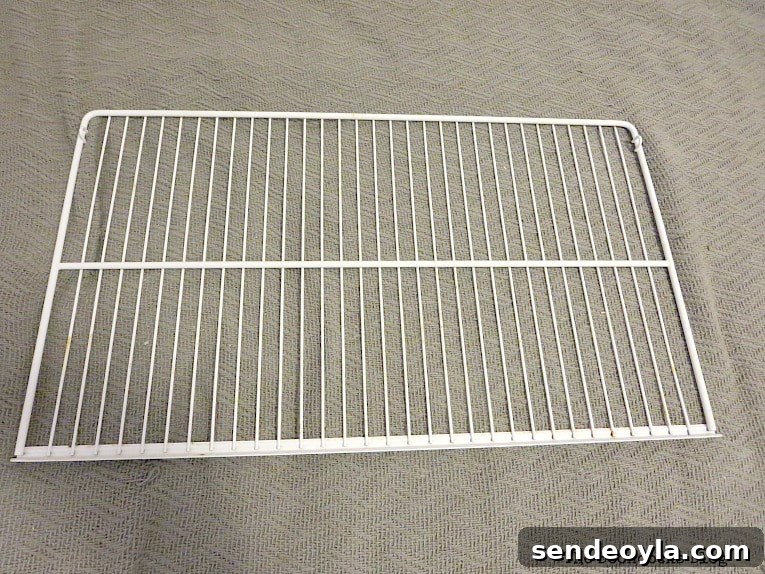
For the frame I used an old wire shelf salvaged from a refrigerator. If you don’t have that exact piece, any grid-like frame, wire rack, or slatted backing with holes will work just as well. The grid gives the fabric something to weave through and creates a textured, dimensional result.
Materials Used for This 4th of July Decor
- Wire rack or grid panel left over from an appliance or shelving
- Various fabric scraps cut into strips (red, white, blue, or patterned)
- Needle and thread for securing ends
- Hot glue (optional) for extra hold
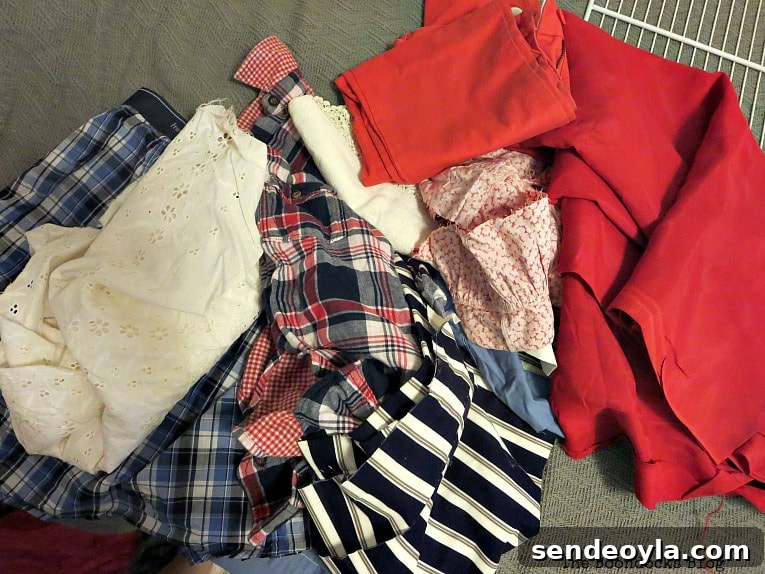
I worked with a helper who enjoyed settling into the pile of fabric while I arranged the strips. A calm helper makes the process more relaxed and keeps things fun.

How to Make This Upcycled Patriotic Art
This is a simple, relaxing craft, although it can be a bit time-consuming. You can easily watch TV while weaving the strips through the grid. I folded and twisted the fabric strips in different ways and threaded them through the spaces in the rack. When a strip’s end was visible, I tucked it behind the wire or secured it with a few stitches; hot glue can be used for a quicker hold.
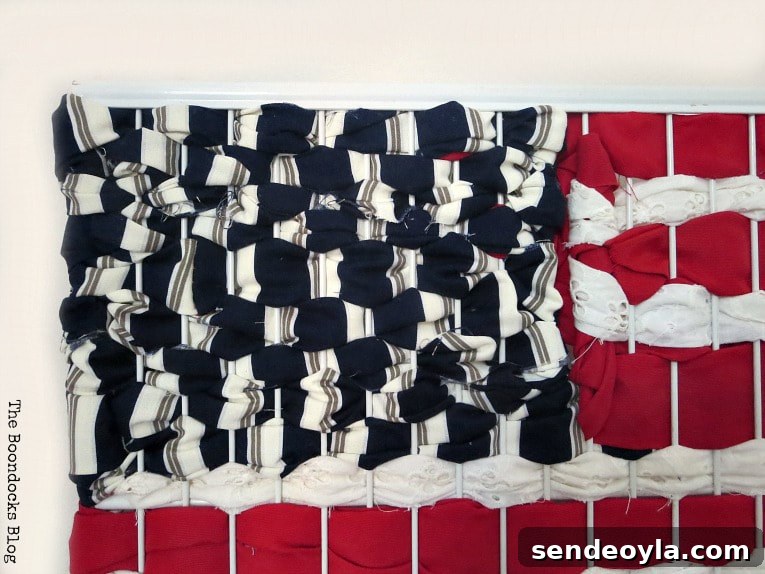
Early on I made a layout choice that left more white than I intended in the blue field. Rather than undoing everything, I decided to incorporate a blue-and-white striped fabric so the white spots read like scattered stars. I asked my daughter to choose between a few blue options; she picked a stripe, which I wove so the white portions wouldn’t line up, creating the impression of random white stars on a blue background.
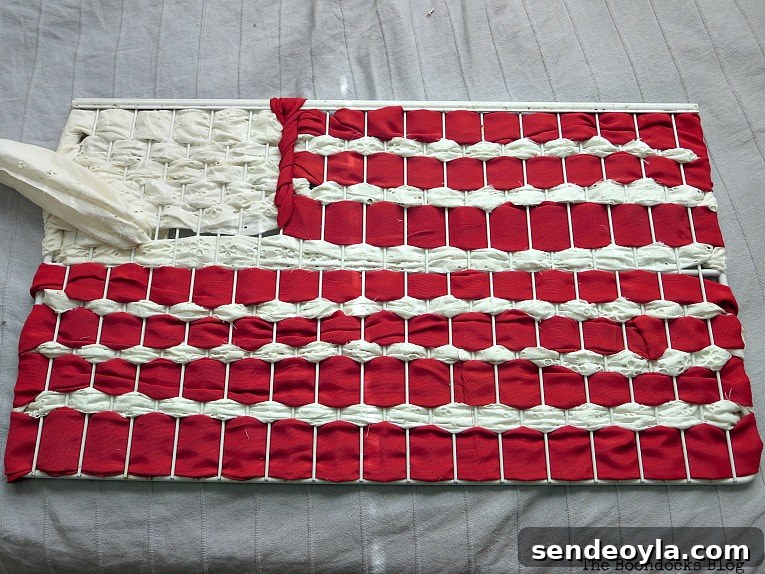
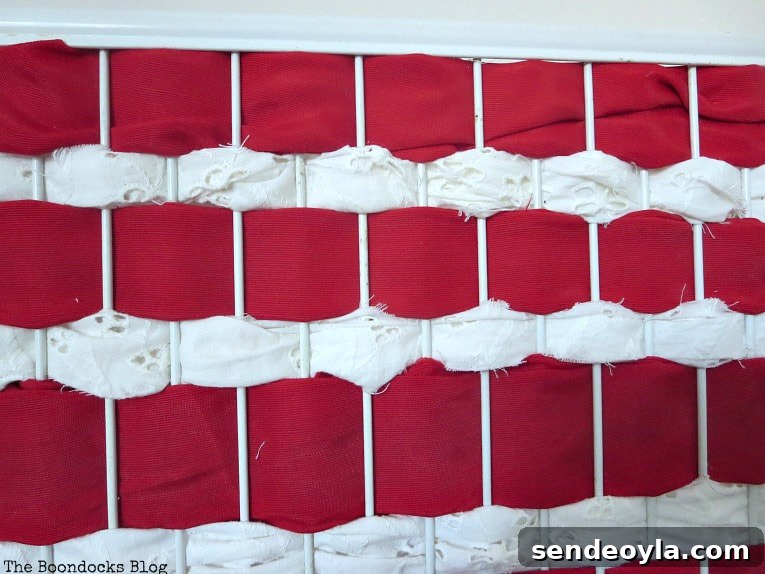
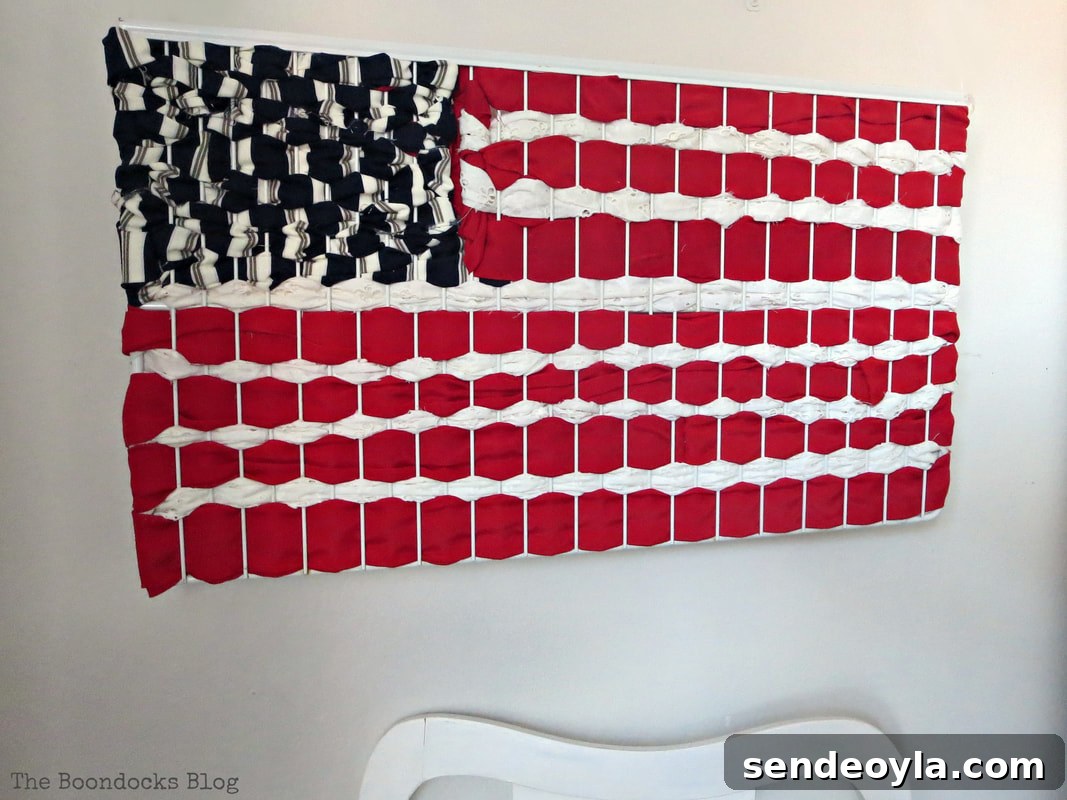
The red and white stripes were woven next, with strips tucked or stitched behind the grid for a tidy finish. It isn’t an exact replica of the American flag, and I didn’t count out every stripe while watching TV—so there are a few playful imperfections. That spontaneity is part of the charm; the piece is artistic rather than an exact flag reproduction.
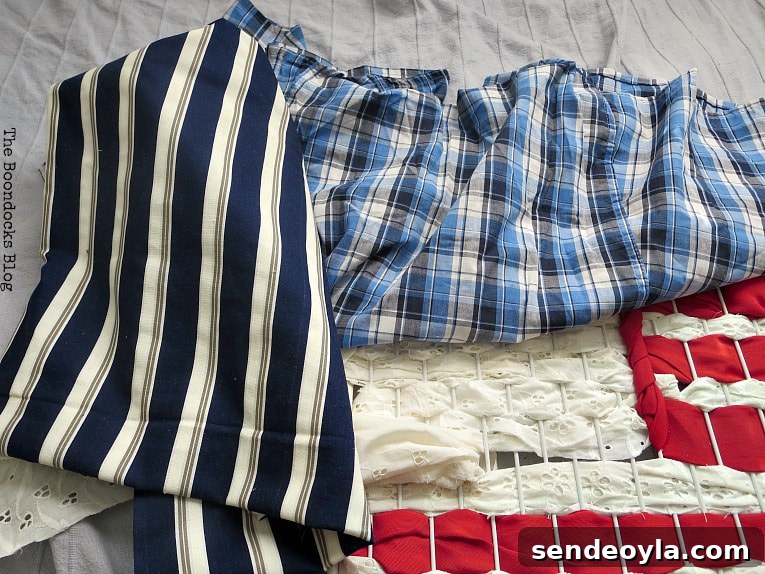
When the blue section was finished, the scattered white bits read like stars, giving a lively, textured effect. The close-up view shows the layers and the tactile quality of fabric against metal, which is what gives the piece its pop-art feel.
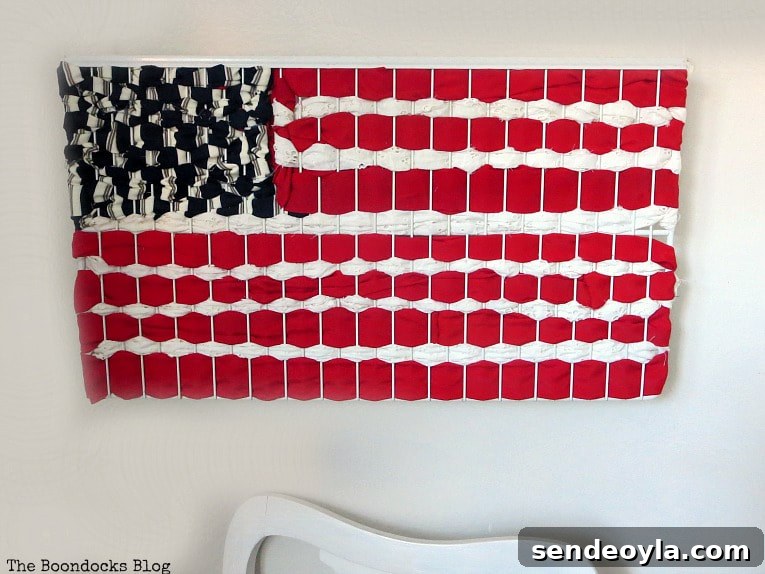
The finished art looks great hung on a wall and pairs nicely with light, neutral furniture. For me it brings a bright, modern accent to the room—almost like a textile version of pop art. It’s a fun way to celebrate the Fourth of July indoors without buying brand-new decorations.
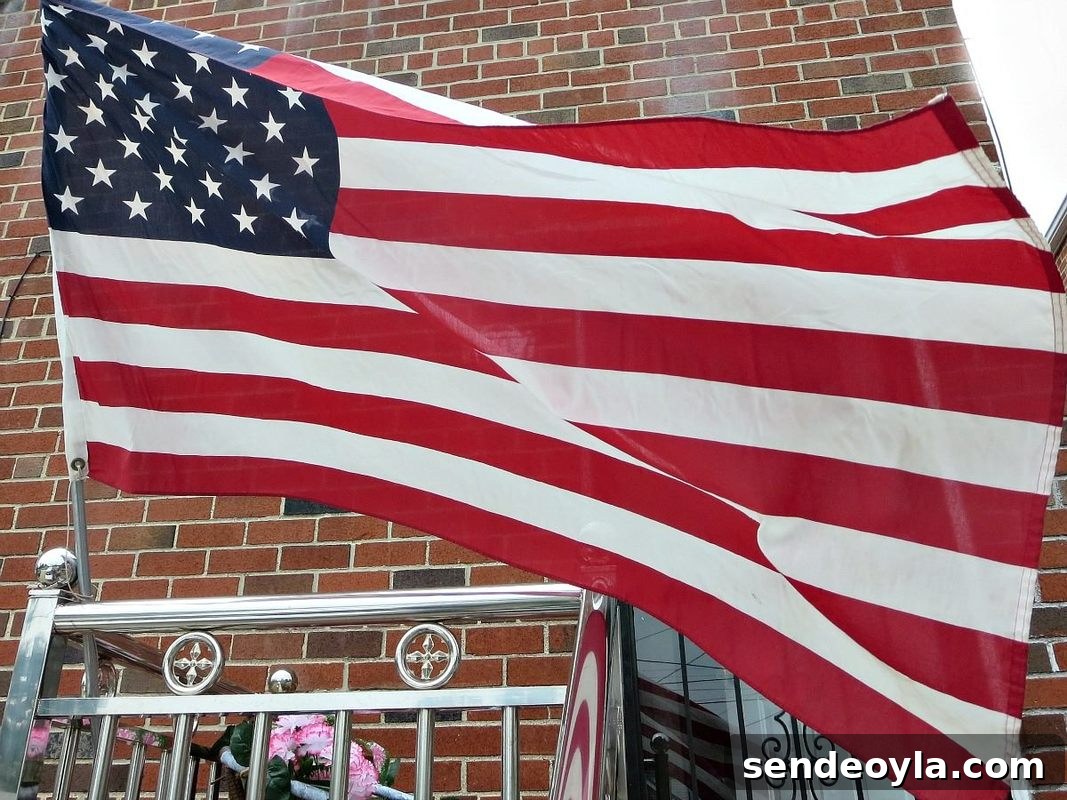
Quick note for non-American readers: the traditional US flag has 13 stripes, representing the original 13 colonies, and 50 stars representing the states. My version interprets those elements loosely rather than replicating them exactly, so it works more as decorative art than a precise historical reproduction.
All in all, this upcycled patriotic art project is budget-friendly, creative, and adaptable. Use different fabrics, textures, and frames to make a version that reflects your own style. It’s perfect for adding a handmade touch to your Fourth of July decor or for year-round display as a colorful accent.
I hope this inspires you to try making upcycled patriotic art from fabric scraps. Do you decorate the inside of your home for the Fourth of July, or do you prefer to focus on outdoor displays?

If you enjoyed this project, consider subscribing to the blog to receive future updates and tutorial posts. The subscription form is on the sidebar and at the top of the site. See the site’s privacy policy for details.
This blog is for entertainment; these DIY ideas are not professional advice. Read the full disclaimer on the site for more information.
I love reading your comments and try to reply to each one. Please avoid including hyperlinks in your comment so it can be published.