
Mirror Makeover with Old Fashioned Milk Paint
Today I have a special announcement: I was chosen to be a Brand Blogger for the Old Fashioned Milk Paint Company. To celebrate, I tackled a quick mirror makeover using their milk paint and I want to share the process and results.
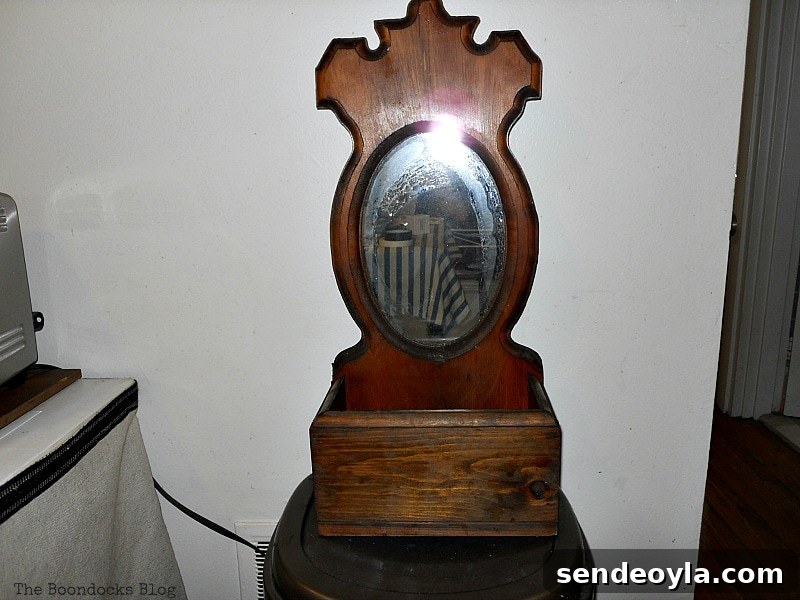
Last year my husband visited our boys and came home with a treasure trove of finds from a neighbor who was moving. One of those items was the mirror you see here. He told me, “When you go to New York, check the basement—there’s something for you.” How lucky is that?
About Milk Paint and Why I Chose It
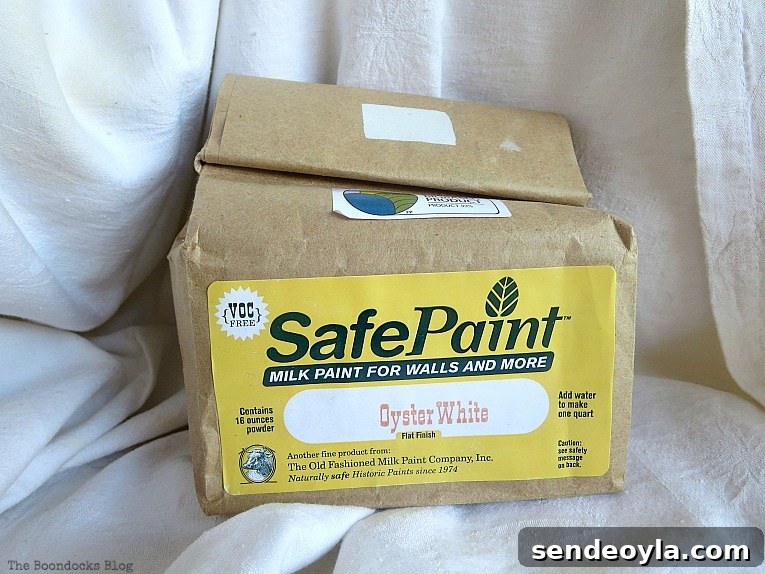
True milk paint is a powdered paint made from milk protein and crushed limestone. It is all-natural, contains zero VOCs, and is non-toxic—qualities that appealed to me, especially when working in someone else’s apartment. The paint comes in many colors and the powders can be blended to create custom shades. For this project I chose the soft, airy Oyster White to brighten up the space.
Mixing and Preparing the Paint
This was my first time using milk paint, and I admit I was nervous. I watched videos and asked friends for tips. When I finally opened the sealed bag I mixed one part Old Fashioned Milk Paint (Oyster White) to one part warm water, stirred for a few minutes, and let the mixture rest for about 20 minutes. I mixed it slightly thin because I wanted a washed look rather than full coverage.
It’s important to understand how milk paint behaves: it bonds well to porous, unfinished wood and can soak into the grain. When applied over an existing finish, milk paint often chips away to create that popular “chippy” vintage look. If you prefer a smooth, permanent finish on non-porous or prefinished surfaces, Old Fashioned Milk Paint offers a “Safe Paint” version or a separate bonding agent to ensure the paint adheres without chipping. My mirror looked porous but I wasn’t completely sure, and I didn’t want to sand, so I used the Safe Paint option for added adhesion.
Application and Tips
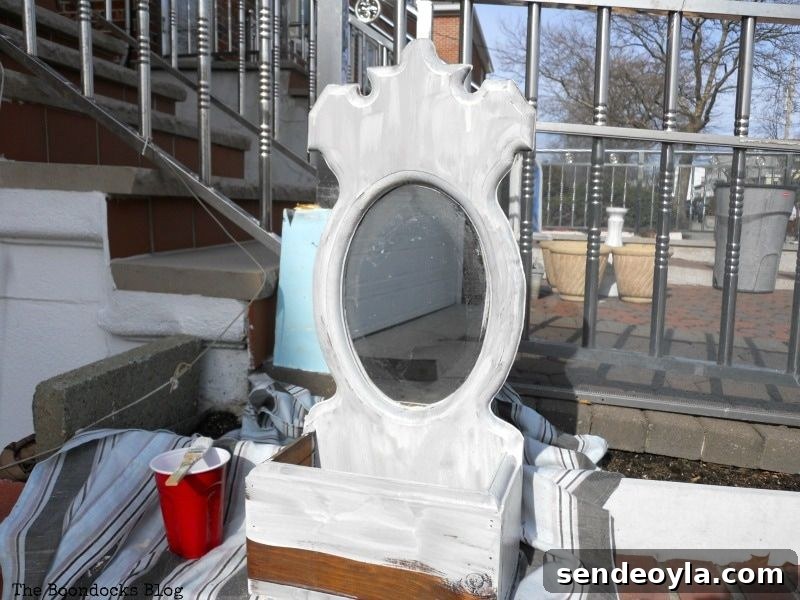
Preparation was simple: I wiped the mirror frame down with soapy water and let it dry. I applied the paint with a brush in thin coats. After the first coat, the finish looked like a subtle wash that let the wood texture show through. The paint goes on smoothly and is very forgiving—if you want more coverage, add more powder for a thicker consistency.
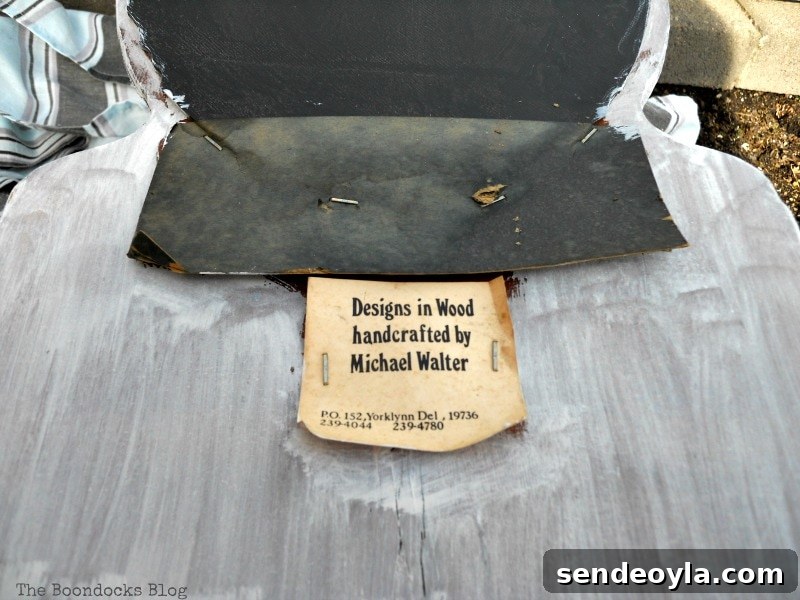
When I flipped the mirror over I found a label on the back—if you recognize it or know more about the piece, I’d love to hear from you. I applied a second thin coat and let it dry overnight.
Finishing Touches
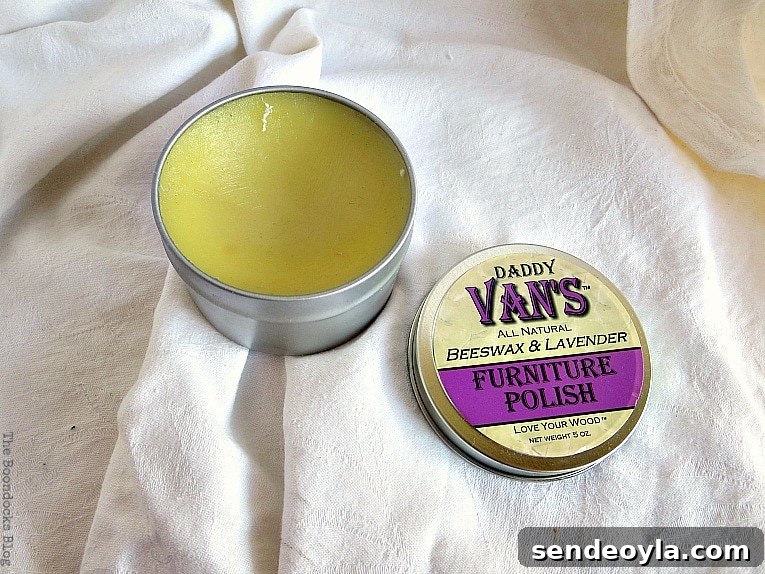
The next day I treated the painted frame with Daddy Van’s All Natural Beeswax and Lavender Furniture Polish. The lavender scent was lovely and the wax gave the paint a soft, finished sheen. I lightly distressed the curves with sandpaper to create a subtle old-world look that highlights the frame’s details.
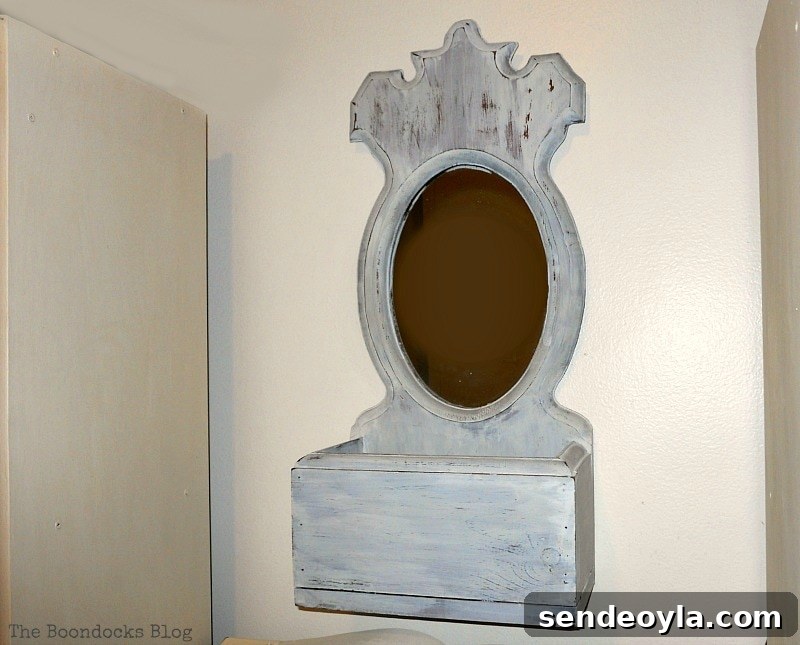
Placement and Before/After
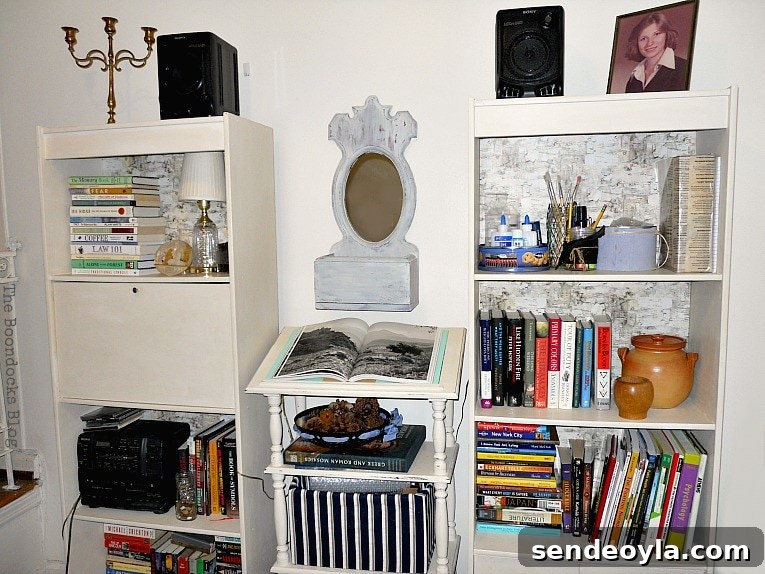
I placed the finished mirror on top of a dictionary stand between two bookcases I recently refreshed. The light Oyster White complements the bookcase unit and brightens the room more than the original dark wood did.
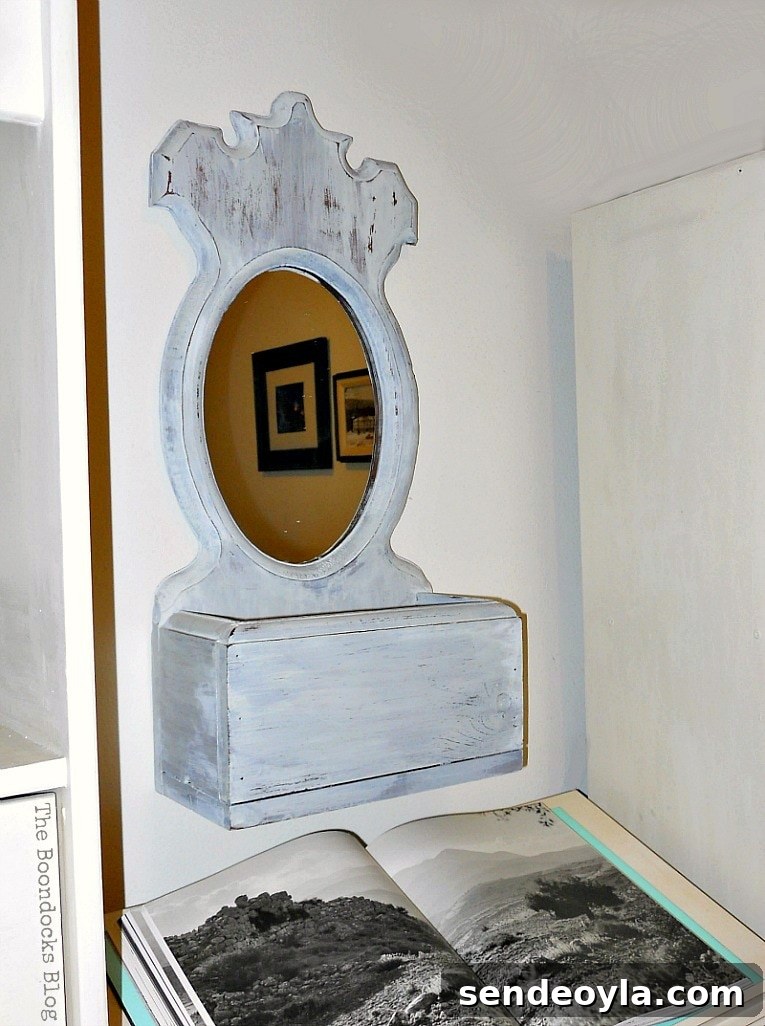
To be honest, the surrounding shelves are lived-in—this is reality, not a staged shot. My son’s books, pens, and stereo are all in place. The bookcases still need additional makeovers, but that will wait until my next trip.
Final Thoughts
This project taught me a lot about Old Fashioned Milk Paint. The paint applied smoothly, had no unpleasant odors, and felt safe to use indoors. The makeover was quick and rewarding—if I could do it on my first try, you can too. Have you ever used milk paint on a furniture or décor project?
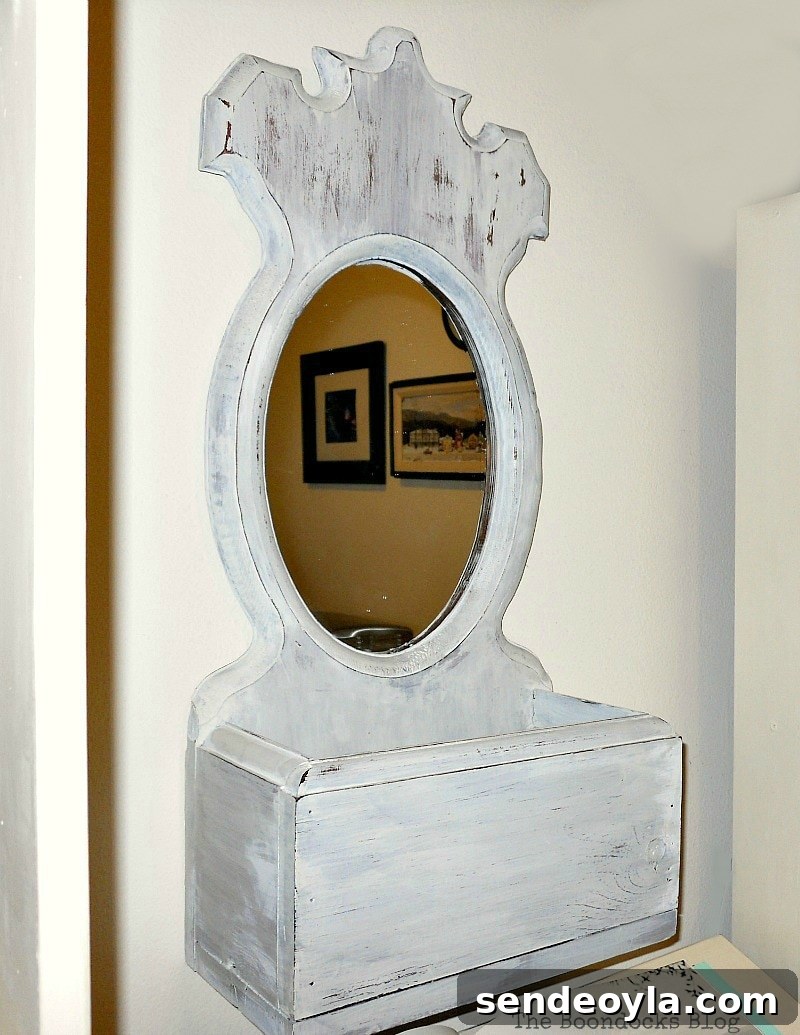
I particularly love the small storage box built into the mirror—it’s a unique detail that I hadn’t seen before. The light color really blends well with the rest of the unit and brightens the space without overwhelming it.
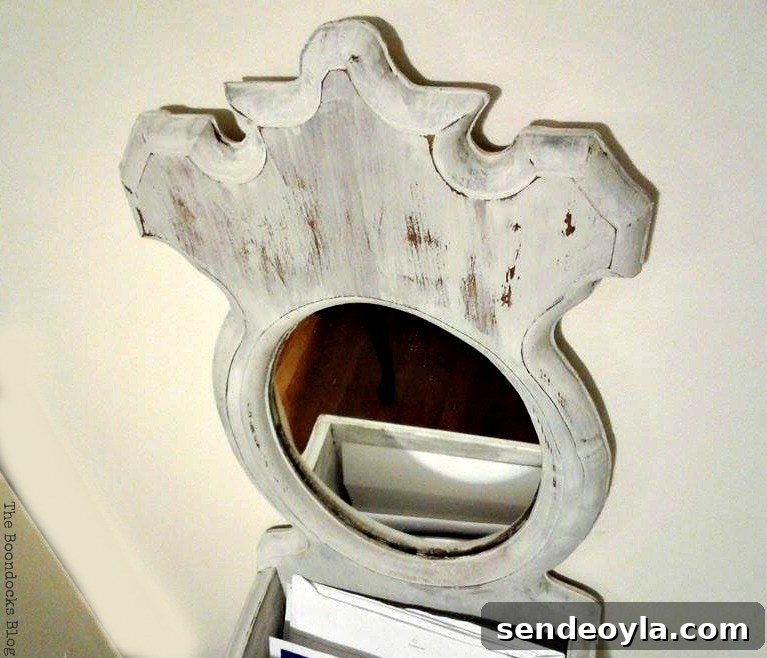
If you enjoyed this makeover, feel free to share or save it. I’ll be trying milk paint on more projects and I’m excited to continue exploring its possibilities.