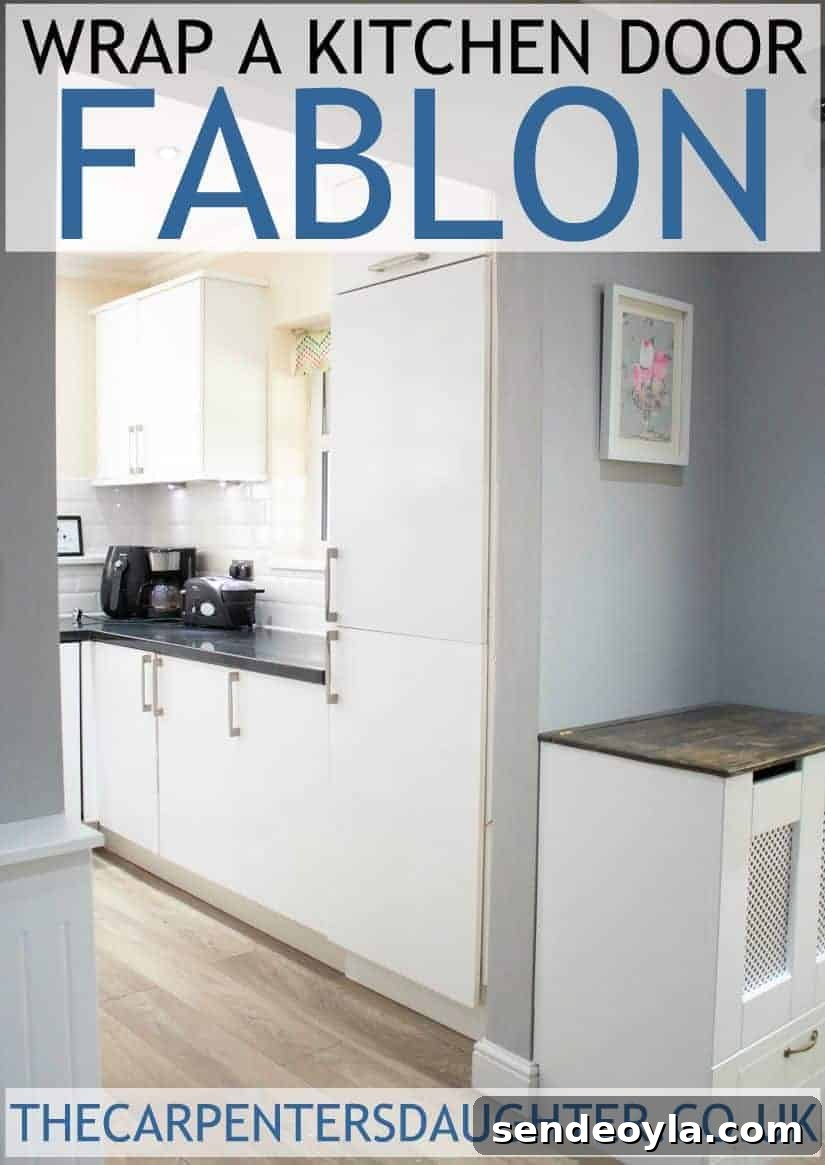
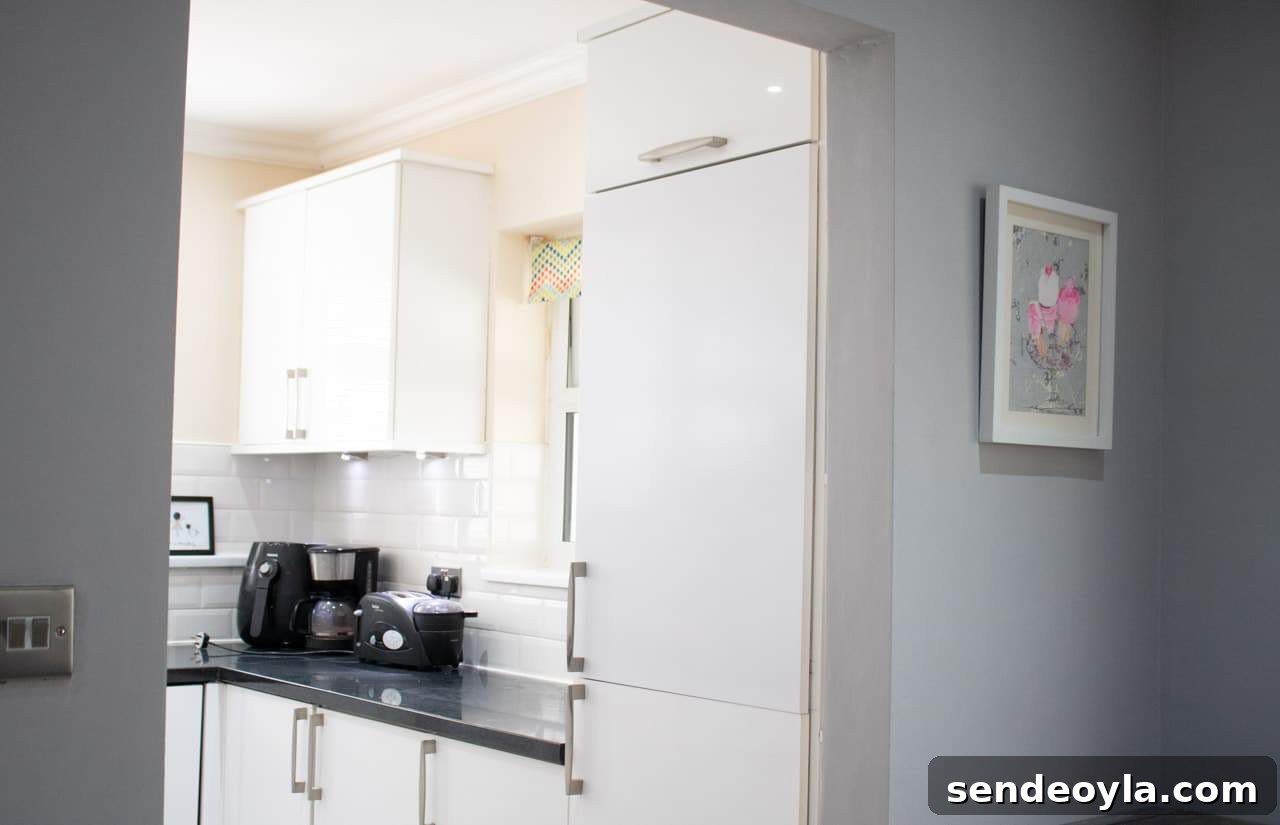
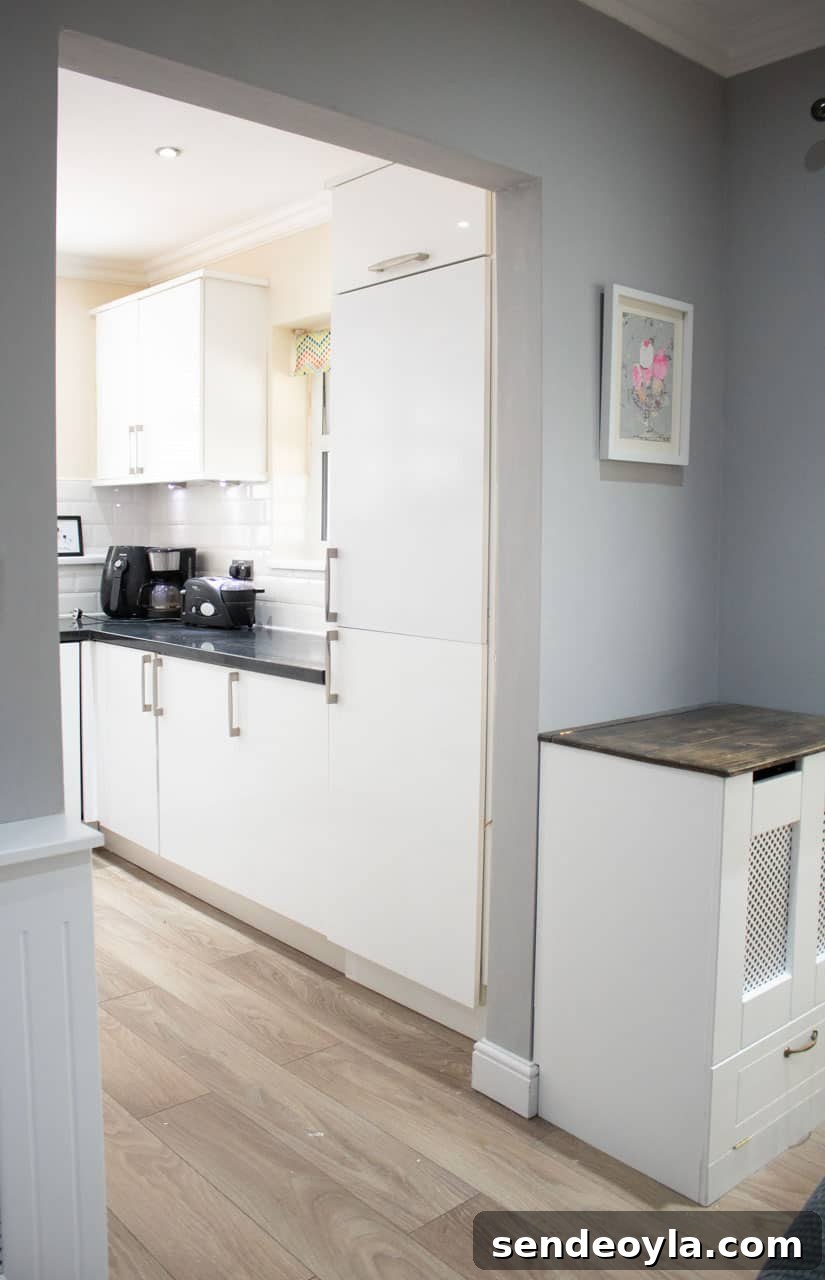
Here I show how to wrap a kitchen door with white high-gloss Fablon. My door had lost its original glossy surface and revealed a dull matte finish underneath. Replacing the door would have cost around £70, so I repaired it using an £8 roll of Fablon.
When I fitted a utility kitchen recently I realised the doors are the biggest expense compared with the cabinet carcasses. We found cheap doors from a supplier selling show-home cancellations, which helped keep costs down. Over time, however, one wrapped door got damaged during transit multiple times, so we kept an integrated kitchen door in the garage as a spare.
It wasn’t an urgent problem — the door still opened to reach the fridge, although it didn’t have a handle. After two years of quiet complaints from my husband, I decided to take the old matte door from the garage and cover it with white high-gloss Fablon. It’s a quick, low-cost way to refresh a single door without replacing a whole set.
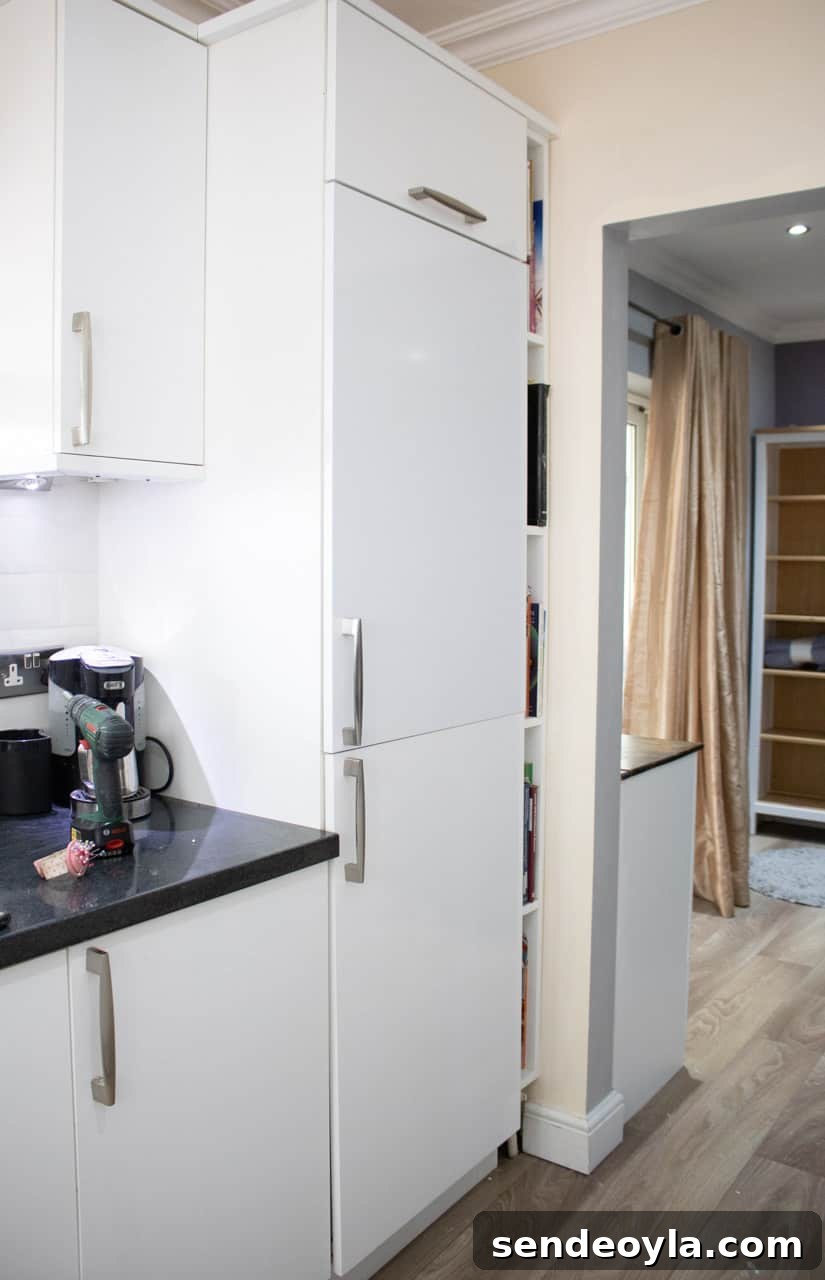
I wouldn’t choose this method for an entire kitchen unless I was on a very tight budget, but for one or a few doors it’s a practical and attractive fix. The wrapped door is slightly brighter than the others, but it’s barely noticeable unless you’re looking for it. If you have a few doors to update, wrapping them is worth considering.
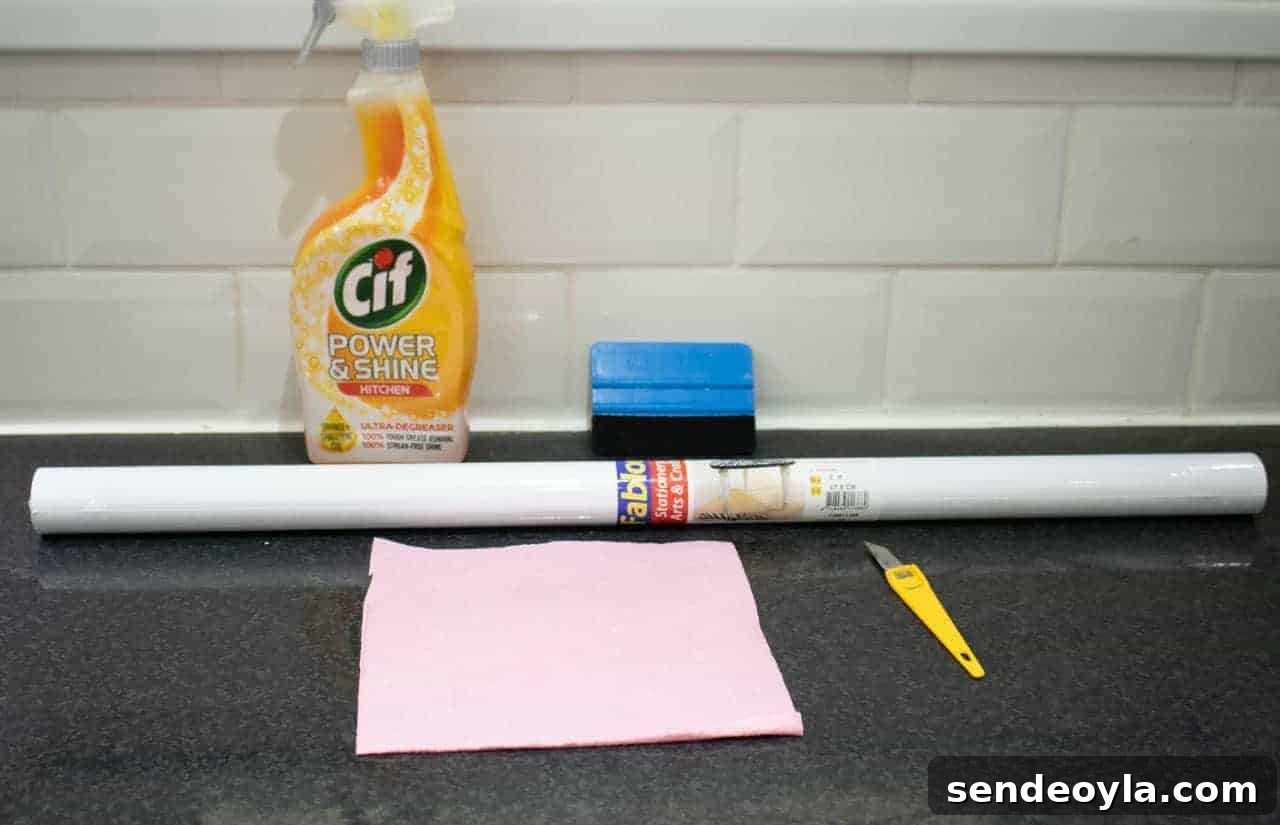
THINGS YOU’LL NEED TO WRAP A KITCHEN DOOR
- Flat kitchen door
- Fablon wide enough to allow a 5 cm overlap around the edges
- Degreaser
- Clean cloth
- Squeegee (mini squeegee works well)
- Scalpel or sharp craft knife
- Screwdriver
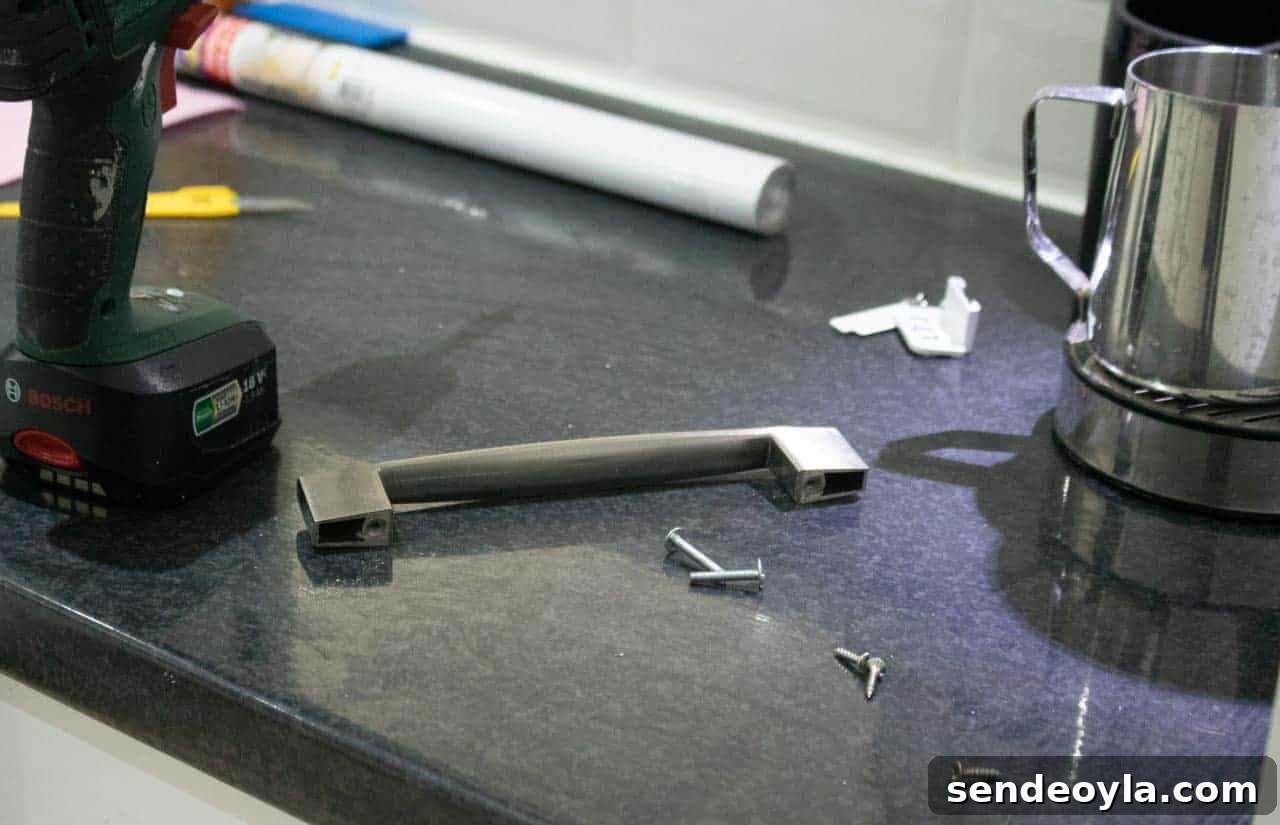
HOW TO WRAP A KITCHEN DOOR WITH FABLON
This is a straightforward process if you take your time and work methodically. The basic steps are: remove the door and handle, clean the surface, cut the Fablon to size, stick the Fablon down from one end while smoothing out bubbles, trim the corners, fold and press over the edges, then refit the handle and hang the door back on the cabinet.
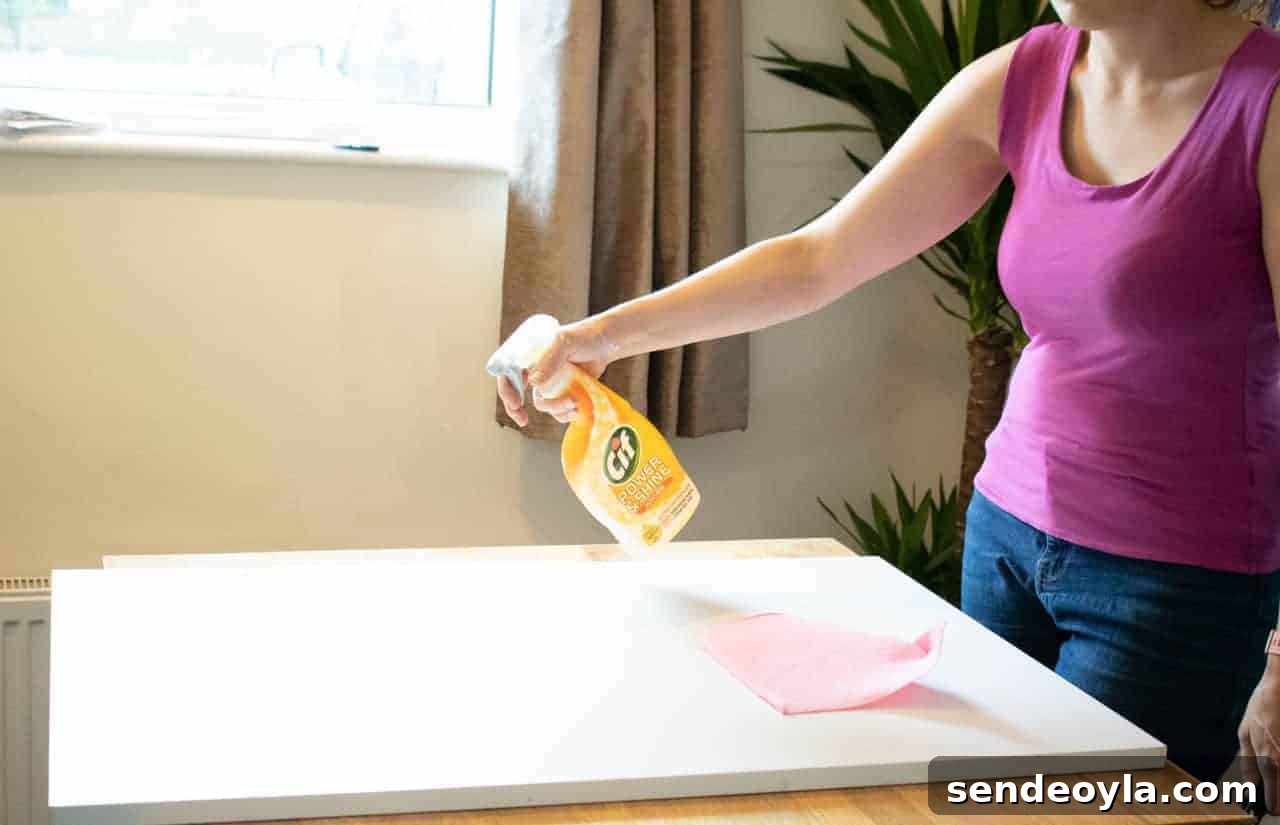
PREPARING YOUR DOOR FOR WRAPPING
Remove the door from the cabinet and unscrew the handle. Clean the face thoroughly with a degreaser and a clean cloth to remove grease, dirt and dust. Any stubborn grime left on the surface can show through the Fablon as bumps or bubbles, so go over the door carefully.
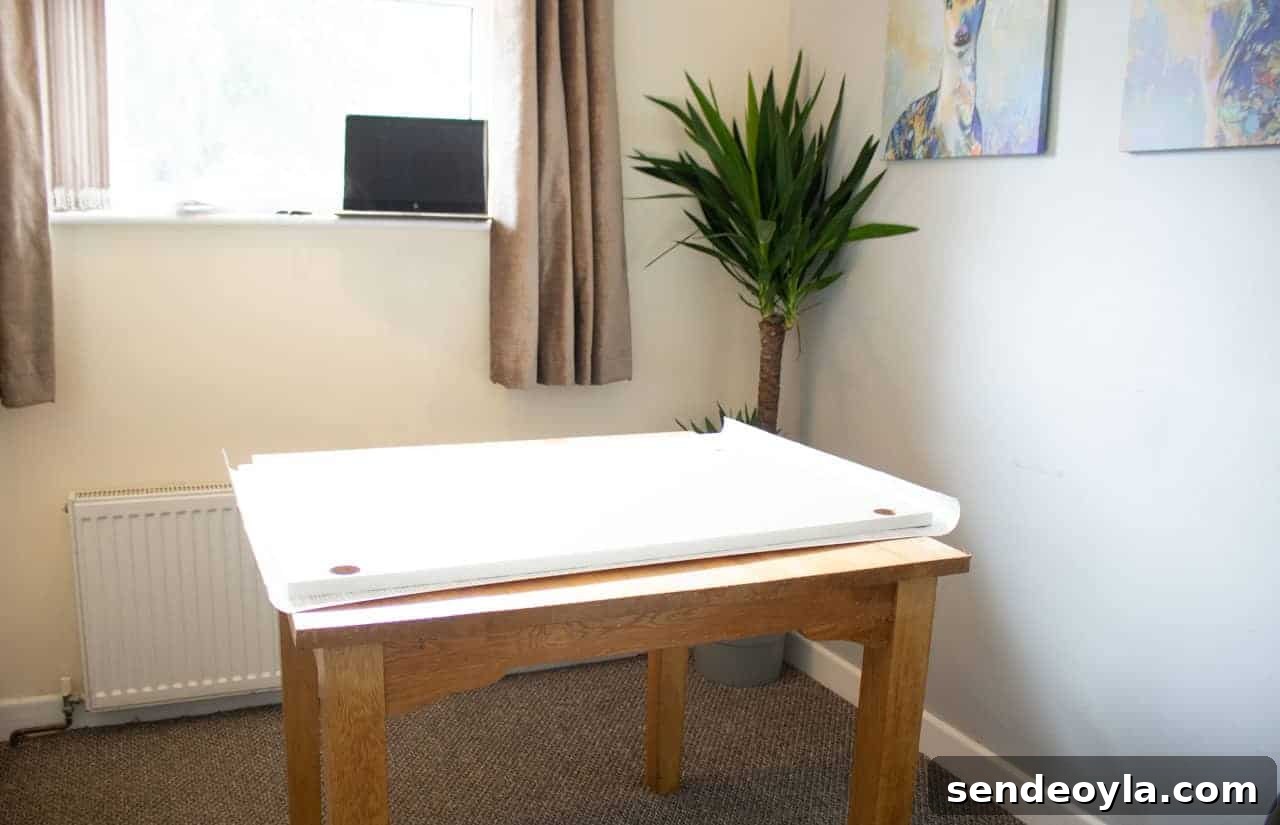
CUT YOUR FABLON TO SIZE
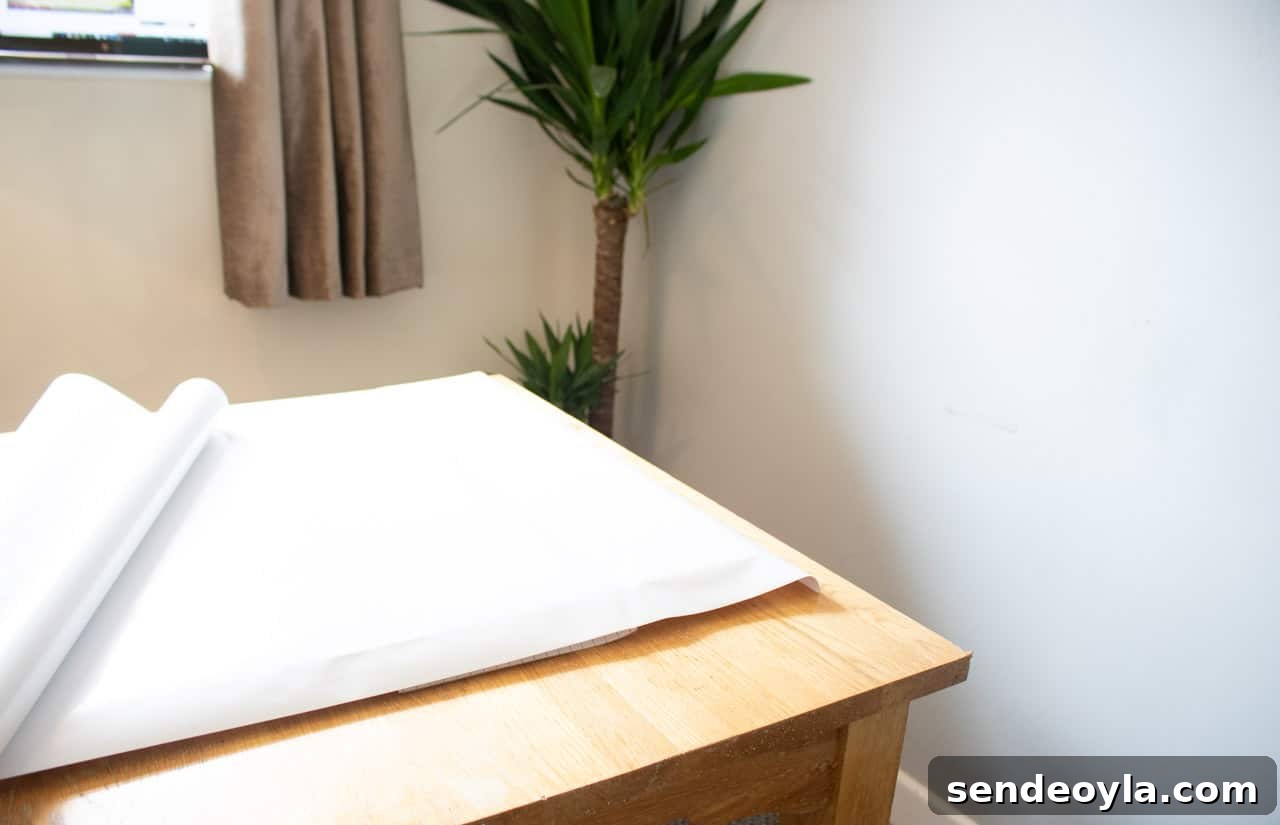
Work on a large, flat surface with the paper backing of the Fablon facing up. Place the door face-down on top of the backing and cut the Fablon so there is at least a 5 cm border around all sides. Leaving this allowance makes it easier to fold and seal the edges neatly. Avoid cutting a piece that is too large — it becomes difficult to handle and can slip off the table.
START PULLING OFF THE BACKING
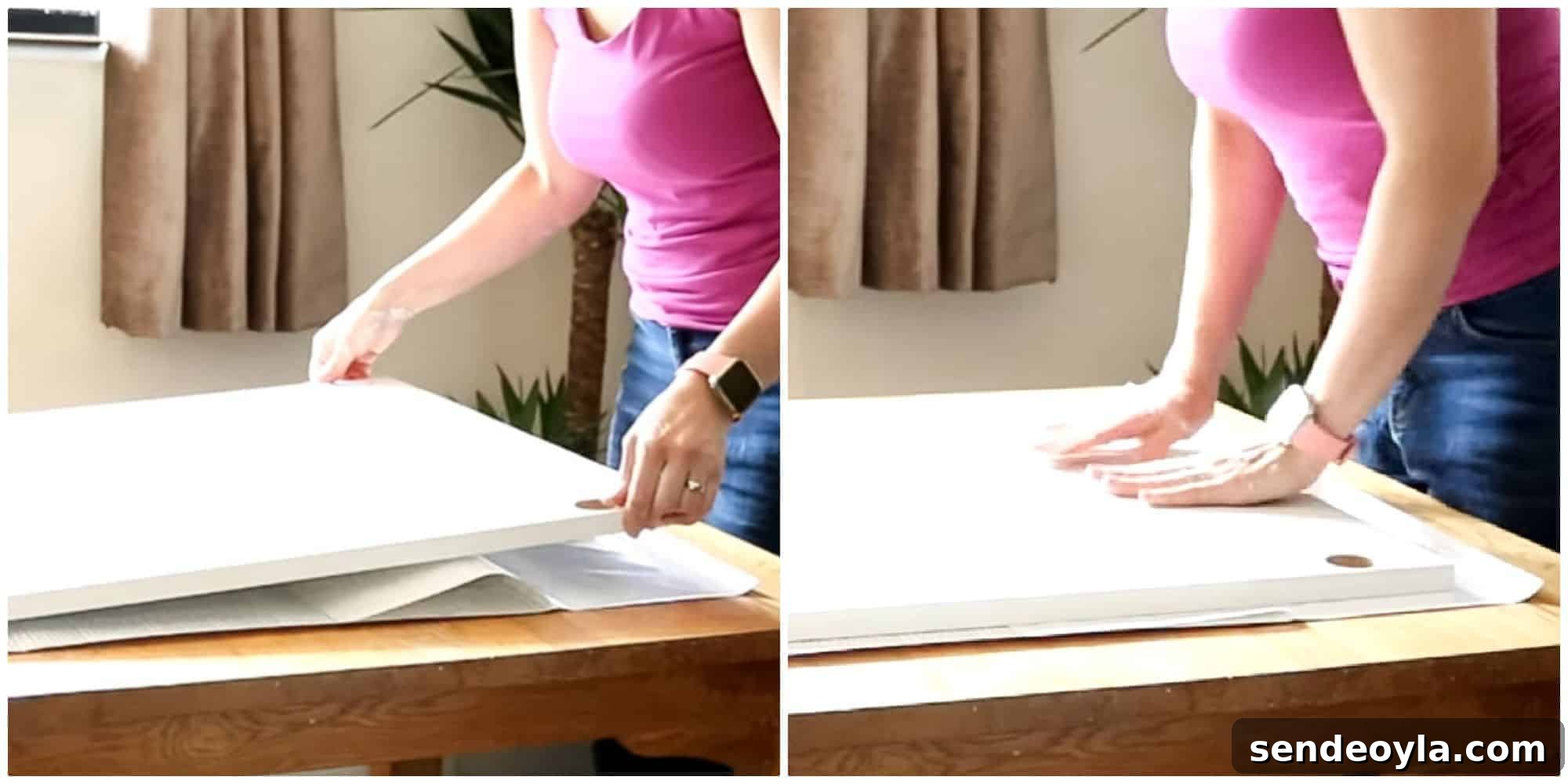
Remove the door briefly and peel back about 15 cm (6 inches) of the backing paper from the top of the Fablon, folding the paper back to expose the adhesive. Place the front of the door down onto the exposed sticky section, then press firmly to adhere.
Carefully flip the partially covered door over so the door is now facing up and the Fablon is attached to the top section. This gives you a controlled starting point to smooth the rest of the film into place.
APPLYING THE FABLON
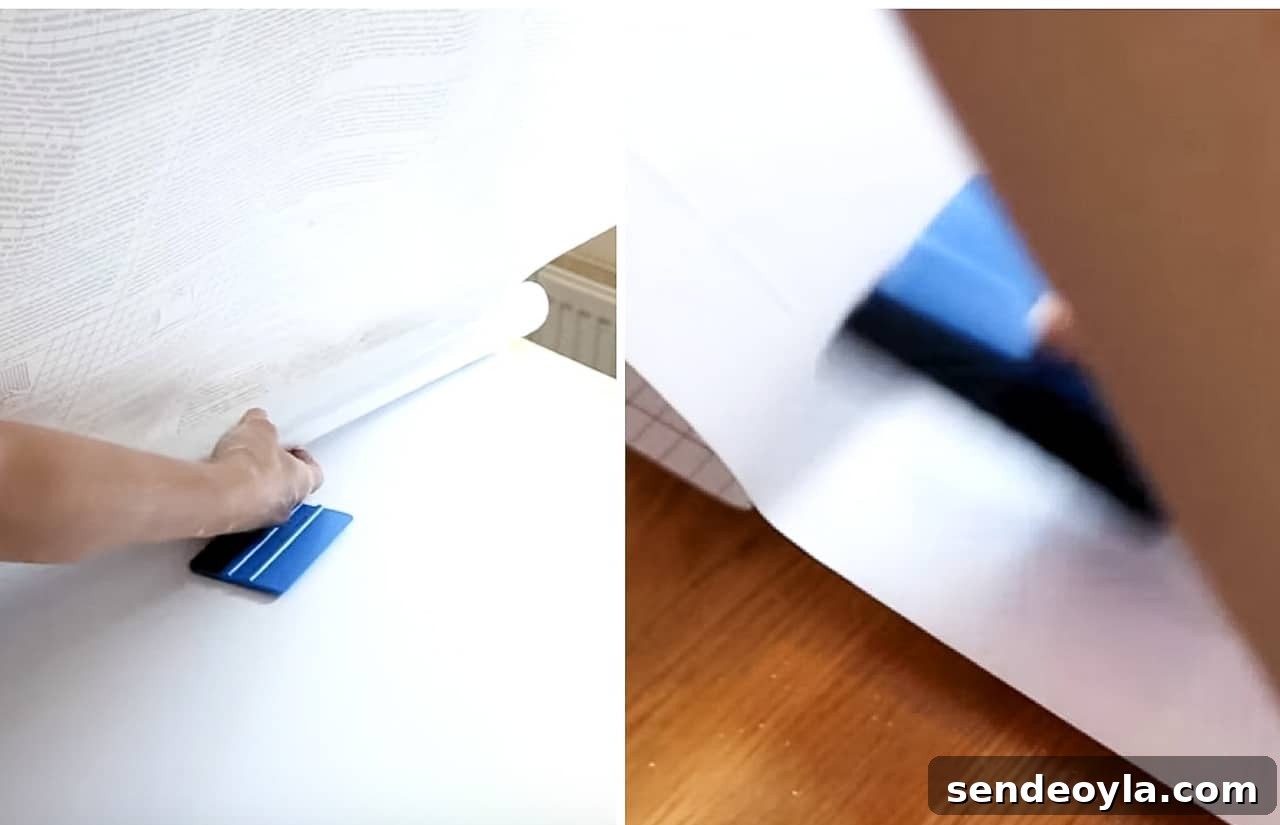
Use a squeegee to smooth the Fablon over the door as you remove more of the backing paper. Work from the centre outward and from the top down, pushing out air bubbles as you go. If you do get a bubble, gently lift the film back and reapply while smoothing. Take your time — slow, steady pressure produces the best finish.
CUTTING YOUR CORNERS
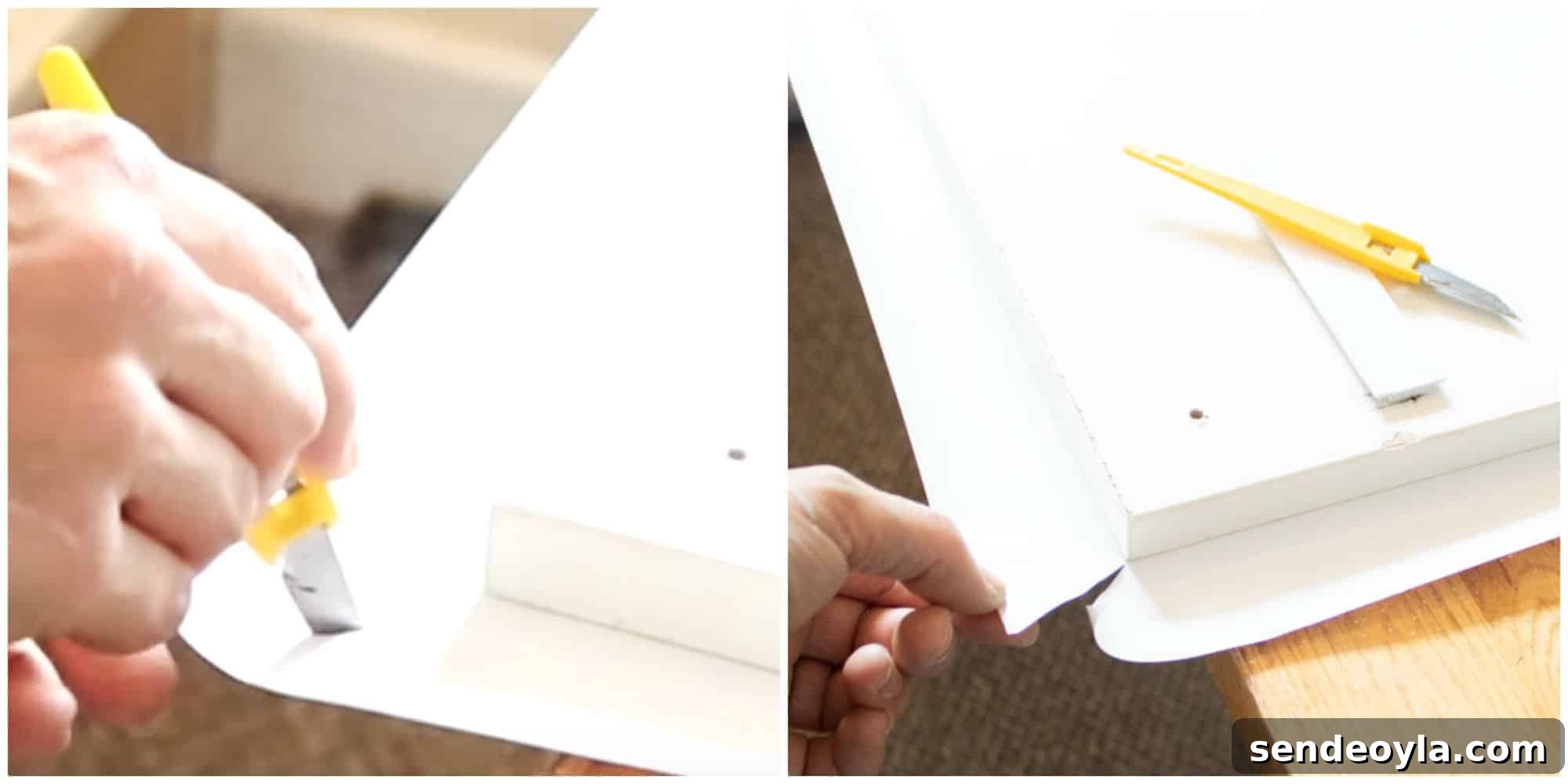
To get neat corners, use a scalpel or craft knife to make a precise slit from the corner of the door out to the edge of the Fablon, creating a small flap. Repeat for each corner but don’t trim away the excess just yet — you’ll tidy that after folding the edges.
FOLDING OVER THE EDGES
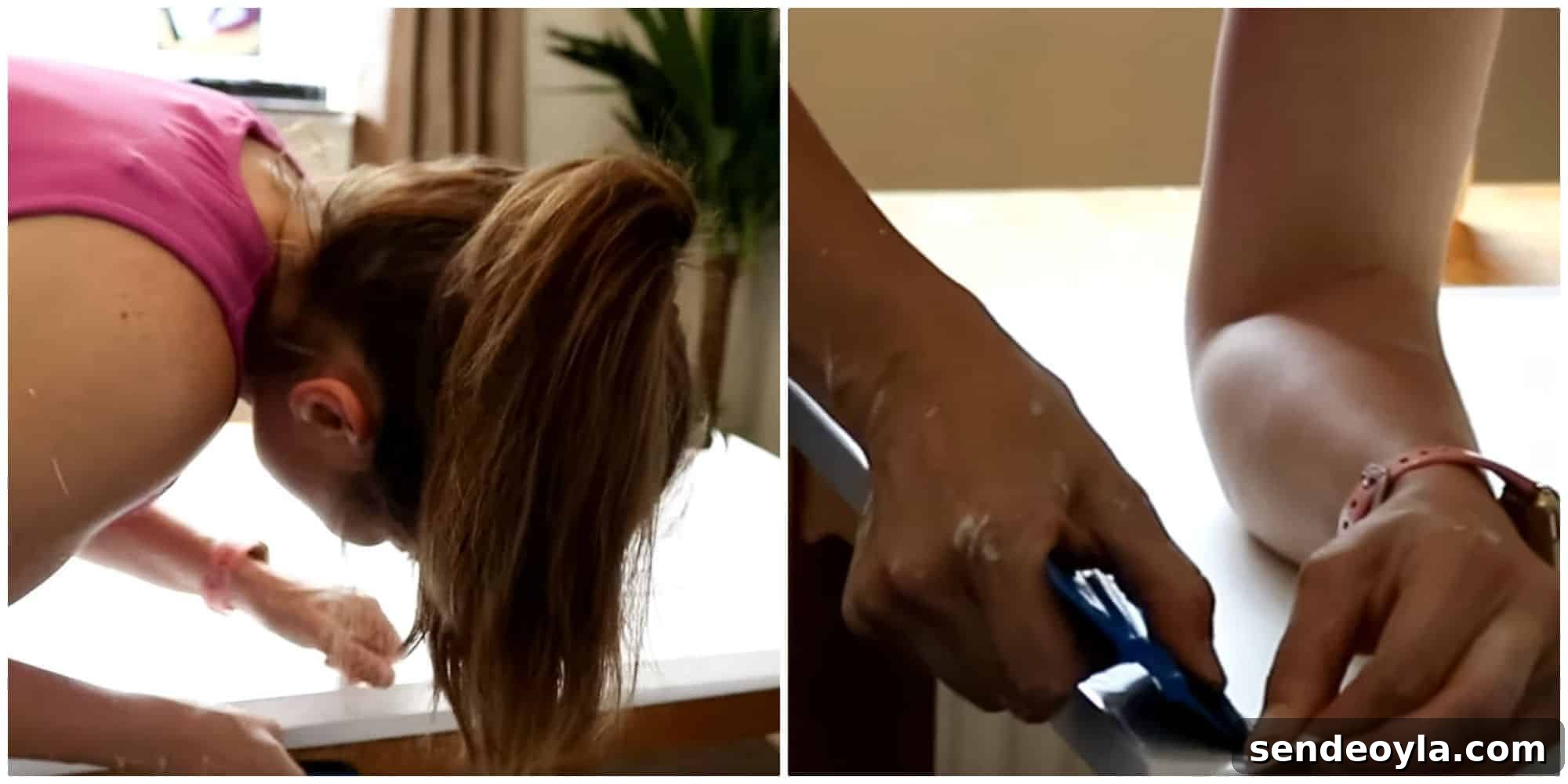
Fold the 5 cm overlap over the sides of the door. Be careful not to overstretch the film, which can cause ripples. Gently tease the film over the edge with your hands and press firmly with the squeegee. Work one side at a time, keeping any pulling to a minimum to avoid stretching the adhesive film.
TIDYING UP THE CORNERS
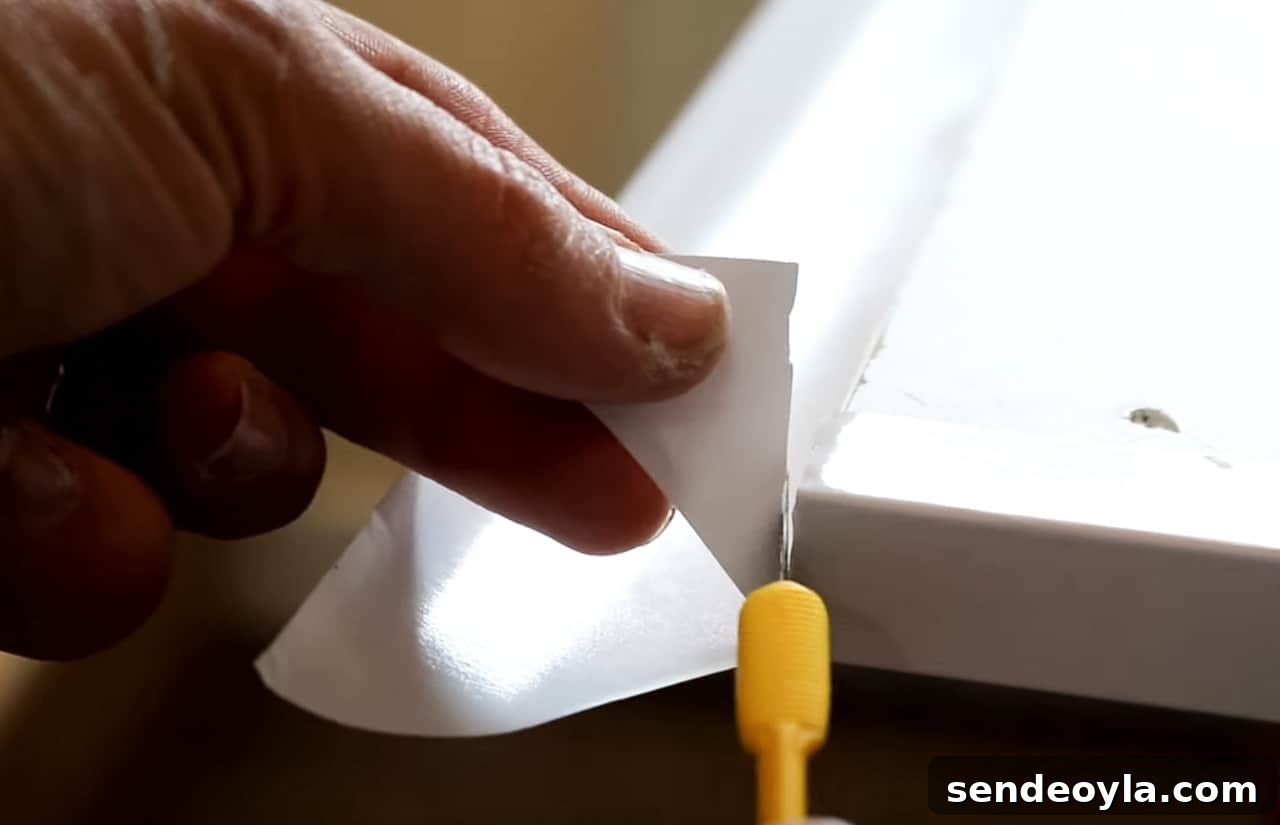
Once a side is pressed down, trim the excess at the corners with a scalpel for a clean finish. Repeat until all edges are folded and neat. Use the squeegee again to press down any remaining edges and remove small bubbles or creases.
REFITTING THE HANDLE
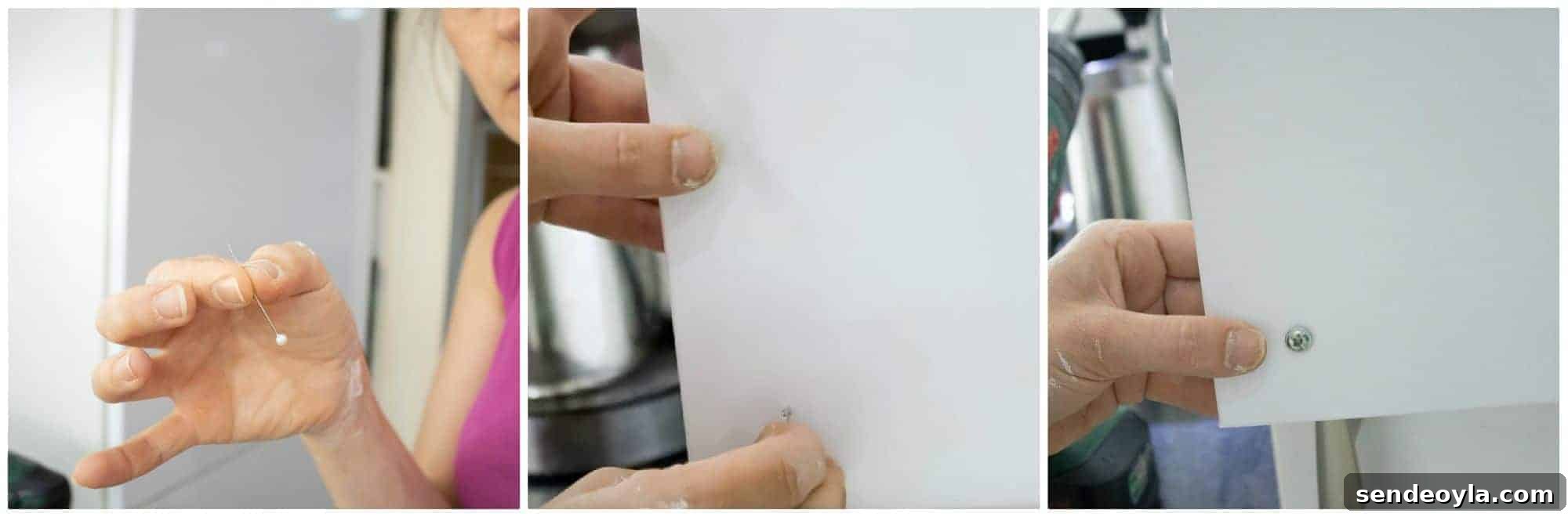
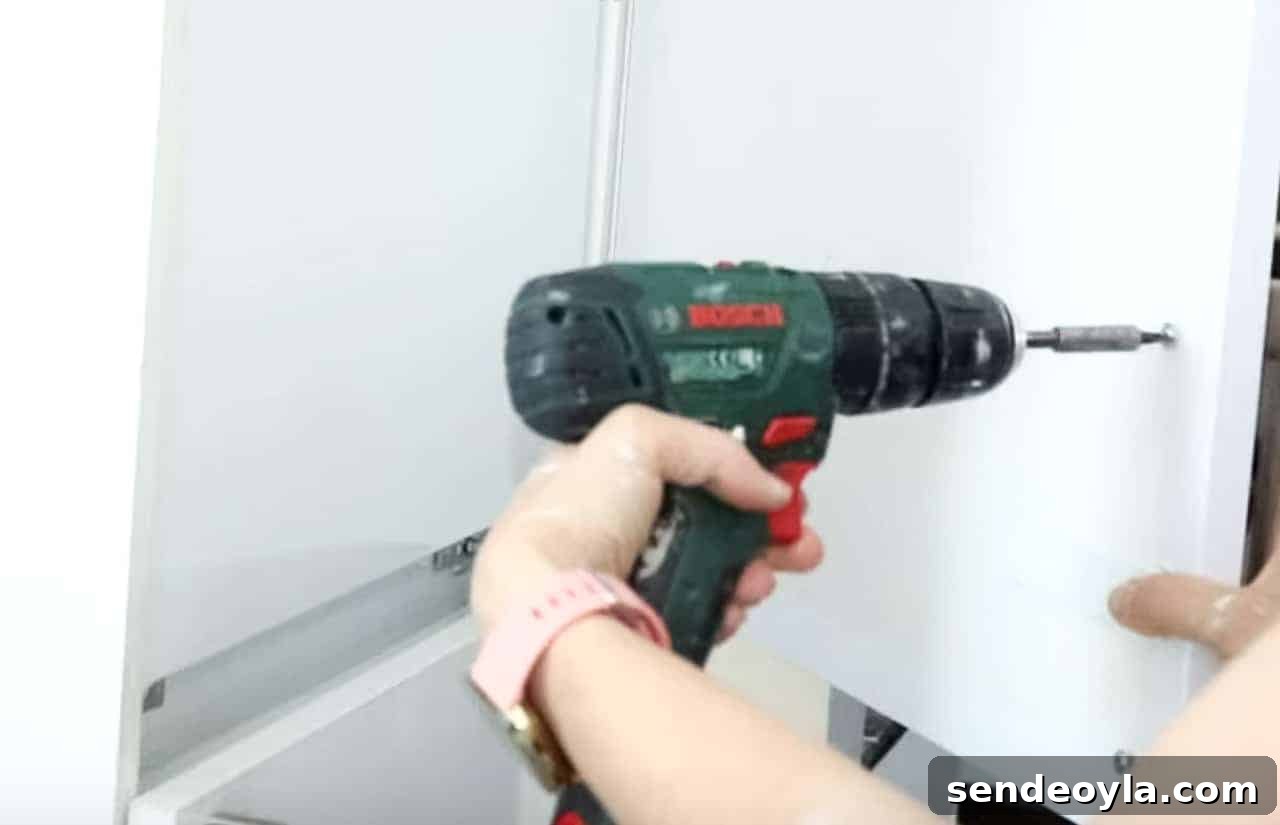
Reattach the door to the cabinet and line up the handle. If the screw holes are covered by the Fablon, carefully pierce through the existing screw locations from the good side with a pin or small nail, then push the screw through. Hold the handle in place and secure it with the screws using a screwdriver.
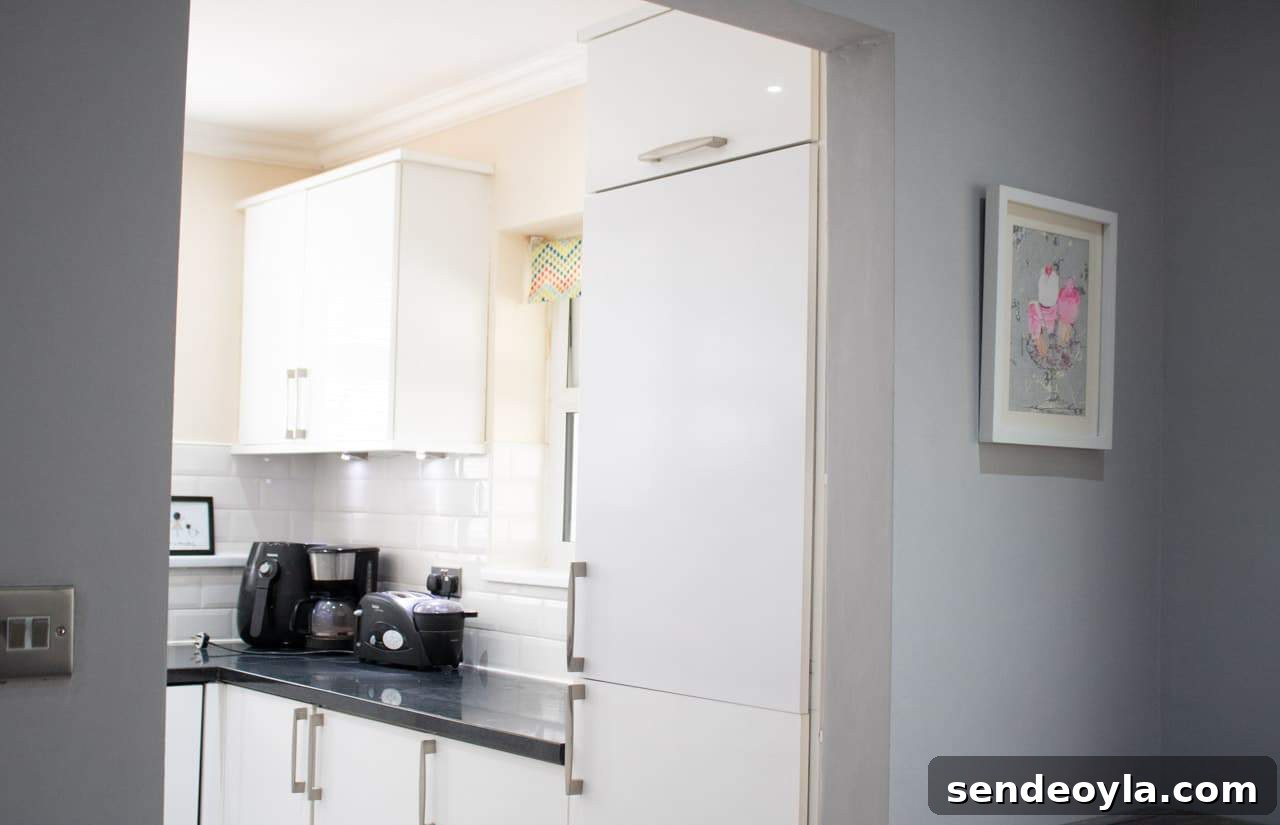
The final result looks clean and professional. I had no significant bubbles on the main face and only minor imperfections along the edges. This approach is ideal for refreshing a small number of doors quickly and cheaply. How long the finish will last depends on use, but because the film is only likely to be touched around the handle, it should remain in good condition for regular kitchen use.
QUICK SUMMARY
- Remove the door and handle.
- Clean with degreaser and a cloth.
- Cut Fablon with a 5 cm overlap.
- Stick the top first, then smooth downwards with a squeegee.
- Trim corners, fold edges, and press firmly.
- Pierce screw holes and refit the handle and door.
PIN THIS HOW-TO FOR LATER