
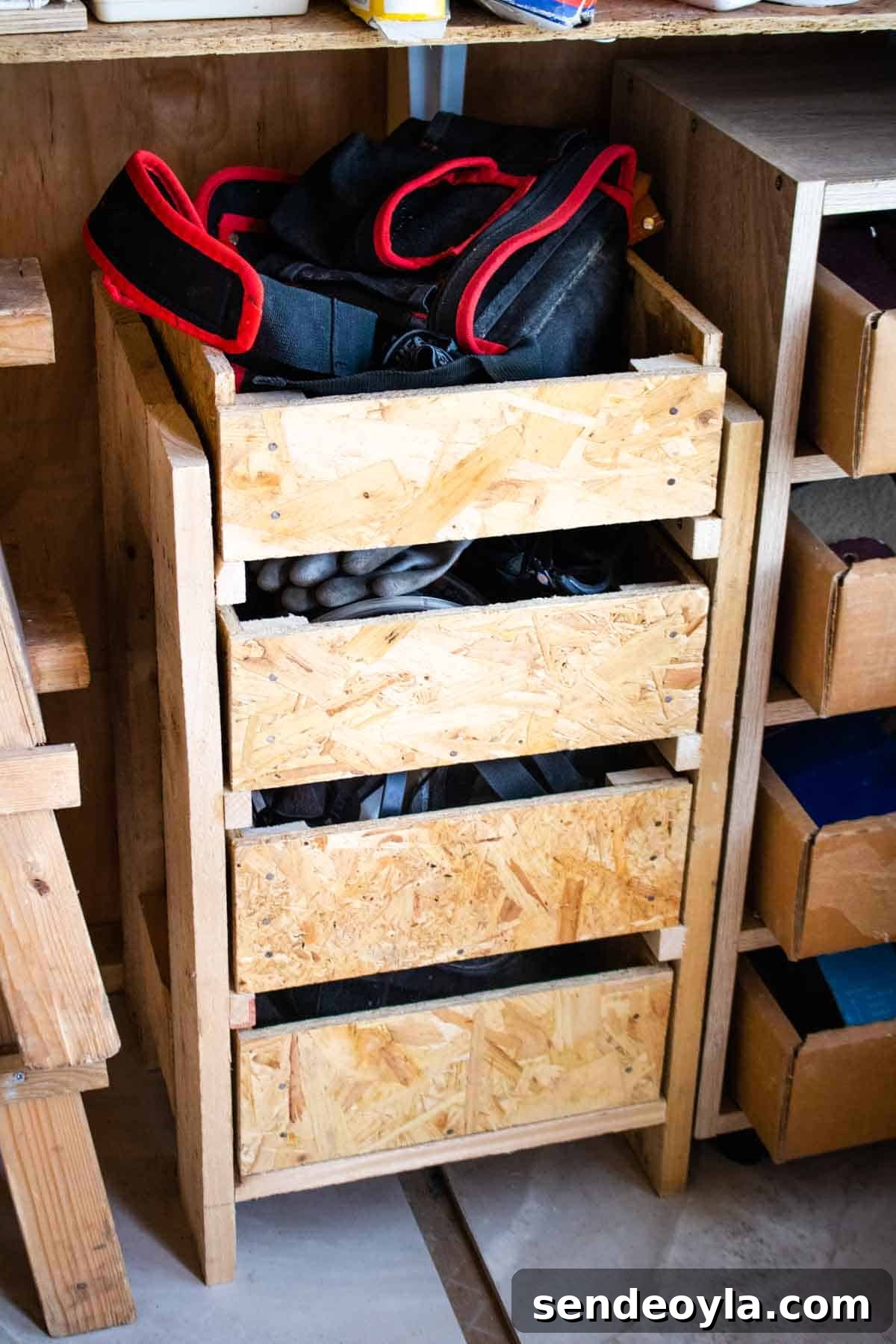
How to build simple DIY box drawers on basic runners to add workshop storage using offcuts. Step-by-step photos and a video walkthrough are included.
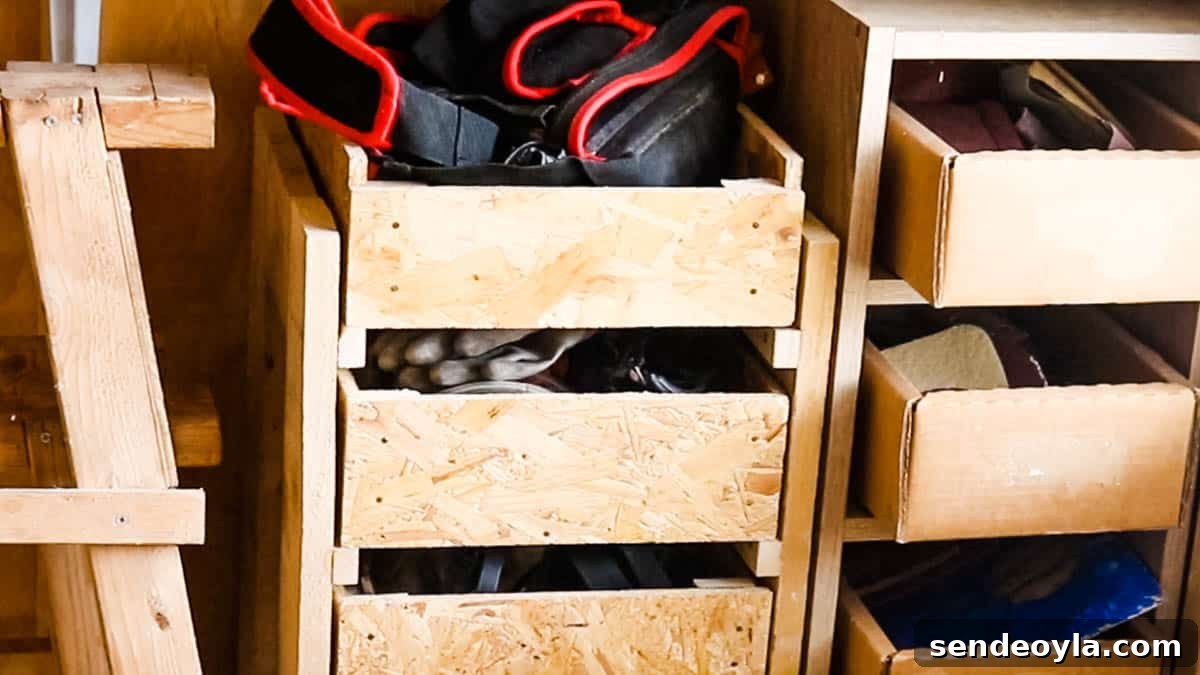
Last year I made a pallet plant stand and removed the attached drawer so I could reuse the sides to make these simple box drawers for PPE while I reorganised my workshop. The same concept works whether you’re recycling pallet wood, plywood offcuts, or thicker sheet material—just adapt the runner and support details to suit your materials.
If you don’t have pallet sides, two sturdy strips of sheet material screwed to the inside of a frame will also act as adequate runners. The important thing is a consistent, level surface for the drawer to rest on.
I needed four small wooden boxes to keep gloves, goggles, and other PPE sorted. These boxes are versatile and can be used for toys, stationery, hardware, or any small workshop bits.
Tools & Materials Used For Easy Wooden Box Drawers
Some of the product links below point to tools I used; you can substitute comparable tools you already own.
- Offcuts – I used OSB with added corner supports because my sheet was thinner than ideal*
- Mitre saw
- Mitre stand
- Hand saw
- Wood glue
- Hammer
- Panel pin nails
- Tape measure
- Combi drill
- Wood screws
- Trend pocket hole jig
- Pocket hole screws
*If you can use 12mm or thicker sheet material you won’t need internal corner supports. For more on solid box construction, see my guide on making a wooden box file for reference.
Measurements
Decide on the internal volume you need before cutting. You can cut four identical sides to make matching boxes, or make two pairs of different lengths if you want to vary width or depth. When working from offcuts I wasn’t strict about uniform heights—these are practical workshop drawers, not exhibition pieces.
How to Make a Box
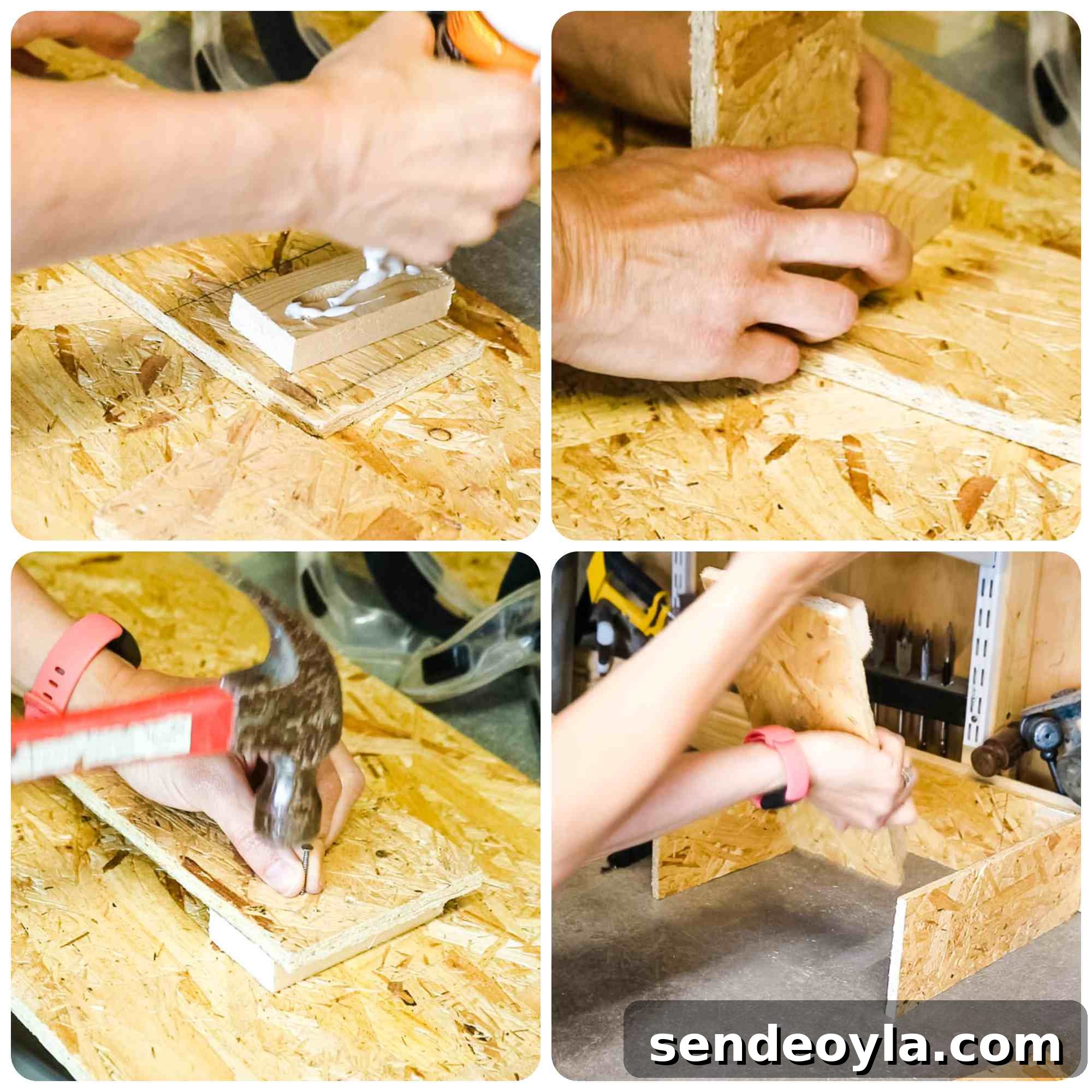
After cutting the four side panels, prepare four corner supports. They don’t all have to be the same length, but each should be set back by the thickness of the base material so the base sits flush inside the box.
Use an offcut of your base material held along the shortest edge of the front and back panels to mark where the supports should sit. Glue the supports to those marks and position them slightly above the plane where the base will sit so you can nail the base to the supports later.
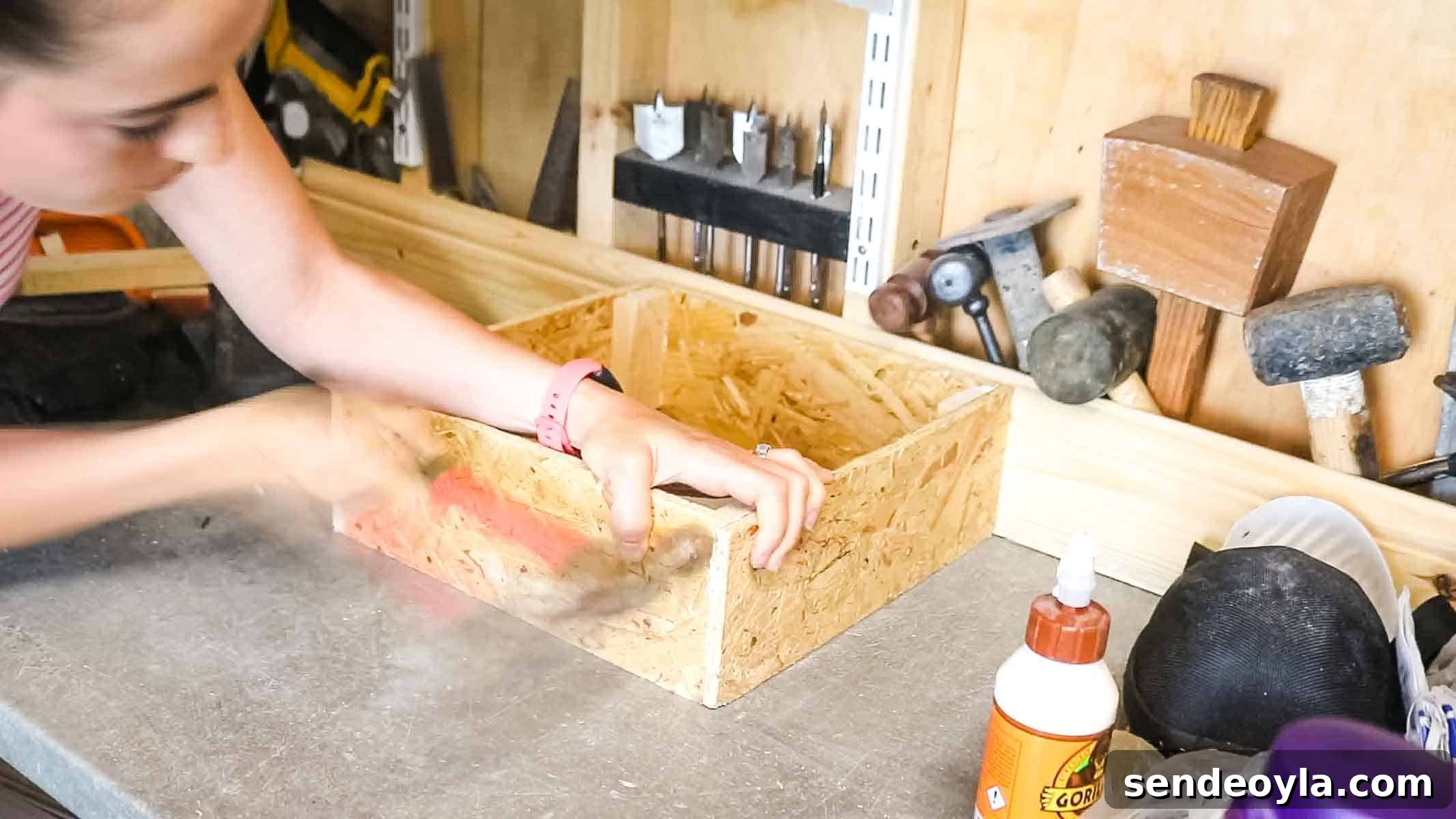
Gluing And Nailing the Box Sides Together
With the supports glued in place on the front and back panels, assemble the four sides. The side pieces don’t need rear supports if you prefer the cut edge to show on the sides of the finished drawer.
When nailing, try to keep the box square. For a quick workshop solution I pushed the assembly up against a flat fence and nailed it while holding that alignment.
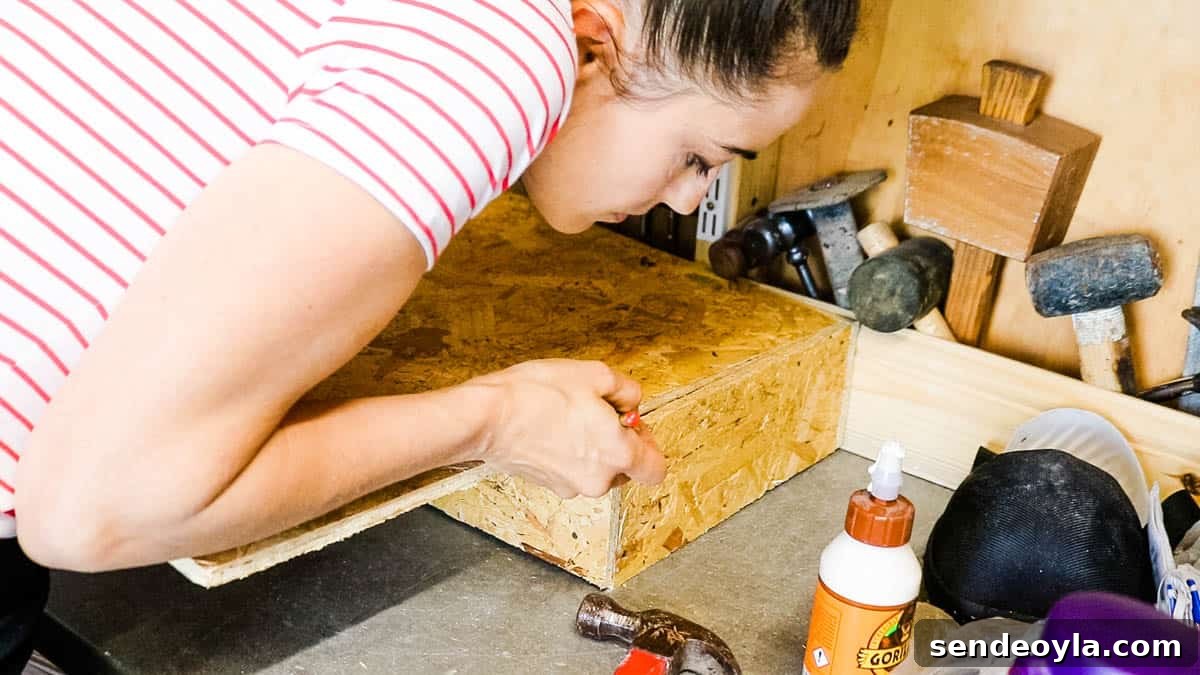
Cutting the Bases
For the base, hold a sheet of OSB inside the assembled box and mark where it fits. Square the lines with a speed square and cut using a hand saw or compact circular saw. Leave a millimetre or two of clearance so the base slides in easily without binding.
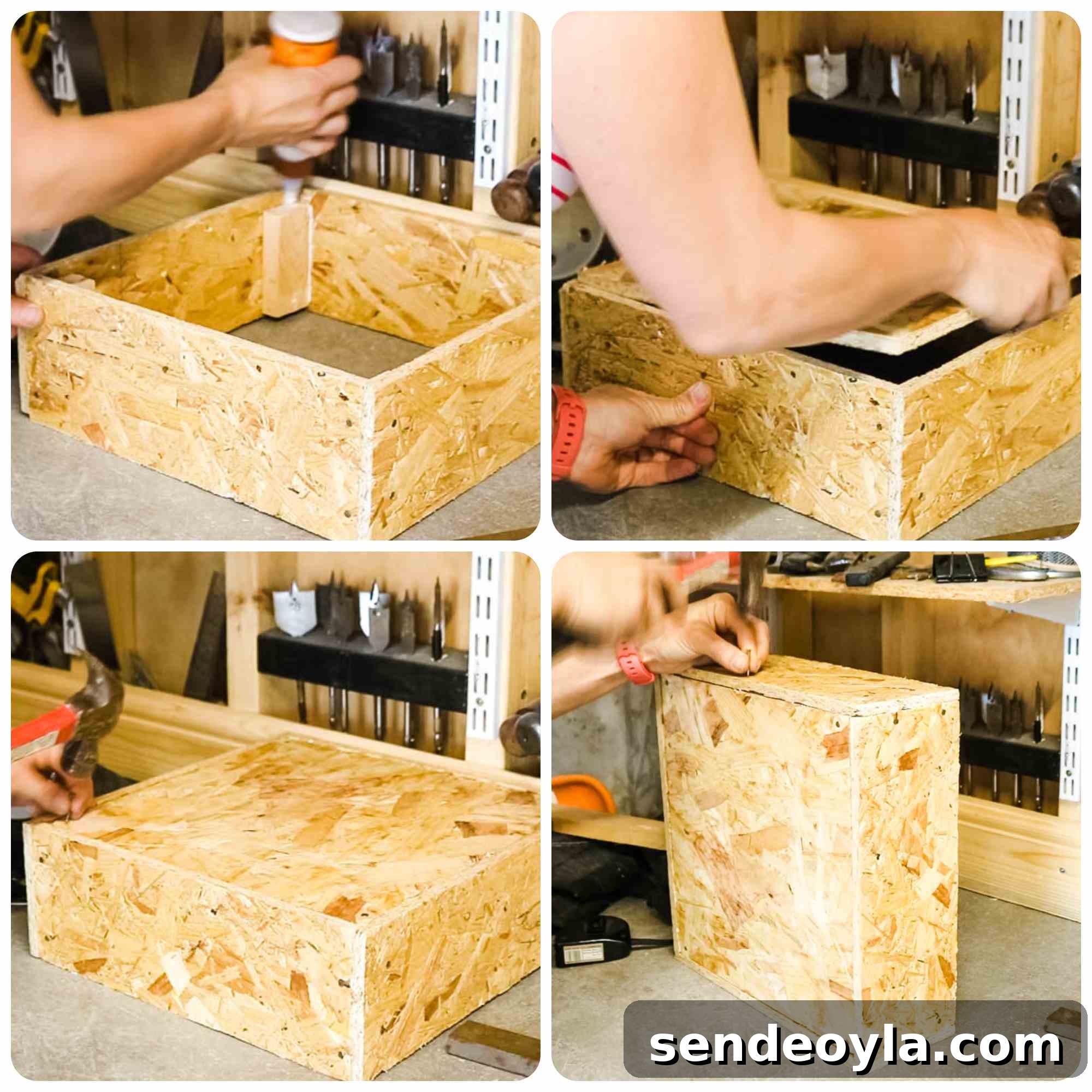
Gluing and Nailing the Bases On
Flip the box upside down, apply wood glue to the bottom of each corner support, then slot the base in place. Secure the base with panel pins and add at least one nail along each side into the base for extra rigidity. This reduces sagging if you store heavier items, though PPE is typically lightweight.
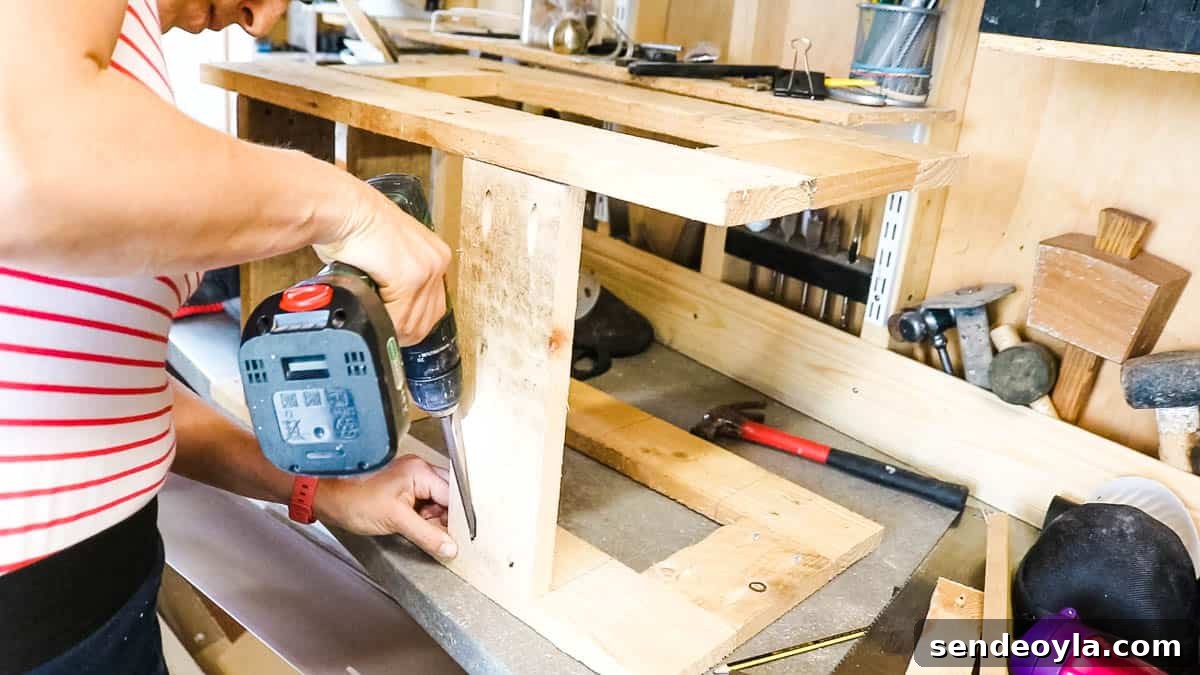
Making the Drawer’s Frame Stronger
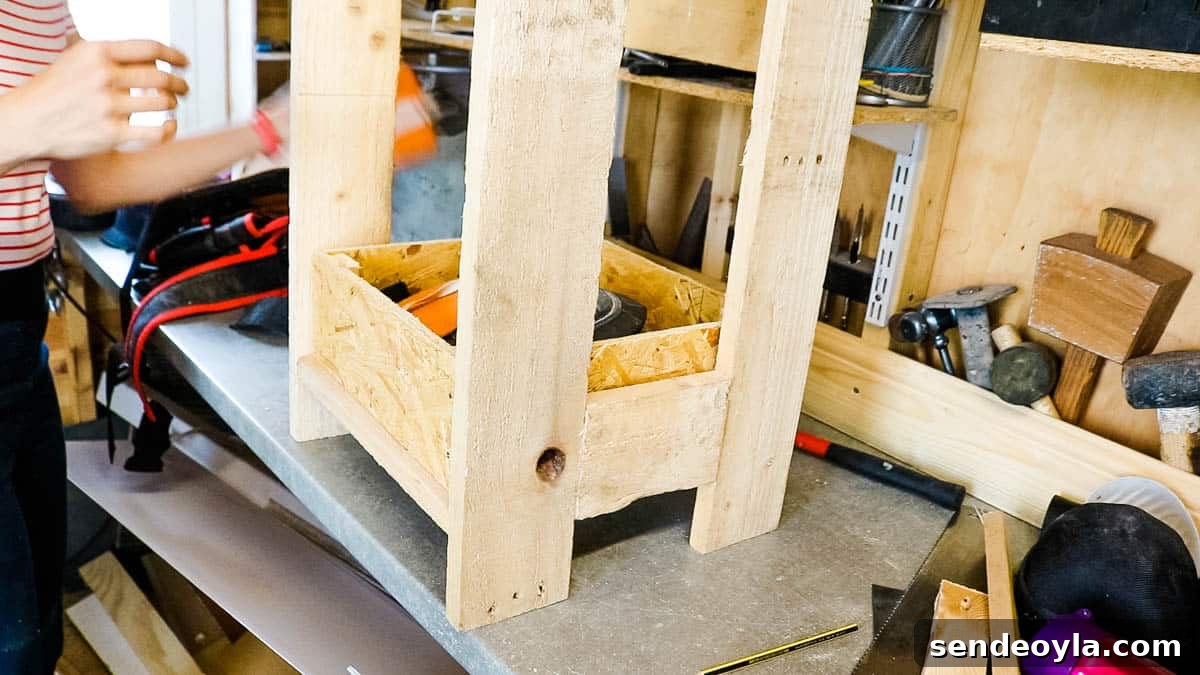
I reused two side panels I built from pallet wood to serve as the drawer frame. If you don’t have pallet wood, thick plywood strips or chipboard work fine as runners. To stiffen my frame I pocket-holed and screwed a centre back piece; this keeps the frame square and prevents racking when drawers are pulled in and out.
Planning More Wooden Boxes
After building the first box, place it on your stand or frame to confirm spacing and fit. Then cut and assemble additional boxes to match or vary in height based on the items you plan to store. Using offcuts often means boxes will look similar but won’t be perfectly identical; that’s fine for functional workshop storage and helps reduce waste.
Making Basic Drawer Runner Supports
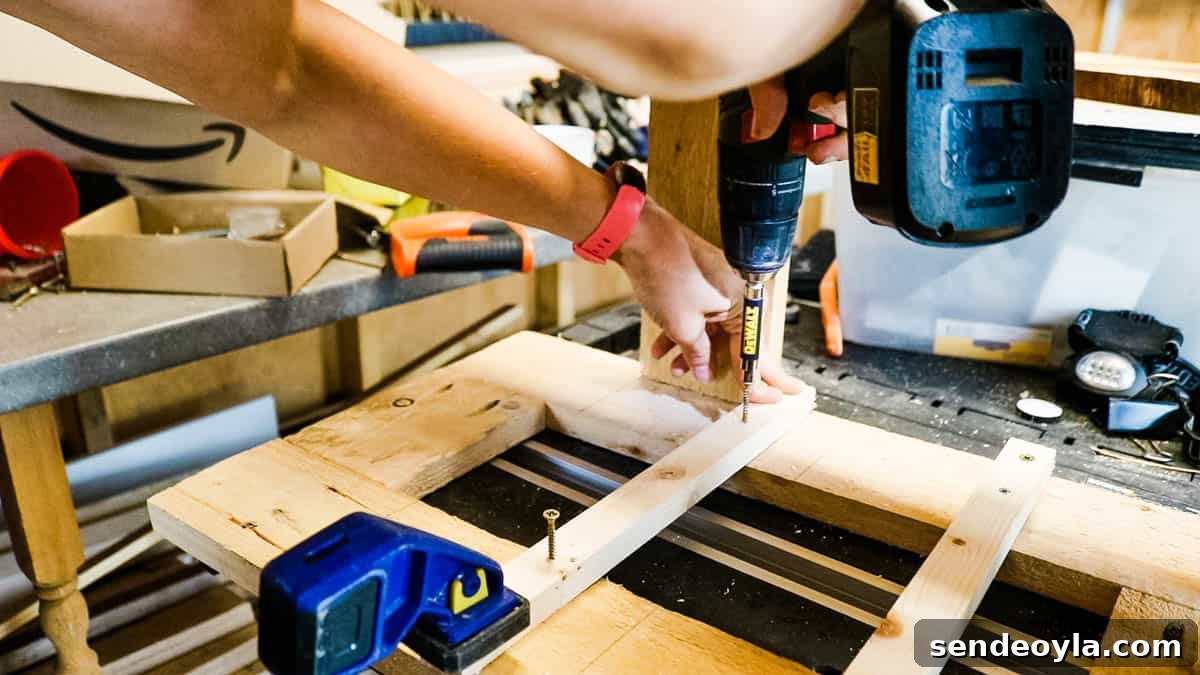
There’s nothing complicated about these runners—batons or strips spaced and screwed into the side frame are all you need. Predrill and screw the runners in position, checking clearance so each box slides smoothly. This straightforward approach is ideal for beginners looking to add functional drawer storage to their workshop.
Total Spend
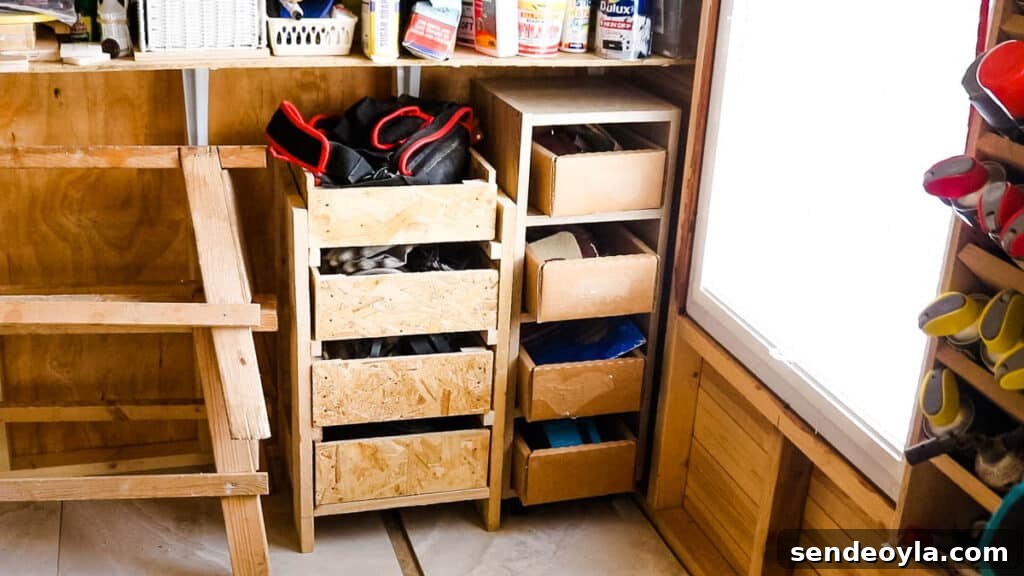
Free — all materials were reclaimed from my existing stock. Reusing offcuts and pallet wood is a cost-effective way to create practical storage while cutting waste. With timber prices rising, repurposing scrap is a sensible option.
More Projects You Might Like
- 20 Workshop organization ideas for tool storage
- DIY silicone tube holder
- Easy shed shelves
- DIY tool wall
📖 Printable Card
Easy DIY Box Drawers For Workshop Storage
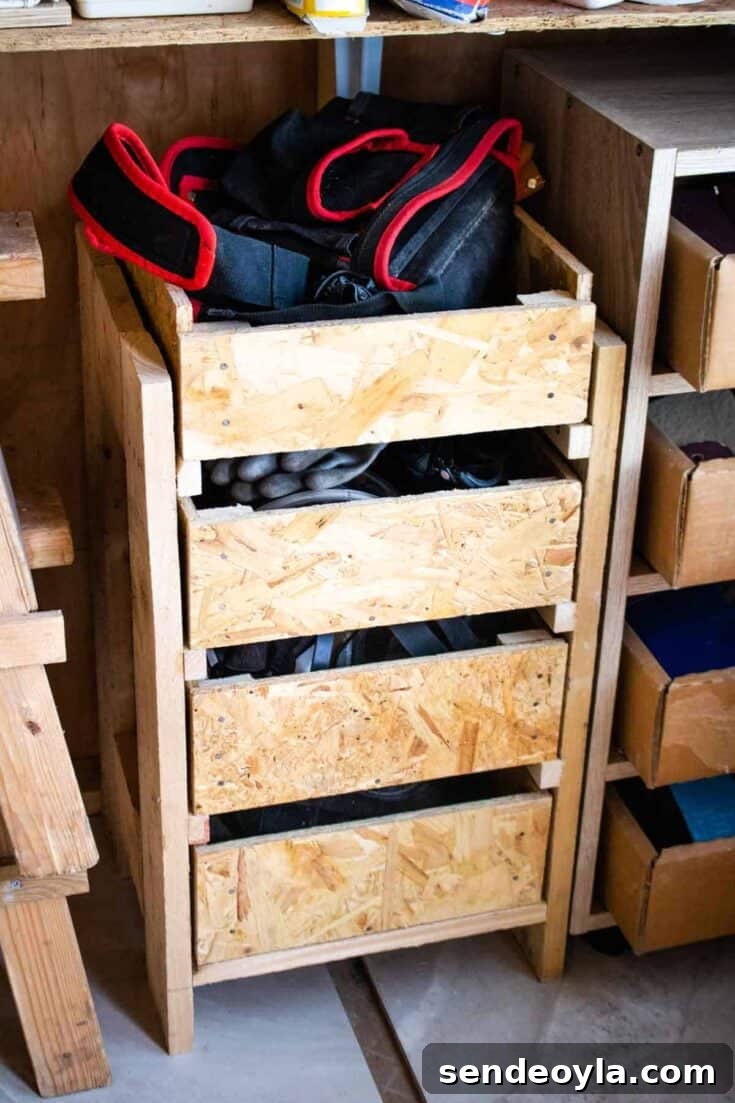
Step-by-step instructions to make simple wooden box drawers on basic runners using offcuts. Ideal for workshop storage and small items.
2 hours
1 hour
3 hours
Easy
Materials
- OSB or plywood
- Corner supports (offcuts)
- Pallet wood or runner strips
- Wood glue
- Nails and panel pins
- Wood screws
Tools
- Hammer
- Hand saw or circular saw
- Mitre saw (optional)
- Combi drill
- Drill bit
Instructions
- Cut four side panels to the required lengths to form the box sides.
- Cut four corner supports sized to sit inside the corners, offset by the base thickness.
- Glue and nail two supports behind the front and two behind the back panels.
- Check the offset so the base will sit flush inside the box when installed.
- Assemble the sides, gluing and nailing them together, and keep the assembly square as you can.
- Cut the base to fit with a small clearance and glue and nail it to the corner supports.
- Add nails through the sides into the base for extra strength and to reduce sagging.
- Build or reuse a frame to hold the drawers—pallet stand sides, two thick plywood strips, or similar will work.
- Predrill and screw runner batons into the frame at the chosen spacing so drawers slide in and out easily.
- Fasten a back support slightly wider than the drawer width to provide clearance and prevent binding.
Did you make this project?
Leave a comment on the blog or share a photo on Instagram to show your build.