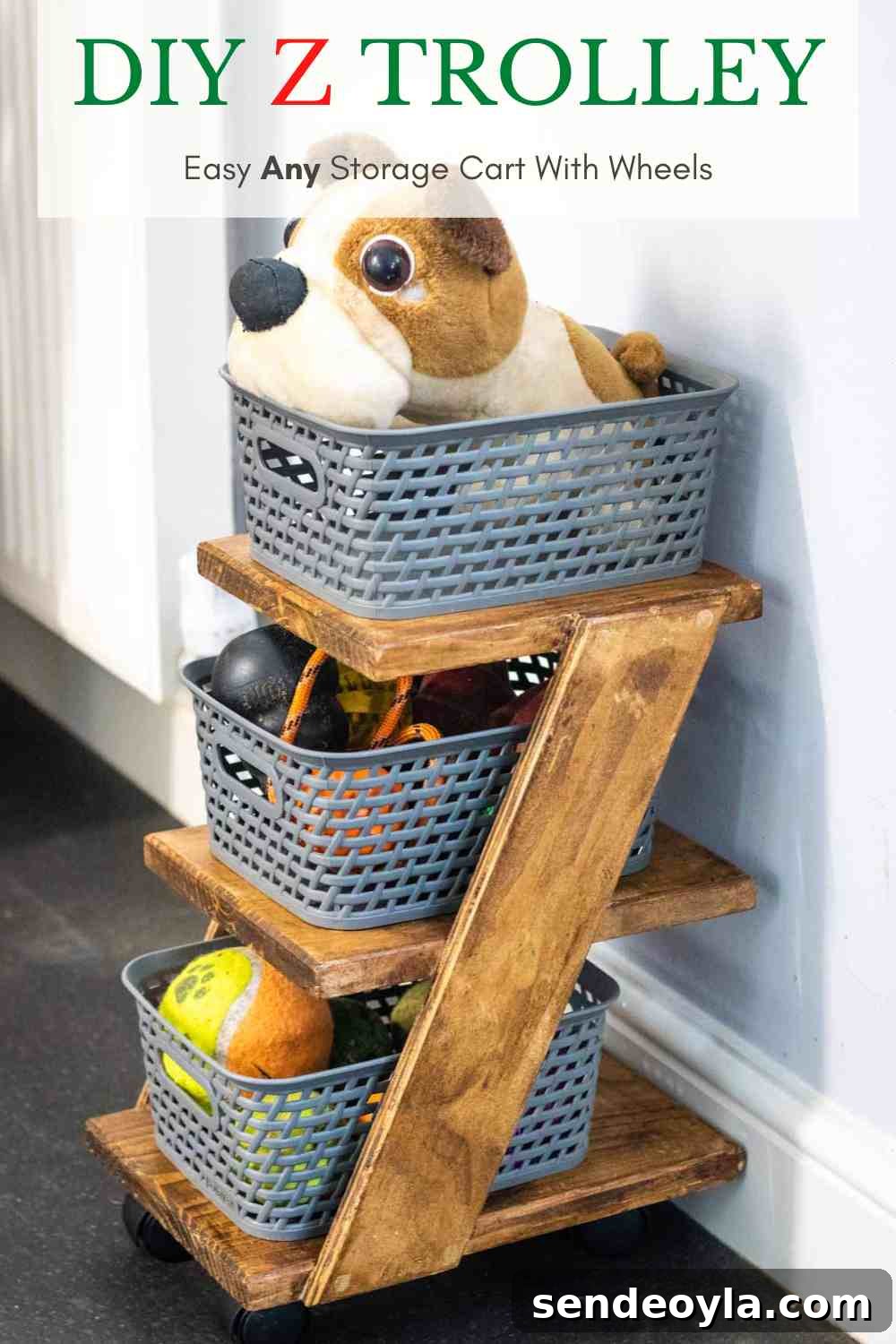
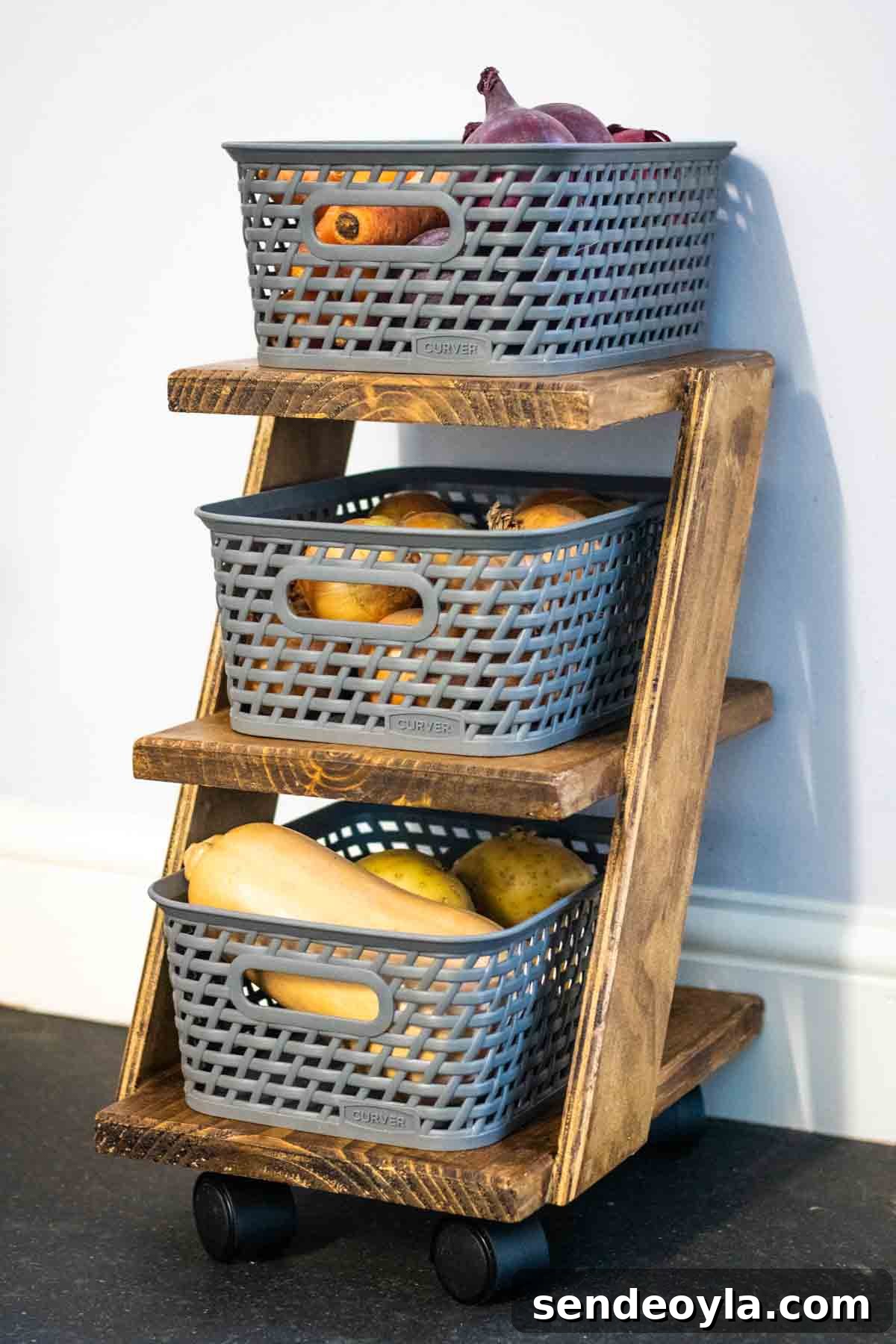
This simple DIY Z-shelf three-tier trolley offers flexible storage for small plastic baskets around the home. It’s designed to fit common 4L Curver and Wham Studio-style boxes and includes free plans, step-by-step instructions, and alternative tool options.
Note: this project is not sponsored. The tools and materials shown are items I used for the build.
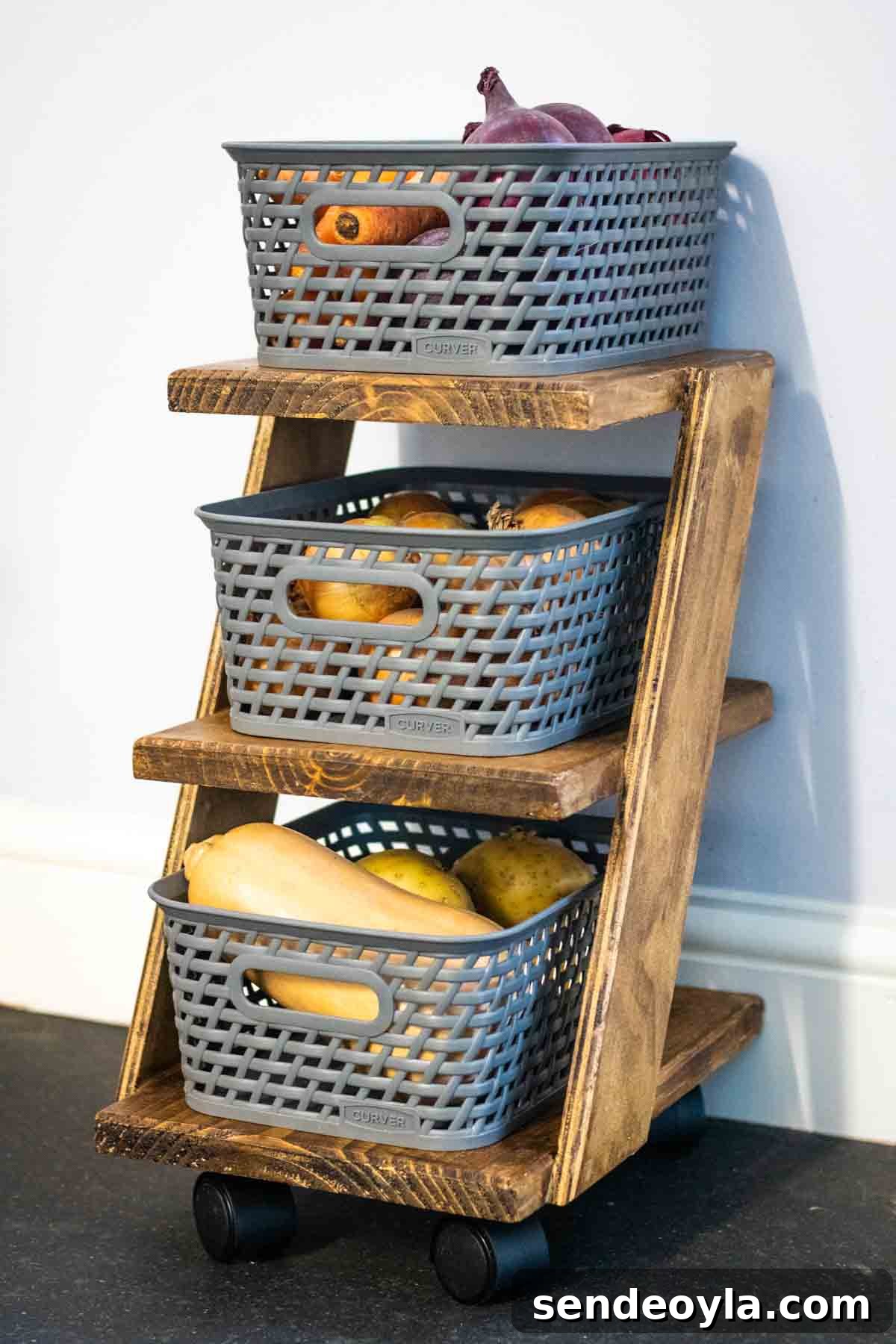
I’d wanted a compact fruit and vegetable rack for a while, and after collecting a few ideas I settled on this simple Z-shelf basket caddy. It’s fast to build, uses offcuts where possible, and is ideal if you prefer to avoid extra shopping trips. The design is straightforward so anyone with basic tools can make it.
I picked up affordable small baskets in supermarkets — they’re an economical choice and meant I could build a wooden three-tier stand sized to fit those boxes. The result is a tidy, mobile unit that keeps produce, toys or craft supplies organized.

What Can I Use This DIY 3 Tier Trolley Shelf For?
This Z-shelf three-tier trolley is extremely versatile. Here are some uses I’ve considered:
- Bedside trolley (you can make two to match)
- Farmhouse-style tabletop cupcake or cake stand
- Small afternoon tea trolley for sandwiches and cakes
- Dog toy basket
- Three-tier fruit or vegetable basket
- Bathroom storage trolley
- End table with storage
- Shoe box shelf
- Hobby trolley for sewing, knitting and craft supplies
- Scaled up, it could become a compact DIY bar cart or drinks trolley
What I enjoy most about this design is the Z-frame — it’s a distinctive and fun shape to assemble. If you prefer, you could substitute simple straight vertical supports and attach the shelves to them instead.
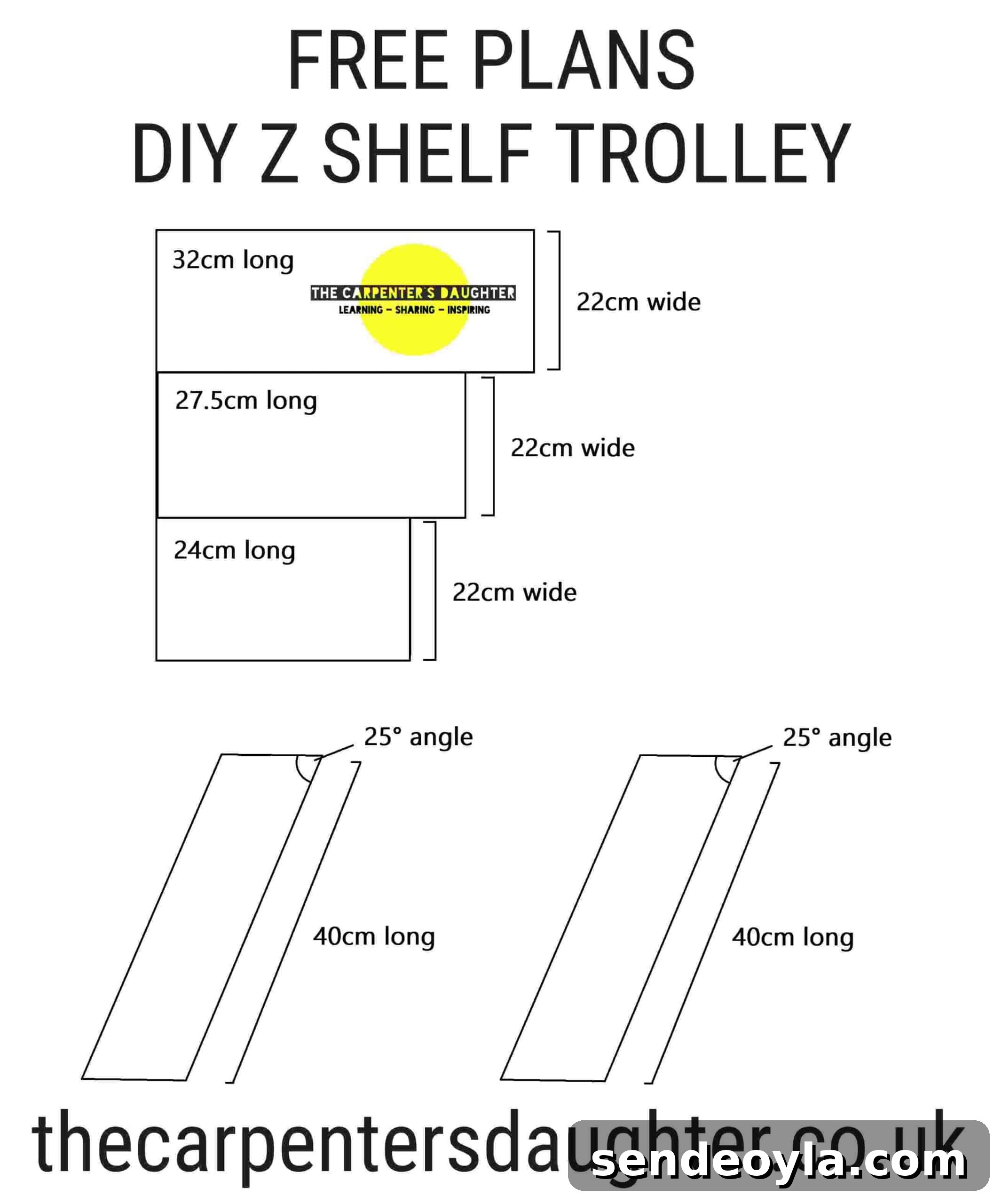
Free Plans and Cutting List
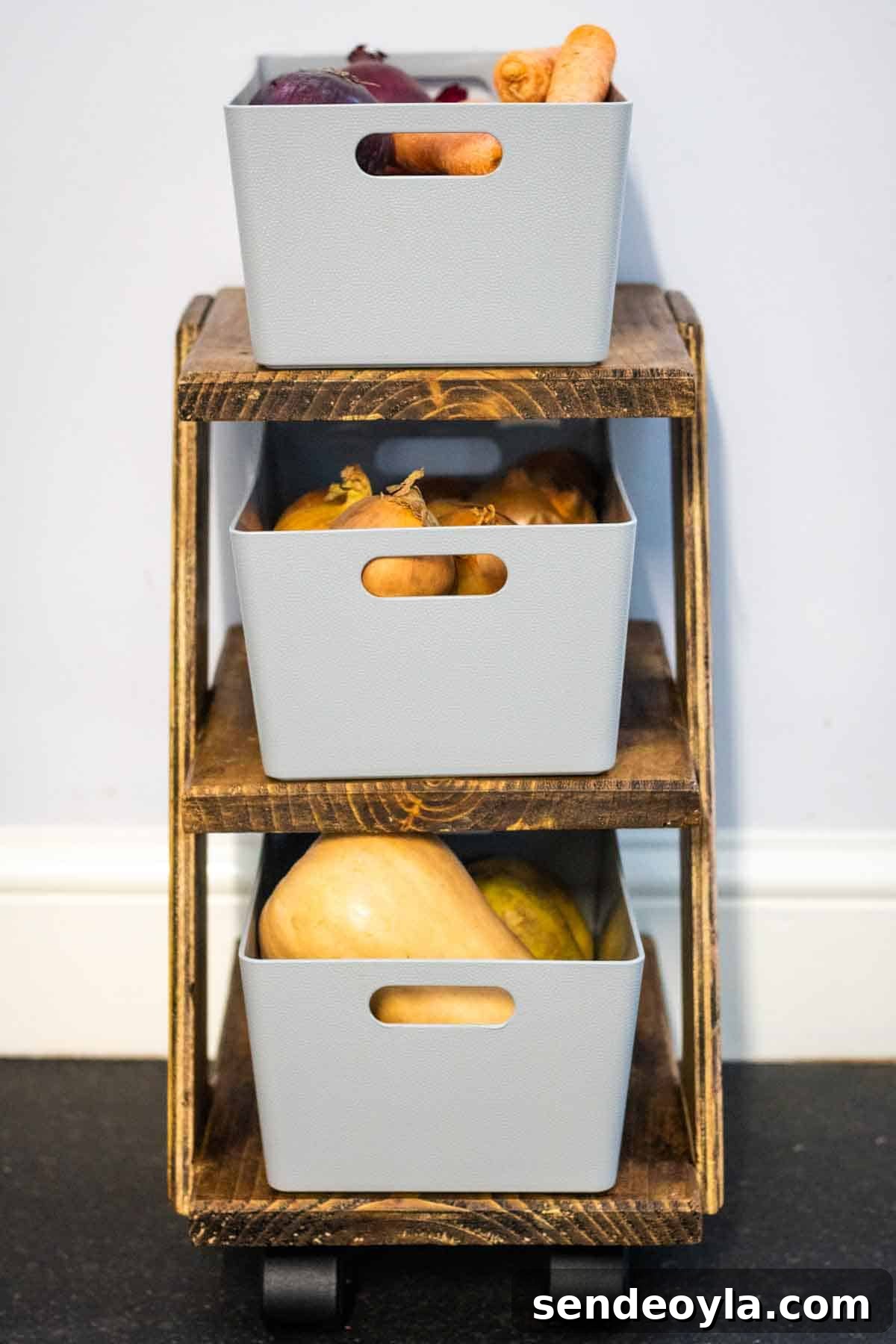
Treat these free plans as a guide: basket dimensions vary between brands and models. For example, some 4L boxes have tray-like shapes. The shelves are staggered so the bottom shelf is longest, the middle slightly shorter, and the top shelf the shortest — this helps stability.
All three shelf recesses are the same size for simplicity. If you want uniform baskets, choose baskets smaller than the following maximum dimensions:
- 15 cm height
- 22 cm width
- 24 cm length
Tools & Materials
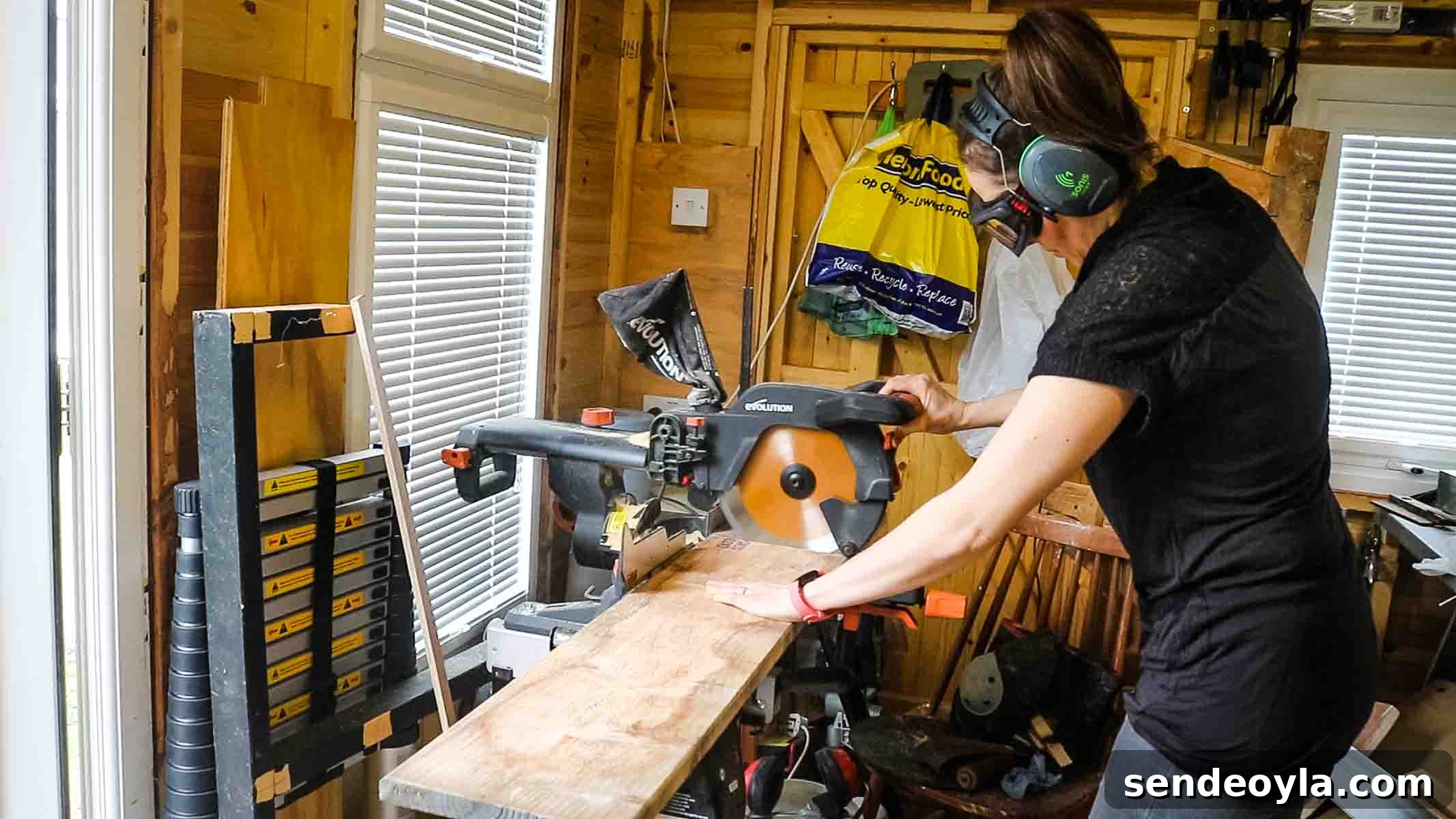
Below are the main supplies and tools used for this Z-shelf trolley. You can substitute similar items depending on what you have available.
- Timber board (for example 220 mm x 22 mm staircase timber or similar offcuts)
- 12 mm plywood strip (roughly 1200 mm x 85 mm, cut and mitred as needed)
- Mitre saw or a hand saw
- Sliding bevel (if you don’t have an adjustable mitre saw)
- Clamps
- Sawhorses or a workbench
- Wood glue
- Combi drill
- Tape measure
- Countersink bit
- Wood screws
- Orbital sander and sanding papers (80 and 120 grit)
- Palm router (optional) or sanding block for edge profiling
- 45° chamfer router bit (optional)
- Castor wheels (optional for mobility)
- 4L-style plastic baskets (Curver or Wham-style)
- Dark furniture wax or finish of your choice and lint-free cloths
- 3 mm wood drill bit
- Wood filler
- Safety gear: ear protection, safety goggles and a dust mask
Tips for Buying Storage Baskets
This project is independent of any manufacturer. Many budget-friendly basket brands work well — check discount stores and supermarket ranges for inexpensive 4L-style boxes that match the recommended dimensions.
Or Recycle Old Drawers
You can also repurpose small drawers from an old sideboard as the basket bay instead of plastic boxes. Narrow drawers work best; wider drawers may need additional supports.
Tips for Cutting Wood
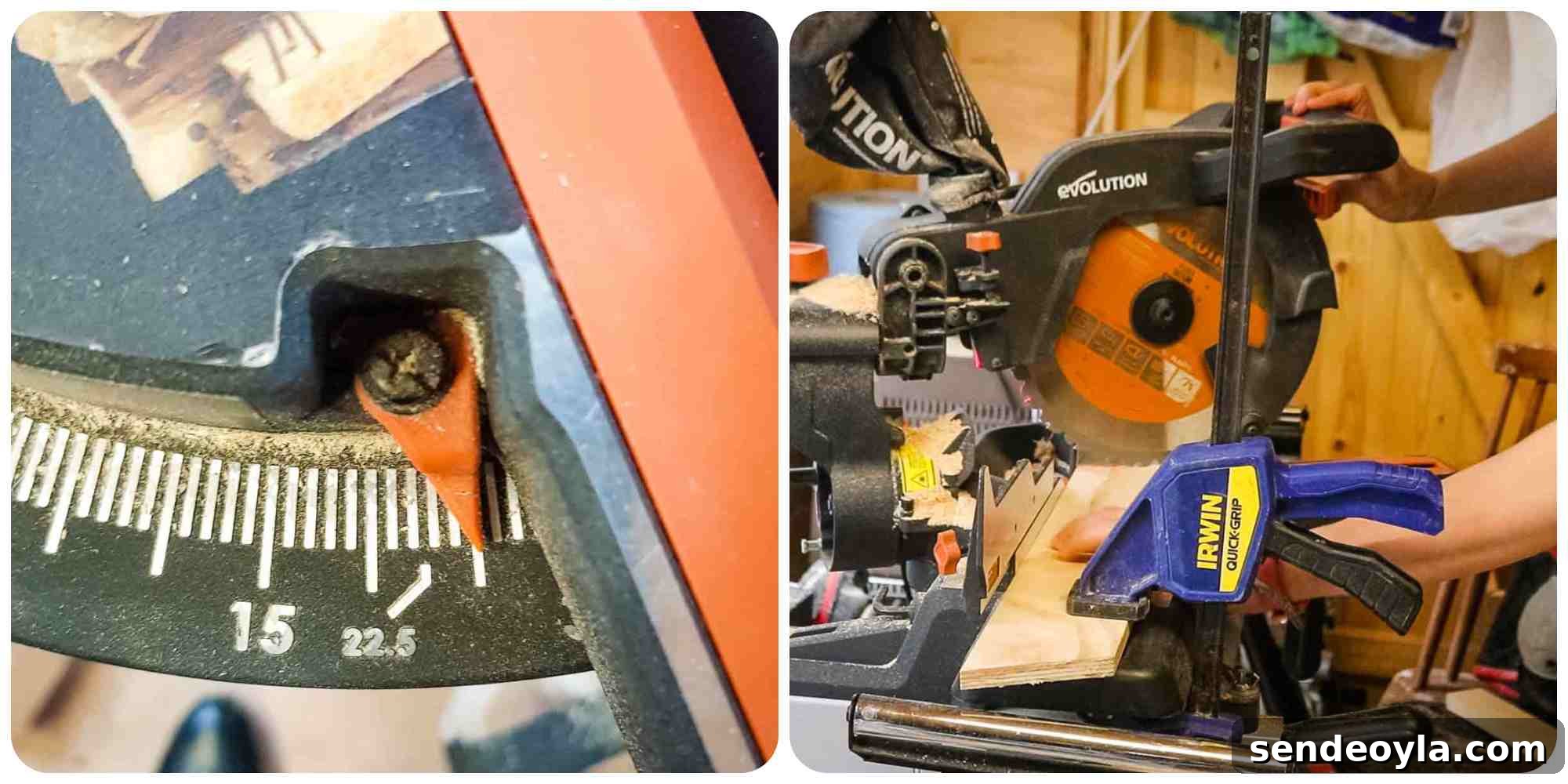
I cut the shelves and support strips with a mitre saw for speed and accuracy. For the Z-frame supports you only need to set a single 25° angle and make the four matching cuts, which saves time.
If You Don’t Have a Mitre Saw
You can still build the shelf with a hand saw. Use a sliding bevel set to 25° and a protractor to mark your cut lines, then cut carefully by hand.
How to Build the Z-Shelf Trolley
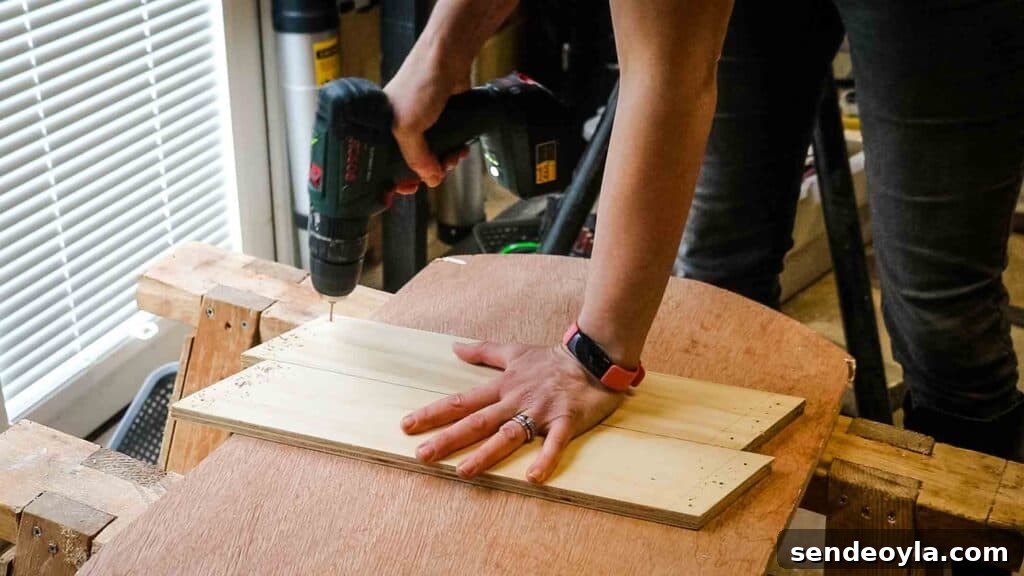
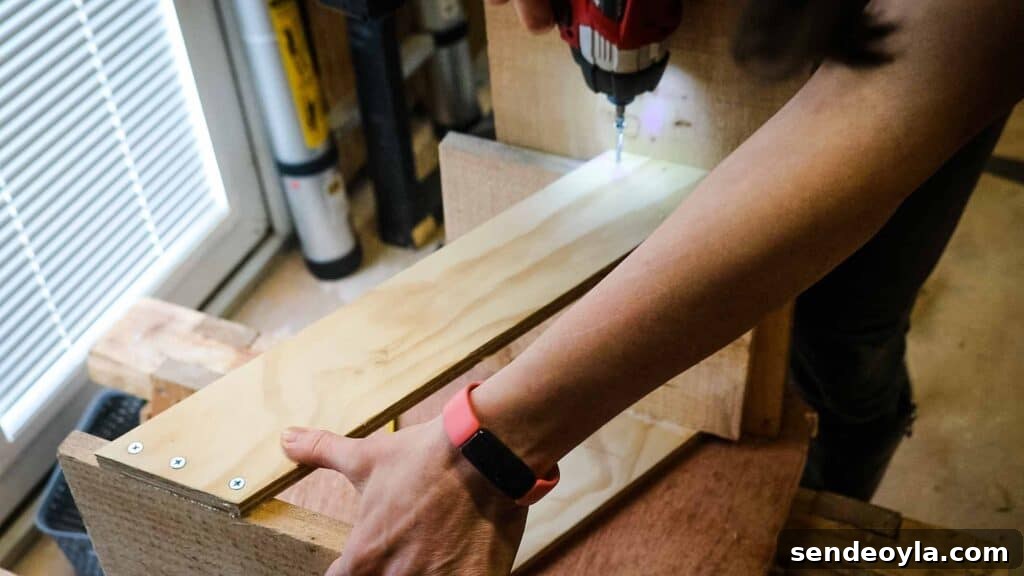
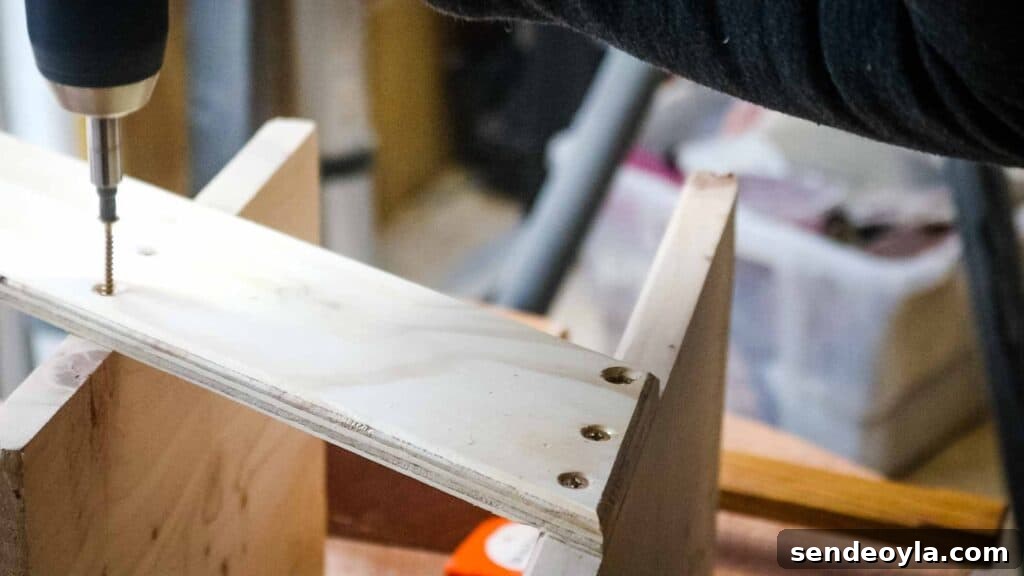
After cutting your pieces, position a shelf against one support to mark the shelf thickness and the screw locations. Pre-drill three holes with a 3 mm bit and then countersink them so screw heads sit flush for filling later.
Combi Drill Setting
Use drill mode and select setting 2 on most combi drills (setting 1 is usually for masonry).
Gluing and Screwing
Apply wood glue to the shelf edges, align the supports 3 cm inset at the top and bottom, then clamp and screw the top and bottom shelves in place. Use a flat spacer to help level the support while driving screws. For accuracy, make a 3 cm pencil reference line on each support before fastening.
Placement Tips
Fit the centre screws first to stabilize the shelf, then add the outer screws. If a screw needs adjustment, remove it, countersink the hole slightly, then replace it.
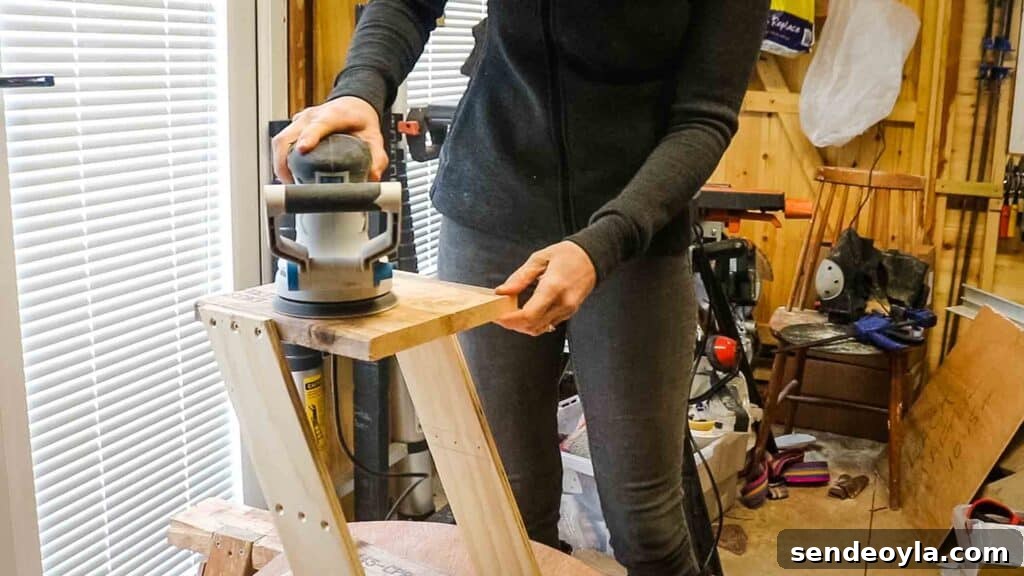
Sanding the Wood
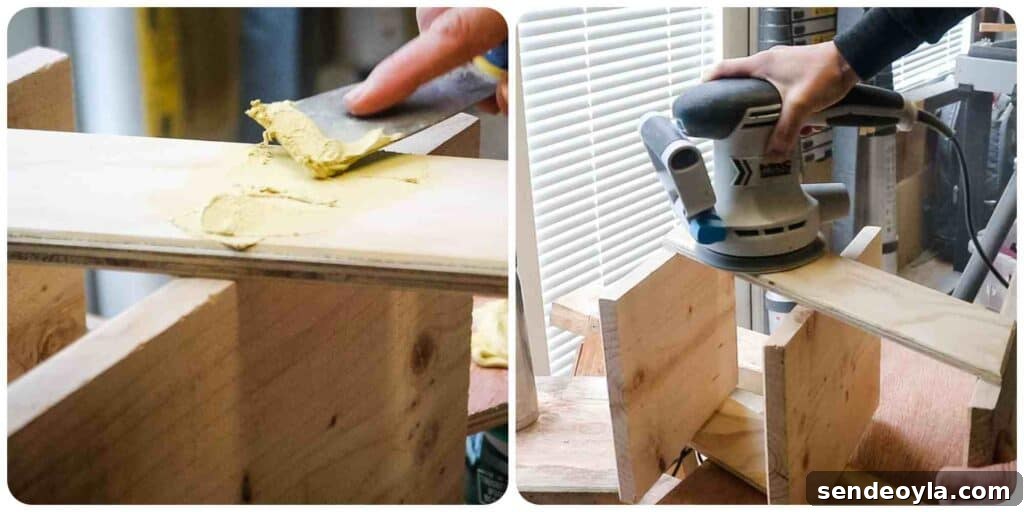
Sand the assembly with 80 grit to remove roughness, then refine with 120 grit to get a smooth finish. If you plan to apply dark wax, a very smooth surface reduces visible sanding marks.
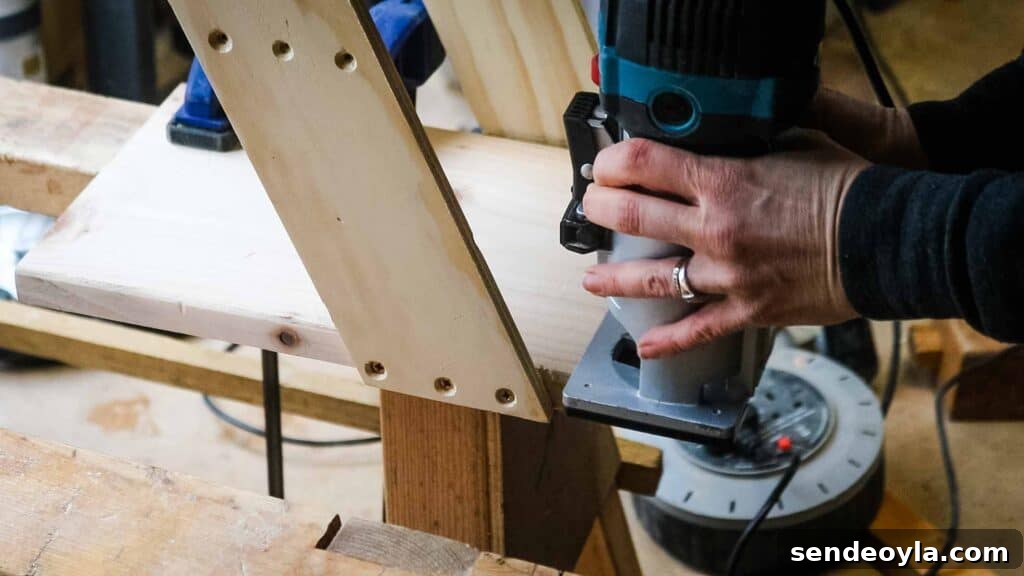
Softening the Edges (Router or Hand Sanding)
A palm router with a 45° chamfer bit gives professional-looking edges quickly. If you don’t own a router, a sanding block worked along the edges will soften them nicely. Always clamp the work securely and rout or sand in the correct direction to avoid tearout.
Fitting the Middle Shelf
Measure 15 cm from the top and bottom on the inside of each support and draw pencil lines to mark the centre shelf position. Align the middle shelf with these lines so you can mark and drive the outside screws from the supports. Countersink these screws as well to allow for filler.
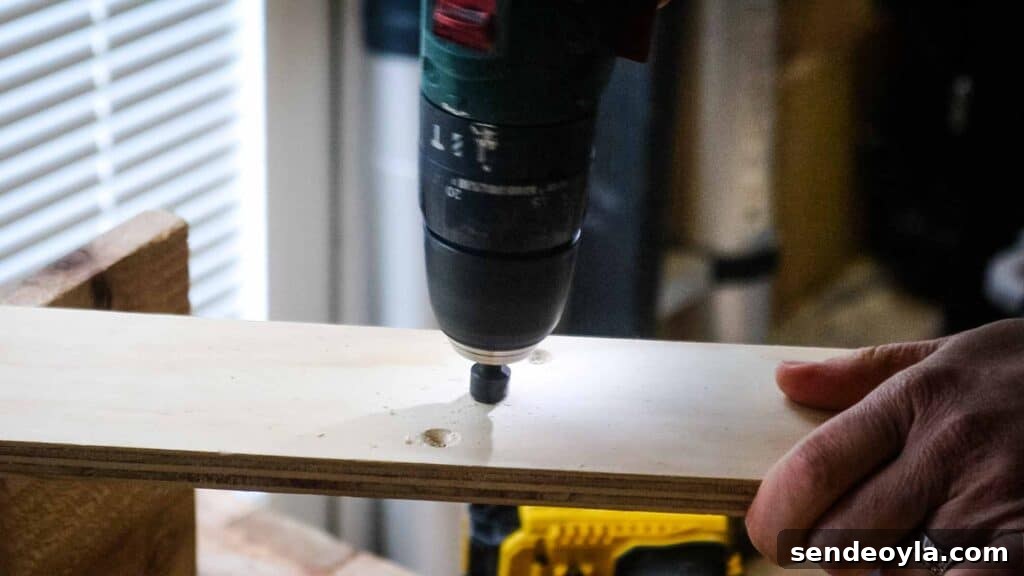
A recommended sequence: install screws loosely, then remove one at a time to countersink and reinsert, repeating until all screws are seated evenly.
Filling Screw Holes and Final Sanding
Fill screw heads with a wood filler that matches your finish. Quick-set natural-colour filler is useful if you want it to blend with bare wood. After the filler dries, sand smooth so the filled areas disappear into the surface.
Finishing Your 3 Tier Storage Shelf
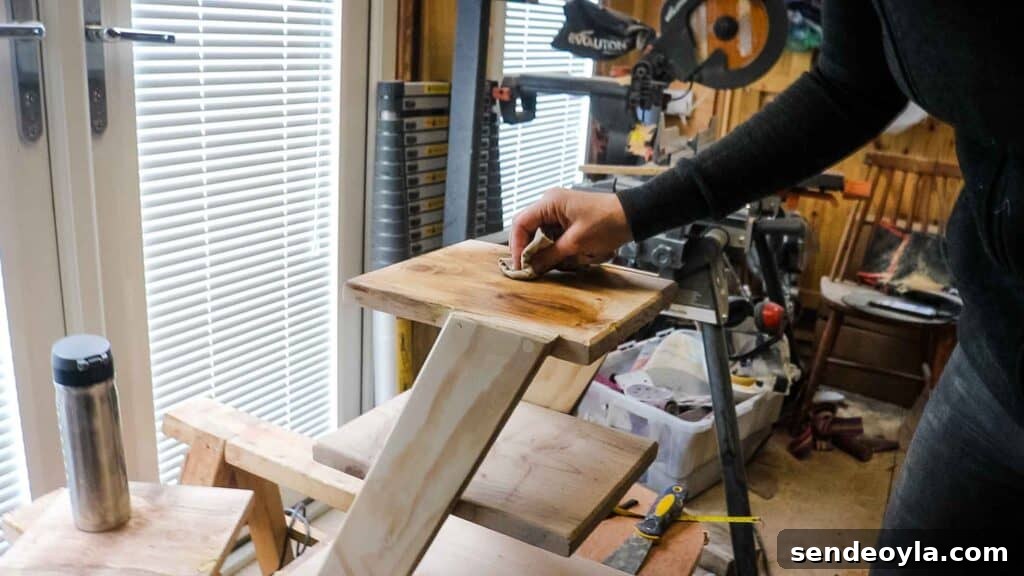
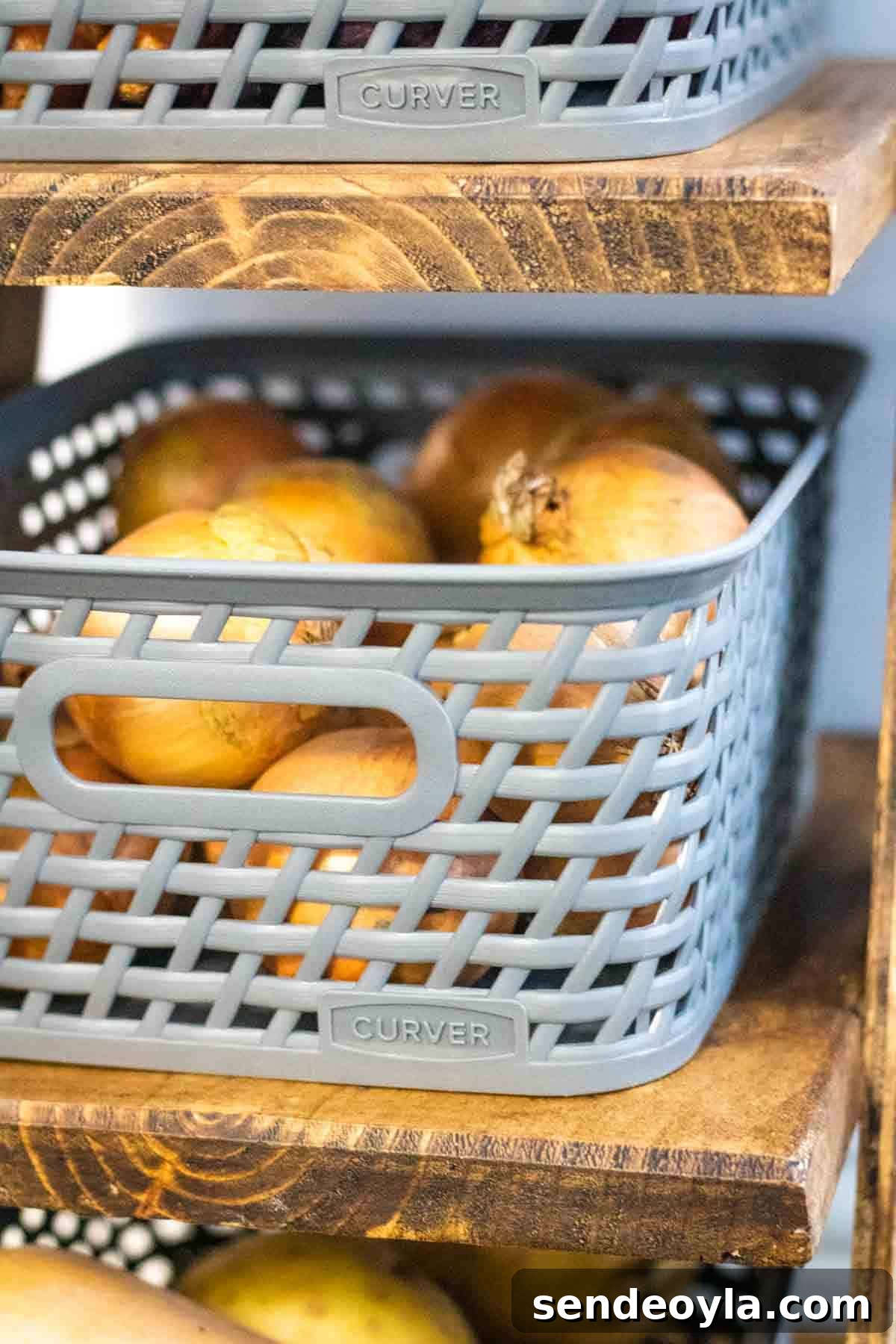
You can finish the shelf in many ways: chalk paint, satinwood, or a simple wax finish. For a quick rustic look, rub dark furniture wax over the wood with a lint-free cloth. Dark wax needs time to fully cure, but it provides immediate protection and a warm tone. If you prefer more control, apply clear wax first, then dark wax and buff back to achieve the shade you want.
Adding Castor Wheels
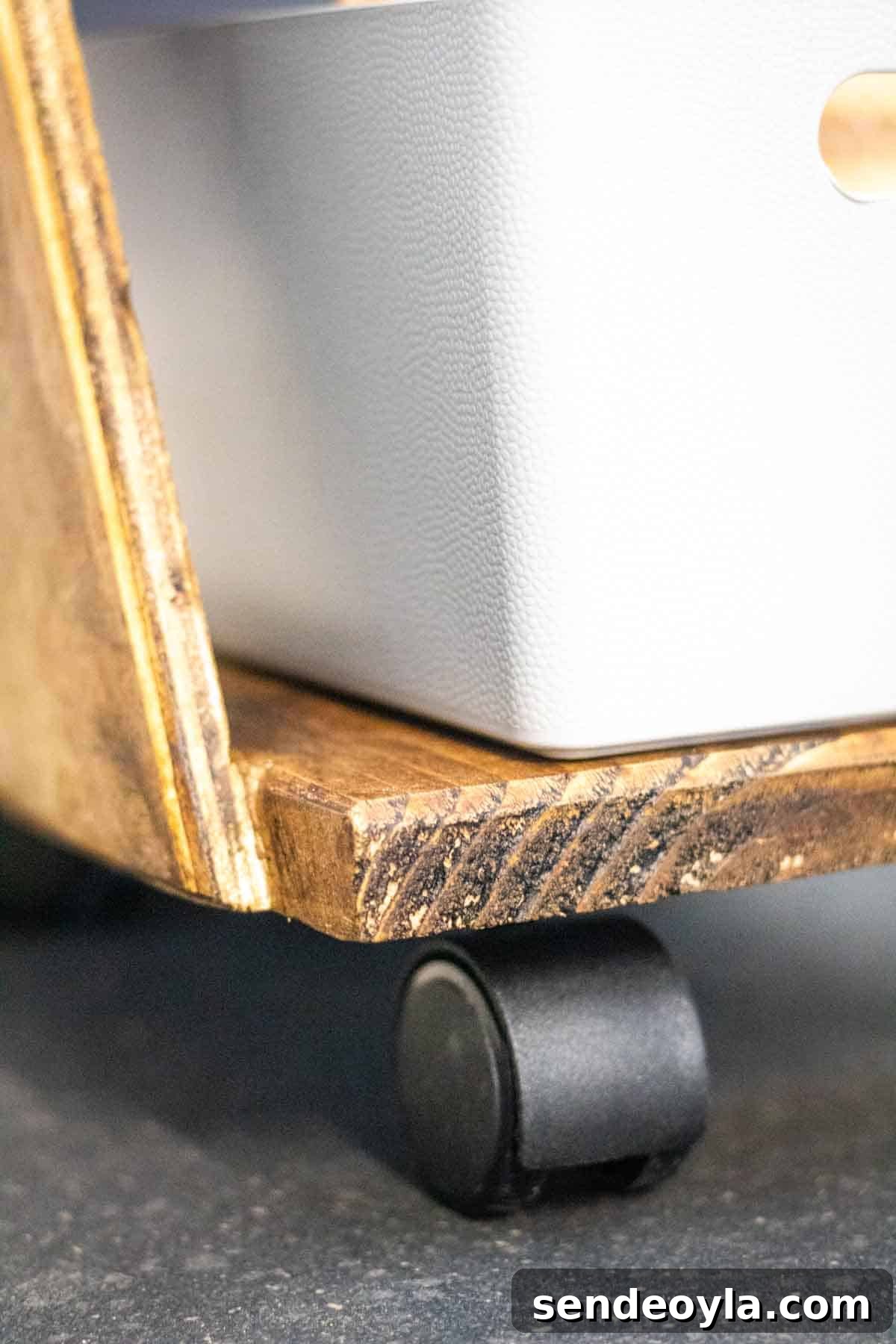
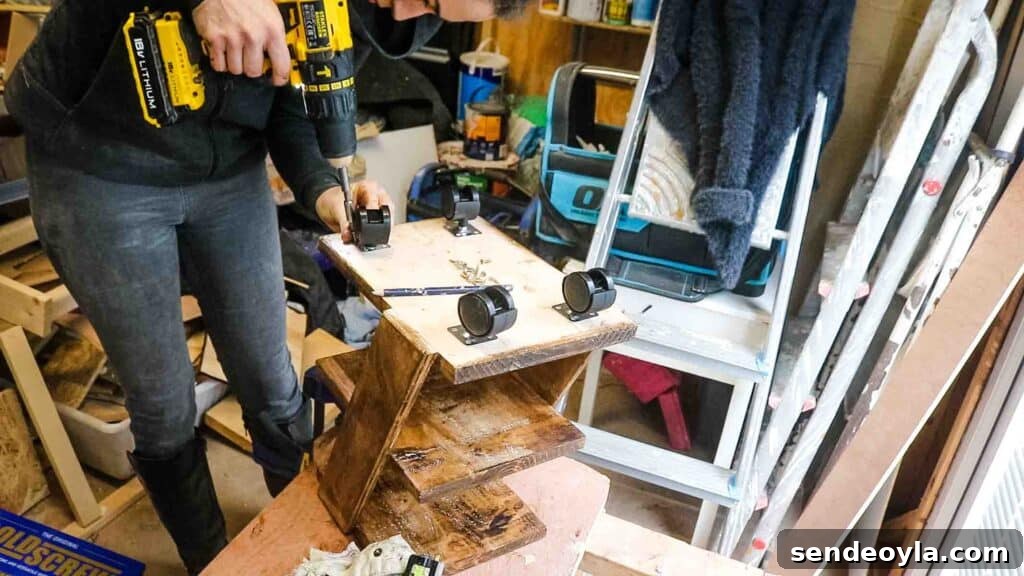
If the base is sufficiently thick, attach castor wheels in each corner for mobility. Set each wheel back by about 3 cm for stability and use pilot holes if necessary. Alternatively, fit short hairpin legs for a different look.
Cost and Variations
This build used mostly offcuts and inexpensive baskets, with a materials cost of just a few pounds where I already had tools. You can adapt the design to reclaimed pallet wood or combine narrow strips if you prefer a rustic look — if joining strips, add a couple of under-screwed battens for stiffness.
The Z-frame works with different basket styles and creates a practical bedside table, hobby trolley, or kitchen storage unit.
What would you use it for?
Even Cheaper DIY Trolley Ideas
If you want to simplify further, the two angled supports could be attached to alternative tray or box platforms, such as an IKEA tray (use washers to protect plastic), a sturdy food tray, decorative covered shoe boxes, wallpapered cardboard boxes, or paper-mâché containers.
More Scrap Wood Project Ideas
- DIY kitchen recycling bins
- Easy dumbbell rack for three sets
- Countertop tea towel ladder for the kitchen
- Wall-mountable coat rack and dog lead holder
- DIY desk monitor stand
- Simple shed shelving
- Many other small scrap-wood projects to improve your home
Printable Card
DIY Z SHELF 3 TIER TROLLEY FOR 4L BASKET STORAGE
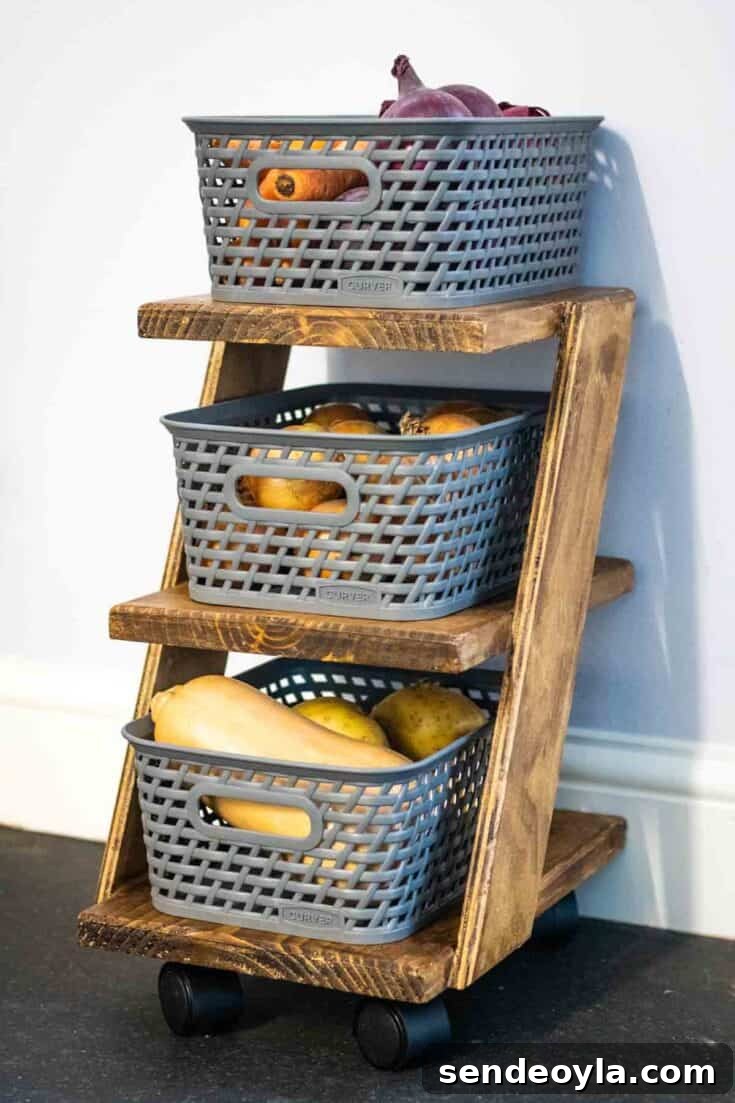
Simple three-tier Z-shelf trolley sized for small plastic baskets. Ideal for fruit, veg, toys, craft supplies and more. Includes a cutting guide and step-by-step build instructions.
1 hour
1 hour 30 minutes
2 hours 30 minutes
Easy
Materials
- Timber (see cutting list)
- Wood glue
- Wood screws
- Castor wheels (optional)
- 4L-style plastic baskets
- Wood filler
- Dark furniture wax or chosen finish
- Lint-free cloth
Tools
- Mitre saw or hand saw
- Clamps
- Sawhorses or workbench
- Combi drill
- Tape measure
- Countersink bit
- Orbital sander
- Palm router (optional)
- 45° chamfer bit (optional)
- 3 mm wood drill bit
Instructions
- Cut the wood pieces according to the cutting list.
- Drill three screw holes at the top and bottom of both support pieces and countersink them.
- Mark 3 cm inset lines for the front-to-top and front-to-bottom shelf positions.
- Glue and screw the supports to the top and bottom shelves, ensuring supports are flush and aligned.
- Repeat the assembly on the opposite side.
- Sand all surfaces smoothly, including the middle shelf before final fixing.
- Mark 15 cm from the top and bottom on the inside of the supports to position the middle shelf.
- Align the middle shelf with these pencil lines and fasten from the outside, countersinking the screw heads.
- Soften sharp edges with a 45° chamfer bit or hand sand.
- Fill screw holes with wood filler, let dry and sand smooth.
- Apply dark wax or your chosen finish and buff off any excess.
- Flip the trolley and screw castor wheels into the corners if you want mobility, then place your baskets on the shelves.
Pin This DIY Dog Toy Trolley
This design also makes a great hobby or toy trolley — compact, mobile and easy to customise.