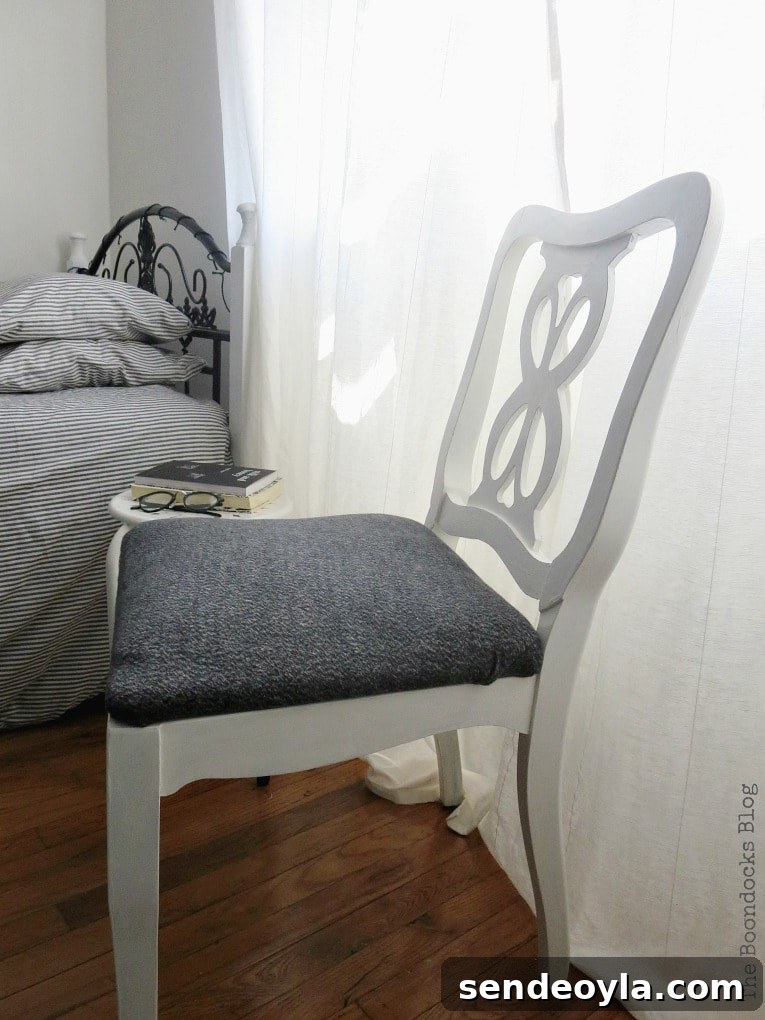
Last week I showed the reveal of my girls’ bedroom, and I have a little confession: even when a room feels finished, there’s almost always room for improvement. In this case, the desk needed a proper chair. The ottoman my daughter had been using was getting flattened and simply wasn’t comfortable, so I went hunting for a better solution.
A quick trip to the basement turned up four identical chairs. I only needed one, but figured I might as well redo two—you never know when you’ll need a spare. In the end I gave two of the chairs unique makeovers, each with a different finish and upholstery.
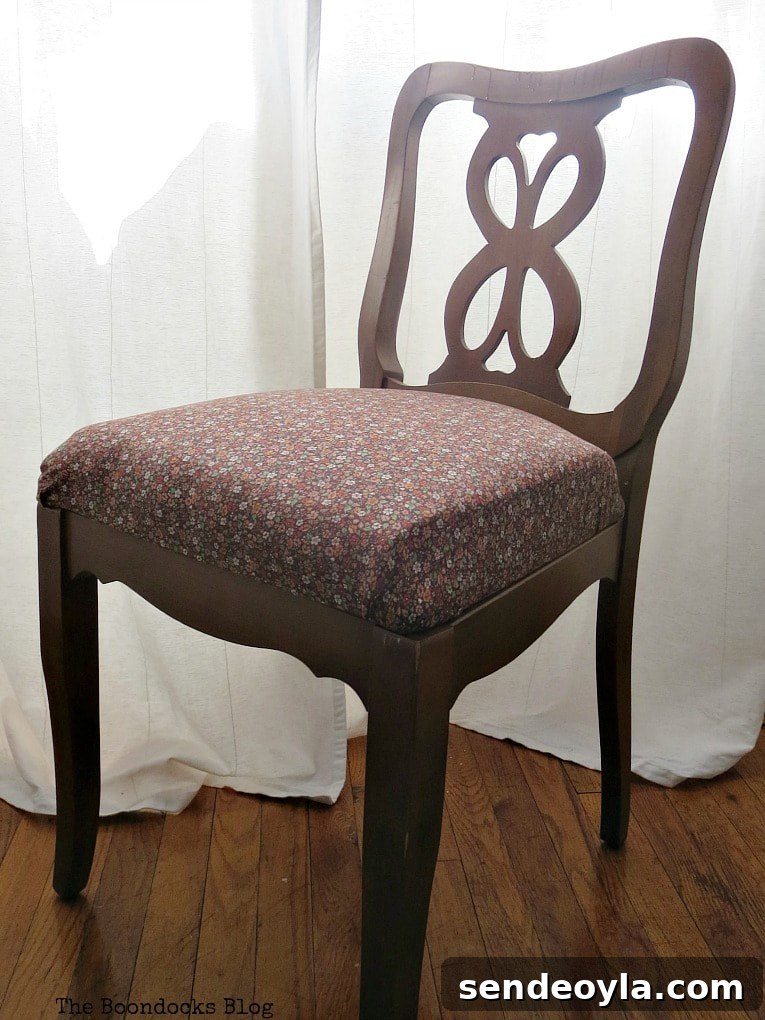
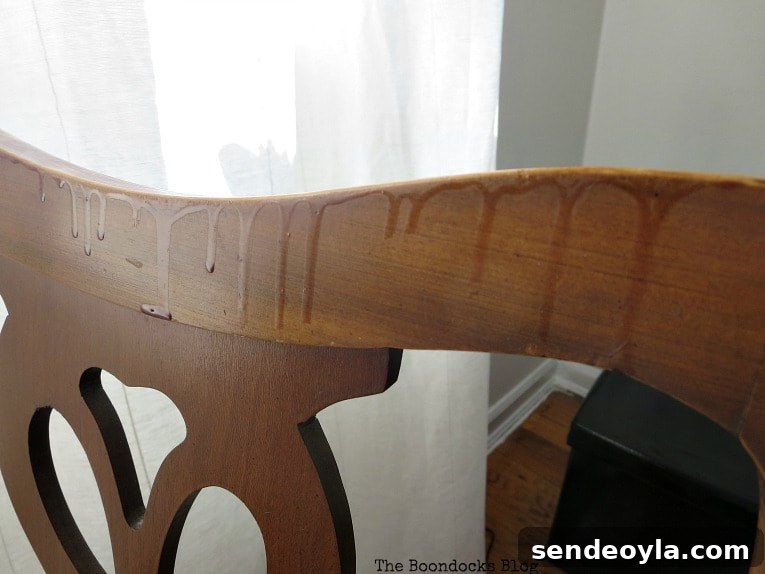
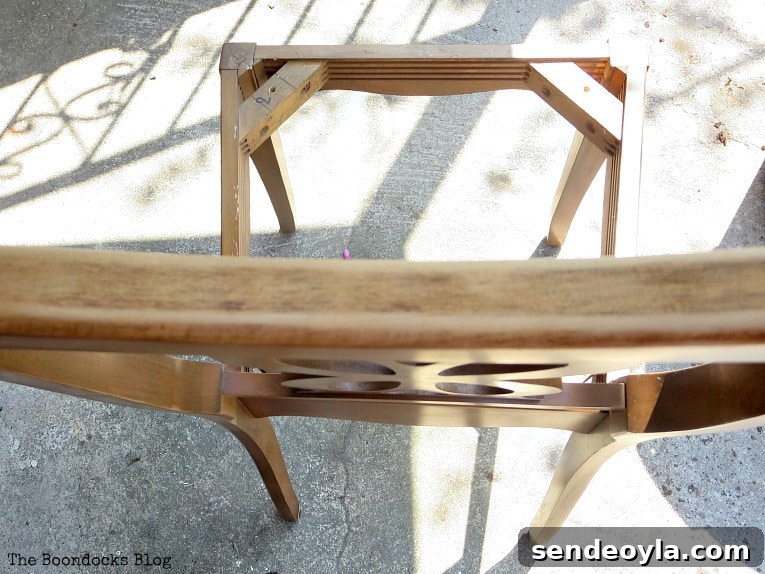
At first glance the chairs looked fine, but on closer inspection I found dried stain drips and awkwardly high cushions I had added years earlier. The plan was clear: remove the extra foam, refinish the wooden frames, and reupholster the seats for comfortable, attractive results.
Disclosure: This post contains affiliate links for your shopping convenience. If you purchase any of these products through the links, a small commission may be received at no extra charge to you. See our full disclosure in the site privacy policy.
What I Used:
- Power sander
- Sandpaper
- DecoArt Americana Chalky finish paint (Everlasting)
- DecoArt creme wax (clear)
- Hope’s Tung Oil
- Pieces of fabric for upholstery (I used recycled clothes)
- Staple gun
- Rags for waxing and oil
The How To:
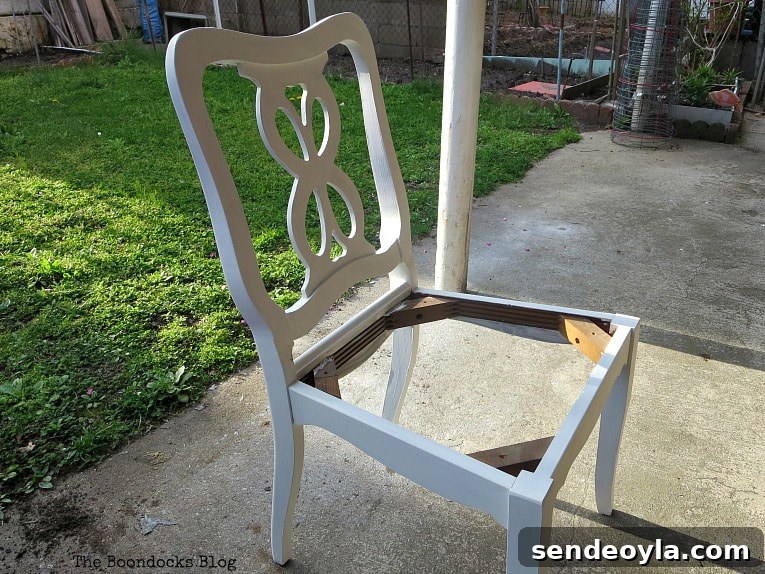
The first step was to sand away the old stain drips and smooth the wood. Once the rough spots were removed, I painted the entire frame of the first chair with chalky finish paint. Chalk paint is forgiving and covers dark wood well; three thin coats hid the darker stain, and the paint dries quickly so you don’t spend all day waiting between coats.
I didn’t sand every inch of the chair—chalk paint can adhere to existing finishes without heavy stripping. After the paint dried, I protected the finish with a clear wax, buffing it lightly for a soft, durable surface.
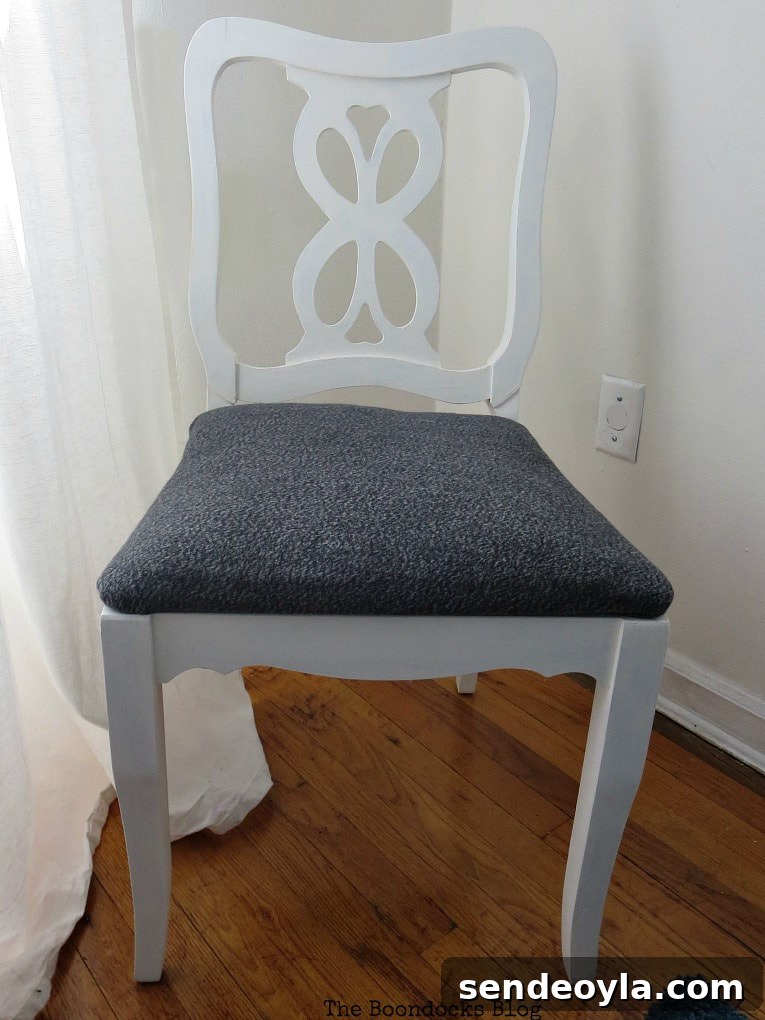
Next came reupholstery. I removed the bulky foam I had added years earlier and replaced it with a much thinner layer of batting, creating a seat that’s comfortable without being oversized. For fabric I went thrifty: the first chair’s cover came from an old sweatshirt, giving a clean, solid look that complements the black-and-white scheme of the girls’ room.
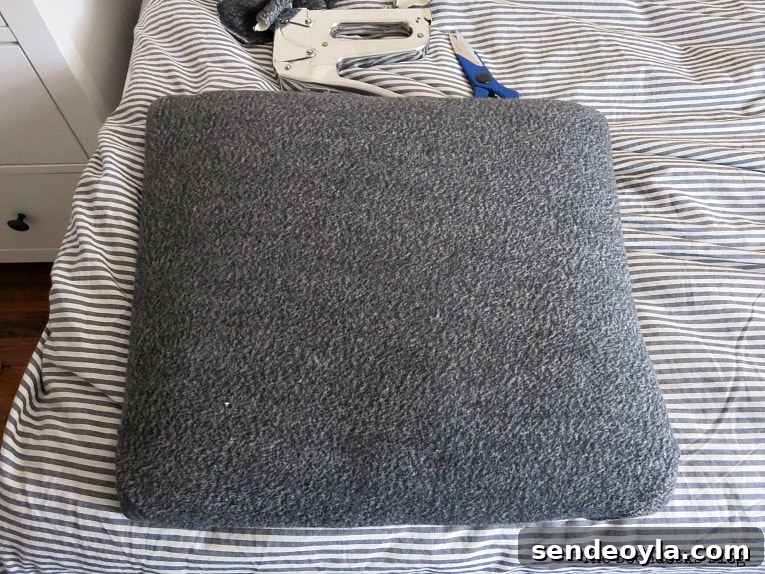
I won’t run through a full reupholstery tutorial here, but there are many step-by-step guides available that show how to remove and replace chair seat coverings. For my chairs I was able to keep most of the original bottom padding and simply replace the top layer and fabric.
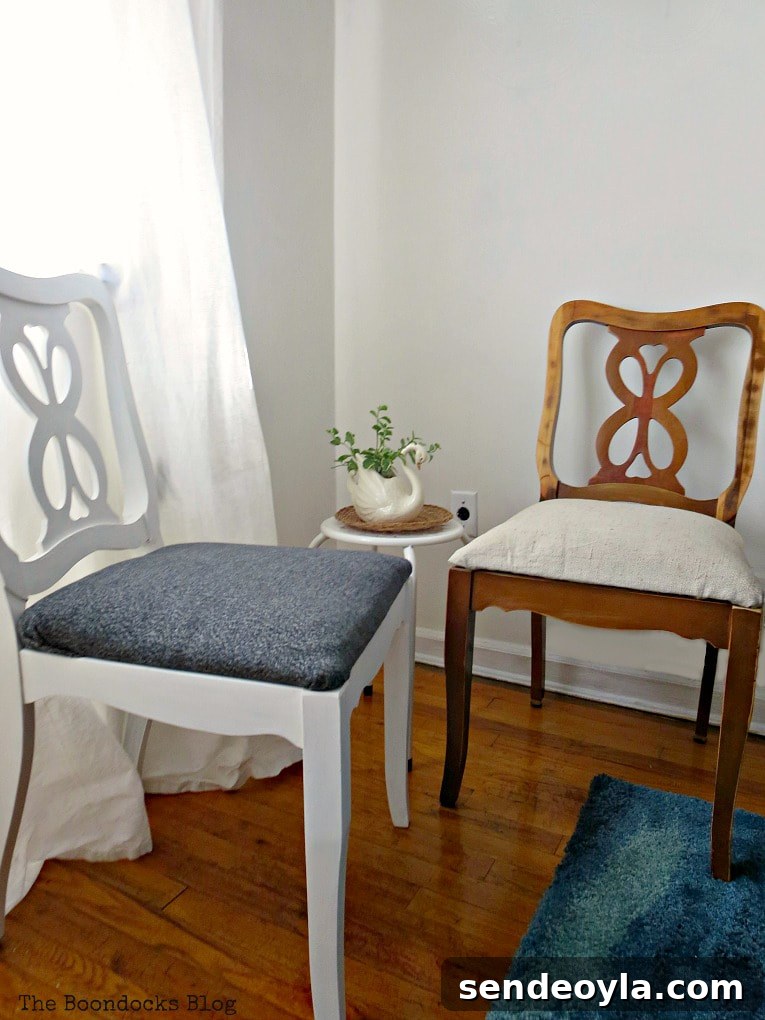
Chair No. 1 is finished: a simple, modern white chair that fits the bedroom’s monochrome palette and gives my daughter a comfortable place to sit at her desk.
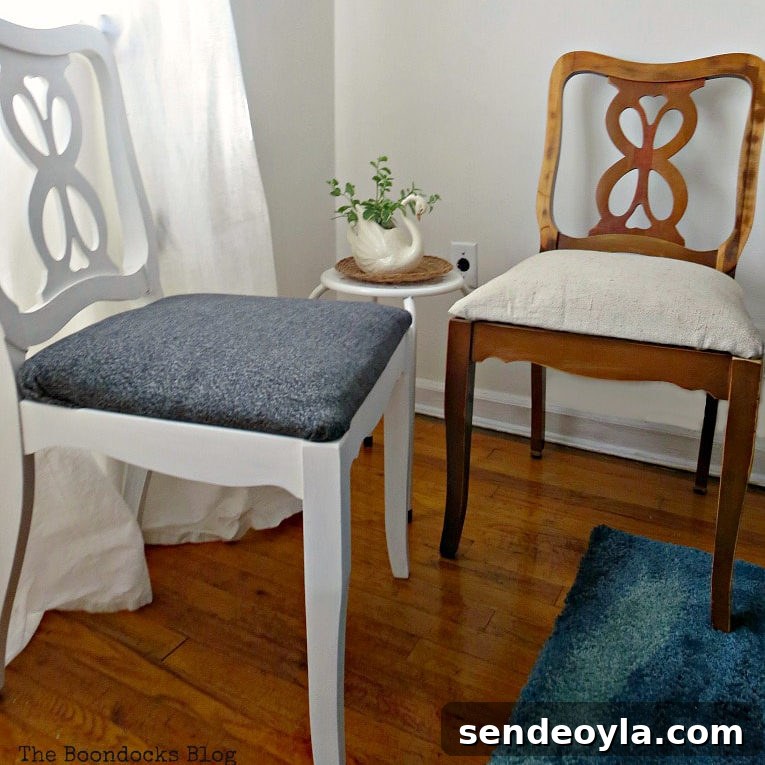
For the second chair I chose a different approach to suit another room with warmer wood tones. I wanted to preserve and enhance the wood grain, so rather than paint it I selectively sanded away the darker finish in certain areas to create a softly distressed look. I did this intuitively, focusing more on the outer frame where the original stain was heaviest.
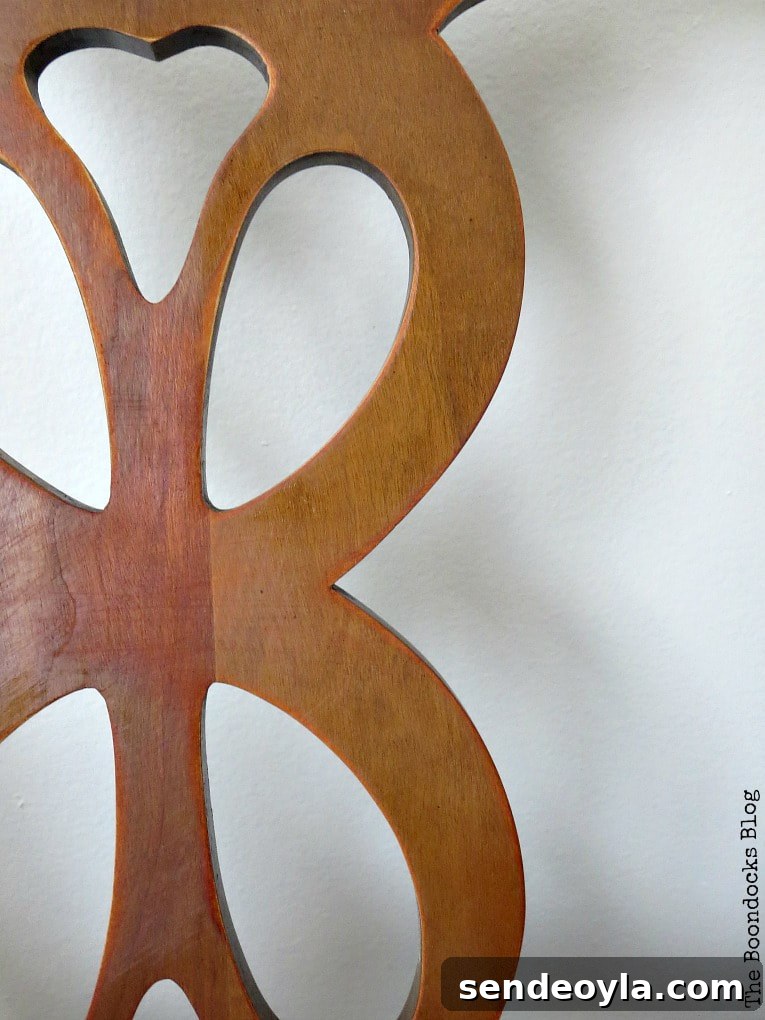
After sanding, I applied tung oil with a rag to deepen and protect the wood. The tung oil enriched the grain and brought out warm honey and amber tones. A central panel of the chair reacted differently—likely a different wood species—so it deepened to a slightly more orange tone compared with the surrounding frame. These natural variations are part of the charm when working with real wood.
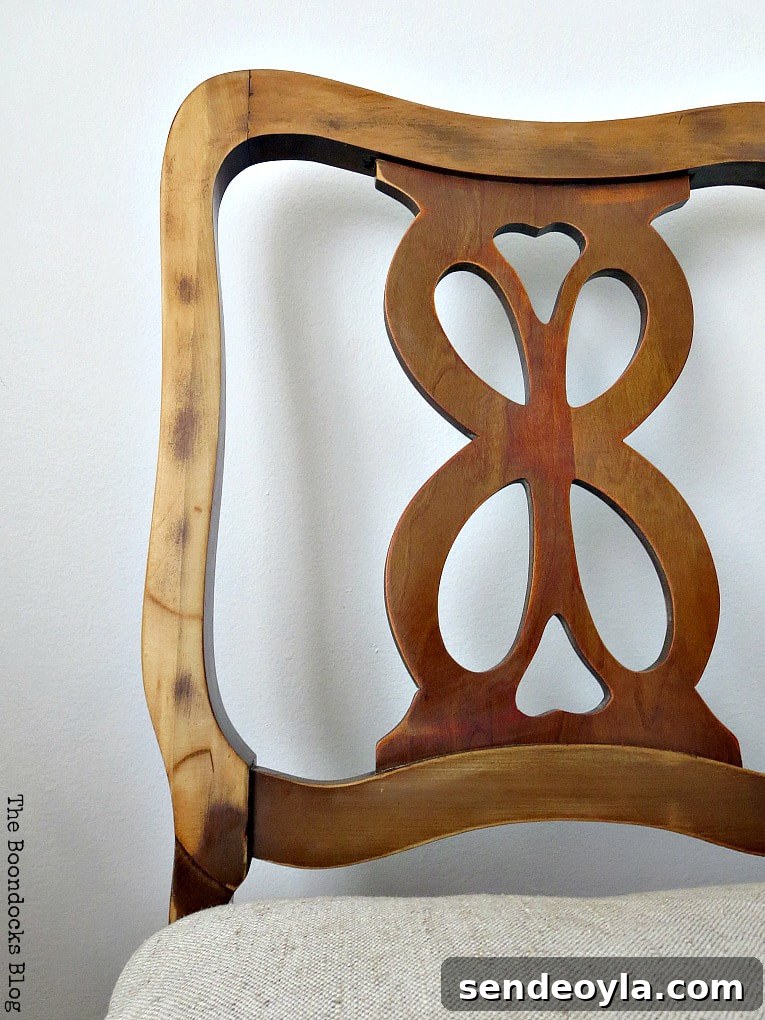
For upholstery on the second chair I first tried a gray cotton t-shirt stretched over the seat as a quick cover. The back seam didn’t sit right, so I finished it with a linen fabric for a clean, natural look that complements the warmed wood tones.
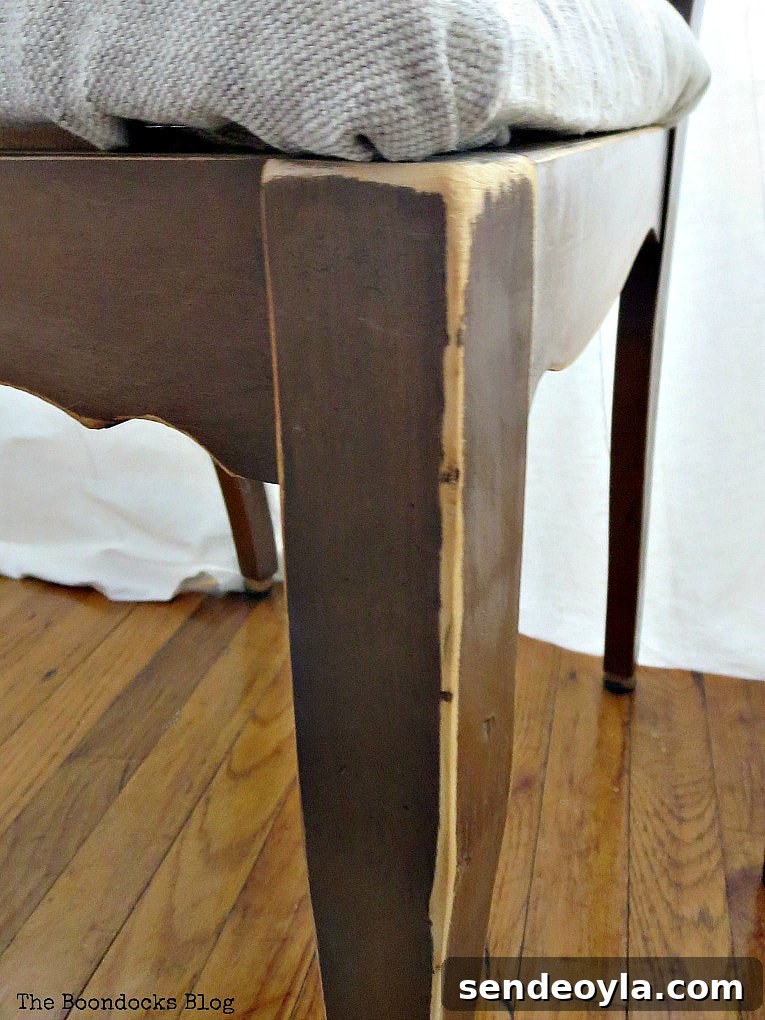
I also distressed the legs in a few spots for a cohesive, gently worn appearance. Looking at photos later I noticed one seat needs a quick screw-tightening—always the reality of working with older furniture.
Here are both finished chairs: the painted white chair that blends with the girls’ black-and-white bedroom, and the warm, oiled-wood chair that lets the wood’s natural character shine. Two unique looks from the same original chair frame—one modern and crisp, the other warm and organic.
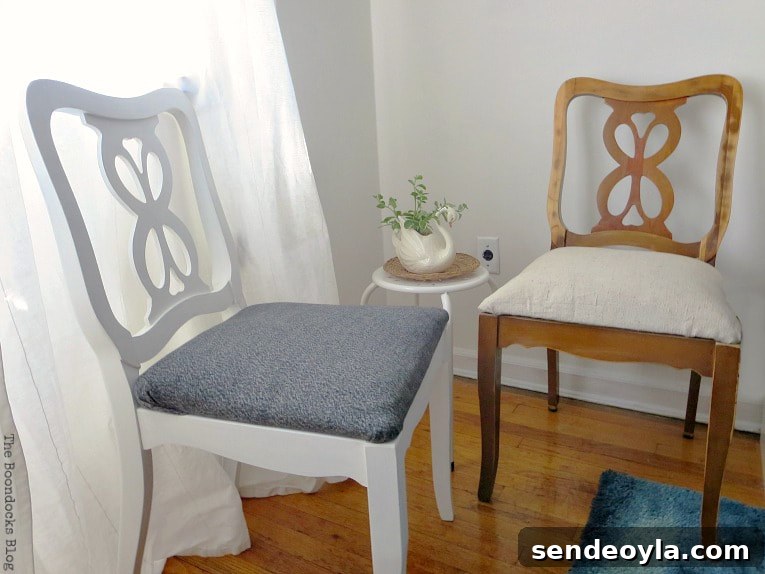
Using solid, simple fabric helps show off the chair frames’ curves; patterned upholstery can compete with the furniture’s lines, while a solid tone highlights the form. Now my daughter has a comfortable desk chair that suits the room and looks modern, and I have a second chair that complements a different space.
Sometimes a piece of furniture tells you what it wants to become: follow the room for one chair, and follow the wood for another. That’s how I turned a single chair style into two distinct makeovers. My daughter is happy to sit pretty at her desk—do you prefer the painted white look or the natural wood finish?