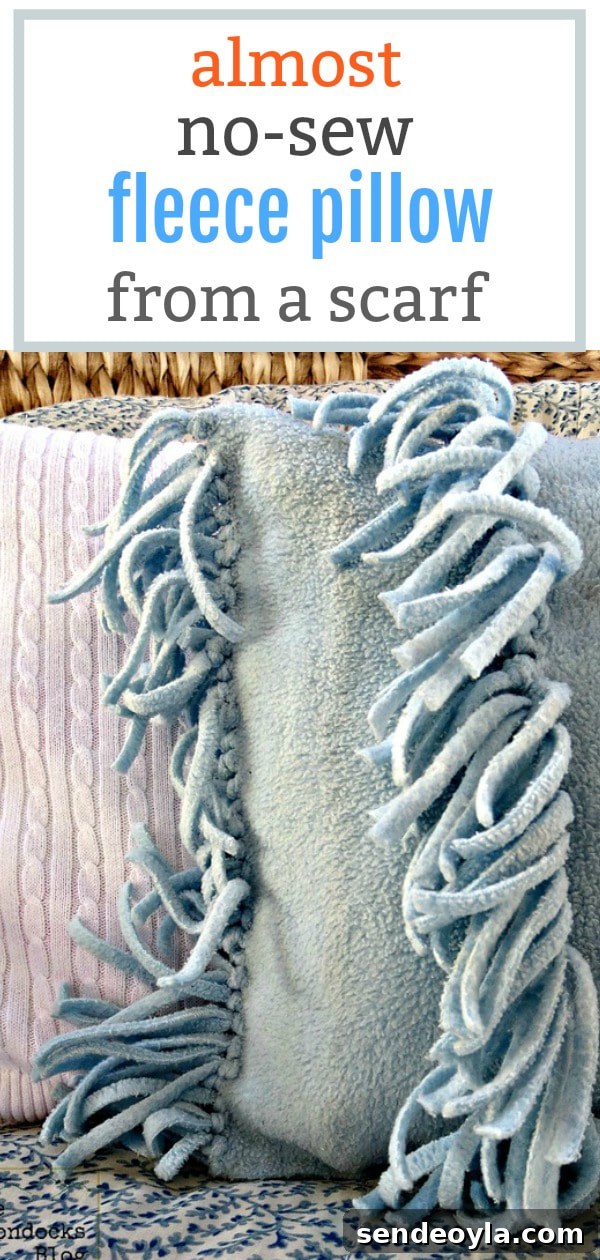
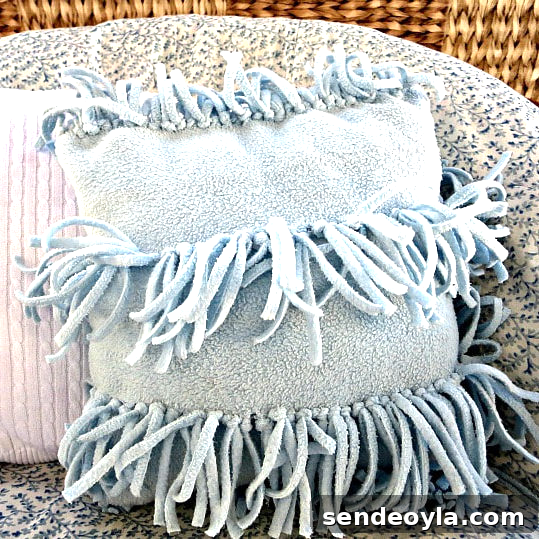
Do you have fleece scarves that have lost their shape or no longer get worn? Instead of letting them sit in a drawer, you can upcycle a fringed fleece scarf into a cozy pillow cover for your sofa or favorite chair. This simple, low-cost DIY turns an old accessory into home decor with almost no sewing required, making it a perfect weekend project or a handmade gift idea.
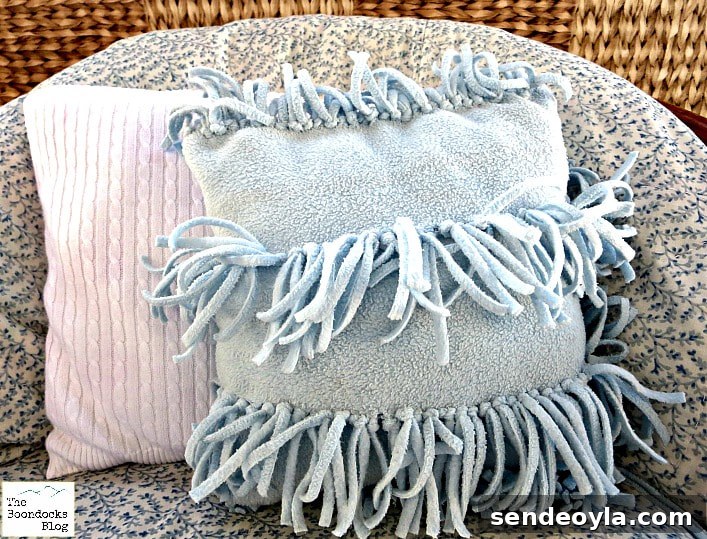
This project works best with a fringed fleece scarf. Mine was stretched and worn from regular use, long enough to reach my knees, so it was time to give it a new purpose. With just a few steps—folding, tying the fringe, and securing a pocket—you can make a snug cover that holds a pillow insert.
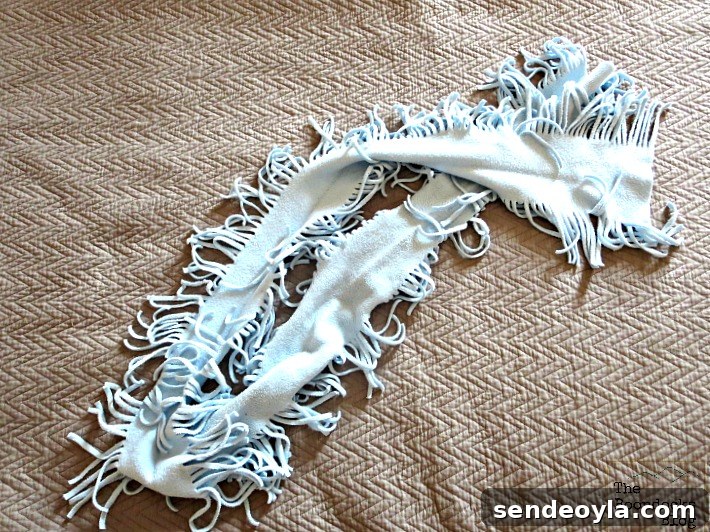
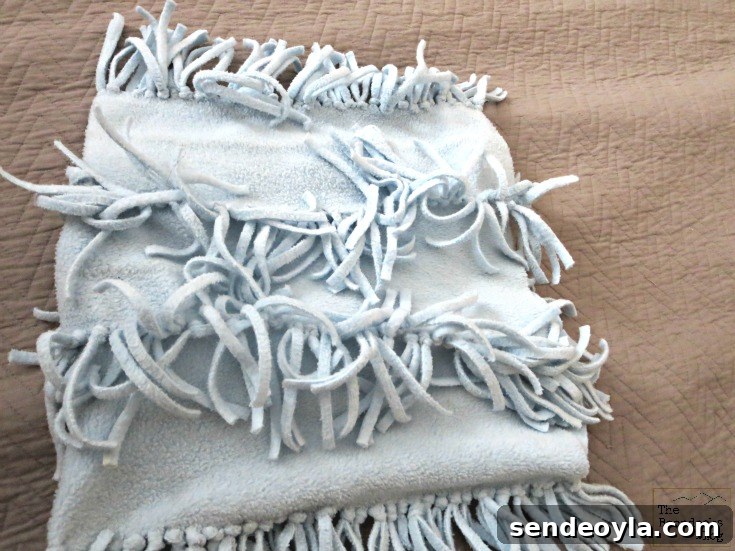
Start by folding the scarf to the size you want for your pillow. For a standard throw-pillow shape, fold the scarf in half lengthwise so the fringes line up on the edges you’ll be tying together. The basic technique is simply folding and tying the fringe knots so the scarf forms a pouch that can hold stuffing or a pillow insert.
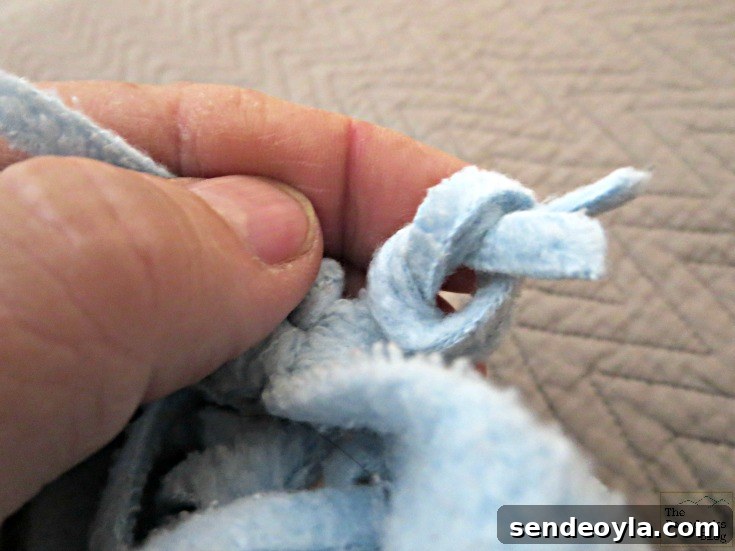
Work along one side and tie each pair of fringes snugly. This is a relaxing, meditative task that’s perfect to do while watching a show—my pick was The Vampire Diaries, thanks to the teens in my house. Tying the fringe takes some time, but it’s easy and requires no special tools.
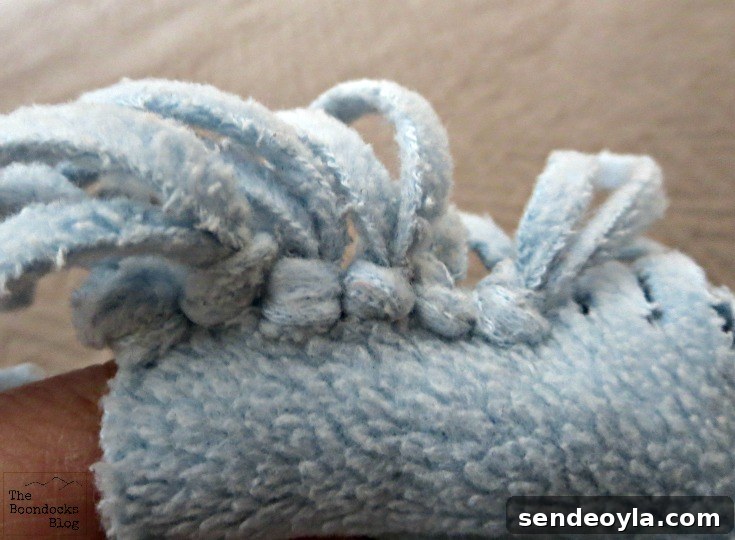
After tying one side, trim the fringe if desired to reduce bulk. I cut about one-third off the total fringe length, then refolded the scarf so the remaining two-thirds formed the main body of the pouch. Next, tie the fringes along the bottom edge to close that side of the pouch.
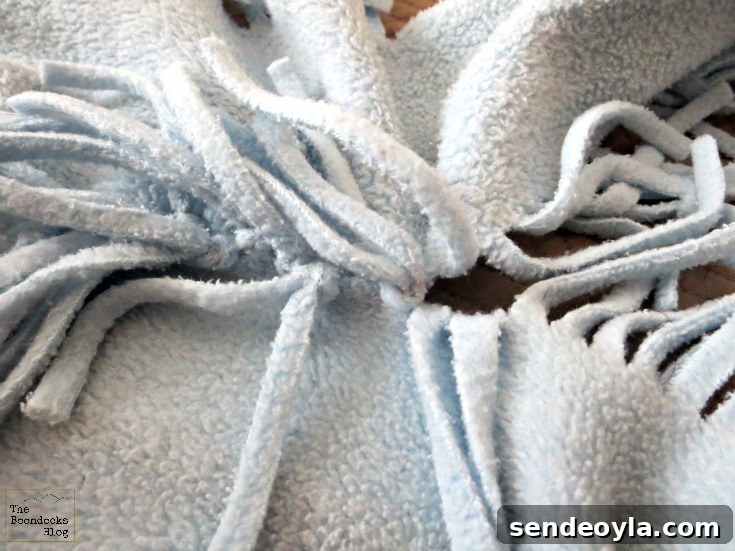
Cutting and folding the scarf into sections gives you control over the final pillow shape. I cut the fringe into thirds to create a pocket with the exact dimensions I wanted. You can adapt this step depending on the scarf’s length and how large you want the finished pillow to be.
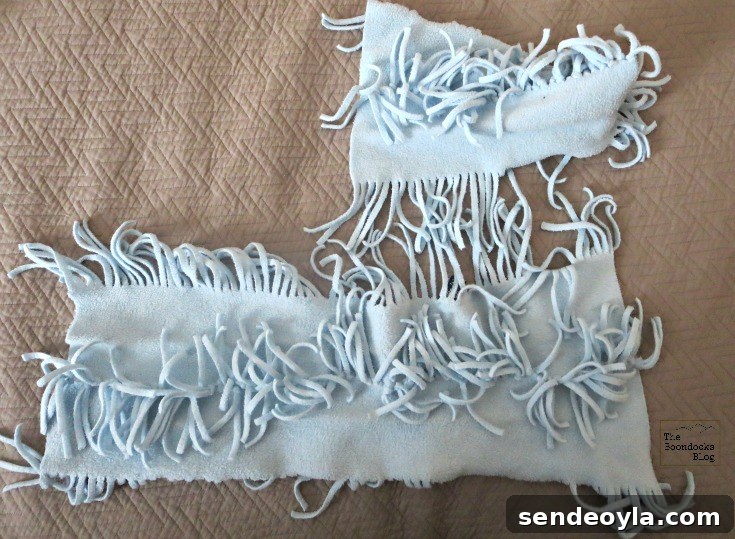
Once the sides and bottom are tied, you’ll have a pocket-shaped cover. At this point you can tuck a small pillow insert or stuffing inside. Smooth the fabric and adjust the stuffing until the pillow looks even and full. The fleece material creates a soft, warm surface that’s great for living room or bedroom accents.
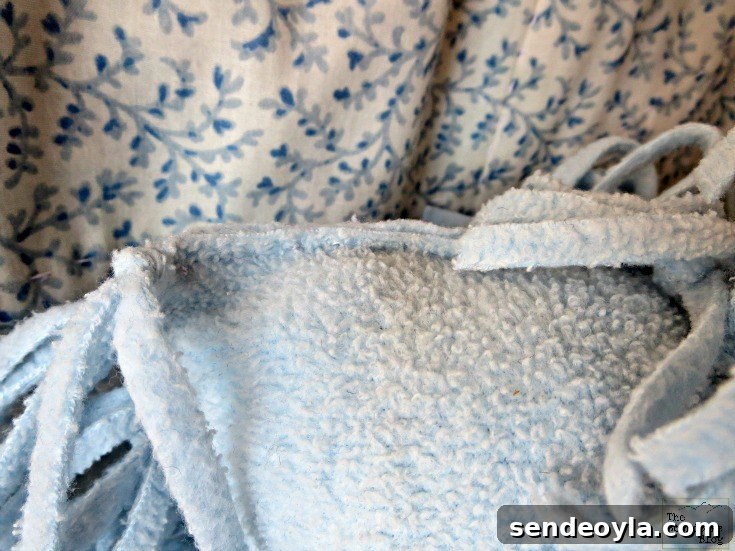
To secure the opening, I sewed a short seam across the top of the pocket. This step makes the pillow more durable and prevents the insert from shifting or coming out. If you prefer truly no-sew methods, a strong fabric glue or iron-on hem tape can work as alternatives, though stitching will last longer with repeated use.
After closing the pocket and smoothing the surface, you’ll have an attractive almost-no-sew fleece pillow. The fringed edge becomes a decorative border, and the soft fleece makes the pillow especially cozy during cooler months. Because the method is flexible, you can change proportions, tie patterns, or fringe length to match your decor.
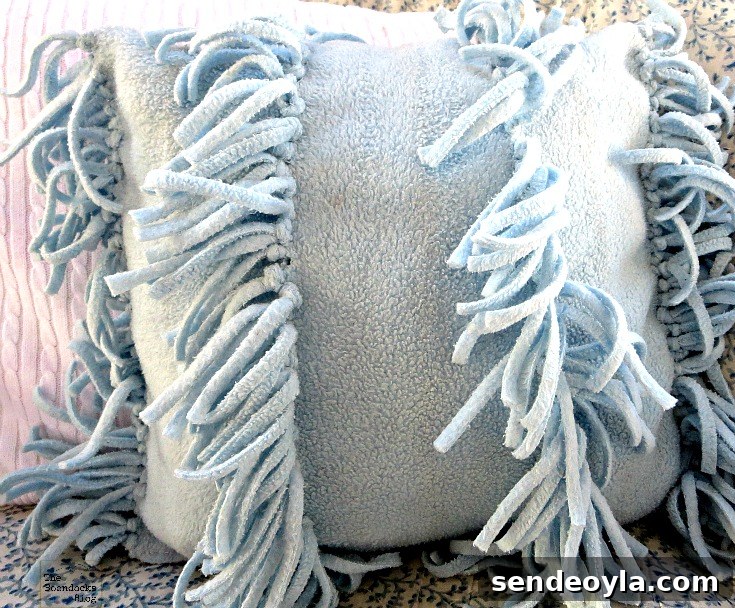
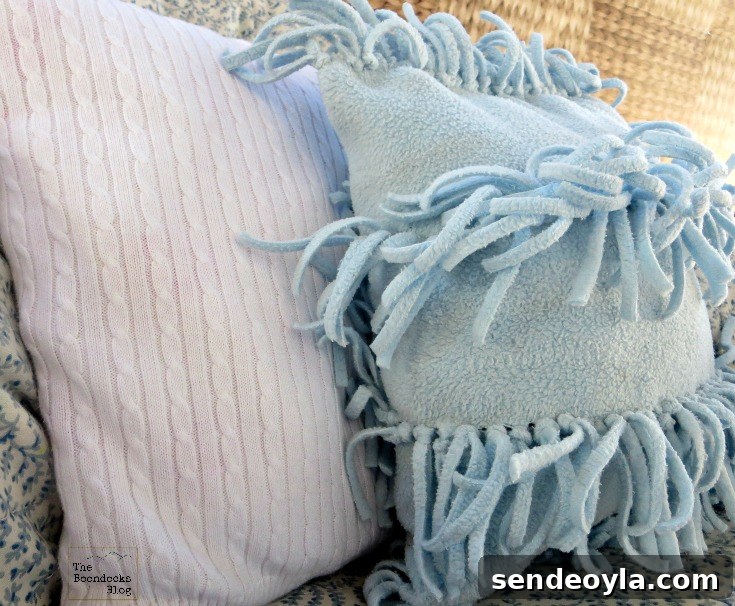
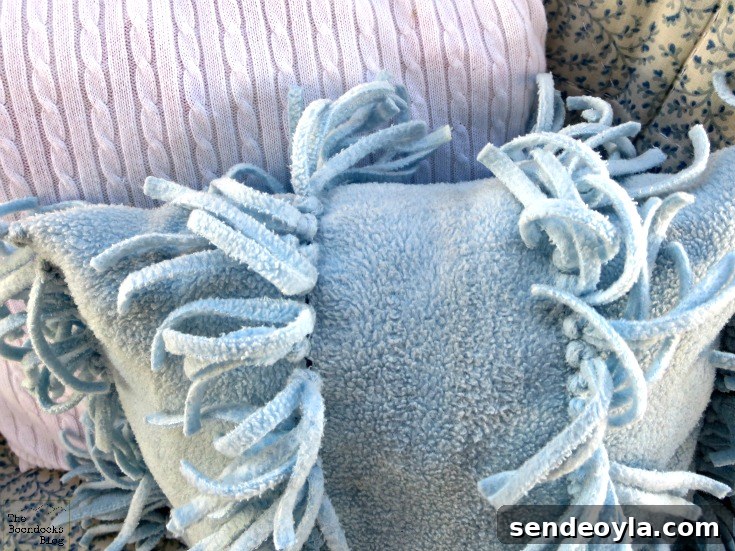
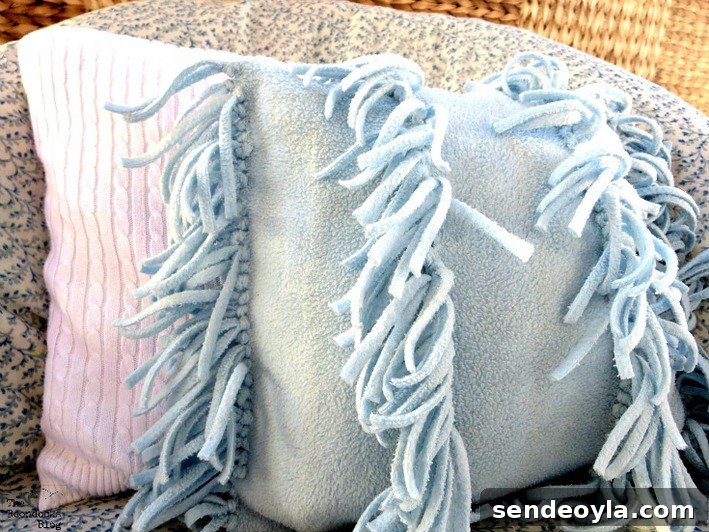
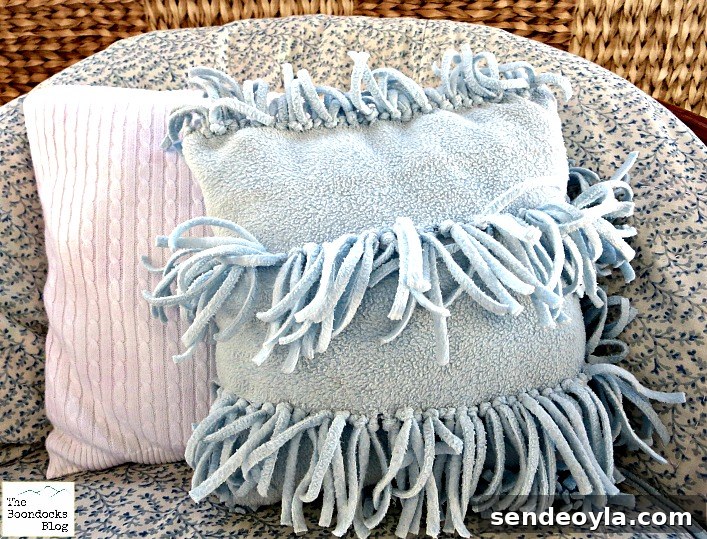
This little cheat—doing a bit of sewing—gave me a polished result, but you can keep it strictly no-sew if you prefer. The end product is a stylish, practical cushion that’s ideal as a handmade Christmas gift or a casual treat for yourself. Upcycling scarves into pillows is a sustainable, enjoyable craft that refreshes your home while reducing waste.