
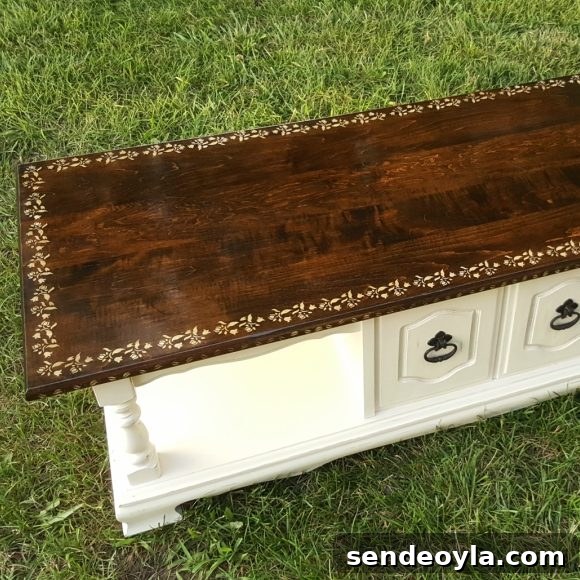
Today is a special day: my good friend Keri from Repurposing Junkie is visiting. Keri and I began blogging around the same time, and we quickly became supportive blogging friends. She’s exceptionally talented at repurposing furniture—I often call her “The Queen of Repurposing”—and today she’s sharing one of her many skills with a curbside coffee table makeover. Read on to see how a discarded piece was transformed into a beautiful, functional table.
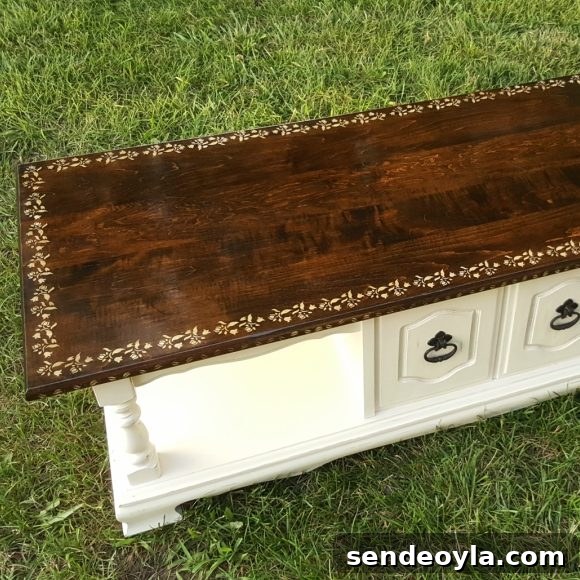
Painted Coffee Table Makeover Ideas
Note: This project was originally published in July 2016.
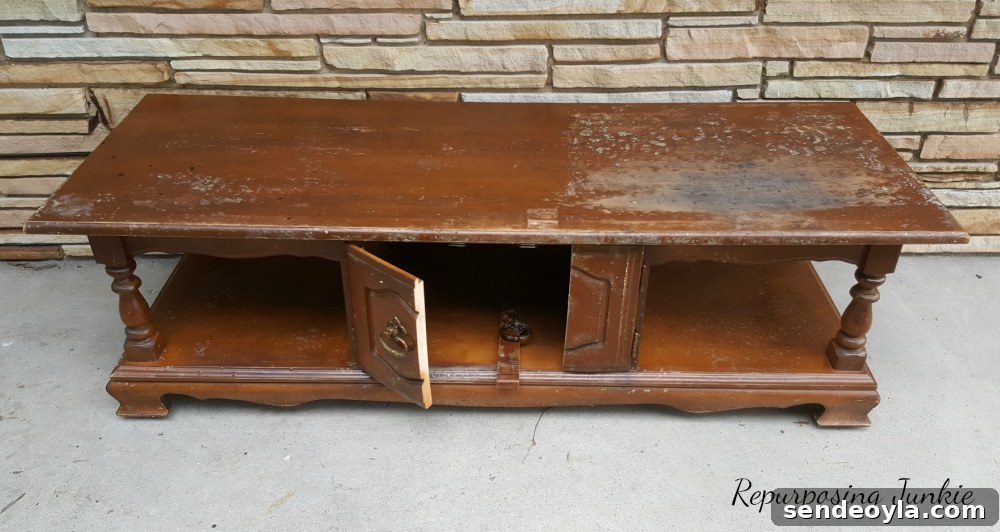
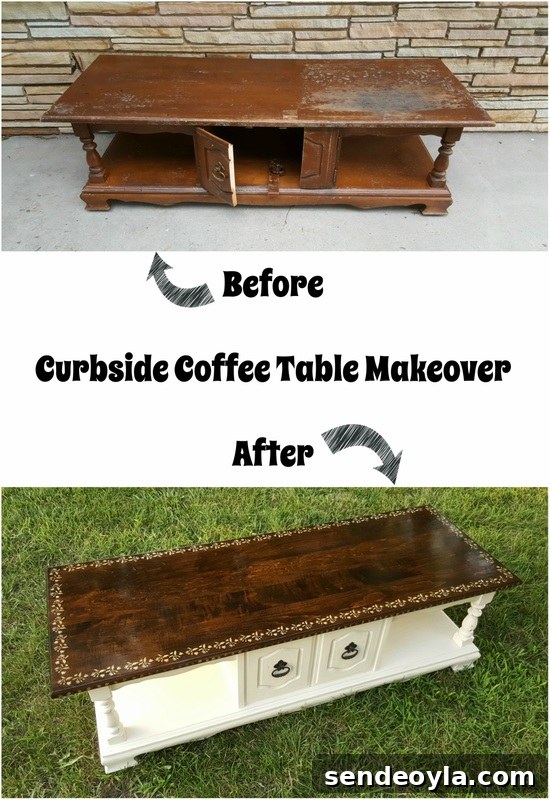
Hi—I’m Keri: wife, mother, blogger, repurposer, furniture refinisher, and a bit of a stencil enthusiast. I’m happy to share the details of this coffee table makeover. The table was a curbside find I picked up on July 4th. It had been left out in the rain, so there was some water damage, and one side had a broken opening door while the other side had fixed doors. That damage is likely why it was discarded.
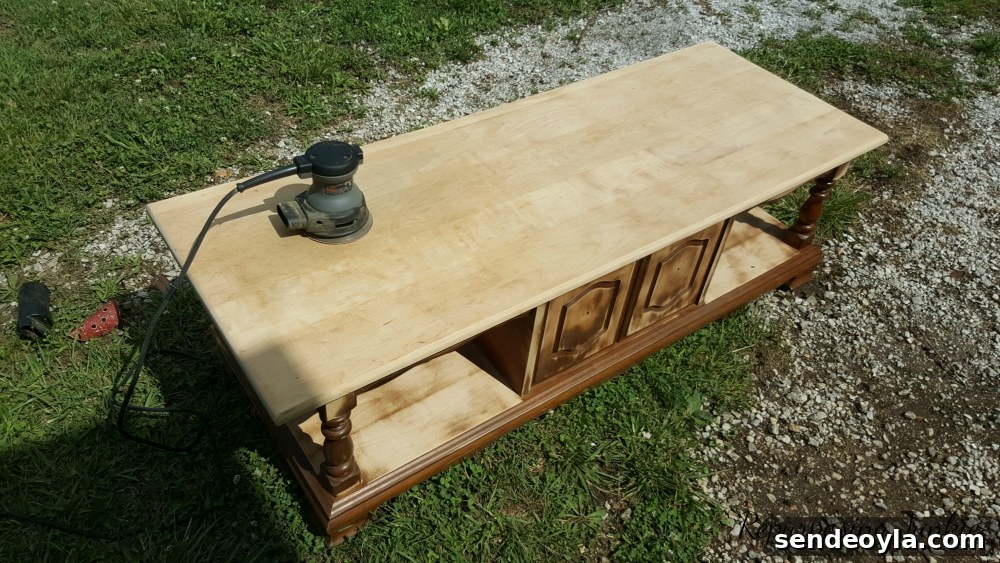
The first step was sanding. I sanded the entire tabletop down to bare wood using an orbital sander, then sanded the rest of the piece as thoroughly as I could with the sander. Areas the sander couldn’t reach were finished by hand. I love working with solid wood furniture because it responds so well to refinishing.
After sanding, I wiped the piece clean of dust and began painting the lower portion. I used several coats of a satin latex off-white that I mixed myself. Once the paint had cured, I added texture and character by lightly distressing the painted base with 220-grit sandpaper. Distressing like this reveals the wood underneath in spots and gives a softly aged look that works well with stained tops.
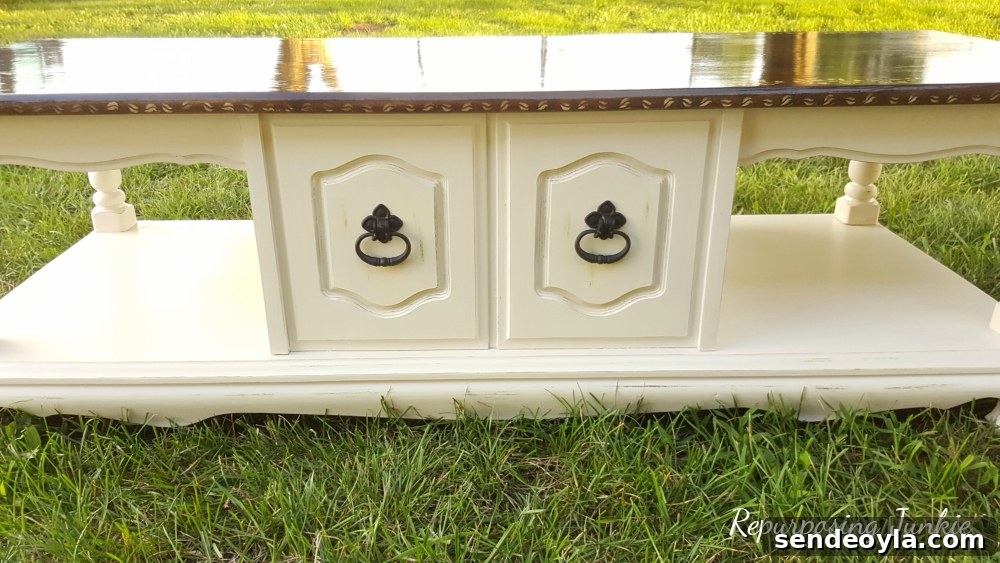
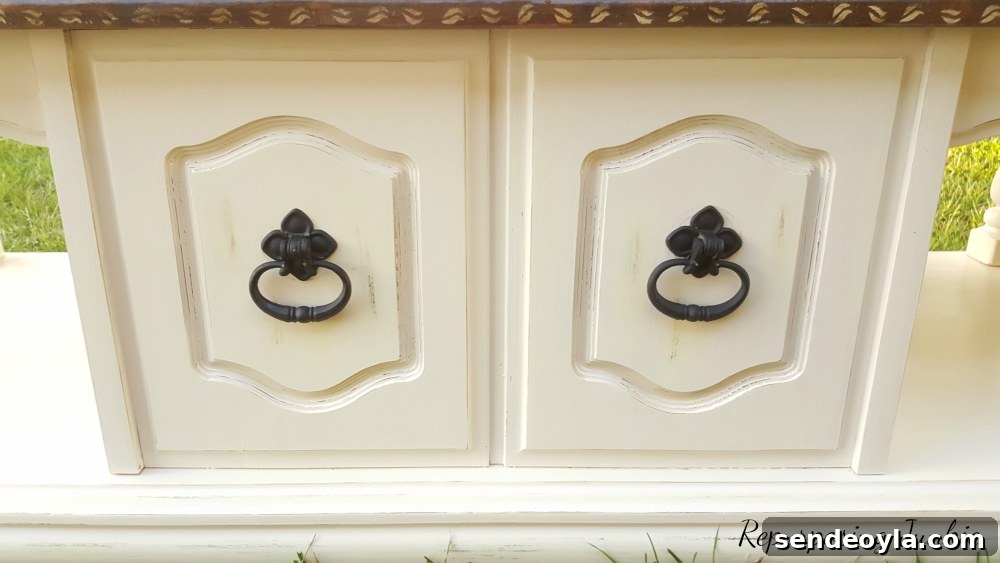
I removed the hardware from the fixed doors, spray painted the pulls black, and then reattached them by hand. A quick caution: small decorative hardware can be irresistible to toddlers. I found the knobs had been spun around before I tightened the screws back on—an entertaining lesson in where to store parts while working on a project.
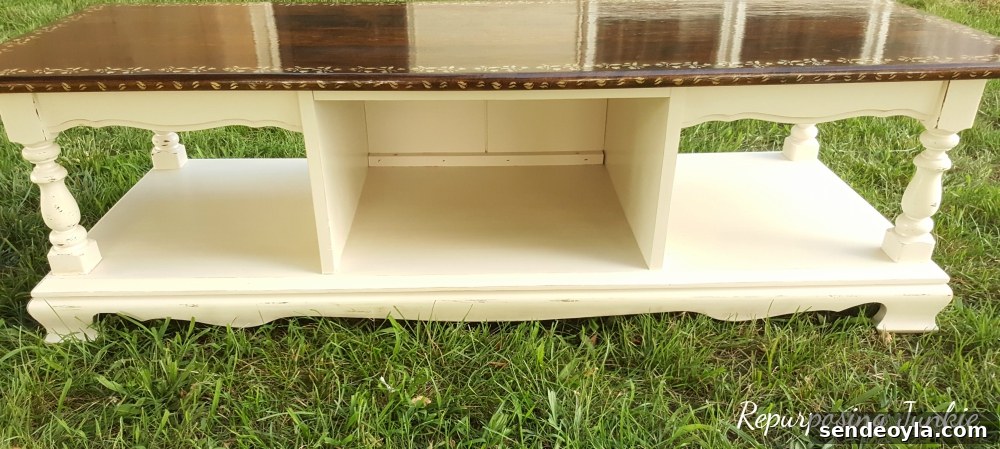
The side with the broken doors had the damaged pieces removed entirely. I filled the exposed screw holes and left the cavity open for a basket or decorative storage solution; this created a practical and attractive negative space in the piece.
Next I focused on the tabletop. The process included the following steps:
- I stained the top with Minwax Dark Walnut to enrich and highlight the wood grain.
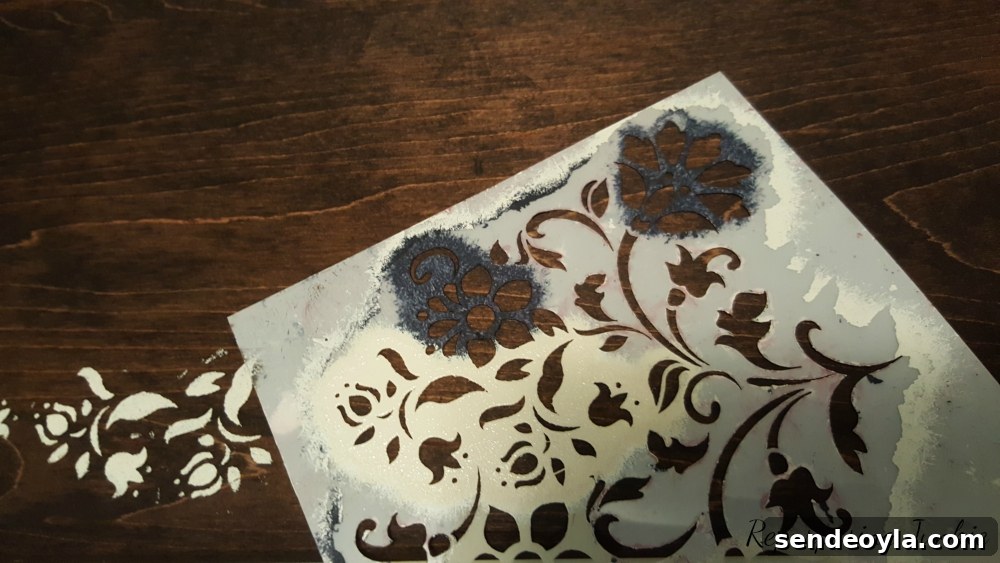
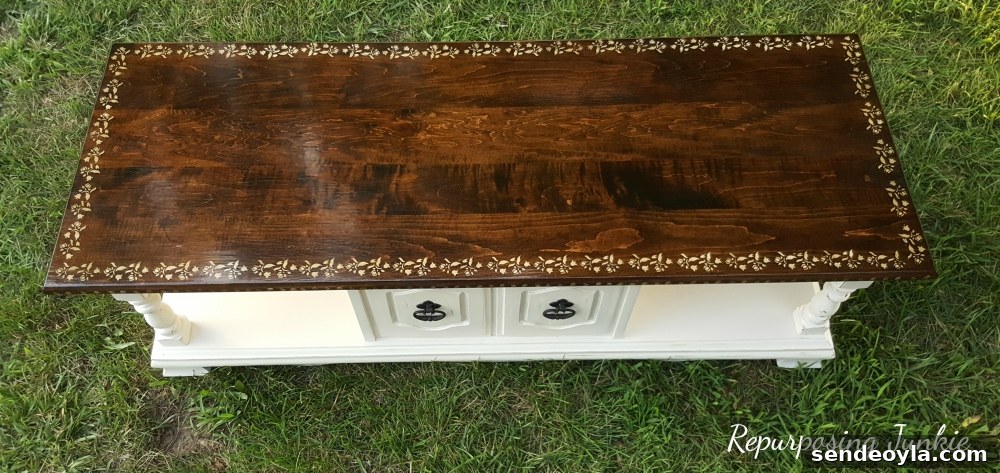
- When the stain had dried, I used part of a stencil to paint a decorative border around the edge of the tabletop—this same stencil pattern had worked well on a previous sign project.
- After the paint dried, I lightly sanded the stenciled area with 220-grit sandpaper to remove any excess paint and to give the stencil a slightly worn, natural appearance.
- I wiped away dust, then re-stained the sanded areas and wiped off any excess to ensure the color blended seamlessly with the rest of the top.
- Finally, I sealed the top with several coats of polyurethane, sanding lightly between coats to achieve a smooth, durable finish.
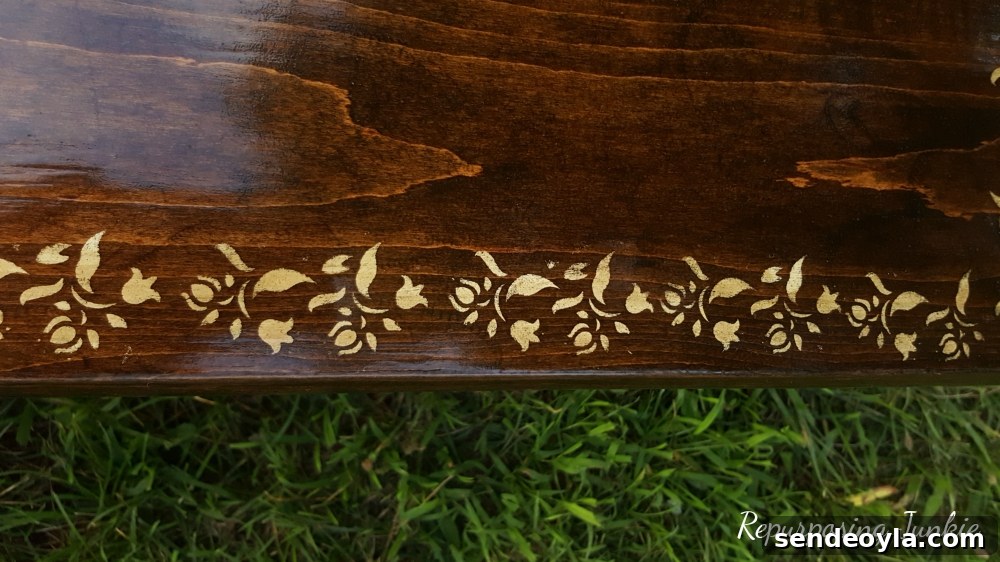
Here is the finished coffee table. The contrast between the painted, slightly distressed base and the warm, stenciled walnut top creates a beautiful, balanced look. I particularly love how the wood grain shows through the stain and how the stencil adds just the right amount of visual interest.
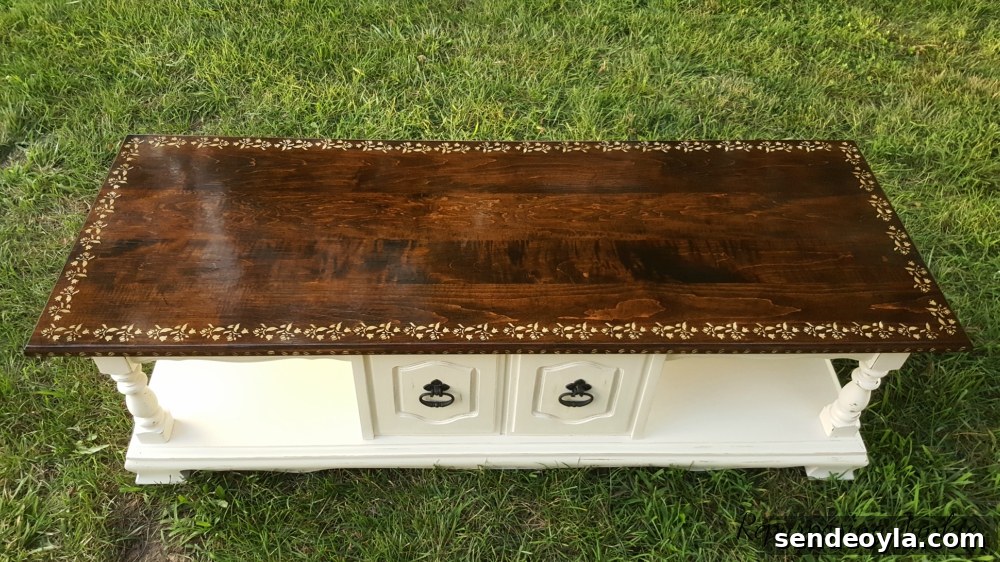
This project blends three finishes—paint, stencil, and stain—which is a combination I’ve been using a lot lately. I’ve used the same technique on smaller tables and dressers and intend to refinish more pieces in my living room. The result is cohesive, warm, and full of character.
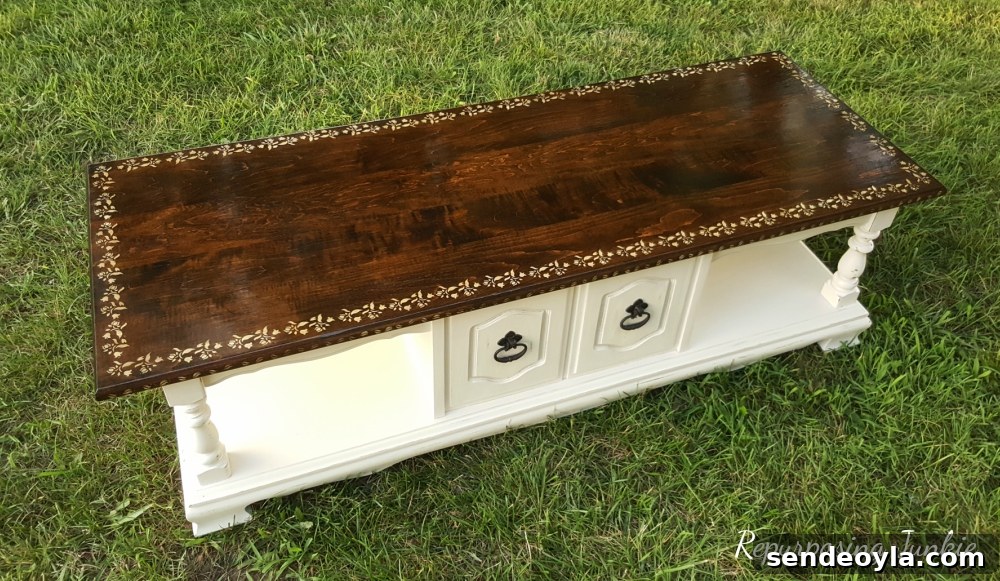
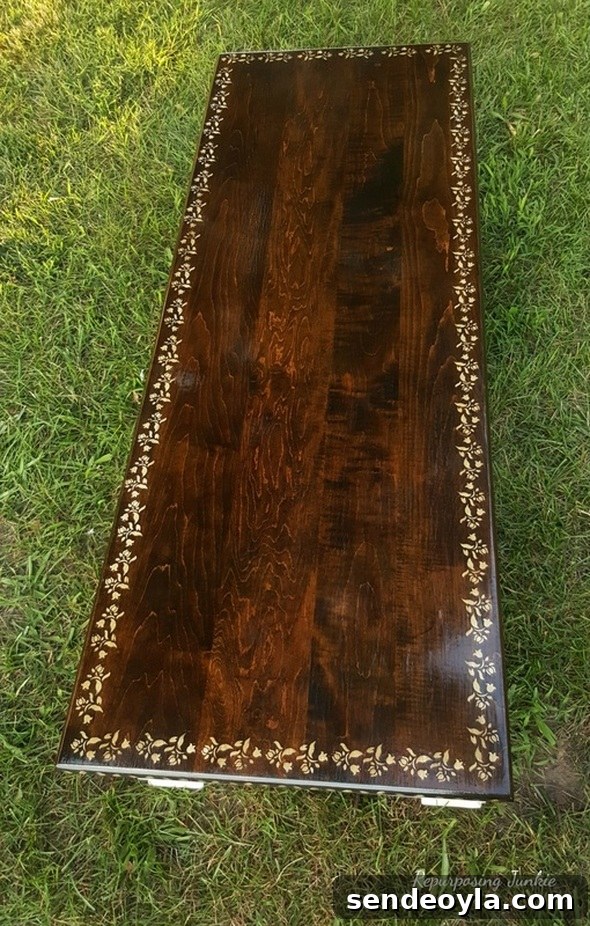
When I rescued this table from the curb, my original plan was to sell it after refinishing. After completing the makeover, however, we decided to keep it and replace our old coffee table. The transformation demonstrates how much value and style can be restored to a once-neglected piece.
Thanks to Mary for inviting me to share this project—it’s a pleasure to guest post. If you enjoy this coffee table makeover, please share it with friends or save it for future inspiration. And if you’ve ever brought a curbside find back to life, I’d love to hear about your experience in the comments.

I welcome your comments and will respond to each one. This post is intended for inspiration and entertainment; consider professional advice for specialized or structural repairs. Happy refinishing!