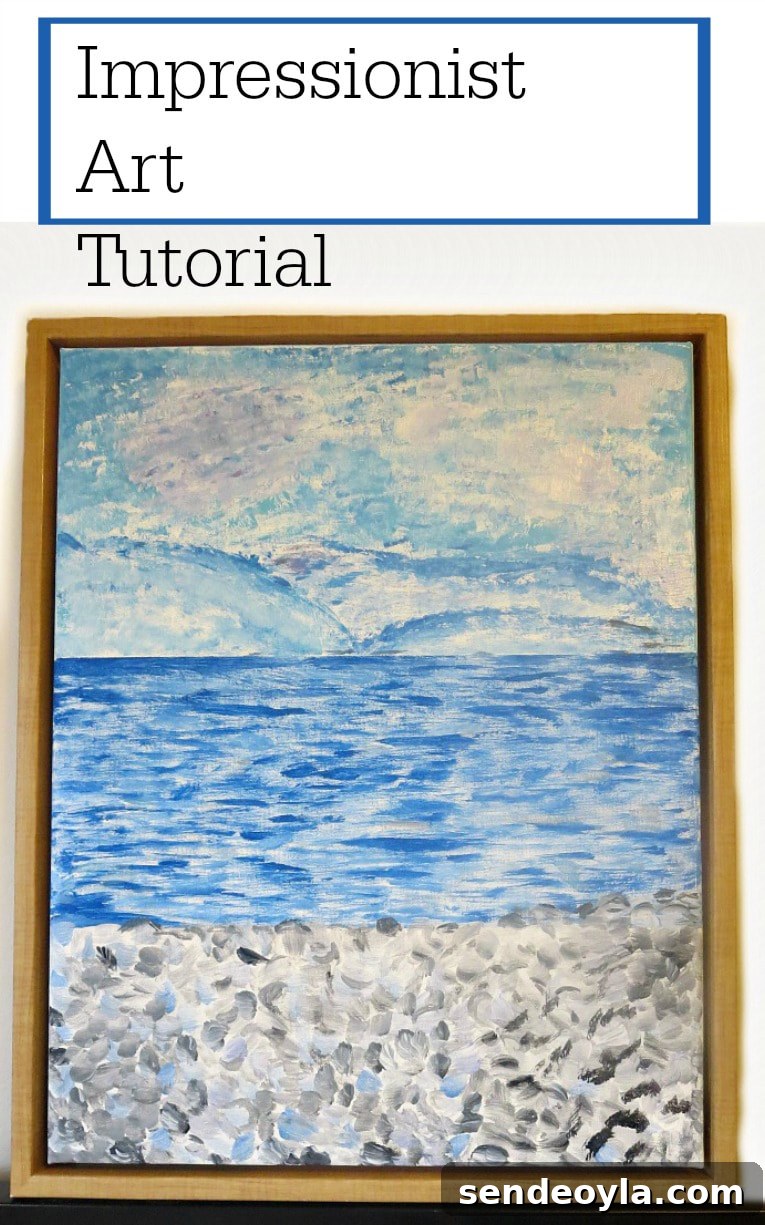
If you love the look of Impressionist painting but not the price tag, try making your own. This guide walks you through an easy, seaside-inspired Impressionist painting you can create at home. Follow the steps below to transform a simple framed canvas or plain canvas into a textured, color-rich landscape that evokes Monet and other Impressionist painters.
What is Impressionist Art?
Impressionism began in France in the mid- to late 19th century and is known for its visible, short brushstrokes that capture the feeling or “impression” of a scene rather than fine detail. Impressionist painters emphasized light, color, and momentary effects—often creating landscapes and everyday scenes with lively, broken brushwork. Famous names associated with the movement include Claude Monet, Pierre-Auguste Renoir, and Edgar Degas. To understand Impressionism, look for works that prioritize color and atmosphere over precision.
Creating Upcycled Impressionist Art
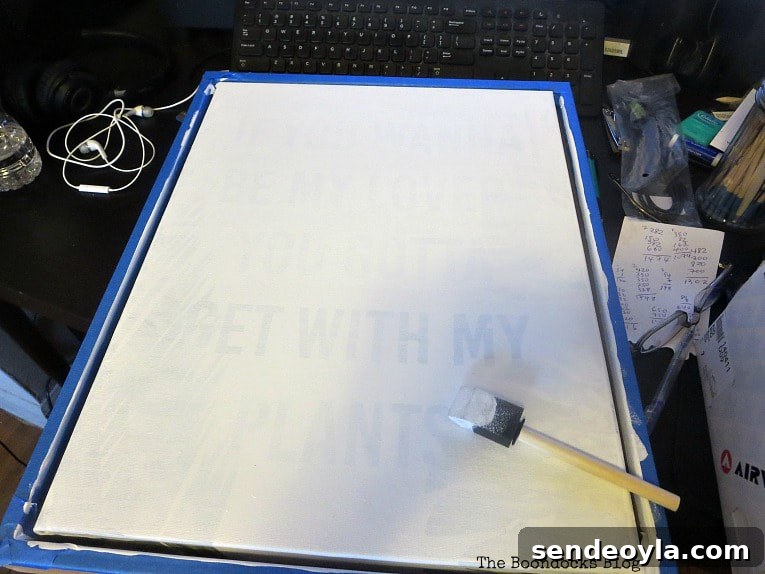
I started this project after finding a framed canvas on sale. The printed image on the canvas wasn’t my taste, but the frame was appealing. I imagined painting directly over the print to give the piece new life. Even though the frame and surface weren’t ideal, this upcycling approach turned out to be both economical and creative.
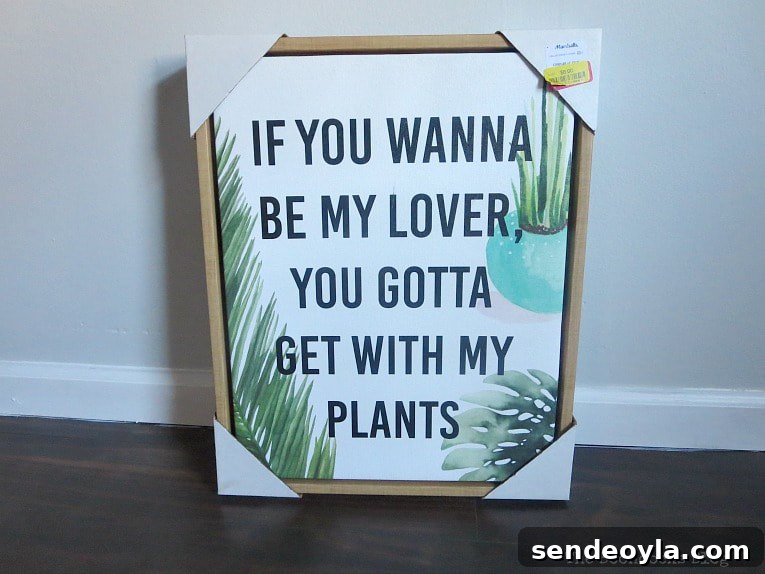
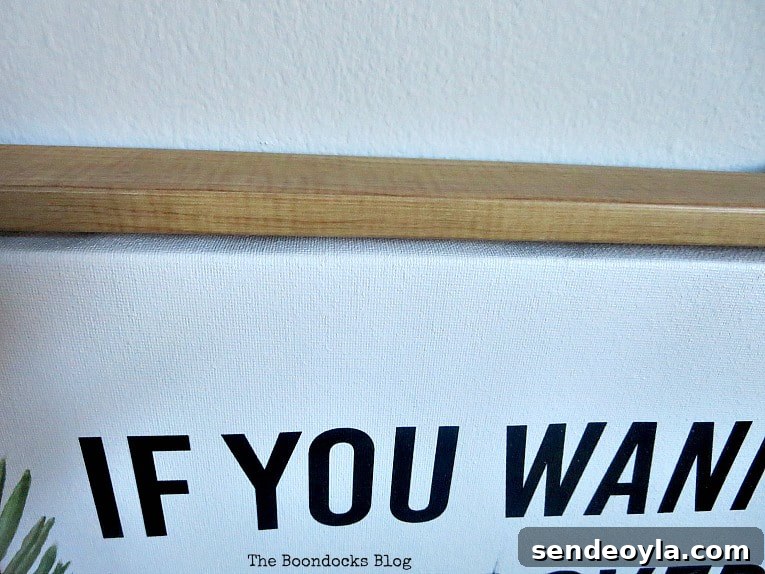
At home I removed the cardboard and discovered the surface was plastic rather than traditional canvas, but that didn’t stop me. With a little planning and some paint, I set out to create a seaside-inspired Impressionist painting using simple materials.
Materials Needed for this Impressionistic Art Project:
- Framed canvas (example size 14″ x 18″) or an unframed canvas
- Masking tape to protect the frame and to block off sections
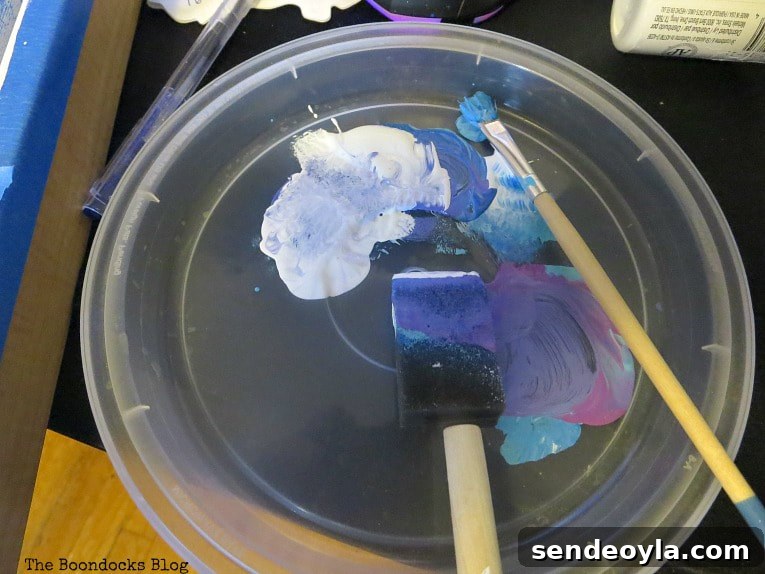
- Acrylic paints in a limited palette (blues, turquoise, white, black, a hint of red or purple)
- Sponge brush for textured application
- Small, stiff brushes for short, deliberate strokes
Beginner-Friendly Impressionist Painting Step-by-Step
Start by taping off the frame so paint won’t splatter onto it. If you’re covering a printed canvas, apply several coats of white acrylic to block out the original image. It may take multiple thin coats to hide printed text or bold colors—let each coat dry before adding the next. Be patient; a smooth base makes a big difference.
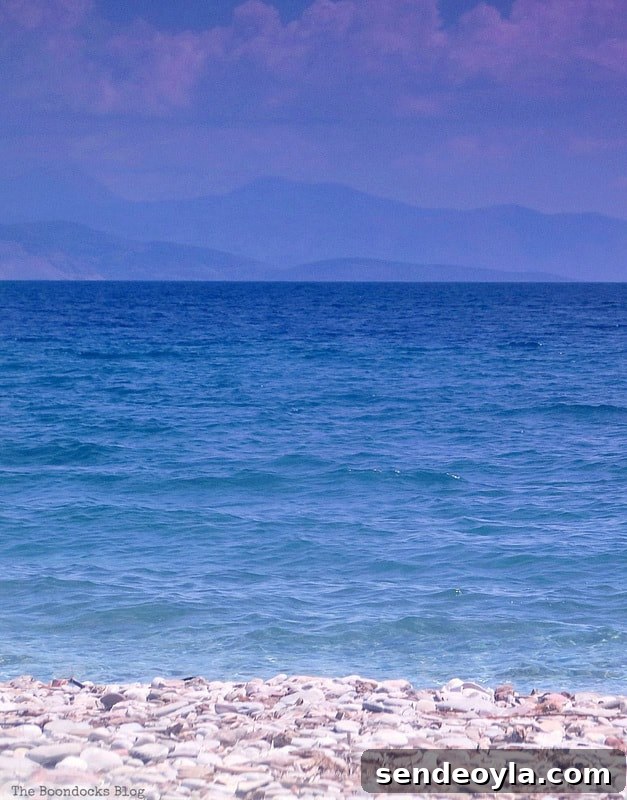
If you prefer to work from a reference, choose a photograph with the color palette and composition you like. I selected a seaside image with blues, teals, and pebbled foregrounds as a guide—Impressionist work often reads well when interpreted loosely rather than copied exactly.
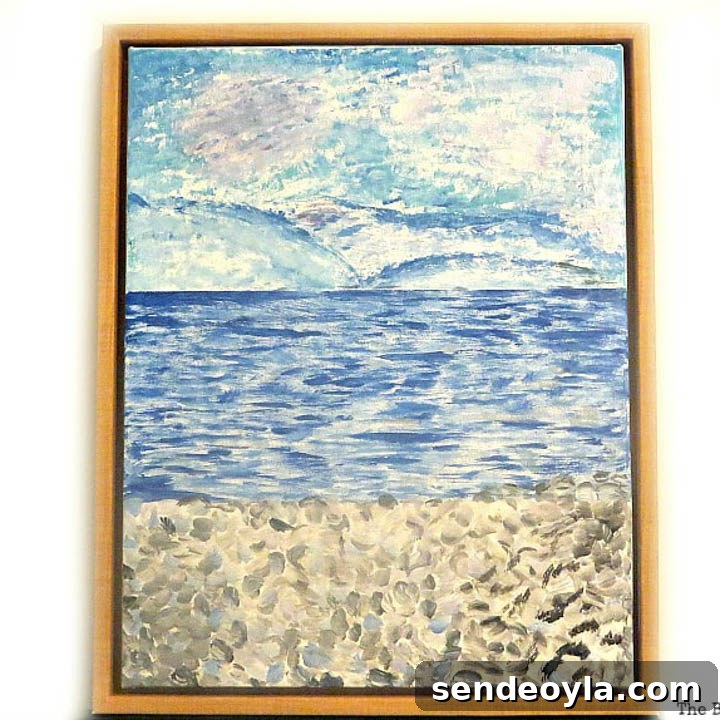
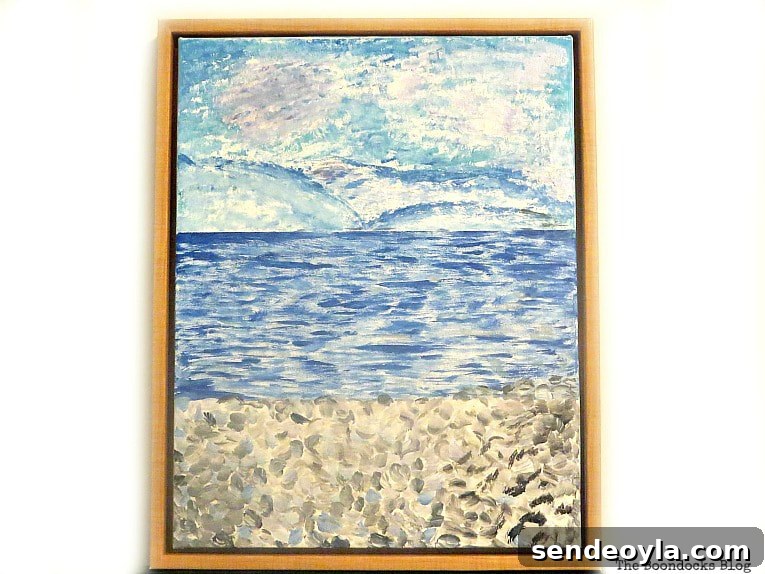
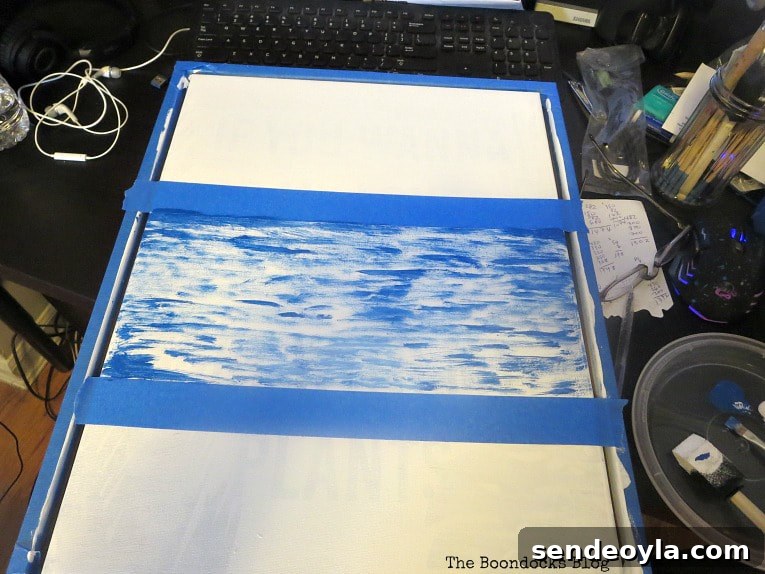
After the base was ready, I divided the canvas into three rough sections: sky, distant water, and foreground pebbles. Using a small stiff brush, I blocked in base blues and teals to obscure the original print. The goal at this stage is to establish broad color areas—not detail.
For the sky I used a sponge brush to dab turquoise and pale blues in short bursts, allowing some colors to blend and others to remain distinct. Adding a touch of red mixed with blue produced subtle purple tones to suggest distant clouds—just a hint is often enough to create depth.
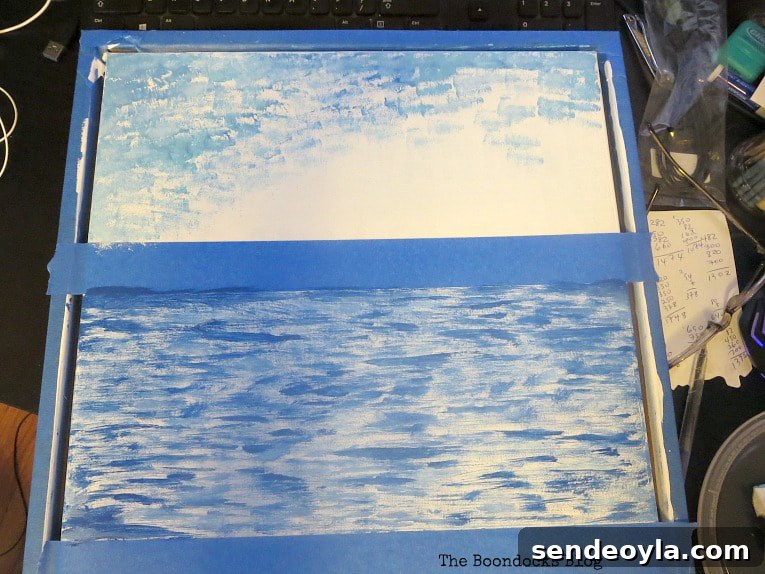
For the rocky shoreline, use short, rounded strokes in black, white, gray, and a little blue to create pebble texture. Keep the marks varied in size and direction—this irregularity suggests natural form without explicit detail. I added gray tones to the water with horizontal strokes to deepen the sea and maintain a gentle horizon line.
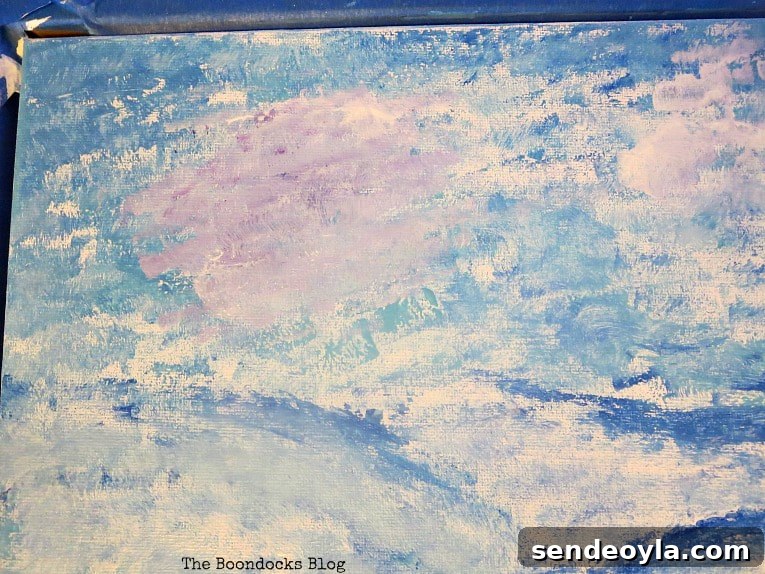
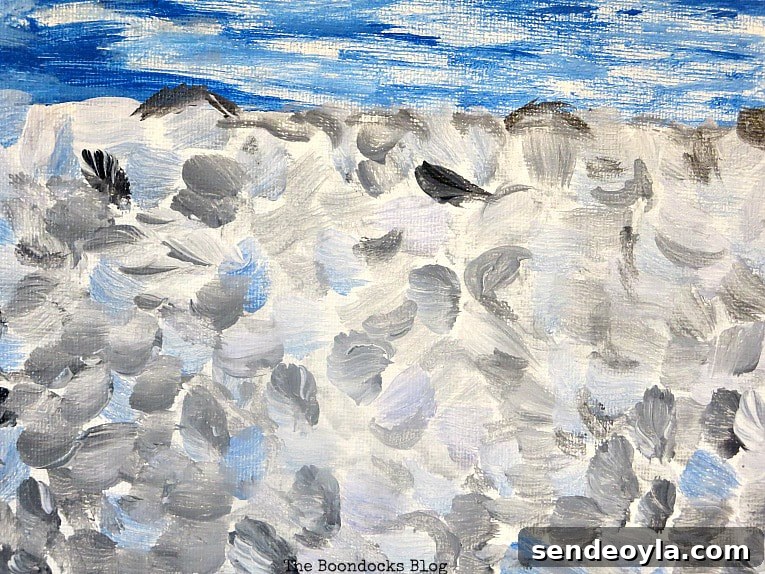
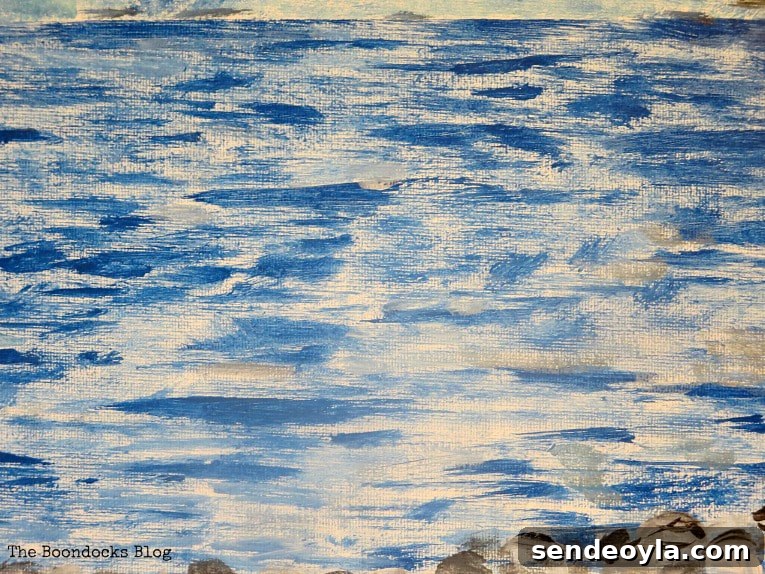
Once satisfied with the composition, remove the masking tape and step back. Minor adjustments—more highlights or a few darker strokes—can bring balance without sacrificing the loose, expressive quality that defines Impressionist-style painting.
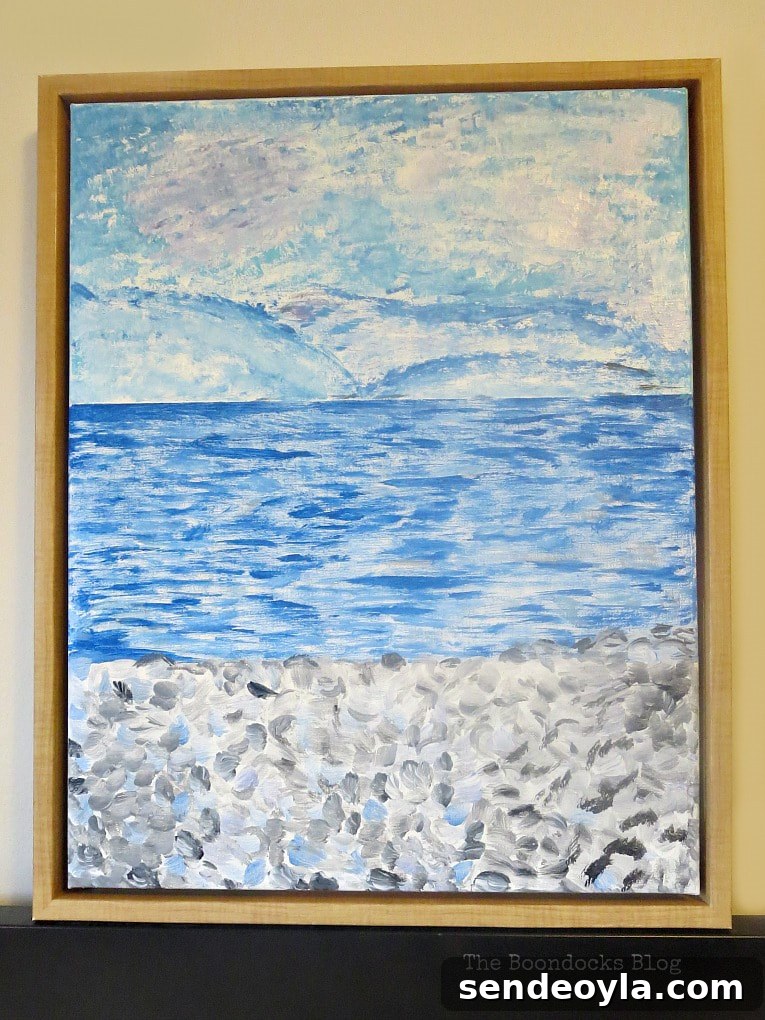
My daughter, who paints professionally, told me she liked how it turned out. Another family member who loves blue immediately claimed the piece, which was the highest compliment. The project confirmed that breaking a scene into simple color blocks and using a limited palette makes Impressionist painting approachable for beginners.
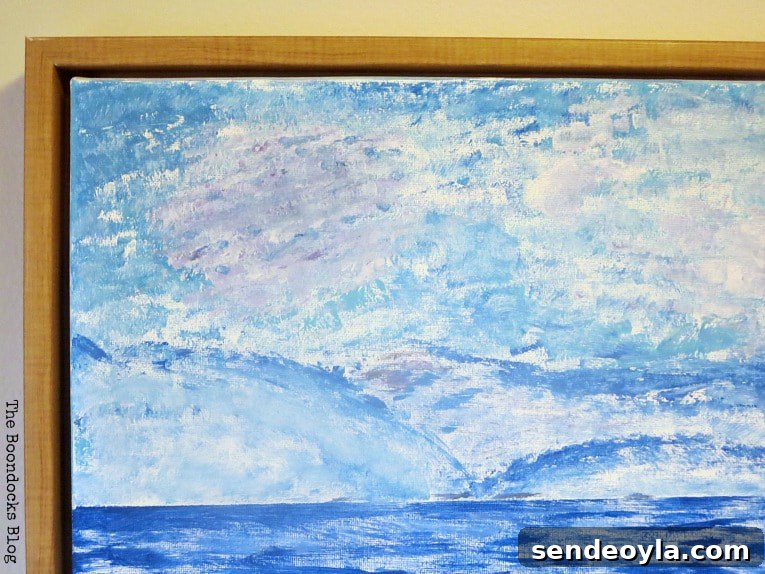
This upcycled Impressionist piece was both affordable and fun to make. If you enjoyed this seaside study, try simplifying other references—portraits, florals, or abstract color fields—in the same loose, textured way. Limiting colors, working in sections, and using varied brush marks will help you create expressive, impressionistic art at home.
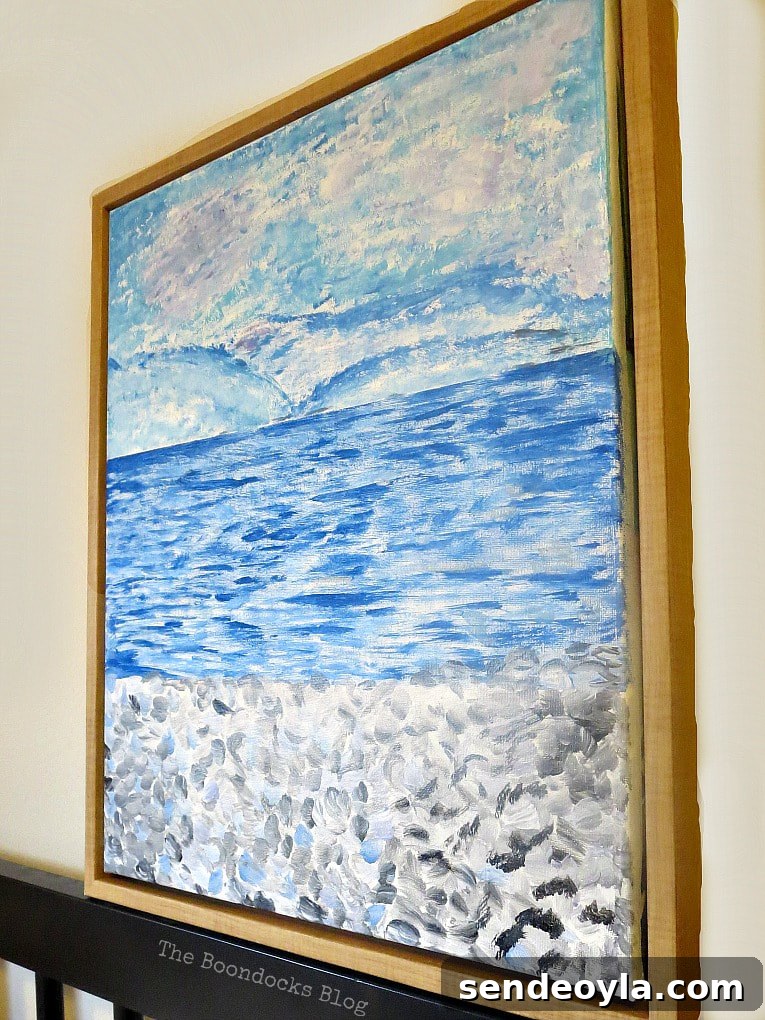
Thinking about future projects, I’m curious to try a minimal, monochrome study inspired by abstract artists. What Impressionist or abstract approach would you like to try?
Additional Art Ideas for Beginners: