
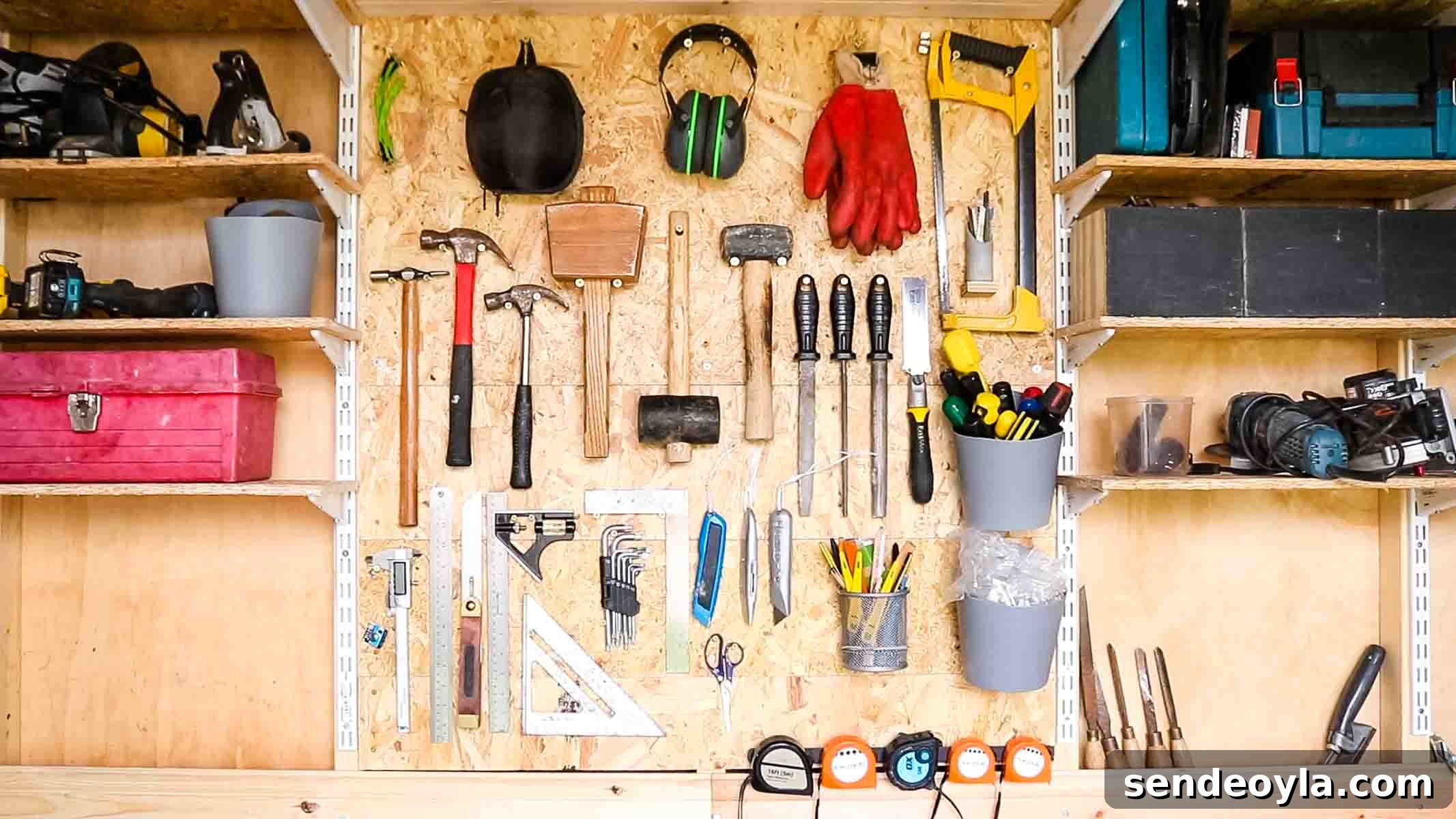
Forget a French cleat tool wall. This cladded OSB section is an easy DIY tool wall storage idea for beginners or anyone short on time. It’s perfect for your most-used tools and can be customised to fit your workshop and needs.
When searching for tool wall ideas online you can get overwhelmed by complicated systems. Many options like French cleats or full pegboard installations are flexible but take time and materials to build. If you want a quick, low-cost solution that makes your workshop neater and gives immediate access to frequently used tools, a simple cladded board with screws works brilliantly.
Things Needed to Create a DIY Tool Wall
- Sheet material: OSB or plywood offcuts are fine
- Timber battens or studs if you need to add support
- An impact driver or combi drill (for driving screws)
- A hand saw or circular saw to cut battens and cladding
- Wood screws and washers
- Rawl plugs if you mount battens to brickwork
- Small containers or recycled items such as pen pots, plastic pipes or buckets for loose items
Alternative options
You can substitute OSB with plywood if you prefer a smoother finish, or use pallet wood strips for a rustic look. A pegboard is another option, but it requires drilling numerous holes and buying pegboard hooks. This cladded-board approach is faster, cheaper and ideal for beginners.
How to Build a Simple Tool Wall
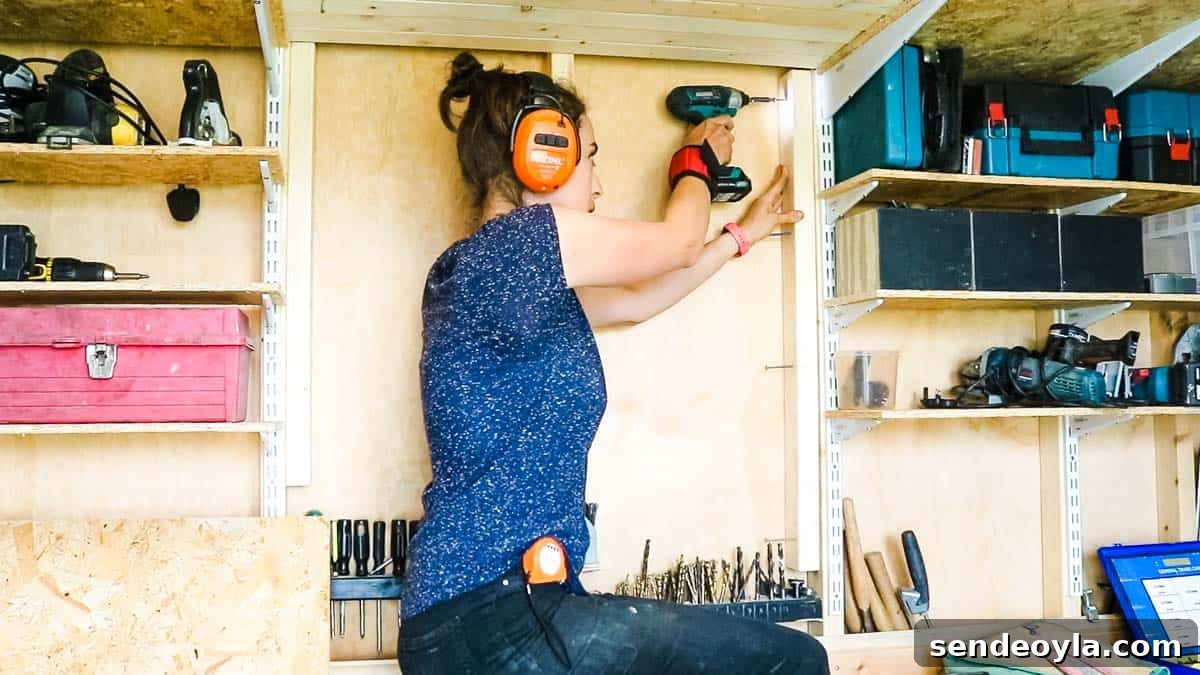
Choose a section of wall or available studwork in your shed, garage or workshop. If the wall is open studwork, attach extra battens where needed so you have solid fixing points. Offcuts of CLS timber work perfectly for this and will be hidden behind your cladding.
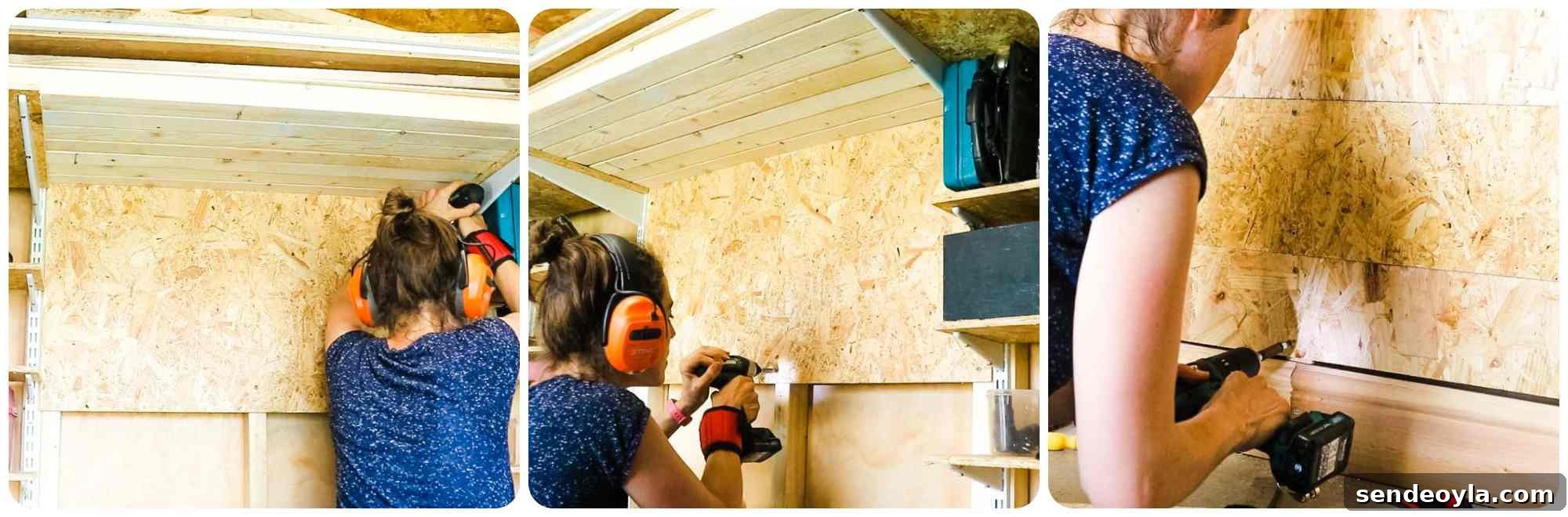
Cut your OSB or plywood panels to size and screw them to the battens or studs. I used roughly 9mm OSB offcuts screwed directly to spars. You can use whole sheets or smaller pieces—this is a working space, so function is more important than aesthetics.
If Mounting to Brickwork
For a brick wall, screw battens to the brick using rawl plugs or appropriate wall anchors first. That gives you screw depth and solid fixings for the cladding. If your cladding is thick enough you may be able to fix directly, but battens are a reliable approach.
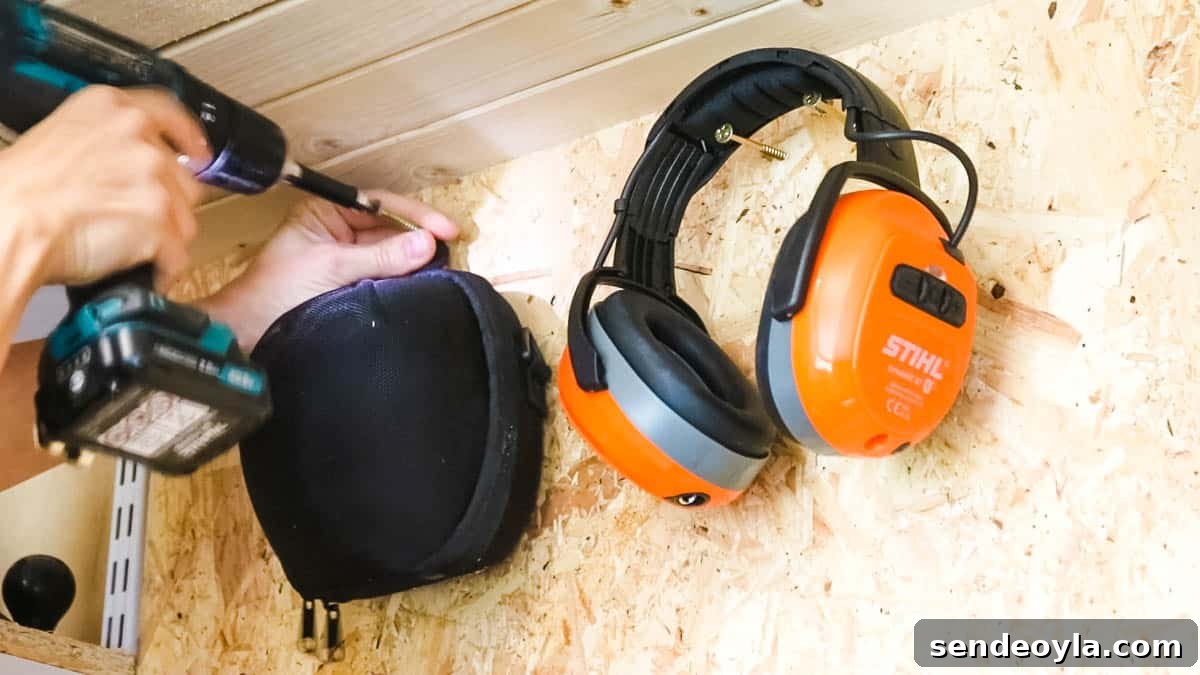
Adding Screws to Hang Tools
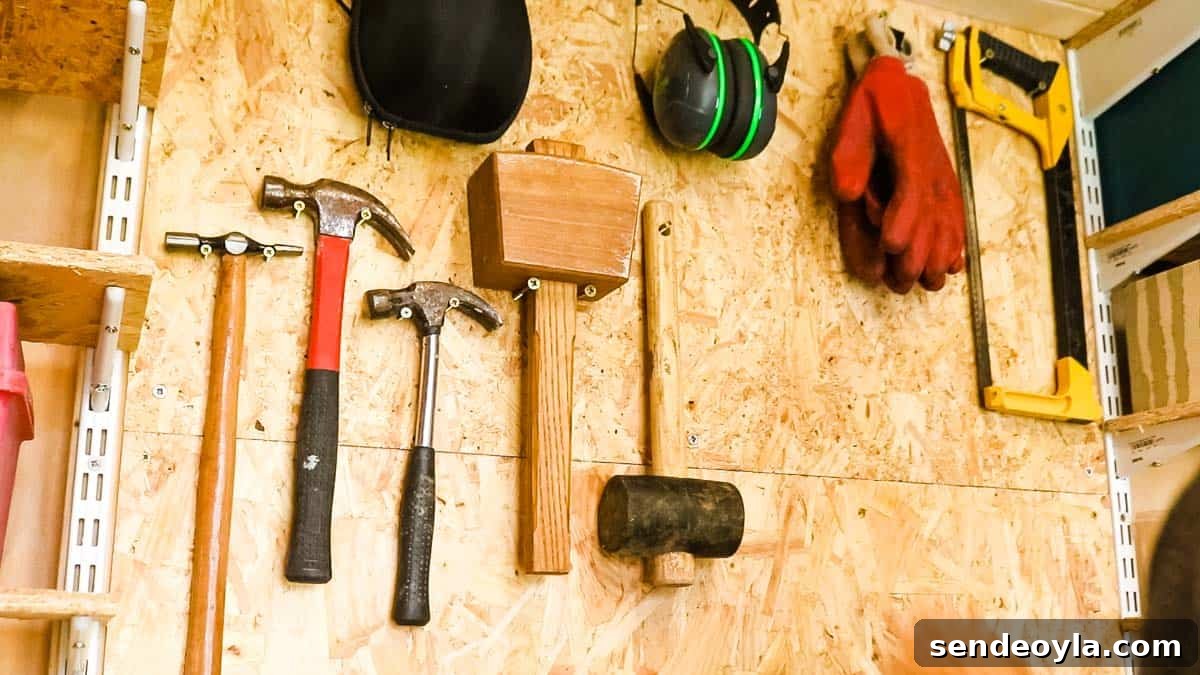
Decide which tools you use most and start hanging them one by one. For this system you simply screw a screw partway into the board and hang the tool from it. It’s forgiving: if a position doesn’t work you can remove the screw and try somewhere else.
I prefer to use screws rather than nails because screws hold better over time. For wooden-handled tools, drilling a small hole in the handle makes hanging simple. For heavier items, make sure the screw penetrates the board and reaches the batten behind so the fix is secure.
Practical Tips for a Reliable Tool Wall
- Avoid nails; screws are more secure and less likely to work loose.
- Drill holes in wooden handles if you don’t want to rely on awkward hanging methods.
- For heavy tools, ensure the screw goes at least three-quarters of the way through the wood into a batten.
- Do not use screws longer than the depth of your studs or battens to avoid them poking through the opposite side.
Storage Ideas and Small Hacks
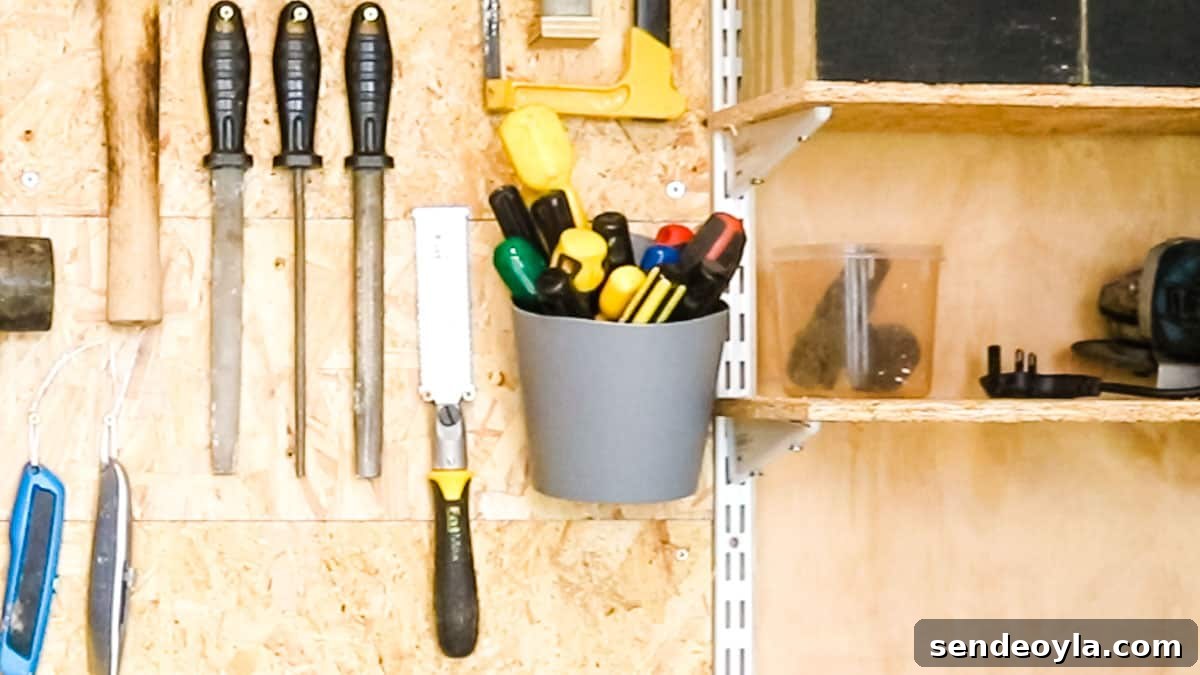
A tool wall is an evolving project—additions make it more useful over time. Small buckets or recycled containers screwed to the board make great homes for loose items like screwdrivers, pencils or blades. Mesh pen pots, plastic boxes or even kitchen tins are all fine for organising small bits.
Hanging Tape Measures and Small Parts
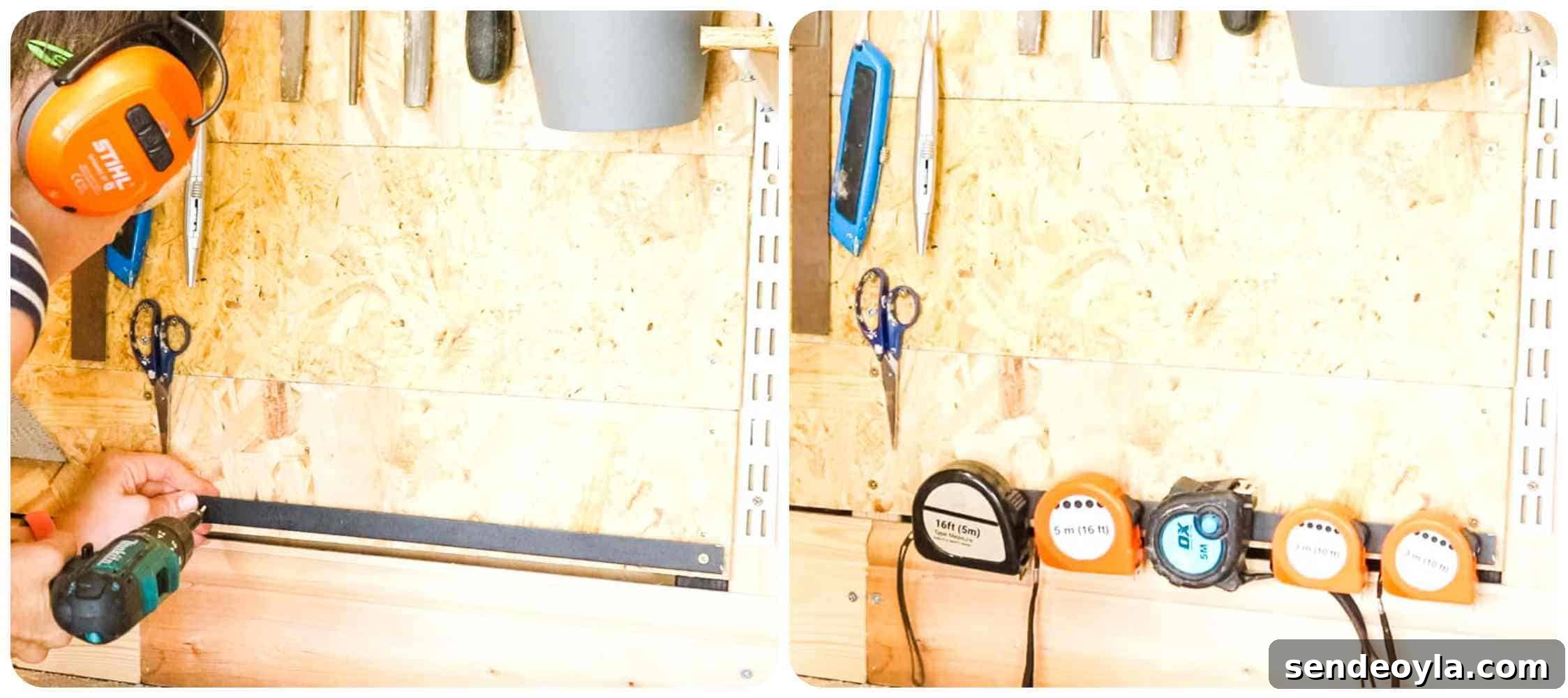
A simple metal strip with a washer spacer makes an excellent hanger for tape measures. Salvaged materials work well here: a short metal strip and a couple of rubber washers create distance from the board so tape measures hang freely. You can also hang them from their looped handles.
Recycled Jigsaw Blade Holder
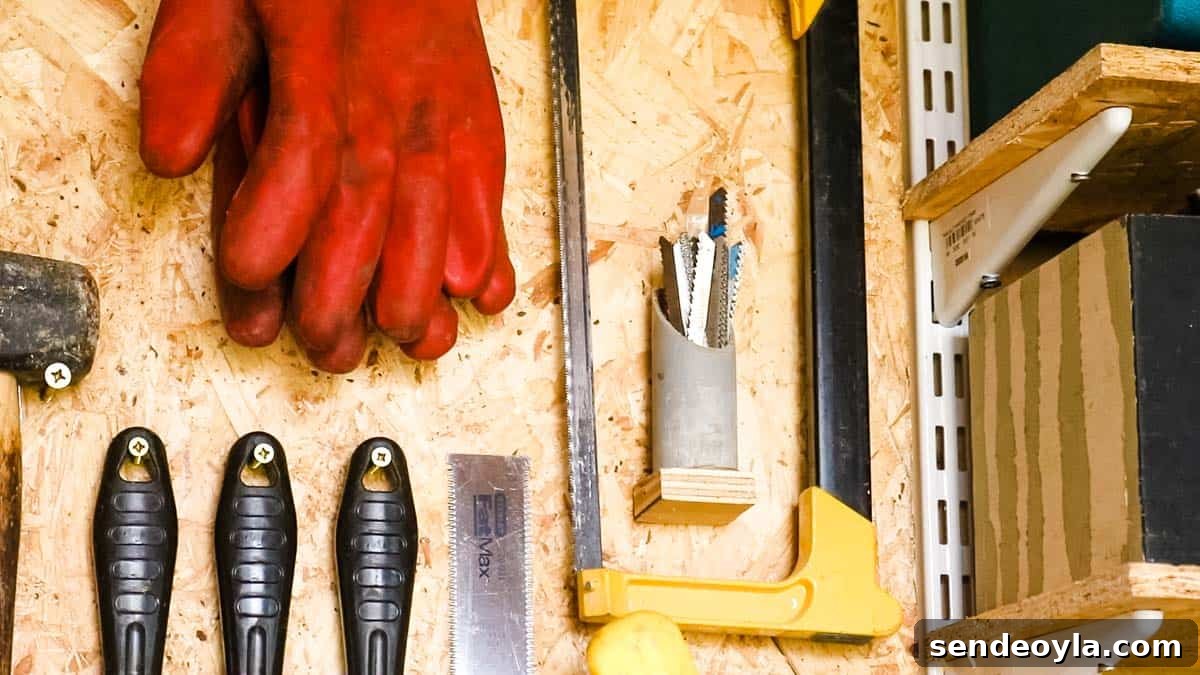
A neat DIY holder for jigsaw blades can be made from a short length of plastic waste pipe cut at an angle and attached to a scrap piece of wood. Glue the pipe to the wood, drill and screw the wood to the board, and you have a tidy blade rack that keeps blades safe and accessible.
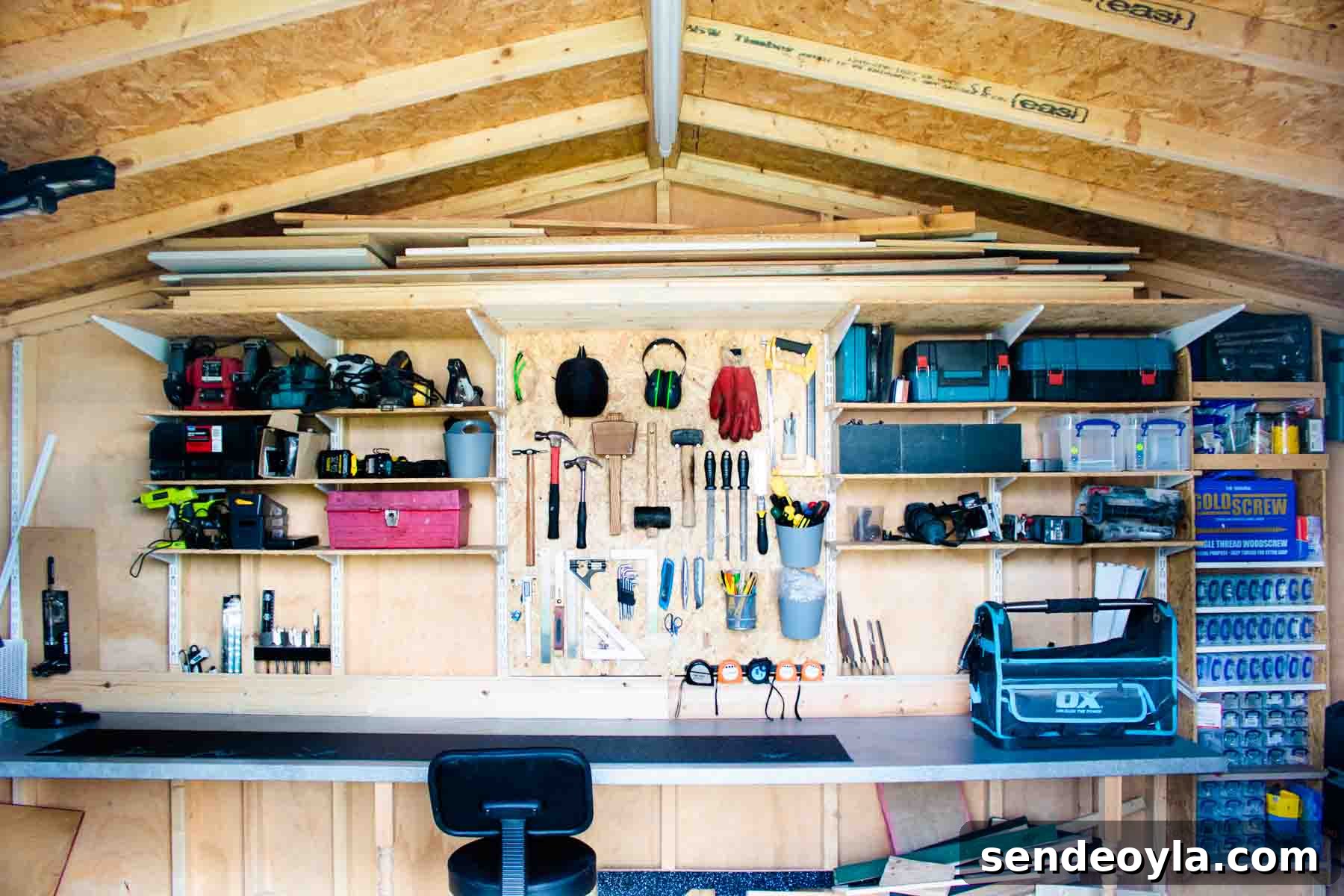
You don’t always need pegboard or French cleats for an effective tool wall. This quick cladded board solution is fast to install, inexpensive, and immediately useful. It’s ideal for anyone who wants a tidy, functional workspace without a big build.
Final Touches: Outline or Photograph
If you’re satisfied with the layout, you can draw outlines around each tool with a marker pen so it’s obvious when something is missing. Alternatively, take a clear photo of the finished wall—this is handy if you plan to change things later but want a reference.
Quick & Easy DIY Tool Wall Storage Idea
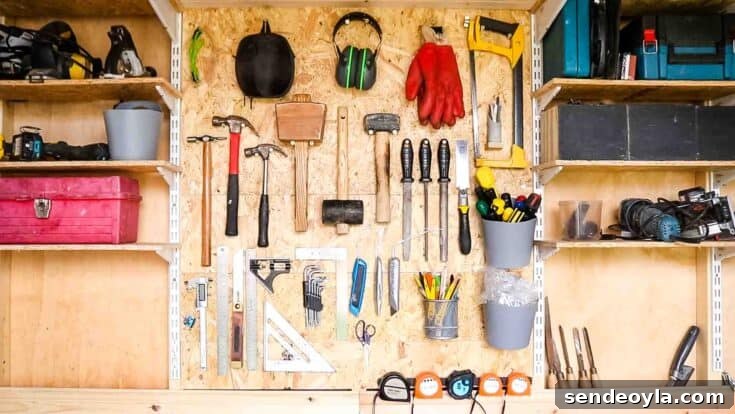
Forget a French cleat tool wall. This cladded OSB section is an easy DIY tool wall storage idea for beginners or those short of time. Ideal for your most-used tools and easy to customise.
10 minutes
30 minutes
40 minutes
Beginner
Low
Materials
- Sheet material (plywood or OSB) or pallet wood cladding
- Screws and washers
- Recycled parts such as rubber washers, pen pots, small buckets
- Rawl plugs if fixing battens to brick
Tools
- Impact driver or combi drill
- Hand saw or circular saw
- Drill bits and screwdriver bits
Instructions
- Find a suitable section of wall or studwork to install your tool board.
- Attach battens or studs where needed; use rawl plugs for brickwork.
- Cut and screw OSB or plywood panels to the battens.
- Insert screws where you want to hang tools, starting with the most-used items.
- Add small containers and recycled holders for loose parts and blades.
- Optionally outline tools with a marker or take a photo for reference.