
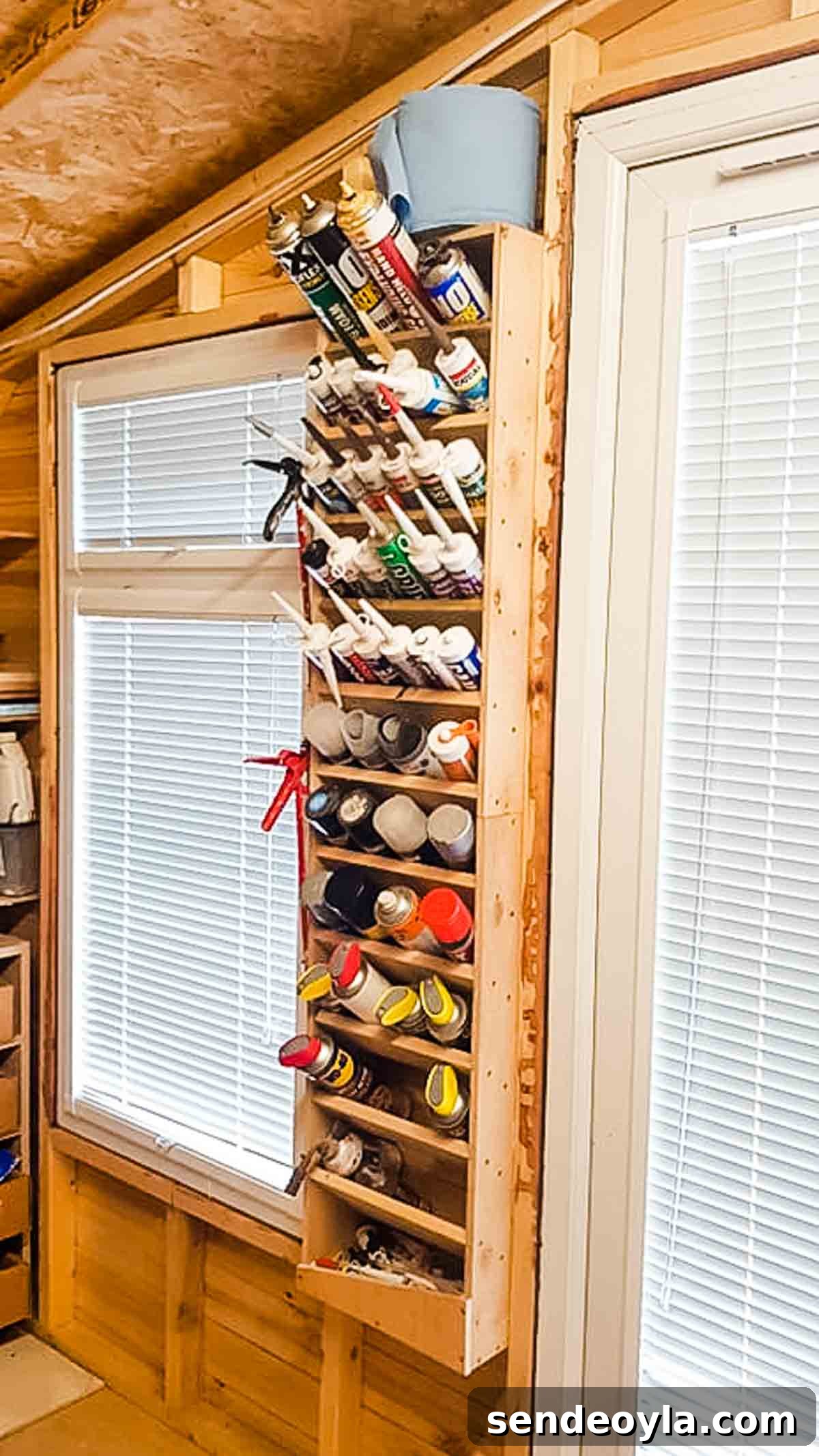
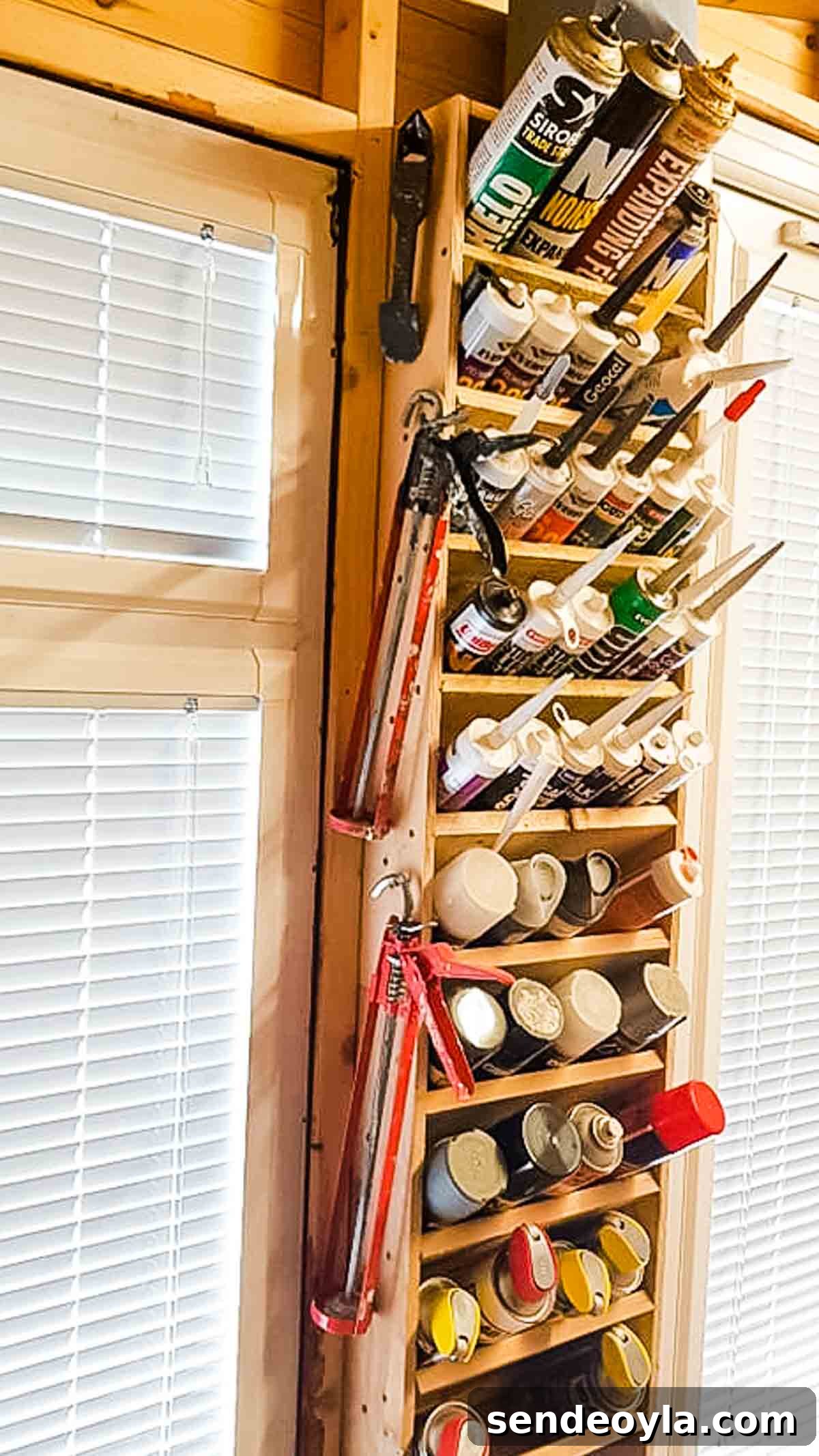
An easy DIY silicone tube holder built from offcuts and fitted between shed spars. It keeps sealants, caulks and glues organized, provides a place to hang a caulk gun, and stores spare nozzles on a bottom shelf.
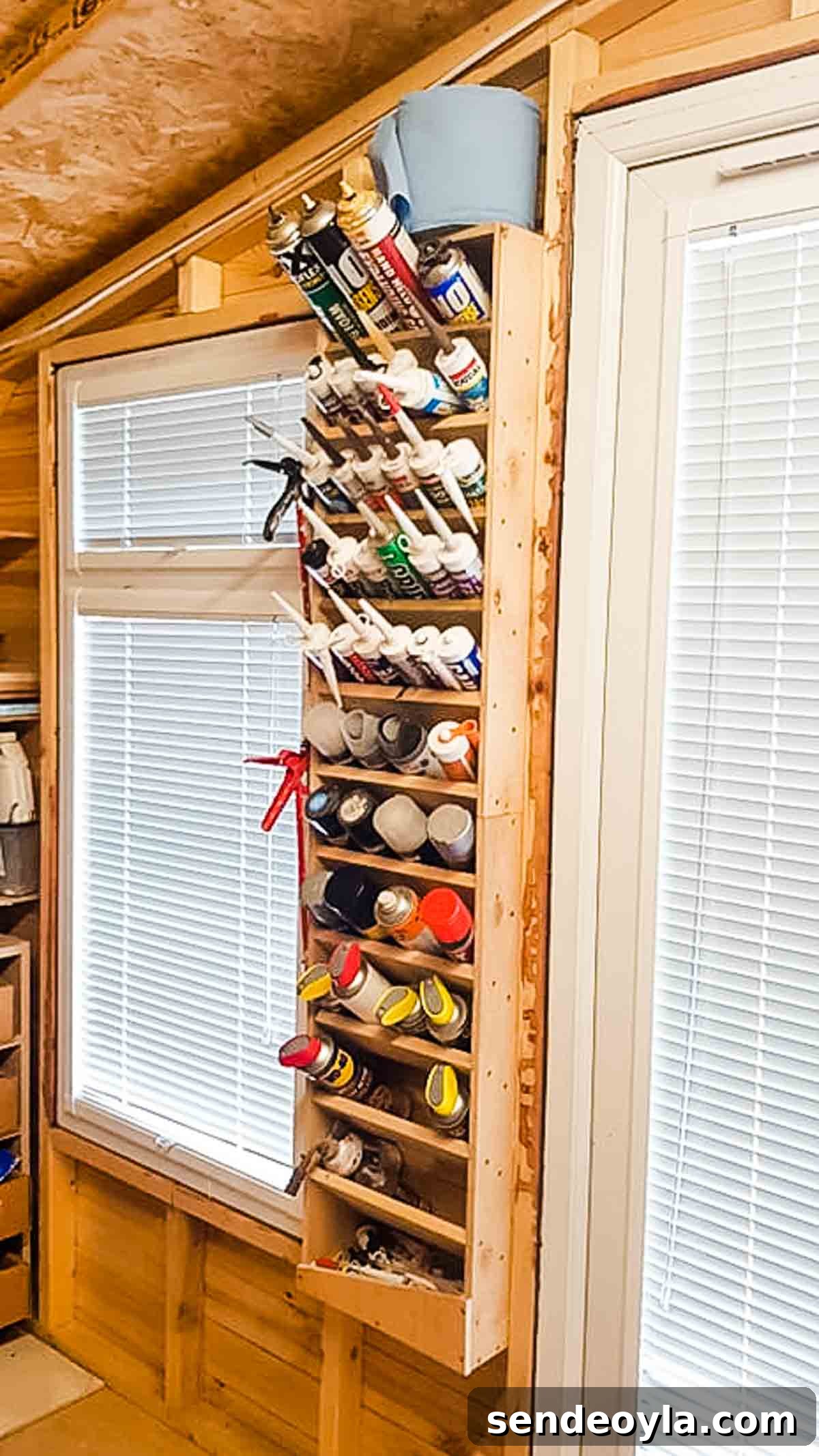
After searching for storage ideas for silicone tubes and not finding what I wanted, I designed a simple rack while reorganizing my workshop. It uses leftover offcuts and some free wall space between the shed spars so it doesn’t get in the way of other tools or workbenches.
The project used materials I already had, so it cost nothing. It now holds my collection of caulks, sealants, adhesives and associated items — even a couple of WD-40 cans fit neatly on the angled shelves.
Other Uses for a Caulk Storage Rack
Although designed for silicone and caulk tubes, this simple box-shelf design works for other cans and containers as well. You can build it as a wall-mounted rack for your workshop, or adapt the idea into a freestanding unit or van-mounted holder. It’s a budget-friendly alternative to store-bought racks and can be tailored to the exact sizes and quantities you need.
It also makes a good storage solution for spray cans, gap fillers, expanding foam cans and similar items that benefit from angled, visible storage.
Tools & Materials Used
Below is a concise list of the tools and materials used to make this silicone tube holder. You can adapt the exact items to what you already own.
- Offcuts — plywood or chipboard recommended over MDF for durability
- Sliding bevel
- Hand saw
- Compact saw or mitre saw
- Tape measure
- Pocket hole jig (optional)
- Pocket hole screws (optional)
- Impact driver or combi drill
- Wood screws
- Clamps
- Spirit level
- Goggles and hearing protection
- Sturdy footwear
*Wood Thickness
The thickness of the side strips screwed to the spars is not critical — they mainly extend the internal width of the rack. For the shelves themselves, try to use offcuts at least 15mm thick so they are sturdy enough to hold tubes without sagging.
Avoid MDF for load-bearing shelves where possible: MDF can split when screwed near the ends even if predrilled. If you must use what you have, it’s easy to replace shelf pieces later with stronger material.
How to Make Your Own DIY Caulk Tube Holder
1. Choose the location: find two vertical spars in your shed or workshop wall where you want to hang the rack.
2. Mark the height: use a spirit level to mark a straight horizontal line where the top of the rack will sit.
3. Fit side extensions: screw plywood or OSB strips to the inside faces of the spars so the top lines up with your level mark. These strips create the internal width and provide places to attach shelves.
Impact Driver Alternatives
If you don’t have an impact driver, predrill pilot holes and use a regular drill-driver or screwdriver. For thin screws and away from the timber ends you can sometimes drive screws without predrilling, but predrilling reduces the chance of splitting.

Tips on Offcuts
Offcuts do not need to be perfect. They do not have to be the same lengths, but matching depths will make marking shelf positions easier. In my build I simply screwed additional pieces underneath to extend length where needed.
This is a shed solution — it’s practical rather than decorative. Using offcuts in this way clears workshop clutter and improves daily usability without a big investment of time or money.
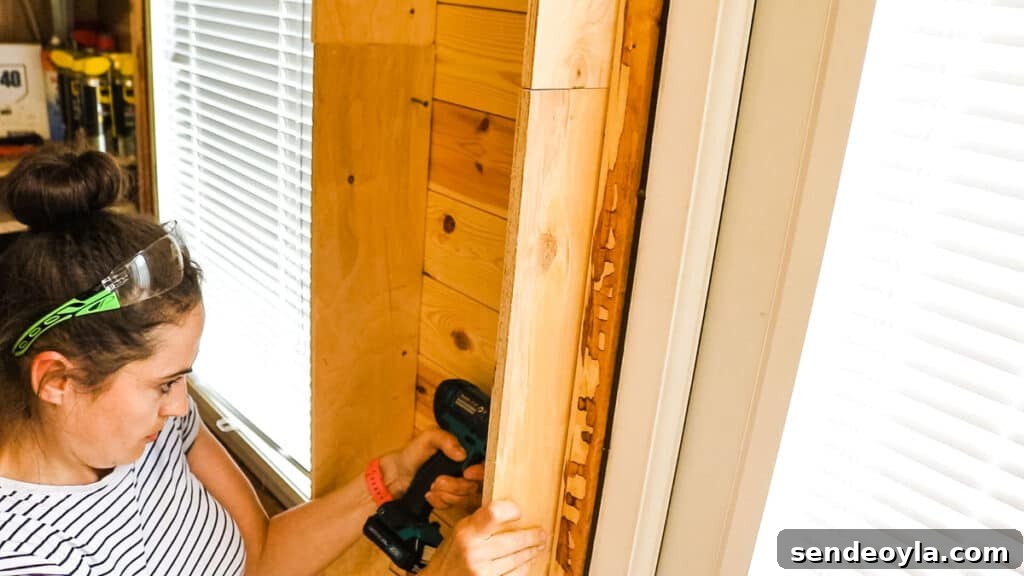
Adding a Top Shelf
A top shelf is optional but useful. Measure the new internal width between the extended side strips, cut a piece to fit, clamp it in place and screw it on. This top shelf can hold paper towels, wipes or small items you want close at hand when working with sealants.
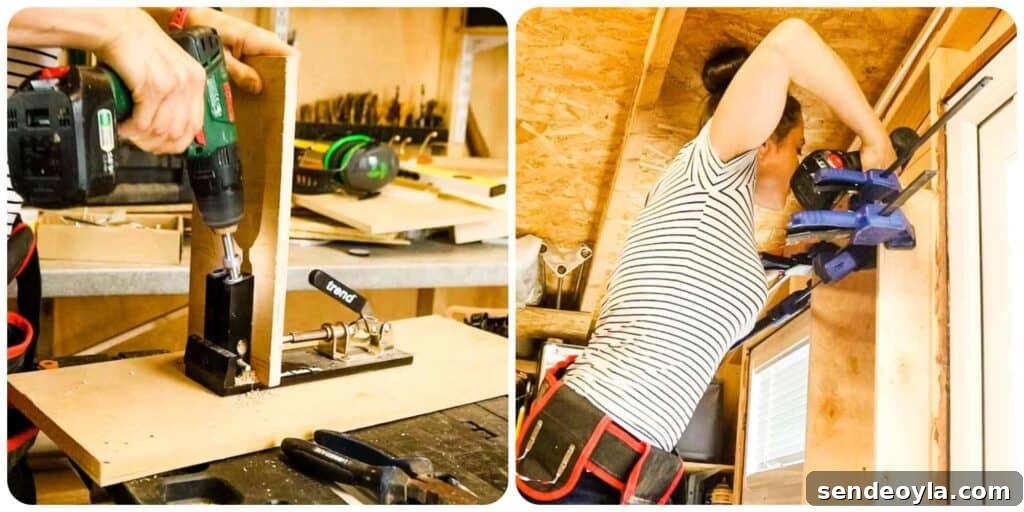
Adding Shelves
Decide the depth and spacing of the shelves before cutting. The correct shelf depth depends on the products you store: gap fillers and expanding foam cans are bulkier, while standard silicone and caulk tubes are slimmer.
Plan your angles and spacing so tubes sit securely and remain visible for easy selection.
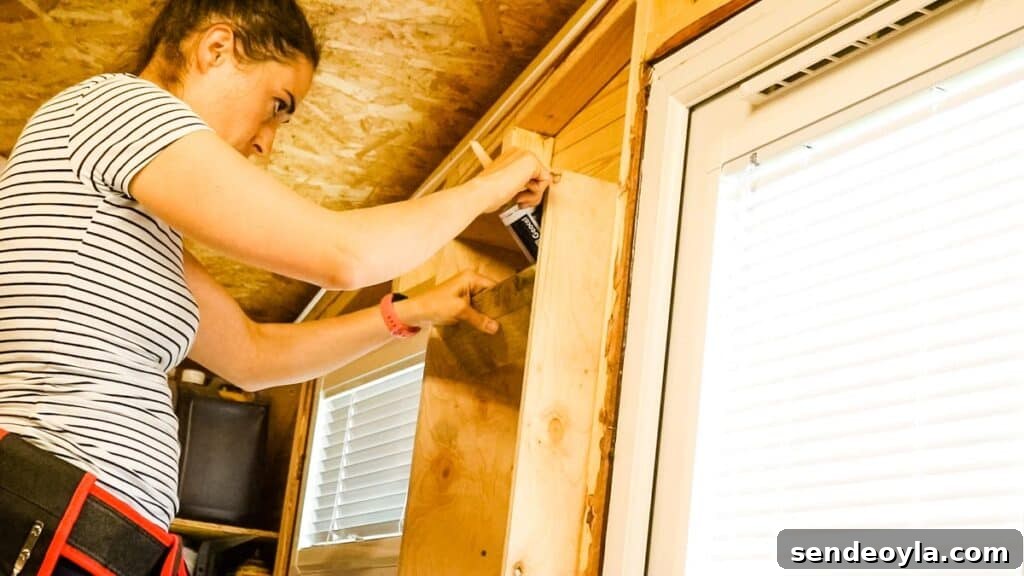
Measurements and Angles for Silicone Shelves
For my build I found the following worked well:
- Shelf spacing: about every 10 cm
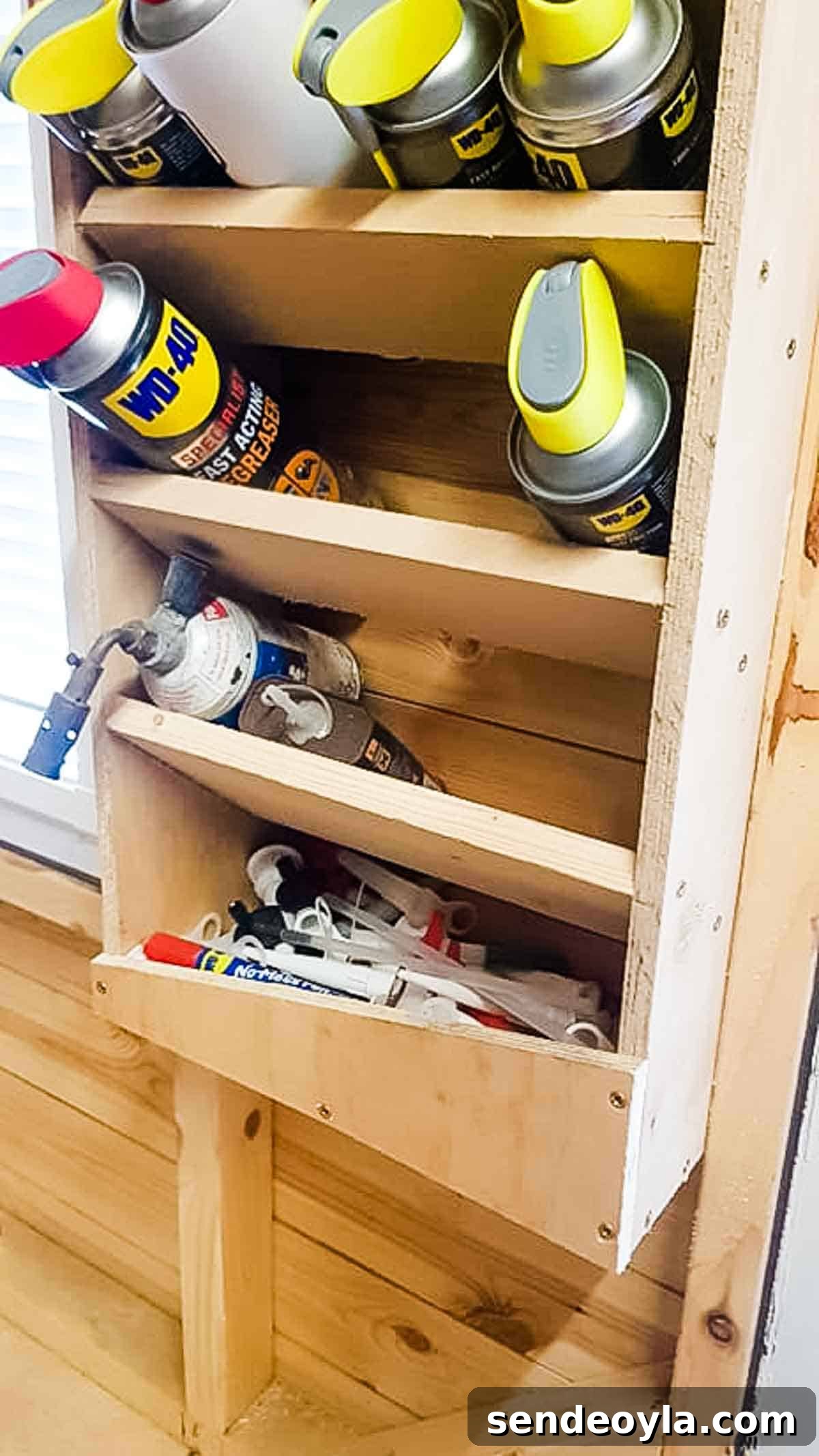
- Angle: roughly 45 degrees to keep tubes visible and prevent rolling
Ensure the shelf depth is sufficient so smaller tubes don’t slip behind the shelf supports.

Keep Repeating
Once the first angled shelf is in place, repeat the process down the length of the rack until you reach the bottom. If you run out of shelves, you can extend the side wall pieces and add more.
If weight is a concern, add a horizontal nogging between the spars for extra support. In most cases the multiple screws holding the side strips provide adequate strength.
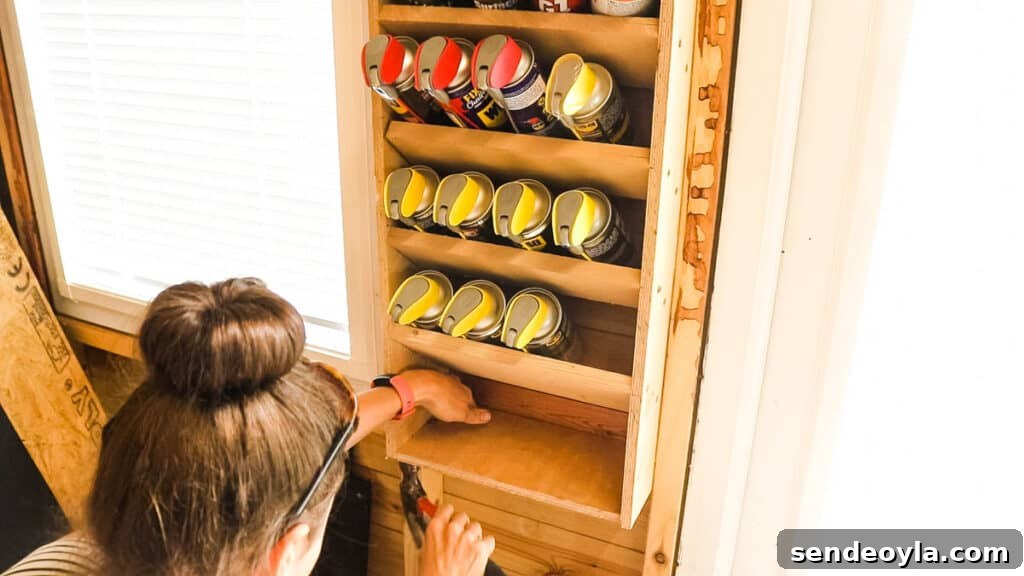
Bottom Shelf for Nozzles
A bottom shelf provides a handy place for spare nozzles and spouts. Cut a piece to the same depth and width as the other shelves and screw it into the sides at the base of the unit.
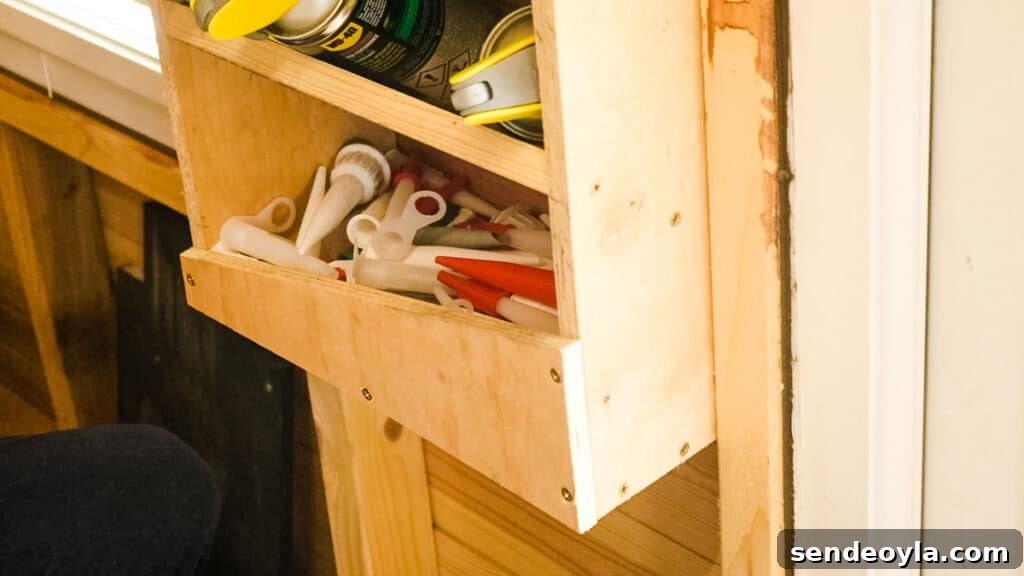
To keep the nozzles contained, I repurposed another angled offcut as a front stop. I trimmed it to width and screwed it to the front face of the bottom shelf. The whole rack can be detached from the wall if needed without dismantling the shelves.
Final Touches
Once the rack was assembled I added a few screws on the outside to hang caulk guns and a silicone remover/spreader tool. These hooks keep frequently used items within reach.
Total Cost
This build was free for me since I used materials already on hand. Even if you need to buy screws or a small amount of timber, this is a very low-cost project that reclaims offcuts and frees up bench and shelf space.
Printable Summary
DIY Silicone Tube Holder (Caulk / Sealant Rack)
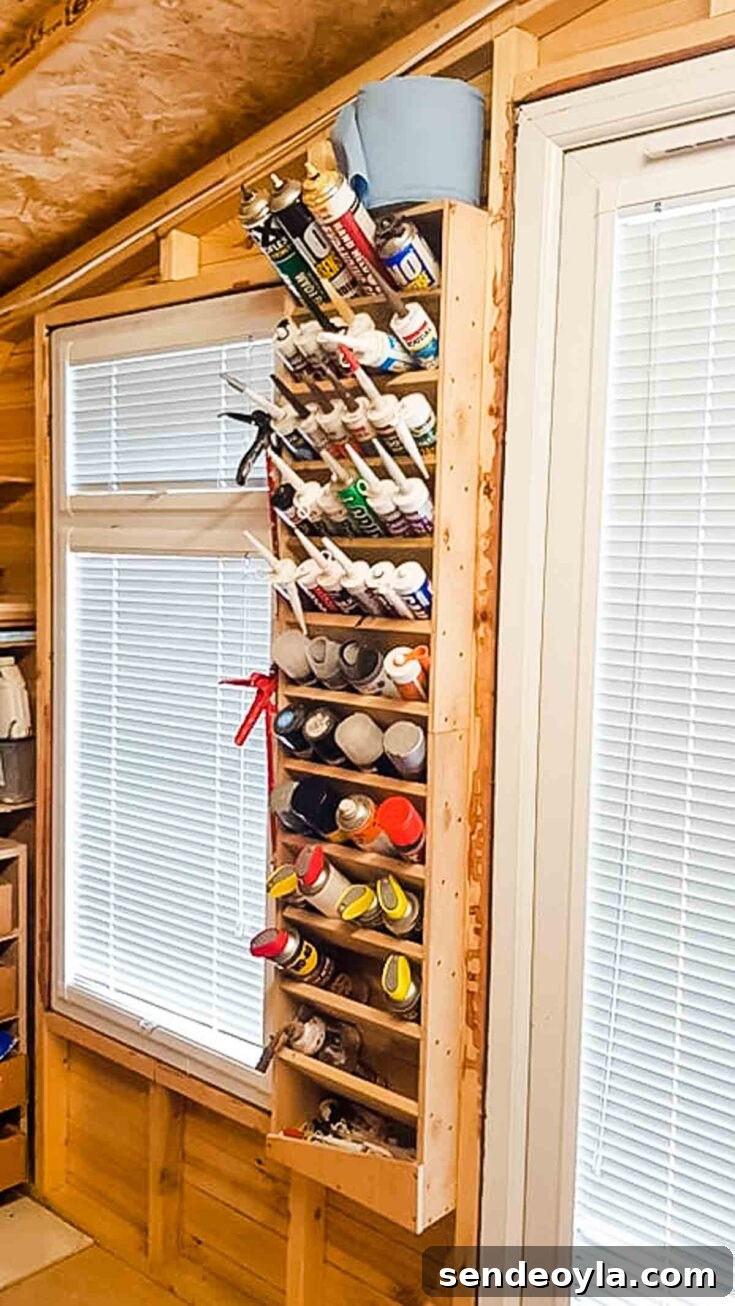
An easy rack made from offcuts, fitted between shed spars to store sealants, caulks and adhesives. Includes angled shelves, an optional top shelf for wipes, and a bottom shelf for spare nozzles.
Materials
- Offcuts (plywood or chipboard recommended)
- Wood screws
Tools
- Hand saw or powered saw
- Combi drill or impact driver
- Pocket hole jig (optional)
- Tape measure
- Sliding bevel gauge
Instructions
- Cut and screw offcut strips to the inside faces of two wall spars to create the internal width.
- Measure the new internal width and cut shelf pieces at least 15 mm thick.
- Optionally pocket-hole and screw a top shelf to store wipes or light items.
- Space and screw angled shelves approximately every 10 cm, typically at a 45° incline.
- Screw a bottom shelf and attach a front stop to store spare nozzles.
- Add a few screws on the side faces to hang caulk guns and tools.