
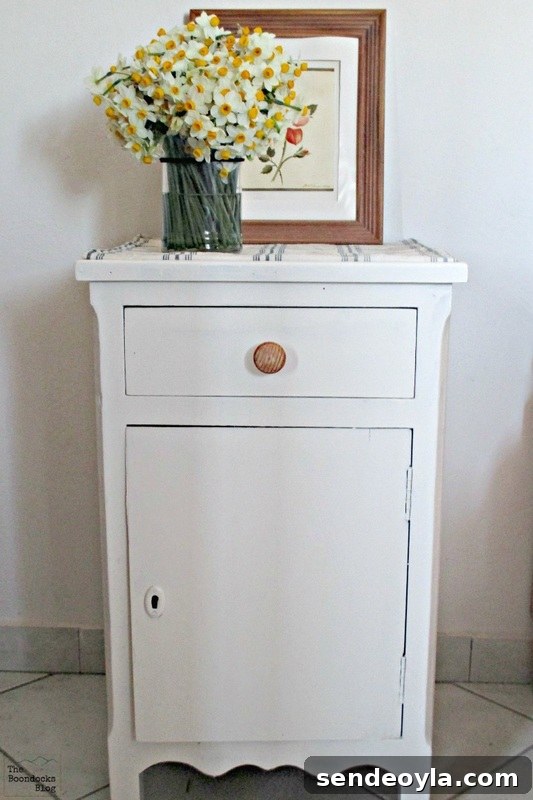
When I first started this blog I knew very little about paint. I couldn’t tell chalk-style paint from enamel, and all I knew was that the enamel paint sold at the local store was difficult to work with. It dried too fast, dripped easily, and never behaved the way I wanted. Early in my blogging days I painted a small table that looked okay at the time, but it was covered in that stubborn enamel and felt as bland as white sandwich bread. Today that piece has a new identity — I call it the Doily Top Side Table.
Disclosure: I received product for this post, but all opinions are my own. I only use and recommend products I trust.
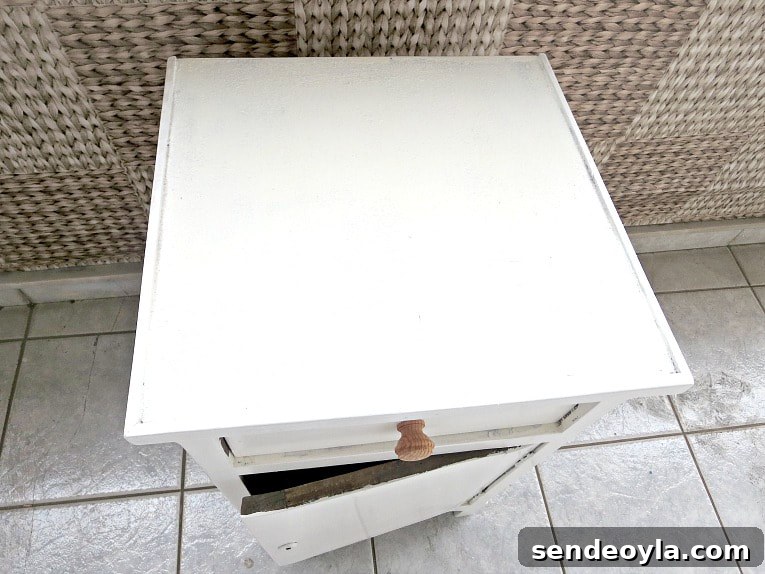
The table top had layers of old paint and glue; it was so uneven that at one point I covered it with fabric after an earlier paint job. Instead of stripping everything down, I decided to work with what was there and transform the surface using chalky-style paint and a simple decoupage technique. The end result is a small side table with a vintage, grandmotherly charm and a durable finish.
What I Used:
- Americana Decor Chalky Finish Paint (Everlasting)
- Sandpaper (various grits)
- Flat and detail brushes
- Mod Podge (water-base decoupage glue and sealer)
- Beeswax furniture finish
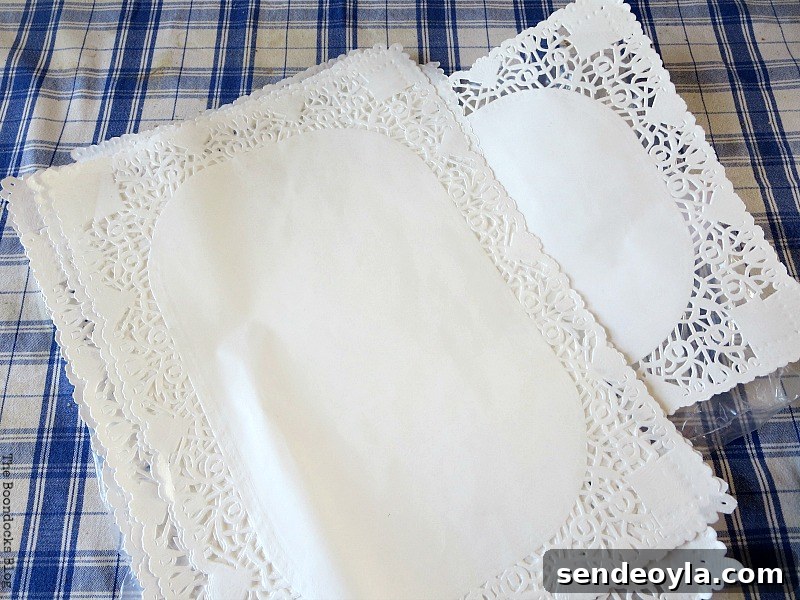
- Paper doilies (pack)
The Process: How I Made the Doily Top Side Table
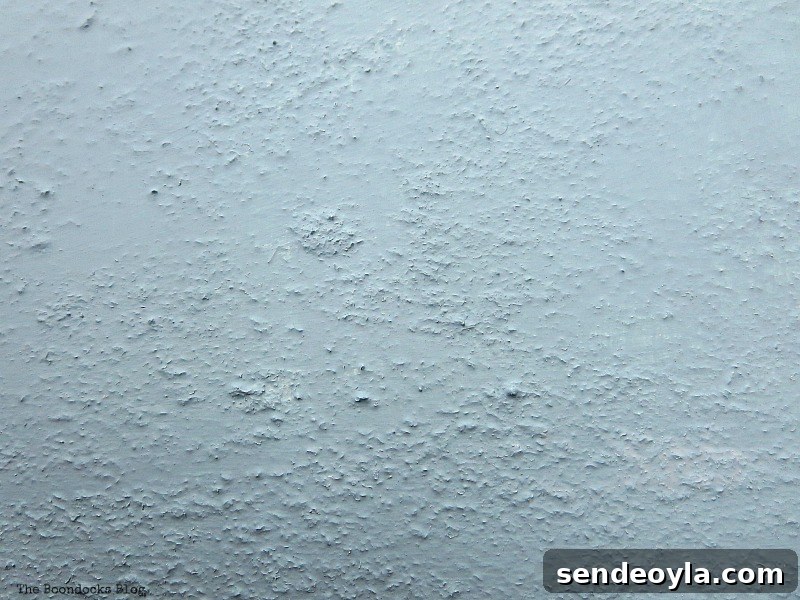
First, I painted the whole table with chalky-style paint. The texture of the chalky finish helped hide the old, uneven surface and gave the piece a soft, matte look. Chalky finish paint is forgiving and builds character naturally, so I used it as the base coat for both the top and the body of the table.
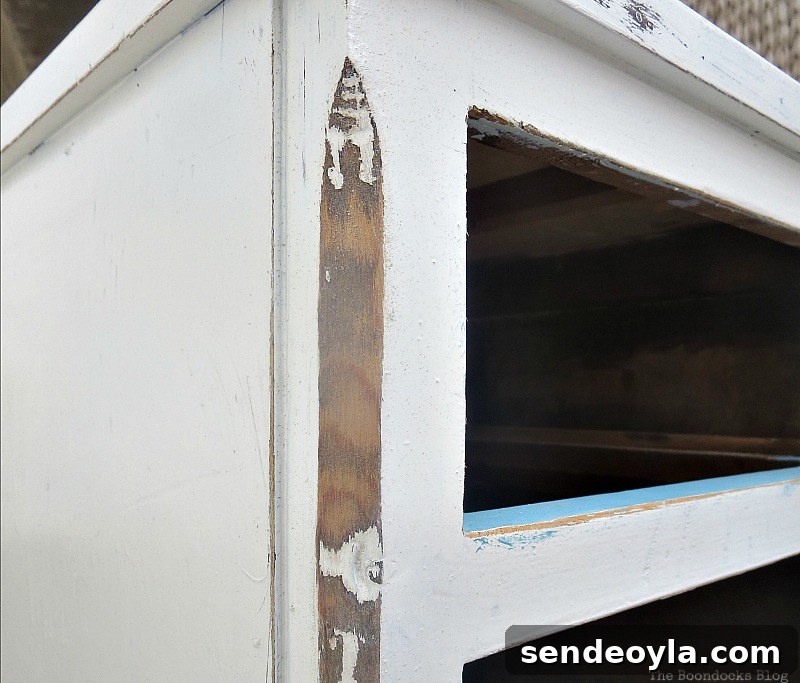
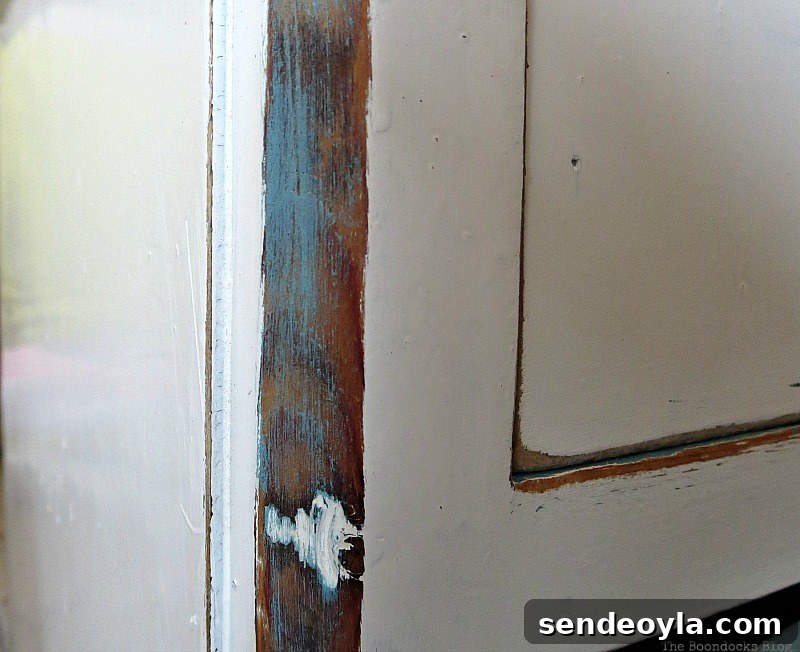
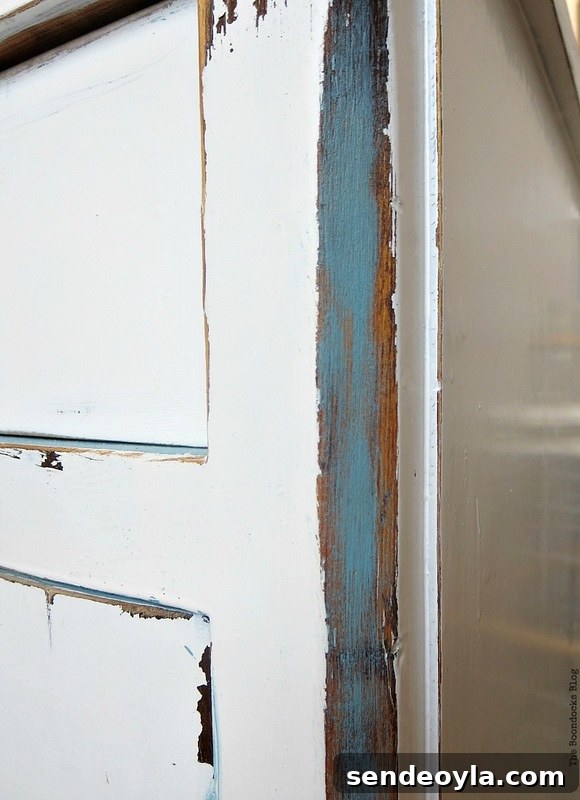
Once the base coat had dried, I distressed the piece with sandpaper, focusing on areas with lovely carved details and indentations. Distressing brings out depth and gives furniture that gently worn, vintage look. I also added a few accents of blue paint in recessed areas and along the sides to introduce contrast and visual interest.
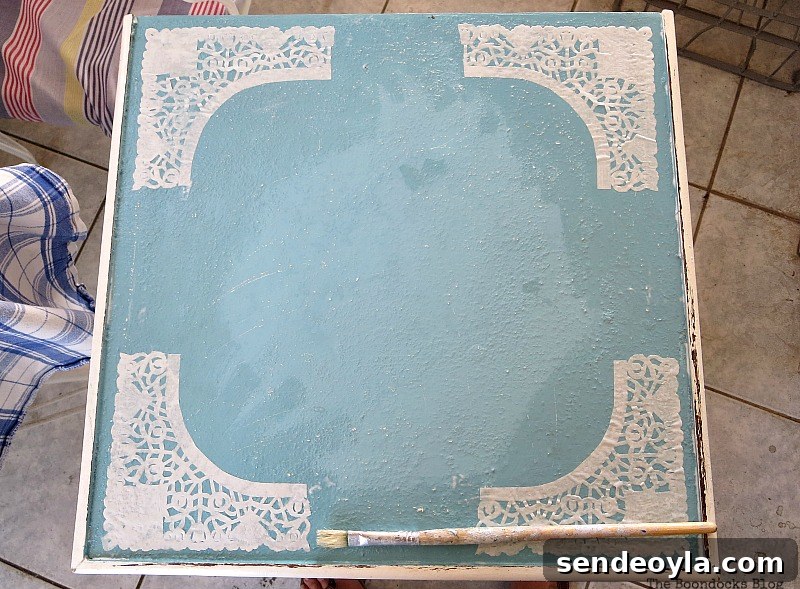
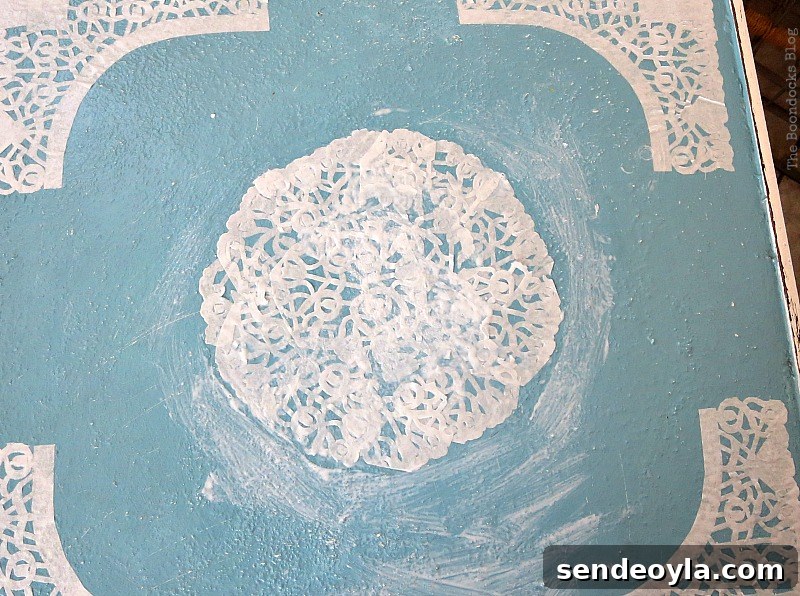
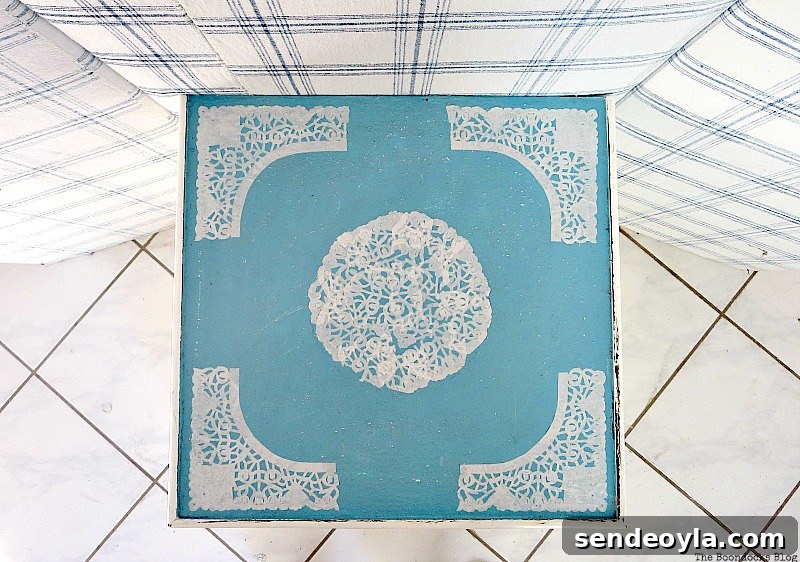
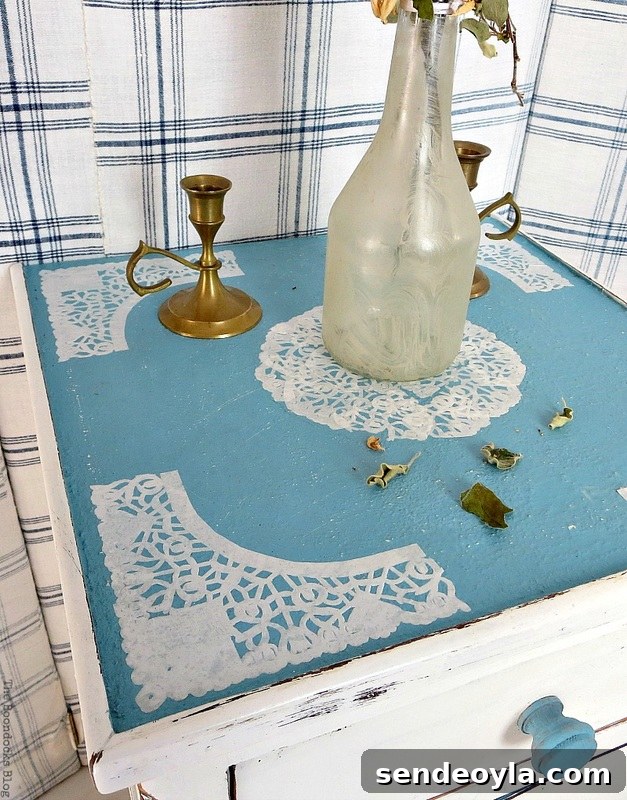
To create the signature doily center, I used paper doilies and Mod Podge to decoupage a circular pattern on the tabletop. I cut the doilies into pieces and arranged them within a pencil-drawn circle, layering small sections until the area felt balanced. Mod Podge both adheres the paper and seals it, leaving a smooth, nearly invisible finish once dry.
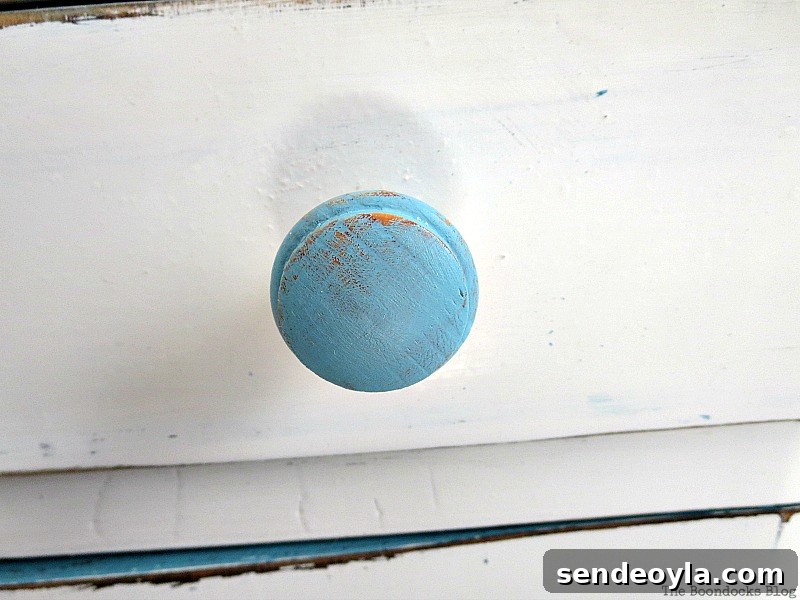
During the decoupage step you can see the wet Mod Podge holding the doily pieces in place. After it dried, the glue became clear and the paper blended into the painted surface. I painted the drawer knob blue to echo the accent color, then applied a beeswax finish to protect the painted details and give the wood a soft sheen.
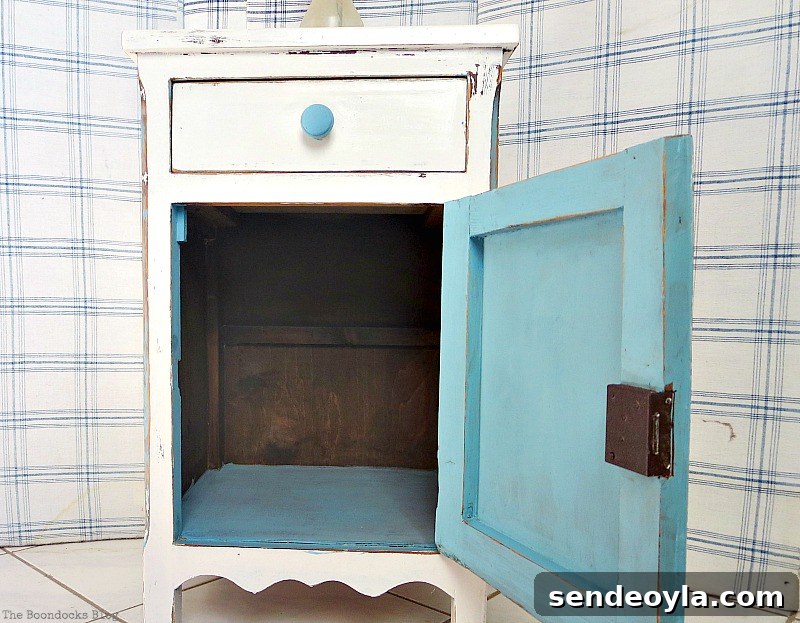
I also painted the interior of the cabinet to tie the whole piece together. The painted inside adds a pleasant surprise when the door is opened and enhances the craftsmanship of the little table.
When everything was finished, I stepped back and enjoyed the result. The doily motif gives the tabletop an old-world, sentimental charm, while the blue accents modernize the look. The decoupage treatment is surprisingly durable and the doily no longer shifts or peels once sealed.
Note:
Product names are listed above for reference. I may receive a small commission when readers purchase products through links I provide elsewhere, which helps support the blog and future projects. There is no additional cost to you.
Product names are listed above for reference. I may receive a small commission when readers purchase products through links I provide elsewhere, which helps support the blog and future projects. There is no additional cost to you.
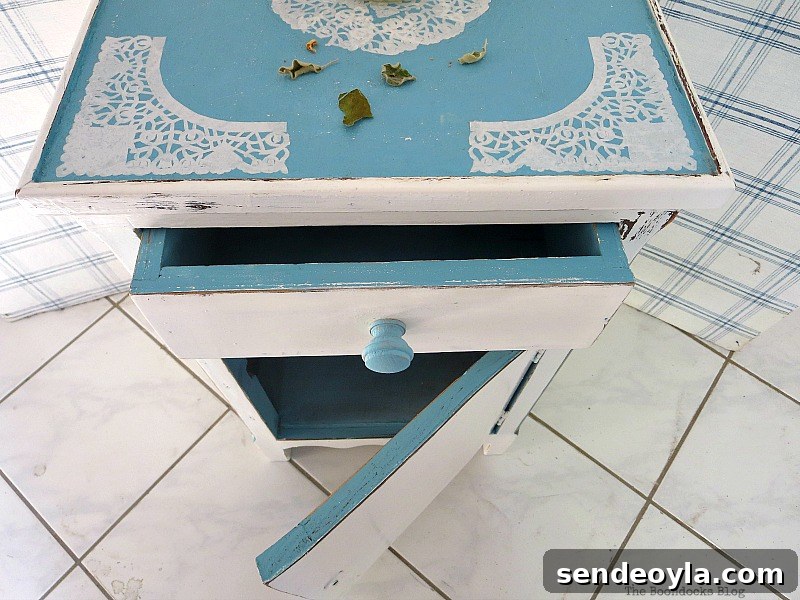
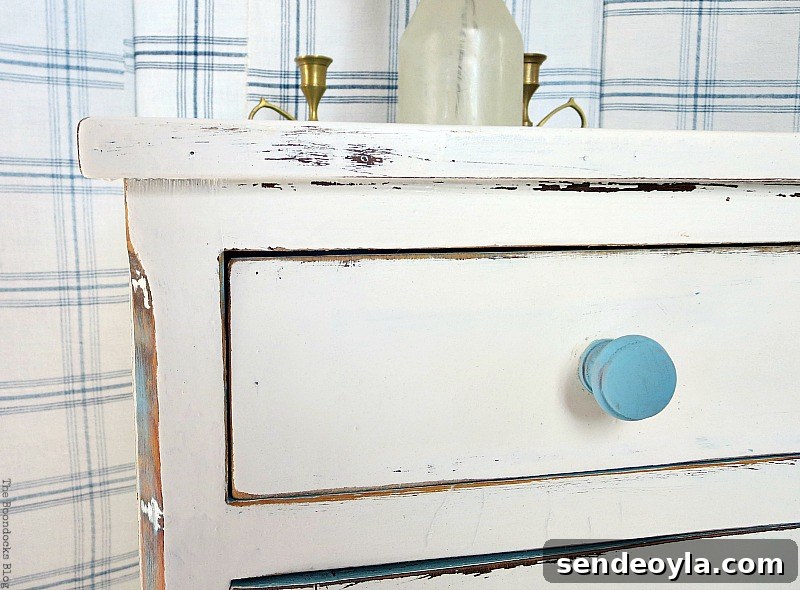
Side-by-side with a companion piece painted in the same shade, you can see how different paints and finishes behave: chalky-style paint produces a soft, velvety surface, while traditional enamel tends to look and wear differently. These contrasts are part of the fun when refreshing old furniture.
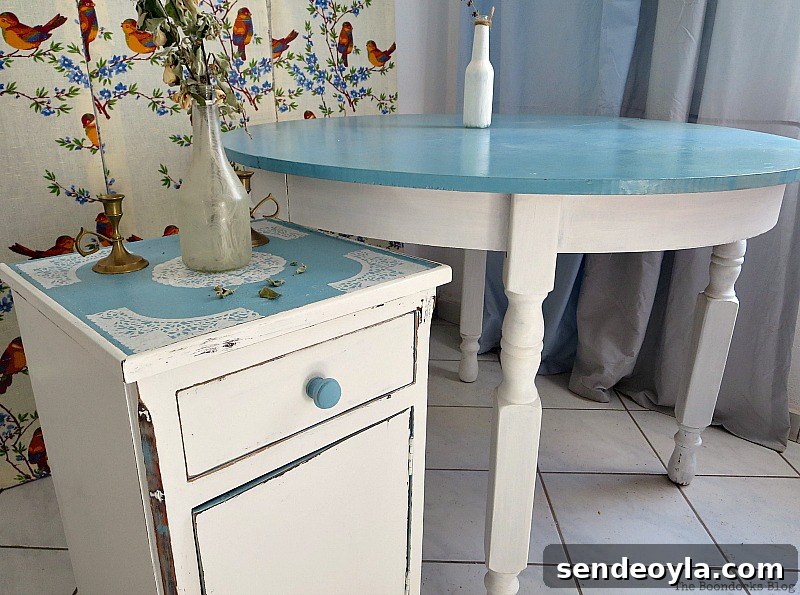
The blue accent in the side indentation is one of my favorite little details. It adds a subtle pop of color and highlights the table’s original carving. Overall, the piece now feels like a treasured vintage find with a fresh, personal twist.
So there you have it: my Doily Top Side Table. I enjoyed experimenting with paint, distressing, and decoupage on this small project. Would this decoupage treatment have worked on a round beach table, or would it have been too fussy? I’d love to hear what you think.
If you enjoyed this makeover, please share or save it for inspiration. Subscribe to the blog to get updates and more furniture makeovers delivered to your inbox twice a week.
You may also like:
Pieces of a Table
Greek Beach Table
<< HOME Five Minutes to a Pretty Clock >>
This blog is for entertainment purposes only; my DIY tutorials are not professional advice. Read my full disclaimer on the blog.
I love getting your comments and I reply to each one.