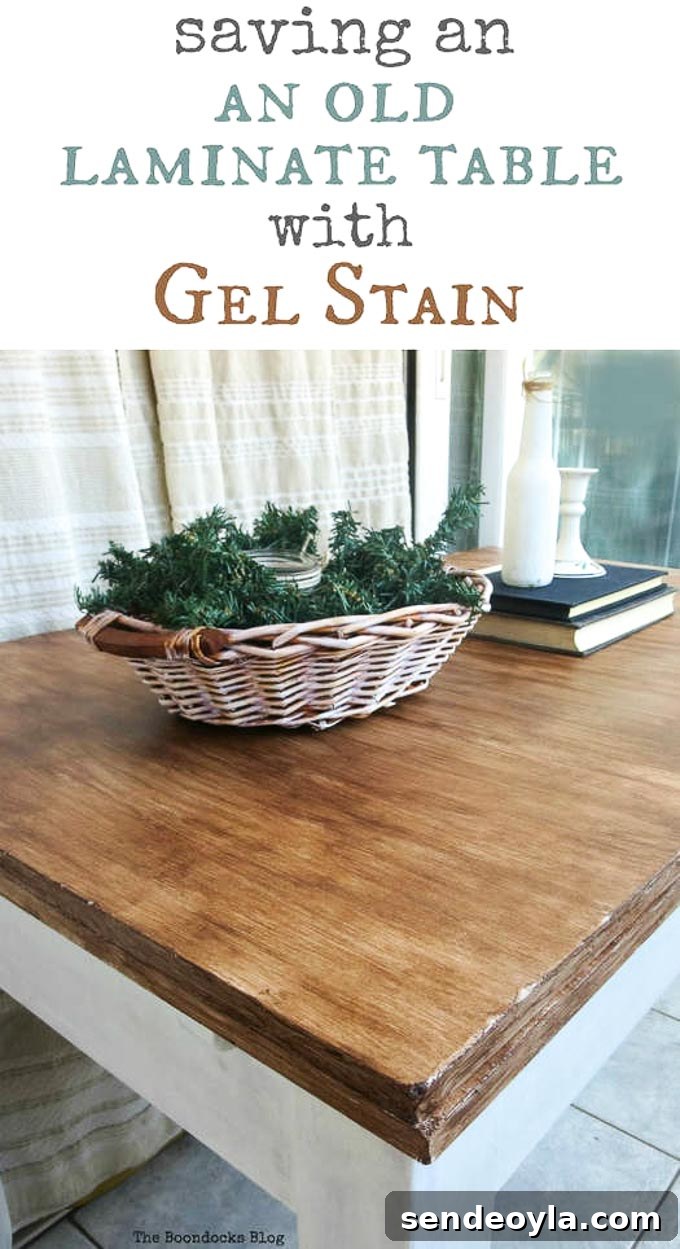
Have an old laminate table that’s seen better days? Instead of throwing it away, give it new life with a simple paint and gel-stain makeover. This step-by-step guide shows how I upcycled a chipped, worn laminate table into a functional, rustic piece using basic supplies and minimal experience.
Upcycling a Beat-Up Laminate Table
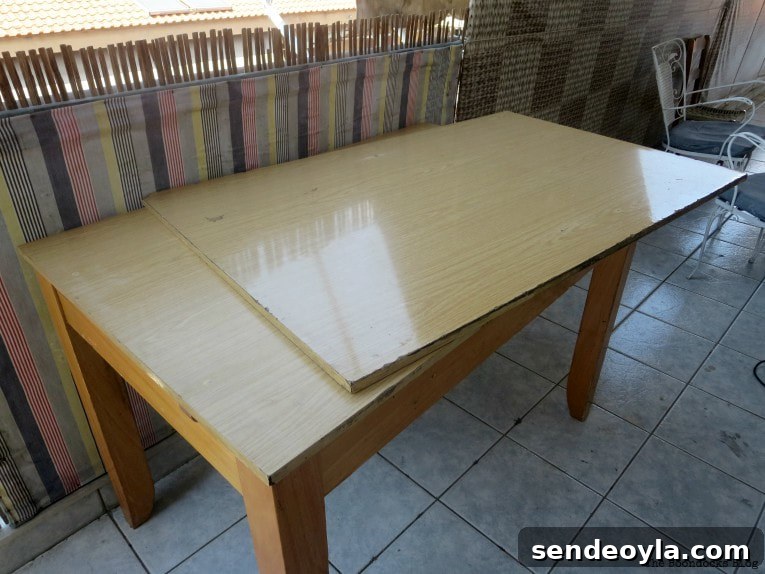
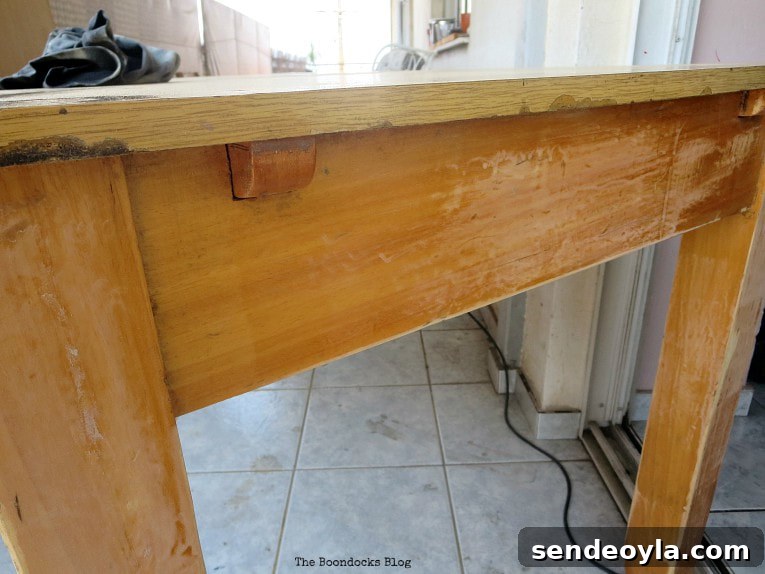
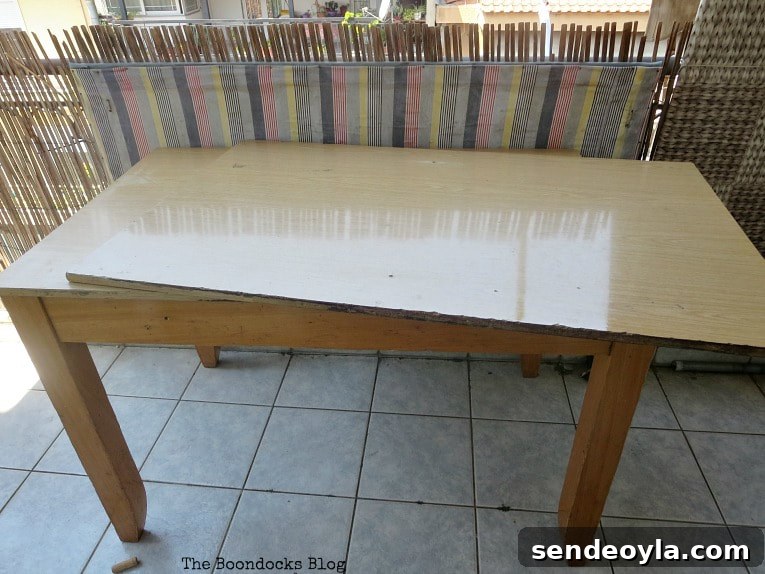
This table was a folding model with two leaves tucked under the top to expand the surface. The finish was chipped, the sides were scuffed, and some spots looked like they’d seen years of use. Rather than replacing it, I decided to try a DIY furniture makeover using chalky finish paint as a base and a gel stain to create a worn wood look.
If you have a similarly tired piece, don’t be afraid to try. You don’t need professional skills to upcycle laminate furniture—just a little patience and the right products. Below I explain what I used and how I did it so you can replicate the look.
What I Used:
Disclosure: this list is for reference. I used these products for this project.
- Sandpaper (assorted grits)
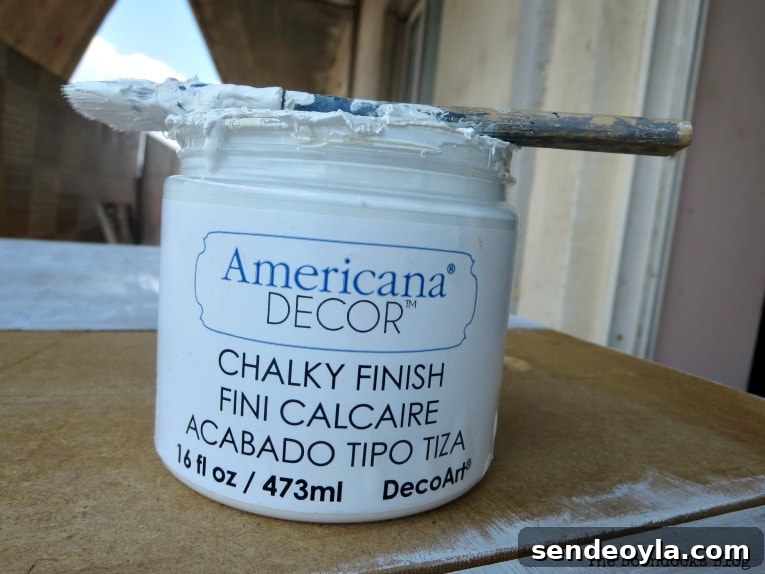
- DecoArt Americana Decor Chalky Finish paint in a crisp white
- Wood putty for repairs
- DecoArt Americana Gel Stain in Walnut
- Clear varnish in spray form for protection
The table had a center top and two leaves underneath. It looked pretty sad when I started, but that also meant there was a lot of creative freedom—small flaws would only add character to the finished piece.
The How-To
1. Prep and light sanding: Begin with light sanding to remove any peeling finish, drips, or rough edges. You don’t need to sand through the laminate—just smooth the problematic areas so paint will adhere consistently.
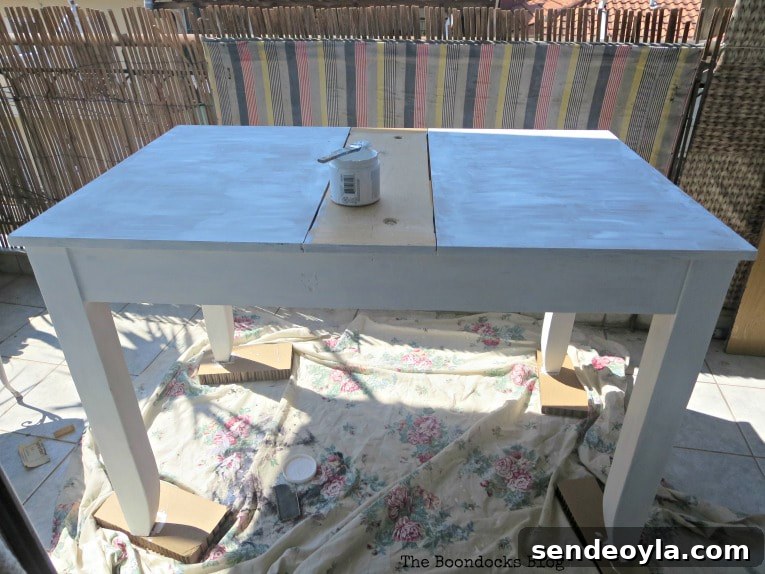
2. Paint the base: I used a chalky finish paint as a primer and painted the legs and underside of the table with three coats for durability. The tabletop just needed one coat of the chalky paint because the gel stain would provide the finished look.
3. Directional texture: On the leaves I painted the undercoat along the length of the table, while the top received paint across the width. This intentional (and partly accidental) difference in brush direction created subtle texture and grain when the gel stain was applied, giving an authentic aged-wood appearance.
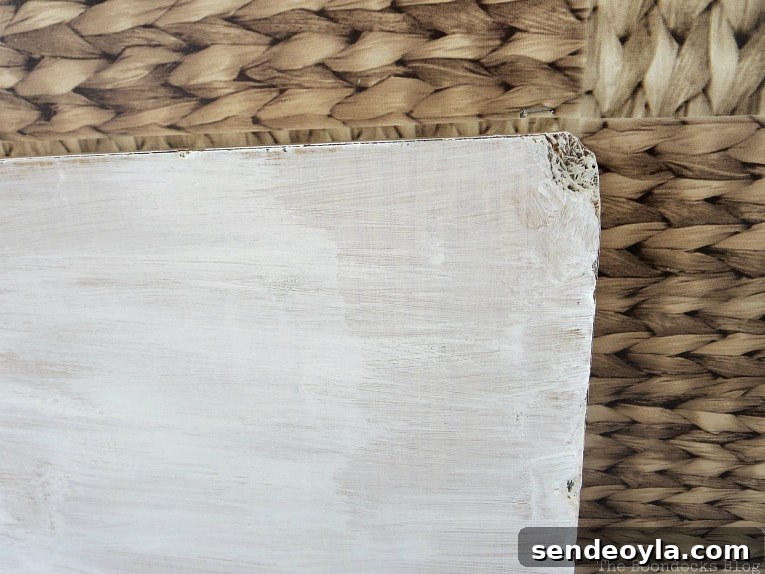
4. Repair small damage: I filled chips and worn edges with wood putty, smoothed it, and painted over it once dry. The repairs blended in nicely after the stain was applied.
5. Apply gel stain: Using a round brush, I worked the gel stain back and forth across the leaves and tabletop. Gel stain is thicker than traditional liquid stain and dries quickly, so it allows for more control and creates rich, uneven tones that suit an upcycled piece. I intentionally left some variation rather than trying to make it perfectly uniform.
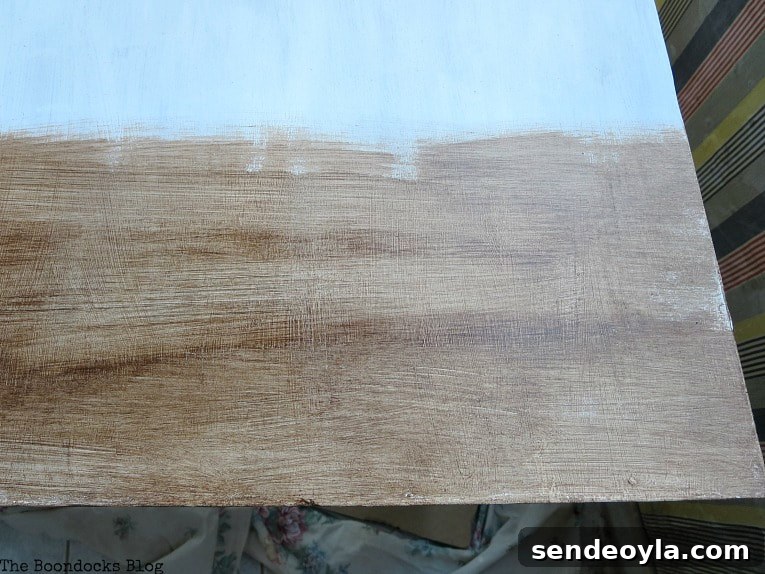
The different painting directions beneath the stain produced pleasant contrast and depth—long strokes under the leaves and crosswise strokes on the top gave each surface a slightly different character.
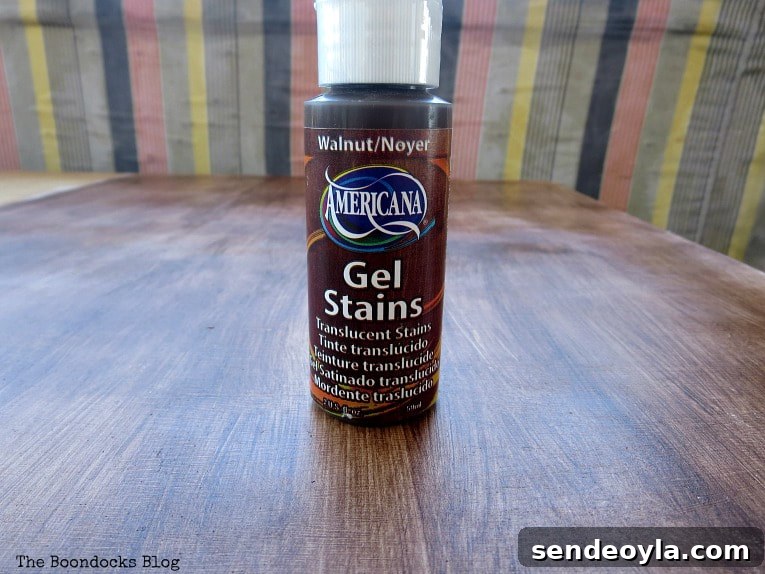
6. Edge details and finishing: I stained the edges to match the top and leaves, then finished the project with multiple thin coats of spray varnish. I applied thin, even layers over two days to build a durable protective finish—important if this table will see everyday use.
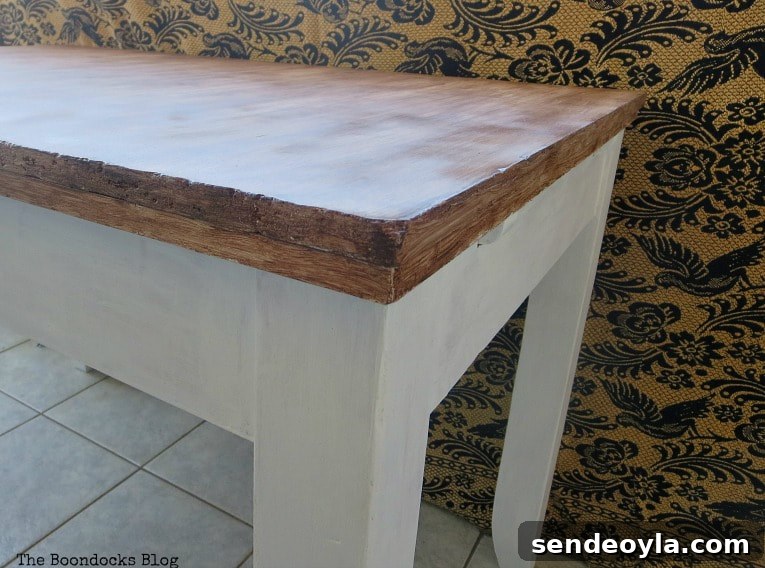
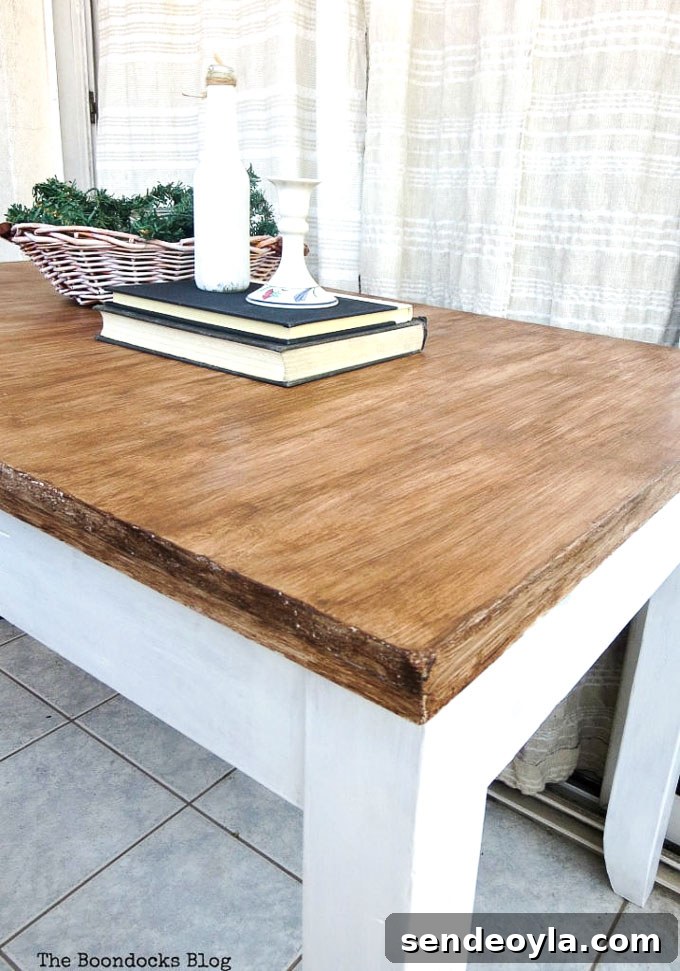
7. Cure time: After letting the varnish cure for about a week, the table was ready for everyday use. The final result is a rugged, worn look with the warm walnut stain contrasting nicely against the crisp white base.
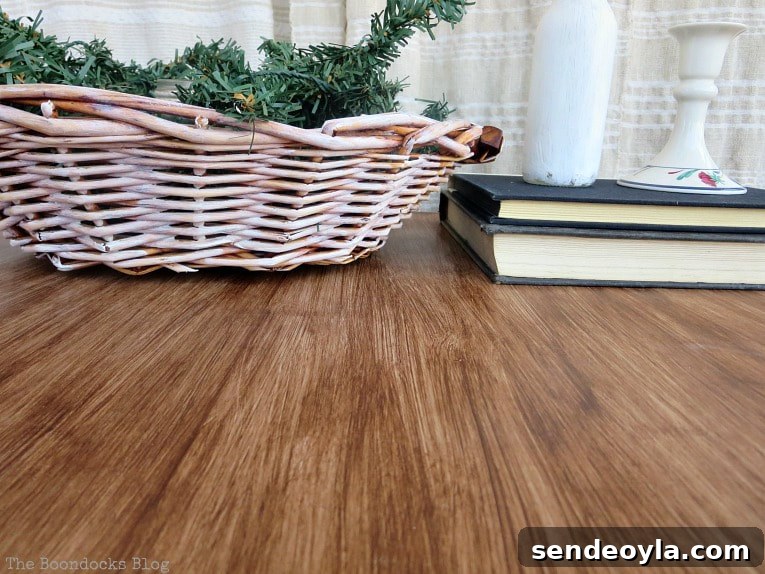
The finished table now sits in a small bedroom as part of a compact apartment refresh. The walnut tones and weathered finish pair well with white paint and give the piece renewed life without the expense of buying a new table.
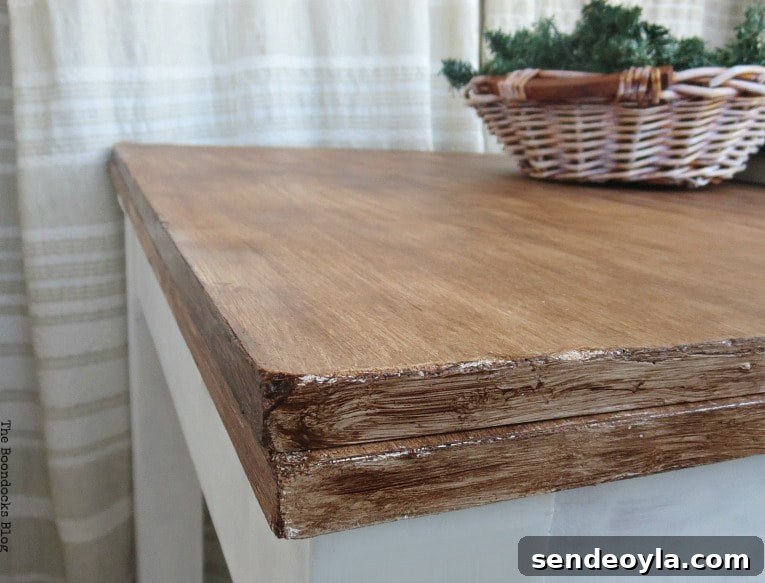
Before and after photos make the transformation obvious—the table went from worn and tired to rustic and useful. Trying a furniture makeover like this is a low-cost way to practice DIY skills and create something unique for your home.
If you’re hesitant to attempt an upcycle, start with a piece that’s already in rough shape—you can’t do much worse, and you’ll learn a lot. Gel stain is forgiving and great for creating a faux-wood appearance on laminate when combined with a chalky primer. Have you used gel stain before? How did your project turn out?
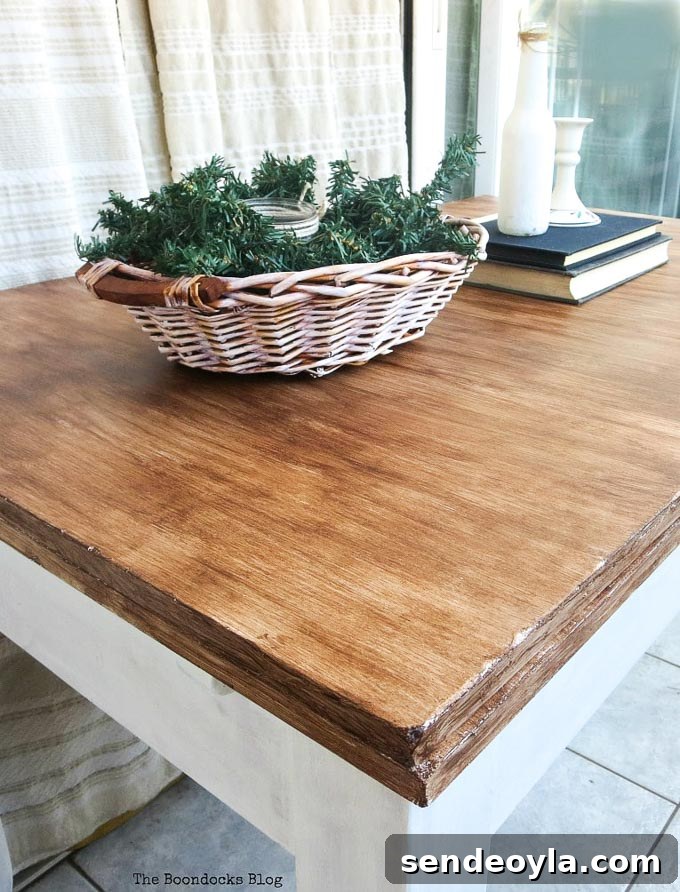
Give it a try—upcycling a laminate table is an affordable, eco-friendly furniture makeover that adds character and extends the life of a well-built piece.