
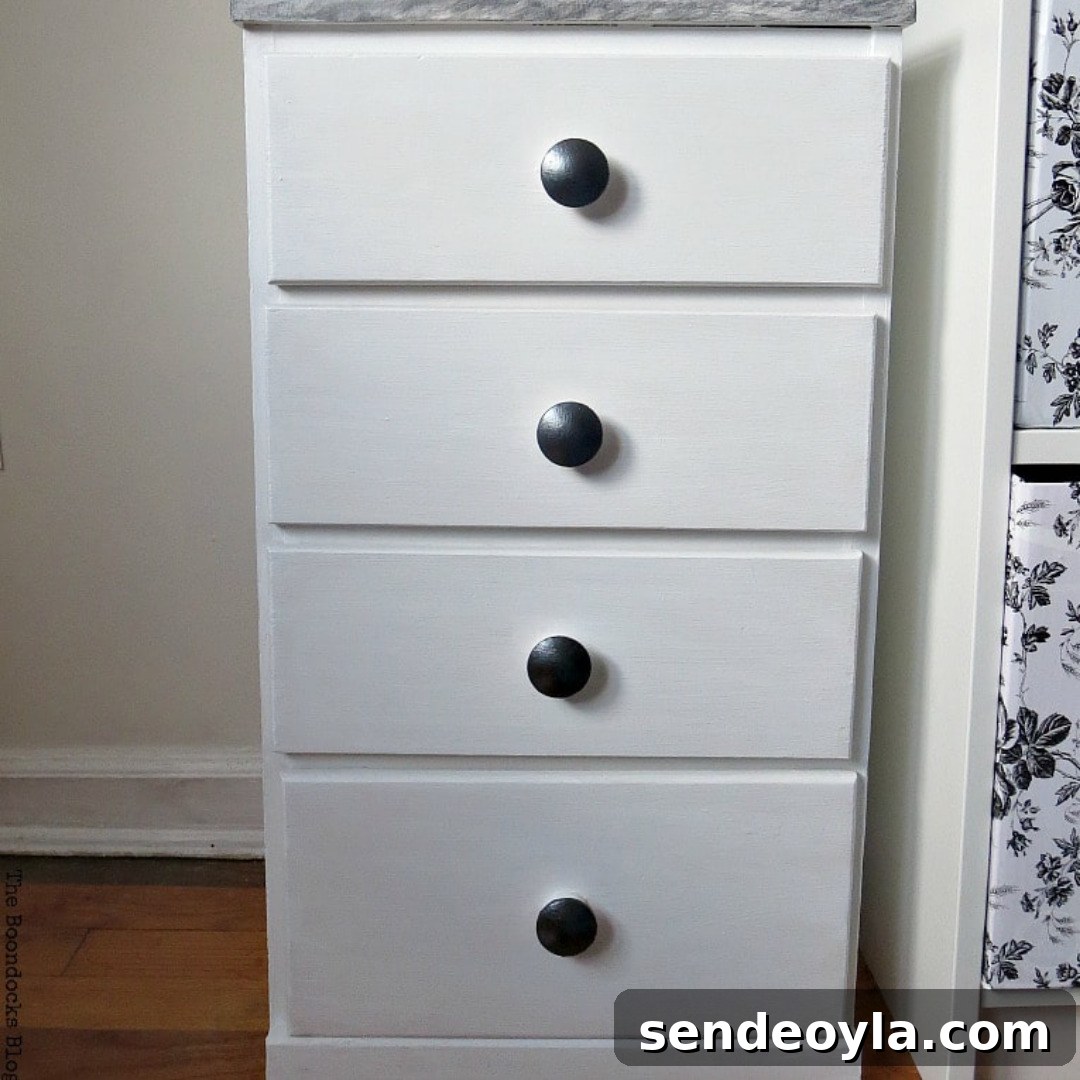
I’m putting the finishing touches on my daughter’s bedroom and giving some rescued furniture a refresh. Below I share the full nightstand makeover: how I repaired the damage, repainted the piece, and added simple details to give it a fresh, cohesive look for the room.
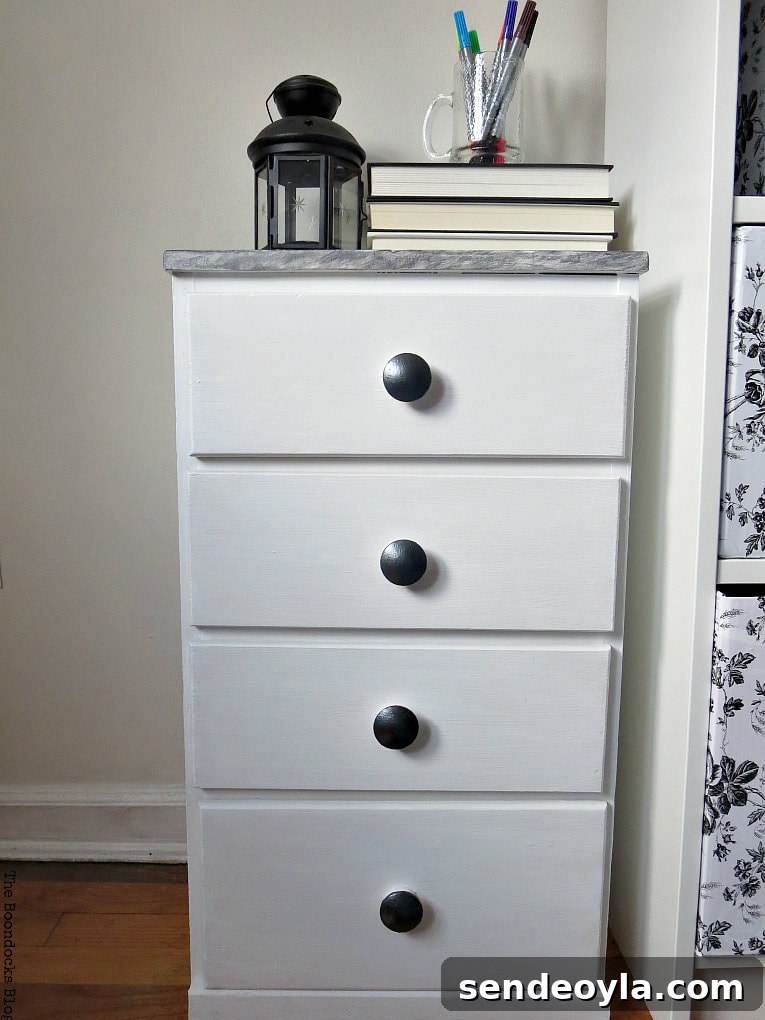
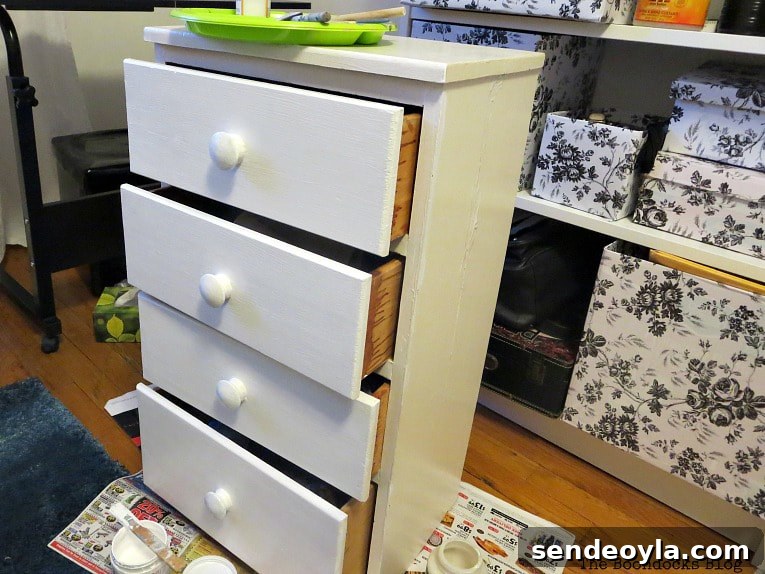
This little nightstand had belonged to my dad and was rescued from the basement. It had good bones, but it looked tired and yellowed, so I decided it would be perfect for the girl’s room after a proper makeover. It needed a few repairs, a new color scheme, and a bit of styling to blend with the rest of the room.
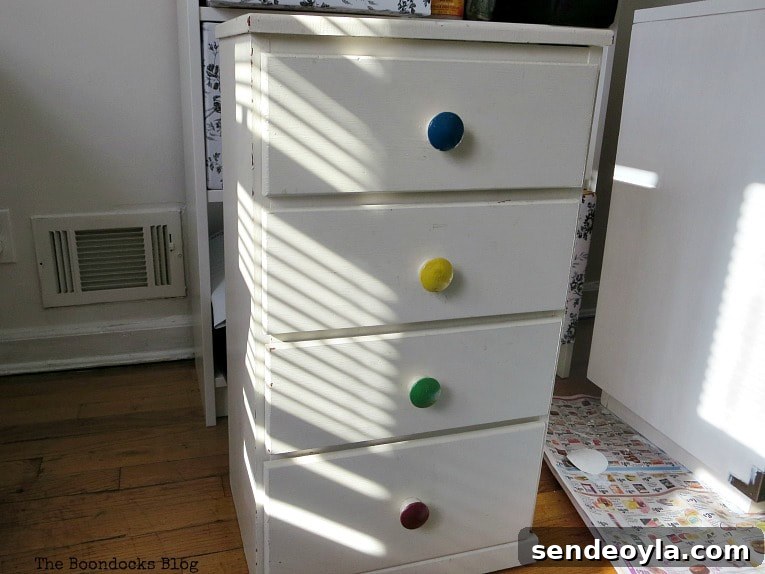
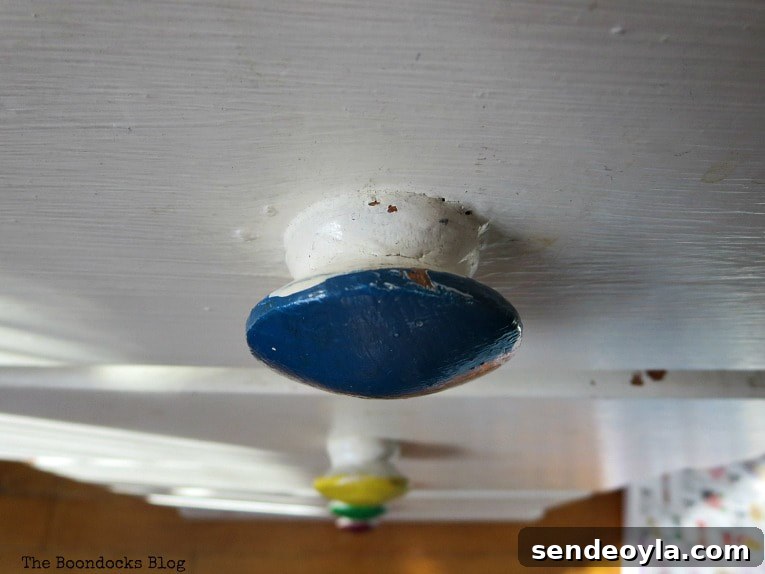
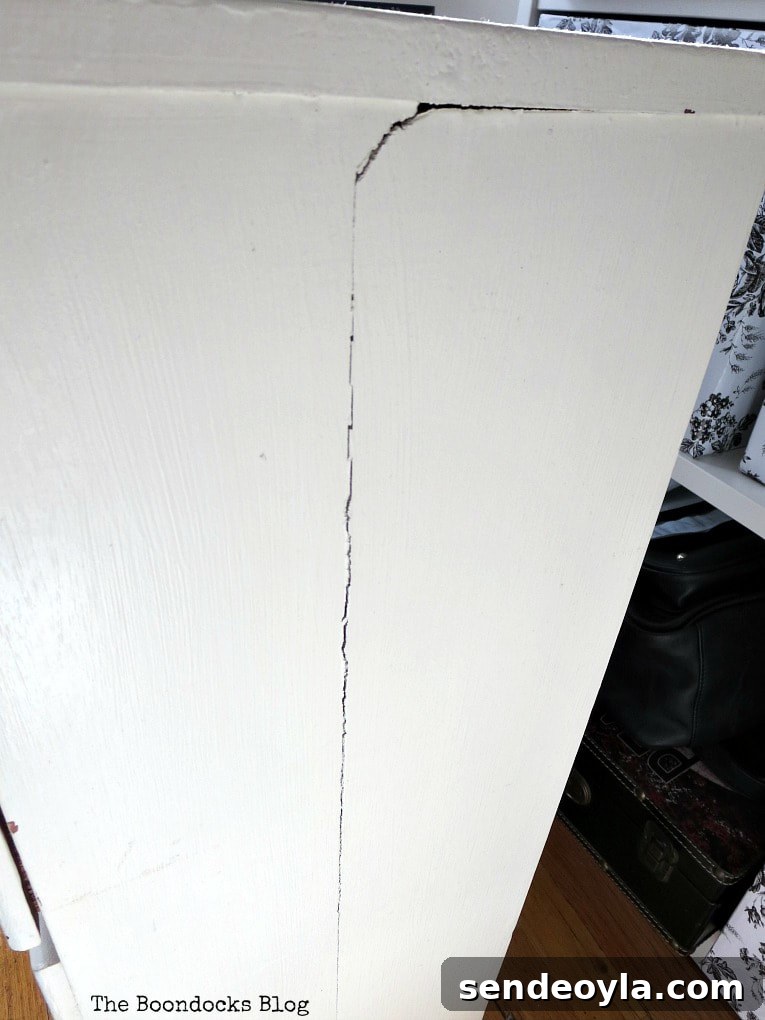
The original finish had faded into a sour cream tone rather than a crisp white, the knobs were multicolored, and there was peeling paint. Most notably, a large crack ran down one side that I didn’t notice until the piece was upstairs. I planned a quick, practical makeover: repair the cracks, paint the whole piece white, add subtle metallic accents, and use contact paper for a decorative touch on the drawer sides.
With a few affordable supplies and a little time, this nightstand would get a modern, coordinated update that fits the black-and-white theme of the bedroom.
What I Used for my Nightstand Makeover
Disclosure: this post originally included affiliate links for convenience.
- DecoArt Americana Satin Enamel Paint in White
- DecoArt Americana Decor Wood Reclaim (wood filler)
- Sandpaper (various grits)
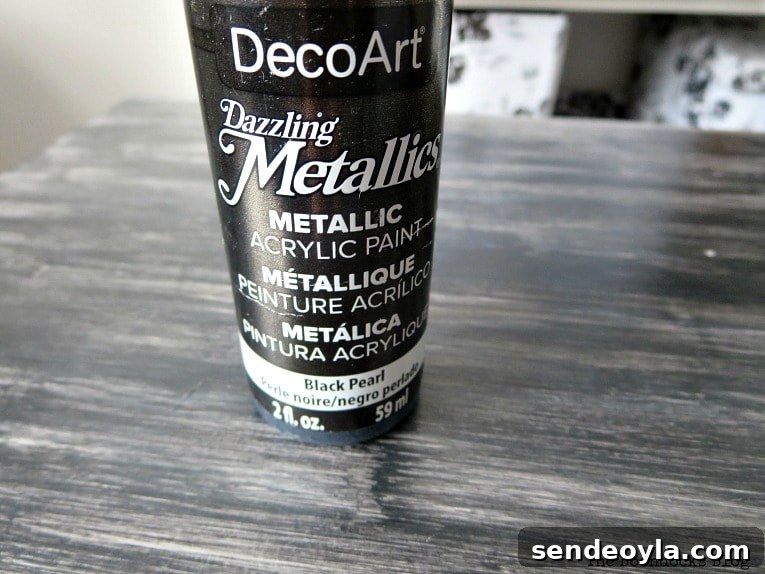
- DecoArt Americana Dazzling Metallics Pearl Black (metallic accent paint)
- DecoArt Varnish Ultra Matte
- Decorative contact paper for drawer sides
Nightstand Makeover How-To
I started by sanding the surface lightly to remove loose paint and create a key for the new paint. For the main finish I used DecoArt Satin Enamel in white—it goes on smoothly, covers well, and typically doesn’t require a top coat. Two coats achieved a clean, even base that immediately refreshed the piece.
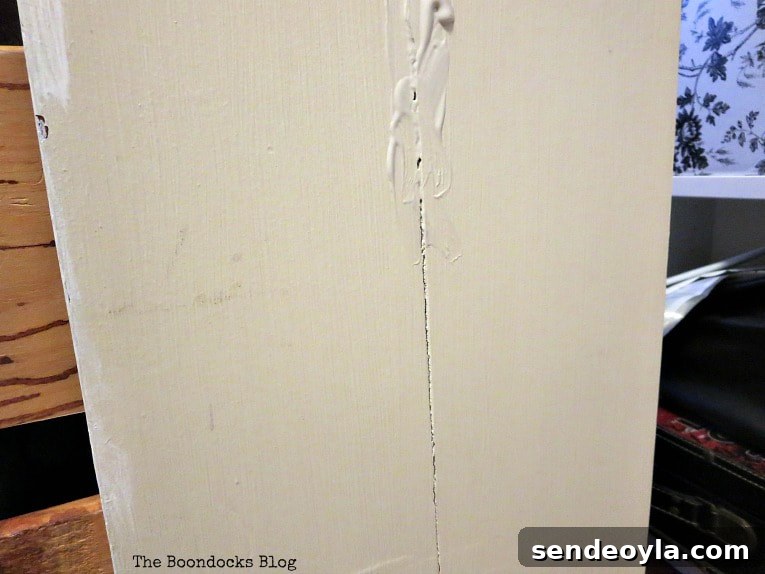
To repair the large crack, I applied a wood reclaim filler in layers, letting each application dry and sanding between coats until the surface was smooth and seamless. This method is straightforward and works well for structural gaps and surface imperfections.
Next I addressed the hardware. The original colorful knobs were inconsistent with the room’s aesthetic, so I repainted them a solid black. We’d tried a pearlescent metallic first, but my daughter preferred a matte black for a softer, less shiny look.
With the white base applied and the hardware sorted, I added subtle metallic accents on the tabletop and edges using a pearl black metallic paint. I used a dry-brush technique for feathered strokes so the accents read as deliberate texture rather than heavy coverage—this gives the top an artful, slightly rustic feel without overpowering the clean white body.
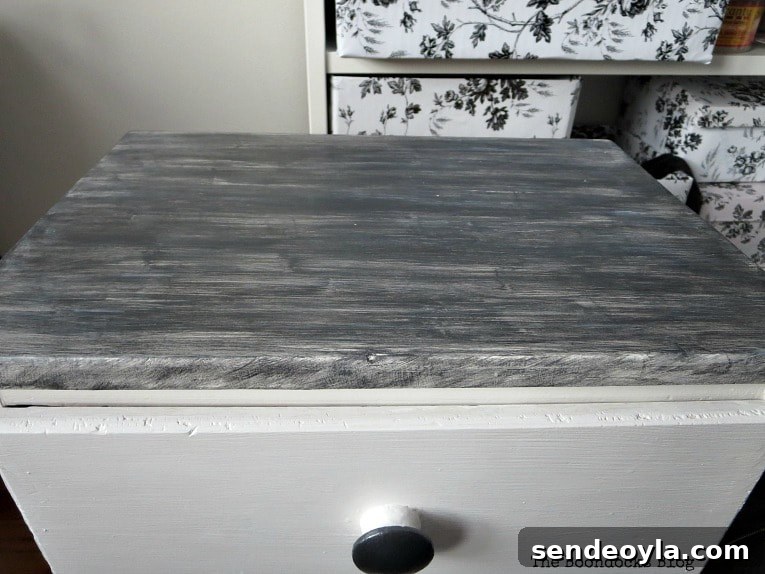
Because I added metallic paint over the satin enamel, I sealed the tabletop with a matte varnish to protect the finish and mute any sheen. If you only use satin enamel, a topcoat isn’t always necessary, but sealing metallic layers helps prevent rubbing and wear.
For a finishing flourish, I lined the outer sides of the drawers with patterned contact paper. This simple addition softens the black-and-white palette and adds a pretty, unexpected detail every time the drawer is opened. It’s also an inexpensive way to introduce pattern and personality without permanent changes.
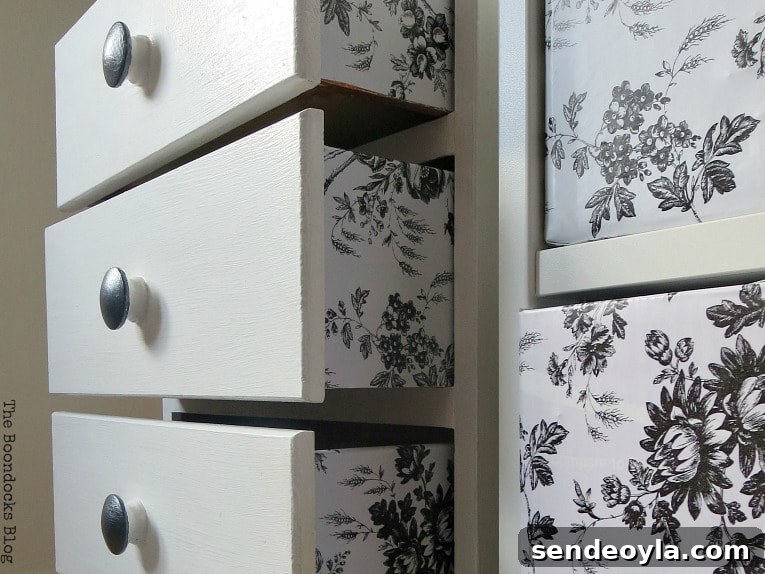
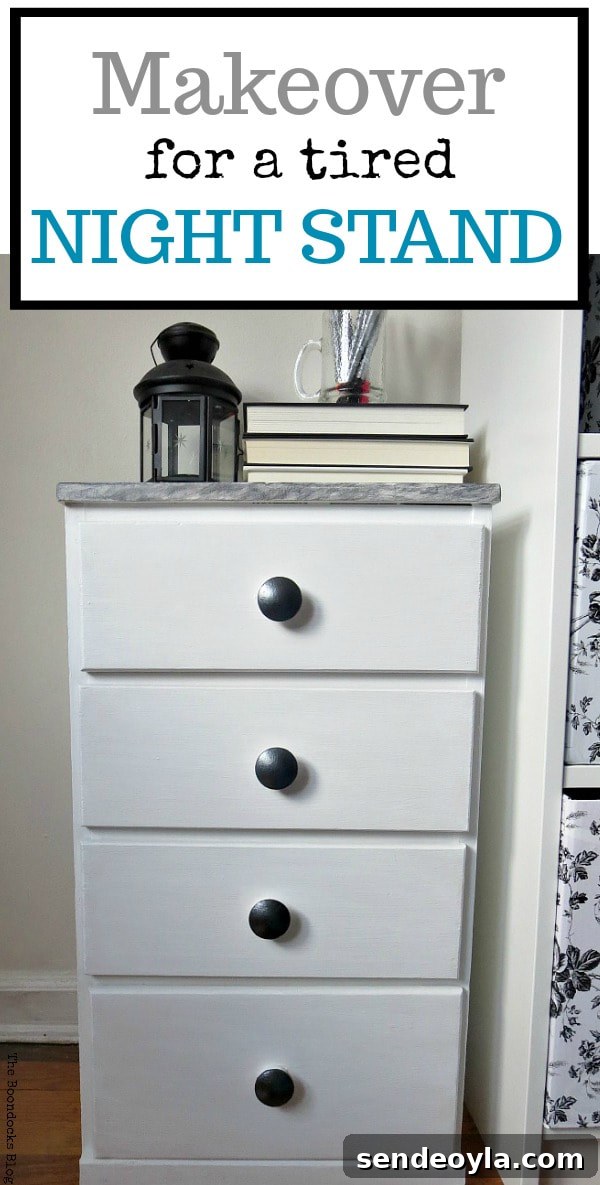
With the hardware reattached, varnish cured, and contact paper trimmed, the nightstand was ready to return to the bedroom. The finished piece looks fresh and intentional—crisp white, edgy yet subtle metallic top, and a soft toile pattern on the drawers that ties into the room’s decor.
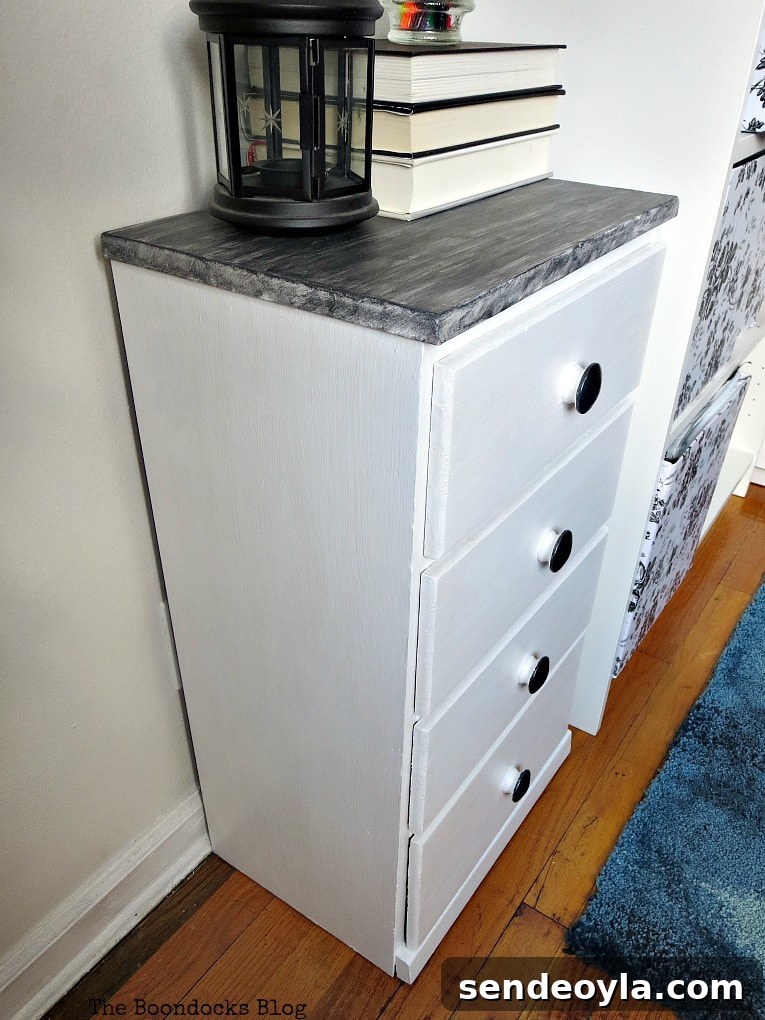
The brushstrokes across the top add texture and interest while the black hardware grounds the look. It now sits between an ombré wall and the bed, complementing artwork and other black-and-white elements in the room.
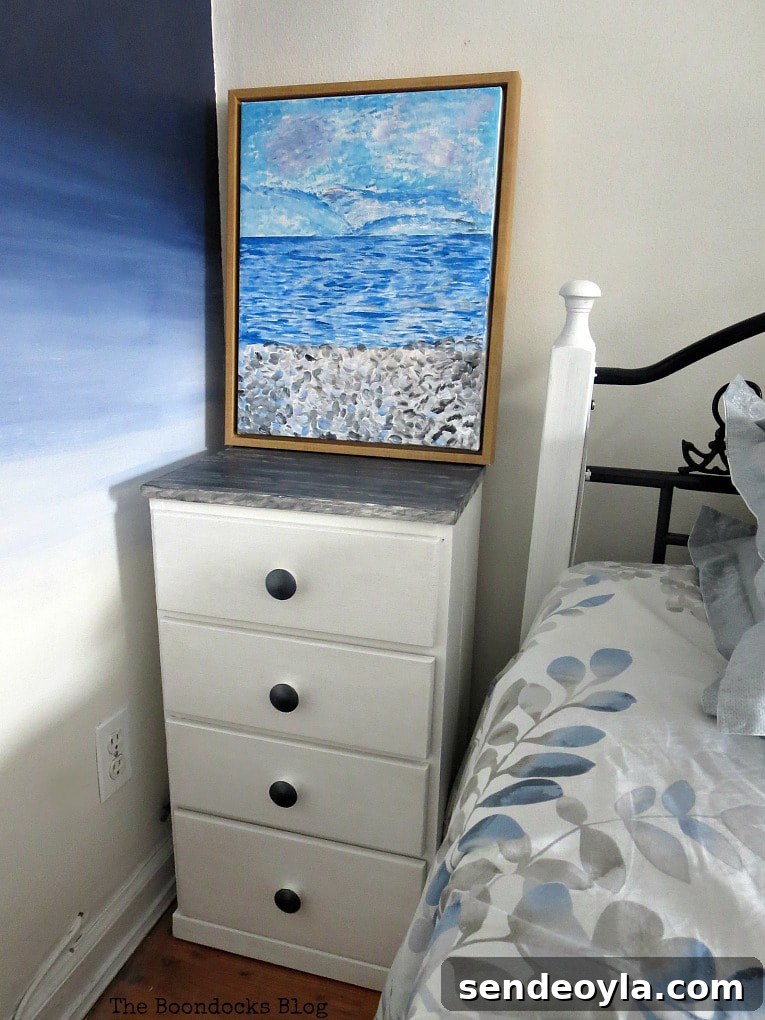
I’m really pleased with how this nightstand makeover turned out. It rescued a sentimental piece, solved functional issues, and contributed a stylish focal point in the bedroom—all with modest cost and a couple of afternoons of work.
The Black and White Bedroom
This makeover is one of several projects I’ve completed in the girl’s black-and-white bedroom. The cohesive palette makes it easy to update pieces over time—painted lamps, a refreshed bedframe, a painted mirror, and a restored dresser all work together to create a modern, layered space. Below are a few of the other updates I completed for this room.