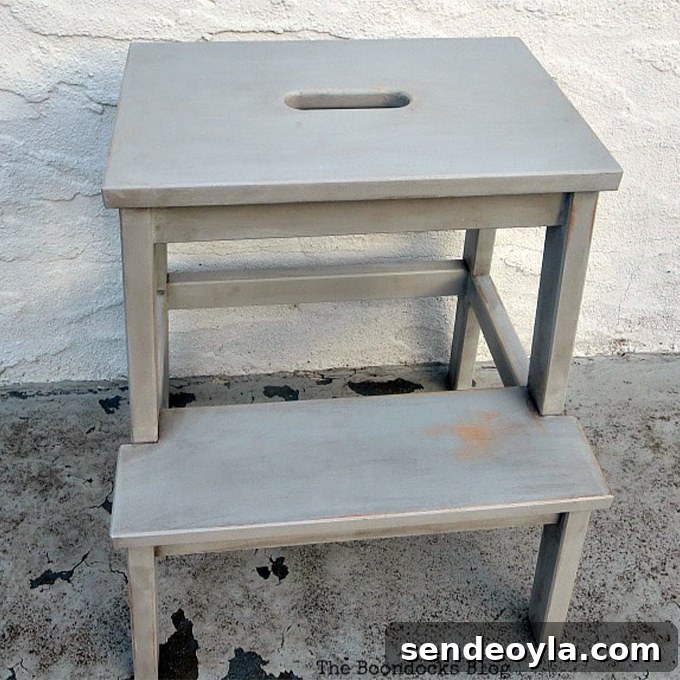
If you’re searching for an Ikea Bekvam step stool hack, you’re in the right place. This simple DIY shows how to turn a plain Bekvam into a warm, worn-looking stool using paint, wax, sanding, and a little distressing. The method is quick, adaptable, and easy to customize—pick any color you like and make it your own.
IKEA Stool Upcycle
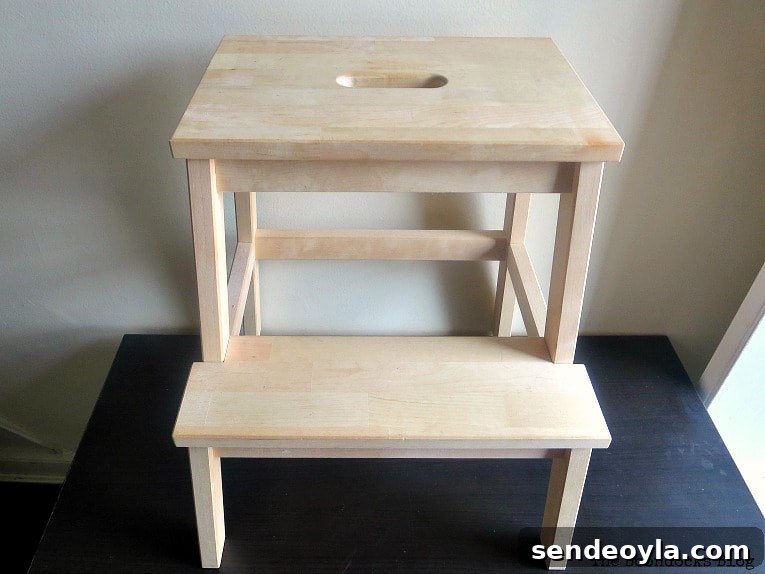
I always come home with something whenever I visit Ikea. On one trip I picked up a Bekvam step stool—perfect for reaching high kitchen cabinets since I’m 5’2″. I left it unpainted for a while, then decided to reinvent it with a cozy, aged finish rather than keeping it looking brand new.
Rather than waiting for natural wear, I sped up the process with paint and wax to create a lived-in patina. The result is a stool that looks comfortably aged while remaining easy to clean and durable for daily use.
Materials Used
Note: names of products used for this project are included for reference.
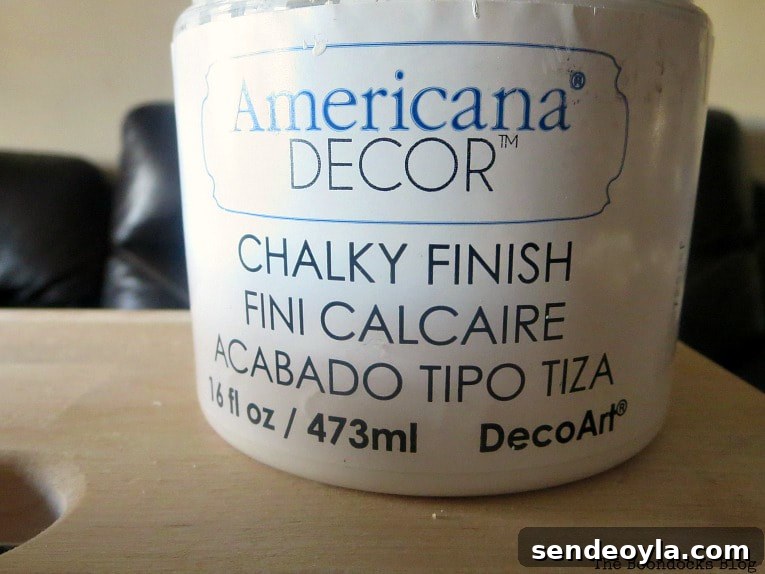
- Americana Decor Chalky Finish in Everlasting (base)
- DecoArt acrylic paint in black and yellow (for tinting)
- Americana Decor Cream Wax
- Daddy Van’s Decorative Wax in Cafe Noir
- Round paint brush (for applying wax)
- Clean rags for buffing
- Sandpaper
How to Hack an Ikea Bekvam Step Stool
The Bekvam is solid birch, which takes paint nicely. My goal was a finish that would clean easily but still read as gently worn. I started by wiping the stool with a vinegar-and-water solution to remove dust and oils so the paint would adhere evenly.
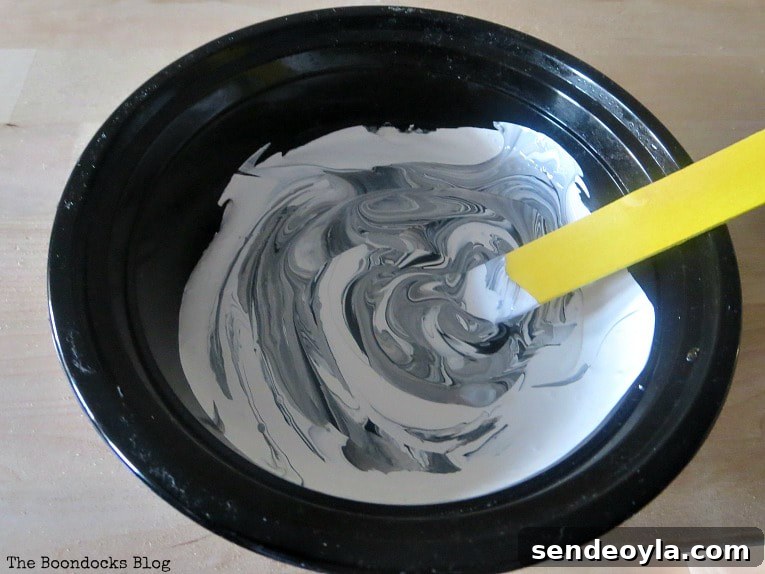
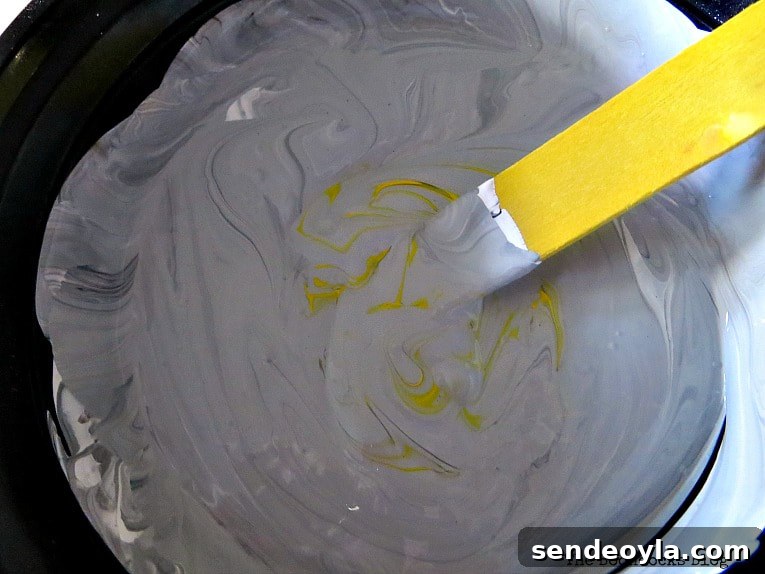
I used a chalky white paint as a base and mixed in a small amount of black acrylic to create a warm gray. To avoid a cold tone I added just a touch of yellow, which gave the gray a softer, cozier hue.
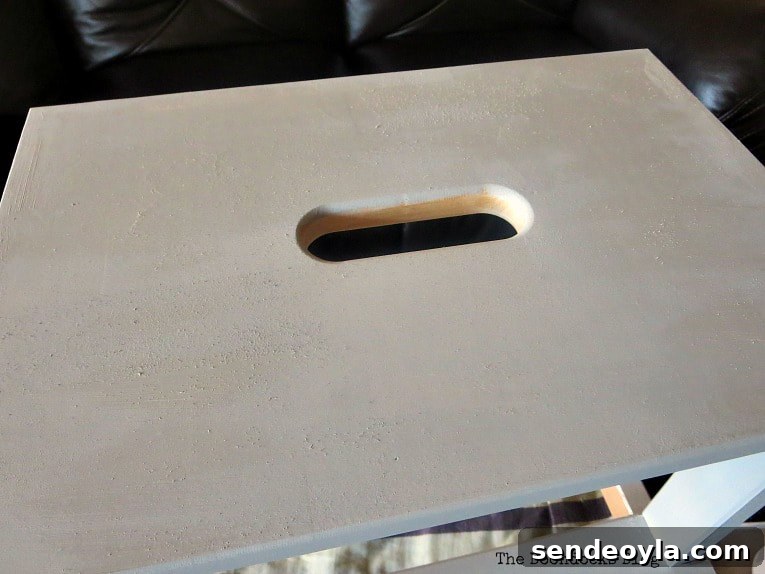
Once the color was right, I painted the entire stool and let it dry. After that, I lightly sanded the surfaces to smooth any brush marks and to prepare the wood for waxing. Sanding also helps create natural variations where distressing will read more authentically.
At that stage I weighed options for protection and aging: varnish for a hard finish, or wax for warmth and color depth. To keep things simple and controllable, I opted to skip varnish this time and work with waxes only.
I began with a cream wax to create an even base and make it easier to blend the darker wax layer. Applying the cream wax first prevents the dark wax from penetrating too deeply and gives you more control over the final tone.
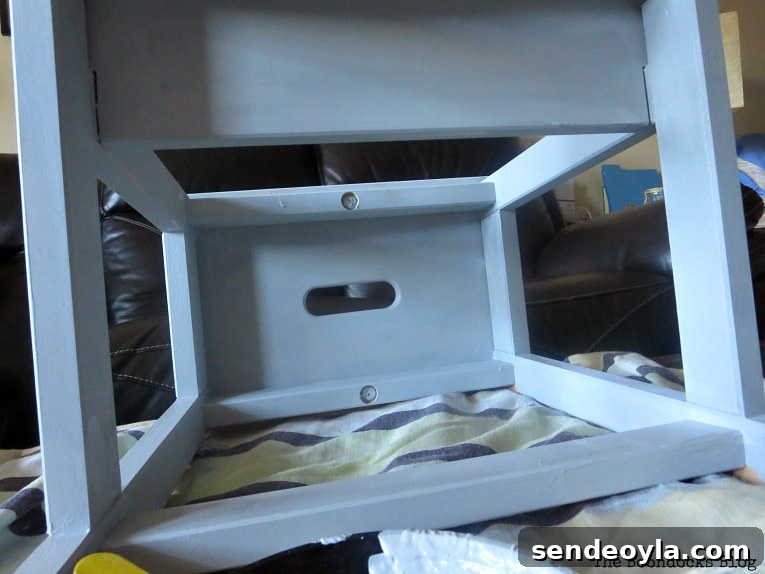
Next I applied the darker wax—Daddy Van’s Cafe Noir—using a round brush to work it into corners and grooves. The round brush makes it easier to get wax into crevices and control how much color you add to each area.
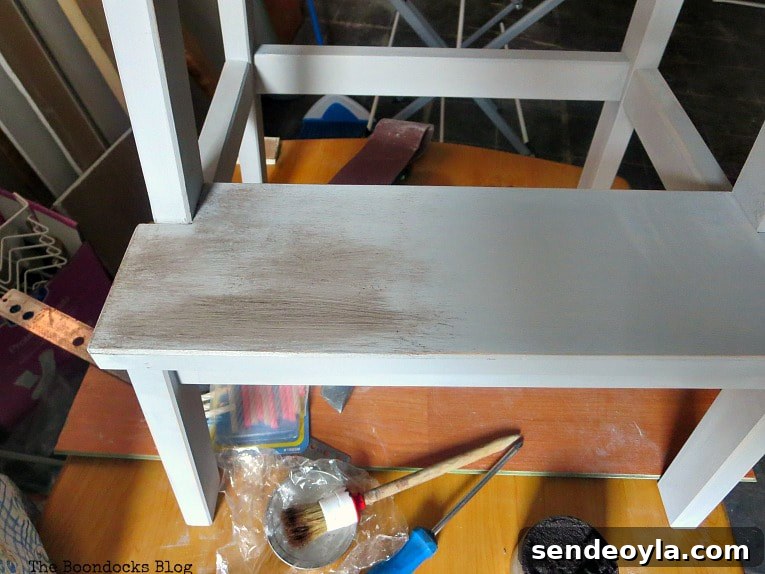
After brushing the wax into the wood, I wiped away the excess with a clean rag and buffed the surface to the desired sheen. This step brings out the warmth of the wax and blends the color naturally into the painted base.
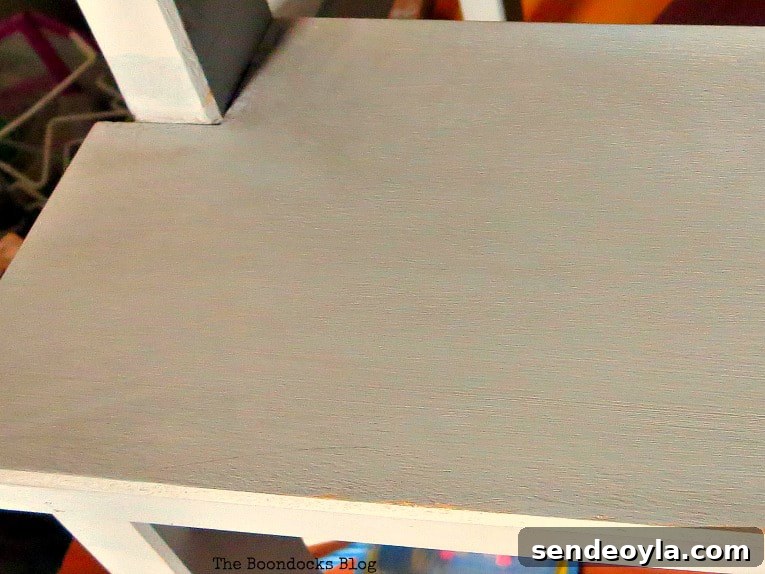
I also added some distressing to edges and corners to enhance the worn look. While some prefer to distress before waxing, I did it afterward and blended the areas with wax to keep the finish cohesive. Imperfections can be part of the charm—handled intentionally, they make the piece look authentically aged.
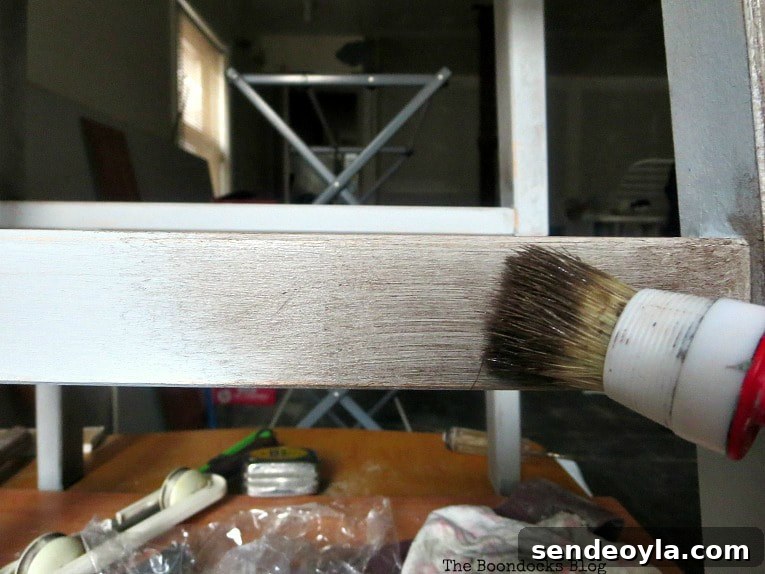
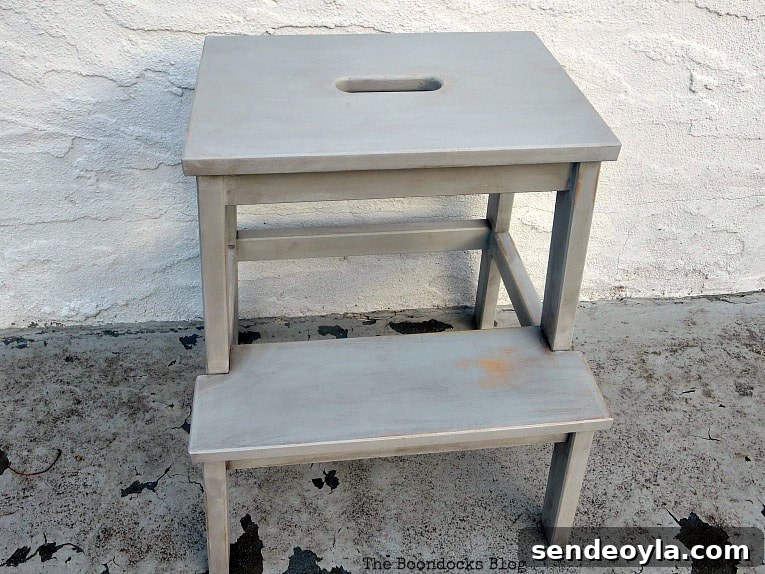
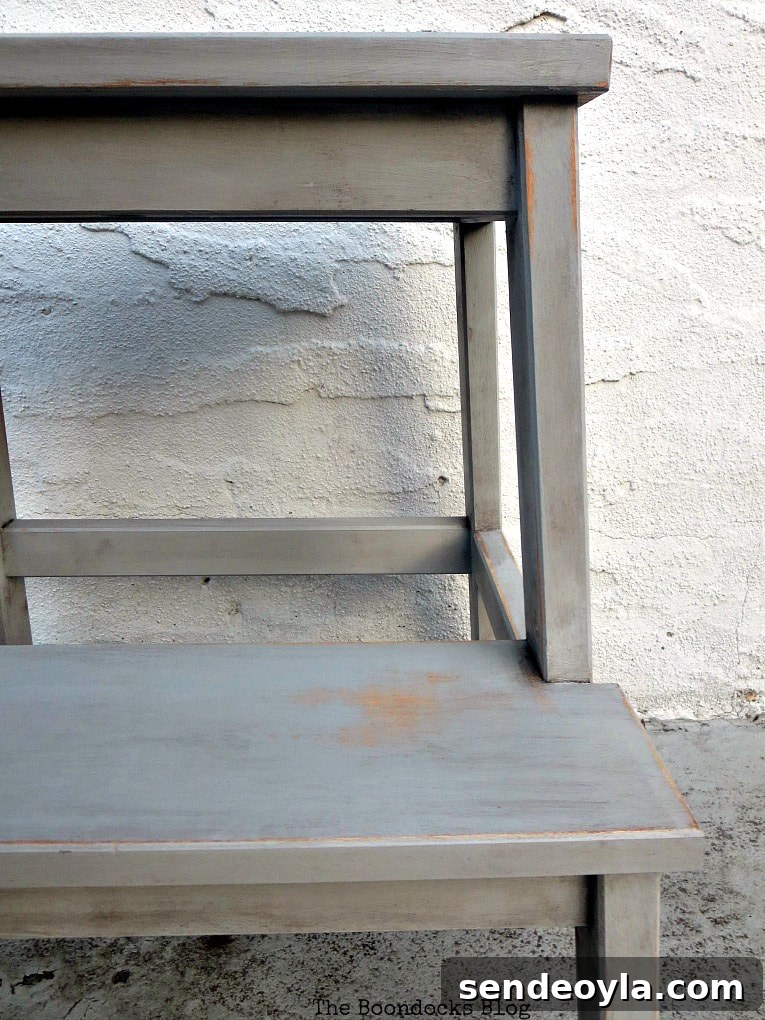
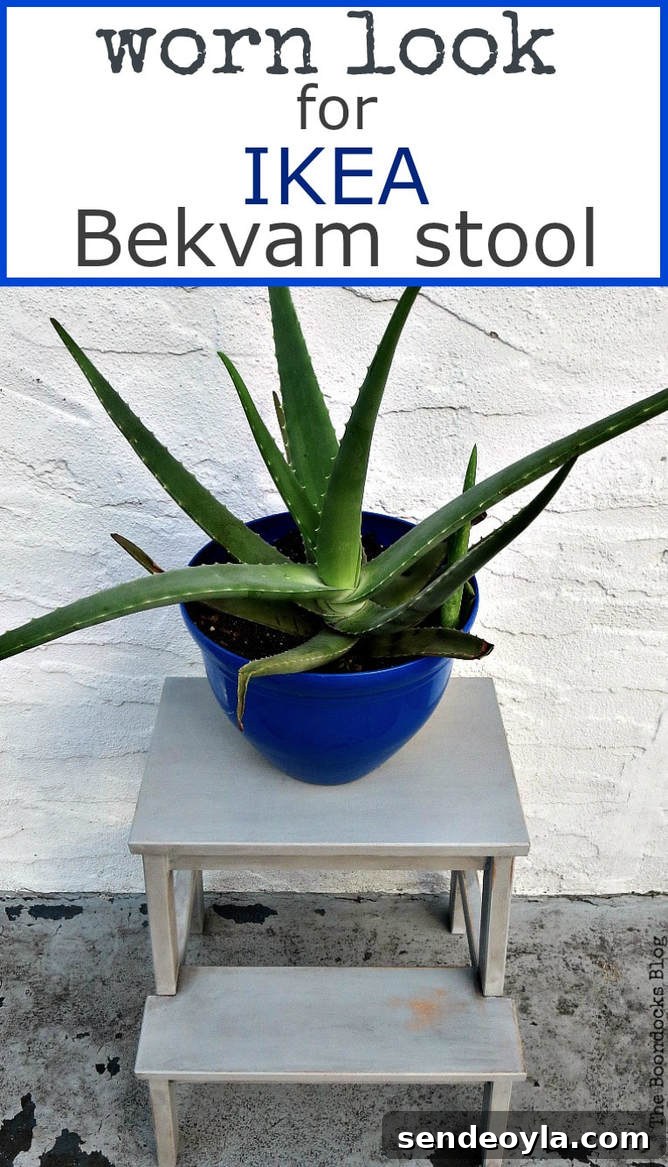
The finished stool has a warm gray tone with subtle dark highlights and soft worn edges. The combination of cream and dark wax gives dimension and an antique character that suits many decor styles.
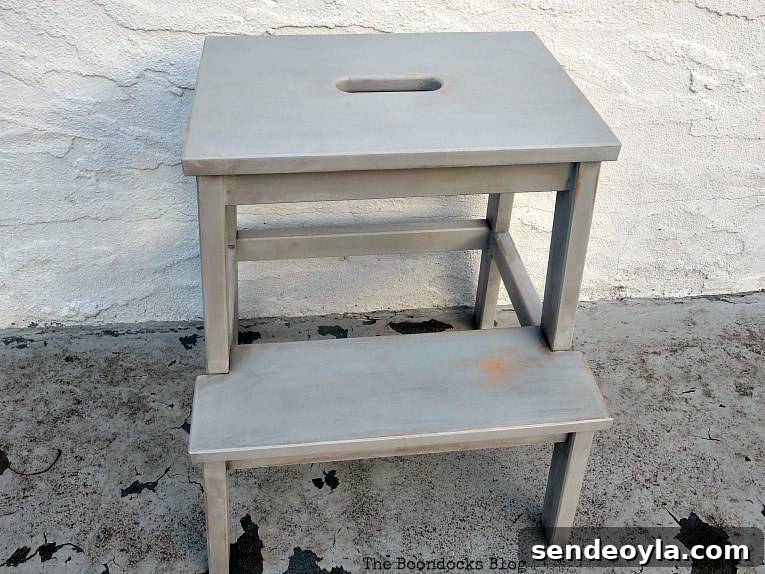
Close-up details reveal the soft distressing and the way the wax settles into corners for a naturally aged effect. The top remains sturdy and practical, ready to be used in the kitchen or anywhere you need a little lift.
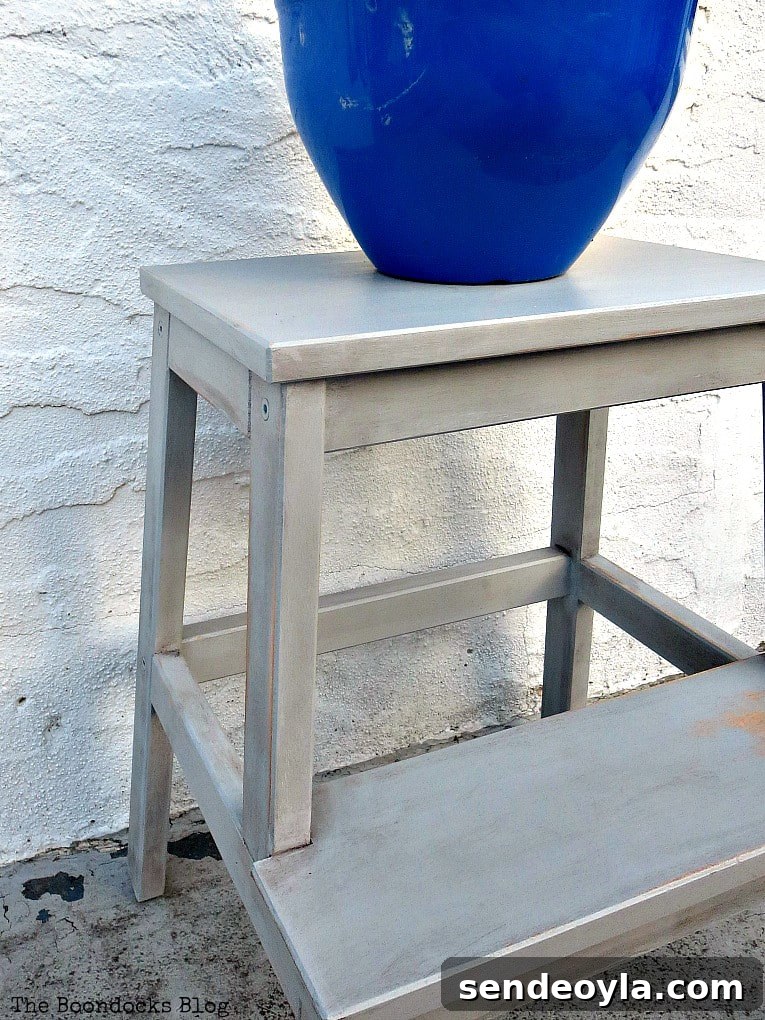
Now the Bekvam does double duty: it helps me reach the high cabinets and also serves as a little display stand when not in use. It’s a small makeover that adds personality and function to a simple piece of furniture.
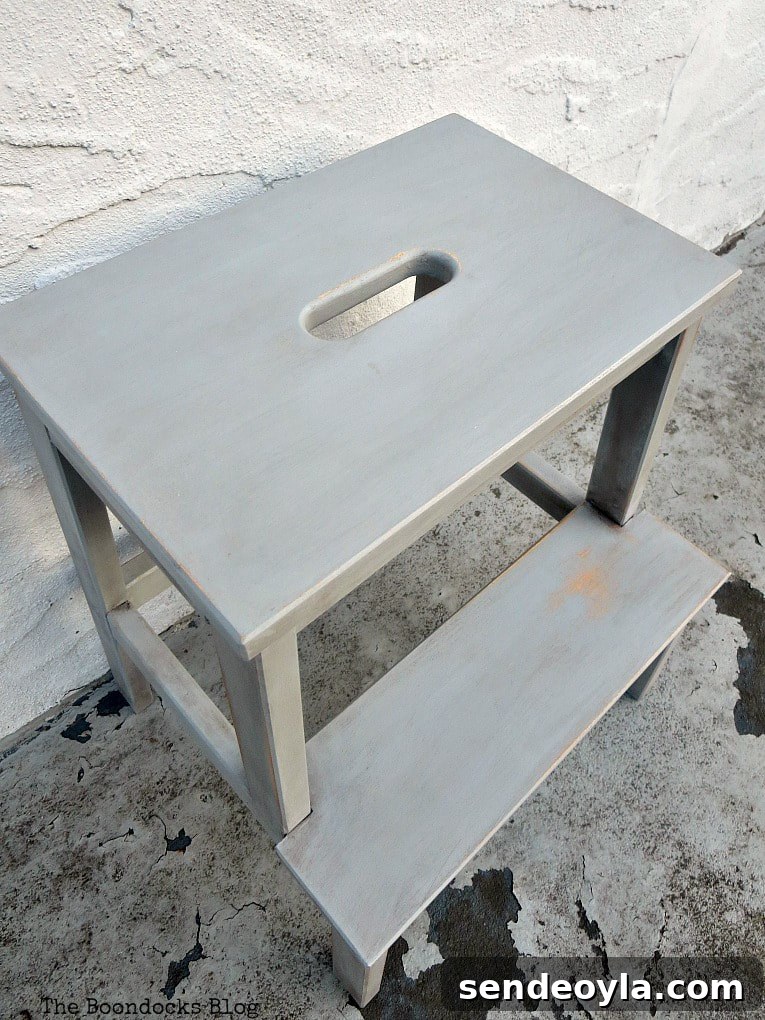
I plan to experiment next time by trying varnish followed by wax to compare the results. There are several ways to finish painted furniture; testing methods helps find the right balance of durability and look for your needs.
I hope this Ikea Bekvam step stool hack inspires you to refresh a simple piece into something characterful and useful. If you prefer newer-looking finishes, you can skip distressing and choose a clear protective topcoat instead. Either way, small projects like this are a great way to customize your space and learn new techniques.
Do you usually apply varnish before wax, or do you prefer wax-only finishes? I’d love to hear which method you use and how it turns out for you.

More Paint Projects: