
Disclosure: I was compensated for this post with product, but all opinions are my own. I only use products I love and recommend.
I have an endless supply of trunks in my basement. They’re practical for storage and can double as decorative furniture — a TV stand, a coffee table, or a statement piece. I’ve already shared two of my trunk makeovers, and today I’m showing you the third project and what I learned about avoiding mistakes when upcycling a trunk.
I enjoy experimenting with different finishes and techniques, but sometimes I get myself into tricky situations. In this post I’ll walk you through my process, the materials I used, the challenge I faced, and the simple lessons I picked up along the way.
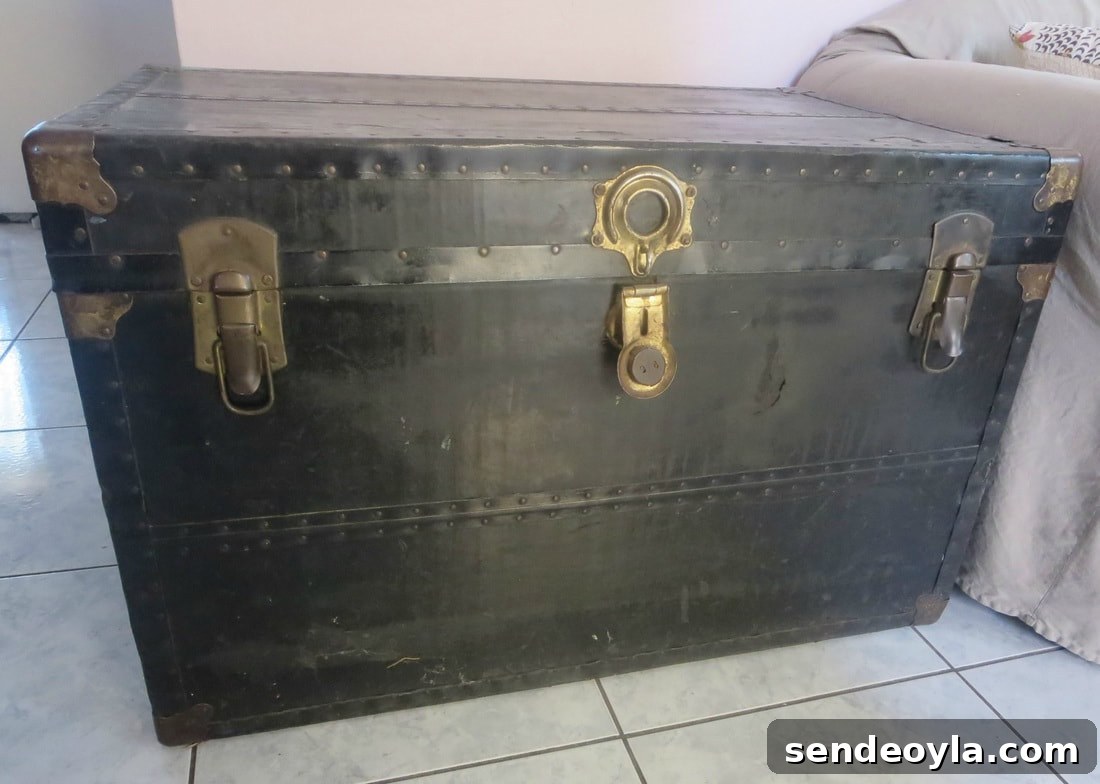
Here’s the trunk I started with — worn, scratched, and very ready for a makeover.
Disclosure: The product links in the original post were affiliate links. If you choose to purchase through affiliate links, I may receive a small commission at no extra cost to you.
What I used:
- Old Fashioned Milk Paint in Soldier Blue (safepaint version)
- Paintbrushes (one for stenciling, one for holding/stippling)
- Homemade beeswax furniture polish
- Greek key stencil
- DecoArt Americana Acrylic Paint in Antique White
- DecoArt Metallics in Bronze
My original plan was straightforward: paint the trunk a pretty blue and do a small decoupage with a few special schoolbook pages. I tested three coats of Old Fashioned Milk Paint in Soldier Blue and loved the color and depth it created.
The Process
After painting three even coats and allowing the surface to dry, I applied my homemade beeswax polish to protect the finish and deepen the sheen. The wax left a lovely, soft glow, but it also made the surface slightly uneven in texture — something I didn’t fully account for before moving to the next step.
I decided to stencil a Greek key pattern along the edges for a clean, classic look. I selected two colors — Antique White and Metallic Bronze — and planned to layer them so the stencil would have subtle depth and variation. That’s when I realized my mistake: I had already waxed the trunk.
Wax seals and protects paint, but it can also prevent new paint from adhering cleanly. I worried that the stencil paint would slide, smear, or simply wipe away. I procrastinated — I even asked for advice in a Facebook group — but ultimately I decided to proceed and learn from the result.
To compensate for the wax and the trunk’s uneven surface, I taped the stencil in place and worked with two brushes: one to press the stencil edges down and another to dab the paint on. In hindsight, a spray adhesive for stencils would have been much easier and yielded cleaner edges, especially on a textured surface.
I alternated Antique White and Metallic Bronze, sometimes blending the two on the stencil brush to create intermediate tones. Because the surface had “hills” and valleys, the paint intensity varied across the design — bronze in some areas, white in others, and peachy blends where the colors mixed. The result felt organic and unique, more layered than precise, and I grew to really like the effect.
I even added stenciling to the bottom edge and touched up the hardware with a little color and extra wax on the straps. After everything dried, I buffed the surface lightly to bring back a subtle sheen without compromising the stencil work.
Final Thoughts and Lessons Learned
The finished trunk turned out to be a happy accident. The combination of milk paint, acrylics, and metallics produced a depth and character I hadn’t planned for. After more than a month of regular use, the surface has held up well with no chipping or peeling.
Key takeaways:
- Plan your steps before you start — know which finish comes first.
- Stick to your plan when possible, especially when layering finishes.
- Use a stencil spray adhesive for textured or uneven surfaces to avoid lifting and bleeding.
- If a project goes off-plan, experiment carefully — mistakes can lead to unique, pleasing results.
If you’re working on a similar DIY project and want tips or encouragement, I recommend finding a community of fellow makers — asking questions and sharing photos can be incredibly helpful.
I hope you can learn from my experience so you can avoid the same misstep — or embrace a happy accident if it happens. Good tools, a clear plan, and a willingness to adapt will carry you through most projects.
If you enjoyed this project, feel free to share it or save the images for inspiration. Subscribe to the original blog for more DIY ideas and paint projects.