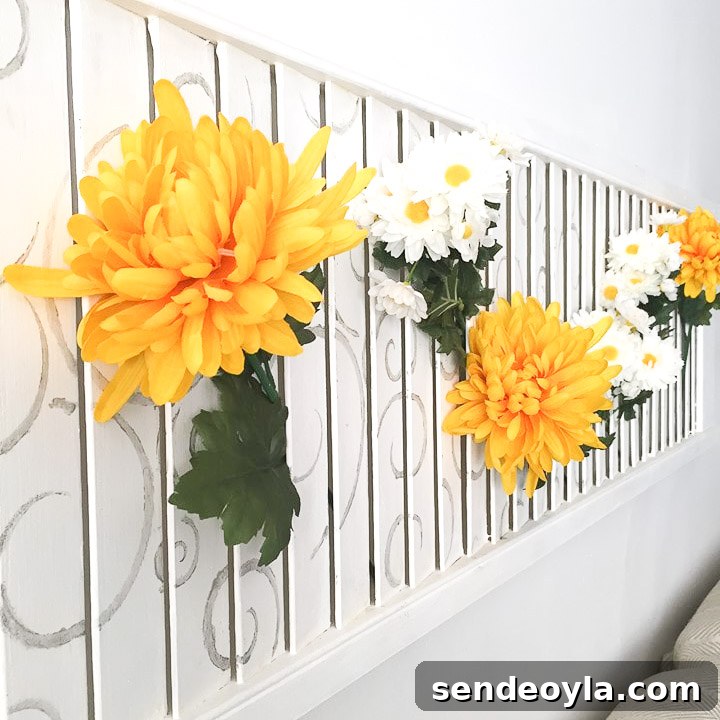
I’ll walk you through how I made this shutter art with a stencil—mistakes and all—so you can avoid the same pitfalls and get the look you want.
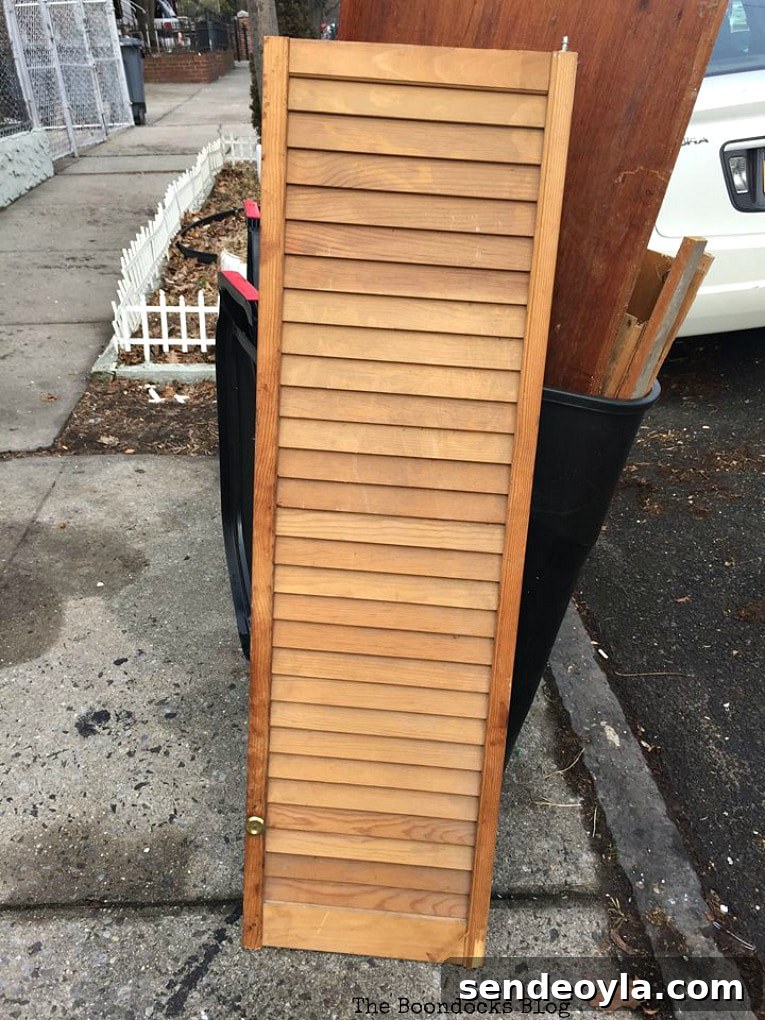
A quick backstory: I parked a few blocks from the hospital in New York and, while waiting, watched a man set this shutter on the curb. I waited until he left the block, then jammed the shutter into the back of my car. It was big, but I had a plan for it.
What I Used:
- Chalky finish paint (white)
- Chip brush
- Pounce sponge (for stenciling—note: not ideal for shutters)
- Fine tip brush
- Stencil with swirl design
- Soft metallic paint (silver)
- Sandpaper
- Creme wax for finish
- Round brush for waxing and a white rag
The How To: DIY Shutter Art with a Stencil
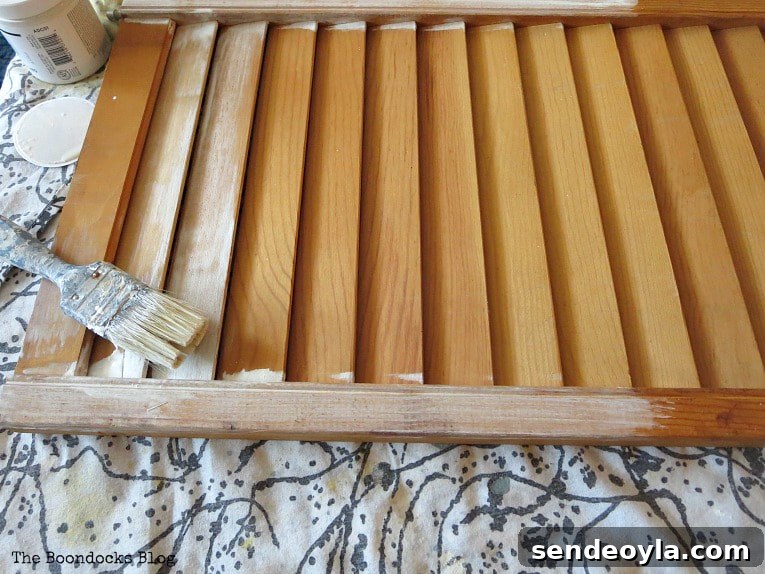
The project started simply enough. After thoroughly wiping the shutter down, I gave it two coats of chalky finish paint. This paint dries fast and provided a nice, even base. Painting the slats took the longest, but two coats did the trick.
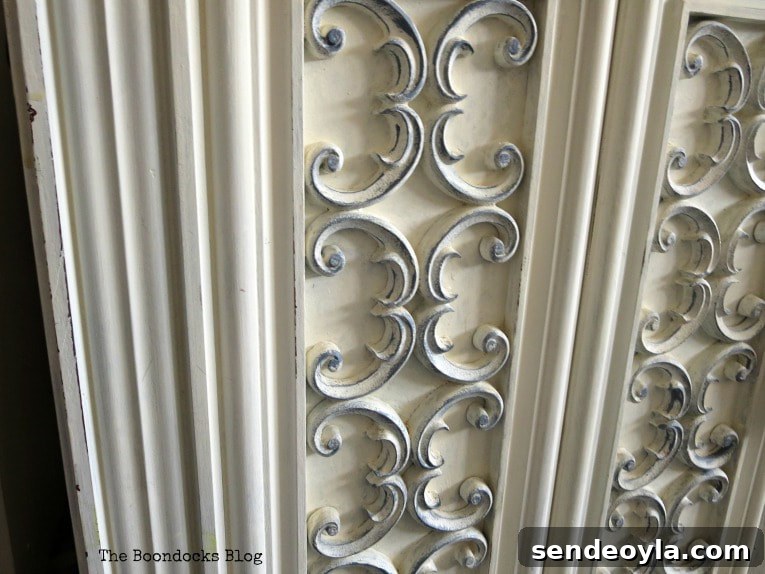
My inspiration was the decorative detailing on a vintage TV cabinet in my living room. I planned to hang the shutter opposite an accent wall and wanted the swirl motif to echo that detailing—subtle and complementary, not competing.
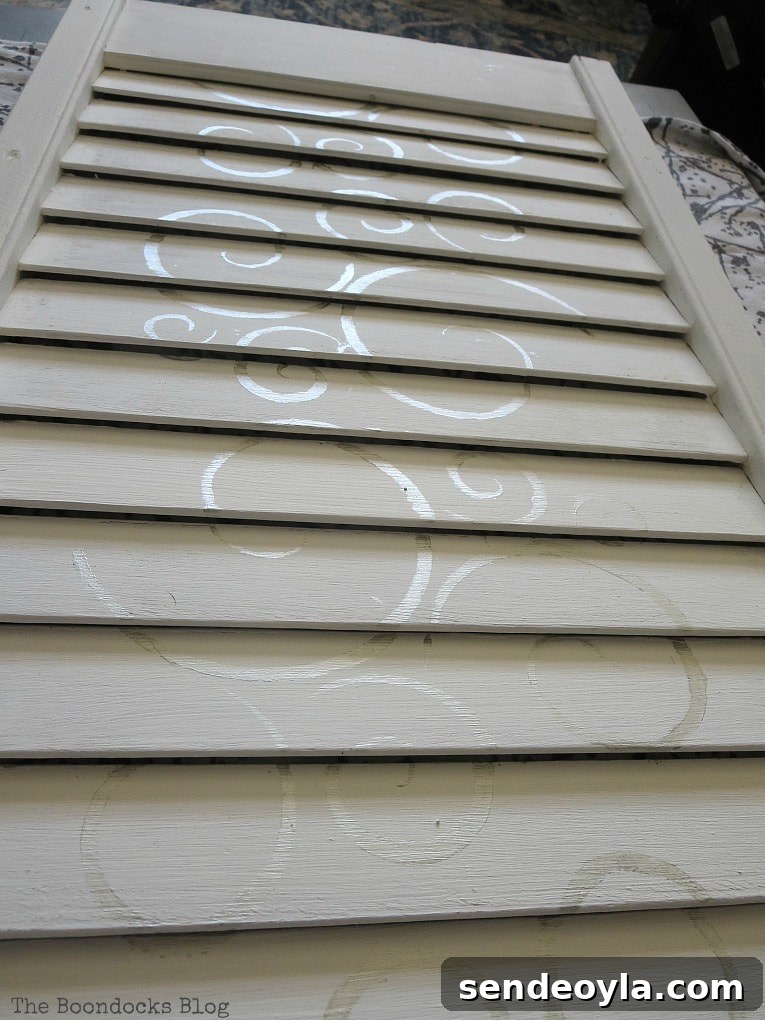
I chose a soft metallic silver for the stencil so the pattern would be a secondary, shimmering detail rather than the dominant feature. To start stenciling I taped the stencil to one end of the shutter and attempted to use a pounce sponge to apply the metallic paint.
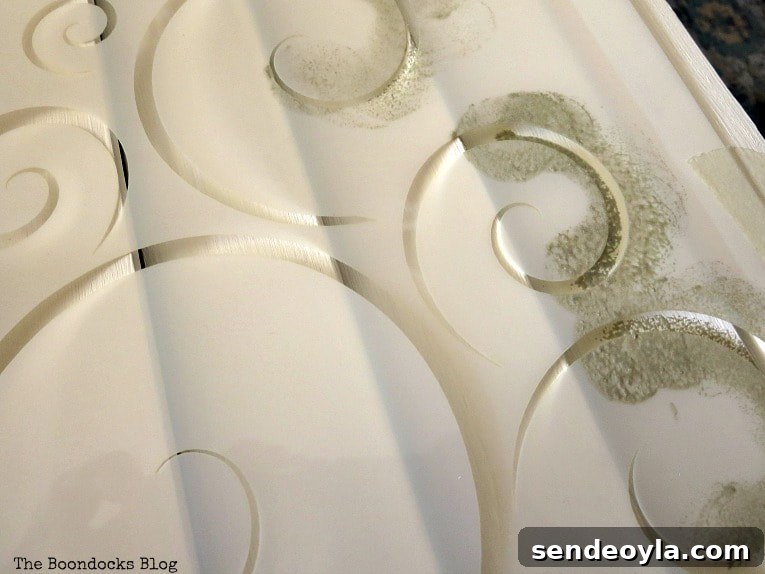
Lesson one: shutters have slats. The stencil wouldn’t lie flat and paint bled into the gaps even after I dabbed off excess. The pounce sponge that works beautifully on flat surfaces wasn’t ideal for this three-dimensional, slatted surface—paint applied too heavily and unevenly.
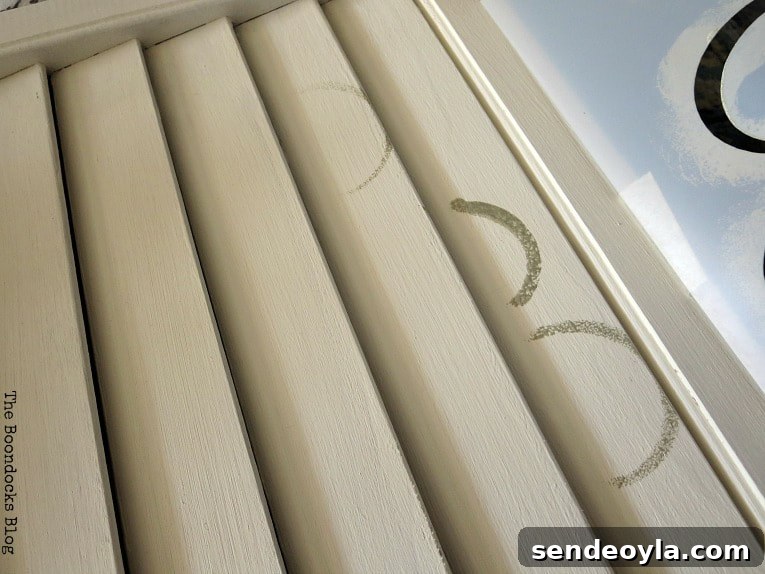
I tried again with thinner brushes for more control. That improved things, but the stencil still didn’t transfer the full design on each slat. My solution was to carefully insert the stencil edge between slats so each slat’s surface could receive a flat, even impression of the design. It was fiddly and slow, but it produced much better results.
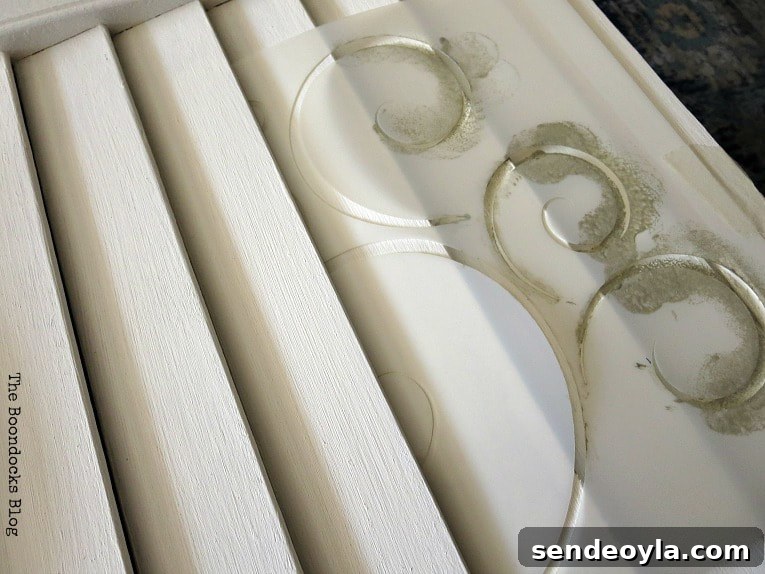
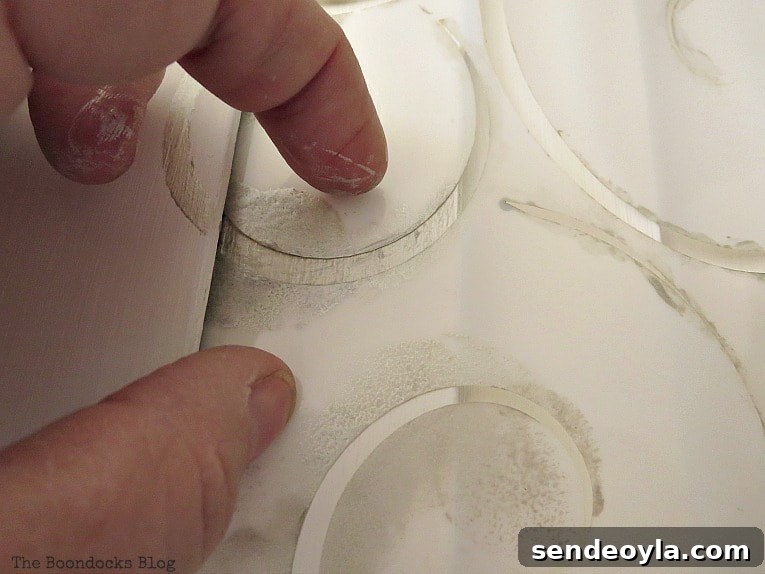
To keep the stencil in place while painting, I pressed it down with my fingers or braced it with a small brush handle. For gaps and areas that looked sparse, I cut the stencil into smaller pieces and filled in extra swirls along the edges to balance the overall design. It took far longer than the ten-minute project I’d expected, but the results were worth the patience.
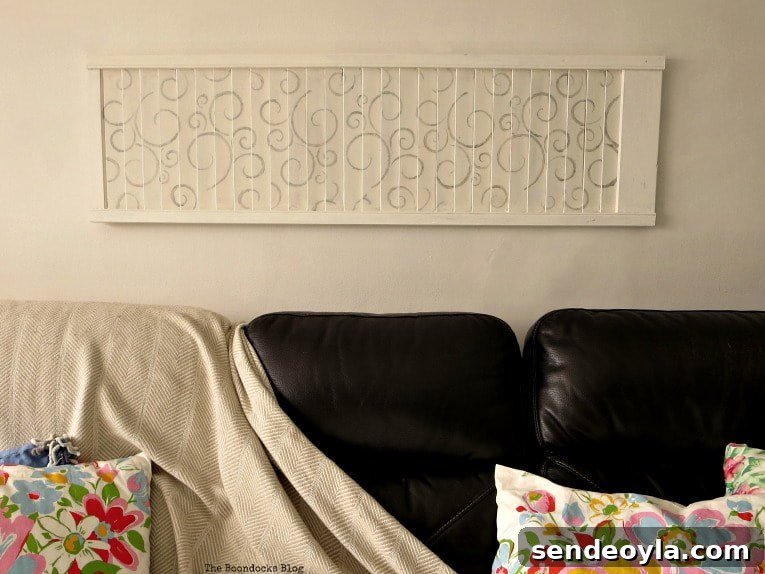
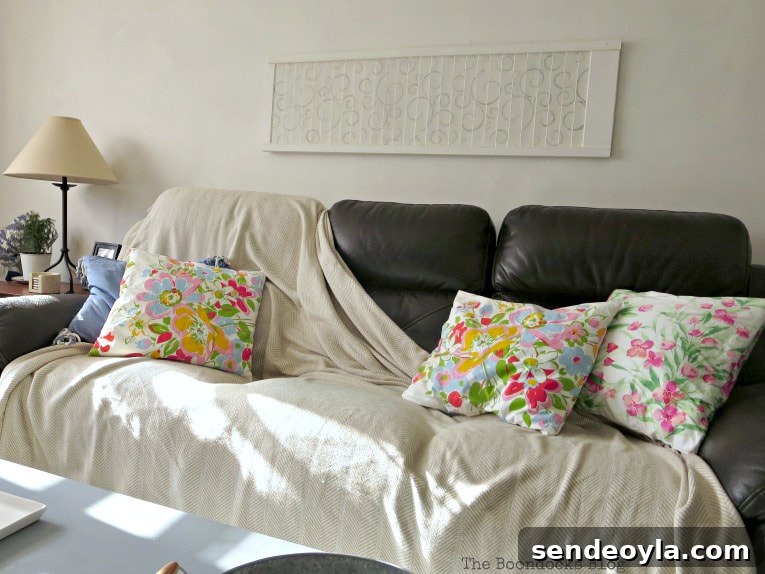
Once the metallic pattern was complete, I sanded very lightly where needed, added a thin coat of creme wax to seal and age the finish, and used adhesive mounting strips to hang the shutter above the sofa. The metallic paint is subtle—depending on the angle and light it shimmers and can almost disappear, which was exactly the understated look I wanted.
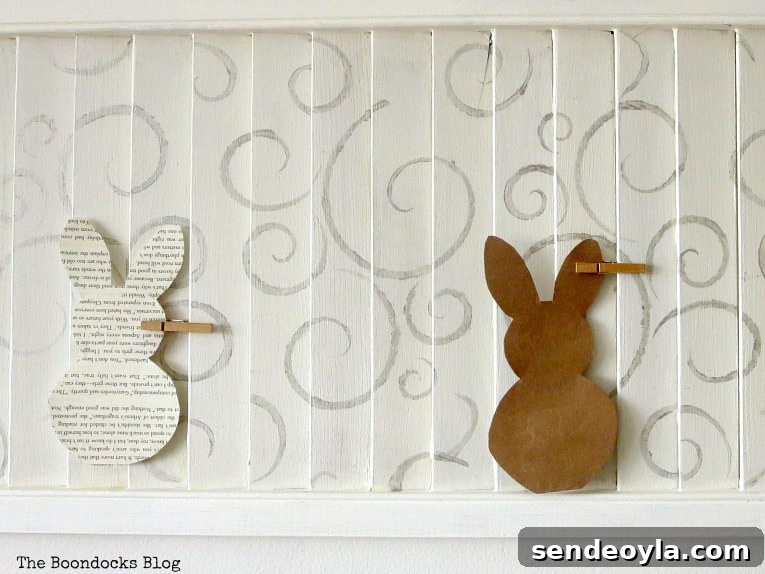
I also used the shutter seasonally—adding paper bunnies for Easter and swapping simple accents for other holidays—so it’s a flexible piece of decor that anchors the wall without overpowering the room.
Final thoughts and quick tips:
- Avoid pounce sponges for deeply slatted surfaces; they’re great on flat surfaces but struggle to keep the stencil tight against slats.
- Work one slat at a time. Insert the stencil edge into the gap and press it flat before you paint.
- Use thin brushes for tight control and dab off excess paint to prevent bleed-through.
- Cut your stencil into smaller sections to fill awkward spots and create a balanced composition.
- Finish with a protective wax or topcoat and hang securely with strong mounting strips.
This shutter took longer than expected, but I ended up with a one-of-a-kind piece that suits the room’s palette and scale. DIY projects can be indulgent in time, but they also let you customize exactly how a piece reads in your space—subtle, textured, and uniquely yours.
If you make your own shutter art, I’d love to hear how it goes—what stencil you choose, how you solved the slat challenge, and what finish you used.