Keep a family heirloom alive with a fresh update. This mid-century modern china cabinet makeover shows how a few simple materials and some patience can transform a worn piece into a stylish, functional focal point.
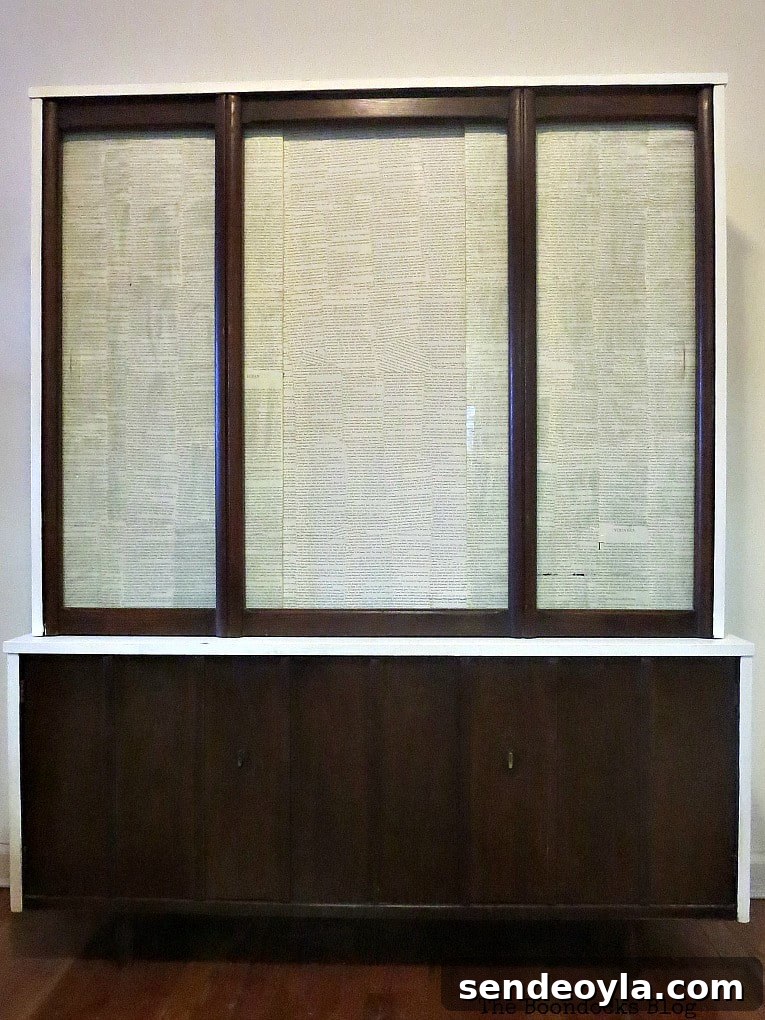
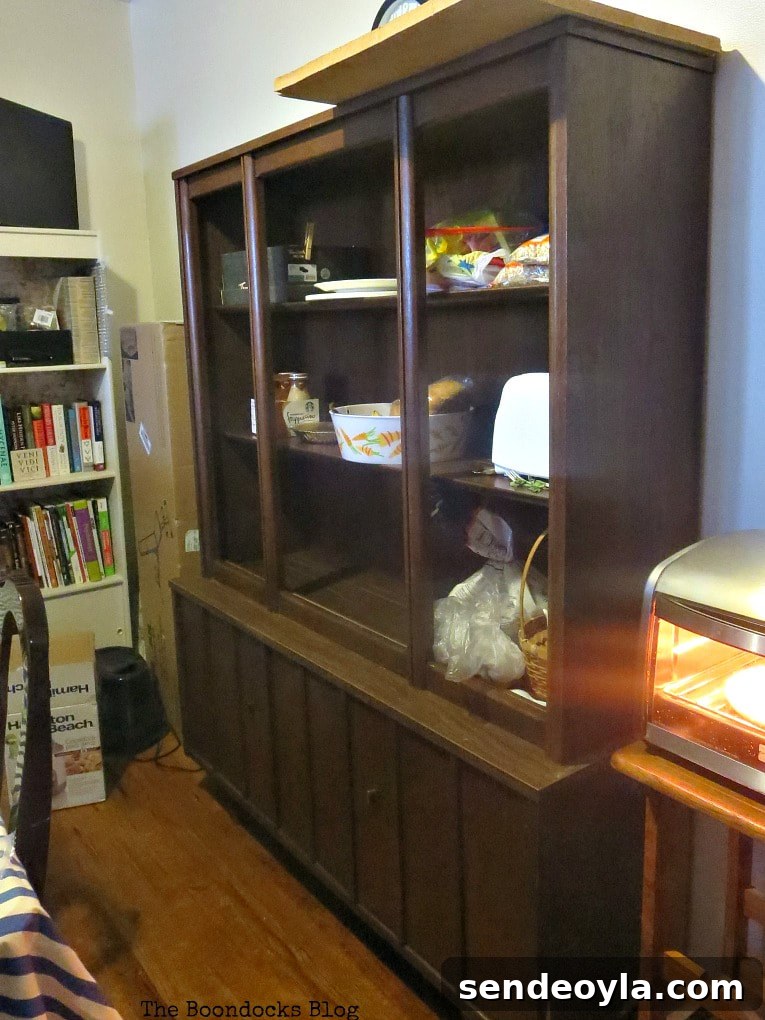
This project began months ago—what I expected to be a quick refresh turned into a much longer process. The cabinet has been in my family since the 1960s, and though I didn’t always appreciate its clean mid-century lines, I wanted to preserve and update it so it could continue to be useful in our home.
I didn’t choose this makeover lightly—this cabinet needed attention, and I wanted to keep as much of the original wood and character as possible.
Disclosure: I received product to complete this post; all opinions are my own and I only recommend products I trust.
Materials Needed To Update This Mid Century Modern China Cabinet
Note: product names are provided for convenience.
- Hope’s 100% Pure Tung Oil, moisture-resistant wood finish
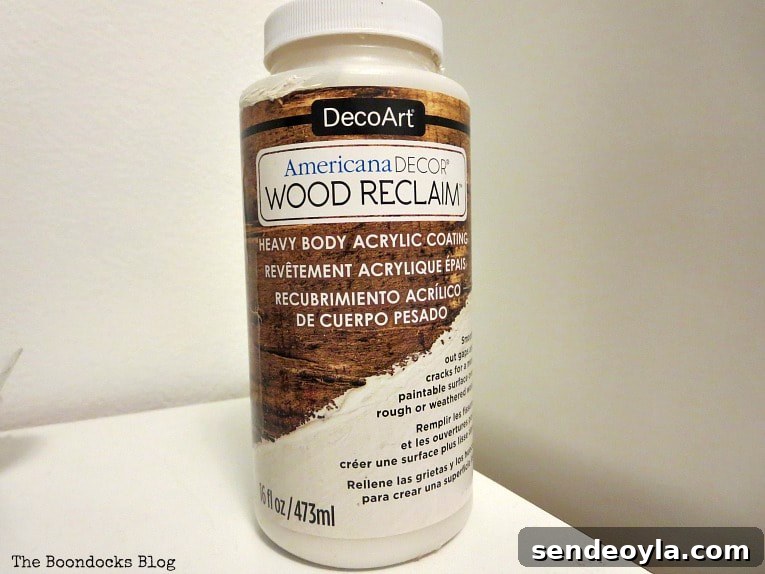
- DecoArt Americana Decor Wood Reclaim (16 oz)
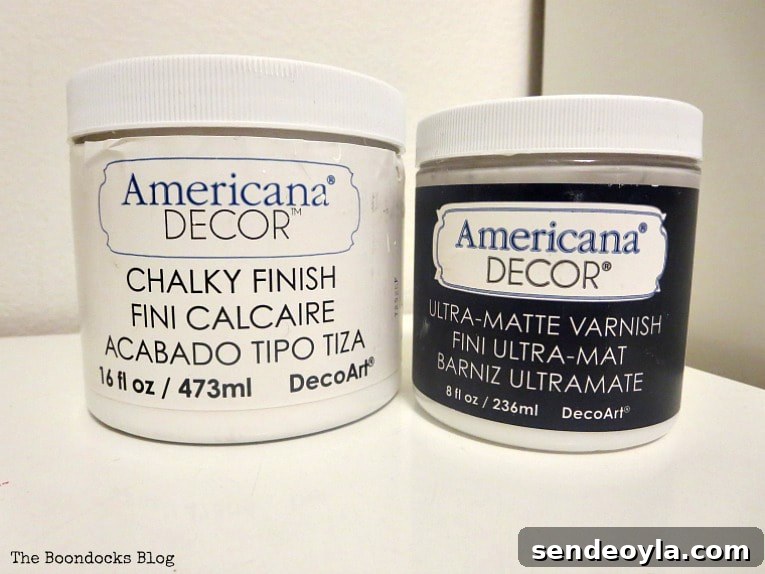
- DecoArt Americana Chalky Finish Paint in Everlasting (a soft white)
- Mod Podge Waterbase Sealer, Glue and Finish in Matte
- DecoArt Ultra Matte Varnish
We brought this piece with us when we first moved to the United States. As a child I didn’t notice it much, but over time the elegant walnut grain and clean silhouette grew on me. The cabinet originally had heavy sliding glass doors and lots of useful storage.
When I returned to New York last fall, restoring and updating this mid-century modern china cabinet moved to the top of my list. My goal was to preserve the wood’s beauty while refreshing the overall look.
The How To:
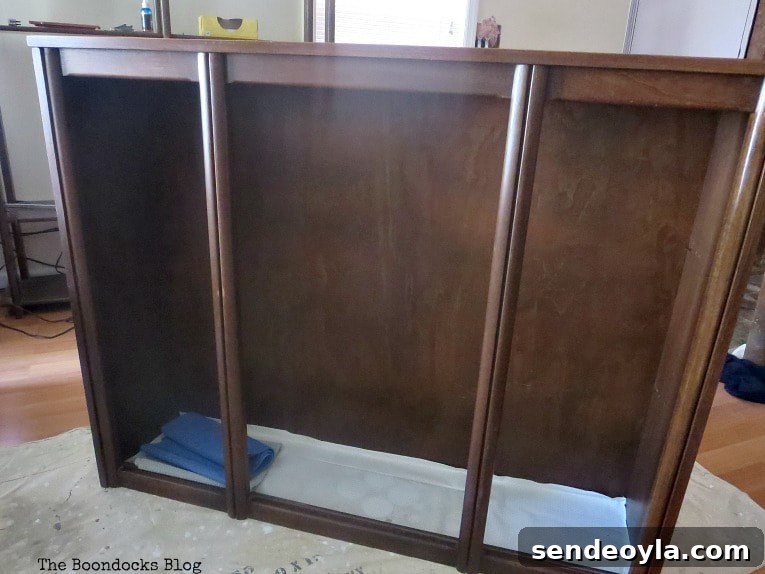
I began by applying tung oil to the entire piece. Using a clean rag, I rubbed the oil on, let it sit for an hour, then wiped it off—repeating the wipe-down twice. The tung oil deepened the grain and added subtle protection.
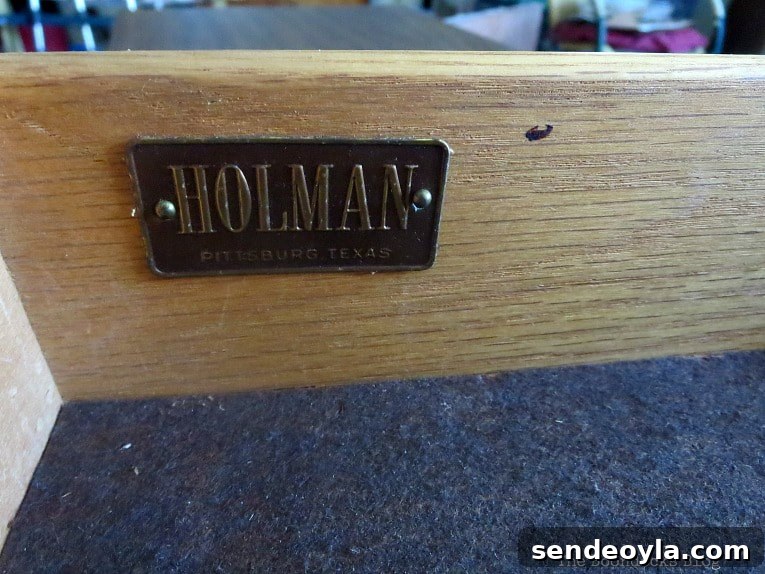
Inside the lower section I discovered a manufacturer label identifying Holman Furniture from Pittsburg, Texas. It turns out Holman was a family-owned company that supplied higher-end department stores; finding that label made me appreciate the cabinet’s history and value even more.
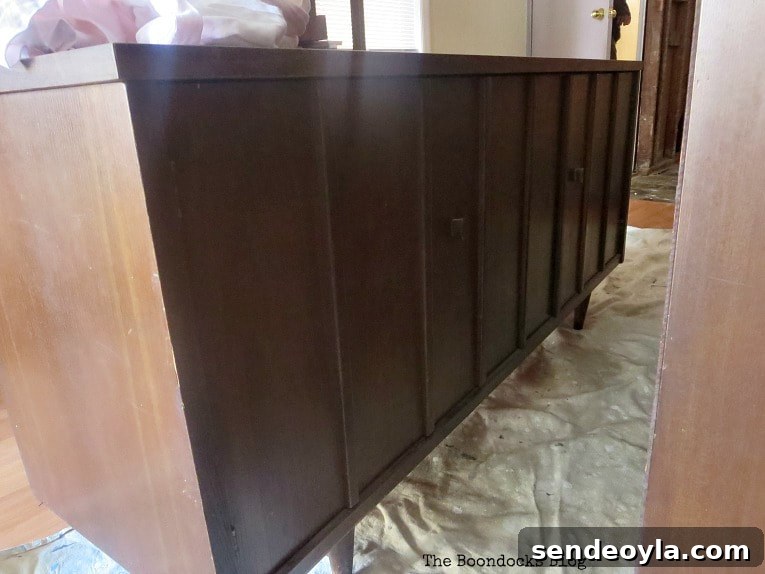
At first I was thrilled with the results of the tung oil on the interior and drawer surfaces, but then I found a problem: the veneer on the bottom left side was peeling and damaged. Nailing the pieces down didn’t solve it, and more veneer came loose as I worked.
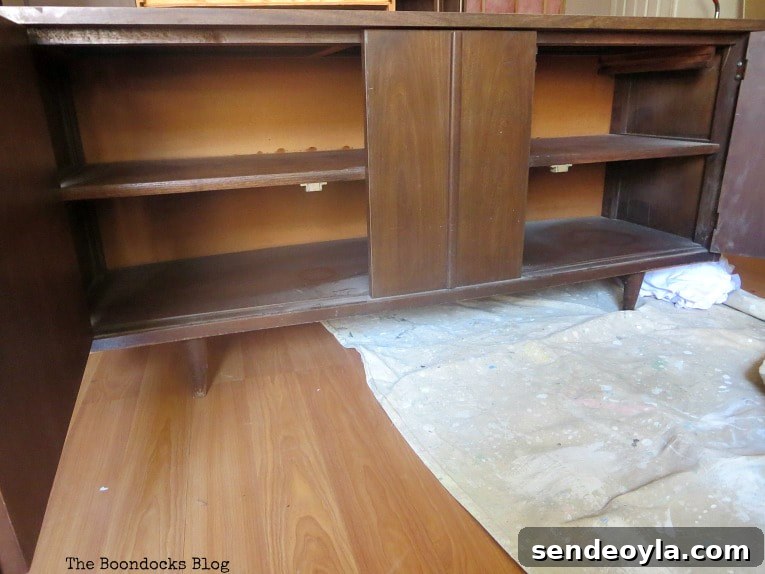
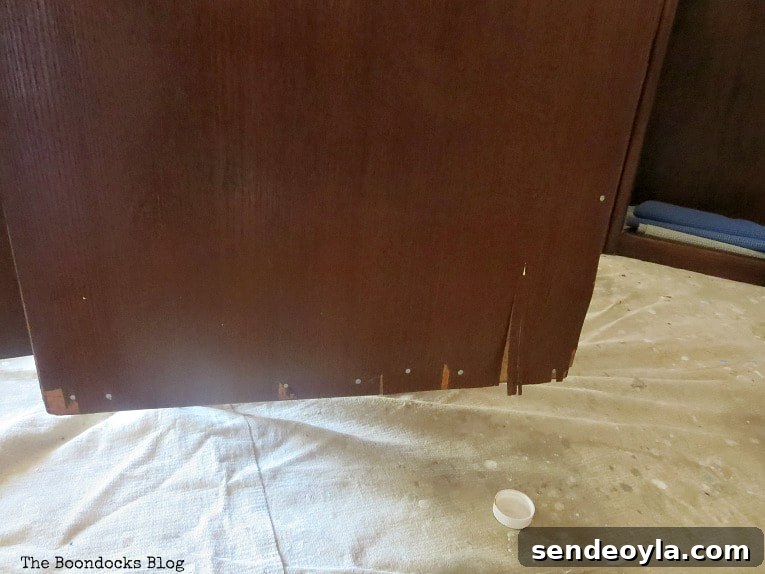
For a while I was stuck, but after researching different repair techniques I decided to even out the surface with a wood reclaim product. Several coats were required to build up a smooth, stable surface; a wood filler would likely work as an alternative depending on the extent of damage.
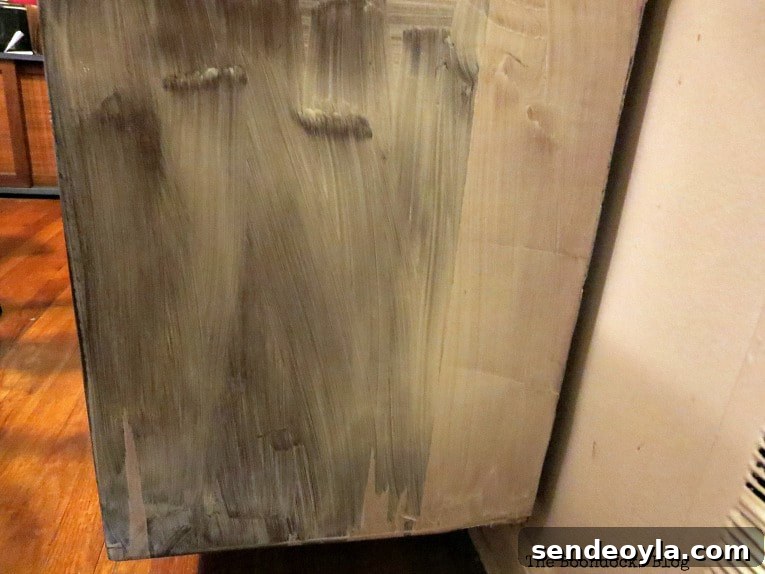
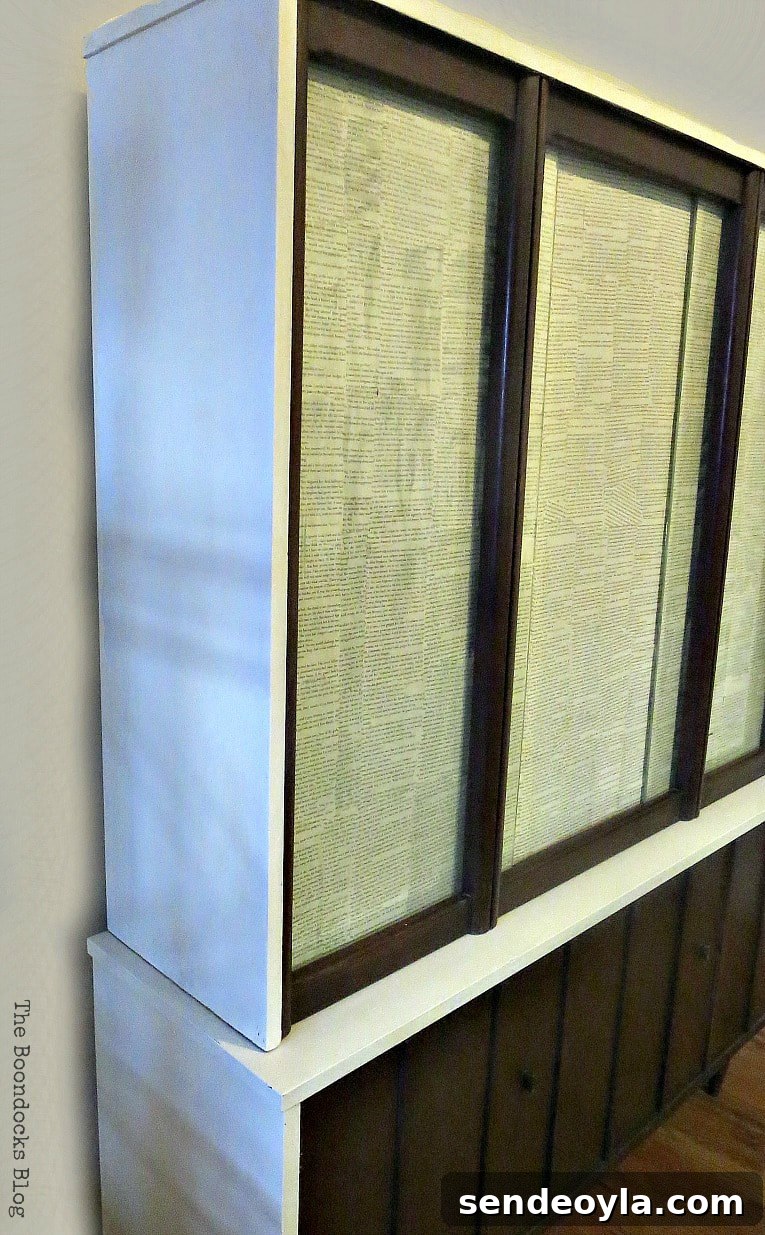
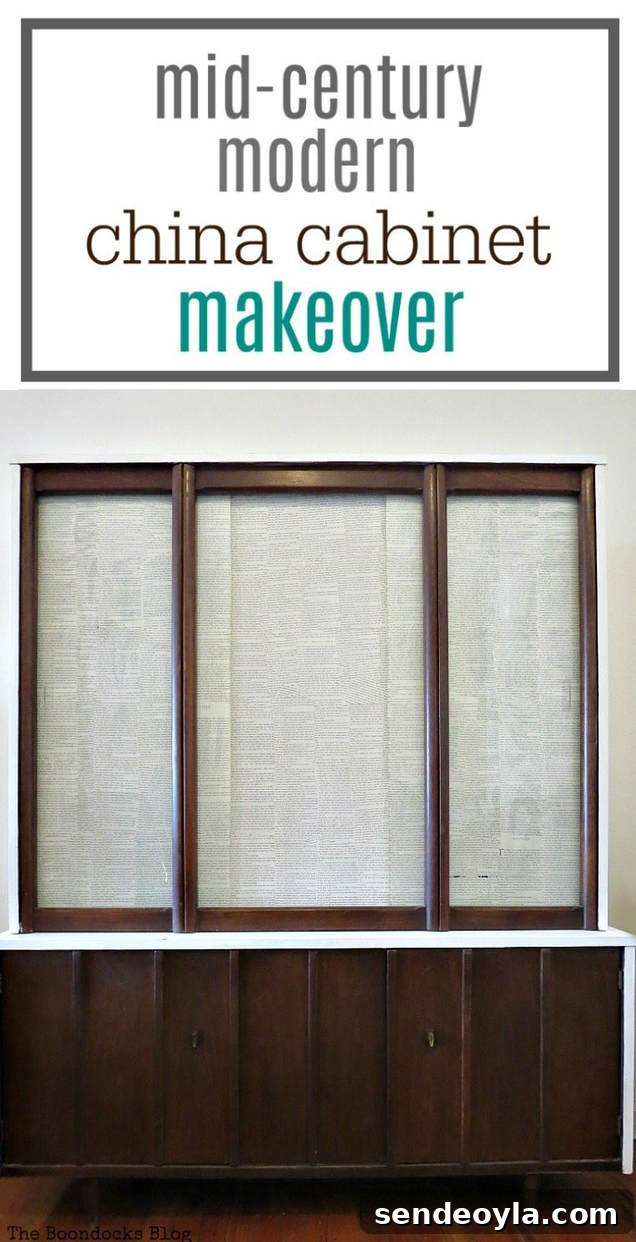
To conceal the repaired side and visually unify the whole piece, I painted the sides and top with chalky finish paint in Everlasting, a soft white that brightened the room and contrasted nicely with the remaining walnut grain on the front. I intentionally left the front panels unpainted to preserve the cabinet’s character.
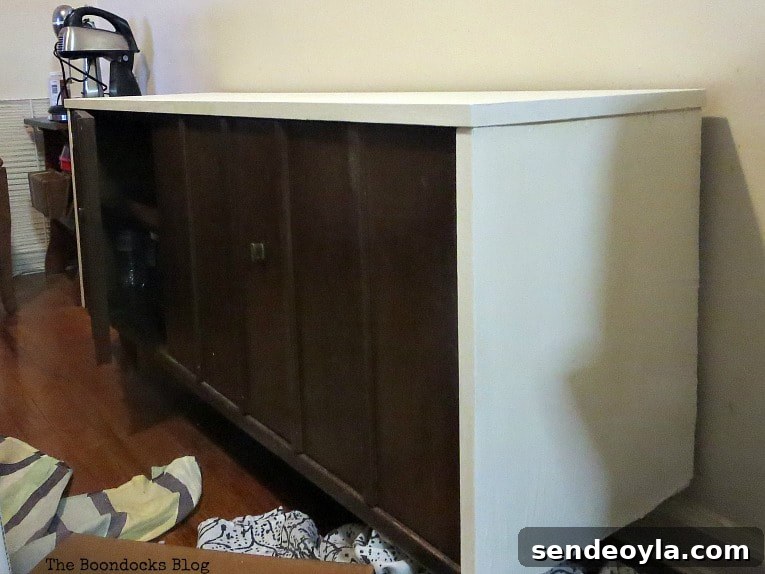
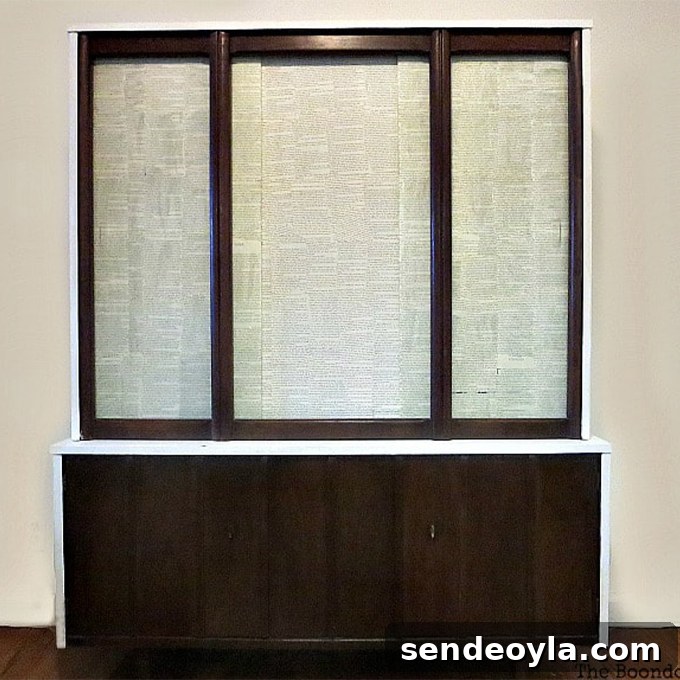
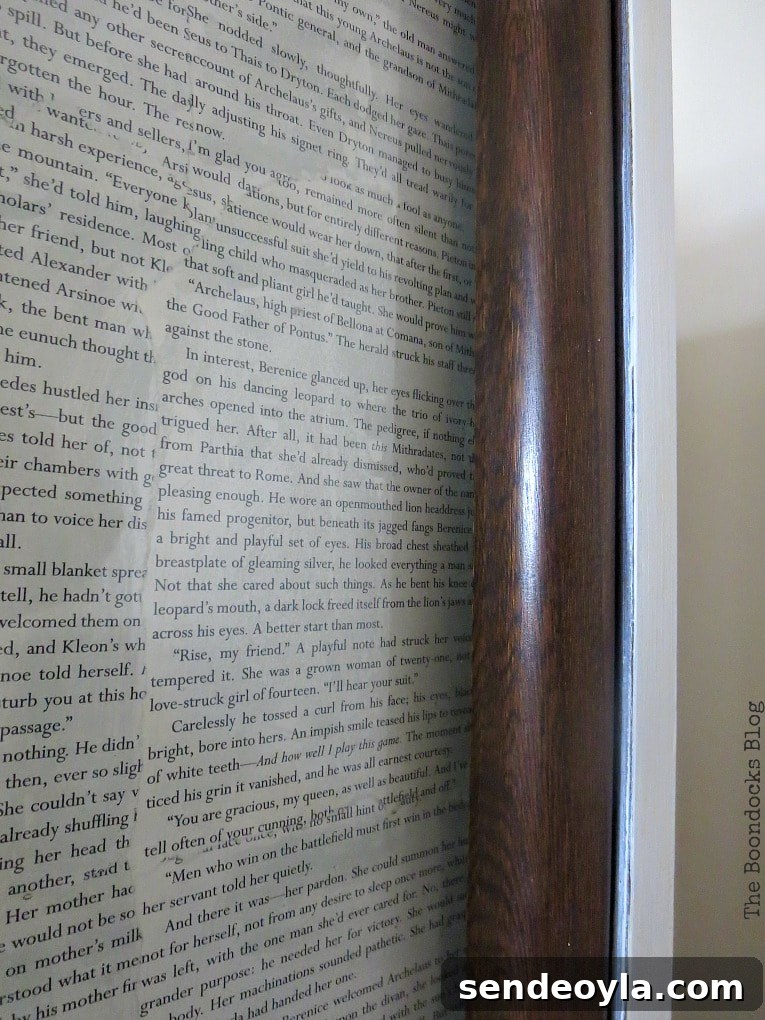
The top section needed a practical solution: because I use this cabinet for storing baking tools and kitchen gadgets rather than for display, I wanted to hide the clutter. Instead of curtains or new glass, I decoupaged book pages onto the inside of the glass doors with Mod Podge. This provided a neutral, textured look while still allowing access to the door pulls.
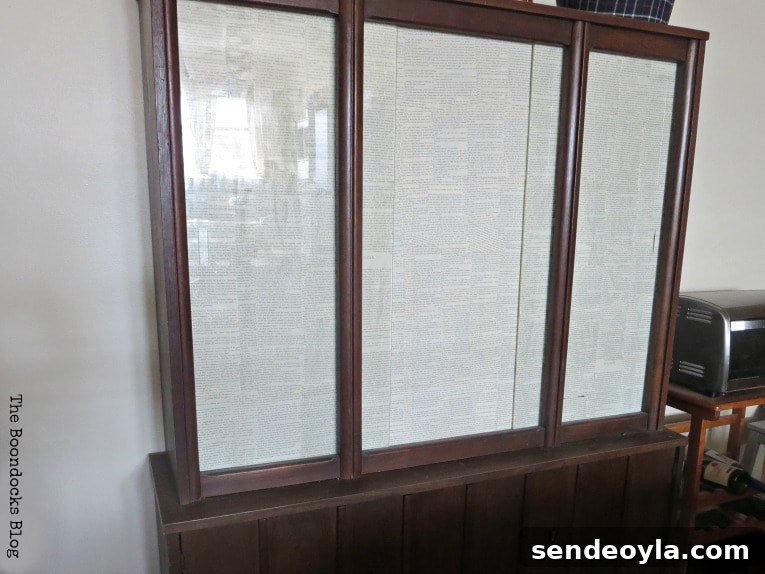
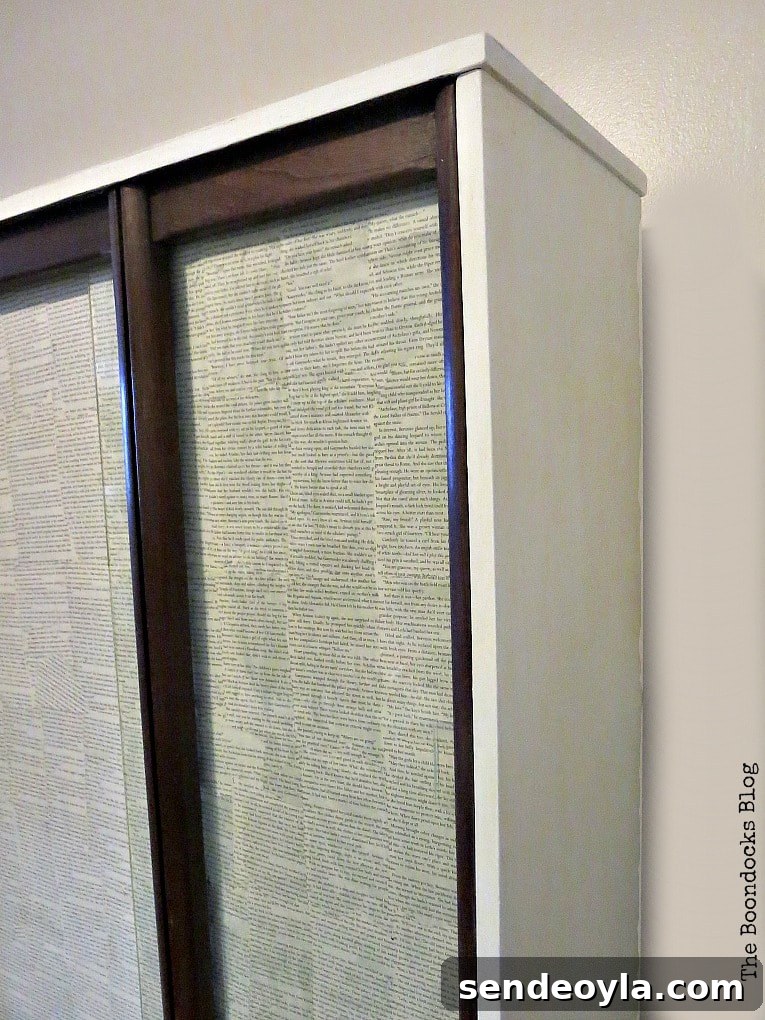
After painting the exposed areas, I sealed the painted surfaces with three coats of ultra-matte varnish. The ultra-matte finish kept the white color true without any yellowing and provided durable protection for daily use.
Here is the finished mid-century modern china cabinet—cleaner, brighter, and still respectful of its original walnut details. Painting only the needed sections allowed me to hide imperfections while preserving the cabinet’s vintage character.
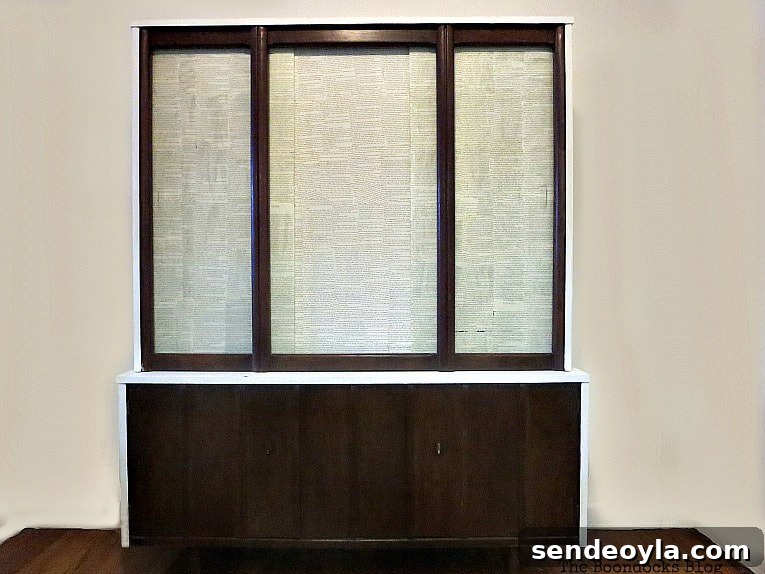
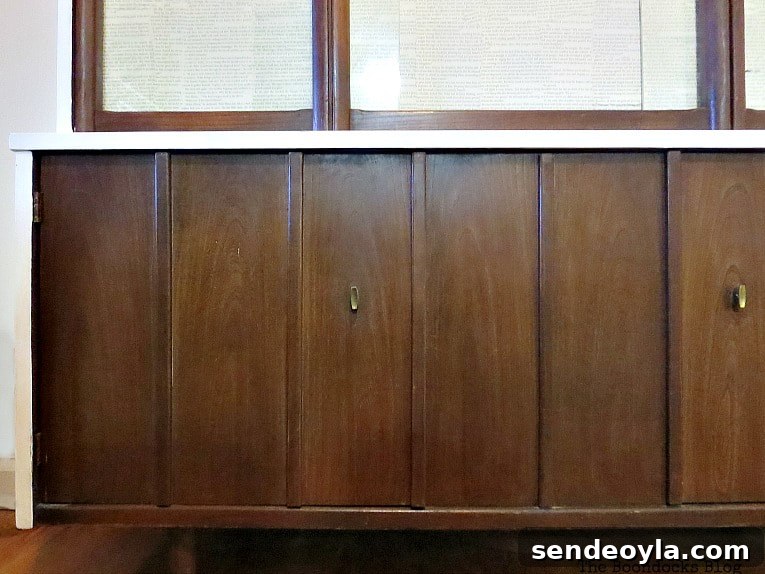
Although I hesitated to paint any part of this heirloom, the update greatly improved the room’s feel—especially in a dining room with no natural light—while preserving the walnut grain where it mattered most. The white paint helps the space feel larger and brighter.
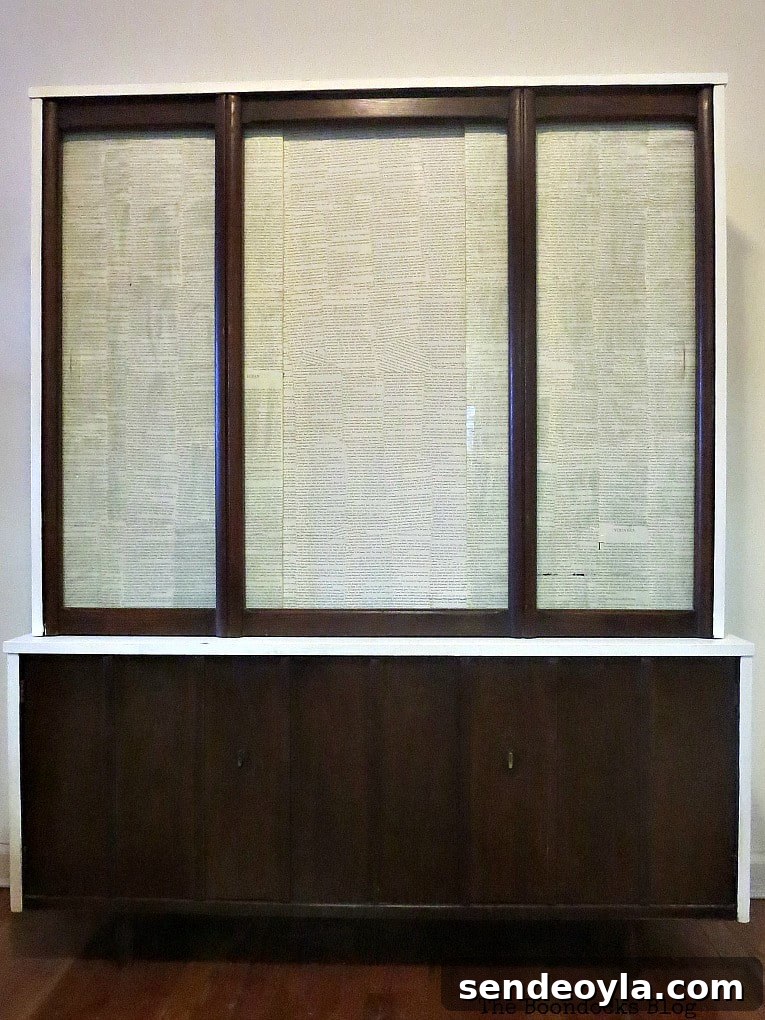
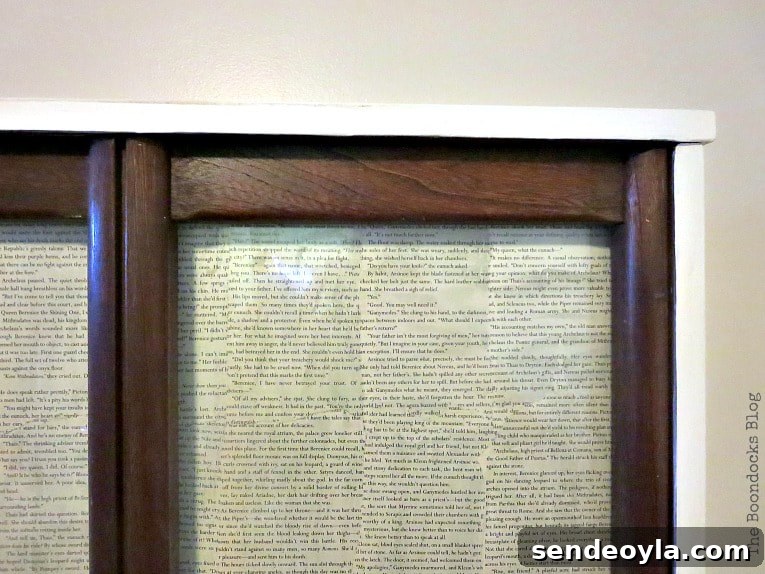
The close-up shows the decoupage applied to the inside of the glass, which conceals stored items while leaving the hardware usable. I’m glad I saved this cabinet from the basement—keeping it in the main living area gives it new life and function.
It took time to decide the best approach, but balancing preservation and practical repairs produced a result I’m proud of. The cabinet now stores baking supplies, hides clutter, and still showcases the walnut grain that makes mid-century modern pieces so appealing.
This room previously held a pair of painted bookcases, and the updated cabinet fits the space better while maintaining period-appropriate style.
In the end, saving this childhood cabinet felt important. It would have been a shame to consign it to storage or a basement—now it continues to serve our family for years to come.

More Furniture Projects: